महिषासुरमर्दिनि स्तोत्रम् (अयि गिरिनन्दिनि)
Mahishasura Mardini Stotram (Aigiri Nandini)
'जय जय हे महिषासुरमर्दिनि' टेक वाली देवी-स्तुति, निर्णय सागर प्रेस के बृहत्स्तोत्ररत्नाकर से: 21 श्लोक और फलश्रुति, हर श्लोक के अर्थ सहितThe hymn to the Devi with the refrain 'Jaya jaya he Mahishasura Mardini', from the Nirnay Sagar Brihat Stotra Ratnakar: 21 verses and the phalashruti, with the meaning of each
PDF डाउनलोडDownload PDF
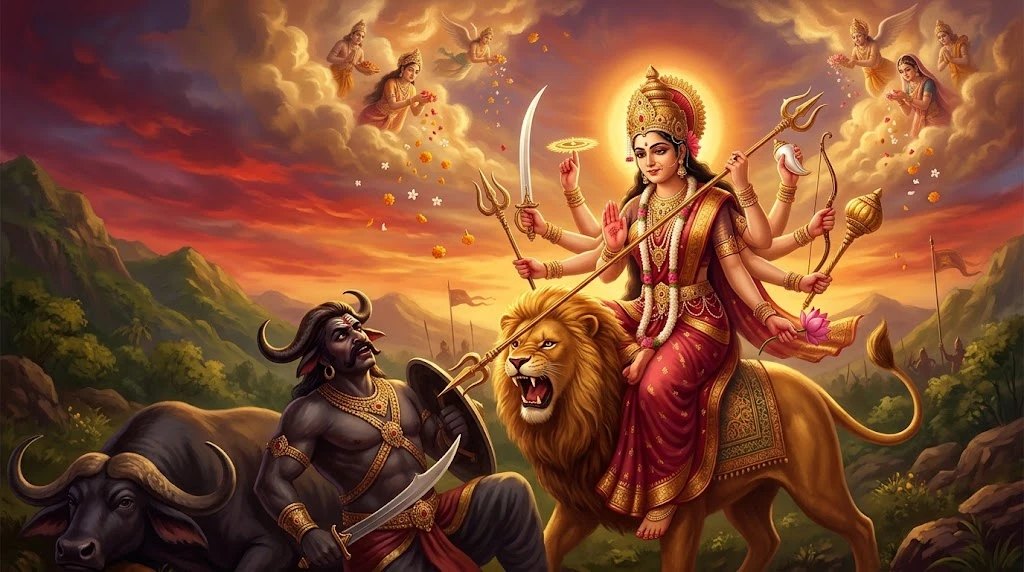
महिषासुरमर्दिनि स्तोत्रम्, जिसे इसके पहले शब्दों से 'अयि गिरिनन्दिनि' भी कहते हैं, देवी दुर्गा की सबसे प्रसिद्ध संस्कृत स्तुतियों में से है। हर श्लोक 'जय जय हे महिषासुरमर्दिनि रम्यकपर्दिनि शैलसुते' की टेक पर समाप्त होता है। श्लोकों में देवी के हिमालय-पुत्री और शिव-पत्नी रूप की वन्दना है, फिर महिषासुर, धूम्रलोचन, चण्ड-मुण्ड, रक्तबीज और शुम्भ-निशुम्भ से उनके युद्धों का वर्णन है, फिर उनके नृत्य और सौन्दर्य का, और अन्त में भक्त की शरणागति। इसकी लय और शब्दों की गूँज (जैसे 'सुमनः सुमनः', 'भ्रमर भ्रमर') इसे गाने योग्य बनाती है।
यह स्तोत्र परम्परा से आदि शंकराचार्य का माना जाता है, पर यह मान्यता विवादित है। निर्णय सागर प्रेस की जिस प्रति से यह पाठ लिया गया है, उसमें ये श्लोक तीस श्लोकों के 'भगवतीपद्यपुष्पांजलिस्तोत्रम्' के भीतर श्लोक 7 से 28 के रूप में छपे हैं, और उस स्तोत्र के अन्तिम श्लोक कवि का नाम रामकृष्ण बताते हैं और 'श्रीपति के पुत्र' का उल्लेख करते हैं; प्रति में शंकराचार्य का नाम नहीं है। नवरात्रि, दुर्गा पूजा और देवी के किसी भी व्रत में इसका पाठ होता है। इस पृष्ठ पर पूरा पाठ उसी छपी प्रति के अनुसार है (श्लोक उस क्रम से गिने गए हैं जिससे पाठक इन्हें जानते हैं: टेक वाले श्लोक 1 से 21, फिर फलश्रुति), हर श्लोक के नीचे सरल अर्थ है जिसमें कठिन विशेषणों की व्याख्या है, और साइन-इन के बाद पूरा पाठ मुफ्त PDF में उतारा जा सकता है।
The Mahishasura Mardini Stotram, also called Aigiri Nandini after its opening words, is one of the best-loved Sanskrit hymns to Goddess Durga. Every verse ends on the refrain 'Jaya jaya he Mahishasura Mardini, ramya-kapardini, Shailasute'. The verses praise the Devi as the daughter of the Himalaya and the wife of Shiva, then describe her battles with Mahishasura, Dhumralochana, Chanda and Munda, Raktabija, and Shumbha and Nishumbha, then her dance and her beauty, and close with the devotee's surrender. Its rhythm and its ringing repetitions ('sumanah sumanah', 'bhramara bhramara') make it a hymn to sing.
The hymn is traditionally attributed to Adi Shankaracharya, though the attribution is disputed. In the Nirnay Sagar print this text is taken from, these verses stand as verses 7 to 28 of a thirty-verse Bhagavati Padya Pushpanjali Stotram, whose closing verses name a poet Ramakrishna and mention 'the son of Shripati'; the print does not name Shankaracharya. It is recited in Navratri, at Durga Puja and on any day sacred to the Devi. This page gives the full text as printed (numbered the way readers know it: the refrain verses 1 to 21, then the phalashruti), a plain meaning under every verse that explains the harder epithets, and, after sign-in, a free PDF of the whole text.
पाठThe text
श्लोकShloka 1
अयि गिरिनंदिनि नंदितमेदिनि विश्वविनोदिनि नंदनुते गिरिवरविंध्यशिरोधिनिवासिनि विष्णुविलासिनि जिष्णुनुते। भगवति हे शितिकंठकुटुंबिनि भूरिकुटुंबिनि भूरिकृते जय जय हे महिषासुरमर्दिनि रम्यकपर्दिनि शैलसुते॥
हे गिरिनन्दिनी (पर्वतराज हिमालय की पुत्री), पृथ्वी को आनन्दित करने वाली, सारे विश्व को अपनी लीला बनाने वाली, आनन्दित जनों (नन्द) से स्तुत देवी; विन्ध्य जैसे श्रेष्ठ पर्वत के शिखर पर बसने वाली, विष्णु के साथ शोभित (विष्णुविलासिनी) और जिष्णु (इन्द्र) से स्तुत। हे भगवती, शितिकण्ठ (नीले कण्ठ वाले शिव) की गृहिणी, विशाल परिवार वाली और महान कार्य करने वाली (भूरिकृते), हे महिषासुर का मर्दन करने वाली, सुन्दर जटाओं वाली (रम्यकपर्दिनी) शैलसुता, आपकी जय हो, जय हो।O Girinandini, daughter of the mountain king Himalaya, who gladdens the earth and makes the whole world her play, praised by the joyful (nanda); who dwells on the summit of the great Vindhya mountain, who shines beside Vishnu (Vishnu-vilasini) and is praised by Jishnu (Indra). O Bhagavati, wife of the blue-throated Shiva (Shitikantha), mother of a great family, doer of great deeds: victory, victory to you, slayer of Mahishasura, daughter of the mountain (Shailasuta), with your lovely braided hair (ramya-kapardini)!
श्लोकShloka 2
सुरवरवर्षिणि दुर्धरधर्षिणि दुर्मुखमर्षिणि हर्षरते त्रिभुवनपोषिणि शंकरतोषिणि किल्बिषमोषिणि घोषरते। दनुजनिरोषिणि दितिसुतरोषिणि दुर्मदशोषिणि सिंधुसुते जय जय हे महिषासुरमर्दिनि रम्यकपर्दिनि शैलसुते॥
जो श्रेष्ठ देवताओं पर वरदान बरसाती हैं, असह्य शत्रुओं को भी दबा देती हैं, दुर्मुख (कटु बोलने वाले; कुछ लोग इसे दुर्मुख नाम का असुर मानते हैं) को भी सह लेती हैं और हर्ष में रमती हैं; जो तीनों लोकों का पोषण करती हैं, शंकर को प्रसन्न करती हैं, पाप (किल्बिष) हर लेती हैं और जयघोष में रमती हैं; जो दनुजों (दानवों) का दमन करती हैं, दिति के पुत्रों (दैत्यों) पर कुपित होती हैं, दुष्टों का घमण्ड सुखा देती हैं और समुद्र की पुत्री (सिन्धुसुता, लक्ष्मी) हैं, उन महिषासुरमर्दिनी शैलसुता की जय हो।She who showers boons on the best of the gods, overpowers even the unassailable, bears patiently even with the harsh-tongued (durmukha; some take it as the demon Durmukha) and delights in joy; who sustains the three worlds, pleases Shankara, steals away sin (kilbisha) and delights in the sound of praise; who subdues the danavas, is wrathful towards the sons of Diti (the daityas), dries up the arrogance of the wicked and is the daughter of the ocean (Sindhusuta, Lakshmi): victory to her, the slayer of Mahishasura, the mountain's daughter.
श्लोकShloka 3
अयि जगदंब मदंब कदंबवनप्रियवासिनि हासरते शिखरिशिरोमणितुंगहिमालयशृंगनिजालयमध्यगते। मधुमधुरे मधुकैटभगंजिनि कैटभभंजिनि रासरते जय जय हे महिषासुरमर्दिनि रम्यकपर्दिनि शैलसुते॥
हे जगदम्बा, हे मेरी माँ, कदम्ब के वन में प्रेम से बसने वाली और हास-परिहास में रमने वाली; पर्वतों के मुकुटमणि ऊँचे हिमालय के शिखर पर अपने निज धाम में विराजने वाली; मधु के समान मधुर, मधु और कैटभ का नाश करने वाली, कैटभ को तोड़ देने वाली और रास (नृत्य-लीला) में रमने वाली देवी, आपकी जय हो।O Mother of the world, my own mother, who loves to dwell in the kadamba forest and delights in laughter; who lives in her own abode on the peak of the lofty Himalaya, the crest-jewel of mountains; sweet as honey, destroyer of Madhu and Kaitabha, breaker of Kaitabha, who delights in the rasa dance: victory to you.
श्लोकShloka 4
अयि शतखंडविखंडितरुंडवितुंडितशुंडगजाधिपते रिपुगजगंडविदारणचंडपराक्रमशुंड मृगाधिपते। निजभुजदंडनिपातितखंडनिपातितमुंडभटाधिपते जय जय हे महिषासुरमर्दिनि रम्यकपर्दिनि शैलसुते॥
जिन्होंने शत्रु के गजराजों की सूँडें सौ-सौ टुकड़ों में काट डालीं और उन्हें बिना सिर का धड़ बना दिया; जिनका वाहन सिंह (मृगाधिप) शत्रु के हाथियों के गण्डस्थल फाड़ने में प्रचण्ड पराक्रमी है; जिन्होंने अपनी भुजाओं के दण्ड से योद्धाओं के नायकों को, मुण्ड जैसे सेनापतियों को, गिराकर खण्ड-खण्ड कर दिया, उन महिषासुरमर्दिनी की जय हो।She who hacked the trunks of the enemy's lordly elephants into a hundred pieces and left them headless; whose lion (mrigadhipa) is fierce in valour, tearing open the temples of the enemy's elephants; who with the rod of her own arms struck down the captains of warriors, Munda among them, and cut them to pieces: victory to the slayer of Mahishasura.
श्लोकShloka 5
अयि रणदुर्मदशत्रुवधोदितदुर्धरनिर्जरशक्तिभृते चतुरविचारधुरीणमहाशिवदूतकृतप्रमथाधिपते। दुरितदुरीहदुराशयदुर्मतिदानवदूतकृतांतमते जय जय हे महिषासुरमर्दिनि रम्यकपर्दिनि शैलसुते॥
जो युद्ध के मद में चूर शत्रुओं के वध के लिए प्रकट हुई अदम्य और अमर (निर्जर) शक्ति धारण करती हैं; जिन्होंने चतुर विचार में अग्रणी, प्रमथगणों के स्वामी महाशिव को अपना दूत बनाया (इसीलिए वे शिवदूती कहलाती हैं); और जिन्होंने पाप, दुष्ट इच्छा, दुष्ट आशय और दुर्बुद्धि वाले दानवों और उनके दूतों के अन्त (कृतान्त, मृत्यु) का निश्चय किया, उनकी जय हो।She who bears the irresistible, undying (nirjara) power that arose to slay enemies drunk with battle; who made great Shiva himself, foremost in wise counsel and lord of the pramathas (his hosts), her messenger, which is why she is called Shivaduti; and who resolved on death (kritanta) for the danavas of sinful deeds, evil desire, wicked intent and twisted mind, and for their envoys: victory to her.
श्लोकShloka 6
अयि शरणागतवैरिवधूवरवीरवराभयदायकरे त्रिभुवनमस्तकशूलविरोधिशिरोधिकृतामलशूलकरे। दुमिदुमितामरदुंदुभिनादमहोमुखरीकृततिग्मकरे जय जय हे महिषासुरमर्दिनि रम्यकपर्दिनि शैलसुते॥
जिनका हाथ शरण में आई शत्रुओं की वीर पत्नियों को भी अभय देता है; जिनके हाथ में वह निर्मल त्रिशूल है जो तीनों लोकों के सिर में शूल (चुभती पीड़ा) बने शत्रुओं की गर्दनों (शिरोधि) पर चलता है; और जिनकी महिमा ने देवताओं की दुन्दुभियों के 'दुमि-दुमि' नाद से सूर्य (तिग्मकर) तक को गुँजा दिया, उनकी जय हो।Her hand grants fearlessness even to the brave wives of enemies who come to her for refuge; her hand holds the spotless trident turned against the necks (shirodhi) of the foes who were a piercing pain (shula) in the head of the three worlds; and her glory, with the 'dumi dumi' of the gods' kettledrums, set even the sun (tigmakara) ringing: victory to her.
श्लोकShloka 7
अयि निजहुंकृतिमात्रनिराकृतधूम्रविलोचनधूम्रशते समरविशोषितशोणितबीजसमुद्भवशोणितबीजलते। शिवशिव शुंभनिशुंभमहाहवतर्पितभूतपिशाचरते जय जय हे महिषासुरमर्दिनि रम्यकपर्दिनि शैलसुते॥
जिन्होंने केवल अपनी 'हुं' की ध्वनि से धूम्रलोचन और उसके सैकड़ों धुएँ जैसे सैनिकों को नष्ट कर दिया; जिन्होंने युद्ध में रक्तबीज (शोणितबीज) का और उसके रक्त से उपजी रक्तबीजों की बेल का रक्त सुखा दिया; और जिन्होंने शुम्भ-निशुम्भ के महायुद्ध से शिव के गण भूत और पिशाचों को तृप्त किया, उनकी जय हो।She who by the mere sound of her 'hum' destroyed Dhumralochana and hundreds of his smoke-dark troops; who in battle dried up the blood of Raktabija (Shonitabija) and of the whole creeper of Raktabijas that sprang from it; and who, in the great war with Shumbha and Nishumbha, sated the bhutas and pishachas, Shiva's followers: victory to her.
श्लोकShloka 8
धनुरनुसंगरणक्षणसंगपरिस्फुरदंगनटत्कटके कनकपिशंगपृषत्कनिषंगरसद्भटशृंगहृतावटुके। कृतचतुरंगबलक्षितिरंगघटद्बहुरंगरटद्बटुके जय जय हे महिषासुरमर्दिनि रम्यकपर्दिनि शैलसुते॥
युद्ध के क्षण में धनुष चढ़ाते समय जिनके चमकते अंगों के साथ कंगन (कटक) नाचते हैं; जिनके तरकश (निषंग) से निकले सोने जैसे पीले बाण (पृषत्क) गरजते योद्धाओं में श्रेष्ठ वीरों को गिरा देते हैं; और जिन्होंने चतुरंगिणी सेना को रणभूमि का रंगमंच बना दिया, जहाँ अनेक रंगों के दल भिड़ते हैं और बटुक (देवी के बाल-सेवक) ललकारते हैं, उनकी जय हो।Her bracelets (kataka) dance on her flashing limbs as she draws the bow in the moment of battle; the gold-tawny arrows (prishatka) from her quiver (nishanga) strike down the foremost of the roaring warriors; and she has made the fourfold army her stage on the battlefield, where many-hued hosts clash and her young attendants (batuka) shout: victory to her.
श्लोकShloka 9
सुरललनाततथेयितथेयितथाभिनयोत्तरनृत्यरते धिमिकटधिक्कटधिकटधिमिध्वनिधीरमृदंगनिनादरते। जय जय हे महिषासुरमर्दिनि रम्यकपर्दिनि शैलसुते॥
जो देवांगनाओं के 'तत थेयि थेयि' बोलों पर अभिनय से भरे उत्तम नृत्य में रमती हैं, और 'धिमिकट धिक्कट धिकट धिमि' की गम्भीर ध्वनि वाले मृदंग के नाद में आनन्द लेती हैं, उनकी जय हो। (इस प्रति में यह श्लोक तीन ही पंक्तियों का छपा है; दूसरी प्रतियों में एक पंक्ति और मिलती है।)She delights in the fine dance of the heavenly women, full of gesture, to the beats of 'tata theyi theyi', and rejoices in the deep sound of the mridanga drum, 'dhimikata dhikkata dhikata dhimi': victory to her. (In this print the verse has only three lines; other copies have one more.)
श्लोकShloka 10
जय जय जप्यजये जयशब्दपरस्तुतितत्परविश्वनुते झणझणझिंजिमिझिंकृतनूपुरसिंजितमोहितभूतपते। नटितनटार्धनटीनटनायकनाटितनाट्यसुगानरते जय जय हे महिषासुरमर्दिनि रम्यकपर्दिनि शैलसुते॥
हे जपने योग्य, विजय-स्वरूपा, 'जय जय' के शब्दों से स्तुति में लगा सारा विश्व जिनकी वन्दना करता है; जो 'झण झण झिंजिमि' बजते नूपुरों की झंकार से भूतपति (शिव) को मोहित कर देती हैं; और जो नटों के नायक शिव और उनकी अर्धांगिनी नटी के रचे नाट्य और सुन्दर गान में रमती हैं, उनकी जय हो।O victory itself, worthy to be chanted, honoured by the whole world intent on praising you with cries of 'jaya, jaya'; who enchants Bhutapati (Shiva) with the jingle of anklets going 'jhana jhana jhinjimi'; and who delights in the drama and sweet song staged by Shiva, lord of dancers, and the dancer who is his other half: victory to her.
श्लोकShloka 11
अयि सुमनः-सुमनःसुमनः सुमनःसुमनोहरकांतियुते श्रितरजनीरजनीरजनीरजनीरजनीकरवक्त्रवृते। सुनयनविभ्रमरभ्रमरभ्रमरभ्रमरभ्रमराधिपते जय जय हे महिषासुरमर्दिनि रम्यकपर्दिनि शैलसुते॥
यहाँ कवि ने शब्दों की आवृत्ति से खेल किया है: जो सज्जनों, देवताओं और फूलों (सब 'सुमनस्') के मन को हरने वाली सुन्दर कान्ति से युक्त हैं; जिनका मुख रात्रि के स्वामी चन्द्रमा (रजनीकर) जैसा है; और जिनके सुन्दर नेत्रों की चंचल चितवन भौंरों की तरह मँडराती है, भौंरों के राजा जैसी, उनकी जय हो।Here the poet plays on repeated words: she has a radiance that steals the hearts of the good, of the gods and of flowers (all 'sumanas'); her face is like the moon, lord of the night (rajanikara); and the darting glances of her lovely eyes hover like black bees, like the king of bees: victory to her.
श्लोकShloka 12
सहितमहाहवमल्लमतल्लिकमल्लितरल्लकमल्लरते विरचितवल्लिकपल्लिकमल्लिकझिल्लिकभिल्लिकवर्गवृते। सितकृतफुल्लसमुल्लसितारुणतल्लजपल्लवसल्ललिते जय जय हे महिषासुरमर्दिनि रम्यकपर्दिनि शैलसुते॥
जो बड़े युद्ध में श्रेष्ठ मल्लों (पहलवानों) से भिड़ने में रमती हैं; जो वनवासी भिल्ल आदि जातियों की स्त्रियों के समूहों से घिरी रहती हैं; और जो खिले हुए, चमकते लाल कोमल पत्तों (पल्लव) जैसी सुन्दर लगती हैं, उनकी जय हो।She delights in great battles against the finest wrestlers (malla); she is surrounded by bands of forest women of the Bhilla and other tribes; and she is lovely as a fresh, glowing red shoot (pallava) in bloom: victory to her.
श्लोकShloka 13
अविरलगंडगलन्मदमेदुरमत्तमतंगजराजपते त्रिभुवनभूषणभूतकलानिधिरूपपयोनिधिराजसुते। अयि सुदतीजनलालसमानसमोहनमन्मथराजसुते जय जय हे महिषासुरमर्दिनि रम्यकपर्दिनि शैलसुते॥
जिनकी चाल मद बहाते मतवाले गजराज जैसी है; जो तीनों लोकों का आभूषण, कलाओं के भण्डार चन्द्रमा जैसे रूप वाली, समुद्रराज की पुत्री (लक्ष्मी) हैं; और हे राजकुमारी, जो सुन्दर दाँतों वाली स्त्रियों के उत्सुक मन को मोह लेने वाले कामदेव (मन्मथ) के समान मनोहर हैं, उनकी जय हो।Her gait is like that of a lordly elephant in rut, ichor streaming from its temples; she is the ornament of the three worlds, with the beauty of the moon, treasure of all arts, the daughter of the king of oceans (Lakshmi); and, O princess, she is as captivating as Manmatha, the god of love who charms the eager hearts of lovely women: victory to her.
श्लोकShloka 14
कमलदलामलकोमलकांतिकलाकलितामलभाललते सकलविलासकलानिलयक्रमकेलिचलत्कलहंसकुले। अलिकुलसंकुलकुवलयमंडलमौलिमिलद्बकुलालिकुले जय जय हे महिषासुरमर्दिनि रम्यकपर्दिनि शैलसुते॥
जिनका निर्मल ललाट कमल की पंखुड़ी जैसी कोमल कान्ति से सजा है; जिनकी चाल, जो सब कलाओं और लीलाओं की आश्रय है, क्रीड़ा करते कलहंसों के झुण्ड जैसी है; और जिनके केशों में भौंरों से घिरे नीलकमलों के बीच बकुल के फूल गुँथे हैं जिन पर भौंरे मँडराते हैं, उनकी जय हो।Her spotless brow is graced with the soft radiance of a lotus petal; her steps, home of every grace and art, move at play like a flock of swans (kalahamsa); and in her hair, among clusters of blue lotuses crowded with bees, bakula flowers are set, swarming with bees: victory to her.
श्लोकShloka 15
करमुरलीरववीजितकूजितलज्जितकोकिलमञ्जुमते मिलितपुलिंदमनोहरगुंजितरंजितशैलनिकुंजगते। निजगुणभूतमहाशबरीगणसद्गुणसंभृतकेलितले जय जय हे महिषासुरमर्दिनि रम्यकपर्दिनि शैलसुते॥
जिनके हाथ की मुरली के स्वर ने कोयल की मीठी कूक को भी लजा दिया; जो पुलिन्द (वनवासी) लोगों के मनोहर गुंजन से गूँजते पर्वत के कुंजों में जाती हैं; और जिनकी क्रीड़ा-स्थली उनकी अपनी सेविका बनी महा-शबरी स्त्रियों के गुणों से भरी है, उनकी जय हो।The music of the flute in her hand puts the sweet-voiced cuckoo to shame; she goes into the mountain groves that ring with the lovely humming of the Pulinda forest folk; and her pleasure-ground is filled with the virtues of the great Shabari women who are her own attendants: victory to her.
श्लोकShloka 16
कटितटपीतदुकूलविचित्रमयूखतिरस्कृतचंद्ररुचे प्रणतसुरासुरमौलिमणिस्फुरदंशुलसन्नखचंद्ररुचे। जितकनकाचलमौलिपदोर्जितनिर्झरकुंजरकुंभकुचे जय जय हे महिषासुरमर्दिनि रम्यकपर्दिनि शैलसुते॥
जिनकी कमर पर पहने पीले रेशमी वस्त्र की रंग-बिरंगी किरणें चन्द्रमा की कान्ति को भी फीका कर देती हैं; जिनके चरणों के नख, प्रणाम करते देवताओं और असुरों के मुकुट-मणियों की किरणों से, चन्द्रमा जैसे चमकते हैं; और जिनके स्तन (कुच), झरनों वाले पर्वतों के बलवान हाथियों के कुम्भ (मस्तक) जैसे, सोने के पर्वत (सुमेरु) के शिखर को भी जीत लेते हैं, उनकी जय हो।The many-coloured gleam of the yellow silk at her waist outshines the moon; her toenails shine like moons in the light of the crown-jewels of the gods and asuras who bow to her; and her bosom (kucha), like the frontal globes (kumbha) of the mighty elephants of the mountain streams, outdoes even the summit of the golden mountain (Meru): victory to her.
श्लोकShloka 17
विजितसहस्रकरैकसहस्रकरैकसहस्रकरैकनुते कृतसुरतारकसंगरतारकसंगरतारकसूनुसुते। सुरथसमाधिसमानसमाधिसमाधिसमाधिसुजातरते जय जय हे महिषासुरमर्दिनि रम्यकपर्दिनि शैलसुते॥
जिनकी स्तुति सहस्र किरणों वाले सूर्य करते हैं; जिनके पुत्र (स्कन्द, कार्तिकेय) ने देवताओं के लिए युद्ध में तारकासुर को जीता; और जिन्होंने राजा सुरथ और वैश्य समाधि के गहरे ध्यान से प्रसन्न होकर उन पर कृपा की, उनकी जय हो। (सुरथ और समाधि की कथा देवी-माहात्म्य में है।)She is praised by the thousand-rayed Sun; her son (Skanda, Kartikeya) defeated the demon Taraka in battle for the gods; and she was pleased with the deep meditation (samadhi) of King Suratha and the merchant Samadhi and blessed them: victory to her. (The story of Suratha and Samadhi is told in the Devi Mahatmya.)
श्लोकShloka 18
पदकमलं करुणानिलये वरिवस्यति योऽनुदिनं, स शिवे अयि कमले कमलानिलये कमलानिलयः स कथं न भवेत्। तव पदमेव परंपदमेवमनुशीलयतो मम किं न शिवे जय जय हे महिषासुरमर्दिनि रम्यकपर्दिनि शैलसुते॥
हे करुणा की निवास-स्थली शिवा, जो प्रतिदिन आपके चरण-कमलों की सेवा करता है, हे कमला, कमल में बसने वाली, वह स्वयं लक्ष्मी का निवास क्यों न बने? 'आपके चरण ही परम पद हैं', इस भाव से उनका ध्यान करने वाले मुझको, हे शिवे, क्या नहीं मिलेगा? आपकी जय हो।O Shiva (the Goddess), abode of compassion, whoever serves your lotus feet every day, O Kamala who dwells in the lotus, how could that person not become a home of Lakshmi? To me, who dwell on your feet as the highest state, O Shiva, what will not come? Victory to you.
श्लोकShloka 19
कनकलसत्कलसिंधुजलैरनुसिंचिनुते गुणरंगभुवं भजति स किं न शचीकुचकुंभतटीपरिरंभसुखानुभवम्। तव चरणं शरणं करवाणि नतामरवाणिनिवासि शिवं जय जय हे महिषासुरमर्दिनि रम्यकपर्दिनि शैलसुते॥
जो सोने के चमकते कलशों में भरे नदी-जल से आपके गुणों की रंगभूमि (पूजा-स्थल) को सींचता है, क्या वह इन्द्र जैसा स्वर्ग-सुख नहीं पाता, जो शची के आलिंगन का सुख भोगते हैं? हे देवी, जिनमें प्रणाम करते देवताओं की वाणी (स्तुति) बसती है, मैं आपके कल्याणकारी (शिव) चरणों को अपनी शरण बनाता हूँ। आपकी जय हो।One who sprinkles the stage of your glories (the place of your worship) with river water from gleaming golden pitchers, does that person not taste the joys of heaven, like Indra in the embrace of Shachi? O you in whom dwell the words of the bowing gods, I make your auspicious (shiva) feet my refuge. Victory to you.
श्लोकShloka 20
तव विमलेंदुकुलं वदनेंदुमलं सकलं ननु कूलयते किमु पुरुहूतपुरींदुमुखीसुमुखीभिरसौ विमुखीक्रियते। मम तु मतं शिवनामधने भवती कृपया किमुत क्रियते जय जय हे महिषासुरमर्दिनि रम्यकपर्दिनि शैलसुते॥
आपका मुखचन्द्र निर्मल चन्द्रमाओं के सारे कुल को निश्चय ही फीका कर देता है; तो क्या इन्द्रपुरी (स्वर्ग) की चन्द्रमुखी सुन्दरियाँ उसे हराकर मुँह फेरने पर विवश कर सकती हैं? मेरा तो यही मत है: हे शिव-नाम को ही धन मानने वाली देवी, आपकी कृपा से क्या नहीं हो सकता? आपकी जय हो।Your moon-face surely outshines the whole race of spotless moons; could the moon-faced beauties of Indra's city (heaven) ever make it turn away in defeat? My belief is this: O you whose wealth is Shiva's name, what cannot be done by your grace? Victory to you.
श्लोकShloka 21
अयि मयि दीनदयालुतया कृपयैव त्वया भवितव्यमुमे अयि जगतो जननी कृपयासि यथासि तथाऽनुमितासि रते। यदुचितमत्र भवत्युररीकुरुतादुरुतापमपाकुरुते जय जय हे महिषासुरमर्दिनि रम्यकपर्दिनि शैलसुते॥
हे उमा, मुझ दीन पर अपनी दीनदयालुता से, केवल कृपा करके, आपको दया करनी ही चाहिए। हे जगत की जननी, आप जैसी कृपामयी हैं, वैसी ही जानी जाती हैं, हे आनन्दमयी। यहाँ जो उचित हो वही स्वीकार कीजिए और मेरा बड़ा ताप (दुःख) दूर कीजिए। आपकी जय हो।O Uma, out of your kindness to the humble and by your grace alone, you must be merciful to me. O Mother of the world, as gracious as you are, so you are known to be, O joyful one. Do here whatever is fitting, and take away my great suffering (tapa). Victory to you.
फलश्रुतिPhalashruti
स्तुतिमितस्तिमितः सुसमाधिना नियमतोऽयमतोऽनुदिनं पठेत्। परमया रमयापि निषेव्यते परिजनोऽरिजनोऽपि च तं भजेत्॥
जो इस स्तुति को स्थिर मन और अच्छी एकाग्रता से, नियमपूर्वक प्रतिदिन पढ़ता है, उसकी सेवा परम लक्ष्मी (रमा) भी करती हैं, और उसके परिजन ही नहीं, शत्रु भी उसका साथ देते हैं।Whoever reads this hymn every day, with a steady mind, good concentration and discipline, is served even by the supreme Lakshmi (Rama), and not only their own people but even their enemies stand by them.
यह स्तोत्र कहाँ से हैWhere the hymn comes from
यह पाठ नारायण राम आचार्य द्वारा सम्पादित, निर्णय सागर प्रेस, मुम्बई के बृहत्स्तोत्ररत्नाकर के दूसरे भाग के देवी-स्तोत्रों से लिया गया है। वहाँ स्तोत्र संख्या 291 'भगवतीपद्यपुष्पांजलिस्तोत्रम्' है: पहले छह श्लोक दूसरे छन्दों में देवी को पुष्पांजलि अर्पित करते हैं, फिर 'छन्दः' लिखकर 'अयि गिरिनन्दिनि' से श्लोक 7 आरम्भ होता है, श्लोक 27 तक टेक वाले श्लोक चलते हैं, श्लोक 28 फलश्रुति है और श्लोक 29-30 में कवि अपना परिचय देते हैं। इस पृष्ठ पर श्लोक 7 से 28 दिए गए हैं, क्योंकि यही भाग महिषासुरमर्दिनि स्तोत्र के नाम से पढ़ा जाता है; यहाँ इन्हें 1 से 21 और फलश्रुति के रूप में गिना गया है, जैसे पाठक इन्हें जानते हैं (हमारा श्लोक 1 छपी प्रति का श्लोक 7 है)।
अलग-अलग संस्करणों में श्लोकों की संख्या और कुछ शब्द अलग मिलते हैं। अधिकतर आज की पुस्तकों और वेबसाइटों में टेक वाले 21 श्लोक होते हैं, कुछ में फलश्रुति भी जुड़ी होती है। इस प्रति में श्लोक 9 (छपी प्रति का 15) केवल दो पंक्तियों और टेक का है, जबकि दूसरी प्रतियों में उसमें एक पंक्ति और है ('कृतकुकुथः कुकुथो...' या 'हासविलासहुलासमयि...')। यहाँ छपी प्रति का पाठ ही रखा गया है और हर अन्तर स्रोत-टिप्पणी में दर्ज है। छपी प्रति की कुछ स्पष्ट छपाई-भूलें (टूटा या छूटा अक्षर, टूटता छन्द) वाराणसी से छपे एक दूसरे बृहत्स्तोत्ररत्नाकर और वेब पाठों से मिलाकर सुधारी गई हैं।
This text is taken from the Devi stotras in the second volume of the Brihat Stotra Ratnakar, edited by Narayan Ram Acharya and published by the Nirnay Sagar Press, Bombay. There it is stotra no. 291, the 'Bhagavati Padya Pushpanjali Stotram': the first six verses, in other metres, offer a handful of flowers to the Devi; then, after the word 'chhandah', verse 7 begins with 'Ayi girinandini', the refrain verses run to verse 27, verse 28 is the phalashruti, and in verses 29 and 30 the poet introduces himself. This page gives verses 7 to 28, the part read as the Mahishasura Mardini Stotram, numbered here as readers know them: 1 to 21 and the phalashruti (our verse 1 is the print's verse 7).
Editions differ in the number of verses and in some words. Most present-day books and websites give the 21 refrain verses, some add the phalashruti. In this print verse 9 (the print's 15) has only two lines and the refrain, where other copies have one more line ('Kritakukuthah kukutho...' or 'Hasavilasahulasamayi...'). The printed text is kept here, and every difference is recorded in the source note. A few plain misprints (a broken or missing letter, a line that breaks the metre) are corrected against a second printed Brihat Stotra Ratnakar from Varanasi and the web texts.
पाठ विधिHow to read it
स्नान करके स्वच्छ वस्त्र पहनें, माँ दुर्गा के चित्र या मूर्ति के सामने दीपक जलाएँ, और हो सके तो लाल फूल, कुमकुम और अक्षत अर्पित करें। पूरा पाठ एक बैठक में करें; हर श्लोक की चौथी पंक्ति (टेक) सबसे पहले याद हो जाती है, और समूह में पढ़ते समय एक व्यक्ति पहली तीन पंक्तियाँ पढ़ता है और सब मिलकर टेक गाते हैं।
श्लोक लम्बे समासों से बने हैं, इसलिए पहले धीरे-धीरे, शब्दों को अलग करके पढ़ें और अर्थ साथ देखें; लय अपने आप आ जाती है। अन्त में फलश्रुति पढ़ें, फिर देवी की आरती या 'ॐ दुं दुर्गायै नमः' का जप करके प्रसाद बाँटें।
Bathe, put on clean clothes, light a lamp before a picture or image of Mother Durga, and if you can, offer red flowers, kumkum and unbroken rice. Read the whole hymn in one sitting; the fourth line of each verse, the refrain, is the first thing people learn by heart, and in a group one person reads the first three lines and everyone sings the refrain together.
The verses are built of long compounds, so read slowly at first, breaking the words apart and following the meaning; the rhythm comes by itself. Close with the phalashruti, then the Devi's aarti or a round of 'Om Dum Durgayai Namah', and share the prasad.
महत्व और फलMeaning and fruit
स्तोत्र देवी के दो रूप एक साथ रखता है: एक ओर वे रणभूमि में असुरों का संहार करने वाली प्रचण्ड शक्ति हैं, जिनकी हुंकार से धूम्रलोचन भस्म होता है और जिनका सिंह शत्रु के हाथियों को चीर देता है; दूसरी ओर वे कदम्ब-वन में रमने वाली, नृत्य और संगीत में आनन्द लेने वाली, कोमल और सुन्दर माँ हैं। अन्तिम श्लोकों में भक्त कहता है कि उसके लिए देवी के चरण ही परम पद हैं और केवल कृपा से ही उसका दुःख दूर होगा।
फलश्रुति कहती है कि जो इसे स्थिर मन से नियमपूर्वक प्रतिदिन पढ़ता है, उसकी सेवा लक्ष्मी करती हैं और शत्रु भी उसके अनुकूल हो जाते हैं। परम्परा में इसे भय, बाधा, शत्रु-भय और कठिन समय में साहस के लिए पढ़ा जाता है। ये श्रद्धा के कथन हैं, किसी फल का वचन नहीं।
The hymn holds two faces of the Devi together: on one side the fierce power that destroys the asuras on the battlefield, whose 'hum' burns up Dhumralochana and whose lion tears open the enemy's elephants; on the other the gentle, lovely mother who delights in the kadamba forest, in dance and in music. In the last verses the devotee says that the Devi's feet alone are the highest state, and that grace alone will take away their sorrow.
The phalashruti says that whoever reads it every day with a steady mind and discipline is served by Lakshmi and finds even enemies turning friendly. By tradition it is read for courage in fear, obstacles, hostility and hard times. These are statements of faith, not a promise of any result.
कब पढ़ेंWhen to read
नवरात्रि के नौ दिन, विशेषकर अष्टमी, नवमी और विजयादशमी; दुर्गा पूजा के समय; मंगलवार और शुक्रवार को; अष्टमी तिथि को; और किसी भी दिन प्रातः या संध्या की देवी-पूजा में।The nine days of Navratri, especially Ashtami, Navami and Vijayadashami; during Durga Puja; on Tuesdays and Fridays; on the Ashtami tithi; and in morning or evening worship of the Devi on any day.
कुंडली मेंIn your kundli
ज्योतिष में माँ दुर्गा की उपासना मंगल और राहु, दोनों के उपाय के रूप में बताई जाती है, और महिषासुरमर्दिनी का रूप साहस और शत्रु-बाधा पर विजय का प्रतीक है। मंगल के नीच (कर्क) या पीड़ित होने पर, मंगल-राहु की युति (अंगारक योग) में, राहु की महादशा या अन्तर्दशा में, गोचर में राहु के लग्न या चन्द्र राशि पर आने पर, और जब कुंडली का छठा भाव (शत्रु, विवाद) पीड़ित हो, तब इस स्तोत्र का नियमित पाठ परम्परा में उपाय के रूप में दिया जाता है। यह परम्परा का उपाय है, किसी फल का वचन नहीं। अपनी कुंडली में मंगल और राहु की स्थिति और चल रही दशा इसी साइट पर अपनी कुंडली बनाकर देखी जा सकती है।In Jyotish the worship of Mother Durga is given as a remedy for both Mars and Rahu, and the Mahishasura Mardini form stands for courage and victory over hostile forces. Regular reading of this hymn is traditionally prescribed when Mars is debilitated (in Cancer) or afflicted, for the Mars-Rahu conjunction called Angarak yoga, in a Rahu mahadasha or antardasha, when Rahu transits the lagna or the Moon sign, and when the sixth house of the kundli (enemies, disputes) is afflicted. This is a traditional remedy, not a promise of results. You can build your kundli on this site and see where Mars and Rahu stand and which dasha is running.
ग्रह: Grahas: मंगलMars, राहुRahu
अपनी कुंडली में देखेंCheck it in your kundliप्रश्नोत्तरQuestions people ask
- महिषासुरमर्दिनि स्तोत्र किसने लिखा?Who wrote the Mahishasura Mardini Stotram?
- यह स्तोत्र परम्परा से आदि शंकराचार्य का माना जाता है, पर यह मान्यता विवादित है। निर्णय सागर प्रेस के बृहत्स्तोत्ररत्नाकर में ये श्लोक 'भगवतीपद्यपुष्पांजलिस्तोत्रम्' के भाग के रूप में छपे हैं, जिसके अन्तिम श्लोक कवि का नाम रामकृष्ण बताते हैं और 'श्रीपति के पुत्र' का उल्लेख करते हैं; उस प्रति में शंकराचार्य का नाम नहीं है।The hymn is traditionally attributed to Adi Shankaracharya, though the attribution is disputed. In the Nirnay Sagar Brihat Stotra Ratnakar these verses are printed as part of the Bhagavati Padya Pushpanjali Stotram, whose last verses name a poet Ramakrishna and mention 'the son of Shripati'; that print does not name Shankaracharya.
- अयि गिरिनन्दिनि का पाठ कब करना चाहिए?When should Aigiri Nandini be read?
- नवरात्रि और दुर्गा पूजा इसका मुख्य समय है, विशेषकर अष्टमी और नवमी। मंगलवार, शुक्रवार और अष्टमी तिथि को भी पढ़ा जाता है, और किसी भी दिन प्रातः या संध्या की देवी-पूजा में।Navratri and Durga Puja are its main season, Ashtami and Navami above all. It is also read on Tuesdays, Fridays and the Ashtami tithi, and in morning or evening worship of the Devi on any day.
- महिषासुरमर्दिनि स्तोत्र कितनी बार पढ़ें?How many times should the Mahishasura Mardini Stotram be read?
- एक बार पूरा पाठ, फलश्रुति सहित, पर्याप्त है। कुछ लोग नवरात्रि में रोज़ एक, तीन या नौ बार पढ़ते हैं। फलश्रुति प्रतिदिन नियम से पढ़ने की बात कहती है; संख्या से अधिक महत्व नियमितता और भाव का है।One full reading, with the phalashruti, is enough. Some read it once, three times or nine times a day through Navratri. The phalashruti speaks of reading it daily with discipline; regularity and feeling matter more than the count.
- महिषासुरमर्दिनि स्तोत्र पढ़ने के क्या लाभ हैं?What are the benefits of reading the Mahishasura Mardini Stotram?
- फलश्रुति के अनुसार नियम से पढ़ने वाले की सेवा लक्ष्मी करती हैं और शत्रु भी अनुकूल हो जाते हैं। परम्परा में इसे साहस, भय से मुक्ति और बाधाओं में शक्ति के लिए पढ़ा जाता है, और ज्योतिष में यह मंगल और राहु का उपाय है। ये श्रद्धा के कथन हैं, किसी फल का वचन नहीं।By its phalashruti, one who reads it with discipline is served by Lakshmi and finds even enemies turning friendly. By tradition it is read for courage, freedom from fear and strength in obstacles, and in Jyotish it is a remedy for Mars and Rahu. These are statements of faith, not a promise of results.
साथ में पढ़ेंRead alongside
 स्तोत्र और कवचStotras and Kavachas
दुर्गा कवच (देव्याः कवचम्)
Durga Kavach (Devi Kavacham)
श्रीदुर्गासप्तशती का पहला अंग: ब्रह्मा द्वारा मार्कण्डेय को सुनाया गया देवी-कवच, गीता प्रेस के पाठ से, हर श्लोक के अर्थ सहितThe first limb of the Durga Saptashati: the Devi's armour as Brahma told it to Markandeya, in the Gita Press text, with the meaning of every shloka
 चालीसाChalisas
श्री दुर्गा चालीसा
Durga Chalisa
माँ दुर्गा की चालीसा, गीता प्रेस के पाठ से, हर चौपाई के अर्थ सहितThe Chalisa of Mother Durga in the Gita Press reading, with the meaning of every verse
 आरतीAartis
जय अम्बे गौरी
Jai Ambe Gauri
माँ दुर्गा (अम्बे) की आरती, शिवानन्द स्वामी रचित, अर्थ सहितThe aarti of Durga as Mother Ambe, sung by Shivanand Swami, with the meaning of every stanza
 चालीसाChalisas
श्री विन्ध्येश्वरी चालीसा
Vindhyeshwari Chalisa
विन्ध्याचल की देवी विन्ध्यवासिनी की स्तुति, हर चौपाई के अर्थ सहितThe hymn to Vindhyavasini, the Devi of Vindhyachal, with the meaning of every verse
 चालीसाChalisas
श्री काली चालीसा
Kali Chalisa
माँ काली की चालीस चौपाइयाँ, अर्थ सहितForty verses to Mother Kali, with the meaning of every line
 आरतीAartis
अम्बे तू है जगदम्बे काली
Ambe Tu Hai Jagdambe Kali
आरती श्री काली जी की, छपी पोथी के पाठ से, हर पद के अर्थ सहितThe aarti of Mother Kali from a printed collection, with the meaning of every stanza