अम्बे तू है जगदम्बे काली
Ambe Tu Hai Jagdambe Kali
आरती श्री काली जी की, छपी पोथी के पाठ से, हर पद के अर्थ सहितThe aarti of Mother Kali from a printed collection, with the meaning of every stanza
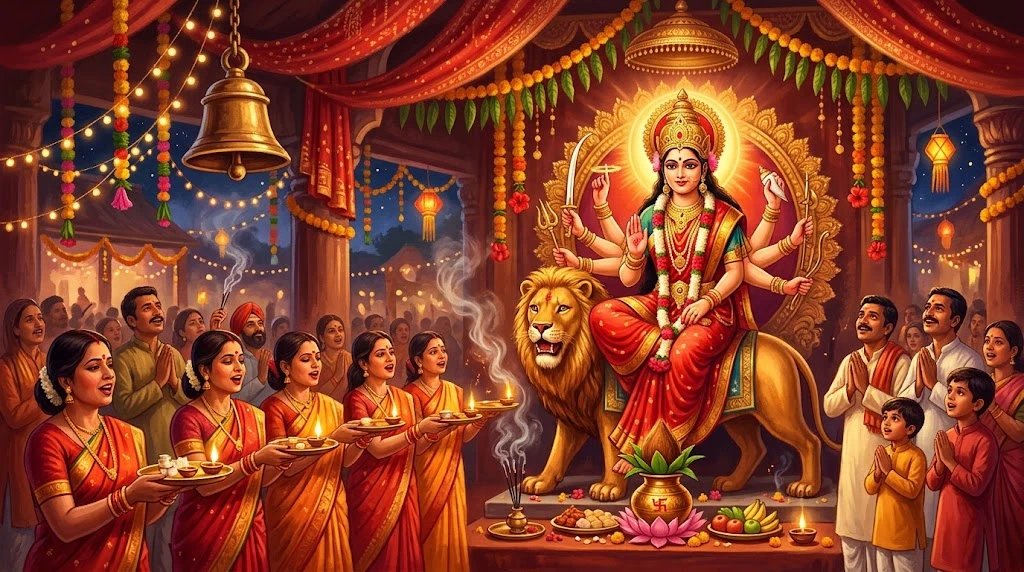
PDF डाउनलोडDownload PDF
अम्बे तू है जगदम्बे काली माँ काली और माँ दुर्गा की सबसे अधिक गाई जाने वाली आरतियों में से है। इसमें देवी को एक साथ अम्बे, जगदम्बा, काली और दुर्गा कहकर पुकारा गया है, और भक्त माँ से धन-दौलत नहीं, केवल उनके मन में एक छोटा सा कोना माँगता है। इसका रचयिता ज्ञात नहीं है; यह लोक-परम्परा से चली आई रचना है। नवरात्रि, काली पूजा, माता की चौकी और जागरण में यह लगभग हर जगह गूँजती है।
यहाँ दिया गया पाठ रणधीर प्रकाशन, हरिद्वार के '51 चालीसा संग्रह आरतियों सहित' में छपी 'आरती श्री काली जी की' के अनुसार है। हर पद के नीचे उसका सीधा अर्थ है, ताकि गाते समय शब्दों का भाव भी साथ चले। साइन-इन करके पूरा पाठ PDF में उतारकर आप उसे छाप सकते हैं या परिवार को भेज सकते हैं।
Ambe Tu Hai Jagdambe Kali is one of the most widely sung aartis of Mother Kali and Mother Durga. It calls the Goddess Ambe, Jagdamba, Kali and Durga in a single breath, and the devotee asks her not for wealth but only for a small corner in her heart. The author is not known; it has come down through popular tradition. It is heard almost everywhere at Navratri, at Kali Puja, at mata ki chauki gatherings and at night-long jagrans.
The text below follows 'Aarti Shri Kali Ji Ki' as printed in '51 Chalisa Sangrah Artiyon Sahit' from Randhir Prakashan, Haridwar. Under each stanza is a plain meaning, so the sense of the words travels with the singing. After signing in you can download the same text as a PDF to print or to send to family.
पाठThe text
टेकRefrain
अम्बे तू है जगदम्बे काली जय दुर्गे खप्पर वाली, तेरे ही गुन गायें भारती। ओ मैया हम सब उतारें तेरी आरती।
हे अम्बे, तू ही जगदम्बा (जगत की माता) और काली है; हे खप्पर (कपाल-पात्र) धारण करने वाली दुर्गा, तेरी जय हो। सारी भारती (भारत-भूमि और उसकी वाणी) तेरे ही गुण गाती है; हे मैया, हम सब तेरी आरती उतारते हैं।O Ambe, you are Jagdamba, the mother of the world, and you are Kali; victory to you, Durga, who carries the khappar, the skull-bowl. All of Bharati, the land and its voice, sings only your praise; O Mother, all of us wave the aarti lamp before you.
पदVerse 1
माता तेरे भक्त जनों पर भीड़ पड़ी है भारी। दानव दल पर टूट पड़ो माँ करके सिंह सवारी। सौ सौ सिंहों से बलशाली अष्ट भुजाओं वाली। दुखियों के दुःख को निवारती, ओ मैया हम सब उतारें तेरी आरती।
हे माता, तेरे भक्तों पर भारी संकट आ पड़ा है; सिंह पर सवार होकर दानवों की सेना पर टूट पड़ो। तू सौ-सौ सिंहों से भी अधिक बलवान है, आठ भुजाओं वाली है, और दुखियों का दुःख दूर करती है; हे मैया, हम सब तेरी आरती उतारते हैं।Mother, a heavy trouble has fallen on your devotees; ride out on your lion and fall upon the army of demons. You are stronger than hundreds upon hundreds of lions, you have eight arms, and you take away the sorrow of the suffering; O Mother, all of us wave the aarti lamp before you.
पदVerse 2
मां बेटे का इस जग में है बड़ा ही निर्मल नाता। पूत कपूत सुने हैं पर ना माता सुनी कुमाता। सब पर करुणा दरसाने वाली अमृत बरसाने वाली। दुखियों के दुख को निवारती, ओ मैया हम सब उतारें तेरी आरती।
इस संसार में माँ और बेटे का नाता सबसे निर्मल है। बेटे के कपूत (बुरी राह पर गया हुआ) होने की बात तो सुनी है, पर माता कभी कुमाता हुई, यह किसी ने नहीं सुना। तू सब पर करुणा दिखाने वाली, अमृत बरसाने वाली और दुखियों का दुख दूर करने वाली है; हे मैया, हम सब तेरी आरती उतारते हैं।In this world the bond between a mother and her child is the purest of all. People have heard of a son who goes astray, but no one has ever heard of a mother who turns against her child. You show compassion to all, you pour down nectar, and you take away the sorrow of the suffering; O Mother, all of us wave the aarti lamp before you.
पदVerse 3
नहीं मांगते धन और दौलत ना चांदी ना सोना। हम तो मांगते तेरे मन का एक छोटा सा कोना। सबकी बिगड़ी बनाने वाली लाज बचाने वाली, सतियों के सत को संवारती, ओ मैया हम सब उतारें तेरी आरती।
हम तुझसे धन-दौलत, चाँदी या सोना नहीं माँगते; हम तो तेरे मन का बस एक छोटा सा कोना माँगते हैं। तू सबका बिगड़ा काम बनाने वाली, लाज बचाने वाली और सती (पतिव्रता, सदाचारी) स्त्रियों के सत (सत्य और शील) को सँवारने वाली है; हे मैया, हम सब तेरी आरती उतारते हैं।We do not ask you for wealth and riches, nor for silver or gold; we ask only for a small corner of your heart. You set right what has gone wrong for everyone, you guard our honour, and you uphold the virtue of faithful, upright women; O Mother, all of us wave the aarti lamp before you.
आरती कैसे करेंHow the aarti is done
आरती पूजा का अन्तिम चरण है। स्नान करके पूजा-स्थान साफ़ करें और माँ काली या माँ दुर्गा के चित्र के सामने चौकी पर लाल वस्त्र बिछाएँ। घी या सरसों के तेल का दीपक जलाएँ, लाल फूल (विशेषकर गुड़हल), अक्षत, कुमकुम और प्रसाद अर्पित करें। पहले गणेश जी को प्रणाम करें।
फिर थाली में दीपक या कपूर रखकर, घंटी बजाते हुए यह आरती गाएँ और थाली को घड़ी की दिशा में घुमाएँ। छपे पाठ में आरम्भ की दो पंक्तियाँ एक ही बार दी गई हैं और हर पद 'ओ मैया हम सब उतारें तेरी आरती' पर समाप्त होता है; गाते समय प्रायः हर पद के बाद आरम्भ की पंक्तियाँ सब मिलकर दोहराते हैं।
आरती के बाद थाली सब उपस्थित लोगों के सामने ले जाई जाती है; हर कोई ज्योति पर हाथ फेरकर आँखों और सिर से लगाता है। अन्त में प्रसाद बाँटें। माता की चौकी या जागरण में यह आरती प्रायः ढोलक और ताली के साथ ऊँचे स्वर में गाई जाती है।
Aarti is the last step of the puja. Bathe, clean the place of worship, and spread a red cloth on a low stool before the picture of Mother Kali or Mother Durga. Light a lamp of ghee or mustard oil and offer red flowers (hibiscus above all), rice grains, kumkum and prasad. Bow to Ganesha first.
Then place the lamp or camphor on a plate, ring the bell, sing this aarti and move the plate clockwise before the Goddess. The printed text gives the two opening lines only once, and every stanza ends with 'O Maiya hum sab utarein teri aarti'; in singing, everyone usually joins in the opening lines again after each stanza.
When the aarti ends, the plate is carried to everyone present; each person passes the hands over the flame and touches them to the eyes and the head. Then the prasad is shared. At a mata ki chauki or a jagran this aarti is usually sung aloud to the dholak and clapping.
महत्वMeaning
यह आरती देवी के दो रूपों को एक साथ देखती है: एक ओर वह खप्पर धारण करने वाली, आठ भुजाओं वाली, सिंह पर सवार योद्धा है जो दानवों की सेना पर टूट पड़ती है; दूसरी ओर वह माँ है जो अमृत बरसाती है और सब पर करुणा करती है। काली और दुर्गा यहाँ दो देवियाँ नहीं, एक ही जगदम्बा के नाम हैं।
आरती का मध्य पद इसका हृदय है: बेटा कपूत हो सकता है, पर माता कभी कुमाता नहीं होती। इसी भरोसे पर अन्तिम पद में भक्त धन, चाँदी और सोना छोड़कर केवल माँ के मन में एक छोटा सा कोना माँगता है। अर्थात् इस आरती की माँग वस्तु नहीं, सम्बन्ध है।
माँ को सबकी बिगड़ी बनाने वाली, लाज बचाने वाली और सदाचार की रक्षा करने वाली कहा गया है। इसीलिए संकट, भय और अपमान की घड़ी में लोग इस आरती से माँ को पुकारते हैं।
The aarti holds two faces of the Goddess together. On one side she is the warrior with the skull-bowl and eight arms, riding her lion and falling upon the demon army; on the other she is the mother who pours down nectar and shows compassion to all. Kali and Durga are not two goddesses here but two names of the one Jagdamba.
The middle stanza is its heart: a son may go astray, but a mother never turns against her child. On that trust, in the last stanza the devotee sets aside wealth, silver and gold and asks only for a small corner in the Mother's heart. What this aarti asks for, that is, is not a thing but a bond.
The Mother is called the one who sets right what has gone wrong for everyone, who guards honour and who upholds virtue. That is why people call on her with this aarti in times of trouble, fear and disgrace.
कब पढ़ेंWhen to read
नवरात्रि के नौ दिन सुबह और शाम की पूजा के अन्त में, काली पूजा और दीपावली की रात, अमावस्या को, और शुक्रवार, मंगलवार या शनिवार की देवी-पूजा में। माता की चौकी और जागरण में भी यह आरती गाई जाती है।At the end of the morning and evening puja through the nine days of Navratri, on the night of Kali Puja and Diwali, on Amavasya, and in the worship of the Goddess on Fridays, Tuesdays or Saturdays. It is also sung at mata ki chauki gatherings and jagrans.
कुंडली मेंIn your kundli
ज्योतिष में माँ काली राहु और शनि की अधिष्ठात्री मानी जाती हैं। राहु की महादशा या अन्तर्दशा में, कुंडली में राहु के लग्न, चतुर्थ, अष्टम या द्वादश भाव में होने पर, कालसर्प दोष में, और शनि की साढ़ेसाती या ढैया में काली उपासना और यह आरती बताई जाती है। भय, भ्रम और अचानक आए संकट के समय भी देवी की आरती का विधान है। अपनी कुंडली में राहु और शनि की स्थिति और चल रही दशा इसी साइट पर देखी जा सकती है।In Jyotish Mother Kali presides over Rahu and Saturn. The worship of Kali with this aarti is the usual advice in a Rahu mahadasha or antardasha, when Rahu sits in the lagna or in the fourth, eighth or twelfth house, in Kala Sarpa dosha, and during Saturn's sade sati or dhaiya. The aarti of the Goddess is also prescribed in times of fear, confusion and sudden trouble. You can check where Rahu and Saturn stand in your own kundli, and which dasha is running, on this site.
ग्रह: Grahas: राहुRahu, शनिSaturn
अपनी कुंडली में देखेंCheck it in your kundliप्रश्नोत्तरQuestions people ask
- अम्बे तू है जगदम्बे काली आरती कब गानी चाहिए?When should Ambe Tu Hai Jagdambe Kali be sung?
- नवरात्रि में सुबह-शाम की पूजा के अन्त में, काली पूजा और दीपावली की रात, और शुक्रवार, मंगलवार या शनिवार की देवी-पूजा में इसका विशेष महत्व है। जो नित्य देवी की पूजा करते हैं, वे इसे रोज़ संध्या को दीपक जलाकर भी गा सकते हैं।It has special value at the end of the morning and evening puja in Navratri, on Kali Puja and Diwali night, and in the worship of the Goddess on Fridays, Tuesdays or Saturdays. Those who worship the Goddess every day can sing it each evening when the lamp is lit.
- यह आरती माँ काली की है या माँ दुर्गा की?Is this aarti to Kali or to Durga?
- दोनों की। आरती की पहली ही पंक्ति में देवी को अम्बे, जगदम्बे, काली और दुर्गा कहा गया है। छपी पोथी में इसका शीर्षक 'आरती श्री काली जी की' है, पर नवरात्रि में दुर्गा पूजा में भी यही आरती गाई जाती है।Both. The very first line calls the Goddess Ambe, Jagdambe, Kali and Durga. The printed collection titles it 'Aarti Shri Kali Ji Ki', yet the same aarti is sung in the Durga puja of Navratri.
- काली माता की आरती गाने से क्या लाभ होता है?What is the benefit of singing the Kali aarti?
- आरती स्वयं माँ को दुखियों का दुख दूर करने वाली, सबकी बिगड़ी बनाने वाली और लाज बचाने वाली कहती है। परम्परा में इसे भय, संकट और शत्रु-बाधा के समय माँ की शरण लेने के लिए गाया जाता है; इसका मूल भाव माँ से धन नहीं, उनका स्नेह माँगना है।The aarti itself calls the Mother the one who removes the sorrow of the suffering, sets right what has gone wrong and guards honour. By tradition it is sung to take refuge in her in times of fear, trouble and enmity; its heart is to ask the Mother not for wealth but for her love.
- काली माता की आरती के नियम क्या हैं?What are the rules for the Kali aarti?
- स्नान करके स्वच्छ वस्त्र पहनें, पूजा-स्थान साफ़ रखें, दीपक जलाएँ और पहले गणेश जी को प्रणाम करें। आरती खड़े होकर, घंटी बजाते हुए, थाली घड़ी की दिशा में घुमाकर गाई जाती है। माँ को लाल फूल प्रिय हैं; आरती के बाद ज्योति सब पर फेरें और प्रसाद बाँटें।Bathe and wear clean clothes, keep the place of worship clean, light a lamp and bow to Ganesha first. The aarti is sung standing, with the bell ringing and the plate moving clockwise. Red flowers are dear to the Mother; afterwards pass the flame to everyone present and share the prasad.
साथ में पढ़ेंRead alongside
 चालीसाChalisas
श्री काली चालीसा
Kali Chalisa
माँ काली की चालीस चौपाइयाँ, अर्थ सहितForty verses to Mother Kali, with the meaning of every line
 आरतीAartis
मंगल की सेवा सुन मेरी देवा
Mangal Ki Seva Sun Meri Deva
श्रीज्वाला-काली देवी की आरती, गीता प्रेस के पाठ से, हर पद के अर्थ सहितThe aarti of Jwala-Kali Devi in the Gita Press reading, with the meaning of every stanza
 चालीसाChalisas
श्री दुर्गा चालीसा
Durga Chalisa
माँ दुर्गा की चालीसा, गीता प्रेस के पाठ से, हर चौपाई के अर्थ सहितThe Chalisa of Mother Durga in the Gita Press reading, with the meaning of every verse
 आरतीAartis
जय अम्बे गौरी
Jai Ambe Gauri
माँ दुर्गा (अम्बे) की आरती, शिवानन्द स्वामी रचित, अर्थ सहितThe aarti of Durga as Mother Ambe, sung by Shivanand Swami, with the meaning of every stanza