दुर्गा कवच (देव्याः कवचम्)
Durga Kavach (Devi Kavacham)
श्रीदुर्गासप्तशती का पहला अंग: ब्रह्मा द्वारा मार्कण्डेय को सुनाया गया देवी-कवच, गीता प्रेस के पाठ से, हर श्लोक के अर्थ सहितThe first limb of the Durga Saptashati: the Devi's armour as Brahma told it to Markandeya, in the Gita Press text, with the meaning of every shloka
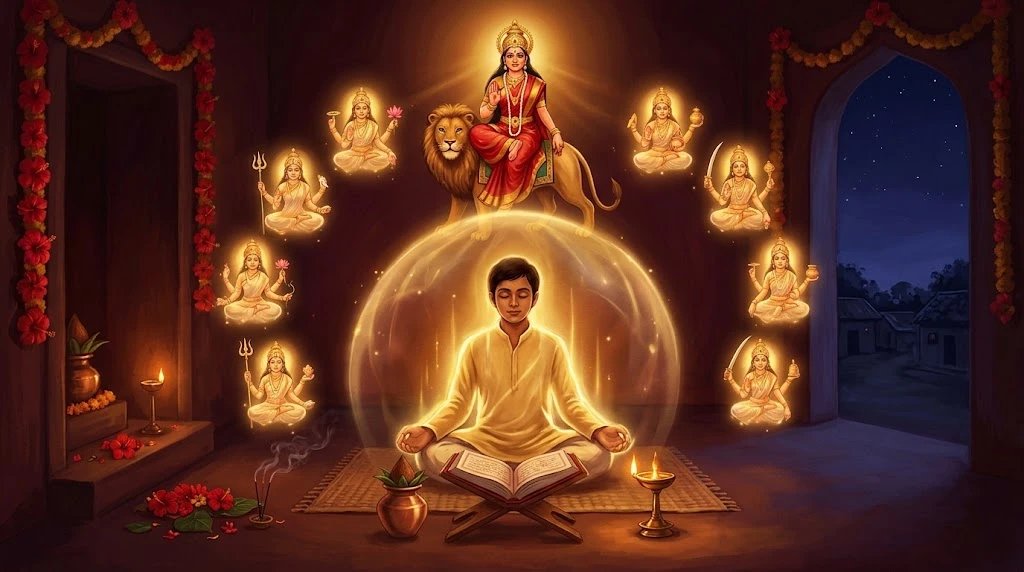
PDF डाउनलोडDownload PDF
दुर्गा कवच, जिसे 'देव्याः कवचम्' या चण्डी-कवच भी कहते हैं, श्रीदुर्गासप्तशती के पाठ से पहले पढ़ा जाने वाला पहला अंग है; इसके बाद अर्गला और कीलक आते हैं और फिर सप्तशती के तेरह अध्याय। सप्तशती का मूल पाठ मार्कण्डेय पुराण का देवी-माहात्म्य है, पर यह कवच उन अध्यायों में नहीं है: कई संस्करणों की पुष्पिका इसे वाराह पुराण का बताती है, और गीता प्रेस की प्रति में स्रोत-ग्रन्थ का नाम नहीं है। इसके रचयिता ज्ञात नहीं हैं; ग्रन्थ के भीतर यह मार्कण्डेय मुनि के प्रश्न पर ब्रह्मा जी का दिया हुआ उपदेश है।
कवच का अर्थ है ढाल या बख्तर। 56 श्लोकों में पहले नवदुर्गा और सात माताओं का वर्णन है, फिर दसों दिशाओं से लेकर सिर, आँख, कण्ठ, हृदय, पैरों के तलवों, प्राणों, मन और परिवार तक, हर अंग की रक्षा के लिए एक-एक देवी का नाम लिया गया है, और अन्त में फलश्रुति है। लोग इसे भय, रोग और संकट से रक्षा की भावना से, नवरात्रि में और सप्तशती-पाठ के आरम्भ में पढ़ते हैं। इस पृष्ठ पर पूरा पाठ गीता प्रेस की छपी प्रति के अनुसार है, हर श्लोक के नीचे सरल अर्थ है जिसमें देवी और अंग का नाम है, और साइन-इन के बाद पूरा पाठ मुफ्त PDF में उतारा जा सकता है।
The Durga Kavach, also called Devyah Kavacham or the Chandi Kavach, is the first of the limbs (angas) read before the Durga Saptashati; the Argala and the Kilaka follow it, and then the thirteen chapters of the Saptashati itself. The core of the Saptashati is the Devi Mahatmya of the Markandeya Purana, but this Kavach is not part of those chapters: the colophon in several editions assigns it to the Varaha Purana, and the Gita Press copy names no source. Its author is not known; within the text it is Brahma's teaching, given in answer to the sage Markandeya.
Kavach means a shield or armour. Its 56 shlokas first name the nine Durgas and the seven Mothers, then call on one goddess after another to guard the ten directions and every part of the body, from the head, eyes and throat to the heart, the soles of the feet, the breath, the mind and the household, and close with the fruit of the reading. People read it for protection from fear, illness and danger, in Navratri and at the start of a Saptashati recitation. This page gives the full text as printed by Gita Press, a plain meaning under every shloka naming the goddess and the part she guards, and, after sign-in, a free PDF of the whole text.
पाठThe text
पदVerse
ॐ अस्य श्रीचण्डीकवचस्य ब्रह्मा ऋषिः, अनुष्टुप् छन्दः, चामुण्डा देवता, अङ्गन्यासोक्तमातरो बीजम्, दिग्बन्धदेवतास्तत्त्वम्, श्रीजगदम्बाप्रीत्यर्थे सप्तशतीपाठाङ्गत्वेन जपे विनियोगः।
यह विनियोग है, जो पाठ से पहले बोला जाता है: इस श्रीचण्डी-कवच के ऋषि ब्रह्मा हैं, छन्द अनुष्टुप् है और देवता चामुण्डा हैं; अंगन्यास में कही गई माताएँ (मातृकाएँ) इसका बीज हैं और दिग्बन्ध के देवता इसका तत्त्व। जगदम्बा की प्रसन्नता के लिए, सप्तशती-पाठ के अंग के रूप में, इसका जप किया जाता है।This is the viniyoga, said before the reading: the seer of this Chandi Kavach is Brahma, its metre is anushtup and its deity is Chamunda; the Mothers named in the anga-nyasa are its seed (bija) and the deities who bind the directions are its essence (tattva). It is recited to please Jagadamba, the Mother of the world, as a limb of the Saptashati reading.
पदVerse
ॐ नमश्चण्डिकायै॥
ॐ, चण्डिका देवी को नमस्कार। यह कवच के आरम्भ का नमस्कार-मन्त्र है।Om, salutation to Goddess Chandika. This is the salutation that opens the Kavach.
पदVerse 1
मार्कण्डेय उवाच ॐ यद्गुह्यं परमं लोके सर्वरक्षाकरं नृणाम्। यन्न कस्यचिदाख्यातं तन्मे ब्रूहि पितामह॥
मार्कण्डेय मुनि ब्रह्मा जी से पूछते हैं: हे पितामह, संसार में जो परम गुप्त है, जो मनुष्यों की हर प्रकार से रक्षा करता है और जिसे आपने अब तक किसी को नहीं बताया, वह मुझे बताइए।The sage Markandeya asks Brahma: O Grandfather (Pitamaha), tell me that which is most secret in the world, which protects people in every way, and which you have told to no one.
पदVerse 2
ब्रह्मोवाच अस्ति गुह्यतमं विप्र सर्वभूतोपकारकम्। देव्यास्तु कवचं पुण्यं तच्छृणुष्व महामुने॥
ब्रह्मा जी बोले: हे विप्र (ब्राह्मण), ऐसा एक अत्यन्त गुप्त और सब प्राणियों का उपकार करने वाला साधन है, देवी का पवित्र कवच। हे महामुनि, उसे सुनो।Brahma said: O vipra (brahmin), there is something most secret that serves the good of all beings: the holy armour (kavach) of the Devi. Hear it, great sage.
पदVerse 3
प्रथमं शैलपुत्री च द्वितीयं ब्रह्मचारिणी। तृतीयं चन्द्रघण्टेति कूष्माण्डेति चतुर्थकम्॥
देवी के नौ रूपों में पहली शैलपुत्री हैं, दूसरी ब्रह्मचारिणी, तीसरी चन्द्रघण्टा और चौथी कूष्माण्डा।Of the Devi's nine forms, the first is Shailaputri, the second Brahmacharini, the third Chandraghanta and the fourth Kushmanda.
पदVerse 4
पञ्चमं स्कन्दमातेति षष्ठं कात्यायनीति च। सप्तमं कालरात्रीति महागौरीति चाष्टमम्॥
पाँचवीं स्कन्दमाता हैं, छठी कात्यायनी, सातवीं कालरात्रि और आठवीं महागौरी।The fifth is Skandamata, the sixth Katyayani, the seventh Kalaratri and the eighth Mahagauri.
पदVerse 5
नवमं सिद्धिदात्री च नवदुर्गाः प्रकीर्तिताः। उक्तान्येतानि नामानि ब्रह्मणैव महात्मना॥
नौवीं सिद्धिदात्री हैं; ये नवदुर्गा कहलाती हैं। ये नाम स्वयं महात्मा ब्रह्मा ने कहे हैं।The ninth is Siddhidatri; together they are called the Navadurga, the nine Durgas. These names were spoken by the great-souled Brahma himself.
पदVerse 6
अग्निना दह्यमानस्तु शत्रुमध्ये गतो रणे। विषमे दुर्गमे चैव भयार्ताः शरणं गताः॥
जो आग में जल रहा हो, युद्ध में शत्रुओं के बीच घिर गया हो, या विषम और दुर्गम (कठिन, पहुँच से बाहर) स्थान में फँसा हो, ऐसे भयभीत लोग जो देवी की शरण में आते हैं,Those who are caught in fire, surrounded by enemies in battle, or trapped in rough and impassable (durgam) places, who in their fear take refuge in the Devi,
पदVerse 7
न तेषां जायते किंचिदशुभं रणसंकटे। नापदं तस्य पश्यामि शोकदुःखभयं न हि॥
उनका युद्ध के संकट में भी कोई अशुभ नहीं होता। ब्रह्मा कहते हैं: मैं ऐसे व्यक्ति पर कोई आपदा नहीं देखता, न शोक, न दुःख, न भय।come to no harm even in the crisis of battle. Brahma says: I see no calamity for such a person, no grief, no sorrow, no fear.
पदVerse 8
यैस्तु भक्त्या स्मृता नूनं तेषां वृद्धिः प्रजायते। ये त्वां स्मरन्ति देवेशि रक्षसे तान्न संशयः॥
जिन्होंने भक्ति से देवी का स्मरण किया, उनकी निश्चय ही वृद्धि (उन्नति) होती है। हे देवेशि (देवताओं की स्वामिनी), जो आपका स्मरण करते हैं, उनकी आप रक्षा करती हैं, इसमें संशय नहीं।Those who remember the Devi with devotion surely prosper (vriddhi). O Deveshi, queen of the gods, you protect those who remember you; of this there is no doubt.
पदVerse 9
प्रेतसंस्था तु चामुण्डा वाराही महिषासना। ऐन्द्री गजसमारूढा वैष्णवी गरुडासना॥
अब सात माताओं के रूप: चामुण्डा प्रेत (शव) पर विराजती हैं, वाराही भैंसे पर, ऐन्द्री (इन्द्र की शक्ति) हाथी पर और वैष्णवी (विष्णु की शक्ति) गरुड़ पर।Now the forms of the Mothers: Chamunda sits on a corpse (preta), Varahi on a buffalo, Aindri (the power of Indra) on an elephant, and Vaishnavi (the power of Vishnu) on Garuda.
पदVerse 10
माहेश्वरी वृषारूढा कौमारी शिखिवाहना। लक्ष्मीः पद्मासना देवी पद्महस्ता हरिप्रिया॥
माहेश्वरी (शिव की शक्ति) बैल पर सवार हैं, कौमारी (कार्तिकेय की शक्ति) का वाहन मोर (शिखी) है, और लक्ष्मी देवी कमल पर बैठी, हाथ में कमल लिए, हरि (विष्णु) की प्रिया हैं।Maheshvari (the power of Shiva) rides a bull, Kaumari (the power of Kartikeya) has the peacock (shikhi) as her mount, and Goddess Lakshmi, seated on a lotus with a lotus in her hand, is the beloved of Hari (Vishnu).
पदVerse 11
श्वेतरूपधरा देवी ईश्वरी वृषवाहना। ब्राह्मी हंससमारूढा सर्वाभरणभूषिता॥
ईश्वरी देवी श्वेत रूप धारण किए बैल पर सवार हैं, और ब्राह्मी (ब्रह्मा की शक्ति) हंस पर विराजमान हैं, सब आभूषणों से सजी।Goddess Ishvari, white in form, rides a bull, and Brahmi (the power of Brahma) is mounted on a swan, adorned with every ornament.
पदVerse 12
इत्येता मातरः सर्वाः सर्वयोगसमन्विताः। नानाभरणशोभाढ्या नानारत्नोपशोभिताः॥
ये सब माताएँ सब प्रकार की योग-शक्तियों से युक्त हैं, अनेक आभूषणों की शोभा से भरी हैं और अनेक रत्नों से सुशोभित हैं।All these Mothers are endowed with every yogic power, rich in the splendour of many ornaments and adorned with many jewels.
पदVerse 13
दृश्यन्ते रथमारूढा देव्यः क्रोधसमाकुलाः। शङ्खं चक्रं गदां शक्तिं हलं च मुसलायुधम्॥
ये देवियाँ क्रोध से भरी, रथों पर सवार दिखाई देती हैं; उनके हाथों में शंख, चक्र, गदा, शक्ति (भाला), हल और मूसल नामक आयुध हैं।These goddesses are seen mounted on chariots, full of wrath; in their hands are the conch, the discus, the mace, the shakti spear, the plough and the pestle-club (musala).
पदVerse 14
खेटकं तोमरं चैव परशुं पाशमेव च। कुन्तायुधं त्रिशूलं च शार्ङ्गमायुधमुत्तमम्॥
साथ ही ढाल (खेटक), तोमर (फेंकने का भाला), फरसा, पाश, कुन्त (बरछा), त्रिशूल और उत्तम शार्ङ्ग धनुष भी।And the shield (khetaka), the javelin (tomara), the axe, the noose, the lance (kunta), the trident and the excellent Sharnga bow.
पदVerse 15
दैत्यानां देहनाशाय भक्तानामभयाय च। धारयन्त्यायुधानीत्थं देवानां च हिताय वै॥
दैत्यों के शरीर का नाश करने, भक्तों को अभय देने और देवताओं के हित के लिए वे इस प्रकार आयुध धारण करती हैं।They bear these weapons to destroy the bodies of the daityas, to give fearlessness to devotees, and for the good of the gods.
पदVerse 16
नमस्तेऽस्तु महारौद्रे महाघोरपराक्रमे। महाबले महोत्साहे महाभयविनाशिनि॥
हे महारौद्रा (अत्यन्त उग्र), महान और भयंकर पराक्रम वाली, महाबली, महान उत्साह वाली और बड़े-बड़े भयों का नाश करने वाली देवी, आपको नमस्कार है।Salutation to you, Devi, most fierce (maha-raudra), of great and terrible valour, mighty, of great vigour, destroyer of great fears.
पदVerse 17
त्राहि मां देवि दुष्प्रेक्ष्ये शत्रूणां भयवर्धिनि। प्राच्यां रक्षतु मामैन्द्री आग्नेय्यामग्निदेवता॥
हे देवि, जिनकी ओर शत्रु देख भी नहीं पाते (दुष्प्रेक्ष्या) और जो शत्रुओं का भय बढ़ाती हैं, मेरी रक्षा कीजिए। पूर्व दिशा में ऐन्द्री मेरी रक्षा करें और आग्नेय कोण (दक्षिण-पूर्व) में अग्निदेवता (अग्नि की शक्ति)।Protect me, Devi, you whom enemies cannot bear to look upon (dushprekshya), who increase the fear of foes. In the east may Aindri guard me, and in the south-east (agneya) Agnidevata, the power of Agni.
पदVerse 18
दक्षिणेऽवतु वाराही नैर्ऋत्यां खड्गधारिणी। प्रतीच्यां वारुणी रक्षेद् वायव्यां मृगवाहिनी॥
दक्षिण में वाराही रक्षा करें, नैर्ऋत्य कोण (दक्षिण-पश्चिम) में खड्गधारिणी (तलवार धारण करने वाली), पश्चिम में वारुणी (वरुण की शक्ति) और वायव्य कोण (उत्तर-पश्चिम) में मृगवाहिनी (हिरण पर सवार देवी)।In the south may Varahi guard me, in the south-west (nairritya) Khadgadharini, the sword-bearer, in the west Varuni (the power of Varuna), and in the north-west (vayavya) Mrigavahini, who rides the deer.
पदVerse 19
उदीच्यां पातु कौमारी ऐशान्यां शूलधारिणी। ऊर्ध्वं ब्रह्माणि मे रक्षेदधस्ताद् वैष्णवी तथा॥
उत्तर में कौमारी रक्षा करें, ईशान कोण (उत्तर-पूर्व) में शूलधारिणी (त्रिशूल धारण करने वाली), ऊपर ब्रह्माणी मेरी रक्षा करें और नीचे वैष्णवी।In the north may Kaumari protect me, in the north-east (aishanya) Shuladharini, the trident-bearer; above may Brahmani guard me, and below, Vaishnavi.
पदVerse 20
एवं दश दिशो रक्षेच्चामुण्डा शववाहना। जया मे चाग्रतः पातु विजया पातु पृष्ठतः॥
इस प्रकार शव पर सवार चामुण्डा दसों दिशाओं में रक्षा करें। जया मेरे आगे और विजया मेरे पीछे रक्षा करें।So may Chamunda, who rides a corpse, guard all ten directions. May Jaya protect me in front and Vijaya behind.
पदVerse 21
अजिता वामपार्श्वे तु दक्षिणे चापराजिता। शिखामुद्योतिनी रक्षेदुमा मूर्ध्नि व्यवस्थिता॥
बाईं ओर अजिता और दाईं ओर अपराजिता रक्षा करें। उद्योतिनी (प्रकाश देने वाली) मेरी शिखा (चोटी) की रक्षा करें और उमा मेरे मस्तक पर स्थित होकर रक्षा करें।May Ajita guard my left side and Aparajita my right. May Udyotini, the radiant one, guard my topknot (shikha), and may Uma, seated on my head, protect it.
पदVerse 22
मालाधरी ललाटे च भ्रुवौ रक्षेद् यशस्विनी। त्रिनेत्रा च भ्रुवोर्मध्ये यमघण्टा च नासिके॥
मालाधरी ललाट (माथे) की रक्षा करें, यशस्विनी दोनों भौंहों की, त्रिनेत्रा (तीन नेत्रों वाली) भौंहों के बीच की और यमघण्टा नाक की।May Maladhari, wearer of the garland, guard my forehead, Yashasvini my eyebrows, Trinetra, the three-eyed, the space between the brows, and Yamaghanta my nose.
पदVerse 23
शङ्खिनी चक्षुषोर्मध्ये श्रोत्रयोर्द्वारवासिनी। कपोलौ कालिका रक्षेत्कर्णमूले तु शांकरी॥
शंखिनी दोनों आँखों की रक्षा करें, द्वारवासिनी दोनों कानों की, कालिका दोनों गालों की और शांकरी (शंकर की शक्ति) कानों की जड़ की।May Shankhini guard my eyes, Dvaravasini my ears, Kalika my cheeks, and Shankari (the power of Shankara) the roots of my ears.
पदVerse 24
नासिकायां सुगन्धा च उत्तरोष्ठे च चर्चिका। अधरे चामृतकला जिह्वायां च सरस्वती॥
सुगन्धा नासिका (नथुनों) की रक्षा करें, चर्चिका ऊपर के होंठ की, अमृतकला नीचे के होंठ की और सरस्वती जीभ की।May Sugandha guard my nostrils, Charchika my upper lip, Amritakala my lower lip, and Saraswati my tongue.
पदVerse 25
दन्तान् रक्षतु कौमारी कण्ठदेशे तु चण्डिका। घण्टिकां चित्रघण्टा च महामाया च तालुके॥
कौमारी दाँतों की रक्षा करें, चण्डिका कण्ठ की, चित्रघण्टा गले की घंटी (घण्टिका, कौआ) की और महामाया तालु की।May Kaumari guard my teeth, Chandika my throat, Chitraghanta the uvula (ghantika), and Mahamaya my palate.
पदVerse 26
कामाक्षी चिबुकं रक्षेद् वाचं मे सर्वमङ्गला। ग्रीवायां भद्रकाली च पृष्ठवंशे धनुर्धरी॥
कामाक्षी ठोड़ी की रक्षा करें, सर्वमंगला मेरी वाणी की, भद्रकाली गर्दन की और धनुर्धरी (धनुष धारण करने वाली) रीढ़ की हड्डी (पृष्ठवंश) की।May Kamakshi guard my chin, Sarvamangala my speech, Bhadrakali my neck, and Dhanurdhari, the bow-bearer, my spine (prishthavamsha).
पदVerse 27
नीलग्रीवा बहिःकण्ठे नलिकां नलकूबरी। स्कन्धयोः खड्गिनी रक्षेद् बाहू मे वज्रधारिणी॥
नीलग्रीवा गले के बाहरी भाग की रक्षा करें, नलकूबरी श्वास-नली (नलिका) की, खड्गिनी (तलवार वाली) दोनों कन्धों की और वज्रधारिणी मेरी दोनों भुजाओं की।May Nilagriva guard the outside of my throat, Nalakubari my windpipe (nalika), Khadgini, the sword-bearer, my shoulders, and Vajradharini, who holds the thunderbolt, my arms.
पदVerse 28
हस्तयोर्दण्डिनी रक्षेदम्बिका चाङ्गुलीषु च। नखाञ्छूलेश्वरी रक्षेत्कुक्षौ रक्षेत्कुलेश्वरी॥
दण्डिनी (दण्ड धारण करने वाली) दोनों हाथों की रक्षा करें, अम्बिका उँगलियों की, शूलेश्वरी नखों की और कुलेश्वरी कुक्षि (पेट के पार्श्व) की।May Dandini, who bears the staff, guard my hands, Ambika my fingers, Shuleshvari my nails, and Kuleshvari my belly (kukshi).
पदVerse 29
स्तनौ रक्षेन्महादेवी मनः शोकविनाशिनी। हृदये ललिता देवी उदरे शूलधारिणी॥
महादेवी स्तनों की रक्षा करें, शोकविनाशिनी (शोक मिटाने वाली) मन की, ललिता देवी हृदय की और शूलधारिणी उदर (पेट) की।May Mahadevi guard my breasts, Shokavinashini, the destroyer of grief, my mind, Goddess Lalita my heart, and Shuladharini my abdomen.
पदVerse 30
नाभौ च कामिनी रक्षेद् गुह्यं गुह्येश्वरी तथा। पूतना कामिका मेढ्रं गुदे महिषवाहिनी॥
कामिनी नाभि की रक्षा करें, गुह्येश्वरी गुप्त अंगों की, पूतना और कामिका जननेन्द्रिय (मेढ्र) की और महिषवाहिनी (भैंसे पर सवार देवी) गुदा की।May Kamini guard my navel, Guhyeshvari my private parts, Putana and Kamika the organ of generation (medhra), and Mahishavahini, who rides the buffalo, the anus.
पदVerse 31
कट्यां भगवती रक्षेज्जानुनी विन्ध्यवासिनी। जङ्घे महाबला रक्षेत्सर्वकामप्रदायिनी॥
भगवती कमर की रक्षा करें, विन्ध्यवासिनी (विन्ध्याचल में बसने वाली) घुटनों की, और सब कामनाएँ देने वाली महाबला दोनों पिण्डलियों (जंघा) की।May Bhagavati guard my waist, Vindhyavasini, who dwells on the Vindhya hills, my knees, and Mahabala, giver of every wish, my shanks (jangha).
पदVerse 32
गुल्फयोर्नारसिंही च पादपृष्ठे तु तैजसी। पादाङ्गुलीषु श्री रक्षेत्पादाधस्तलवासिनी॥
नारसिंही (नृसिंह की शक्ति) टखनों की रक्षा करें, तैजसी पैरों के ऊपरी भाग की, श्री पैरों की उँगलियों की और तलवासिनी पैरों के तलवों की।May Narasimhi (the power of Narasimha) guard my ankles, Taijasi the tops of my feet, Shri my toes, and Talavasini, who dwells beneath the feet, my soles.
पदVerse 33
नखान् दंष्ट्राकराली च केशांश्चैवोर्ध्वकेशिनी। रोमकूपेषु कौबेरी त्वचं वागीश्वरी तथा॥
दंष्ट्राकराली (भयानक दाढ़ों वाली) नखों की रक्षा करें, ऊर्ध्वकेशिनी (ऊपर उठे केशों वाली) बालों की, कौबेरी (कुबेर की शक्ति) रोमकूपों की और वागीश्वरी (वाणी की स्वामिनी) त्वचा की।May Damshtrakarali, of the dreadful tusks, guard my nails, Urdhvakeshini, whose hair stands on end, my hair, Kauberi (the power of Kubera) the pores of my skin, and Vagishvari, mistress of speech, my skin.
पदVerse 34
रक्तमज्जावसामांसान्यस्थिमेदांसि पार्वती। अन्त्राणि कालरात्रिश्च पित्तं च मुकुटेश्वरी॥
पार्वती रक्त, मज्जा, वसा (चर्बी), मांस, हड्डियों और मेद की रक्षा करें; कालरात्रि आँतों की और मुकुटेश्वरी पित्त की।May Parvati guard my blood, marrow, fat, flesh, bones and medas; Kalaratri my intestines, and Mukuteshvari my bile (pitta).
पदVerse 35
पद्मावती पद्मकोशे कफे चूडामणिस्तथा। ज्वालामुखी नखज्वालामभेद्या सर्वसंधिषु॥
पद्मावती पद्मकोश (हृदय-कमल) की रक्षा करें, चूडामणि कफ की, ज्वालामुखी नखों की दीप्ति की और अभेद्या (जिसे कोई भेद न सके) शरीर के सब जोड़ों की।May Padmavati guard the lotus-sheath of the heart (padmakosha), Chudamani the phlegm (kapha), Jvalamukhi the lustre of the nails, and Abhedya, the impenetrable, every joint of the body.
पदVerse 36
शुक्रं ब्रह्माणि मे रक्षेच्छायां छत्रेश्वरी तथा। अहंकारं मनो बुद्धिं रक्षेन्मे धर्मधारिणी॥
ब्रह्माणी मेरे शुक्र (वीर्य) की रक्षा करें, छत्रेश्वरी मेरी छाया की, और धर्मधारिणी मेरे अहंकार, मन और बुद्धि की।May Brahmani guard my vital seed (shukra), Chhatreshvari my shadow, and Dharmadharini, upholder of dharma, my ego, mind and intellect.
पदVerse 37
प्राणापानौ तथा व्यानमुदानं च समानकम्। वज्रहस्ता च मे रक्षेत्प्राणं कल्याणशोभना॥
वज्रहस्ता (हाथ में वज्र वाली) मेरे प्राण, अपान, व्यान, उदान और समान, इन पाँचों वायुओं की रक्षा करें, और कल्याणशोभना मेरे प्राणों (जीवन) की।May Vajrahasta, thunderbolt in hand, guard the five vital airs, prana, apana, vyana, udana and samana, and may Kalyanashobhana guard my life itself.
पदVerse 38
रसे रूपे च गन्धे च शब्दे स्पर्शे च योगिनी। सत्त्वं रजस्तमश्चैव रक्षेन्नारायणी सदा॥
योगिनी रस, रूप, गन्ध, शब्द और स्पर्श, इन पाँचों विषयों में मेरी रक्षा करें, और नारायणी सत्त्व, रज और तम, तीनों गुणों की सदा रक्षा करें।May Yogini guard me in taste, form, smell, sound and touch, the five objects of the senses, and may Narayani always guard sattva, rajas and tamas, the three gunas.
पदVerse 39
आयू रक्षतु वाराही धर्मं रक्षतु वैष्णवी। यशः कीर्तिं च लक्ष्मीं च धनं विद्यां च चक्रिणी॥
वाराही मेरी आयु की रक्षा करें, वैष्णवी धर्म की, और चक्रिणी (चक्र धारण करने वाली) यश, कीर्ति, लक्ष्मी (समृद्धि), धन और विद्या की।May Varahi guard my span of life, Vaishnavi my dharma, and Chakrini, who bears the discus, my fame, renown, fortune, wealth and learning.
पदVerse 40
गोत्रमिन्द्राणि मे रक्षेत्पशून्मे रक्ष चण्डिके। पुत्रान् रक्षेन्महालक्ष्मीर्भार्यां रक्षतु भैरवी॥
इन्द्राणी मेरे गोत्र (कुल) की रक्षा करें; हे चण्डिके, मेरे पशुओं की रक्षा कीजिए। महालक्ष्मी मेरे पुत्रों की रक्षा करें और भैरवी मेरी पत्नी की।May Indrani guard my lineage (gotra); O Chandika, protect my cattle. May Mahalakshmi guard my sons and Bhairavi my wife.
पदVerse 41
पन्थानं सुपथा रक्षेन्मार्गं क्षेमकरी तथा। राजद्वारे महालक्ष्मीर्विजया सर्वतः स्थिता॥
सुपथा मेरे रास्ते की रक्षा करें, क्षेमकरी (कुशल करने वाली) मार्ग की, महालक्ष्मी राजद्वार (शासन और दरबार) में, और विजया सब ओर से रक्षा करती हुई स्थित रहें।May Supatha guard my path, Kshemakari, bringer of welfare, my road, Mahalakshmi at the royal court (raja-dvara), and may Vijaya stand guard on every side.
पदVerse 42
रक्षाहीनं तु यत्स्थानं वर्जितं कवचेन तु। तत्सर्वं रक्ष मे देवि जयन्ती पापनाशिनी॥
जो स्थान रक्षा से छूट गया हो और कवच में न आया हो, हे पाप का नाश करने वाली जयन्ती देवी, उन सबकी रक्षा कीजिए।Whatever place has been left unguarded, not covered by this armour, protect all of it, Goddess Jayanti, destroyer of sin.
पदVerse 43
पदमेकं न गच्छेत्तु यदीच्छेच्छुभमात्मनः। कवचेनावृतो नित्यं यत्र यत्रैव गच्छति॥
यहाँ से फलश्रुति आरम्भ होती है: जो अपना शुभ चाहता हो, वह कवच के बिना एक पग भी न चले। कवच से सदा ढका हुआ व्यक्ति जहाँ-जहाँ जाता है,Here the phalashruti, the fruit of the reading, begins: one who wishes their own good should not take a single step without this armour. Whoever goes about always covered by it, wherever they go,
पदVerse 44
तत्र तत्रार्थलाभश्च विजयः सार्वकामिकः। यं यं चिन्तयते कामं तं तं प्राप्नोति निश्चितम्। परमैश्वर्यमतुलं प्राप्स्यते भूतले पुमान्॥
वहाँ-वहाँ उसे धन-लाभ होता है और सब कामनाओं को पूरा करने वाली विजय मिलती है। वह जो-जो कामना मन में सोचता है, उसे निश्चय पाता है, और पृथ्वी पर अतुलनीय परम ऐश्वर्य प्राप्त करता है।there they gain wealth and a victory that fulfils every wish. Whatever desire they hold in mind, they surely obtain, and on this earth they come to supreme and matchless prosperity.
पदVerse 45
निर्भयो जायते मर्त्यः संग्रामेष्वपराजितः। त्रैलोक्ये तु भवेत्पूज्यः कवचेनावृतः पुमान्॥
कवच से ढका हुआ मनुष्य निर्भय हो जाता है, युद्धों में पराजित नहीं होता और तीनों लोकों में पूजनीय होता है।Covered by this armour, a mortal becomes fearless, is not defeated in battles, and is honoured in the three worlds.
पदVerse 46
इदं तु देव्याः कवचं देवानामपि दुर्लभम्। यः पठेत्प्रयतो नित्यं त्रिसन्ध्यं श्रद्धयान्वितः॥
देवी का यह कवच देवताओं के लिए भी दुर्लभ है। जो संयमित रहकर, श्रद्धा के साथ, प्रतिदिन तीनों सन्ध्याओं (प्रातः, मध्याह्न, सायं) में इसका पाठ करता है,This armour of the Devi is hard to obtain even for the gods. Whoever reads it every day with self-restraint and faith, at the three sandhyas (dawn, noon and dusk),
पदVerse 47
दैवी कला भवेत्तस्य त्रैलोक्येष्वपराजितः। जीवेद् वर्षशतं साग्रमपमृत्युविवर्जितः॥
उसे दैवी कला (देवी की शक्ति का अंश) प्राप्त होती है और वह तीनों लोकों में अपराजित रहता है। वह अकाल मृत्यु से रहित होकर सौ वर्ष से भी अधिक जीता है।receives a share of divine power (daivi kala) and stays unconquered in the three worlds. Free of untimely death, they live a hundred years and more.
पदVerse 48
नश्यन्ति व्याधयः सर्वे लूताविस्फोटकादयः। स्थावरं जङ्गमं चैव कृत्रिमं चापि यद्विषम्॥
उसके लूता (मकड़ी के विष से होने वाले चर्म-रोग) और विस्फोटक (फोड़े, चेचक) आदि सब रोग नष्ट हो जाते हैं; स्थावर (वनस्पति और खनिज का), जंगम (जीवों का) और कृत्रिम (बनाया हुआ), हर प्रकार का विष भी।Every disease leaves them, luta (skin eruptions from spider poison), visphotaka (boils and pox) and the rest; and every poison, whether from plants and minerals (sthavara), from creatures (jangama), or made by man (kritrima).
पदVerse 49
अभिचाराणि सर्वाणि मन्त्रयन्त्राणि भूतले। भूचराः खेचराश्चैव जलजाश्चोपदेशिकाः॥
पृथ्वी पर जितने भी अभिचार (किसी के अनिष्ट के लिए किए गए प्रयोग), मन्त्र और यन्त्र हैं, धरती पर, आकाश में और जल में विचरने वाले जीव, और उपदेश से (सिखाकर) किए गए अनिष्ट प्रयोग,All abhichara (rites performed to harm someone), all mantras and yantras turned against one on this earth, the beings that move on land, in the sky and in water, and the harms worked by instruction,
पदVerse 50
सहजा कुलजा माला डाकिनी शाकिनी तथा। अन्तरिक्षचरा घोरा डाकिन्यश्च महाबलाः॥
सहजा (जन्म से साथ आई), कुलजा (कुल से आई) और माला नामक बाधाएँ, डाकिनी, शाकिनी, और आकाश में घूमने वाली भयंकर, बलवान डाकिनियाँ,the afflictions called sahaja (inborn), kulaja (handed down in the family) and mala, the dakinis and shakinis, and the terrible, mighty dakinis who roam the sky,
पदVerse 51
ग्रहभूतपिशाचाश्च यक्षगन्धर्वराक्षसाः। ब्रह्मराक्षसवेतालाः कूष्माण्डा भैरवादयः॥
ग्रह (पकड़ने वाली बाधाएँ), भूत, पिशाच, यक्ष, गन्धर्व, राक्षस, ब्रह्मराक्षस, वेताल, कूष्माण्ड और भैरव आदि,the grahas (seizing spirits), bhutas, pishachas, yakshas, gandharvas, rakshasas, brahmarakshasas, vetalas, kushmandas, bhairavas and the like,
पदVerse 52
नश्यन्ति दर्शनात्तस्य कवचे हृदि संस्थिते। मानोन्नतिर्भवेद् राज्ञस्तेजोवृद्धिकरं परम्॥
ये सब, जिसके हृदय में यह कवच स्थित हो, उसके दर्शन मात्र से नष्ट हो जाते हैं। उसे राजा (शासन) से मान और उन्नति मिलती है; यह कवच तेज को बहुत बढ़ाने वाला है।all these perish at the very sight of one in whose heart this armour is set. Such a person gains honour and advancement from the ruler; the Kavach greatly increases their radiance (tejas).
पदVerse 53
यशसा वर्धते सोऽपि कीर्तिमण्डितभूतले। जपेत्सप्तशतीं चण्डीं कृत्वा तु कवचं पुरा॥
वह यश से बढ़ता है और कीर्ति से सजी इस पृथ्वी पर शोभा पाता है। पहले यह कवच करके फिर सप्तशती चण्डी का जप (पाठ) करना चाहिए।They grow in fame on an earth adorned with their renown. One should first recite this Kavach and then the Saptashati Chandi.
पदVerse 54
यावद्भूमण्डलं धत्ते सशैलवनकाननम्। तावत्तिष्ठति मेदिन्यां संततिः पुत्रपौत्रिकी॥
जब तक पृथ्वी पर्वतों, वनों और जंगलों को धारण किए रहती है, तब तक उसकी पुत्र-पौत्रों की सन्तान-परम्परा धरती पर बनी रहती है।As long as the earth bears its mountains, woods and forests, so long does their line of sons and grandsons endure upon it.
पदVerse 55
देहान्ते परमं स्थानं यत्सुरैरपि दुर्लभम्। प्राप्नोति पुरुषो नित्यं महामायाप्रसादतः॥
देह छूटने पर वह महामाया की कृपा से उस परम धाम को पाता है जो देवताओं के लिए भी दुर्लभ है।At the end of the body, by the grace of Mahamaya, that person reaches the supreme abode, which even the gods find hard to attain.
पदVerse 56
लभते परमं रूपं शिवेन सह मोदते॥ ॐ॥
वह परम रूप पाता है और शिव के साथ आनन्द करता है। ॐ। यहाँ देवी-कवच पूरा होता है।They attain the supreme form and rejoice with Shiva. Om. With this the Devi Kavach is complete.
पाठ विधिHow to read it
सप्तशती-पाठ के साथ पढ़ना हो तो क्रम यह है: पहले कवच, फिर अर्गला स्तोत्र, फिर कीलक, और उसके बाद सप्तशती के अध्याय। कवच के अन्तिम श्लोकों में स्वयं कहा गया है कि पहले कवच करके फिर सप्तशती चण्डी का जप करे। जिनके पास पूरी सप्तशती पढ़ने का समय न हो, वे केवल कवच का पाठ भी करते हैं; यह भी प्रचलित है।
स्नान करके स्वच्छ वस्त्र पहनें, आसन पर बैठें और माँ दुर्गा के चित्र या मूर्ति के सामने दीपक जलाएँ। आरम्भ में विनियोग पढ़ें (चाहें तो हाथ में जल लेकर, अन्त में उसे भूमि पर छोड़ दें), फिर 'ॐ नमश्चण्डिकायै' कहकर श्लोक पढ़ें। संस्कृत कठिन लगे तो धीरे-धीरे, स्पष्ट उच्चारण से पढ़ें; जल्दी में शब्द काटने से अच्छा है कि अर्थ देखते हुए पढ़ा जाए।
नवरात्रि के नौ दिन इसके पाठ का मुख्य समय है, विशेषकर अष्टमी और नवमी। सामान्य दिनों में प्रातः या संध्या को एक बार पढ़ना पर्याप्त है; श्लोक 46 तीनों सन्ध्याओं में पाठ की बात करता है, जो नियम से चलने वाले साधक करते हैं। पाठ के बीच उठना या बात करना ठीक नहीं माना जाता।
If it is read with the Saptashati, the order is: the Kavach first, then the Argala Stotram, then the Kilaka, and after that the chapters of the Saptashati. The closing shlokas of the Kavach say this themselves: recite the Kavach first, then the Saptashati Chandi. Those without time for the whole Saptashati read the Kavach on its own, and that too is common practice.
Bathe, put on clean clothes, sit on a mat and light a lamp before a picture or image of Mother Durga. Begin with the viniyoga (if you like, holding a little water in the right palm and letting it fall to the ground at the end), then say Om Namash Chandikayai and read the shlokas. If the Sanskrit feels difficult, read slowly and pronounce clearly; reading with an eye on the meaning is better than rushing and clipping the words.
The nine days of Navratri are its main season, Ashtami and Navami above all. On ordinary days one reading in the morning or evening is enough; shloka 46 speaks of reading it at all three sandhyas, which those who keep a strict practice follow. Getting up or talking in the middle of the reading is held to be improper.
महत्व और फलMeaning and fruit
कवच का विचार सीधा है: शरीर, मन और जीवन का कोई भाग ऐसा न छूटे जिस पर देवी की दृष्टि न हो। इसलिए यह दिशाओं से आरम्भ होकर सिर से पैर तक जाता है, फिर रक्त, मज्जा और हड्डियों तक, फिर पाँच प्राणों, पाँचों इन्द्रिय-विषयों और तीन गुणों तक, और अन्त में आयु, धर्म, यश, धन, परिवार और रास्ते तक। श्लोक 42 में बचा हुआ सब कुछ जयन्ती देवी को सौंप दिया जाता है। पाठ करने वाला हर अंग का नाम लेते हुए उस पर ध्यान टिकाता है, और यही इसका अनुभव है: देवी की शरण में पूरा अपना-आप।
फलश्रुति (श्लोक 43 से 56) में निर्भयता, रोग और विष से रक्षा, अभिचार और बाधाओं के नाश, यश, सन्तान और अन्त में परम धाम की बात कही गई है। ये परम्परा के कथन हैं, किसी परिणाम का वचन नहीं; श्रद्धा और नियम से किया गया पाठ मन को स्थिर करता है और भय को कम करता है, इतना अनुभव में आता है। रोग में यह पाठ उपचार का साथ है, उसका स्थान नहीं।
The idea of the Kavach is simple: no part of body, mind or life should be left outside the Devi's watch. So it begins with the directions and goes from head to foot, then into the blood, marrow and bones, then to the five vital airs, the five objects of the senses and the three gunas, and at last to life span, dharma, fame, wealth, family and the road one travels. In shloka 42 everything still left over is handed to Goddess Jayanti. The reader rests attention on each part as it is named, and that is the experience of the text: the whole self placed in the Devi's shelter.
The phalashruti (shlokas 43 to 56) speaks of fearlessness, protection from disease and poison, the end of hostile rites and spirits, fame, descendants, and finally the supreme abode. These are the statements of tradition, not a promise of any result; what readers find is that a reading done with faith and regularity steadies the mind and eases fear. In illness the reading goes alongside treatment, never in its place.
नवदुर्गाThe nine Durgas
श्लोक 3 से 5 में देवी के नौ रूप गिनाए गए हैं, जिनकी पूजा नवरात्रि के नौ दिनों में क्रम से होती है। शैलपुत्री पर्वतराज हिमालय की पुत्री, पार्वती हैं। ब्रह्मचारिणी तप में लीन रूप हैं, जिन्होंने शिव को पाने के लिए कठोर तपस्या की। चन्द्रघण्टा के मस्तक पर घण्टे के आकार का अर्धचन्द्र है; यह शान्त होते हुए भी युद्ध के लिए तत्पर रूप है।
कूष्माण्डा वह रूप हैं जिनकी मुस्कान से ब्रह्माण्ड की रचना मानी जाती है। स्कन्दमाता स्कन्द, अर्थात् कार्तिकेय की माता हैं, जो पुत्र को गोद में लिए दिखाई जाती हैं। कात्यायनी ऋषि कात्यायन के आश्रम में प्रकट हुईं और महिषासुर का वध करने वाली मानी जाती हैं।
कालरात्रि देवी का सबसे भयानक, काला रूप है, जो अन्धकार और दुष्टता का नाश करता है, पर भक्तों के लिए शुभ है। महागौरी गौर वर्ण, शान्त और करुणामय रूप हैं। सिद्धिदात्री सब सिद्धियाँ देने वाली हैं। कवच इन नौ नामों से आरम्भ करके बताता है कि रक्षा करने वाली शक्ति एक ही है, जो अलग-अलग रूपों में सामने आती है।
Shlokas 3 to 5 list the Devi's nine forms, worshipped one on each day of Navratri. Shailaputri is the daughter of the mountain king Himalaya, that is, Parvati. Brahmacharini is the form absorbed in tapas, who undertook hard austerities to win Shiva. Chandraghanta wears a bell-shaped half-moon on her brow; she is calm, yet ready for battle.
Kushmanda is the form whose smile is said to have brought the universe into being. Skandamata is the mother of Skanda, that is, Kartikeya, and is shown with her son on her lap. Katyayani appeared at the hermitage of the sage Katyayana and is held to be the slayer of Mahishasura.
Kalaratri is the Devi's darkest and most fearsome form, who destroys darkness and evil but is auspicious to her devotees. Mahagauri is the fair, peaceful and compassionate form. Siddhidatri is the giver of all siddhis, the spiritual attainments. By opening with these nine names the Kavach makes the point that the power that protects is one, appearing in many forms.
कब पढ़ेंWhen to read
नवरात्रि के नौ दिन, विशेषकर अष्टमी और नवमी; सप्तशती-पाठ के आरम्भ में हर बार; और सामान्य दिनों में प्रातः या संध्या को एक बार। मंगलवार, शुक्रवार और अष्टमी तिथि को भी पढ़ा जाता है; भय, यात्रा या कठिन समय में रोज़ का पाठ रखा जाता है।The nine days of Navratri, Ashtami and Navami above all; every time before a Saptashati recitation; and on ordinary days once, morning or evening. It is also read on Tuesdays, Fridays and the Ashtami tithi, and kept as a daily reading in fear, before travel or in a hard period.
कुंडली मेंIn your kundli
ज्योतिष में माँ दुर्गा की उपासना मंगल और राहु, दोनों का उपाय मानी जाती है, और कवच विशेष रूप से रक्षा का पाठ है। राहु की महादशा या अन्तर्दशा में, गोचर में राहु के लग्न या चन्द्र राशि पर आने पर, मंगल के नीच (कर्क) या पीड़ित होने पर, मंगल-राहु की युति (अंगारक योग) में, और जब कुंडली में छठा या आठवाँ भाव पीड़ित हो, यानी शत्रु, रोग, दुर्घटना या अचानक संकट का भय हो, तब दुर्गा कवच का नियमित पाठ बताया जाता है। यह परम्परा का उपाय है, किसी फल का वचन नहीं। अपनी कुंडली में मंगल और राहु की स्थिति और चल रही दशा इसी साइट पर कुंडली बनाकर देखी जा सकती है।In Jyotish the worship of Mother Durga is a remedy for both Mars and Rahu, and the Kavach in particular is a text of protection. Its regular reading is prescribed in a Rahu mahadasha or antardasha, when Rahu transits the lagna or the Moon sign, when Mars is debilitated (in Cancer) or afflicted, for the Mars-Rahu conjunction called Angarak yoga, and when the sixth or eighth house of the kundli is afflicted, that is, when enemies, illness, accidents or sudden trouble are feared. This is a traditional remedy, not a promise of results. You can build your kundli on this site and see where Mars and Rahu stand and which dasha is running.
ग्रह: Grahas: मंगलMars, राहुRahu
अपनी कुंडली में देखेंCheck it in your kundliप्रश्नोत्तरQuestions people ask
- दुर्गा कवच कब पढ़ना चाहिए?When should the Durga Kavach be read?
- नवरात्रि के नौ दिन इसका मुख्य समय है। सप्तशती-पाठ से पहले इसे हर बार पढ़ा जाता है, अर्गला और कीलक के साथ। सामान्य दिनों में प्रातः या संध्या को, स्नान करके, एक बार पढ़ा जा सकता है।Navratri's nine days are its main season. It is read every time before the Saptashati, together with the Argala and the Kilaka. On ordinary days it can be read once, morning or evening, after bathing.
- दुर्गा कवच कितनी बार पढ़ें?How many times should the Durga Kavach be read?
- एक बार का पाठ पर्याप्त है। कवच का श्लोक 46 तीनों सन्ध्याओं (प्रातः, मध्याह्न, सायं) में पाठ की बात करता है, जिसे नियम से साधना करने वाले अपनाते हैं। संख्या से अधिक महत्व नियमितता और शुद्ध उच्चारण का है।One reading is enough. Shloka 46 of the Kavach speaks of reading it at the three sandhyas, dawn, noon and dusk, which those with a regular practice follow. Regularity and clear pronunciation matter more than the count.
- दुर्गा कवच पढ़ने के क्या लाभ हैं?What are the benefits of reading the Durga Kavach?
- परम्परा में इसे रक्षा का पाठ माना गया है: फलश्रुति भय, रोग, विष, शत्रु और बाधाओं से रक्षा, यश और परिवार की वृद्धि की बात करती है। ज्योतिष में यह मंगल और राहु का उपाय है। ये श्रद्धा के कथन हैं; पाठ से मन को स्थिरता और साहस मिलता है, यह अधिकतर पाठक अनुभव करते हैं।Tradition holds it to be a text of protection: its phalashruti speaks of shelter from fear, disease, poison, enemies and hostile forces, and of growth in fame and family. In Jyotish it is a remedy for Mars and Rahu. These are statements of faith; what most readers find is steadiness of mind and courage.
- क्या दुर्गा कवच सप्तशती के बिना अकेले पढ़ सकते हैं?Can the Durga Kavach be read on its own, without the Saptashati?
- हाँ, बहुत से लोग केवल कवच का नित्य पाठ करते हैं। सप्तशती के साथ पढ़ें तो क्रम कवच, अर्गला, कीलक और फिर अध्याय है। पाठ स्नान के बाद, स्वच्छ स्थान पर, आसन पर बैठकर करें और विनियोग से आरम्भ करें।Yes, many people read only the Kavach as a daily practice. With the Saptashati the order is Kavach, Argala, Kilaka and then the chapters. Read after bathing, in a clean place, seated on a mat, and begin with the viniyoga.
साथ में पढ़ेंRead alongside
 चालीसाChalisas
श्री दुर्गा चालीसा
Durga Chalisa
माँ दुर्गा की चालीसा, गीता प्रेस के पाठ से, हर चौपाई के अर्थ सहितThe Chalisa of Mother Durga in the Gita Press reading, with the meaning of every verse
 आरतीAartis
जय अम्बे गौरी
Jai Ambe Gauri
माँ दुर्गा (अम्बे) की आरती, शिवानन्द स्वामी रचित, अर्थ सहितThe aarti of Durga as Mother Ambe, sung by Shivanand Swami, with the meaning of every stanza
 चालीसाChalisas
श्री विन्ध्येश्वरी चालीसा
Vindhyeshwari Chalisa
विन्ध्याचल की देवी विन्ध्यवासिनी की स्तुति, हर चौपाई के अर्थ सहितThe hymn to Vindhyavasini, the Devi of Vindhyachal, with the meaning of every verse
 चालीसाChalisas
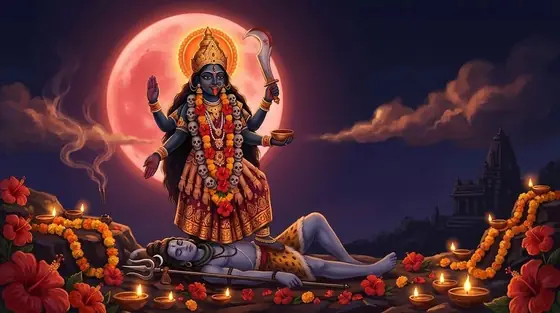
श्री काली चालीसा
Kali Chalisa
माँ काली की चालीस चौपाइयाँ, अर्थ सहितForty verses to Mother Kali, with the meaning of every line
 आरतीAartis
अम्बे तू है जगदम्बे काली
Ambe Tu Hai Jagdambe Kali
आरती श्री काली जी की, छपी पोथी के पाठ से, हर पद के अर्थ सहितThe aarti of Mother Kali from a printed collection, with the meaning of every stanza