श्रीपञ्चमुखहनुमत्कवचम् (पंचमुखी हनुमान कवच)
Panchmukhi Hanuman Kavach (Shri Panchamukha Hanumat Kavacham)
सुदर्शन संहिता का पंचमुखी हनुमान कवच: ध्यान, न्यास, पाँचों मुखों के मन्त्र और फलश्रुति, निर्णय सागर प्रेस के पाठ से, हर अंश के अर्थ सहितThe five-faced Hanuman armour of the Sudarshana Samhita: dhyana, nyasa, the mantras of the five faces and the phalashruti, from the Nirnay Sagar text, with the meaning of every part
PDF डाउनलोडDownload PDF
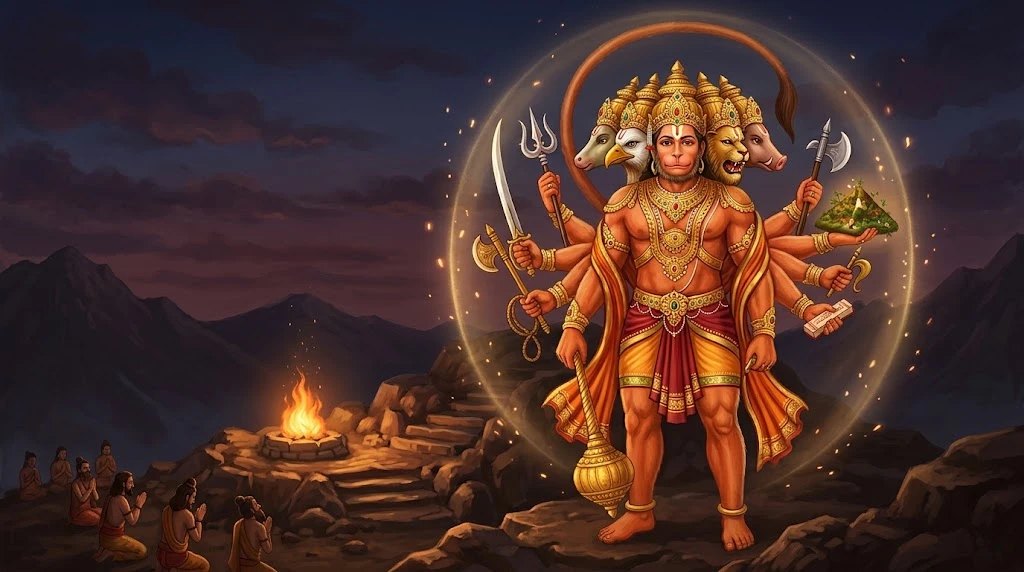
श्रीपञ्चमुखहनुमत्कवचम् हनुमान जी के पाँच मुखों वाले रूप का कवच है: पूर्व में वानर, दक्षिण में नरसिंह, पश्चिम में गरुड़, उत्तर में वराह और ऊपर हयग्रीव (अश्व) का मुख। इसकी पुष्पिका इसे सुदर्शन संहिता का बताती है और कहती है कि यह श्रीरामचन्द्र और सीता द्वारा कहा गया है; इसलिए परम्परा से इसे सुदर्शन संहिता का अंश माना जाता है। ग्रन्थ के भीतर ध्यान के श्लोक गरुड़ जी के मुख से कहे गए हैं। इसके रचयिता का नाम ज्ञात नहीं है।
यह साधारण स्तोत्र से अलग है: इसमें श्लोकों के साथ लम्बे गद्य मन्त्र-खण्ड हैं, यानी दो विनियोग, करन्यास और अंगन्यास, दिग्बन्ध, पाँचों मुखों के अलग-अलग मन्त्र और अन्त में फलश्रुति। लोग इसे भय, बाधा, शत्रु-भय और रोग के समय रक्षा के भाव से, विशेषकर मंगलवार और शनिवार को पढ़ते हैं। इस पृष्ठ पर पूरा पाठ निर्णय सागर प्रेस के बृहत्स्तोत्ररत्नाकर के छपे पाठ के अनुसार है, हर श्लोक और मन्त्र-खण्ड के नीचे सरल अर्थ है, और साइन-इन के बाद पूरा पाठ मुफ्त PDF में उतारा जा सकता है।
The Shri Panchamukha Hanumat Kavacham is the armour-hymn of Hanuman's five-faced form: the monkey face to the east, Narasimha to the south, Garuda to the west, the boar (Varaha) to the north and the horse face, Hayagriva, above. Its colophon assigns it to the Sudarshana Samhita and says it was spoken by Shri Ramachandra and Sita, so it is traditionally attributed to that samhita. Within the text the meditation verses are spoken by Garuda. The name of its author is not known.
It differs from an ordinary stotra: alongside its shlokas it carries long prose mantra blocks, two viniyogas, the hand and body nyasa, the binding of the directions, a separate mantra for each of the five faces, and a phalashruti at the end. People read it for protection in fear, trouble, enmity and illness, especially on Tuesdays and Saturdays. This page gives the full text as printed in the Nirnay Sagar Press Brihat Stotra Ratnakar, a plain meaning under every shloka and mantra block, and, after sign-in, a free PDF of the whole text.
पाठThe text
विनियोगViniyoga
ॐ अस्य श्रीपञ्चमुखहनुमत्कवचमन्त्रस्य। ब्रह्मा ऋषिः। गायत्री छन्दः। पञ्चमुखविराट् हनुमान् देवता। ह्रीं बीजम्। श्रीं शक्तिः। क्रौं कीलकम्। क्रूं कवचम्। क्रैं अस्त्राय फट्। इति दिग्बन्धः॥
यह कवच का पहला विनियोग है: इस श्रीपंचमुख-हनुमत्-कवच रूपी मन्त्र के ऋषि ब्रह्मा हैं, छन्द गायत्री है और देवता पाँच मुखों वाले विराट् रूप हनुमान हैं। इसके बाद बीज, शक्ति, कीलक, कवच और अस्त्र के एक-एक बीजाक्षर गिनाए गए हैं; ग्रन्थ इसे दिग्बन्ध (दिशाओं को बाँधने का मन्त्र) कहता है।This is the first viniyoga of the Kavach: the seer of this Panchmukha Hanuman Kavach-mantra is Brahma, its metre is gayatri, and its deity is Hanuman in his vast (virat) five-faced form. It then names one seed syllable each for the bija, the shakti, the kilaka, the kavacha and the astra; the text calls this the digbandha, the binding of the directions.
श्लोकShloka 1
श्रीगरुड उवाच अथ ध्यानं प्रवक्ष्यामि शृणु सर्वाङ्गसुन्दरि। यत्कृतं देवदेवेन ध्यानं हनुमतः प्रियम्॥
गरुड़ जी बोले: हे सर्वांगसुन्दरी (जिसका हर अंग सुन्दर है), सुनो, अब मैं हनुमान जी का वह प्रिय ध्यान बताता हूँ जो देवों के देव ने किया था।Garuda said: Listen, O lady lovely in every limb (sarvangasundari); now I shall tell you the meditation dear to Hanuman, the one practised by the god of gods.
श्लोकShloka 2
पञ्चवक्त्रं महाभीमं त्रिपञ्चनयनैर्युतम्। बाहुभिर्दशभिर्युक्तं सर्वकामार्थसिद्धिदम्॥
हनुमान जी के इस रूप के पाँच मुख हैं, यह अत्यन्त विकराल (महाभीम) है, इसकी पन्द्रह आँखें (तीन गुणा पाँच) और दस भुजाएँ हैं, और यह सब कामनाएँ और प्रयोजन सिद्ध करने वाला है।This form of Hanuman has five faces and is most formidable (mahabhima); it has fifteen eyes (three times five) and ten arms, and it grants the fulfilment of every wish and aim.
श्लोकShloka 3
पूर्वं तु वानरं वक्त्रं कोटिसूर्यसमप्रभम्। दंष्ट्राकरालवदनं भ्रुकुटीकुटिलेक्षणम्॥
पूर्व की ओर वानर का मुख है, जो करोड़ों सूर्यों के समान प्रभा वाला है; उसके दाँत (दाढ़ें) विकराल हैं और तनी हुई भौंहों के नीचे उसकी दृष्टि टेढ़ी है।Facing east is the monkey face, shining like a crore of suns, with fearsome tusks and a gaze narrowed under knitted brows.
श्लोकShloka 4
अस्यैव दक्षिणं वक्त्रं नारसिंहं महाद्भुतम्। अत्युग्रतेजोवपुषं भीषणं भयनाशनम्॥
इसी रूप का दक्षिण मुख नारसिंह (नृसिंह भगवान का) है, अत्यन्त अद्भुत; उसका तेज और शरीर अत्यन्त उग्र है, वह भीषण है और भय का नाश करता है।The southern face of this same form is that of Narasimha, most wondrous; its radiance and body are fierce in the extreme, it is terrible to behold and it destroys fear.
श्लोकShloka 5
पश्चिमं गारुडं वक्त्रं वक्रतुण्डं महाबलम्। सर्वनागप्रशमनं विषभूतादिकृन्तनम्॥
पश्चिम मुख गरुड़ का है, मुड़ी हुई चोंच (वक्रतुण्ड) वाला और महाबली; वह सब नागों को शान्त करता है और विष तथा भूत आदि बाधाओं को काट देता है।The western face is Garuda's, with a curved beak (vakratunda) and great strength; it subdues all serpents and cuts away poison, spirits and the like.
श्लोकShloka 6
उत्तरं सौकरं वक्त्रं कृष्णं दीप्तं नभोपमम्। पातालसिंहवेतालज्वररोगादिकृन्तनम्॥
उत्तर मुख सूकर (वराह) का है, काला, दमकता हुआ और आकाश के समान; वह पाताल के सिंह, वेताल, ज्वर और रोग आदि को काट देता है।The northern face is the boar's (Varaha), dark, blazing and vast as the sky; it cuts away the lions of the netherworld, vetalas, fevers, diseases and the like.
श्लोकShloka 7
ऊर्ध्वं हयाननं घोरं दानवान्तकरं परम्। येन वक्त्रेण विप्रेन्द्र तारकाख्यं महासुरम्॥
ऊपर की ओर घोड़े का मुख (हयानन, हयग्रीव) है, घोर और दानवों का अन्त करने वाला। हे विप्रश्रेष्ठ, इसी मुख से तारक नाम के महान असुर को... (वाक्य अगले श्लोक में पूरा होता है।)Facing upward is the horse face (hayanana, Hayagriva), dreadful, the supreme ender of the danavas. O best of brahmins, the face with which the great asura named Taraka... (the sentence runs on into the next verse.)
श्लोकShloka 8
जघान शरणं तत्स्यात्सर्वशत्रुहरं परम्। ध्यात्वा पञ्चमुखं रुद्रं हनूमन्तं दयानिधिम्॥
...मारा गया, वही मुख शरण है, सब शत्रुओं को हरने वाला परम आश्रय। पाँच मुखों वाले, रुद्र-रूप, दया के सागर (दयानिधि) हनुमान का इस प्रकार ध्यान करके... (वाक्य आगे चलता है।)...was slain: that face is the refuge, the supreme remover of all enemies. Having thus meditated on the five-faced Hanuman, who is Rudra and an ocean of compassion (dayanidhi)... (the sentence runs on.)
श्लोकShloka 9
खड्गं त्रिशूलं खट्वाङ्गं पाशमङ्कुशपर्वतम्। मुष्टिं कौमोदकीं वृक्षं धारयन्तं कमण्डलुम्॥
...जो तलवार, त्रिशूल, खट्वांग (खोपड़ी लगा दण्ड), पाश, अंकुश और पर्वत, मुट्ठी, कौमोदकी गदा, वृक्ष और कमण्डलु धारण किए हुए हैं......who holds the sword, the trident, the khatvanga (a staff topped with a skull), the noose, the goad and the mountain, the clenched fist, the mace Kaumodaki, a tree and the water-pot (kamandalu)...
श्लोकShloka 10
भिन्दिपालं ज्ञानमुद्रां दशभिर्मुनिपुङ्गवम्। एतान्यायुधजालानि धारयन्तं भजाम्यहम्॥
...और भिन्दिपाल (फेंकने का भाला) तथा ज्ञानमुद्रा; दस भुजाओं में इन सब आयुधों को धारण करने वाले मुनिश्रेष्ठ हनुमान का मैं भजन करता हूँ।...and the bhindipala javelin and the gesture of knowledge (jnana-mudra): I worship that best of sages who bears all these weapons in his ten hands.
श्लोकShloka 11
प्रेतासनोपविष्टं तं सर्वाभरणभूषितम्। दिव्यमाल्याम्बरधरं दिव्यगन्धानुलेपनम्। सर्वाश्चर्यमयं देवं हनूमद्विश्वतोमुखम्॥
वे प्रेत के आसन पर बैठे हैं, सब आभूषणों से सजे हैं, दिव्य माला और वस्त्र पहने हैं और दिव्य सुगन्ध का लेप लगाए हैं। ऐसे हैं सब आश्चर्यों से भरे, हर दिशा में मुख वाले (विश्वतोमुख) हनुमान देव।He sits on a corpse-seat, adorned with every ornament, wearing divine garlands and garments and anointed with divine fragrance: such is the god Hanuman, full of every wonder, whose faces look every way (vishvatomukha).
श्लोकShloka 12
पञ्चास्यमच्युतमनेकविचित्रवर्ण- वक्त्रं शशाङ्कशिखरं कपिराजवर्यम्। पीताम्बरादिमुकुटैरुपशोभिताङ्गं पिङ्गाक्षमाद्यमनिशं मनसा स्मरामि॥
पाँच मुखों वाले, अच्युत (कभी न डिगने वाले), अनेक विचित्र रंगों के मुखों वाले, सिर पर चन्द्रमा धारण करने वाले, वानरराजों में श्रेष्ठ, पीताम्बर और मुकुट आदि से सजे अंगों वाले, पीली आँखों वाले (पिंगाक्ष) आदि-देव का मैं निरन्तर मन से स्मरण करता हूँ।Five-faced, unfailing (achyuta), with faces of many wondrous colours, bearing the moon on his crest, the best of monkey kings, his limbs adorned with yellow silk, a crown and the rest, tawny-eyed (pingaksha), the first one: him I remember in my mind without pause.
श्लोकShloka 13
मर्कटेशं महोत्साहं सर्वशत्रुहरं परम्। शत्रुं संहर मां रक्ष श्रीमन्नापदमुद्धर॥
हे वानरों के स्वामी (मर्कटेश), महान उत्साह वाले, सब शत्रुओं को हरने वाले परमेश्वर, शत्रु का संहार कीजिए, मेरी रक्षा कीजिए; हे श्रीमन्, मुझे विपत्ति से उबारिए।O lord of the monkeys (markatesha), of great vigour, supreme remover of all enemies: destroy the enemy, protect me, and, glorious one, lift me out of misfortune.
श्लोकShloka 14
ॐ हरिमर्कट मर्कट मन्त्रमिदं परिलिख्यति लिख्यति वामतले। यदि नश्यति नश्यति शत्रुकुलं यदि मुञ्चति मुञ्चति वामलता॥
यह एक प्रयोग-श्लोक है: 'ॐ हरिमर्कट मर्कट' वाला यह मन्त्र बाएँ तल (हथेली या पैर के तलवे) पर लिखा जाता है; ग्रन्थ कहता है कि इससे शत्रुओं का कुल नष्ट होता है और 'वाम लता' (शब्दार्थ: बाईं बेल; यहाँ इसका आशय स्पष्ट नहीं है) छूट जाती है। यहाँ ग्रन्थ के कथन को ही दोहराया गया है।This is a verse of practice: this mantra beginning 'Om Harimarkata Markata' is written on the left palm or sole; the text says that by it the host of enemies perishes and the 'vama-lata' (literally 'left creeper'; its sense here is not clear) is loosed. Here we only restate what the text says.
मन्त्रMantra
ॐ हरिमर्कटाय स्वाहा।
ॐ, हरिमर्कट (वानरों में श्रेष्ठ, हनुमान) को स्वाहा। यह पाँच मुखों के मन्त्रों से पहले का छोटा मन्त्र है।Om, svaha to Harimarkata, the foremost of monkeys, Hanuman. This short mantra comes before the mantras of the five faces.
पूर्वमुख मन्त्रEastern face mantra
ॐ नमो भगवते पञ्चवदनाय पूर्वकपिमुखाय सकलशत्रुसंहारकाय स्वाहा।
पूर्व वाले वानर-मुख का मन्त्र: पाँच मुखों वाले भगवान के पूर्व वानर-मुख को नमस्कार, जो सब शत्रुओं का संहार करने वाला है।The mantra of the eastern, monkey face: salutation to the five-faced Lord in his eastern monkey face, the destroyer of all enemies.
दक्षिणमुख मन्त्रSouthern face mantra
ॐ नमो भगवते पञ्चवदनाय दक्षिणमुखाय करालवदनाय नरसिंहाय सकलभूतप्रमथनाय स्वाहा।
दक्षिण वाले नृसिंह-मुख का मन्त्र: पाँच मुखों वाले भगवान के दक्षिण मुख, विकराल मुख वाले नरसिंह को नमस्कार, जो सब भूत-बाधाओं को कुचल देने वाले हैं।The mantra of the southern, Narasimha face: salutation to the five-faced Lord in his southern face, Narasimha of the dreadful mouth, who crushes all evil spirits.
पश्चिममुख मन्त्रWestern face mantra
ॐ नमो भगवते पञ्चवदनाय पश्चिममुखाय गरुडाननाय सकलविषहराय स्वाहा।
पश्चिम वाले गरुड़-मुख का मन्त्र: पाँच मुखों वाले भगवान के पश्चिम, गरुड़ के मुख को नमस्कार, जो सब प्रकार का विष हरने वाला है।The mantra of the western, Garuda face: salutation to the five-faced Lord in his western, Garuda face, which removes every poison.
उत्तरमुख मन्त्रNorthern face mantra
ॐ नमो भगवते पञ्चवदनायोत्तरमुखायादिवराहाय सकलसंपत्कराय स्वाहा।
उत्तर वाले वराह-मुख का मन्त्र: पाँच मुखों वाले भगवान के उत्तर मुख, आदिवराह को नमस्कार, जो सब प्रकार की सम्पत्ति देने वाले हैं।The mantra of the northern, boar face: salutation to the five-faced Lord in his northern face, the primeval boar (Adivaraha), giver of every kind of prosperity.
ऊर्ध्वमुख मन्त्रUpward face mantra
ॐ नमो भगवते पञ्चवदनायोर्ध्वमुखाय हयग्रीवाय सकलजनवशंकराय स्वाहा।
ऊपर वाले हयग्रीव-मुख का मन्त्र: पाँच मुखों वाले भगवान के ऊर्ध्व मुख, हयग्रीव (घोड़े की गर्दन वाले) को नमस्कार, जो सब लोगों को अनुकूल (वश में) करने वाले हैं।The mantra of the upward, Hayagriva face: salutation to the five-faced Lord in his upward face, Hayagriva the horse-necked, who wins all people over (vashankara).
विनियोगViniyoga
ॐ अस्य श्रीपञ्चमुखहनुमन्मन्त्रस्य। श्रीरामचन्द्र ऋषिः। अनुष्टुप् छन्दः। पञ्चमुखवीरहनुमान् देवता। हनुमानिति बीजम्। वायुपुत्र इति शक्तिः। अञ्जनीसुत इति कीलकम्। श्रीरामदूतहनुमत्प्रसादसिद्ध्यर्थे जपे विनियोगः॥ इति ऋष्यादिकं विन्यसेत्।
यह मन्त्र-भाग का दूसरा विनियोग है: इस पंचमुख-हनुमान मन्त्र के ऋषि श्रीरामचन्द्र हैं, छन्द अनुष्टुप् है और देवता पंचमुखी वीर हनुमान हैं; 'हनुमान' नाम बीज है, 'वायुपुत्र' शक्ति है और 'अंजनीसुत' कीलक। रामदूत हनुमान की कृपा की सिद्धि के लिए इसका जप किया जाता है। अन्त का वाक्य कहता है कि ऋषि आदि का न्यास करें।This is the second viniyoga, for the mantra section: the seer of this Panchmukha Hanuman mantra is Shri Ramachandra, its metre is anushtup and its deity is the five-faced hero Hanuman; the name 'Hanuman' is its seed (bija), 'son of Vayu' its power (shakti) and 'son of Anjani' its keystone (kilaka). It is recited to win the grace of Hanuman, Rama's messenger. The closing words say: place the seer and the rest on the body (nyasa).
करन्यासKara-nyasa
ॐ अञ्जनीसुताय अङ्गुष्ठाभ्यां नमः। ॐ रुद्रमूर्तये तर्जनीभ्यां नमः। ॐ वायुपुत्राय मध्यमाभ्यां नमः। ॐ अग्निगर्भाय अनामिकाभ्यां नमः। ॐ रामदूताय कनिष्ठिकाभ्यां नमः। ॐ पञ्चमुखहनुमते करतलकरपृष्ठाभ्यां नमः। इति करन्यासः॥
यह करन्यास है, जिसमें हनुमान के छह नाम हाथों पर रखे जाते हैं: अंजनीसुत (अंजनी के पुत्र) अंगूठों पर, रुद्रमूर्ति तर्जनी पर, वायुपुत्र मध्यमा पर, अग्निगर्भ (भीतर अग्नि धारण करने वाले) अनामिका पर, रामदूत कनिष्ठा पर, और पंचमुख हनुमान हथेली और हाथ के पृष्ठ भाग पर।This is the kara-nyasa, which places six names of Hanuman on the hands: Anjanisuta (son of Anjani) on the thumbs, Rudramurti on the index fingers, Vayuputra on the middle fingers, Agnigarbha (who holds fire within) on the ring fingers, Ramaduta on the little fingers, and the five-faced Hanuman on the palms and backs of the hands.
अंगन्यासAnga-nyasa
ॐ अञ्जनीसुताय हृदयाय नमः। ॐ रुद्रमूर्तये शिरसे स्वाहा। ॐ वायुपुत्राय शिखायै वषट्। ॐ अग्निगर्भाय कवचाय हुम्। ॐ रामदूताय नेत्रत्रयाय वौषट्। ॐ पञ्चमुखहनुमते अस्त्राय फट्। पञ्चमुखहनुमते स्वाहा॥ इति दिग्बन्धः॥
यह अंगन्यास है, जिसमें वही नाम शरीर पर रखे जाते हैं: अंजनीसुत हृदय पर, रुद्रमूर्ति सिर पर, वायुपुत्र शिखा पर, अग्निगर्भ कवच (दोनों कन्धों से लिपटी भुजाओं) पर, रामदूत तीनों नेत्रों पर, और पंचमुख हनुमान अस्त्र के रूप में। अन्त में 'पञ्चमुखहनुमते स्वाहा' से दिशाएँ बाँधी जाती हैं (दिग्बन्ध)।This is the anga-nyasa, which places the same names on the body: Anjanisuta on the heart, Rudramurti on the head, Vayuputra on the topknot (shikha), Agnigarbha as armour across the shoulders, Ramaduta on the three eyes, and the five-faced Hanuman as the weapon (astra). The closing 'Panchamukhahanumate svaha' binds the directions (digbandha).
ध्यानDhyana
अथ ध्यानम्॥ वन्दे वानरनारसिंहखगराट्क्रोडाश्ववक्त्रान्वितं दिव्यालङ्करणं त्रिपञ्चनयनं देदीप्यमानं रुचा। हस्ताब्जैरसिखेटपुस्तकसुधाकुम्भाङ्कुशाद्रिं हलं खट्वाङ्गं फणिभूरुहं दशभुजं सर्वारिवीरापहम्॥ इति॥
यह मन्त्र-भाग का ध्यान है: मैं उन हनुमान की वन्दना करता हूँ जिनके वानर, नरसिंह, पक्षिराज गरुड़, वराह (क्रोड) और अश्व के मुख हैं; जो दिव्य आभूषणों से सजे, पन्द्रह नेत्रों वाले और अपनी कान्ति से दमकते हैं; जो अपने दस कमल-जैसे हाथों में तलवार, ढाल, पुस्तक, अमृत-कलश, अंकुश, पर्वत, हल, खट्वांग, सर्प और वृक्ष धारण करते हैं; और जो सब शत्रु-वीरों को दूर करते हैं।This is the dhyana of the mantra section: I bow to Hanuman whose faces are those of the monkey, Narasimha, Garuda king of birds, the boar (kroda) and the horse; divinely adorned, fifteen-eyed, blazing with his own lustre; who holds in his ten lotus hands the sword, shield, book, pot of nectar, goad, mountain, plough, khatvanga, serpent and tree; and who drives away every hostile warrior.
मन्त्रMantra
अथ मन्त्रः॥ ॐ श्रीरामदूतायाञ्जनेयाय वायुपुत्राय महाबलपराक्रमाय सीतादुःखनिवारणाय लङ्कादहनकारणाय महाबलप्रचण्डाय फाल्गुनसखाय कोलाहलसकलब्रह्माण्डविश्वरूपाय सप्तसमुद्रनिर्लङ्घनाय पिङ्गलनयनायामितविक्रमाय सूर्यबिम्बफलसेवनाय दुष्टनिवारणाय दृष्टिनिरालंकृताय सञ्जीविनीसञ्जीविताङ्गदलक्ष्मणमहाकपिसैन्यप्राणदाय दशकण्ठविध्वंसनाय रामेष्टाय महाफाल्गुनसखाय सीतासहितरामवरप्रदाय षट्प्रयोगागमपञ्चमुखवीरहनुमन्मन्त्रजपे विनियोगः॥
यह मुख्य मन्त्र का आरम्भ है, जिसमें हनुमान जी के गुण और लीलाएँ नामों के रूप में गिनाई गई हैं: रामदूत, आंजनेय, वायुपुत्र, महाबली, सीता का दुःख दूर करने वाले, लंका जलाने वाले, फाल्गुन (अर्जुन) के सखा, विश्वरूप, सात समुद्र लाँघने वाले, पिंगल नेत्रों वाले, सूर्य-बिम्ब को फल समझकर पकड़ने वाले, संजीवनी से अंगद, लक्ष्मण और वानर-सेना को प्राण देने वाले, दशकण्ठ (रावण) का विध्वंस करने वाले, राम के प्रिय, और सीता सहित राम का वर दिलाने वाले। अन्त में कहा गया है कि यह छह प्रयोगों वाले पंचमुखी वीर हनुमान मन्त्र के जप का विनियोग है।This opens the main mantra, which lists Hanuman's qualities and deeds as names: Rama's messenger, son of Anjani and of Vayu, of great strength and valour, who ended Sita's sorrow, who burned Lanka, friend of Phalguna (Arjuna), the cosmic form, who leapt the seven seas, tawny-eyed, who reached for the Sun's disc as a fruit, who with the Sanjivani herb restored the lives of Angada, Lakshmana and the monkey army, destroyer of ten-necked Ravana, dear to Rama, who grants the boon of Rama together with Sita. It closes by naming this as the viniyoga for reciting the five-faced hero Hanuman mantra of six applications (shat-prayoga).
प्रयोग मन्त्रApplication mantra
ॐ हरिमर्कटमर्कटाय बंबंबंबंबं वौषट् स्वाहा।
छह प्रयोगों के मन्त्रों में पहला: हरिमर्कट (हनुमान) के नाम के साथ एक बीजाक्षर पाँच बार और 'वौषट् स्वाहा'।The first of the mantras of the six applications: the name Harimarkata (Hanuman) with one seed syllable repeated five times, closing with 'vaushat svaha'.
प्रयोग मन्त्रApplication mantra
ॐ हरिमर्कटमर्कटाय फंफंफंफंफं फट् स्वाहा।
दूसरा प्रयोग-मन्त्र: हनुमान के नाम के साथ एक बीजाक्षर पाँच बार और 'फट् स्वाहा'।The second mantra of application: Hanuman's name with one seed syllable five times, closing with 'phat svaha'.
प्रयोग मन्त्रApplication mantra
ॐ हरिमर्कटमर्कटाय खेंखेंखेंखेंखें मारणाय स्वाहा।
तीसरा प्रयोग-मन्त्र: बीजाक्षर पाँच बार; ग्रन्थ इसका उद्देश्य 'मारण' (शत्रु को नष्ट करना) बताता है। यहाँ केवल ग्रन्थ का कथन दिया गया है।The third mantra of application: a seed syllable five times; the text names its aim as marana, striking down the enemy. We only report what the text says.
प्रयोग मन्त्रApplication mantra
ॐ हरिमर्कटमर्कटाय लुंलुंलुंलुंलुं आकर्षितसकलसम्पत्कराय स्वाहा।
चौथा प्रयोग-मन्त्र: बीजाक्षर पाँच बार, और हनुमान को सब सम्पत्ति खींच लाने वाला (आकर्षण) कहा गया है।The fourth mantra of application: a seed syllable five times, addressing Hanuman as the one who draws in every kind of prosperity (akarshana).
प्रयोग मन्त्रApplication mantra
ॐ हरिमर्कटमर्कटाय धंधंधंधंधं शत्रुस्तम्भनाय स्वाहा।
पाँचवाँ प्रयोग-मन्त्र: बीजाक्षर पाँच बार; ग्रन्थ इसका उद्देश्य 'शत्रु-स्तम्भन' (शत्रु को रोक देना, निष्क्रिय कर देना) बताता है।The fifth mantra of application: a seed syllable five times; the text names its aim as stambhana, bringing the enemy to a standstill.
प्रयोग मन्त्रApplication mantra
ॐ टंटंटंटंटं कूर्ममूर्तये पञ्चमुखवीरहनुमते परयन्त्रपरतन्त्रोच्चाटनाय स्वाहा।
छठा प्रयोग-मन्त्र: बीजाक्षर पाँच बार, कूर्म (कछुए) रूप वाले पंचमुखी वीर हनुमान को; ग्रन्थ इसका उद्देश्य दूसरों के यन्त्र-तन्त्र (किसी के विरुद्ध किए गए प्रयोग) का उच्चाटन (उन्हें उखाड़ देना) बताता है।The sixth mantra of application: a seed syllable five times, to the five-faced hero Hanuman in the form of the tortoise (kurma); the text names its aim as uchchatana, uprooting yantras and tantras worked by others.
दिग्बन्धDigbandha
ॐ कंखंगंघंङं चंछंजंझंञं टंठंडंढंणं तंथंदंधंनं पंफंबंभंमं यंरंलंवं शंषंसंहं ळंक्षं स्वाहा। इति दिग्बन्धः॥
यह वर्णमाला का दिग्बन्ध है: क से क्ष तक सभी व्यंजन अनुस्वार के साथ पढ़े जाते हैं, और ग्रन्थ इसे दिशाओं को बाँधने वाला मन्त्र कहता है।This is the digbandha of the alphabet: every consonant from ka to ksha is recited with the nasal (anusvara), and the text calls it the binding of the directions.
पूर्वमुख बीज मन्त्रEastern face bija mantra
ॐ पूर्वकपिमुखाय पञ्चमुखहनुमते टंटंटंटंटं सकलशत्रुसंहरणाय स्वाहा।
पूर्व वाले वानर-मुख का दूसरा मन्त्र: पंचमुख हनुमान के पूर्व कपि-मुख को, बीजाक्षर पाँच बार; यह सब शत्रुओं के संहार के लिए कहा गया है।The second mantra of the eastern, monkey face: to the five-faced Hanuman's eastern monkey face, a seed syllable five times, said for the destruction of all enemies.
दक्षिणमुख बीज मन्त्रSouthern face bija mantra
ॐ दक्षिणमुखाय पञ्चमुखहनुमते करालवदनाय नरसिंहाय ॐ ह्रांह्रींह्रूंह्रैंह्रौंह्रः सकलभूतप्रेतदमनाय स्वाहा।
दक्षिण वाले नृसिंह-मुख का मन्त्र: विकराल मुख वाले नरसिंह-रूप पंचमुख हनुमान को, छह बीजाक्षरों के साथ; यह सब भूत-प्रेत बाधाओं को दबाने के लिए कहा गया है।The mantra of the southern, Narasimha face: to the five-faced Hanuman as Narasimha of the dreadful mouth, with six seed syllables, said for subduing all ghosts and spirits.
पश्चिममुख बीज मन्त्रWestern face bija mantra
ॐ पश्चिममुखाय गरुडाननाय पञ्चमुखहनुमते मंमंमंमंमं सकलविषहराय स्वाहा।
पश्चिम वाले गरुड़-मुख का मन्त्र: गरुड़ के मुख वाले पंचमुख हनुमान को, बीजाक्षर पाँच बार; यह सब प्रकार के विष को हरने के लिए कहा गया है।The mantra of the western, Garuda face: to the Garuda-faced five-faced Hanuman, a seed syllable five times, said for removing every poison.
उत्तरमुख बीज मन्त्रNorthern face bija mantra
ॐ उत्तरमुखायादिवराहाय लंलंलंलंलं नृसिंहाय नीलकण्ठमूर्तये पञ्चमुखहनुमते स्वाहा।
उत्तर वाले वराह-मुख का मन्त्र: उत्तर मुख वाले आदिवराह को, बीजाक्षर पाँच बार, और नृसिंह तथा नीलकण्ठ (शिव) रूप वाले पंचमुख हनुमान को स्वाहा।The mantra of the northern, boar face: to the northern face, the primeval boar, with a seed syllable five times, and svaha to the five-faced Hanuman who is also Nrisimha and Nilakantha (Shiva).
ऊर्ध्वमुख बीज मन्त्रUpward face bija mantra
ॐ ऊर्ध्वमुखाय हयग्रीवाय रुंरुंरुंरुंरुं रुद्रमूर्तये सकलप्रयोजननिर्वाहकाय स्वाहा।
ऊपर वाले हयग्रीव-मुख का मन्त्र: ऊर्ध्व मुख हयग्रीव को, बीजाक्षर पाँच बार, रुद्र-रूप हनुमान को, जो सब प्रयोजनों को पूरा करने वाले हैं।The mantra of the upward, Hayagriva face: to the upward face Hayagriva, a seed syllable five times, to Hanuman in Rudra's form, who carries every purpose through.
समापन मन्त्रClosing mantra
ॐ अञ्जनीसुताय वायुपुत्राय महाबलाय सीताशोकनिवारणाय श्रीरामचन्द्रकृपापादुकाय महावीर्यप्रमथनाय ब्रह्माण्डनाथाय कामदाय पञ्चमुखवीरहनुमते स्वाहा।
यह समापन-मन्त्र का पहला भाग है: अंजनी के पुत्र, वायुपुत्र, महाबली, सीता का शोक दूर करने वाले, श्रीरामचन्द्र की कृपा की पादुका (कृपा के आधार), महापराक्रमी शत्रुओं को कुचलने वाले, ब्रह्माण्ड के नाथ, कामनाएँ देने वाले पंचमुखी वीर हनुमान को स्वाहा।This is the first part of the closing mantra: svaha to the five-faced hero Hanuman, son of Anjani and of Vayu, mighty, who ended Sita's grief, the sandal (paduka) of Shri Ramachandra's grace, crusher of the most valiant foes, lord of the universe and giver of wishes.
समापन मन्त्रClosing mantra
भूतप्रेतपिशाचब्रह्मराक्षसशाकिनीडाकिन्यन्तरिक्षग्रहपरयन्त्रपरतन्त्रोच्चाटनाय स्वाहा।
समापन-मन्त्र का दूसरा भाग: हनुमान को स्वाहा, जो भूत, प्रेत, पिशाच, ब्रह्मराक्षस, शाकिनी, डाकिनी, आकाश में घूमने वाली ग्रह-बाधाओं और दूसरों के यन्त्र-तन्त्र को उखाड़ देने (उच्चाटन) वाले हैं।The second part of the closing mantra: svaha to Hanuman, who uproots (uchchatana) bhutas, pretas, pishachas, brahmarakshasas, shakinis, dakinis, the seizing spirits that roam the sky, and yantras and tantras worked by others.
समापन मन्त्रClosing mantra
सकलप्रयोजननिर्वाहकाय पञ्चमुखवीरहनुमते श्रीरामचन्द्रवरप्रसादाय जंजंजंजंजं स्वाहा।
समापन-मन्त्र का अन्तिम भाग: सब प्रयोजन पूरे करने वाले, श्रीरामचन्द्र के वर और प्रसाद के रूप पंचमुखी वीर हनुमान को, बीजाक्षर पाँच बार, स्वाहा।The last part of the closing mantra: svaha, with a seed syllable five times, to the five-faced hero Hanuman, who carries every purpose through and is himself the boon and grace of Shri Ramachandra.
फलश्रुतिPhalashruti 15
इदं कवचं पठित्वा तु महाकवचं पठेन्नरः। एकवारं जपेत्स्तोत्रं सर्वशत्रुनिवारणम्॥
यहाँ से फलश्रुति है: मनुष्य इस कवच को पढ़कर फिर महाकवच का पाठ करे। फलश्रुति कहती है कि इस स्तोत्र का एक बार का जप सब शत्रुओं को दूर करता है।Here the phalashruti begins: having read this kavach, one should then read the great kavach (mahakavacha). The phalashruti says that reciting this stotra once keeps all enemies away.
फलश्रुतिPhalashruti 16
द्विवारं तु पठेन्नित्यं पुत्रपौत्रप्रवर्धनम्। त्रिवारं च पठेन्नित्यं सर्वसंपत्करं शुभम्॥
प्रतिदिन दो बार का पाठ पुत्र-पौत्रों की वृद्धि करने वाला कहा गया है, और तीन बार का पाठ शुभ तथा सब सम्पत्ति देने वाला।Reading it twice daily is said to bring growth of sons and grandsons, and three times daily to be auspicious and to bring every kind of prosperity.
फलश्रुतिPhalashruti 17
चतुर्वारं पठेन्नित्यं सर्वरोगनिवारणम्। पञ्चवारं पठेन्नित्यं सर्वलोकवशङ्करम्॥
प्रतिदिन चार बार का पाठ सब रोगों को दूर करने वाला कहा गया है, और पाँच बार का पाठ सब लोगों को अनुकूल करने वाला।Reading it four times daily is said to ward off all illness, and five times daily to win all people over.
फलश्रुतिPhalashruti 18
षड्वारं च पठेन्नित्यं सर्वदेववशङ्करम्। सप्तवारं पठेन्नित्यं सर्वसौभाग्यदायकम्॥
प्रतिदिन छह बार का पाठ सब देवताओं को प्रसन्न (अनुकूल) करने वाला कहा गया है, और सात बार का पाठ सब प्रकार का सौभाग्य देने वाला।Reading it six times daily is said to win the favour of all the gods, and seven times daily to bring every kind of good fortune.
फलश्रुतिPhalashruti 19
अष्टवारं पठेन्नित्यमिष्टकामार्थसिद्धिदम्। नववारं पठेन्नित्यं राजभोगमवाप्नुयात्॥
प्रतिदिन आठ बार का पाठ मनचाही कामनाएँ और प्रयोजन सिद्ध करने वाला कहा गया है, और नौ बार पढ़ने वाला राजसी सुख पाता है, ऐसा फलश्रुति कहती है।Reading it eight times daily is said to fulfil cherished wishes and aims, and the phalashruti says that one who reads it nine times daily attains royal comforts.
फलश्रुतिPhalashruti 20
दशवारं पठेन्नित्यं त्रैलोक्यज्ञानदर्शनम्। रुद्रावृत्तिं पठेन्नित्यं सर्वसिद्धिर्भवेद्ध्रुवम्॥
प्रतिदिन दस बार का पाठ तीनों लोकों का ज्ञान और दर्शन देने वाला कहा गया है, और रुद्र-आवृत्ति (ग्यारह बार) के नित्य पाठ से सब सिद्धियाँ निश्चित होती हैं, ऐसा ग्रन्थ कहता है।Reading it ten times daily is said to give knowledge and vision of the three worlds, and the text says that a daily reading of the Rudra round (eleven times) surely brings every accomplishment.
फलश्रुतिPhalashruti 21
निर्बलो रोगयुक्तश्च महाव्याध्यादिपीडितः। कवचस्मरणेनैव महाबलमवाप्नुयात्॥
जो दुर्बल हो, रोगी हो या बड़ी व्याधियों से पीड़ित हो, वह इस कवच के स्मरण मात्र से महान बल पाता है, ऐसा फलश्रुति कहती है। यहाँ कवच पूरा होता है।The phalashruti says that one who is weak, ill or afflicted by grave disease gains great strength merely by remembering this kavach. With this the Kavach is complete.
कवच की बनावटHow the Kavach is built
कवच तीन भागों में चलता है। पहले भाग में विनियोग के बाद गरुड़ जी चौदह श्लोकों में पंचमुखी रूप का ध्यान बताते हैं: पाँचों मुख, पन्द्रह नेत्र, दस भुजाएँ और उनके आयुध। तेरहवाँ श्लोक सीधी प्रार्थना है और चौदहवाँ एक प्रयोग-श्लोक।
दूसरा भाग गद्य मन्त्रों का है: पाँचों मुखों को नमस्कार के पाँच मन्त्र, फिर श्रीरामचन्द्र ऋषि वाला दूसरा विनियोग, करन्यास, अंगन्यास, एक और ध्यान-श्लोक, और 'अथ मन्त्रः' से आरम्भ होने वाला लम्बा मन्त्र, जिसमें छह प्रयोगों के मन्त्र, वर्णमाला का दिग्बन्ध और हर मुख का बीज-मन्त्र है। तीसरा भाग फलश्रुति है, श्लोक 15 से 21, जिसमें एक से ग्यारह बार तक के पाठ का फल गिनाया गया है।
छपी प्रति श्लोकों पर 1 से 21 तक संख्या देती है; गद्य मन्त्र-खण्डों पर संख्या नहीं है, इसलिए इस पृष्ठ पर वे बिना संख्या के अलग-अलग खण्ड हैं, ताकि श्लोक संख्या छपी प्रति से मिले।
The Kavach runs in three parts. In the first, after the viniyoga, Garuda gives the meditation on the five-faced form in fourteen shlokas: the five faces, fifteen eyes, ten arms and the weapons they hold. Shloka 13 is a direct prayer and shloka 14 a verse of practice.
The second part is prose mantra: five mantras saluting the five faces, then a second viniyoga with Shri Ramachandra as seer, the hand and body nyasa, another meditation verse, and the long mantra opening with 'atha mantrah', which holds the mantras of the six applications, the binding of the directions with the alphabet, and a seed mantra for each face. The third part is the phalashruti, shlokas 15 to 21, which lists the fruit of reading it from one to eleven times.
The print numbers the shlokas 1 to 21; the prose mantra blocks carry no number, so on this page they stand as separate unnumbered blocks and the shloka numbers match the print.
पाठ विधिHow to read it
स्नान करके स्वच्छ वस्त्र पहनें, आसन पर बैठें और हनुमान जी के चित्र या मूर्ति के सामने दीपक जलाएँ; पंचमुखी हनुमान का चित्र हो तो और अच्छा। पहले श्रीराम का स्मरण करें, फिर विनियोग, ध्यान के श्लोक और आगे का पाठ क्रम से पढ़ें। न्यास के मन्त्र पढ़ते समय बताए गए अंग को दाहिने हाथ से छूने की परम्परा है।
बीजाक्षरों वाले मन्त्र-खण्ड, जैसे पाँचों मुखों के बीज-मन्त्र और छह प्रयोगों के मन्त्र, परम्परा में गुरु से सीखकर ही जपे जाते हैं; जिन्हें दीक्षा नहीं मिली, वे प्रायः ध्यान के श्लोक, पाँचों मुखों के नमस्कार-मन्त्र और फलश्रुति श्रद्धा से पढ़ते हैं। उच्चारण धीमे और स्पष्ट रखें; बीजाक्षर जल्दी में न बोलें।
मंगलवार और शनिवार, हनुमान जयन्ती और कठिन समय इसके पाठ के मुख्य अवसर हैं। फलश्रुति स्वयं एक से ग्यारह बार तक के नित्य पाठ की बात करती है; सामान्य रूप से एक बार का नियमित पाठ पर्याप्त है।
Bathe, put on clean clothes, sit on a mat and light a lamp before a picture or image of Hanuman, a five-faced one if you have it. First remember Shri Rama, then read the viniyoga, the meditation verses and the rest in order. While reading the nyasa mantras it is customary to touch the named part of the body with the right hand.
The blocks of seed syllables, such as the seed mantras of the five faces and the mantras of the six applications, are by tradition recited only after learning them from a guru; those without initiation usually read the meditation verses, the five salutation mantras of the faces and the phalashruti with faith. Keep the pronunciation slow and clear, and never rush the seed syllables.
Tuesdays and Saturdays, Hanuman Jayanti and hard times are its main occasions. The phalashruti itself speaks of daily readings from one to eleven times; for most readers one regular reading is enough.
पाँच मुखों का अर्थWhat the five faces mean
कवच हर मुख का काम स्वयं बताता है। पूर्व का वानर-मुख हनुमान जी का अपना रूप है, करोड़ों सूर्यों जैसा तेजस्वी, और उसका मन्त्र शत्रुओं के संहार के लिए है। दक्षिण का नरसिंह-मुख भय का नाश करता है और भूत-बाधाओं को दबाता है। पश्चिम का गरुड़-मुख नागों को शान्त करता है और विष हरता है।
उत्तर का वराह-मुख रोग, ज्वर और पाताल की बाधाओं को काटता है और उसका मन्त्र सम्पत्ति देने वाला कहा गया है। ऊपर का हयग्रीव-मुख, जिससे ग्रन्थ के अनुसार तारकासुर मारा गया, लोगों को अनुकूल करने वाला कहा गया है। इस तरह पाँचों मुख मिलकर चारों दिशाओं और ऊपर से पूरी रक्षा का चित्र बनाते हैं, और ग्रन्थ के ये कथन श्रद्धा की भाषा हैं, किसी परिणाम का वचन नहीं।
The Kavach states the work of each face itself. The eastern monkey face is Hanuman's own, radiant as a crore of suns, and its mantra is for the destruction of enemies. The southern Narasimha face destroys fear and subdues spirits. The western Garuda face calms serpents and removes poison.
The northern boar face cuts away disease, fever and the troubles of the netherworld, and its mantra is said to bring prosperity. The upward Hayagriva face, with which, the text says, the asura Taraka was slain, is said to win people over. Together the five faces make a picture of protection from the four directions and from above; these statements of the text are the language of faith, not a promise of results.
कब पढ़ेंWhen to read
मंगलवार और शनिवार को, हनुमान जयन्ती पर, और भय, शत्रु-बाधा, रोग या कठिन समय में नित्य पाठ के रूप में; प्रातः या संध्या को, स्नान के बाद एक बार।On Tuesdays and Saturdays, on Hanuman Jayanti, and as a daily reading in fear, enmity, illness or a hard period; once, morning or evening, after bathing.
कुंडली मेंIn your kundli
ज्योतिष में हनुमान जी की उपासना मंगल और शनि, दोनों का उपाय मानी जाती है, और पंचमुखी रूप विशेष रूप से रक्षा के लिए पढ़ा जाता है। शनि की साढ़ेसाती या ढैया में, शनि या मंगल की महादशा-अन्तर्दशा में, मंगल के नीच (कर्क) या पीड़ित होने पर, मंगल-शनि की युति या परस्पर दृष्टि में, और जब छठा या आठवाँ भाव पीड़ित हो, यानी शत्रु, विवाद, रोग या दुर्घटना का भय दिखे, तब इस कवच का नियमित पाठ परम्परा में बताया जाता है। यह परम्परा का उपाय है, किसी फल का वचन नहीं। अपनी कुंडली में मंगल और शनि की स्थिति और चल रही दशा इसी साइट पर कुंडली बनाकर देखी जा सकती है।In Jyotish the worship of Hanuman is a remedy for both Mars and Saturn, and the five-faced form is read above all for protection. Tradition prescribes regular reading of this Kavach during Saturn's sade sati or dhaiya, in a Saturn or Mars mahadasha or antardasha, when Mars is debilitated (in Cancer) or afflicted, when Mars and Saturn are conjunct or aspect each other, and when the sixth or eighth house is afflicted, that is, when enemies, disputes, illness or accidents are feared. This is a traditional remedy, not a promise of results. You can build your kundli on this site and see where Mars and Saturn stand and which dasha is running.
ग्रह: Grahas: मंगलMars, शनिSaturn
अपनी कुंडली में देखेंCheck it in your kundliप्रश्नोत्तरQuestions people ask
- पंचमुखी हनुमान कवच कब पढ़ना चाहिए?When should the Panchmukhi Hanuman Kavach be read?
- मंगलवार और शनिवार इसके मुख्य दिन हैं, साथ ही हनुमान जयन्ती। भय, शत्रु-बाधा या कठिन समय में इसे रोज़ प्रातः या संध्या को, स्नान के बाद पढ़ा जाता है।Tuesdays and Saturdays are its main days, along with Hanuman Jayanti. In fear, enmity or a hard period it is read daily, morning or evening, after bathing.
- पंचमुखी हनुमान कवच कितनी बार पढ़ें?How many times should the Panchmukhi Hanuman Kavach be read?
- एक बार का नियमित पाठ पर्याप्त है। फलश्रुति (श्लोक 15 से 21) एक से दस बार और 'रुद्रावृत्ति' यानी ग्यारह बार तक के नित्य पाठ का अलग-अलग फल बताती है; संख्या से अधिक महत्व नियमितता और शुद्ध उच्चारण का है।One regular reading is enough. The phalashruti (shlokas 15 to 21) gives a separate fruit for daily readings from one to ten times and for the 'Rudra round' of eleven; regularity and clear pronunciation matter more than the count.
- पंचमुखी हनुमान कवच पढ़ने के क्या लाभ हैं?What are the benefits of reading the Panchmukhi Hanuman Kavach?
- परम्परा में इसे रक्षा का पाठ माना गया है: फलश्रुति शत्रुओं से रक्षा, रोग से मुक्ति, सम्पत्ति, सौभाग्य और दुर्बल को बल मिलने की बात करती है। ज्योतिष में यह मंगल और शनि का उपाय है। ये श्रद्धा के कथन हैं; पाठ से मन को स्थिरता और साहस मिलता है, यह अधिकतर पाठक अनुभव करते हैं। रोग में यह उपचार का साथ है, उसका स्थान नहीं।Tradition holds it to be a text of protection: its phalashruti speaks of shelter from enemies, freedom from illness, prosperity, good fortune and strength for the weak. In Jyotish it is a remedy for Mars and Saturn. These are statements of faith; what most readers find is steadiness of mind and courage. In illness it goes alongside treatment, never in its place.
- पंचमुखी हनुमान कवच के क्या नियम हैं?What rules apply to reading the Panchmukhi Hanuman Kavach?
- स्नान के बाद, स्वच्छ स्थान पर, आसन पर बैठकर पढ़ें और विनियोग से आरम्भ करें। बीजाक्षरों वाले मन्त्र-खण्डों का जप परम्परा में गुरु से सीखकर किया जाता है; बिना दीक्षा के ध्यान के श्लोक, पाँचों मुखों के नमस्कार-मन्त्र और फलश्रुति श्रद्धा से पढ़े जा सकते हैं। किसी के अहित की भावना से पाठ न करें।Read after bathing, in a clean place, seated on a mat, and begin with the viniyoga. By tradition the blocks of seed syllables are recited only after learning them from a guru; without initiation one can read the meditation verses, the five salutation mantras of the faces and the phalashruti with faith. Never read it with the wish to harm anyone.
साथ में पढ़ेंRead alongside
 चालीसाChalisas
श्री हनुमान चालीसा
Hanuman Chalisa
गोस्वामी तुलसीदास रचित चालीस चौपाइयाँ, अर्थ सहितTulsidas's forty verses to Hanuman, with the meaning of every line
 स्तोत्र और कवचStotras and Kavachas
बजरंग बाण
Bajrang Baan
गोस्वामी तुलसीदास को परम्परा से समर्पित दोहा, पैंतीस चौपाइयाँ और दोहा, अर्थ सहितThe prayer to Hanuman traditionally attributed to Tulsidas: a doha, thirty-five chaupais and a closing doha, with the meaning of every verse
 स्तोत्र और कवचStotras and Kavachas
संकटमोचन हनुमानाष्टक
Sankat Mochan Hanuman Ashtak
गोस्वामी तुलसीदास रचित आठ छन्द और दोहा, अर्थ सहितTulsidas's eight verses to Hanuman the remover of trouble, with the meaning of every verse
 स्तोत्र और कवचStotras and Kavachas
हनुमान बाहुक
Hanuman Bahuk
गोस्वामी तुलसीदास रचित चौवालीस छन्द, हर छन्द के अर्थ सहितTulsidas's forty-four verses to Hanuman, with the meaning of every verse
 स्तोत्र और कवचStotras and Kavachas
श्रीरामरक्षास्तोत्रम्
Shri Ram Raksha Stotra
बुधकौशिक ऋषि रचित रामरक्षा-कवच: विनियोग, ध्यान और 38 श्लोक, हर श्लोक के अर्थ सहितBudha Kaushika's armour of Rama's names: the viniyoga, the dhyana and all 38 verses, with the meaning of each
 चालीसाChalisas
श्री शनि चालीसा
Shani Chalisa
शनिदेव की चालीस चौपाइयाँ, हर दोहे और चौपाई के अर्थ सहितForty verses to Shani Dev, with the meaning of every doha and chaupai