अच्युताष्टकम्
Achyutashtakam
'अच्युतं केशवं रामनारायणं': श्रीविष्णु के कृष्ण और राम रूपों के नामों से भरे आठ श्लोक और फलश्रुति, हर श्लोक के अर्थ सहितAchyutam Keshavam: eight verses on the names of Vishnu as Krishna and Rama, with the phalashruti and the meaning of every verse
PDF डाउनलोडDownload PDF
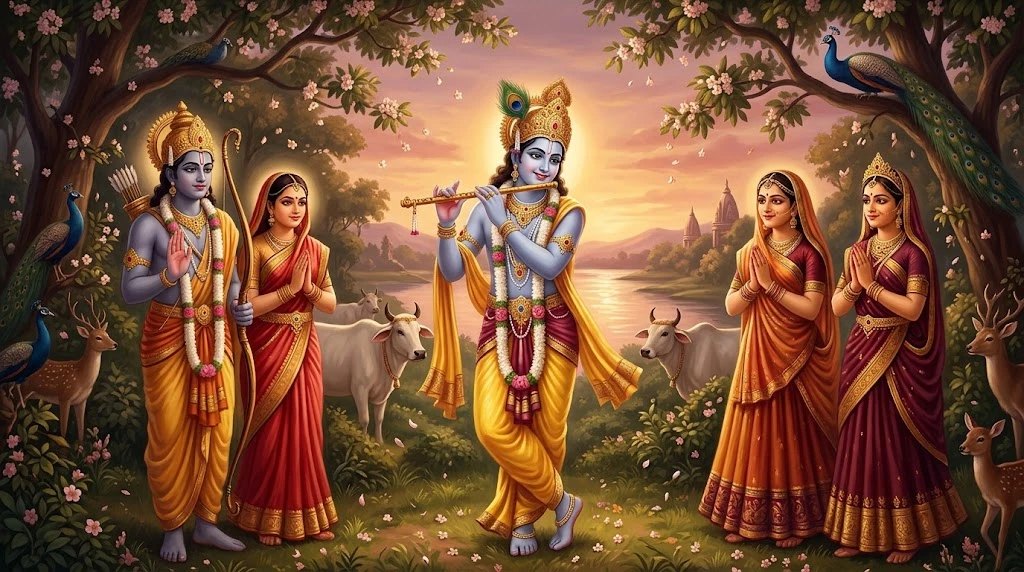
अच्युताष्टकम् भगवान् विष्णु की आठ श्लोकों की संस्कृत स्तुति है, जिसके अन्त में एक श्लोक की फलश्रुति है। 'अच्युत' का अर्थ है वह जो कभी अपने स्वरूप से नहीं गिरता, और पूरे स्तोत्र में विष्णु के कृष्ण और राम, दोनों अवतारों के नाम साथ-साथ आते हैं: केशव, नारायण, दामोदर, वासुदेव, माधव, गोपिकावल्लभ, जानकीनायक, राघव और बाल-गोपाल। परम्परा इसे आदि शंकराचार्य की रचना मानती है, और गीता प्रेस की स्तोत्ररत्नावली की पुष्पिका भी इसे श्रीमच्छंकराचार्य की कृति बताती है। इसका छन्द स्रग्विणी है, जिसकी सीधी लय इसे गाने में सहज बनाती है।
लोग इसे प्रातः और संध्या की पूजा में, एकादशी और गुरुवार को, और जन्माष्टमी या राम नवमी पर पढ़ते और गाते हैं। इस पृष्ठ पर पूरा पाठ गीता प्रेस, गोरखपुर की स्तोत्ररत्नावली के अनुसार है, हर श्लोक के नीचे उसका सीधा अर्थ है जिसमें हर नाम और विशेषण की व्याख्या है, और साइन-इन के बाद पूरा पाठ मुफ्त PDF में उतारा जा सकता है।
Achyutashtakam is a Sanskrit hymn of eight verses to Vishnu, closing with a one-verse phalashruti. Achyuta means the one who never falls from his own nature, and all through the hymn the names of Vishnu's two avatars, Krishna and Rama, come side by side: Keshava, Narayana, Damodara, Vasudeva, Madhava, Gopikavallabha, Janakinayaka, Raghava and Bala Gopala. Tradition holds it to be the work of Adi Shankaracharya, and the colophon in the Gita Press Stotra Ratnavali also names Shri Shankaracharya as its author. It is in the sragvini metre, whose even beat makes it easy to sing.
People read and sing it in morning and evening worship, on Ekadashi and Thursdays, and on Janmashtami or Ram Navami. This page gives the full text as printed in the Gita Press, Gorakhpur Stotra Ratnavali, a plain meaning under every verse that explains each name and epithet, and, after sign-in, a free PDF of the whole text.
पाठThe text
श्लोकShloka 1
अच्युतं केशवं रामनारायणं कृष्णदामोदरं वासुदेवं हरिम्। श्रीधरं माधवं गोपिकावल्लभं जानकीनायकं रामचन्द्रं भजे॥
मैं अच्युत (जो कभी अपने स्वरूप से नहीं गिरते), केशव (सुन्दर केशों वाले, या केशी असुर को मारने वाले), राम, नारायण, कृष्ण, दामोदर (जिनकी कमर यशोदा ने रस्सी से बाँधी थी), वासुदेव (वसुदेव के पुत्र, सबमें बसने वाले देव), हरि (पाप हरने वाले), श्रीधर (लक्ष्मी को धारण करने वाले), माधव (लक्ष्मी के पति), गोपिकावल्लभ (गोपियों के प्रिय) और जानकीनायक (सीता के स्वामी) रामचन्द्र को भजता हूँ।I worship Achyuta (who never falls from his own nature), Keshava (of the beautiful hair, or slayer of the demon Keshi), Rama, Narayana, Krishna, Damodara (whose waist Yashoda bound with a rope), Vasudeva (son of Vasudeva, the god who dwells in all), Hari (who takes away sin), Shridhara (who holds Shri, Lakshmi), Madhava (Lakshmi's husband), Gopikavallabha (beloved of the gopis) and Ramachandra, Janakinayaka (lord of Sita).
श्लोकShloka 2
अच्युतं केशवं सत्यभामाधवं माधवं श्रीधरं राधिकाराधितम्। इन्दिरामन्दिरं चेतसा सुन्दरं देवकीनन्दनं नन्दजं सन्दधे॥
अच्युत, केशव, सत्यभामा के पति (सत्यभामाधव), माधव, श्रीधर, राधिका द्वारा आराधित, लक्ष्मी के निवास-स्थान (इन्दिरामन्दिर), सुन्दर, देवकी के पुत्र (देवकीनन्दन) और नन्द के पुत्र (नन्दज) भगवान् को मैं अपने मन (चेतसा) में दृढ़ता से धारण करता हूँ (सन्दधे)।Achyuta, Keshava, the husband of Satyabhama (Satyabhamadhava), Madhava, Shridhara, he who is worshipped by Radhika, the dwelling-place of Lakshmi (Indiramandira), the beautiful one, the son of Devaki (Devakinandana) and son of Nanda (Nandaja): him I hold fast in my mind (chetasa sandadhe).
श्लोकShloka 3
विष्णवे जिष्णवे शङ्खिने चक्रिणे रुक्मिणीरागिणे जानकीजानये। वल्लवीवल्लभायार्चितायात्मने कंसविध्वंसिने वंशिने ते नमः॥
विष्णु (सर्वव्यापक), जिष्णु (विजयी), शंख धारण करने वाले (शङ्खी), चक्र धारण करने वाले (चक्री), रुक्मिणी से प्रेम करने वाले, जानकी के पति (जानकीजानि), गोप-स्त्रियों (वल्लवी) के प्रिय, पूजित (अर्चित), आत्म-स्वरूप (आत्मा), कंस का विनाश करने वाले और बाँसुरी बजाने वाले (वंशी), आपको नमस्कार है।To Vishnu (the all-pervading), to Jishnu (the victorious), to the bearer of the conch (Shankhin) and of the discus (Chakrin), to the lover of Rukmini, to the husband of Janaki (Janakijani), to the beloved of the cowherd women (vallavi), to the one who is worshipped (archita), to the Self (atman), to the destroyer of Kamsa, to the flute-player (vamshin): to you, salutation.
श्लोकShloka 4
कृष्ण गोविन्द हे राम नारायण श्रीपते वासुदेवाजित श्रीनिधे। अच्युतानन्त हे माधवाधोक्षज द्वारकानायक द्रौपदीरक्षक॥
हे कृष्ण, हे गोविन्द (गायों के पालक, इन्द्रियों के स्वामी), हे राम, हे नारायण, हे श्रीपति (लक्ष्मी के स्वामी), हे वासुदेव, हे अजित (जिन्हें कोई जीत न सके), हे श्रीनिधि (लक्ष्मी और सारी शोभा के भण्डार), हे अच्युत, हे अनन्त, हे माधव, हे अधोक्षज (इन्द्रियों की पहुँच से परे), हे द्वारकानायक (द्वारका के स्वामी), हे द्रौपदी के रक्षक! यह पूरा श्लोक भगवान् को उनके नामों से पुकारना है।O Krishna, O Govinda (keeper of the cows, lord of the senses), O Rama, O Narayana, O Shripati (lord of Lakshmi), O Vasudeva, O Ajita (the unconquered), O Shrinidhi (treasure-house of Lakshmi and of all splendour), O Achyuta, O Ananta (the endless), O Madhava, O Adhokshaja (beyond the reach of the senses), O lord of Dwarka (Dvarakanayaka), O protector of Draupadi! The whole verse is a calling-out to the Lord by his names.
श्लोकShloka 5
राक्षसक्षोभितः सीतया शोभितो दण्डकारण्यभूपुण्यताकारणः। लक्ष्मणेनान्वितो वानरैः सेवितो- ऽगस्त्यसम्पूजितो राघवः पातु माम्॥
जो राक्षसों के कारण क्षुब्ध हुए (राक्षसक्षोभित; इस शब्द का अर्थ 'जिन्होंने राक्षसों को क्षुब्ध कर दिया' भी लिया जाता है), जो सीता के साथ शोभा पाते हैं, जिनके निवास ने दण्डकारण्य की भूमि को पुण्य बनाया, जो लक्ष्मण के साथ हैं, वानरों द्वारा सेवित हैं और अगस्त्य मुनि द्वारा पूजित हैं, वे रघुवंशी राम (राघव) मेरी रक्षा करें।Stirred to anger by the rakshasas (rakshasa-kshobhita; the word is also taken to mean 'who threw the rakshasas into turmoil'), graced by Sita, the reason the land of the Dandaka forest became holy, with Lakshmana at his side, served by the monkeys and honoured by the sage Agastya: may Raghava (Rama of the Raghu line) protect me.
श्लोकShloka 6
धेनुकारिष्टकानिष्टकृद्द्वेषिहा केशिहा कंसहृद्वंशिकावादकः। पूतनाकोपकः सूरजाखेलनो बालगोपालकः पातु मां सर्वदा॥
अनिष्ट करने वाले शत्रु धेनुक (गधे के रूप वाला असुर) और अरिष्ट (बैल के रूप वाला असुर) का वध करने वाले, केशी को मारने वाले, कंस का अन्त करने वाले (कंसहृत्), बाँसुरी बजाने वाले (वंशिकावादक), पूतना पर कोप करने वाले (पूतनाकोपक) और सूर्य-पुत्री यमुना (सूरजा) के तट पर खेलने वाले बाल-गोपाल सदा मेरी रक्षा करें।Slayer of the hostile evil-doers Dhenuka and Arishta (demons in the form of a donkey and a bull), slayer of Keshi, destroyer of Kamsa (Kamsahrit), player of the flute (vamshikavadaka), who turned his wrath on Putana (Putanakopaka), who played by the Yamuna (Suraja, daughter of the Sun): may that young cowherd, Bala Gopala, protect me always.
श्लोकShloka 7
विद्युदुद्योतवत्प्रस्फुरद्वाससं प्रावृडम्भोदवत्प्रोल्लसद्विग्रहम्। वन्यया मालया शोभितोरःस्थलं लोहिताङ्घ्रिद्वयं वारिजाक्षं भजे॥
जिनका वस्त्र बिजली की चमक की तरह झिलमिलाता है, जिनका शरीर वर्षा ऋतु के मेघ (प्रावृट्-अम्भोद) की तरह दमकता है, जिनका वक्षःस्थल वन के फूलों की माला (वनमाला) से सुशोभित है और जिनके दोनों चरण लाल (लोहित) हैं, उन कमल-नयन (वारिजाक्ष) भगवान् को मैं भजता हूँ।Whose garment flashes like a streak of lightning, whose body glows like a rain-cloud of the monsoon (pravrit-ambhoda), whose chest is adorned with a garland of forest flowers (vanamala), whose two feet are red (lohita): that lotus-eyed one (varijaksha) I worship.
श्लोकShloka 8
कुञ्चितैः कुन्तलैर्भ्राजमानाननं रत्नमौलिं लसत्कुण्डलं गण्डयोः। हारकेयूरकं कङ्कणप्रोज्ज्वलं किङ्किणीमञ्जुलं श्यामलं तं भजे॥
जिनका मुख घुँघराले केशों (कुञ्चित कुन्तल) से दमकता है, जिनके मस्तक पर रत्नों का मुकुट (रत्नमौलि) है और गालों (गण्ड) पर कुण्डल चमकते हैं, जो हार और बाजूबन्द (केयूर) पहने हैं, कंगनों (कङ्कण) से उज्ज्वल हैं और करधनी के घुँघरुओं (किङ्किणी) से मनोहर लगते हैं, उन साँवले (श्यामल) प्रभु को मैं भजता हूँ।Whose face shines amid curling locks (kunchita kuntala), who wears a jewelled crown (ratnamauli), with earrings glinting against his cheeks (ganda), who is decked with necklace and armlets (keyura), bright with bracelets (kankana) and lovely with the little bells of his girdle (kinkini): that dark one (shyamala) I worship.
फलश्रुतिPhalashruti 9
अच्युतस्याष्टकं यः पठेदिष्टदं प्रेमतः प्रत्यहं पूरुषः सस्पृहम्। वृत्ततः सुन्दरं कर्तृविश्वम्भर- स्तस्य वश्यो हरिर्जायते सत्वरम्॥
मनचाहा फल देने वाले (इष्टद) और छन्द (वृत्त) में सुन्दर इस अच्युताष्टक को जो व्यक्ति प्रेम से, लगन (स्पृहा) के साथ, प्रतिदिन पढ़ता है, जगत् के कर्ता और पालनहार (विश्वम्भर) हरि शीघ्र ही उसके वश में हो जाते हैं, अर्थात् उसके प्रेम से बँध जाते हैं।Whoever reads this Achyutashtakam, which grants what is wished for (ishtada) and is beautiful in its metre (vritta), lovingly, eagerly (saspriham) and every day, Hari, the maker and sustainer of the universe (Vishvambhara), soon comes under their sway, that is, is won over by their love.
यह स्तोत्र कहाँ से हैWhere the hymn comes from
अच्युताष्टकम् परम्परा से आदि शंकराचार्य की रचना माना जाता है; गीता प्रेस की स्तोत्ररत्नावली में यह श्रीकृष्ण-स्तोत्रों के बीच छपा है और इसकी पुष्पिका इसे श्रीमच्छंकराचार्य-कृत बताती है। इसका छन्द स्रग्विणी है: हर चरण में बारह अक्षर, जिनमें गुरु-लघु-गुरु का एक ही क्रम चार बार दोहराया जाता है, इसलिए हर पंक्ति एक ही ताल पर चलती है। आठ श्लोकों के बाद नौवाँ श्लोक फलश्रुति है।
स्तोत्र की बनावट सीधी है: पहले दो श्लोक नामों की माला गूँथकर 'भजे' (भजता हूँ) और 'सन्दधे' (मन में धारण करता हूँ) पर रुकते हैं, तीसरा श्लोक 'ते नमः' (आपको नमस्कार) कहता है, चौथा केवल नाम लेकर पुकारता है, पाँचवाँ वन में श्रीराम का और छठा बाल-कृष्ण की लीलाओं का स्मरण करता है, और सातवाँ-आठवाँ उनके रूप का ध्यान कराते हैं। प्रसिद्ध भजन 'अच्युतम् केशवम् कृष्ण दामोदरम्, राम नारायणम् जानकी वल्लभम्' इन्हीं नामों को दूसरे क्रम में रखता है; वह अलग भजन है, यह स्तोत्र नहीं।
Tradition holds the Achyutashtakam to be the work of Adi Shankaracharya; the Gita Press Stotra Ratnavali prints it among its hymns to Krishna, and its colophon credits it to Shri Shankaracharya. It is in the sragvini metre: twelve syllables to a line, in which one pattern of long, short, long is repeated four times, so that every line moves to the same beat. After the eight verses, the ninth is the phalashruti.
The hymn is simply built: the first two verses string a garland of names and come to rest on bhaje (I worship) and sandadhe (I hold in my mind), the third says te namah (salutation to you), the fourth only calls out his names, the fifth remembers Rama in the forest and the sixth the childhood deeds of Krishna, and the seventh and eighth lead the reader to meditate on his form. The well-known bhajan Achyutam Keshavam Krishna Damodaram, Rama Narayanam Janaki Vallabham sets these same names in a different order; it is a separate bhajan, not this stotra.
पाठ विधिHow to read it
स्नान करके स्वच्छ वस्त्र पहनें, विष्णु, श्रीकृष्ण या श्रीराम के चित्र के सामने दीपक जलाएँ, और हो सके तो तुलसी-दल, फूल या पीले पुष्प अर्पित करें। आठों श्लोक और फलश्रुति एक बैठक में, स्पष्ट उच्चारण से पढ़ें; स्रग्विणी की लय में इसे गाया भी जा सकता है।
फलश्रुति प्रतिदिन, प्रेम और लगन से पढ़ने की बात कहती है, इसलिए कम समय में भी रोज़ एक बार पूरा पाठ करना अच्छा है। संस्कृत कठिन लगे तो पहले हर श्लोक का अर्थ पढ़ लें; नामों का अर्थ समझकर पढ़ने से पाठ नाम-स्मरण बन जाता है। एकादशी, गुरुवार और जन्माष्टमी या राम नवमी पर इसे विशेष रूप से पढ़ा जाता है।
Bathe, put on clean clothes, light a lamp before a picture of Vishnu, Krishna or Rama, and if you can, offer tulsi leaves or flowers, yellow ones if you have them. Read all eight verses and the phalashruti in one sitting, with clear pronunciation; it can also be sung to the beat of the sragvini metre.
The phalashruti speaks of reading it every day, with love and eagerness, so even when time is short one full reading a day is good. If the Sanskrit feels hard, read the meaning of each verse first; reading with the meaning of the names in mind turns the recitation into a remembrance of the names. It is read especially on Ekadashi, on Thursdays, and on Janmashtami or Ram Navami.
महत्व और फलMeaning and fruit
अच्युताष्टक की विशेषता यह है कि यह विष्णु के कृष्ण और राम रूपों को अलग नहीं करता: पहले ही श्लोक में गोपिकावल्लभ और जानकीनायक साथ आते हैं, तीसरे में रुक्मिणी के प्रेमी और जानकी के पति, और चौथे श्लोक की द्वारकानायक की पुकार के ठीक बाद पाँचवाँ श्लोक राघव की स्तुति करता है। 'अच्युत' नाम ही इसका भाव है: जो कभी अपने स्वरूप से नहीं डिगता, वह अपने भक्त को भी नहीं छोड़ता। इसलिए यह स्तोत्र रक्षा की प्रार्थना ('पातु माम्', मेरी रक्षा करें) और प्रेम के ध्यान, दोनों को साथ रखता है।
फलश्रुति कहती है कि जो इसे प्रतिदिन प्रेम और लगन से पढ़ता है, जगत् के कर्ता और पालनहार हरि शीघ्र ही उसके वश में हो जाते हैं, अर्थात् उसके प्रेम से बँध जाते हैं। परम्परा में इसे मन की स्थिरता, भक्ति और कठिन समय में भगवान् के स्मरण के लिए पढ़ा जाता है।
What sets the Achyutashtakam apart is that it does not keep Vishnu's forms as Krishna and Rama apart: the very first verse names the beloved of the gopis and the lord of Janaki together, the third the lover of Rukmini and the husband of Janaki, and right after the fourth verse calls on the lord of Dwarka, the fifth praises Raghava. The name Achyuta is its whole spirit: he who never wavers from his own nature does not let go of his devotee either. So the hymn holds together a prayer for protection (patu mam, protect me) and a loving meditation.
The phalashruti says that whoever reads it every day with love and eagerness soon wins over Hari, the maker and sustainer of the universe, who is bound by their love. By tradition it is read for a steady mind, for devotion, and to keep the Lord in remembrance in hard times.
कब पढ़ेंWhen to read
प्रातः या संध्या की पूजा में; एकादशी, गुरुवार और बुधवार को; जन्माष्टमी, राम नवमी और कार्तिक मास में; और किसी भी दिन विष्णु या कृष्ण की आरती से पहले।In morning or evening worship; on Ekadashi, Thursdays and Wednesdays; on Janmashtami, on Ram Navami and through the month of Kartik; and before an aarti of Vishnu or Krishna on any day.
कुंडली मेंIn your kundli
ज्योतिष में विष्णु की उपासना बुध और बृहस्पति, दोनों के लिए बताई जाती है: पराशर की परम्परा में बुध की दशा के कष्टों की शान्ति के लिए विष्णु की स्तुति का विधान है, और गुरुवार की पूजा और व्रत विष्णु और बृहस्पति, दोनों से जुड़े हैं। कुंडली में बुध के नीच (मीन), अस्त या पाप-ग्रहों से पीड़ित होने पर, बृहस्पति के नीच (मकर) या राहु से पीड़ित होने पर, और बुध या बृहस्पति की महादशा-अन्तर्दशा में अच्युताष्टक का पाठ पारम्परिक उपाय के रूप में दिया जाता है, विशेषकर जब पढ़ाई, निर्णय, वाणी या मन की स्थिरता में बाधा हो। आपकी कुंडली में बुध और बृहस्पति कहाँ हैं और कौन-सी दशा चल रही है, यह इसी साइट पर अपनी कुंडली बनाकर देखा जा सकता है।In Jyotish, the worship of Vishnu is prescribed for both Mercury and Jupiter: in the Parashari tradition the praise of Vishnu is the remedy for the troubles of a Mercury dasha, and Thursday worship and fasting are tied to both Vishnu and Jupiter. The Achyutashtakam is given as a traditional remedy when Mercury is debilitated (in Pisces), combust or afflicted by malefics in the kundli, when Jupiter is debilitated (in Capricorn) or afflicted by Rahu, and during a Mercury or Jupiter mahadasha or antardasha, especially when study, decisions, speech or a steady mind meet obstacles. Where Mercury and Jupiter stand in your kundli and which dasha is running can be seen by building your kundli on this site.
ग्रह: Grahas: बृहस्पतिJupiter, बुधMercury
अपनी कुंडली में देखेंCheck it in your kundliप्रश्नोत्तरQuestions people ask
- अच्युताष्टकम् कब पढ़ना चाहिए?When should the Achyutashtakam be read?
- किसी भी दिन प्रातः या संध्या की पूजा में पढ़ा जा सकता है। एकादशी, गुरुवार, जन्माष्टमी, राम नवमी और कार्तिक मास में इसका पाठ विशेष माना जाता है।It can be read in morning or evening worship on any day. It is held to be special on Ekadashi, on Thursdays, on Janmashtami and Ram Navami, and through the month of Kartik.
- अच्युताष्टकम् कितनी बार पढ़ना चाहिए?How many times should the Achyutashtakam be read?
- फलश्रुति प्रतिदिन पढ़ने की बात कहती है, इसलिए रोज़ एक बार पूरा पाठ, फलश्रुति सहित, पर्याप्त है। कुछ लोग संकल्प लेकर 3, 11 या 108 बार पढ़ते हैं; कोई संख्या अनिवार्य नहीं है, नियमितता और भाव अधिक महत्व रखते हैं।The phalashruti speaks of reading it every day, so one full reading a day, with the phalashruti, is enough. Some take a vow to read it 3, 11 or 108 times; no count is required, and regularity and feeling matter more.
- अच्युताष्टकम् पढ़ने के क्या लाभ हैं?What are the benefits of reading the Achyutashtakam?
- फलश्रुति के अनुसार जो इसे प्रतिदिन प्रेम और लगन से पढ़ता है, हरि शीघ्र ही उसके प्रेम से बँध जाते हैं। परम्परा में इसे भक्ति, मन की स्थिरता और कठिन समय में भगवान् के स्मरण के लिए पढ़ा जाता है, और ज्योतिष में यह बुध और बृहस्पति के उपाय के रूप में बताया जाता है।By its phalashruti, Hari is soon won over by the love of those who read it every day with love and eagerness. By tradition it is read for devotion, a steady mind and remembrance of the Lord in hard times, and in Jyotish it is given as a remedy for Mercury and Jupiter.
- क्या अच्युताष्टकम् के पाठ के कोई नियम हैं?Are there any rules for reading the Achyutashtakam?
- कोई कठोर नियम नहीं है; कोई भी इसे श्रद्धा से पढ़ या गा सकता है। स्वच्छ होकर, शान्त मन से, स्पष्ट उच्चारण के साथ पढ़ें, और हो सके तो पहले नामों का अर्थ समझ लें। फलश्रुति प्रेम और लगन पर ज़ोर देती है, इसलिए बाहरी नियमों से अधिक भाव महत्व रखता है।There are no strict rules; anyone may read or sing it with faith. Read it after washing, with a quiet mind and clear pronunciation, and if you can, learn the meaning of the names first. The phalashruti stresses love and eagerness, so feeling matters more than outward rules.
साथ में पढ़ेंRead alongside
 स्तोत्र और कवचStotras and Kavachas
श्रीविष्णुसहस्रनामस्तोत्रम्
Shri Vishnu Sahasranama Stotram
'विश्वं विष्णुर्वषट्कारो': महाभारत के अनुशासन पर्व से भगवान् विष्णु के सहस्र नाम, संवाद और फलश्रुति के अर्थ सहितVishvam Vishnur Vashatkaro: the thousand names of Vishnu from the Anushasana Parva of the Mahabharata, with the meaning of the dialogue and the phalashruti
 आरतीAartis
ॐ जय जगदीश हरे
Om Jai Jagdish Hare
श्री विष्णु जी की आरती, पं. श्रद्धाराम शर्मा रचित, अर्थ सहितThe Vishnu aarti written by Pandit Shardha Ram Sharma, with the meaning of every stanza
 चालीसाChalisas
श्री विष्णु चालीसा
Vishnu Chalisa
जगत के पालनहार भगवान विष्णु की चालीसा, हर दोहे और चौपाई के अर्थ सहितThe Chalisa of Vishnu, preserver of the world, with the meaning of every doha and chaupai
 स्तोत्र और कवचStotras and Kavachas
मधुराष्टकम्
Madhurashtakam
श्रीवल्लभाचार्य रचित 'अधरं मधुरं वदनं मधुरं', आठों श्लोक अर्थ सहितAdharam Madhuram, Shri Vallabhacharya's eight verses on the sweetness of Krishna, with the meaning of every verse
 चालीसाChalisas
श्री कृष्ण चालीसा
Krishna Chalisa
बंशी वाले श्रीकृष्ण की चालीसा, हर दोहे और चौपाई के अर्थ सहितThe Chalisa of Krishna, the flute player, with the meaning of every doha and chaupai
 स्तोत्र और कवचStotras and Kavachas
श्रीरामरक्षास्तोत्रम्
Shri Ram Raksha Stotra
बुधकौशिक ऋषि रचित रामरक्षा-कवच: विनियोग, ध्यान और 38 श्लोक, हर श्लोक के अर्थ सहितBudha Kaushika's armour of Rama's names: the viniyoga, the dhyana and all 38 verses, with the meaning of each