मधुराष्टकम्
Madhurashtakam
श्रीवल्लभाचार्य रचित 'अधरं मधुरं वदनं मधुरं', आठों श्लोक अर्थ सहितAdharam Madhuram, Shri Vallabhacharya's eight verses on the sweetness of Krishna, with the meaning of every verse
PDF डाउनलोडDownload PDF
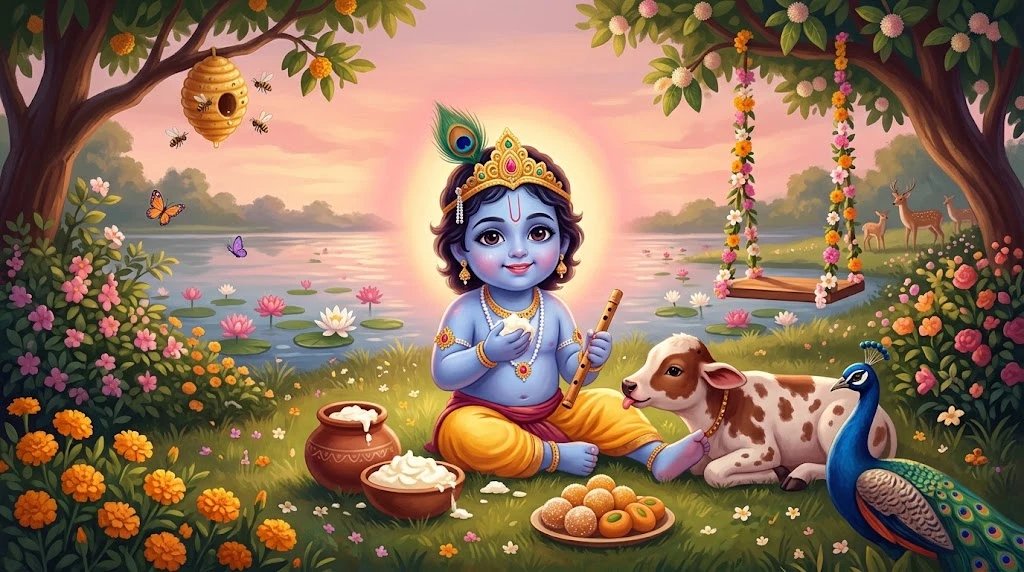
मधुराष्टकम् श्रीकृष्ण की आठ श्लोकों की संस्कृत स्तुति है, जिसकी हर पंक्ति बार-बार एक ही शब्द 'मधुरम्' (मीठा, मनोहर) पर लौटती है। कवि श्रीकृष्ण के होंठ, मुख, नेत्र, मुस्कान, चाल, वाणी, वस्त्र, बाँसुरी और नृत्य से लेकर गोपियों, गायों, यमुना की लहरों और उनकी लाठी तक एक-एक चीज़ गिनाते हैं, और हर श्लोक इसी बात पर समाप्त होता है कि मधुराधिपति (मधुरता के स्वामी) का सब कुछ मधुर है। गीता प्रेस की स्तोत्ररत्नावली इसे श्रीमद्वल्लभाचार्य की रचना बताती है; परम्परा भी इसे पुष्टिमार्ग के संस्थापक आचार्य वल्लभ की कृति मानती है।
जन्माष्टमी, एकादशी और कृष्ण-मन्दिरों की संध्या-आरती में यह स्तोत्र गाया जाता है, और इसकी सीधी लय के कारण बच्चे भी इसे जल्दी याद कर लेते हैं। इस पृष्ठ पर पूरा पाठ गीता प्रेस, गोरखपुर की स्तोत्ररत्नावली के अनुसार है, हर श्लोक के नीचे उसका सीधा अर्थ है जिसमें कठिन शब्दों की व्याख्या भी है, और साइन-इन के बाद पूरा पाठ मुफ्त PDF में उतारा जा सकता है।
Madhurashtakam is a Sanskrit hymn of eight verses to Krishna in which every line keeps returning to one word, madhuram: sweet, lovely. The poet names one thing after another, Krishna's lips, face, eyes, smile, walk, speech, clothes, flute and dance, and then the gopis, the cows, the waves of the Yamuna and his herding staff, and every verse ends on the same thought: everything about Madhuradhipati, the lord of sweetness, is sweet. The Gita Press Stotra Ratnavali names Shri Vallabhacharya as its author, and tradition too holds it to be the work of Acharya Vallabha, founder of the Pushtimarg.
It is sung on Janmashtami, on Ekadashi and at evening aarti in Krishna temples, and its simple, swinging rhythm makes it one of the first stotras children learn by heart. This page gives the full text as printed in the Gita Press, Gorakhpur Stotra Ratnavali, a plain meaning under every verse that also explains the harder words, and, after sign-in, a free PDF of the whole text.
पाठThe text
पदVerse 1
अधरं मधुरं वदनं मधुरं नयनं मधुरं हसितं मधुरम्। हृदयं मधुरं गमनं मधुरं मधुराधिपतेरखिलं मधुरम्॥
उनके होंठ (अधर) मधुर हैं, मुख मधुर है, नेत्र मधुर हैं और मुस्कान (हसित) मधुर है। उनका हृदय मधुर है, उनकी चाल (गमन) मधुर है; मधुराधिपति, अर्थात् मधुरता के स्वामी श्रीकृष्ण, का सब कुछ (अखिल) मधुर है।His lips (adhara) are sweet, his face is sweet, his eyes are sweet and his smile (hasita) is sweet. His heart is sweet and his walk (gamana) is sweet; everything (akhila) about Madhuradhipati, the lord of sweetness, Krishna, is sweet.
पदVerse 2
वचनं मधुरं चरितं मधुरं वसनं मधुरं वलितं मधुरम्। चलितं मधुरं भ्रमितं मधुरं मधुराधिपतेरखिलं मधुरम्॥
उनकी वाणी मधुर है, उनके चरित (कर्म और लीलाएँ) मधुर हैं, उनके वस्त्र (वसन) मधुर हैं और देह को मोड़कर खड़े होने की उनकी भंगिमा (वलित) मधुर है। उनका चलना मधुर है, उनका घूमना-फिरना (भ्रमित) मधुर है; मधुरता के स्वामी का सब कुछ मधुर है।His words are sweet, his deeds and doings (charita) are sweet, his clothes (vasana) are sweet, and the graceful bend of his body (valita) is sweet. His moving is sweet, his wandering about (bhramita) is sweet; everything about the lord of sweetness is sweet.
पदVerse 3
वेणुर्मधुरो रेणुर्मधुरः पाणिर्मधुरः पादौ मधुरौ। नृत्यं मधुरं सख्यं मधुरं मधुराधिपतेरखिलं मधुरम्॥
उनकी बाँसुरी (वेणु) मधुर है, उनके चरणों की धूल (रेणु) मधुर है, उनके हाथ (पाणि) मधुर हैं और दोनों चरण मधुर हैं। उनका नृत्य मधुर है, उनकी मित्रता (सख्य) मधुर है; मधुरता के स्वामी का सब कुछ मधुर है।His flute (venu) is sweet, the dust of his feet (renu) is sweet, his hands (pani) are sweet and his two feet are sweet. His dancing is sweet, his friendship (sakhya) is sweet; everything about the lord of sweetness is sweet.
पदVerse 4
गीतं मधुरं पीतं मधुरं भुक्तं मधुरं सुप्तं मधुरम्। रूपं मधुरं तिलकं मधुरं मधुराधिपतेरखिलं मधुरम्॥
उनका गाना मधुर है, उनका पीना (पीत; कुछ टीकाकार इसे उनके पीले वस्त्र से भी जोड़ते हैं) मधुर है, उनका भोजन करना (भुक्त) मधुर है और उनका सोना (सुप्त) मधुर है। उनका रूप मधुर है, उनके माथे का तिलक मधुर है; मधुरता के स्वामी का सब कुछ मधुर है।His singing is sweet, his drinking (pita; some commentators also take it as his yellow garment) is sweet, his eating (bhukta) is sweet and his sleeping (supta) is sweet. His form is sweet, the tilak on his brow is sweet; everything about the lord of sweetness is sweet.
पदVerse 5
करणं मधुरं तरणं मधुरं हरणं मधुरं रमणं मधुरम्। वमितं मधुरं शमितं मधुरं मधुराधिपतेरखिलं मधुरम्॥
उनके काम (करण) मधुर हैं, भक्तों को संसार-सागर से पार उतारना (तरण) मधुर है, माखन और मन चुराना (हरण) मधुर है और उनकी क्रीड़ा (रमण) मधुर है। जो वे त्याग देते हैं (वमित), वह भी मधुर है, और उनका शान्त भाव (शमित) भी मधुर है; मधुरता के स्वामी का सब कुछ मधुर है।His doings (karana) are sweet, his ferrying of devotees across the sea of worldly life (tarana) is sweet, his stealing of butter and of hearts (harana) is sweet, and his play (ramana) is sweet. Even what he casts off (vamita) is sweet, and his calm (shamita) is sweet; everything about the lord of sweetness is sweet.
पदVerse 6
गुञ्जा मधुरा माला मधुरा यमुना मधुरा वीची मधुरा। सलिलं मधुरं कमलं मधुरं मधुराधिपतेरखिलं मधुरम्॥
उनकी गुंजा (घुँघची के लाल-काले दाने, जिनकी माला वे पहनते हैं) मधुर है, उनकी माला मधुर है, यमुना मधुर है और उसकी लहरें (वीची) मधुर हैं। यमुना का जल (सलिल) मधुर है, उसमें खिले कमल मधुर हैं; मधुरता के स्वामी का सब कुछ मधुर है।His gunja (the red-and-black seeds strung into the necklace he wears) is sweet, his garland is sweet, the Yamuna is sweet and her waves (vichi) are sweet. Her water (salila) is sweet, the lotuses on it are sweet; everything about the lord of sweetness is sweet.
पदVerse 7
गोपी मधुरा लीला मधुरा युक्तं मधुरं मुक्तं मधुरम्। दृष्टं मधुरं शिष्टं मधुरं मधुराधिपतेरखिलं मधुरम्॥
गोपियाँ मधुर हैं, उनकी लीला मधुर है, उनसे मिलन (युक्त) मधुर है और उनसे छूटना (मुक्त) भी मधुर है। उनकी दृष्टि (दृष्ट) मधुर है, उनका शिष्ट, सौम्य व्यवहार (शिष्ट) मधुर है; मधुरता के स्वामी का सब कुछ मधुर है।The gopis are sweet, his play (lila) is sweet, being with him (yukta) is sweet, and being parted from him (mukta) is sweet too. His glance (drishta) is sweet, his gentle courtesy (shishta) is sweet; everything about the lord of sweetness is sweet.
पदVerse 8
गोपा मधुरा गावो मधुरा यष्टिर्मधुरा सृष्टिर्मधुरा। दलितं मधुरं फलितं मधुरं मधुराधिपतेरखिलं मधुरम्॥
उनके साथी ग्वाले (गोप) मधुर हैं, गायें मधुर हैं, गाय चराने की उनकी लाठी (यष्टि) मधुर है और उनकी रची सृष्टि मधुर है। दुष्टों को कुचलना (दलित) मधुर है, और जो कुछ उनसे फलता है (फलित), वह मधुर है; मधुरता के स्वामी का सब कुछ मधुर है।His cowherd companions (gopa) are sweet, the cows are sweet, his herding staff (yashti) is sweet, and the creation he made (srishti) is sweet. His crushing of the wicked (dalita) is sweet, and all that comes to fruit through him (phalita) is sweet; everything about the lord of sweetness is sweet.
पाठ विधिHow to read it
स्नान करके स्वच्छ वस्त्र पहनें, बालकृष्ण, राधा-कृष्ण या श्रीनाथजी के चित्र के सामने घी का दीपक जलाएँ, और हो सके तो तुलसी-दल और माखन-मिश्री का भोग रखें। फिर आठों श्लोक एक बैठक में, धीरे-धीरे और अर्थ का ध्यान रखते हुए पढ़ें।
मधुराष्टकम् गाने के लिए बना है; इसकी लय सीधी है और हर पंक्ति 'मधुरम्' पर टिकती है, इसलिए परिवार के साथ मिलकर गाना उतना ही उचित है जितना अकेले पढ़ना। पाठ के अन्त में भोग का प्रसाद सबमें बाँटें।
Bathe, put on clean clothes, and light a ghee lamp before an image of Bal Krishna, Radha-Krishna or Shrinathji; if you can, offer tulsi leaves and butter with sugar candy. Then read all eight verses in one sitting, slowly, keeping the meaning in mind.
Madhurashtakam was made to be sung; its rhythm is plain and every line comes to rest on madhuram, so singing it together as a family is as proper as reading it alone. At the end, share the offering as prasad.
मधुराधिपति: मधुरता के स्वामीMadhuradhipati: the lord of sweetness
हर श्लोक की दूसरी पंक्ति 'मधुराधिपतेरखिलं मधुरम्' पर समाप्त होती है। 'मधुराधिपति' का सीधा अर्थ है मधुरता के अधिपति, यानी वह जिसमें मधुरता अपनी पूर्णता में है। 'मधुरा' मथुरा का पुराना नाम भी है, इसलिए कई भक्त इसमें 'मथुरा के स्वामी' का भाव भी सुनते हैं; दोनों अर्थ श्रीकृष्ण पर ही जाते हैं।
वल्लभाचार्य के पुष्टिमार्ग में भगवान की सेवा प्रेम और माधुर्य-भाव से होती है, ऐश्वर्य और भय से नहीं। यह स्तोत्र उसी दृष्टि का छोटा-सा रूप है: इसमें श्रीकृष्ण से कुछ माँगा नहीं गया, केवल उनके रूप, लीला और उनके संसार की हर चीज़ को मधुर कहकर सराहा गया है।
The second line of every verse ends on madhuradhipater akhilam madhuram. Madhuradhipati means the lord of sweetness, the one in whom sweetness is complete. Madhura is also an old name of Mathura, so many devotees hear in it the lord of Mathura as well; both readings point to Krishna.
In Vallabhacharya's Pushtimarg the Lord is served with love and with madhurya, a feeling of tender sweetness, rather than with awe or fear. This hymn is that outlook in miniature: it asks Krishna for nothing, and only praises his form, his play and every thing in his world as sweet.
महत्व और फलMeaning and fruit
मधुराष्टकम् में कोई फलश्रुति नहीं है; इसका फल इसका भाव ही है। जो मन बार-बार श्रीकृष्ण की मधुरता पर लौटता है, उसमें कठोरता, चिड़चिड़ापन और रूखापन कम होने लगता है, यही परम्परा की मान्यता है। इसलिए इसे मन को कोमल और प्रसन्न बनाने वाला पाठ माना जाता है।
भक्त इसे भक्ति की शुरुआत का पाठ भी मानते हैं: इसकी संस्कृत सरल है, शब्द बार-बार दोहराए जाते हैं, और इसे गाते-गाते श्रीकृष्ण के रूप का ध्यान अपने-आप बनने लगता है। जन्माष्टमी पर इसका पाठ उत्सव का अंग है।
Madhurashtakam has no phalashruti, no closing verse that promises a reward; its fruit is its mood. Tradition holds that a mind which keeps returning to Krishna's sweetness slowly loses its harshness, irritability and dryness. That is why it is read to make the mind gentle and glad.
Devotees also treat it as a first text of bhakti: its Sanskrit is simple, its words keep repeating, and in singing it a picture of Krishna's form takes shape in the mind on its own. On Janmashtami its recitation is part of the celebration.
कब पढ़ेंWhen to read
जन्माष्टमी पर अवश्य; एकादशी और हर दिन की कृष्ण-पूजा में, प्रातः या संध्या-आरती के समय। मन अशान्त हो तो सोने से पहले भी इसका पाठ या गान किया जाता है।On Janmashtami without fail; on Ekadashi and in daily worship of Krishna, at morning or evening aarti. When the mind is unsettled, it is also read or sung before sleep.
कुंडली मेंIn your kundli
ज्योतिष में श्रीकृष्ण की उपासना चन्द्रमा और शुक्र से जोड़ी जाती है: चन्द्रमा मन और भावनाओं का कारक है, शुक्र प्रेम, सौन्दर्य, संगीत और कला का। कुंडली में चन्द्रमा के नीच (वृश्चिक), पीड़ित या राहु-केतु से ग्रस्त होने पर, शुक्र के नीच (कन्या), अस्त या कमज़ोर होने पर, और चन्द्र या शुक्र की महादशा-अन्तर्दशा में मधुराष्टकम् का नियमित पाठ बताया जाता है। दाम्पत्य में रूखापन, मन की बेचैनी, या संगीत और कला में रुचि रखने वालों के लिए इसे शुक्र के उपायों के साथ जोड़ा जाता है। अपनी कुंडली में चन्द्रमा और शुक्र की स्थिति इसी साइट पर कुंडली बनाकर देखी जा सकती है।In Jyotish the worship of Krishna is linked to the Moon and Venus: the Moon rules the mind and the emotions, Venus love, beauty, music and the arts. Regular recitation of Madhurashtakam is suggested when the Moon is debilitated (in Scorpio), afflicted or held by Rahu or Ketu, when Venus is debilitated (in Virgo), combust or weak, and during a Moon or Venus mahadasha or antardasha. For dryness in a marriage, a restless mind, or those drawn to music and the arts, it goes alongside the other Venus remedies. You can see where the Moon and Venus stand in your own kundli by building it on this site.
ग्रह: Grahas: चन्द्रMoon, शुक्रVenus
अपनी कुंडली में देखेंCheck it in your kundliप्रश्नोत्तरQuestions people ask
- मधुराष्टकम् किसने लिखा?Who wrote Madhurashtakam?
- गीता प्रेस की स्तोत्ररत्नावली के अन्त-वाक्य में इसे श्रीमद्वल्लभाचार्य की रचना कहा गया है, और परम्परा भी इसे पुष्टिमार्ग के संस्थापक आचार्य वल्लभ का स्तोत्र मानती है।The closing line in the Gita Press Stotra Ratnavali names Shri Vallabhacharya as its author, and tradition too holds it to be a hymn of Acharya Vallabha, founder of the Pushtimarg.
- मधुराष्टकम् कब और कितनी बार पढ़ना चाहिए?When, and how many times, should Madhurashtakam be read?
- किसी भी दिन प्रातः या संध्या को एक बार पढ़ना पर्याप्त है। जन्माष्टमी, एकादशी और कृष्ण-पूजा के दिन इसका पाठ विशेष माना जाता है। कोई संख्या बँधी नहीं है; कई लोग इसे तीन या ग्यारह बार गाते हैं, पर नियमितता अधिक महत्व रखती है।Any day, morning or evening, once is enough. It is held to be special on Janmashtami, on Ekadashi and on days of Krishna worship. No count is fixed; many sing it three or eleven times, but regularity matters more.
- मधुराष्टकम् पढ़ने के क्या लाभ हैं?What are the benefits of reading Madhurashtakam?
- परम्परा में इसे मन को शान्त, कोमल और प्रसन्न करने वाला पाठ माना गया है, जो श्रीकृष्ण के प्रति प्रेम-भाव जगाता है। ज्योतिष में इसे चन्द्रमा और शुक्र के उपाय के रूप में बताया जाता है।Tradition holds that it calms the mind, softens it and makes it glad, and that it awakens love for Krishna. In Jyotish it is given as a remedy for the Moon and Venus.
- क्या मधुराष्टकम् के पाठ के कोई विशेष नियम हैं?Are there any special rules for reciting Madhurashtakam?
- कोई कठिन नियम नहीं है। स्नान करके, स्वच्छ स्थान पर श्रीकृष्ण के चित्र के सामने दीपक जलाकर पढ़ना अच्छा है। इसे कोई भी पढ़ या गा सकता है; संस्कृत के उच्चारण में धीरे-धीरे पढ़ने से शुद्धता बनी रहती है।There are no strict rules. It is good to bathe and read it in a clean place, with a lamp lit before an image of Krishna. Anyone may read or sing it; reading slowly keeps the Sanskrit pronunciation clean.
साथ में पढ़ेंRead alongside
 चालीसाChalisas
श्री कृष्ण चालीसा
Krishna Chalisa
बंशी वाले श्रीकृष्ण की चालीसा, हर दोहे और चौपाई के अर्थ सहितThe Chalisa of Krishna, the flute player, with the meaning of every doha and chaupai
 आरतीAartis
आरती कुंजबिहारी की
Aarti Kunj Bihari Ki
श्रीकृष्ण की प्रसिद्ध आरती, गीता प्रेस के पाठ से, हर पद के अर्थ सहितThe best-known aarti of Krishna, from the Gita Press text, with the meaning of every stanza
 आरतीAartis
ॐ जय जगदीश हरे
Om Jai Jagdish Hare
श्री विष्णु जी की आरती, पं. श्रद्धाराम शर्मा रचित, अर्थ सहितThe Vishnu aarti written by Pandit Shardha Ram Sharma, with the meaning of every stanza
 व्रत कथाVrat Kathas
एकादशी व्रत कथा और नियम
Ekadashi Vrat Katha and Rules
एकादशी व्रत की उत्पत्ति — पद्म पुराण की मुर दैत्य और एकादशी देवी की कथा, व्रत के नियम, फलाहार, जागरण, द्वादशी का पारण, और वर्ष की चौबीस एकादशियों का फलWhere Ekadashi comes from: the Padma Purana katha of the demon Mura and the goddess Ekadashi, the rules of the fast, phalahar, the vigil, the Dwadashi paran, and the fruit of the twenty-four Ekadashis of the year