आरती कुंजबिहारी की
Aarti Kunj Bihari Ki
श्रीकृष्ण की प्रसिद्ध आरती, गीता प्रेस के पाठ से, हर पद के अर्थ सहितThe best-known aarti of Krishna, from the Gita Press text, with the meaning of every stanza
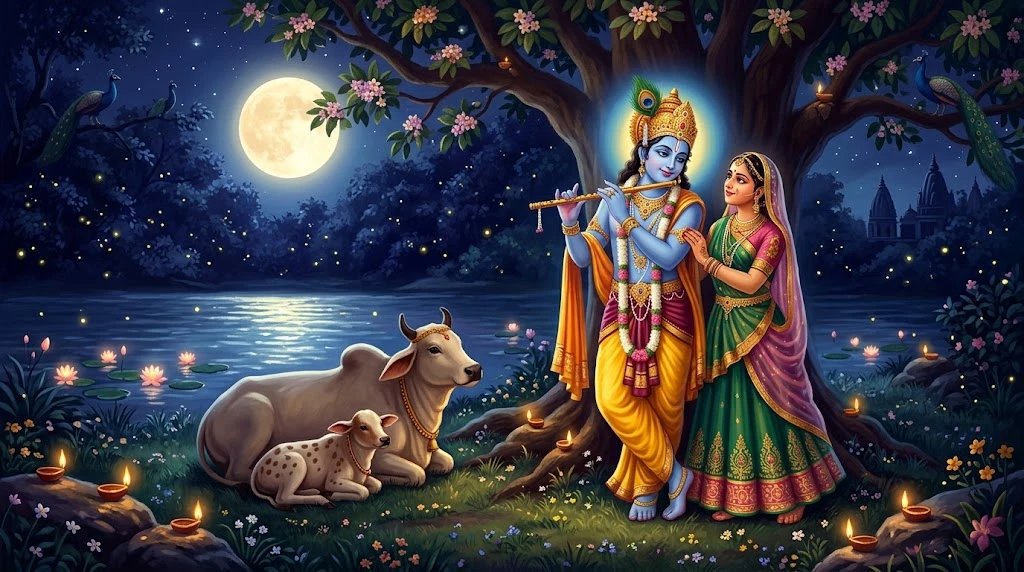
PDF डाउनलोडDownload PDF
आरती कुंजबिहारी की श्रीकृष्ण की सबसे अधिक गाई जाने वाली आरती है। 'कुंजबिहारी' का अर्थ है वृन्दावन के कुंजों में विहार करने वाले, और टेक में उन्हें गिरिधर (गोवर्धन उठाने वाले) और मुरारी (मुर दैत्य के शत्रु) कहकर पुकारा गया है। यह ब्रजभाषा की परम्परागत रचना है; इसके रचयिता का नाम ज्ञात नहीं है। जन्माष्टमी की रात, मन्दिरों की संध्या आरती और घरों की रोज़ की पूजा में यही आरती गूँजती है।
यहाँ दिया गया पाठ गीता प्रेस, गोरखपुर के 'श्रीआरती-संग्रह' के अनुसार है और खेमराज श्रीकृष्णदास की पुस्तिका से मिलाया गया है। हर पद के नीचे उसका सीधा अर्थ है, ताकि गाते समय शब्दों का चित्र आँखों के सामने रहे। साइन-इन करने पर पूरा पाठ मुफ्त PDF में उतारा जा सकता है, छापने या परिवार को भेजने के लिए।
Aarti Kunj Bihari Ki is the most sung aarti of Krishna. Kunj Bihari means the one who roams the bowers of Vrindavan, and the refrain calls him Giridhar, who lifted the Govardhan hill, and Murari, enemy of the demon Mura. It is a traditional Brajbhasha composition whose author is not known. On the night of Janmashtami, at the evening aarti in temples and in the daily puja at home, this is the aarti that is heard.
The text below follows the Gita Press, Gorakhpur collection Shri Aarti Sangrah and has been checked against the Khemraj Shrikrishnadas booklet. Under each stanza is a plain meaning, so the picture the words paint stays before the eyes while singing. After sign-in the full text can be downloaded as a free PDF, for printing or for sending to family.
पाठThe text
टेकRefrain
आरती कुंजबिहारीकी । श्रीगिरधर कृष्नमुरारीकी ॥
यह आरती कुंजबिहारी की है, वृन्दावन के कुंजों में विहार करने वाले श्रीकृष्ण की; गिरिधर (गोवर्धन पर्वत उठाने वाले) और मुरारी (मुर दैत्य को मारने वाले) श्रीकृष्ण की आरती।This is the aarti of Kunj Bihari, Krishna who roams the bowers of Vrindavan; the aarti of Giridhar, who lifted the Govardhan hill, and Murari, slayer of the demon Mura.
पदVerse 1
गलेमें बैजंतीमाला, बजावै मुरलि मधुर बाला । श्रवनमें कुण्डल झलकाला, नंदके आनँद नँदलाला ॥ श्रीगिरधर कृष्नमुरारीकी ॥
उनके गले में वैजयंती माला है और वह बालक मधुर मुरली बजा रहा है। कानों में कुंडल झलक रहे हैं; यह नंद के आनंद, नंदलाल हैं। श्री गिरिधर कृष्ण मुरारी की आरती।A vaijayanti garland lies on his neck, and the boy plays a sweet flute. Earrings flash at his ears; this is Nandlal, the joy of Nanda. The aarti of Giridhar Krishna Murari.
पदVerse 2
गगन सम अंग कांति काली, राधिका चमक रही आली, लतनमें ठाढ़े बनमाली, भ्रमर-सी अलक, कस्तूरी-तिलक, चंद्र-सी झलक, ललित छबि स्यामा प्यारीकी । श्रीगिरधर कृष्नमुरारीकी ॥
उनके अंगों की कांति आकाश जैसी श्याम है और, हे सखी, पास में राधिका चमक रही हैं। बनमाली (वन के फूलों की माला पहनने वाले श्रीकृष्ण) लताओं के बीच खड़े हैं। भौंरे-सी काली अलकें, कस्तूरी का तिलक, चंद्रमा-सी आभा; प्यारी श्यामा (राधा) की यह छवि कितनी ललित है।His limbs are dark as the sky, and, O friend, Radhika shines beside him. Banamali, Krishna garlanded with forest flowers, stands among the creepers. Locks black as bees, a musk tilak, a glow like the moon: how lovely is the form of the beloved Shyama, Radha.
पदVerse 3
कनकमय मोर-मुकुट बिलसै, देवता दरसनकों तरसै, गगन सों सुमन रासि बरसै, बजे मुरचंग, मधुर मिरदंग, ग्वालिनी संग, अतुल रति गोपकुमारीकी । श्रीगिरधर कृष्नमुरारीकी ॥
सोने का मोर-मुकुट चमक रहा है, देवता उनके दर्शन को तरसते हैं और आकाश से फूलों की राशि बरसती है। मुरचंग (मुँह से बजाया जाने वाला बाजा) और मधुर मृदंग बज रहे हैं, ग्वालिनें साथ हैं; गोप-कन्याओं का उनसे अतुलनीय प्रेम है।A golden peacock crown gleams, the gods long for a glimpse of him, and heaps of flowers rain from the sky. The morchang, a mouth harp, and the sweet mridang drum play, the cowherd women are with him; matchless is the love of the gopa maidens for him.
पदVerse 4
जहाँ ते प्रगट भई गंगा, सकल-मल-हारिणि श्रीगंगा, स्मरन ते होत मोह-भंगा, बसी सिव सीस, जटाके बीच, हरै अघ कीच, चरन छबि श्रीबनवारीकी । श्रीगिरधर कृष्नमुरारीकी ॥
जिन चरणों से गंगा प्रकट हुई, वह श्रीगंगा सारा मल हर लेती है और उसके स्मरण मात्र से मोह टूट जाता है। वह शिव के सिर पर, जटाओं के बीच बसी है और पापों की कीचड़ हर लेती है; ऐसी है श्री बनवारी के चरणों की छवि।From those feet the Ganga sprang: the holy Ganga that washes away every stain, and whose very remembrance breaks delusion. She dwells on Shiva's head, in his matted locks, and clears the mire of sin; such is the glory of Banwari's feet.
पदVerse 5
चमकती उज्ज्वल तट रेनू, बज रही बृन्दाबन बेनू, चहुँ दिसि गोपि ग्वाल धेनू, हँसत मृदु मंद, चाँदनी चंद, कटत भव-फंद, टेर सुनु दीन दुखारीकी । श्रीगिरधर कृष्नमुरारीकी ॥
यमुना के तट की उज्ज्वल रेणु (धूल) चमक रही है, वृन्दावन में वेणु बज रही है और चारों ओर गोपियाँ, ग्वाल और गायें हैं। वह मृदु-मंद मुस्कान से हँसते हैं, चंद्रमा की चाँदनी फैली है और संसार का फंदा कटता है। हे प्रभु, इस दीन-दुखी की पुकार सुनिए।The bright dust of the riverbank glitters, the flute sounds through Vrindavan, and on every side are gopis, cowherds and cows. He smiles softly, the moon spreads its light, and the snare of worldly life is cut. Hear, Lord, the cry of this poor and sorrowing one.
टेकRefrain
आरती कुंजबिहारीकी । श्रीगिरधर कृष्नमुरारीकी ॥
आरती टेक पर लौटकर पूरी होती है: कुंजबिहारी की आरती, श्री गिरिधर कृष्ण मुरारी की आरती।The aarti closes by returning to the refrain: the aarti of Kunj Bihari, the aarti of Giridhar Krishna Murari.
आरती कैसे करेंHow the aarti is done
श्रीकृष्ण या लड्डू गोपाल के विग्रह या चित्र के सामने घी का दीपक या कपूर जलाएँ। थाली में दीपक के साथ फूल, अक्षत और थोड़ा जल रखें। आरती से पहले भगवान को माखन-मिश्री, फल या कोई भी सात्विक भोग अर्पित करें।
आरती खड़े होकर गाई जाती है। टेक 'आरती कुंजबिहारी की' से आरम्भ करें और हर पद के अन्त में 'श्रीगिरिधर कृष्णमुरारी की' दोहराएँ। दीपक को घड़ी की दिशा में विग्रह के चरणों से मुख तक घुमाते रहें; साथ में घंटी या शंख बजाना शुभ माना जाता है।
आरती पूरी होने पर दीपक की ज्योति पर हाथ फेरकर सिर और आँखों से लगाएँ और उपस्थित सबको ज्योति दें। फिर भोग को प्रसाद रूप में बाँटें। जिनके पास पूरी सामग्री न हो, वे केवल दीपक जलाकर भी श्रद्धा से यह आरती गा सकते हैं।
Light a ghee lamp or camphor before an image or picture of Krishna or Laddu Gopal. On the plate, beside the lamp, keep flowers, unbroken rice and a little water. Before the aarti, offer the Lord makhan-mishri, fruit or any simple sattvik food.
The aarti is sung standing. Begin with the refrain, Aarti Kunj Bihari Ki, and repeat Shri Giridhar Krishna Murari Ki at the end of every stanza. Keep circling the lamp clockwise before the image, from the feet to the face; ringing a bell or blowing a conch alongside is considered auspicious.
When the aarti ends, pass your hands over the flame and touch them to your head and eyes, and offer the flame to everyone present. Then share the offered food as prasad. Those who do not have the full set of items can light just a lamp and sing this aarti with devotion.
महत्वMeaning
यह आरती श्रीकृष्ण के रूप का वर्णन है: वैजयंती माला, मुरली, कुंडल, सोने का मोर-मुकुट, भौंरे-सी अलकें और कस्तूरी का तिलक। हर पद एक चित्र है; कभी लताओं के बीच खड़े बनमाली, कभी यमुना तट पर गोपियों, ग्वालों और गायों के बीच वेणु बजाते कन्हैया।
चौथा पद भगवान के चरणों की महिमा कहता है: उन्हीं चरणों से गंगा प्रकट हुई, जो शिव की जटाओं में बसी और सबके पाप धोती है। अन्तिम पद में भक्त अपने को 'दीन दुखारी' कहकर पुकार सुनने की विनती करता है। यही इस आरती का सार है: रूप का दर्शन और शरणागति।
रचयिता का नाम ज्ञात नहीं है; यह ब्रजभाषा की परम्परागत आरती है, जो गीता प्रेस के 'श्रीआरती-संग्रह' और अनेक पुराने आरती-संग्रहों में छपी है और जन्माष्टमी पर मन्दिरों और घरों में सबसे अधिक गाई जाती है।
The aarti describes the form of Krishna: the vaijayanti garland, the flute, the earrings, the golden peacock crown, locks black as bees and the musk tilak. Each stanza is a picture; now Banamali standing among the creepers, now Kanhaiya on the Yamuna bank playing the flute among gopis, cowherds and cows.
The fourth stanza tells the glory of the Lord's feet: from them the Ganga sprang, who settled in Shiva's matted locks and washes away the sins of all. In the last stanza the devotee calls himself poor and sorrowing and asks to be heard. That is the heart of this aarti: seeing the divine form, and taking refuge.
The author's name is not known; it is a traditional Brajbhasha aarti, printed in the Gita Press Shri Aarti Sangrah and in many old aarti collections, and the one most sung in temples and homes on Janmashtami.
कब पढ़ेंWhen to read
जन्माष्टमी की रात श्रीकृष्ण-जन्म के समय, रोज़ शाम की पूजा के अन्त में, और एकादशी पर विष्णु-कृष्ण पूजा में। मन्दिरों में यह भोग और संध्या आरती, दोनों में गाई जाती है।On the night of Janmashtami at the moment of Krishna's birth, at the end of the daily evening puja, and on Ekadashi in the worship of Vishnu-Krishna. In temples it is sung at both the bhog and the evening aarti.
कुंडली मेंIn your kundli
श्रीकृष्ण का सम्बन्ध चंद्रमा और शुक्र से है: चंद्रमा मन और माता का कारक है, शुक्र प्रेम, सौन्दर्य और कला का। कुंडली में चंद्रमा के पीड़ित होने पर (केमद्रुम योग, राहु-केतु या शनि से युति), शुक्र के नीच या अस्त होने पर, और चंद्र या शुक्र की महादशा-अन्तर्दशा में श्रीकृष्ण की उपासना और यह आरती बताई जाती है। अपनी कुंडली में चंद्र और शुक्र की स्थिति इसी साइट पर देखी जा सकती है।Krishna is linked with the Moon and Venus: the Moon rules the mind and the mother, Venus rules love, beauty and the arts. When the Moon is afflicted in the kundli (Kemadruma yoga, conjunct Rahu-Ketu or Saturn), when Venus is debilitated or combust, and during a Moon or Venus mahadasha or antardasha, the worship of Krishna with this aarti is the usual advice. You can check the state of the Moon and Venus in your own kundli on this site.
ग्रह: Grahas: चन्द्रMoon, शुक्रVenus
अपनी कुंडली में देखेंCheck it in your kundliप्रश्नोत्तरQuestions people ask
- आरती कुंजबिहारी की किसने लिखी?Who wrote Aarti Kunj Bihari Ki?
- रचयिता का नाम ज्ञात नहीं है। यह ब्रजभाषा की परम्परागत आरती है, जो गीता प्रेस के 'श्रीआरती-संग्रह' सहित पुराने आरती-संग्रहों में बिना रचयिता के नाम के छपी है।The author is not known. It is a traditional Brajbhasha aarti, printed without an author's name in old aarti collections, including the Gita Press Shri Aarti Sangrah.
- 'कुंजबिहारी' का क्या अर्थ है?What does Kunj Bihari mean?
- कुंज का अर्थ है लताओं से घिरा छायादार स्थान और बिहारी का अर्थ है विहार करने वाला। कुंजबिहारी यानी वृन्दावन के कुंजों में विहार करने वाले श्रीकृष्ण। टेक के गिरिधर (गोवर्धन उठाने वाले) और मुरारी (मुर दैत्य को मारने वाले) भी श्रीकृष्ण के ही नाम हैं।Kunj is a shaded bower of creepers, and bihari is one who roams there. Kunj Bihari is Krishna who wanders the bowers of Vrindavan. Giridhar, who lifted Govardhan, and Murari, who slew the demon Mura, in the refrain are also names of Krishna.
- यह आरती कब करनी चाहिए?When should this aarti be sung?
- रोज़ शाम की पूजा के अन्त में, जन्माष्टमी की रात श्रीकृष्ण-जन्म के समय, और एकादशी पर। मन्दिरों में यह संध्या आरती में गाई जाती है; घर पर इसे किसी भी दिन श्रद्धा से गाया जा सकता है।At the end of the daily evening puja, on the night of Janmashtami at the moment of Krishna's birth, and on Ekadashi. Temples sing it at the evening aarti; at home it can be sung with devotion on any day.
- आरती कुंजबिहारी की के क्या लाभ हैं और क्या नियम हैं?What are the benefits and rules of Aarti Kunj Bihari Ki?
- परम्परा में श्रीकृष्ण की आरती मन की अशान्ति दूर करने, घर में प्रेम और सौहार्द बढ़ाने और संकट में सहारा देने वाली मानी जाती है; ज्योतिष में इसे चंद्र और शुक्र की शान्ति से जोड़ा जाता है। नियम सरल हैं: स्नान करके स्वच्छ वस्त्र पहनें, दीपक जलाएँ, भोग लगाएँ, खड़े होकर आरती गाएँ और अन्त में प्रसाद बाँटें।By tradition the aarti of Krishna is held to calm an unquiet mind, increase love and harmony in the home and give support in trouble; in astrology it is linked with pacifying the Moon and Venus. The rules are simple: bathe and wear clean clothes, light a lamp, offer food, sing the aarti standing, and share the prasad at the end.
साथ में पढ़ेंRead alongside
 चालीसाChalisas
श्री कृष्ण चालीसा
Krishna Chalisa
बंशी वाले श्रीकृष्ण की चालीसा, हर दोहे और चौपाई के अर्थ सहितThe Chalisa of Krishna, the flute player, with the meaning of every doha and chaupai
 व्रत कथाVrat Kathas
एकादशी व्रत कथा और नियम
Ekadashi Vrat Katha and Rules
एकादशी व्रत की उत्पत्ति — पद्म पुराण की मुर दैत्य और एकादशी देवी की कथा, व्रत के नियम, फलाहार, जागरण, द्वादशी का पारण, और वर्ष की चौबीस एकादशियों का फलWhere Ekadashi comes from: the Padma Purana katha of the demon Mura and the goddess Ekadashi, the rules of the fast, phalahar, the vigil, the Dwadashi paran, and the fruit of the twenty-four Ekadashis of the year
 आरतीAartis
ॐ जय जगदीश हरे
Om Jai Jagdish Hare
श्री विष्णु जी की आरती, पं. श्रद्धाराम शर्मा रचित, अर्थ सहितThe Vishnu aarti written by Pandit Shardha Ram Sharma, with the meaning of every stanza
 व्रत कथाVrat Kathas
बुधवार व्रत कथा
Budhvar Vrat Katha
गणेश जी और बुध देव का बुधवार व्रत — बुधवार को पत्नी को विदा कराने वाले पुरुष की कथा, व्रत विधि और उद्यापनThe Wednesday fast for Ganesha and Budh: the man who brought his wife home on a Wednesday, how to keep the fast, and the udyapan