एकादशी व्रत कथा और नियम
Ekadashi Vrat Katha and Rules
एकादशी व्रत की उत्पत्ति — पद्म पुराण की मुर दैत्य और एकादशी देवी की कथा, व्रत के नियम, फलाहार, जागरण, द्वादशी का पारण, और वर्ष की चौबीस एकादशियों का फलWhere Ekadashi comes from: the Padma Purana katha of the demon Mura and the goddess Ekadashi, the rules of the fast, phalahar, the vigil, the Dwadashi paran, and the fruit of the twenty-four Ekadashis of the year
अगला व्रतNext fast
गुरुवार, 5 नवंबर 2026Thursday, 5 November 2026
रमा एकादशीRama Ekadashi
कार्तिक कृष्ण एकादशी · 11:03 (4 नवंबर 2026) से 10:36 (5 नवंबर 2026) तकKartika Krishna Ekadashi · from 11:03 on 4 November 2026 to 10:36 on 5 November 2026
- पारण (अगले दिन)Paran (next day)
- 06:40 – 08:50 (6 नवंबर 2026)(6 November 2026)
आगे की तिथियाँDates after that
- शुक्रवार, 20 नवंबर 2026Friday, 20 November 2026प्रबोधिनी (देवउठनी) एकादशीPrabodhini Ekadashi · 12:08–14:14
- शुक्रवार, 4 दिसंबर 2026Friday, 4 December 2026उत्पन्ना एकादशीUtpanna Ekadashi · 07:03–09:06
- रविवार, 20 दिसंबर 2026Sunday, 20 December 2026मोक्षदा एकादशीMokshada Ekadashi · 07:13–09:15
PDF डाउनलोडDownload PDF
हर चंद्र मास में दो एकादशियाँ आती हैं — शुक्ल पक्ष की और कृष्ण पक्ष की — और वर्ष में चौबीस, अधिक मास हो तो छब्बीस। एकादशी भगवान विष्णु की तिथि है, 'हरि का दिन', और वैष्णव परंपरा में यह सभी व्रतों में श्रेष्ठ कही गई है। इसका व्रत सीधा है: उस दिन अन्न नहीं खाना, विष्णु का स्मरण और पूजा करना, रात में जागना, और अगले दिन द्वादशी को पारण करना। हर एकादशी का अपना नाम और अपनी कथा है — निर्जला, देवशयनी, देवउठनी, मोक्षदा — पर उन सबके नीचे एक मूल कथा है: एकादशी स्वयं कौन है, और यह तिथि विष्णु को इतनी प्रिय क्यों है।
यह पृष्ठ उसी मूल कथा से शुरू होता है — पद्म पुराण की मुर दैत्य और भगवान विष्णु के शरीर से प्रकट हुई एकादशी देवी की कथा, जो मार्गशीर्ष कृष्ण उत्पन्ना एकादशी पर सुनी जाती है और हर एकादशी पर पढ़ी जा सकती है। फिर व्रत के सारे नियम एक जगह हैं: दशमी की संध्या से द्वादशी के पारण तक क्या करें, क्या खाएँ, क्या न खाएँ, जागरण कैसे करें, और कौन लोग व्रत में छूट ले सकते हैं। उसके बाद वर्ष की चौबीस एकादशियों की सूची है — हर एक किस कामना के लिए रखी जाती है — और अंत में महत्व और आरती। अगली एकादशी की तिथि, हरि वासर और पारण का समय पंचांग से इस पृष्ठ के ऊपर दिखाया गया है।
Two Ekadashis come in every lunar month, one in the bright fortnight and one in the dark, twenty-four in a year and twenty-six when there is an extra month. Ekadashi is Vishnu's tithi, 'Hari's day', and the Vaishnava tradition calls it the best of all fasts. The vow itself is simple: eat no grain on that day, remember and worship Vishnu, stay awake in the night, and break the fast on the next day, Dwadashi. Every Ekadashi has its own name and its own katha, Nirjala, Devshayani, Dev Uthani, Mokshada, but beneath all of them lies one root story: who Ekadashi herself is, and why this tithi is so dear to Vishnu.
This page begins with that root story, the Padma Purana katha of the demon Mura and the goddess Ekadashi who sprang from Vishnu's body, which is heard on Margashirsha Krishna Utpanna Ekadashi and may be read on any Ekadashi. Then all the rules of the fast are in one place: what to do from the evening of Dashami to the paran on Dwadashi, what to eat and what not, how to keep the vigil, and who may take the fast leniently. After that comes the list of the twenty-four Ekadashis of the year, each with what it is kept for, and at the end the meaning and the aarti. The next Ekadashi, its Hari Vasara and the paran window are shown above the text from the panchang.
एकादशी की उत्पत्ति कथाHow Ekadashi was born
पद्म पुराण में यह कथा भगवान श्रीकृष्ण ने युधिष्ठिर को सुनाई थी, जब युधिष्ठिर ने पूछा कि एकादशी का व्रत क्यों किया जाता है और इस तिथि का जन्म कैसे हुआ। श्रीकृष्ण ने कहा — यह कथा सत्ययुग की है, और जो इसे श्रद्धा से सुनता है, उसे एकादशी व्रत का फल मिलता है।
सत्ययुग में चंद्रावती नगरी में मुर नाम का एक महाबली दैत्य राज्य करता था। उसने तप और बल से ऐसी शक्ति पाई कि उसने इंद्र, अग्नि, वायु, वरुण और सभी देवताओं को युद्ध में हरा दिया, स्वर्ग से उन्हें निकाल दिया और स्वयं स्वर्ग का स्वामी बन बैठा। देवता पृथ्वी पर इधर-उधर छिपकर रहने लगे। किसी के पास मुर से लड़ने का बल नहीं था।
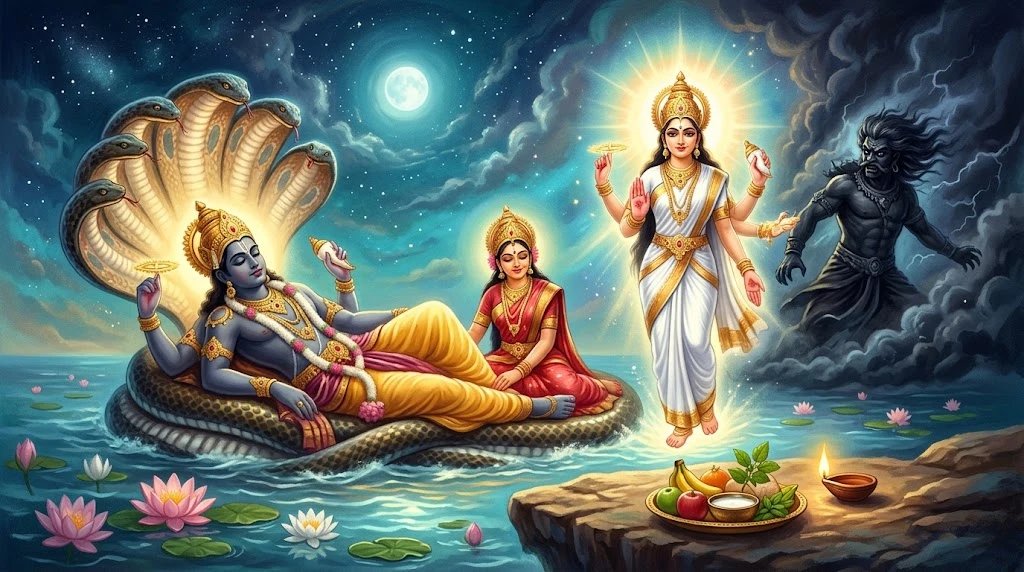
देवता इंद्र के साथ कैलास पर भगवान शिव के पास गए और अपना दुःख कहा। शिव ने कहा, 'मुर का अंत मेरे हाथ नहीं। तुम क्षीरसागर में भगवान विष्णु की शरण में जाओ; वे ही तुम्हारी रक्षा करेंगे।' देवता क्षीरसागर पहुँचे और शेषशायी विष्णु की स्तुति की। इंद्र ने हाथ जोड़कर कहा, 'प्रभु, मुर ने हमारा सब कुछ ले लिया है। हम अपने ही लोक से निकाले हुए घूम रहे हैं। आप ही हमारे रक्षक हैं।'
भगवान विष्णु ने देवताओं को वचन दिया और चंद्रावती की ओर चले। मुर अपनी सेना के साथ उन्हें रोकने आया। युद्ध छिड़ा — भगवान के बाणों से मुर की सेना कटती रही, पर मुर स्वयं अजेय था। कहते हैं यह युद्ध एक हज़ार वर्ष चला। जब मुर नहीं मरा, तो भगवान विष्णु थकान उतारने के लिए युद्धभूमि से हटे और बदरिकाश्रम में हेमवती नाम की एक गुफा में गए — बारह योजन लंबी, जिसका एक ही द्वार था। वहाँ वे योगनिद्रा में लेट गए।
मुर पीछे-पीछे गुफा में पहुँचा। भगवान को सोते देख उसने सोचा कि अब इन्हें सोते ही मार दूँ, और उसने शस्त्र उठाया। उसी क्षण भगवान विष्णु के शरीर से एक तेजस्विनी देवी प्रकट हुई — हाथों में दिव्य शस्त्र, मुख पर प्रचंड तेज। उसने मुर को युद्ध के लिए ललकारा। मुर ने उस पर प्रहार किया, पर देवी के एक हुंकार से उसके शस्त्र गिर पड़े और देवी ने उसी स्थान पर उसका वध कर दिया। मुर की सेना भाग गई। जो लड़ाई हज़ार वर्ष में नहीं जीती गई थी, वह भगवान के सोते-सोते एक क्षण में समाप्त हो गई।
भगवान विष्णु जागे तो सामने मुर का शव और हाथ जोड़े खड़ी देवी को देखा। देवी ने कहा, 'प्रभु, यह दैत्य आपको सोते में मारना चाहता था। मैं आपके शरीर से उत्पन्न हुई और मैंने इसका वध किया।' भगवान प्रसन्न हुए और बोले, 'तुम मेरे शरीर से एकादशी तिथि को उत्पन्न हुई हो, इसलिए तुम्हारा नाम एकादशी है। तुम मुझे सबसे प्रिय हो, और तुम्हारी तिथि मेरी तिथि है। जो मनुष्य तुम्हारे दिन व्रत रखेगा, वह अपने पापों से मुक्त होगा और अंत में मेरे धाम आएगा।' एकादशी देवी ने वर माँगा — 'प्रभु, जो मेरे दिन पूर्ण उपवास रखे, जो केवल एक समय फलाहार करे, और जो रात में जागकर आपका नाम ले — इन सबको आपकी कृपा मिले।' भगवान ने कहा, 'ऐसा ही होगा।'
इसी कथा से जुड़ा है एकादशी पर अन्न न खाने का नियम। परंपरा कहती है कि भगवान विष्णु ने एकादशी के दिन संसार के सभी पापों को अन्न में आश्रय लेने का आदेश दिया — ताकि जो इस दिन अन्न छोड़े, वह पाप से भी छूट जाए; इसीलिए एकादशी को खाया गया अन्न पाप खाने के समान कहा गया है, और चावल सबसे पहले, क्योंकि चावल जल और चंद्र से जुड़ा है और एकादशी चंद्र की तिथि है। कुछ कथाओं में कहा गया है कि मुर का अंश ही अन्न में छिपा, इसलिए अन्न वर्जित हुआ। कारण जो भी बताया जाए, नियम एक है — एकादशी को अन्न नहीं।
श्रीकृष्ण ने युधिष्ठिर से कहा — मार्गशीर्ष कृष्ण पक्ष की जिस एकादशी को देवी प्रकट हुईं, वह उत्पन्ना एकादशी कहलाती है, और एकादशी व्रत का आरंभ वहीं से माना जाता है; जो व्रत शुरू करना चाहे वह उत्पन्ना एकादशी से शुरू करे। उस दिन से शुक्ल और कृष्ण दोनों पक्षों की एकादशी हरि की तिथि है। जो इस दिन अन्न छोड़कर भगवान का नाम लेता है, रात जागता है और द्वादशी को पारण करता है, उसे अनेक यज्ञों और तीर्थों का फल मिलता है — और इस कथा को पढ़ने-सुनने से एकादशी देवी की वही कृपा मिलती है जिससे मुर जैसा दैत्य एक क्षण में गिरा।
In the Padma Purana this katha is told by Krishna to Yudhishthira, when Yudhishthira asks why the Ekadashi fast is kept and how this tithi was born. Krishna says that the story is from the Satya Yuga, and that whoever hears it with faith gains the fruit of the Ekadashi fast.
In the Satya Yuga a mighty demon named Mura ruled in the city of Chandravati. By austerity and strength he gained such power that he defeated Indra, Agni, Vayu, Varuna and all the gods in battle, drove them out of heaven and made himself its master. The gods took to hiding here and there on the earth. No one had the strength to fight Mura.
The gods went with Indra to Shiva on Kailash and told him their grief. Shiva said, 'Mura's end is not in my hands. Go to Vishnu in the ocean of milk and take refuge in him; he alone will protect you.' The gods reached the ocean of milk and praised Vishnu resting on Shesha. Indra folded his hands and said, 'Lord, Mura has taken everything from us. We wander, driven out of our own world. You alone are our protector.'
Vishnu gave the gods his word and set out for Chandravati. Mura came with his army to stop him. Battle began: the Lord's arrows cut down Mura's army, but Mura himself could not be slain. It is said that this battle went on for a thousand years. When Mura did not die, Vishnu withdrew from the field to shake off his weariness and went to a cave called Hemavati in Badrikashram, twelve yojanas long, with a single door. There he lay down in yogic sleep.
Mura followed him into the cave. Seeing the Lord asleep, he thought to kill him in his sleep and raised his weapon. In that instant a radiant goddess sprang from Vishnu's body, divine weapons in her hands and a fierce light on her face. She challenged Mura to fight. Mura struck at her, but at a single roar from the goddess his weapons fell from his hands, and she slew him on the spot. Mura's army fled. The battle that a thousand years had not won was finished in a moment while the Lord slept.
When Vishnu woke he saw Mura's body before him and the goddess standing with folded hands. She said, 'Lord, this demon meant to kill you in your sleep. I was born from your body and I have slain him.' The Lord was pleased and said, 'You were born from my body on the eleventh tithi, Ekadashi, so Ekadashi is your name. You are dearest to me, and your tithi is my tithi. Whoever keeps a fast on your day will be freed of their sins and will come at last to my abode.' The goddess Ekadashi asked a boon: 'Lord, let those who keep a complete fast on my day, those who eat once of fruit, and those who stay awake in the night taking your name, all receive your grace.' The Lord said, 'So be it.'
The rule of eating no grain on Ekadashi is tied to this story. Tradition says that on Ekadashi Vishnu ordered all the sins of the world to take shelter in grain, so that whoever gives up grain on this day is released from sin as well; that is why grain eaten on Ekadashi is likened to eating sin, and rice before all else, because rice belongs to water and the Moon, and Ekadashi is a tithi of the Moon. Some tellings say it was a part of Mura himself that hid in grain, and so grain was forbidden. Whichever reason is given, the rule is one: no grain on Ekadashi.
Krishna told Yudhishthira that the Ekadashi of the dark fortnight of Margashirsha on which the goddess appeared is called Utpanna Ekadashi, and the Ekadashi vow is counted as beginning from it; whoever wishes to take up the vow should begin from Utpanna Ekadashi. From that day the Ekadashi of both the bright and the dark fortnight is Hari's tithi. Whoever gives up grain on this day, takes the Lord's name, stays awake in the night and breaks the fast on Dwadashi gains the fruit of many sacrifices and pilgrimages, and whoever reads or hears this katha receives the same grace of the goddess Ekadashi before which a demon like Mura fell in a moment.
व्रत के नियमRules of the fast
व्रत दशमी की संध्या से शुरू होता है। दशमी को सूर्यास्त से पहले एक बार हल्का सात्विक भोजन करें — बिना चावल, मसूर, उड़द, चना, शहद और प्याज-लहसुन के। रात में भोजन न करें, ब्रह्मचर्य रखें और मन को शांत करके सोएँ। एकादशी के लिए तुलसी दल दशमी को ही तोड़कर रख लें, क्योंकि एकादशी को तुलसी नहीं तोड़ी जाती।
एकादशी को सूर्योदय से पहले उठें, स्नान करें, स्वच्छ या पीले वस्त्र पहनें। भगवान विष्णु के सामने हाथ में जल, अक्षत और फूल लेकर संकल्प लें — 'मैं आज एकादशी का व्रत भगवान विष्णु की प्रसन्नता के लिए रखता/रखती हूँ' — और संकल्प के साथ कहें कि आज अन्न नहीं लेंगे। इस दिन बाल और नाखून नहीं काटे जाते, तेल नहीं लगाया जाता।
पहला और सबसे बड़ा नियम: अन्न नहीं। चावल, गेहूँ, जौ, बाजरा, मक्का, सूजी, मैदा, सभी दालें और उनसे बनी चीज़ें — रोटी, भात, दाल, पूरी, पोहा, खिचड़ी, ब्रेड, बिस्कुट — एकादशी को नहीं लिए जाते। चावल सबसे अधिक वर्जित है। साधारण नमक, मसूर, प्याज-लहसुन, मांस-मदिरा, और परंपरा में शहद भी नहीं। दूसरों के घर का पका भोजन भी इस दिन नहीं लिया जाता।
फलाहार क्या है: फल, दूध, दही, छाछ, पनीर, मेवे, साबूदाना, कुट्टू और सिंघाड़े का आटा, राजगिरा, आलू, शकरकंद, अरबी, लौकी, कद्दू, खीरा और सेंधा नमक। इनसे बना एक समय का भोजन फलाहार कहलाता है। जो सामर्थ्य रखें वे निर्जला (बिना जल) या केवल जल पर रहें; जो नहीं, वे एक समय फलाहार करें। दोनों व्रत माने जाते हैं — कथा में एकादशी देवी ने दोनों के लिए वर माँगा था।
भगवान विष्णु की पूजा: चित्र या शालिग्राम को पंचामृत और गंगाजल से स्नान कराएँ, पीला वस्त्र, चंदन, अक्षत, पीले फूल और दशमी को तोड़े तुलसी दल अर्पित करें। घी का दीपक और धूप जलाएँ। 'ॐ नमो भगवते वासुदेवाय' की माला जपें; समय हो तो विष्णु सहस्रनाम या गीता का एक अध्याय पढ़ें। उस दिन की एकादशी की कथा पढ़ें या सुनें — और जो कथा न मिले, तो यही उत्पत्ति कथा। फिर आरती करें।
आचरण: एकादशी का व्रत पेट से अधिक मन का है। इस दिन क्रोध, झूठ, निंदा, कलह, जुआ, और सभी तरह के भोग से दूर रहें। दिन में न सोएँ — परंपरा में दिन का शयन व्रत को खंडित करता है। सामर्थ्य हो तो कुछ दान करें — अन्न, वस्त्र या किसी भूखे को भोजन। हरिनाम का जप चलता रहे।
जागरण: एकादशी की रात भगवान के नाम में जागने की रात है — भजन, कीर्तन, विष्णु सहस्रनाम, या इस कथा का पाठ। कथा में एकादशी देवी ने रात जागने वालों के लिए अलग से वर माँगा था। जो पूरी रात न जग सकें, वे कम-से-कम आधी रात तक भजन करें और सोने से पहले भगवान को प्रणाम करें।
पारण: एकादशी का व्रत एकादशी को नहीं, अगले दिन द्वादशी को खोला जाता है; इसे पारण कहते हैं। पारण सूर्योदय के बाद, हरि वासर बीतने पर और द्वादशी तिथि समाप्त होने से पहले करना चाहिए। हरि वासर द्वादशी तिथि का पहला चौथाई भाग है, जिसे एकादशी का ही अंग माना जाता है — उसमें पारण नहीं होता। यदि द्वादशी सूर्योदय के कुछ ही समय बाद समाप्त हो रही हो, तो सूर्योदय के तुरंत बाद पारण करें। द्वादशी बीत जाने के बाद पारण करना दोष माना गया है। पारण से पहले स्नान और पूजा करें, किसी ब्राह्मण या भूखे को भोजन दें, फिर तुलसी दल के साथ जल लेकर व्रत खोलें और अन्न लें। इस एकादशी का हरि वासर और पारण का समय पंचांग से इस पृष्ठ के ऊपर दिखाया गया है।
व्रत कब खंडित होता है: भूल से भी अन्न या चावल खा लेने से, दिन में सोने से, क्रोध, झूठ और कलह से, और द्वादशी बीत जाने तक पारण न करने से। यदि कोई नियम टूट जाए तो व्रत छोड़ें नहीं — भगवान से क्षमा माँगें, शेष नियम पूरे करें, और पारण विधि से करें। कई बार पंचांग में एकादशी दो दिन दिखती है — स्मार्त और वैष्णव। जब एकादशी दशमी से विद्ध हो, तो वैष्णव परंपरा अगले दिन का व्रत रखती है; अपने परिवार या गुरु की परंपरा और पंचांग के अनुसार दिन चुनें, दोनों मान्य हैं।
कौन छूट ले सकते हैं: परंपरा कहती है कि एकादशी का व्रत आठ वर्ष से अस्सी वर्ष तक सबके लिए है — स्त्री-पुरुष, सभी वर्ण और आश्रम। छोटे बच्चे, अति वृद्ध, रोगी, गर्भवती और स्तनपान कराने वाली स्त्रियाँ, और यात्रा में रहने वाले निर्जला न करें; उनके लिए एक या दो समय का फलाहार, या केवल चावल छोड़ देना और भगवान का स्मरण करना ही पूरा व्रत है। अन्न न छोड़ सकने वाले भी इस दिन चावल अवश्य छोड़ें — कथा का नियम उतना तो सबके लिए है।
The fast begins on the evening of Dashami. On Dashami eat one light sattvic meal before sunset, without rice, masur, urad, chana, honey, onion or garlic. Do not eat at night, keep celibacy, and sleep with a quiet mind. Pluck the tulsi leaves for Ekadashi on Dashami itself and keep them ready, since tulsi is not plucked on Ekadashi.
On Ekadashi rise before sunrise, bathe and wear clean or yellow clothes. Before Vishnu take water, akshat and a flower in your hand for the sankalp, the vow: 'Today I keep the Ekadashi fast for the pleasure of Lord Vishnu', and with it say that you will take no grain today. Hair and nails are not cut on this day, and oil is not applied to the body.
The first and greatest rule: no grain. Rice, wheat, barley, millet, maize, semolina, refined flour, all pulses and everything made from them, roti, rice, dal, puri, poha, khichdi, bread and biscuits, are not taken on Ekadashi. Rice is forbidden most of all. Ordinary salt, masur, onion and garlic, meat and liquor, and by tradition honey too, are left out. Cooked food from another's house is also not taken on this day.
What the phalahar is: fruit, milk, curd, buttermilk, paneer, nuts, sago, buckwheat and water-chestnut flour, amaranth, potato, sweet potato, colocasia, bottle gourd, pumpkin, cucumber and rock salt. One meal made from these is the phalahar. Those who are able keep nirjala, without even water, or stay on water alone; those who are not take one meal of phalahar. Both count as the fast; in the story the goddess Ekadashi asked the boon for both.
The puja of Vishnu: bathe the picture or the Shaligram with panchamrit and Ganga water, offer yellow cloth, sandal, akshat, yellow flowers and the tulsi leaves plucked on Dashami. Light the ghee lamp and incense. Chant a mala of 'Om Namo Bhagavate Vasudevaya'; if there is time, read the Vishnu Sahasranama or a chapter of the Gita. Read or hear the katha of that day's Ekadashi, and if none is at hand, this story of her birth. Then do the aarti.
Conduct: the Ekadashi fast is of the mind more than the stomach. On this day keep away from anger, lies, gossip, quarrels, gambling and every kind of indulgence. Do not sleep in the day; in tradition, sleeping by day breaks the fast. Give something in charity if you can: grain, cloth, or a meal to someone hungry. Keep the chanting of Hari's name going.
The vigil: the night of Ekadashi is a night for staying awake in the Lord's name, with bhajans, kirtan, the Vishnu Sahasranama or the reading of this katha. In the story the goddess Ekadashi asked a separate boon for those who stay awake in the night. Those who cannot keep the whole night should sing at least until midnight and bow to the Lord before sleeping.
The paran: the Ekadashi fast is broken not on Ekadashi but on the next day, Dwadashi, and this breaking is the paran. It should be done after sunrise, after the Hari Vasara has passed, and before the Dwadashi tithi ends. The Hari Vasara is the first quarter of the Dwadashi tithi, counted as part of Ekadashi itself; the fast is not broken within it. If Dwadashi is ending shortly after sunrise, break the fast right after sunrise. Letting Dwadashi pass without the paran is counted a fault. Before the paran bathe and do the puja, feed a brahmin or someone hungry, then take water with a tulsi leaf to open the fast and eat grain. This Ekadashi's Hari Vasara and paran window are shown above this text from the panchang.
What breaks the fast: eating grain or rice even by mistake, sleeping in the day, anger, lies and quarrels, and letting Dwadashi pass without the paran. If a rule is broken, do not abandon the fast: ask the Lord's forgiveness, complete the remaining rules and do the paran properly. Often the panchang shows Ekadashi on two days, Smarta and Vaishnava. When Ekadashi is touched by Dashami at sunrise, the Vaishnava tradition keeps the fast on the following day; choose the day by the tradition of your family or guru and by the panchang. Both are valid.
Who may keep it leniently: tradition says the Ekadashi fast is for everyone from the age of eight to eighty, women and men, every varna and every stage of life. Small children, the very old, the sick, pregnant and nursing women and those on a journey should not keep nirjala; for them one or two meals of phalahar, or simply giving up rice and remembering the Lord, is the whole fast. Even those who cannot give up grain should at least give up rice on this day; that much of the story's rule is for everyone.
वर्ष की चौबीस एकादशियाँThe twenty-four Ekadashis of the year
हर एकादशी का अपना नाम, अपनी कथा और अपना फल है। नीचे की सूची में महीने उत्तर भारत की पूर्णिमांत गणना से लिखे हैं, जिसमें कृष्ण पक्ष पहले आता है और शुक्ल पक्ष बाद में — इसलिए हर महीने की पहली एकादशी कृष्ण पक्ष की है। अमांत (दक्षिण और पश्चिम भारत की) गणना में कृष्ण पक्ष की एकादशी पिछले महीने के नाम से पुकारी जाती है, पर एकादशी का नाम और उसका फल दोनों गणनाओं में एक ही है। इस वर्ष की तिथियाँ पंचांग से देखें; यह साइट अगली एकादशी ऊपर दिखाती है।
चैत्र: कृष्ण पक्ष की पापमोचनी एकादशी पापों से मुक्ति और पश्चाताप के लिए रखी जाती है — नाम ही कहता है, पाप को मोचन देने वाली। शुक्ल पक्ष की कामदा एकादशी मनोकामना की पूर्ति और शाप या दोष से छूटने के लिए; यह चैत्र नवरात्र के बाद वर्ष की पहली एकादशी है।
वैशाख: कृष्ण पक्ष की वरूथिनी एकादशी सौभाग्य, सुरक्षा और दुःख से रक्षा के लिए रखी जाती है। शुक्ल पक्ष की मोहिनी एकादशी मोह, भ्रम और दुर्भाग्य से छूटने के लिए; यह उस दिन से जुड़ी है जब विष्णु ने मोहिनी रूप धरकर अमृत देवताओं को दिलाया।
ज्येष्ठ: कृष्ण पक्ष की अपरा एकादशी अपार पुण्य और यश के लिए, और ब्रह्महत्या जैसे घोर पापों से मुक्ति के लिए रखी जाती है। शुक्ल पक्ष की निर्जला एकादशी — भीम एकादशी भी — बिना जल रखी जाती है और अकेली यह एकादशी वर्ष की सभी एकादशियों का फल देती है; जो वर्ष भर एकादशी न रख सकें, वे यही एक रखते हैं।
आषाढ़: कृष्ण पक्ष की योगिनी एकादशी रोग से मुक्ति और शाप-निवारण के लिए रखी जाती है। शुक्ल पक्ष की देवशयनी एकादशी — हरिशयनी, पद्मा — वह दिन है जब भगवान विष्णु योगनिद्रा में जाते हैं और चातुर्मास आरंभ होता है; यह आत्म-संयम और साधना के चार महीनों के संकल्प की एकादशी है।
श्रावण: कृष्ण पक्ष की कामिका एकादशी कामनाओं की पूर्ति और पितरों की शांति के लिए रखी जाती है; इस दिन तुलसी दल से विष्णु पूजा का विशेष महत्व है। शुक्ल पक्ष की पुत्रदा एकादशी — श्रावण पुत्रदा — संतान की कामना वाले दम्पतियों के लिए है।
भाद्रपद: कृष्ण पक्ष की अजा एकादशी — अन्नदा भी — पापों के नाश और विपत्ति में धैर्य के लिए रखी जाती है; इसकी कथा राजा हरिश्चंद्र की है। शुक्ल पक्ष की परिवर्तिनी एकादशी — पार्श्व, वामन या जलझूलनी एकादशी — वह दिन है जब योगनिद्रा में सोए भगवान करवट बदलते हैं; यह वामन अवतार से जुड़ी है और भक्ति और विनय के लिए रखी जाती है।
आश्विन: कृष्ण पक्ष की इंदिरा एकादशी पितरों की मुक्ति के लिए रखी जाती है — यह पितृपक्ष में आती है और इसका फल पितरों को अर्पित किया जाता है। शुक्ल पक्ष की पापांकुशा एकादशी पापों पर अंकुश लगाने और शरणागति के लिए है; यह शारदीय नवरात्र और दशहरे के बाद आती है।
कार्तिक: कृष्ण पक्ष की रमा एकादशी लक्ष्मी की कृपा, धन और सौभाग्य के लिए रखी जाती है; यह दीपावली से कुछ दिन पहले आती है। शुक्ल पक्ष की प्रबोधिनी एकादशी — देवउठनी, देवोत्थान — वह दिन है जब भगवान विष्णु चार महीने की योगनिद्रा से जागते हैं, चातुर्मास समाप्त होता है और विवाह के मुहूर्त फिर खुलते हैं; इसकी पूरी कथा इसी साइट पर अलग पृष्ठ पर है।
मार्गशीर्ष: कृष्ण पक्ष की उत्पन्ना एकादशी वह दिन है जब एकादशी देवी प्रकट हुईं — ऊपर की कथा इसी की है; एकादशी व्रत आरंभ करने की यह तिथि है। शुक्ल पक्ष की मोक्षदा एकादशी मोक्ष और पितरों की मुक्ति के लिए रखी जाती है; इसी दिन गीता जयंती भी है, क्योंकि परंपरा में श्रीकृष्ण ने अर्जुन को गीता इसी तिथि को सुनाई।
पौष: कृष्ण पक्ष की सफला एकादशी कार्यों में सफलता और रुके हुए काम पूरे होने के लिए रखी जाती है। शुक्ल पक्ष की पुत्रदा एकादशी — पौष पुत्रदा, वैकुंठ एकादशी — संतान-प्राप्ति के लिए है; दक्षिण भारत में इसी दिन वैकुंठ द्वार खुलता है और मंदिरों में उत्तर द्वार से दर्शन होते हैं।
माघ: कृष्ण पक्ष की षट्तिला एकादशी में तिल का छह प्रकार से उपयोग किया जाता है — स्नान, उबटन, हवन, तर्पण, दान और भोजन में — और यह दरिद्रता दूर करने और दान के फल के लिए रखी जाती है। शुक्ल पक्ष की जया एकादशी — भीष्म एकादशी भी — प्रेत-योनि और नीच गति से मुक्ति के लिए, और विजय के लिए रखी जाती है।
फाल्गुन: कृष्ण पक्ष की विजया एकादशी शत्रुओं पर विजय और कठिन कार्यों में सफलता के लिए रखी जाती है; कथा में भगवान राम ने लंका जाने से पहले यही व्रत रखा था। शुक्ल पक्ष की आमलकी एकादशी आँवले के वृक्ष की पूजा की एकादशी है, जो आरोग्य, आयु और धन के लिए रखी जाती है; यह होली से कुछ दिन पहले आती है।
अधिक मास: जिस वर्ष अधिक (पुरुषोत्तम) मास आता है, उसमें दो और एकादशियाँ जुड़ती हैं। शुक्ल पक्ष की पद्मिनी एकादशी और कृष्ण पक्ष की परमा एकादशी — दोनों पुरुषोत्तम भगवान की प्रिय मानी जाती हैं और परंपरा में इनका फल सभी एकादशियों से अधिक कहा गया है, क्योंकि ये तीन वर्ष में एक बार आती हैं। परमा एकादशी पर पाँच दिन के पंचरात्र व्रत की भी परंपरा है।
Every Ekadashi has its own name, its own katha and its own fruit. In the list below the months are named by the purnimanta reckoning of north India, in which the dark fortnight comes first and the bright second, so the first Ekadashi of each month is the one of the dark fortnight. In the amanta reckoning of south and west India the dark-fortnight Ekadashi is called by the previous month's name, but the name of the Ekadashi and its fruit are the same in both. Check this year's dates in the panchang; this site shows the next Ekadashi above.
Chaitra: Papmochani Ekadashi, in the dark fortnight, is kept for release from sin and for repentance; the name itself means the one that frees from sin. Kamada Ekadashi, in the bright fortnight, is for the fulfilment of wishes and for release from a curse or a fault; it is the first Ekadashi of the year, after the Chaitra Navratri.
Vaishakha: Varuthini Ekadashi, in the dark fortnight, is kept for good fortune, protection and shelter from sorrow. Mohini Ekadashi, in the bright fortnight, is for release from attachment, delusion and ill luck; it is tied to the day Vishnu took the form of Mohini and gave the nectar to the gods.
Jyeshtha: Apara Ekadashi, in the dark fortnight, is kept for boundless merit and fame, and for release from grave sins. Nirjala Ekadashi, in the bright fortnight, also called Bhima Ekadashi, is kept without water, and this one Ekadashi alone gives the fruit of all the Ekadashis of the year; those who cannot keep Ekadashi through the year keep this one.
Ashadha: Yogini Ekadashi, in the dark fortnight, is kept for freedom from disease and the lifting of a curse. Devshayani Ekadashi, in the bright fortnight, also Harishayani or Padma, is the day Vishnu enters his yogic sleep and the chaturmas begins; it is the Ekadashi of the vow of four months of restraint and practice.
Shravana: Kamika Ekadashi, in the dark fortnight, is kept for the fulfilment of wishes and the peace of the ancestors; the worship of Vishnu with tulsi leaves has special weight on this day. Putrada Ekadashi, in the bright fortnight, the Shravana Putrada, is for couples who long for a child.
Bhadrapada: Aja Ekadashi, in the dark fortnight, also Annada, is kept for the destruction of sins and for steadiness in adversity; its katha is that of King Harishchandra. Parivartini Ekadashi, in the bright fortnight, also Parshva, Vamana or Jaljhulani Ekadashi, is the day the sleeping Lord turns on his side; it is tied to the Vamana avatar and is kept for devotion and humility.
Ashwin: Indira Ekadashi, in the dark fortnight, is kept for the liberation of the ancestors; it falls in the Pitru Paksha and its fruit is offered to them. Papankusha Ekadashi, in the bright fortnight, is for reining in sin and for taking refuge in the Lord; it comes after the autumn Navratri and Dussehra.
Kartika: Rama Ekadashi, in the dark fortnight, is kept for the grace of Lakshmi, for wealth and good fortune; it comes a few days before Diwali. Prabodhini Ekadashi, in the bright fortnight, the Dev Uthani or Devotthana Ekadashi, is the day Vishnu wakes from his four-month sleep, the chaturmas ends and the wedding muhurtas open again; its full katha has its own page on this site.
Margashirsha: Utpanna Ekadashi, in the dark fortnight, is the day the goddess Ekadashi appeared, the story told above, and the tithi on which the Ekadashi vow is begun. Mokshada Ekadashi, in the bright fortnight, is kept for liberation and for the release of the ancestors; it is also Gita Jayanti, since by tradition Krishna spoke the Gita to Arjuna on this tithi.
Pausha: Saphala Ekadashi, in the dark fortnight, is kept for success in undertakings and the completion of stalled work. Putrada Ekadashi, in the bright fortnight, the Pausha Putrada or Vaikuntha Ekadashi, is for the gift of a child; in south India the door of Vaikuntha opens on this day and temples give darshan through the northern gate.
Magha: on Shattila Ekadashi, in the dark fortnight, sesame is used in six ways, in the bath, as a paste, in the fire offering, in the water offering to the ancestors, in charity and in food, and it is kept to drive out poverty and for the fruit of giving. Jaya Ekadashi, in the bright fortnight, also Bhishma Ekadashi, is kept for release from the state of a wandering spirit and from low births, and for victory.
Phalguna: Vijaya Ekadashi, in the dark fortnight, is kept for victory over enemies and success in hard undertakings; in the story Rama kept this fast before crossing to Lanka. Amalaki Ekadashi, in the bright fortnight, is the Ekadashi of the worship of the amla tree, kept for health, long life and wealth; it comes a few days before Holi.
The extra month: in a year with an adhika or Purushottama month two more Ekadashis are added. Padmini Ekadashi, in its bright fortnight, and Parama Ekadashi, in its dark fortnight, are both held dear to the Lord as Purushottama, and tradition calls their fruit greater than that of all the others, since they come only once in about three years. On Parama Ekadashi there is also the tradition of a five-day Pancharatra fast.
महत्व और फलMeaning and fruit
परंपरा में एकादशी को सभी व्रतों की माता कहा गया है। कहते हैं कि इसका व्रत अनेक यज्ञों और तीर्थों के बराबर फल देता है, पापों का क्षय करता है, पितरों को मुक्ति दिलाता है और अंत में विष्णु का धाम देता है। पर कथा का भीतरी अर्थ उससे भी सीधा है — जो शक्ति मुर को गिराती है वह भगवान के शरीर से तब प्रकट हुई जब वे विश्राम में थे; एकादशी का व्रत भी मन और इंद्रियों को एक दिन विश्राम देकर उस भीतरी शक्ति को जगाने का दिन है। महीने में दो बार एक दिन अन्न छोड़ना शरीर को भी हल्का करता है, इसलिए आयुर्वेद भी इस उपवास को स्वीकार करता है।
ज्योतिष की दृष्टि से एकादशी गुरु और चंद्र की तिथि है। जिनकी कुंडली में बृहस्पति नीच, अस्त या पाप-पीड़ित हों, गुरु की कठिन दशा चल रही हो, धर्म, संतान या विवाह के भाव दुर्बल हों, या चंद्र निर्बल हो और मन चंचल रहता हो — उनके लिए एकादशी व्रत उपाय में बताया जाता है। जो वर्ष भर नहीं रख सकते, वे निर्जला, देवशयनी, देवउठनी और उत्पन्ना — चार एकादशियाँ अवश्य रखें।
Tradition calls Ekadashi the mother of all fasts. Its vow is said to give the fruit of many sacrifices and pilgrimages, to wear away sin, to free the ancestors and at last to give Vishnu's abode. But the inner meaning of the story is more direct still: the power that felled Mura sprang from the Lord's body while he was at rest, and the Ekadashi fast is likewise a day of giving the mind and the senses rest so that the strength within can wake. Giving up grain for one day twice a month also lightens the body, which is why Ayurveda too approves of this fast.
Seen through astrology, Ekadashi is the tithi of Jupiter and the Moon. For those whose Jupiter is debilitated, combust or afflicted by malefics, who are passing through a hard Jupiter dasha, whose houses of dharma, children or marriage are weak, or whose Moon is weak and whose mind stays restless, the Ekadashi fast is given as a remedy. Those who cannot keep it through the year should keep at least four: Nirjala, Devshayani, Dev Uthani and Utpanna.
आरतीAarti
एकादशी की पूजा और कथा के बाद भगवान विष्णु की आरती 'ॐ जय जगदीश हरे' गाई जाती है। घी के दीपक और कपूर से आरती घुमाएँ, शंख या घंटी बजाएँ, और अंत में 'ॐ नमो भगवते वासुदेवाय' कहकर प्रणाम करें। आरती के बाद फल और मिठाई का प्रसाद बाँटें और रात का जागरण आरंभ करें; व्रत अगले दिन द्वादशी के पारण पर ही खुलेगा।
After the Ekadashi puja and the katha, the Vishnu aarti 'Om Jai Jagdish Hare' is sung. Wave the aarti with a ghee lamp and camphor, sound the conch or the bell, and at the end bow saying 'Om Namo Bhagavate Vasudevaya'. After the aarti share the prasad of fruit and sweets and begin the night vigil; the fast opens only at the paran on Dwadashi the next day.
कब पढ़ेंWhen to read
यह कथा किसी भी एकादशी को — विशेषकर मार्गशीर्ष कृष्ण उत्पन्ना एकादशी को, जहाँ से एकादशी व्रत आरंभ होता है — विष्णु पूजा के बाद और आरती से पहले पढ़ी या सुनी जाती है, और व्रत के नियम दशमी को ही पढ़ लेना अच्छा है।This katha is read or heard on any Ekadashi, above all on Margashirsha Krishna Utpanna Ekadashi where the Ekadashi vow begins, after the puja of Vishnu and before the aarti, and the rules of the fast are best read on Dashami itself.
कुंडली मेंIn your kundli
एकादशी के ग्रह बृहस्पति और चंद्र हैं — भगवान विष्णु के कारक गुरु, जो कुंडली में धर्म, संतान, धन और विवाह के स्वामी हैं, और चंद्र, जिसकी गति से तिथि बनती है; एकादशी चंद्र की ग्यारहवीं कला है और मन को साधने का दिन मानी जाती है। कुंडली में गुरु नीच, अस्त या पाप-पीड़ित हो, गुरु की दशा या अंतर्दशा कठिन चल रही हो, या चंद्र निर्बल हो, तो एकादशी व्रत उपाय में बताया जाता है। इसी साइट पर अपनी कुंडली बनाकर अपना गुरु, चंद्र और चल रही दशा देखें।The grahas of Ekadashi are Jupiter and the Moon: Jupiter, the graha of Vishnu, which in the kundli rules dharma, children, wealth and marriage, and the Moon, whose motion makes the tithi; Ekadashi is the eleventh phase of the Moon and is held to be a day for mastering the mind. When Jupiter in the kundli is debilitated, combust or afflicted by malefics, when a hard Jupiter dasha or antardasha is running, or when the Moon is weak, the Ekadashi fast is given as a remedy. Build your kundli on this site and check your Jupiter, your Moon and the dasha now running.
ग्रह: Grahas: बृहस्पतिJupiter, चन्द्रMoon
अपनी कुंडली में देखेंCheck it in your kundliप्रश्नोत्तरQuestions people ask
- एकादशी पर चावल क्यों नहीं खाते?Why is rice not eaten on Ekadashi?
- परंपरा कहती है कि एकादशी के दिन संसार के पाप अन्न में आश्रय लेते हैं, इसलिए इस दिन अन्न — और सबसे पहले चावल — खाना पाप खाने के समान माना गया है। चावल जल और चंद्र से जुड़ा अन्न है और एकादशी चंद्र की तिथि है, इसलिए चावल पर नियम सबसे कठोर है। कुछ कथाओं में मुर दैत्य का अंश अन्न में छिपने की बात भी है। जो पूरा व्रत न रख सकें, वे भी इस दिन चावल अवश्य छोड़ते हैं।Tradition says that on Ekadashi the sins of the world take shelter in grain, so eating grain on this day, and rice before all else, is likened to eating sin. Rice is the grain of water and the Moon, and Ekadashi is a tithi of the Moon, so the rule on rice is the strictest. Some tellings also say that a part of the demon Mura hid in grain. Even those who cannot keep the full fast give up rice on this day.
- एकादशी व्रत में क्या खा सकते हैं और क्या नहीं?What may one eat during the Ekadashi fast, and what not?
- खा सकते हैं: फल, दूध, दही, छाछ, पनीर, मेवे, साबूदाना, कुट्टू और सिंघाड़े का आटा, राजगिरा, आलू, शकरकंद, अरबी, लौकी, कद्दू, खीरा, सेंधा नमक — यही फलाहार है, प्रायः एक समय। नहीं खा सकते: चावल, गेहूँ, जौ, बाजरा, मक्का, सूजी, मैदा, सभी दालें और उनसे बनी चीज़ें, साधारण नमक, मसूर, प्याज-लहसुन, मांस-मदिरा, और परंपरा में शहद। जो सामर्थ्य रखें वे निर्जला या केवल जल पर रहें; बच्चे, वृद्ध, रोगी और गर्भवती स्त्रियाँ फलाहार लें।Allowed: fruit, milk, curd, buttermilk, paneer, nuts, sago, buckwheat and water-chestnut flour, amaranth, potato, sweet potato, colocasia, bottle gourd, pumpkin, cucumber and rock salt; this is the phalahar, usually one meal. Not allowed: rice, wheat, barley, millet, maize, semolina, refined flour, all pulses and anything made from them, ordinary salt, masur, onion and garlic, meat and liquor, and by tradition honey. Those who are able keep nirjala or stay on water alone; children, the old, the sick and pregnant women take the phalahar.
- एकादशी का पारण कब करें? हरि वासर क्या है?When is the Ekadashi paran done? What is the Hari Vasara?
- पारण अगले दिन द्वादशी को, सूर्योदय के बाद, हरि वासर बीतने पर और द्वादशी तिथि समाप्त होने से पहले किया जाता है। हरि वासर द्वादशी का पहला चौथाई भाग है, जो एकादशी का ही अंग माना जाता है; उसमें व्रत नहीं खोला जाता। यदि द्वादशी सूर्योदय के थोड़ी ही देर बाद समाप्त हो रही हो, तो सूर्योदय के तुरंत बाद पारण करें। द्वादशी बीत जाने पर पारण दोष माना गया है। पहले स्नान, पूजा और भोजन-दान, फिर तुलसी दल के साथ जल लेकर अन्न लें। हर एकादशी का पारण समय पंचांग से देखें; यह साइट उसे ऊपर दिखाती है।The paran is done on the next day, Dwadashi, after sunrise, once the Hari Vasara has passed and before the Dwadashi tithi ends. The Hari Vasara is the first quarter of Dwadashi, counted as part of Ekadashi itself, and the fast is not opened within it. If Dwadashi ends only a little after sunrise, do the paran right after sunrise. A paran after Dwadashi has passed is counted a fault. First the bath, the puja and a gift of food, then water with a tulsi leaf and a meal of grain. Check each Ekadashi's paran window in the panchang; this site shows it above.
- पंचांग में एकादशी दो दिन क्यों दिखती है? स्मार्त और वैष्णव एकादशी में क्या अंतर है?Why does the panchang sometimes show Ekadashi on two days? What is the difference between Smarta and Vaishnava Ekadashi?
- तिथि और सूर्योदय हमेशा साथ नहीं बैठते। जब एकादशी तिथि सूर्योदय के समय दशमी से विद्ध हो — यानी सूर्योदय पर अभी दशमी चल रही हो और एकादशी बाद में लगे — तो स्मार्त (गृहस्थ) परंपरा उसी दिन व्रत रखती है जिस दिन एकादशी अधिक हो, और वैष्णव परंपरा अगले दिन, जब सूर्योदय पर शुद्ध एकादशी या द्वादशी हो। इसलिए पंचांग में दो दिन दिखते हैं। दोनों शास्त्रसम्मत हैं; अपने परिवार, संप्रदाय या गुरु की परंपरा के अनुसार दिन चुनें और पारण भी उसी के अनुसार करें।The tithi and the sunrise do not always fall together. When the Ekadashi tithi is touched by Dashami at sunrise, that is, Dashami is still running at sunrise and Ekadashi begins later, the Smarta or householder tradition keeps the fast on the day that holds more of Ekadashi, and the Vaishnava tradition on the following day, when a pure Ekadashi or Dwadashi holds at sunrise. That is why the panchang shows two days. Both are according to the scriptures; choose the day by the tradition of your family, your sampradaya or your guru, and do the paran accordingly.
साथ में पढ़ेंRead alongside
 व्रत कथाVrat Kathas
देवउठनी एकादशी व्रत कथा
Dev Uthani (Prabodhini) Ekadashi Vrat Katha
कार्तिक शुक्ल एकादशी — चार महीने की योगनिद्रा से भगवान विष्णु का जागना, एकादशी पर अन्न न खाने वाले राजा की कथा, व्रत के नियम, पारण और चातुर्मास का अंतKartik Shukla Ekadashi: Vishnu wakes from his four-month sleep, the katha of the king whose kingdom ate no grain on Ekadashi, the rules of the fast, the paran and the end of chaturmas
 व्रत कथाVrat Kathas
बृहस्पतिवार व्रत कथा
Brihaspativar Vrat Katha
भगवान विष्णु और बृहस्पति देव का गुरुवार व्रत — दानी राजा और अभिमानी रानी की कथा, व्रत विधि और उद्यापनThe Thursday fast for Vishnu and Brihaspati: the generous king and his proud queen, how to keep the fast, and the udyapan
 आरतीAartis
ॐ जय जगदीश हरे
Om Jai Jagdish Hare
श्री विष्णु जी की आरती, पं. श्रद्धाराम शर्मा रचित, अर्थ सहितThe Vishnu aarti written by Pandit Shardha Ram Sharma, with the meaning of every stanza