नारायण कवच (श्रीनारायणकवचम्)
Narayan Kavach (Shri Narayana Kavacham)
श्रीमद्भागवत के छठे स्कन्ध से: विश्वरूप द्वारा इन्द्र को दिया गया नारायण-कवच, न्यास सहित, गीता प्रेस के पाठ से, हर श्लोक के अर्थ के साथFrom the sixth book of the Shrimad Bhagavatam: the armour of Narayana that Vishvarupa gave to Indra, with its nyasa, in the Gita Press text, with the meaning of every shloka
PDF डाउनलोडDownload PDF
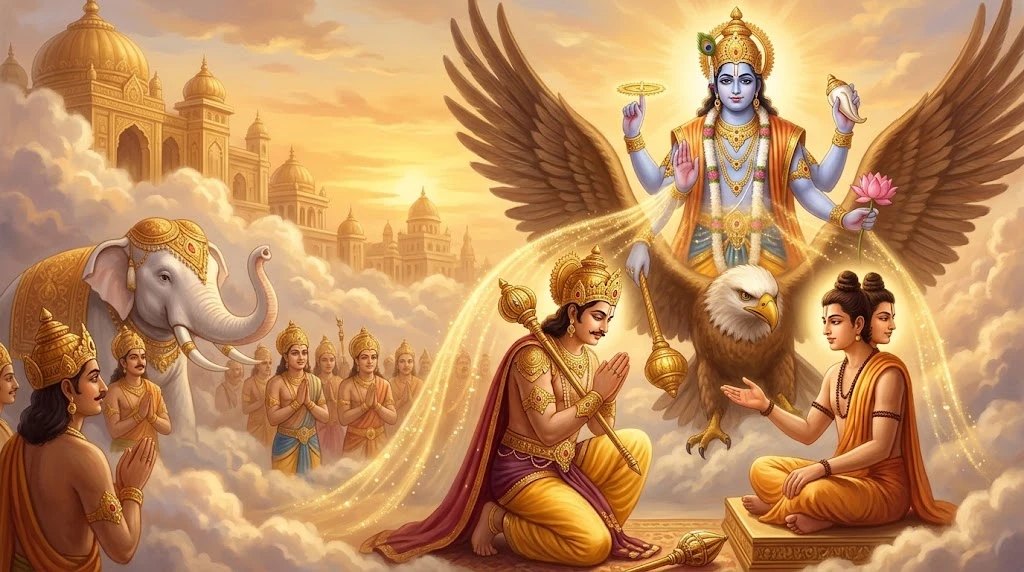
नारायण कवच श्रीमद्भागवत महापुराण के छठे स्कन्ध के आठवें अध्याय में है; भागवत की रचना परम्परा से महर्षि वेदव्यास को मानी जाती है। राजा परीक्षित के पूछने पर श्रीशुकदेव बताते हैं कि देवताओं ने त्वष्टा के पुत्र विश्वरूप को अपना पुरोहित बनाया और विश्वरूप ने इन्द्र को 'नारायण-वर्म', यानी नारायण से बना कवच, सिखाया। इसमें भगवान् के अवतारों, नामों और आयुधों को हर स्थान, दिन के हर भाग और हर संकट में रक्षा के लिए पुकारा गया है।
गीता प्रेस की पुस्तिका श्लोकों से पहले न्यास के मन्त्र छापती है, जो श्लोक 4 से 10 में बताई गई विधि का व्यावहारिक रूप हैं। परम्परा से लोग इसे भय, यात्रा, रोग, विरोध और कठिन समय में पढ़ते हैं, और ज्योतिष में इसे बृहस्पति (गुरु) और राहु से जोड़ा जाता है। इस पृष्ठ पर न्यास सहित पूरा पाठ है, हर श्लोक के नीचे उसका सरल अर्थ है, और साइन-इन करके इसकी मुफ्त PDF ली जा सकती है।
The Narayan Kavach is in the eighth chapter of the sixth book (skandha) of the Shrimad Bhagavata Mahapurana, which is traditionally attributed to Maharshi Veda Vyasa. Asked by King Parikshit, Shri Shukadeva tells how the gods made Vishvarupa, son of Tvashta, their priest, and how Vishvarupa taught Indra the Narayana varma, the armour made of Narayana. In it the Lord's avatars, names and weapons are called on to guard every place, every part of the day and every kind of danger.
The Gita Press booklet prints the nyasa mantras before the shlokas; they are the practical form of the rite that shlokas 4 to 10 describe. People traditionally read it in fear, on journeys, in illness, against hostility and in hard times, and in Jyotish it is linked with Jupiter (Guru) and Rahu. This page gives the full text with the nyasa, a plain meaning under every shloka, and a free PDF after sign-in.
पाठThe text
अंगन्यासAnga-nyasa
अङ्गन्यासः ॐ ॐ नमः—पादयोः। ॐ नं नमः—जानुनोः। ॐ मों नमः—ऊर्वोः। ॐ नां नमः—उदरे। ॐ रां नमः—हृदि। ॐ यं नमः—उरसि। ॐ णां नमः—मुखे। ॐ यं नमः—शिरसि।
यह अंगन्यास है: 'ॐ नमो नारायणाय' इस आठ अक्षरों के मन्त्र का एक-एक अक्षर, आगे ॐ और पीछे नमः लगाकर, शरीर के आठ स्थानों पर रखा जाता है। हर मन्त्र के साथ क्रम से दोनों पैरों, दोनों घुटनों, दोनों जाँघों, पेट, हृदय, छाती, मुख और सिर का स्पर्श किया जाता है; कवच के श्लोक 5 और 6 इसी विधि को शब्दों में बताते हैं।This is the anga-nyasa: each of the eight syllables of the mantra Om Namo Narayanaya, with Om before it and namah after it, is placed on one of eight parts of the body. With each mantra the reader touches in turn the feet, the knees, the thighs, the belly, the heart, the chest, the mouth and the head; shlokas 5 and 6 of the kavach describe this very rite in words.
करन्यासKara-nyasa
करन्यासः ॐ ॐ नमः—दक्षिणतर्जन्याम्। ॐ नं नमः—दक्षिणमध्यमायाम्। ॐ मों नमः—दक्षिणानामिकायाम्। ॐ भं नमः—दक्षिणकनिष्ठिकायाम्। ॐ गं नमः—वामकनिष्ठिकायाम्। ॐ वं नमः—वामानामिकायाम्। ॐ तें नमः—वाममध्यमायाम्। ॐ वां नमः—वामतर्जन्याम्। ॐ सुं नमः—दक्षिणाङ्गुष्ठोर्ध्वपर्वणि। ॐ दें नमः—दक्षिणाङ्गुष्ठाधःपर्वणि। ॐ वां नमः—वामाङ्गुष्ठोर्ध्वपर्वणि। ॐ यं नमः—वामाङ्गुष्ठाधःपर्वणि।
यह करन्यास है: बारह अक्षरों के मन्त्र 'ॐ नमो भगवते वासुदेवाय' का एक-एक अक्षर उँगलियों पर रखा जाता है। पहले दाहिने हाथ की तर्जनी, मध्यमा, अनामिका और कनिष्ठिका पर, फिर बाएँ हाथ की कनिष्ठिका, अनामिका, मध्यमा और तर्जनी पर, और अन्त में दाहिने और फिर बाएँ अँगूठे के ऊपरी और निचले पोर पर; श्लोक 7 में यही विधि कही गई है।This is the kara-nyasa: the twelve syllables of the mantra Om Namo Bhagavate Vasudevaya are placed one by one on the fingers. First on the index, middle, ring and little fingers of the right hand, then on the little, ring, middle and index fingers of the left, and last on the upper and lower joints of the right thumb and then of the left; shloka 7 gives this rite.
विष्णु-षडक्षर न्यासVishnu shadakshara nyasa
विष्णुषडक्षरन्यासः ॐ ॐ नमः—हृदये। ॐ विं नमः—मूर्धनि। ॐ षं नमः—भ्रुवोर्मध्ये। ॐ णं नमः—शिखायाम्। ॐ वें नमः—नेत्रयोः। ॐ नं नमः—सर्वसंधिषु।
यह विष्णु-षडक्षर न्यास है, जिसमें 'ॐ विष्णवे नमः' मन्त्र के अक्षर शरीर पर रखे जाते हैं: ॐ हृदय पर, 'वि' सिर के ऊपरी भाग (मूर्धा) पर, 'ष' दोनों भौंहों के बीच, 'ण' शिखा (चोटी) पर, 'वे' दोनों नेत्रों पर और 'न' शरीर के सब जोड़ों पर। श्लोक 8 और 9 में यही क्रम है।This is the Vishnu shadakshara nyasa, in which the syllables of the mantra Om Vishnave Namah are placed on the body: Om on the heart, vi on the crown of the head (murdha), sha between the eyebrows, na on the topknot (shikha), ve on the two eyes and na on all the joints of the body. Shlokas 8 and 9 give the same order.
दिग्बन्धDigbandha
ॐ मः अस्त्राय फट्—प्राच्याम्। ॐ मः अस्त्राय फट्—आग्नेय्याम्। ॐ मः अस्त्राय फट्—दक्षिणस्याम्। ॐ मः अस्त्राय फट्—नैर्ऋत्ये। ॐ मः अस्त्राय फट्—प्रतीच्याम्। ॐ मः अस्त्राय फट्—वायव्ये। ॐ मः अस्त्राय फट्—उदीच्याम्। ॐ मः अस्त्राय फट्—ऐशान्याम्। ॐ मः अस्त्राय फट्—ऊर्ध्वायाम्। ॐ मः अस्त्राय फट्—अधरायाम्।
यह दिग्बन्ध है, यानी दसों दिशाओं को बाँधना। षडक्षर मन्त्र का अन्तिम अक्षर 'मः' अस्त्र (आयुध) के रूप में लेकर 'ॐ मः अस्त्राय फट्' दस बार कहा जाता है, हर बार एक दिशा की ओर: पूर्व, आग्नेय (दक्षिण-पूर्व), दक्षिण, नैर्ऋत्य (दक्षिण-पश्चिम), पश्चिम, वायव्य (उत्तर-पश्चिम), उत्तर, ईशान (उत्तर-पूर्व), ऊपर और नीचे। श्लोक 9 और 10 यही कहते हैं: 'म' को अस्त्र मानकर, विसर्ग और 'फट्' के साथ, उसे सब दिशाओं में छोड़े।This is the digbandha, the binding of the ten directions. The last syllable of the six-syllable mantra, mah, is taken as a weapon (astra), and Om Mah Astraya Phat is said ten times, once towards each direction: east, south-east (agneya), south, south-west (nairritya), west, north-west (vayavya), north, north-east (aishanya), above and below. Shlokas 9 and 10 say the same: take ma as the weapon and, with the visarga and ending in phat, send it to every quarter.
श्लोकShloka 1
राजोवाच यया गुप्तः सहस्राक्षः सवाहान् रिपुसैनिकान्। क्रीडन्निव विनिर्जित्य त्रिलोक्या बुभुजे श्रियम्॥
राजा परीक्षित ने कहा: जिससे रक्षित होकर सहस्राक्ष (हज़ार नेत्रों वाले इन्द्र) ने शत्रु के सैनिकों को उनके वाहनों सहित, मानो क्रीड़ा करते हुए, जीत लिया और तीनों लोकों की श्री (ऐश्वर्य) का भोग किया,King Parikshit said: That by which Sahasraksha, the thousand-eyed Indra, was guarded when he conquered the enemy soldiers with their mounts as if at play, and enjoyed the fortune (shri) of the three worlds,
श्लोकShloka 2
भगवंस्तन्ममाख्याहि वर्म नारायणात्मकम्। यथाऽऽततायिनः शत्रून् येन गुप्तोऽजयन्मृधे॥
हे भगवन् (श्रीशुकदेव), नारायण-रूप वह वर्म (कवच) मुझे बताइए, और यह भी कि उससे रक्षित होकर इन्द्र ने युद्ध (मृध) में अपने ऊपर चढ़ आए (आततायी) शत्रुओं को कैसे जीता।O revered one (Bhagavan, said to Shuka), tell me that armour (varma) made of Narayana, and how, guarded by it, Indra defeated in battle (mridha) the enemies who had come against him (atatayin).
श्लोकShloka 3
श्रीशुक उवाच वृतः पुरोहितस्त्वाष्ट्रो महेन्द्रायानुपृच्छते। नारायणाख्यं वर्माह तदिहैकमनाः शृणु॥
श्रीशुक बोले: पुरोहित के रूप में वरण किए गए त्वाष्ट्र (त्वष्टा के पुत्र विश्वरूप) ने, पूछने वाले महेन्द्र (इन्द्र) को नारायण नाम का वर्म बताया। उसे यहाँ एक मन होकर सुनो।Shri Shuka said: Tvashtra (Vishvarupa, son of Tvashta), who had been chosen as priest of the gods, told the great Indra, at his asking, the armour called Narayana. Listen to it here with an undivided mind.
श्लोकShloka 4
विश्वरूप उवाच धौताङ्घ्रिपाणिराचम्य सपवित्र उदङ्मुखः। कृतस्वाङ्गकरन्यासो मन्त्राभ्यां वाग्यतः शुचिः॥
विश्वरूप ने कहा: साधक पैर और हाथ धोए, आचमन करे, पवित्री (कुश की अँगूठी) धारण करे और उत्तर की ओर मुख करे। फिर दोनों मन्त्रों से अपने अंगों और हाथों का न्यास (अंगन्यास और करन्यास) करके, वाणी को रोककर और शुद्ध होकर (आगे की विधि करे)।Vishvarupa said: Let the reader wash the feet and hands, sip water (achamana), wear the pavitra, a ring of kusha grass, and face north. Then, having placed the two mantras on their own limbs and hands (anga-nyasa and kara-nyasa), keeping silent and pure, (they proceed as follows).
श्लोकShloka 5
नारायणमयं वर्म संनह्येद् भय आगते। पादयोर्जानुनोरूर्वोरुदरे हृद्यथोरसि॥
भय का अवसर आने पर नारायणमय वर्म धारण करे: (मन्त्र के अक्षर) दोनों पैरों, घुटनों, जाँघों, पेट, हृदय और फिर छाती पर,When fear comes, one should put on this armour made of Narayana, (placing the syllables of the mantra) on the feet, the knees, the thighs, the belly, the heart and then the chest,
श्लोकShloka 6
मुखे शिरस्यानुपूर्व्यादोङ्कारादीनि विन्यसेत्। ॐ नमो नारायणायेति विपर्ययमथापि वा॥
और मुख तथा सिर पर, इसी क्रम से, 'ॐ नमो नारायणाय' के ॐ से आरम्भ होने वाले अक्षर रखे; अथवा उलटे क्रम (विपर्यय) से भी रख सकते हैं।and on the mouth and the head, in that order, one should place the syllables of Om Namo Narayanaya, beginning with Om; or else in the reverse order (viparyaya).
श्लोकShloka 7
करन्यासं ततः कुर्याद् द्वादशाक्षरविद्यया। प्रणवादियकारान्तमङ्गुल्यङ्गुष्ठपर्वसु॥
उसके बाद बारह अक्षरों की विद्या ('ॐ नमो भगवते वासुदेवाय') से करन्यास करे: प्रणव (ॐ) से आरम्भ करके 'य' तक के अक्षर उँगलियों और अँगूठों के पोरों पर रखे।After that, perform the kara-nyasa with the twelve-syllable vidya (Om Namo Bhagavate Vasudevaya): its syllables, from the pranava Om to the final ya, are placed on the fingers and on the joints of the thumbs.
श्लोकShloka 8
न्यसेद्धृदय ओङ्कारं विकारमनु मूर्धनि। षकारं तु भ्रुवोर्मध्ये णकारं शिखया दिशेत्॥
(फिर 'ॐ विष्णवे नमः' के अक्षर इस प्रकार रखे:) ॐकार हृदय पर, 'वि' मूर्धा (सिर) पर, 'ष' भौंहों के बीच और 'ण' शिखा (चोटी) पर।(Then the syllables of Om Vishnave Namah are placed:) Om on the heart, vi on the crown of the head (murdha), sha between the eyebrows, and na on the topknot (shikha).
श्लोकShloka 9
वेकारं नेत्रयोर्युञ्ज्यान्नकारं सर्वसन्धिषु। मकारमस्त्रमुद्दिश्य मन्त्रमूर्तिर्भवेद् बुधः॥
'वे' को दोनों नेत्रों पर और 'न' को शरीर के सब जोड़ों पर रखे। 'म' को अस्त्र (आयुध) मानकर प्रयोग करने से ज्ञानी साधक स्वयं मन्त्रमूर्ति (मन्त्र का साकार रूप) हो जाता है।ve on the two eyes and na on all the joints of the body. Using ma as the weapon (astra), the wise reader becomes the mantra in bodily form (mantra-murti).
श्लोकShloka 10
सविसर्गं फडन्तं तत् सर्वदिक्षु विनिर्दिशेत्। ॐ विष्णवे नम इति॥
उस 'म' को विसर्ग लगाकर और अन्त में 'फट्' जोड़कर (यानी 'मः अस्त्राय फट्' कहकर) सब दिशाओं में छोड़े। (षडक्षर) मन्त्र यह है: 'ॐ विष्णवे नमः'।With the visarga added and phat at its end (that is, as mah astraya phat), that ma is sent out to all the quarters. The (six-syllable) mantra is: Om Vishnave Namah.
श्लोकShloka 11
आत्मानं परमं ध्यायेद् ध्येयं षट्शक्तिभिर्युतम्। विद्यातेजस्तपोमूर्तिमिमं मन्त्रमुदाहरेत्॥
फिर उस परम आत्मा का ध्यान करे जो ध्यान के योग्य है और छह दिव्य शक्तियों से युक्त है (वे छह 'भग' जिनके कारण वे भगवान् कहलाते हैं); विद्या, तेज और तप की मूर्ति उस प्रभु का ध्यान करके यह मन्त्र (आगे का कवच) पढ़े।Then meditate on the supreme Self, who is worthy of meditation and endowed with the six divine powers (the six bhagas that make him Bhagavan), the embodiment of knowledge, radiance and austerity (vidya, tejas, tapas), and recite this mantra, the armour that follows.
श्लोकShloka 12
ॐ हरिर्विदध्यान्मम सर्वरक्षां न्यस्ताङ्घ्रिपद्मः पतगेन्द्रपृष्ठे। दरारिचर्मासिगदेषुचाप- पाशान् दधानोऽष्टगुणोऽष्टबाहुः॥
ॐ। श्रीहरि हर प्रकार से मेरी रक्षा करें, जिन्होंने पक्षिराज गरुड़ (पतगेन्द्र) की पीठ पर अपने चरण-कमल रखे हैं; जो आठ भुजाओं में शंख (दर), चक्र (अरि), ढाल (चर्म), तलवार (असि), गदा, बाण, धनुष और पाश धारण करते हैं और आठ गुणों (अणिमा आदि आठ सिद्धियों) से सम्पन्न हैं।Om. May Hari guard me in every way, he who rests his lotus feet on the back of Garuda, king of birds (patagendra); who in his eight arms holds the conch (dara), the discus (ari), the shield (charma), the sword (asi), the mace, the arrows, the bow and the noose; and who has the eight powers (ashta-guna, the eight siddhis such as anima).
श्लोकShloka 13
जलेषु मां रक्षतु मत्स्यमूर्ति- र्यादोगणेभ्यो वरुणस्य पाशात्। स्थलेषु मायावटुवामनोऽव्यात् त्रिविक्रमः खेऽवतु विश्वरूपः॥
जल में मत्स्य-रूप भगवान् जल-जन्तुओं (यादोगण) से और वरुण के पाश से मेरी रक्षा करें। स्थल पर माया से ब्रह्मचारी बालक (वटु) बने वामन रक्षा करें, और आकाश (ख) में विश्वरूप त्रिविक्रम रक्षा करें।In the waters may the Lord in the form of the Fish (Matsya) protect me from water creatures (yadogana) and from the noose of Varuna. On land may Vamana, who by his maya took the form of a young brahmachari (vatu), protect me, and in the sky (kha) may Trivikrama, whose form is the universe, protect me.
श्लोकShloka 14
दुर्गेष्वटव्याजिमुखादिषु प्रभुः पायान्नृसिंहोऽसुरयूथपारिः। विमुञ्चतो यस्य महाट्टहासं दिशो विनेदुर्न्यपतंश्च गर्भाः॥
किलों और दुर्गम जगहों (दुर्ग), जंगलों (अटवी) और रण के मुहानों (आजिमुख) में असुर-दलपतियों के शत्रु प्रभु नृसिंह रक्षा करें। जब उन्होंने महा-अट्टहास छोड़ा था, तब दिशाएँ गरज उठी थीं और (असुरों की स्त्रियों के) गर्भ गिर पड़े थे।In strongholds and hard places (durga), in forests (atavi), at the front of battle (aji-mukha) and the like, may the Lord Narasimha, the foe of the asura chiefs, protect me: when he let out his great laugh, the quarters roared back and the unborn (of the asura women) fell.
श्लोकShloka 15
रक्षत्वसौ माध्वनि यज्ञकल्पः स्वदंष्ट्रयोन्नीतधरो वराहः। रामोऽद्रिकूटेष्वथ विप्रवासे सलक्ष्मणोऽव्याद् भरताग्रजोऽस्मान्॥
यज्ञ-स्वरूप (यज्ञकल्प) वराह भगवान्, जिन्होंने अपनी दाढ़ पर पृथ्वी को ऊपर उठा लिया था, मार्ग (अध्वा) में मेरी रक्षा करें। पर्वत-शिखरों पर राम (परशुराम) रक्षा करें, और परदेस (विप्रवास) में लक्ष्मण सहित भरत के बड़े भाई (श्रीराम) हमारी रक्षा करें।May Varaha, the embodiment of sacrifice (yajna-kalpa), who raised the earth on his tusk, protect me on the road (adhvan). On mountain peaks may Rama (Parashurama) protect me, and away from home (vipravasa) may the elder brother of Bharata, Shri Rama, with Lakshmana, protect us.
श्लोकShloka 16
मामुग्रधर्मादखिलात् प्रमादा- न्नारायणः पातु नरश्च हासात्। दत्तस्त्वयोगादथ योगनाथः पायाद् गुणेशः कपिलः कर्मबन्धात्॥
नारायण मुझे सब प्रकार के उग्र धर्म (कठोर, हिंसक कर्म) से और प्रमाद (असावधानी) से बचाएँ, और नर हास (उपहास और उसके पीछे के अहंकार) से। योग के स्वामी दत्त (दत्तात्रेय) योग के बिगड़ने (अयोग) से, और गुणों के स्वामी (गुणेश) कपिल कर्म के बन्धन से रक्षा करें।May Narayana guard me from every harsh, violent practice (ugra-dharma) and from carelessness (pramada), and Nara from derision and the pride behind it (hasa). May Datta (Dattatreya), lord of yoga, guard me from failure in yoga (ayoga), and Kapila, master of the gunas (gunesha), from the bondage of karma.
श्लोकShloka 17
सनत्कुमारोऽवतु कामदेवा- द्धयशीर्षा मां पथि देवहेलनात्। देवर्षिवर्यः पुरुषार्चनान्तरात् कूर्मो हरिर्मां निरयादशेषात्॥
सनत्कुमार काम (कामदेव) से रक्षा करें; हयशीर्ष (हयग्रीव) मार्ग में देवताओं के अनादर (देवहेलन) के दोष से; देवर्षियों में श्रेष्ठ (नारद) भगवान् (पुरुष) की पूजा में होने वाली चूक से; और कूर्म-रूप हरि सब नरकों (निरय) से मेरी रक्षा करें।May Sanatkumara protect me from desire (Kamadeva); Hayashirsha (Hayagriva) on the road from the fault of slighting the gods (deva-helana); the best of the divine sages (Narada) from lapses in the worship of the Purusha; and Hari as the Tortoise (Kurma) from every hell (niraya).
श्लोकShloka 18
धन्वन्तरिर्भगवान् पात्वपथ्याद् द्वन्द्वाद् भयादृषभो निर्जितात्मा। यज्ञश्च लोकादवताज्जनान्ताद् बलो गणात् क्रोधवशादहीन्द्रः॥
भगवान् धन्वन्तरि अपथ्य (स्वास्थ्य के प्रतिकूल आहार-विहार) से मेरी रक्षा करें, और मन को जीत चुके (निर्जितात्मा) ऋषभदेव सुख-दुःख, सर्दी-गर्मी जैसे द्वन्द्वों और भय से। यज्ञ भगवान् लोक-निन्दा से और लोगों से होने वाली हानि (जनान्त) से बचाएँ; बलराम (बल) मनुष्यों के दलों (गण) से और नागराज शेष (अहीन्द्र) क्रोधवश कहलाने वाले सर्पों से रक्षा करें।May Lord Dhanvantari guard me from what is unwholesome for the body (apathya), and Rishabha, master of himself (nirjitatma), from the pairs of opposites such as pleasure and pain, heat and cold (dvandva), and from fear. May Yajna guard me from the censure of the world (loka) and from harm done by people (jananta); may Bala(rama) guard me from hostile crowds of people (gana), and the serpent king Shesha (Ahindra) from the serpents called krodhavasha.
श्लोकShloka 19
द्वैपायनो भगवानप्रबोधाद् बुद्धस्तु पाखण्डगणात् प्रमादात्। कल्किः कलेः कालमलात् प्रपातु धर्मावनायोरुकृतावतारः॥
भगवान् द्वैपायन (वेदव्यास) अज्ञान (अप्रबोध) से रक्षा करें; बुद्ध पाखण्डियों के समूह से और प्रमाद से; और धर्म की रक्षा के लिए महान अवतार लेने वाले कल्कि कलियुग के मैल (कालमल) से मेरी भली-भाँति रक्षा करें।May the Lord Dvaipayana (Vyasa) guard me from ignorance (aprabodha); the Buddha from the crowd of false teachers (pakhanda-gana) and from carelessness; and may Kalki, who takes his great descent to protect dharma, guard me well from the stain of the age of Kali (kala-mala).
श्लोकShloka 20
मां केशवो गदया प्रातरव्याद् गोविन्द आसङ्गवमात्तवेणुः। नारायणः प्राह्ण उदात्तशक्ति- र्मध्यन्दिने विष्णुररीन्द्रपाणिः॥
प्रातःकाल केशव अपनी गदा से मेरी रक्षा करें, और संगव तक (सुबह का वह भाग जब गौएँ दुहकर चराने ले जाई जाती हैं) हाथ में वेणु लिए गोविन्द। दिन चढ़ने पर (प्राह्ण) उदात्त (प्रबल) शक्ति वाले नारायण, और मध्याह्न में श्रेष्ठ चक्र (अरीन्द्र, सुदर्शन) हाथ में लिए विष्णु रक्षा करें।May Keshava with his mace protect me at daybreak, and Govinda, flute in hand, until the sangava (the part of the morning when the cows are milked and driven out). In the forenoon (prahna) may Narayana of lofty power (udatta-shakti) protect me, and at midday Vishnu, who holds the best of discs (arindra, the Sudarshana).
श्लोकShloka 21
देवोऽपराह्णे मधुहोग्रधन्वा सायं त्रिधामावतु माधवो माम्। दोषे हृषीकेश उतार्धरात्रे निशीथ एकोऽवतु पद्मनाभः॥
अपराह्ण में प्रचण्ड धनुष वाले मधुहा (मधु दैत्य को मारने वाले, मधुसूदन) देव रक्षा करें, और संध्या को त्रिधामा (तीनों धामों के स्वामी) माधव मेरी रक्षा करें। रात के आरम्भ (दोष) में हृषीकेश, और आधी रात तथा निशीथ (गहरी रात) में अकेले पद्मनाभ रक्षा करें।In the afternoon may the god Madhuha (Madhusudana, slayer of Madhu), with his fierce bow, protect me; at dusk Madhava, Tridhama (lord of the three abodes). As night falls (dosha) may Hrishikesha protect me, and in the dead of night (ardharatra, nishitha) Padmanabha alone.
श्लोकShloka 22
श्रीवत्सधामापररात्र ईशः प्रत्यूष ईशोऽसिधरो जनार्दनः। दामोदरोऽव्यादनुसन्ध्यं प्रभाते विश्वेश्वरो भगवान् कालमूर्तिः॥
रात के पिछले भाग (अपररात्र) में श्रीवत्स-चिह्न धारण करने वाले ईश्वर, उषःकाल (प्रत्यूष) में तलवार धारण करने वाले जनार्दन, प्रभात में दामोदर, और हर संध्या में काल-स्वरूप (कालमूर्ति) भगवान् विश्वेश्वर मेरी रक्षा करें।In the last part of the night (apararatra) may the Lord who bears the Shrivatsa mark protect me; at first light (pratyusha) Janardana, who holds the sword; at daybreak Damodara; and at every sandhya (the junctions of the day) the Lord Vishveshvara, master of the universe, who is Time itself (kala-murti).
श्लोकShloka 23
चक्रं युगान्तानलतिग्मनेमि भ्रमत् समन्ताद् भगवत्प्रयुक्तम्। दन्दग्धि दन्दग्ध्यरिसैन्यमाशु कक्षं यथा वातसखो हुताशः॥
हे चक्र (सुदर्शन), युग के अन्त की आग जैसी प्रखर नेमि (धार) वाले, भगवान् के चलाने पर चारों ओर घूमने वाले, शत्रु-सेना को तुरन्त भस्म कर दो, भस्म कर दो, जैसे वायु का सखा अग्नि (वातसख, हुताश) सूखे तिनकों के ढेर (कक्ष) को भस्म कर देता है।O Discus (the Sudarshana), whose rim (nemi) is as fierce as the fire at the end of an age, whirling all around as the Lord sends you forth: burn, burn up the enemy host at once, as fire, the friend of the wind (vatasakha), burns a heap of dry grass (kaksha).
श्लोकShloka 24
गदेऽशनिस्पर्शनविस्फुलिङ्गे निष्पिण्ढि निष्पिण्ढ्यजितप्रियासि। कूष्माण्डवैनायकयक्षरक्षो- भूतग्रहांश्चूर्णय चूर्णयारीन्॥
हे गदा, जिसकी चिंगारियाँ वज्र (अशनि) की तरह आघात करती हैं, अजित (विष्णु) की प्रिय गदा, पीस डालो, पीस डालो; कूष्माण्ड, वैनायक, यक्ष, राक्षस, भूत और ग्रह (पकड़ने वाली बाधाएँ) कहलाने वाले उपद्रवियों को और शत्रुओं को चूर्ण कर दो, चूर्ण कर दो।O Mace, whose sparks strike like the thunderbolt (ashani), beloved of Ajita (Vishnu): crush, crush; grind to powder, grind to powder the kushmandas, vainayakas, yakshas, rakshasas, bhutas and grahas (seizing spirits), and the enemies.
श्लोकShloka 25
त्वं यातुधानप्रमथप्रेतमातृ- पिशाचविप्रग्रहघोरदृष्टीन्। दरेन्द्र विद्रावय कृष्णपूरितो भीमस्वनोऽरेर्हृदयानि कम्पयन्॥
हे शंखराज (दरेन्द्र, पाञ्चजन्य), श्रीकृष्ण के फूँकने से भरे हुए, भयंकर ध्वनि करते हुए और शत्रु के हृदयों को कँपाते हुए, तुम यातुधान, प्रमथ, प्रेत, मातृका, पिशाच, विप्रग्रह (ब्रह्मराक्षस) और भयानक दृष्टि वाले जीवों को भगा दो।O king of conches (Darendra, the Panchajanya), filled with Krishna's breath, sounding terribly and making the hearts of the foe tremble: drive away the yatudhanas, pramathas, pretas, matrikas, pishachas, vipra-grahas (brahma-rakshasas) and all of dreadful gaze.
श्लोकShloka 26
त्वं तिग्मधारासिवरारिसैन्य- मीशप्रयुक्तो मम छिन्धि छिन्धि। चक्षूंषि चर्मञ्छतचन्द्र छादय द्विषामघोनां हर पापचक्षुषाम्॥
हे श्रेष्ठ तलवार (असिवर), तीखी धार वाली, भगवान् (ईश) की चलाई हुई, मेरी शत्रु-सेना को काट दो, काट दो। हे सौ चन्द्रमाओं (चन्द्राकार चिह्नों) से सजी ढाल (चर्म), पापी शत्रुओं की आँखें ढक दो और पाप-भरी दृष्टि वालों की दृष्टि हर लो।O finest of swords (asivara), sharp of edge, wielded by the Lord (Isha): cut, cut down the army of my foes. O Shield (charma), adorned with a hundred moon-shaped bosses (shata-chandra), cover the eyes of the sinful enemies and take away the sight of those whose gaze is wicked.
श्लोकShloka 27
यन्नो भयं ग्रहेभ्योऽभूत् केतुभ्यो नृभ्य एव च। सरीसृपेभ्यो दंष्ट्रिभ्यो भूतेभ्योंऽहोभ्य एव वा॥
हमें जो भय ग्रहों से, केतुओं (आकाश के अशुभ चिह्नों) से, मनुष्यों से, रेंगने वाले जीवों (सरीसृप) से, दाढ़ वाले पशुओं (दंष्ट्री) से, भूतों से या पापों (अंहस्) से हुआ हो,Whatever fear has come to us from the grahas (planets), from the ketus (ill-omened signs in the sky), from men, from creeping creatures (sarisripa), from fanged beasts (damshtri), from spirits (bhuta) or from sins (amhas),
श्लोकShloka 28
सर्वाण्येतानि भगवन्नामरूपास्त्रकीर्तनात्। प्रयान्तु संक्षयं सद्यो ये नः श्रेयःप्रतीपकाः॥
वे सब, और जो कुछ भी हमारे कल्याण (श्रेय) के विरोधी हैं, भगवान् के नाम, रूप और अस्त्रों के कीर्तन से तुरन्त पूरी तरह नष्ट हो जाएँ।may all of these, and whatever stands against our good (shreyas), be utterly destroyed at once by the chanting of the Lord's names, forms and weapons.
श्लोकShloka 29
गरुडो भगवान् स्तोत्रस्तोभश्छन्दोमयः प्रभुः। रक्षत्वशेषकृच्छ्रेभ्यो विष्वक्सेनः स्वनामभिः॥
भगवान् गरुड़, जिनका स्वरूप ही स्तोत्र, स्तोभ (सामगान में जोड़े जाने वाले अक्षर) और छन्द हैं, और विष्वक्सेन (भगवान् के पार्षदों के प्रमुख), अपने नामों के बल से सब कष्टों (कृच्छ्र) से हमारी रक्षा करें।May the Lord Garuda, whose very being is hymns, stobhas (the syllables added in Sama chanting) and Vedic metres, and Vishvaksena (chief of the Lord's attendants), by the power of their own names, protect us from every hardship (kricchra).
श्लोकShloka 30
सर्वापद्भ्यो हरेर्नामरूपयानायुधानि नः। बुद्धीन्द्रियमनःप्राणान् पान्तु पार्षदभूषणाः॥
हरि के नाम, उनके रूप, उनका वाहन, उनके आयुध, उनके पार्षद और उनके आभूषण, ये सब हमारी बुद्धि, इन्द्रियों, मन और प्राणों को हर विपदा (आपद्) से बचाए रखें।May Hari's names, his forms, his mount, his weapons, his attendants (parshada) and his ornaments keep our intellect, senses, mind and life-breath safe from every calamity.
श्लोकShloka 31
यथा हि भगवानेव वस्तुतः सदसच्च यत्। सत्येनानेन नः सर्वे यान्तु नाशमुपद्रवाः॥
जैसे यह सत्य है कि सत् और असत् (जो प्रकट है और जो अप्रकट है), जो कुछ भी है, वह वास्तव में भगवान् ही हैं, उसी सत्य के बल से हमारे सब उपद्रव (संकट) मिट जाएँ।As it is true that whatever exists, the manifest and the unmanifest (sat and asat), is in truth the Lord alone, so by the strength of this truth may all our troubles (upadrava) come to an end.
श्लोकShloka 32
यथैकात्म्यानुभावानां विकल्परहितः स्वयम्। भूषणायुधलिङ्गाख्या धत्ते शक्तीः स्वमायया॥
भगवान् स्वयं हर तरह के भेद (विकल्प) से परे हैं, ऐसा उन लोगों का अनुभव है जो (आत्मा और परमात्मा की) एकता को जान चुके हैं; और फिर भी वही अपनी माया से आभूषण, आयुध और रूप (लिंग) कहलाने वाली शक्तियों को धारण करते हैं।And as, to those who have realised oneness (aikatmya), the Lord is himself beyond every distinction (vikalpa), yet by his own maya he bears the powers known as his ornaments, his weapons and his forms (linga),
श्लोकShloka 33
तेनैव सत्यमानेन सर्वज्ञो भगवान् हरिः। पातु सर्वैः स्वरूपैर्नः सदा सर्वत्र सर्वगः॥
उसी सत्य के बल से सर्वज्ञ, सर्वव्यापी (सर्वग) भगवान् हरि अपने सब रूपों से सदा और सब जगह हमारी रक्षा करें।by that same truth may the all-knowing Lord Hari, who pervades all (sarvaga), protect us with all his forms, always and everywhere.
श्लोकShloka 34
विदिक्षु दिक्षूर्ध्वमधः समन्ता- दन्तर्बहिर्भगवान् नारसिंहः। प्रहापयँल्लोकभयं स्वनेन स्वतेजसा ग्रस्तसमस्ततेजाः॥
दिशाओं और उनके बीच के कोणों में, ऊपर-नीचे, चारों ओर, भीतर और बाहर, भगवान् नृसिंह (हमारी रक्षा करें), जो अपनी गर्जना (स्वन) से संसार का भय दूर भगाते हैं और जिनके तेज ने सब तेजों को अपने में समा लिया है।In the quarters and the corners between them, above and below, on every side, within and without, may the Lord Narasimha (protect us), who with his roar (svana) drives away the fear of the world, and whose radiance has swallowed every other radiance.
फलश्रुतिPhalashruti 35
मघवन्निदमाख्यातं वर्म नारायणात्मकम्। विजेष्यस्यञ्जसा येन दंशितोऽसुरयूथपान्॥
हे मघवन् (इन्द्र), नारायण-रूप यह वर्म मैंने तुम्हें बता दिया। इसे धारण करके (इससे दंशित होकर) तुम असुर-सेनापतियों को सहज ही जीत लोगे।O Maghavan (Indra), I have told you this armour made of Narayana. Clad in it (damshita), you will easily overcome the leaders of the asura hosts.
फलश्रुतिPhalashruti 36
एतद् धारयमाणस्तु यं यं पश्यति चक्षुषा। पदा वा संस्पृशेत् सद्यः साध्वसात् स विमुच्यते॥
इसे धारण करने वाला जिस-जिस को अपनी आँखों से देख ले या पैर से छू दे, वह भी तुरन्त भय (साध्वस) से छूट जाता है।Whoever wears it, anyone they look upon with their eyes or touch with their foot is at once freed from fear (sadhvasa).
फलश्रुतिPhalashruti 37
न कुतश्चिद् भयं तस्य विद्यां धारयतो भवेत्। राजदस्युग्रहादिभ्यो व्याघ्रादिभ्यश्च कर्हिचित्॥
जो इस विद्या को धारण करता है, उसे कहीं से भी कभी भय नहीं होता: न राजा से, न लुटेरों (दस्यु) से, न ग्रह आदि बाधाओं से, न बाघ जैसे हिंसक पशुओं से।No fear ever comes from any side to one who holds this vidya: not from kings, robbers (dasyu) or grahas (seizing afflictions), nor from tigers and other wild beasts.
फलश्रुतिPhalashruti 38
इमां विद्यां पुरा कश्चित् कौशिको धारयन् द्विजः। योगधारणया स्वाङ्गं जहौ स मरुधन्वनि॥
पहले कभी कौशिक कुल का एक द्विज (ब्राह्मण) इस विद्या को धारण करता था। उसने मरुस्थल (मरुधन्वा) में योग-धारणा के द्वारा अपनी देह छोड़ी।Long ago a certain twice-born of the Kaushika line held this vidya. In the desert (marudhanvan) he gave up his body by yogic concentration (yoga-dharana).
फलश्रुतिPhalashruti 39
तस्योपरि विमानेन गन्धर्वपतिरेकदा। ययौ चित्ररथः स्त्रीभिर्वृतो यत्र द्विजक्षयः॥
एक बार गन्धर्वों के स्वामी चित्ररथ स्त्रियों से घिरे हुए अपने विमान में उस स्थान के ऊपर से गुज़रे, जहाँ उस द्विज की देह छूटी थी।Once Chitraratha, lord of the gandharvas, surrounded by women, passed in his aerial chariot (vimana) over the place where the brahmin's body had fallen.
फलश्रुतिPhalashruti 40
गगनान्न्यपतत् सद्यः सविमानो ह्यवाक्शिराः। स वालखिल्यवचनादस्थीन्यादाय विस्मितः। प्रास्य प्राचीसरस्वत्यां स्नात्वा धाम स्वमन्वगात्॥
उसी क्षण वे अपने विमान सहित, सिर के बल, आकाश से नीचे आ गिरे। विस्मित चित्ररथ ने वालखिल्य ऋषियों के वचन पर (उस ब्राह्मण की) अस्थियाँ उठाईं, उन्हें प्राची सरस्वती (सरस्वती का पूर्व की ओर बहने वाला भाग) में डाला, स्नान किया और अपने लोक लौट गए।At that very moment he fell from the sky, vimana and all, head downwards. Astonished, at the word of the Valakhilya sages he took up (the brahmin's) bones, cast them into the Prachi Saraswati (the stretch where the Saraswati flows east), bathed, and returned to his own realm.
फलश्रुतिPhalashruti 41
श्रीशुक उवाच य इदं शृणुयात् काले यो धारयति चादृतः। तं नमस्यन्ति भूतानि मुच्यते सर्वतो भयात्॥
श्रीशुक ने कहा: समय आने पर जो इसे सुने, और जो श्रद्धा और आदर से इसे धारण करे, उसे सब प्राणी प्रणाम करते हैं और वह सब ओर के भय से छूट जाता है।Shri Shuka said: Whoever hears this at the right time, and whoever wears it with reverence, is honoured by all beings and is freed from fear on every side.
फलश्रुतिPhalashruti 42
एतां विद्यामधिगतो विश्वरूपाच्छतक्रतुः। त्रैलोक्यलक्ष्मीं बुभुजे विनिर्जित्य मृधेऽसुरान्॥
शतक्रतु (सौ यज्ञ करने वाले इन्द्र) ने विश्वरूप से यह विद्या पाकर युद्ध में असुरों को जीता और तीनों लोकों की लक्ष्मी का भोग किया।Shatakratu (Indra, performer of a hundred sacrifices), having received this vidya from Vishvarupa, defeated the asuras in battle and enjoyed the fortune of the three worlds.
यह कवच कहाँ से हैWhere it comes from
भागवत के छठे स्कन्ध के सातवें अध्याय में कथा है कि तीनों लोकों के ऐश्वर्य के मद में इन्द्र ने सभा में आए अपने गुरु बृहस्पति का आदर नहीं किया। बृहस्पति चले गए, और गुरु के बिना देवता असुरों से हारने लगे। ब्रह्मा जी की सलाह पर देवताओं ने त्वष्टा के पुत्र विश्वरूप को अपना पुरोहित चुना, और आठवें अध्याय में विश्वरूप इन्द्र को यह नारायण-कवच देते हैं, जिससे इन्द्र असुरों को जीतकर फिर तीनों लोकों का ऐश्वर्य पाते हैं।
कवच में तीन परतें हैं: शुकदेव राजा परीक्षित को सुना रहे हैं, उनकी कथा में विश्वरूप इन्द्र को सिखा रहे हैं, और अन्त में (श्लोक 38 से 40) कौशिक ब्राह्मण का प्रसंग इसकी शक्ति का उदाहरण देता है। गीता प्रेस की प्रति की श्लोक-संख्या 1 से 42 भागवत के 6.8.1 से 6.8.42 से पूरी तरह मिलती है।
न्यास के मन्त्र भागवत के श्लोकों में नहीं हैं; वे श्लोक 4 से 10 में कही गई विधि को मन्त्र-रूप में लिखते हैं: आठ अक्षरों का अंगन्यास, बारह अक्षरों का करन्यास, छह अक्षरों का विष्णु-न्यास और दसों दिशाओं का दिग्बन्ध। यहाँ का पाठ गीता प्रेस, गोरखपुर की पुस्तिका 'श्रीनारायणकवच' (कोड 229) से लिया गया है और भागवत के दो ऑनलाइन पाठों से मिलाया गया है।
The seventh chapter of the sixth book tells how Indra, proud of his lordship over the three worlds, failed to honour his guru Brihaspati when he came into the assembly. Brihaspati withdrew, and without their guru the gods began to lose to the asuras. On Brahma's advice they chose Vishvarupa, son of Tvashta, as their priest, and in the eighth chapter Vishvarupa gives Indra this Narayana armour, with which Indra overcomes the asuras and regains the fortune of the three worlds.
The kavach has three layers: Shukadeva is speaking to King Parikshit; within his telling Vishvarupa teaches Indra; and at the end (shlokas 38 to 40) the story of a Kaushika brahmin shows its power. The Gita Press numbering, 1 to 42, matches the Bhagavata's 6.8.1 to 6.8.42 exactly.
The nyasa mantras are not among the Bhagavata's verses; they write out as mantras the rite that shlokas 4 to 10 describe: the eight-syllable anga-nyasa, the twelve-syllable kara-nyasa, the six-syllable Vishnu nyasa and the digbandha of the ten directions. The text here is taken from the Gita Press, Gorakhpur booklet Shri Narayan Kavach (code 229) and checked against two online texts of the Bhagavata.
कवच की बनावटHow the armour is built
श्लोक 1 से 3 में परीक्षित का प्रश्न और शुकदेव की भूमिका है। श्लोक 4 से 11 विधि बताते हैं: हाथ-पैर धोना, आचमन, उत्तर की ओर मुख, तीनों न्यास, दिग्बन्ध और फिर भगवान् का ध्यान। श्लोक 12 से कवच आरम्भ होता है, श्रीहरि के उस रूप से जो गरुड़ की पीठ पर चरण रखे, आठ भुजाओं में आठ आयुध लिए हैं।
श्लोक 13 से 19 में अवतार एक-एक स्थान और संकट से रक्षा करते हैं: जल में मत्स्य, स्थल पर वामन, आकाश में त्रिविक्रम, दुर्गम स्थानों में नृसिंह, मार्ग में वराह, और आगे दत्तात्रेय, कपिल, धन्वन्तरि, ऋषभ, व्यास, बुद्ध और कल्कि तक। श्लोक 20 से 22 दिन और रात के हर भाग को भगवान् के एक नाम को सौंपते हैं: प्रातः केशव, मध्याह्न में विष्णु, संध्या को माधव, आधी रात को पद्मनाभ, और इसी तरह।
श्लोक 23 से 26 में भगवान् के आयुधों से प्रार्थना है: सुदर्शन चक्र, गदा, शंख, तलवार और ढाल। श्लोक 27 से 34 सत्य-वचन के रूप में हैं: जैसे यह सत्य है कि जो कुछ है वह भगवान् ही हैं, उसी सत्य के बल से सब संकट मिटें; और अन्त में नृसिंह को हर दिशा में, भीतर और बाहर पुकारा गया है। श्लोक 35 से 42 फलश्रुति और कौशिक ब्राह्मण की कथा हैं।
Shlokas 1 to 3 hold Parikshit's question and Shukadeva's opening. Shlokas 4 to 11 give the rite: washing the hands and feet, achamana, facing north, the three nyasas, the digbandha and then meditation on the Lord. The armour itself begins at shloka 12, with Hari as he rests his feet on Garuda's back and holds eight weapons in his eight arms.
In shlokas 13 to 19 the avatars each guard a place or a danger: Matsya in water, Vamana on land, Trivikrama in the sky, Narasimha in hard places, Varaha on the road, and on through Dattatreya, Kapila, Dhanvantari, Rishabha, Vyasa, the Buddha and Kalki. Shlokas 20 to 22 give each part of the day and night to one of the Lord's names: Keshava at daybreak, Vishnu at midday, Madhava at dusk, Padmanabha in the dead of night, and so on.
Shlokas 23 to 26 address the Lord's weapons: the Sudarshana discus, the mace, the conch, the sword and the shield. Shlokas 27 to 34 are declarations of truth: as it is true that all that exists is the Lord, so by that truth may every trouble end; and at the close Narasimha is called on in every direction, within and without. Shlokas 35 to 42 are the phalashruti and the story of the Kaushika brahmin.
पाठ विधिHow to read it
श्लोक 4 में बताई गई विधि से आरम्भ करें: हाथ-पैर धोकर आचमन करें, दाहिने हाथ की अनामिका में कुश की पवित्री पहनें और उत्तर की ओर मुख करके बैठें। फिर पुस्तिका के क्रम से अंगन्यास, करन्यास, विष्णु-षडक्षर न्यास और दिग्बन्ध करें; हर मन्त्र बोलते हुए उसमें कहे गए अंग या उँगली को छुएँ, और दिग्बन्ध में हर दिशा की ओर चुटकी बजाएँ। न्यास के समय मौन (वाग्यत) रहें, यानी मन्त्रों के अलावा कुछ न बोलें।
न्यास के बाद श्लोक 11 के अनुसार छह शक्तियों से युक्त, विद्या, तेज और तप की मूर्ति भगवान् का ध्यान करें, और फिर श्लोक 12 से कवच पढ़ें। रक्षा की प्रार्थना श्लोक 12 से 34 तक चलती है; पूरा पाठ सभी 42 श्लोकों का है, और बहुत-से लोग श्लोक 1 से 42 तक पढ़ते हैं ताकि कथा और फलश्रुति भी साथ रहें।
श्लोक 5 कहता है 'भय आगते', यानी भय का अवसर आने पर यह कवच धारण करे; इसलिए परम्परा से इसे कठिन समय में, यात्रा से पहले, रोग में या मन के अशान्त होने पर पढ़ा जाता है। नियमित पाठ के लिए प्रातः या संध्या का समय रखा जाता है, और गुरुवार तथा एकादशी को, भगवान् विष्णु की पूजा के बाद, इसका पाठ विशेष माना जाता है।
Begin as shloka 4 says: wash the hands and feet, do achamana, wear a pavitra of kusha grass on the ring finger of the right hand, and sit facing north. Then do the anga-nyasa, kara-nyasa, Vishnu shadakshara nyasa and digbandha in the booklet's order, touching the limb or finger each mantra names and snapping the fingers towards each direction in the digbandha. Keep silent through the nyasa (vagyata), saying nothing but the mantras.
After the nyasa, meditate on the Lord as shloka 11 describes, endowed with the six powers, the embodiment of knowledge, radiance and austerity, and then read the armour from shloka 12. The prayer for protection runs from shloka 12 to 34; the full reading is all 42 shlokas, and many people read 1 to 42 so that the story and the phalashruti come with it.
Shloka 5 says bhaya agate, when fear comes, one should put on this armour; so it is traditionally read in hard times, before a journey, in illness or when the mind is uneasy. For a regular reading, morning or evening is kept, and on Thursdays and Ekadashi, after Vishnu puja, the reading is held to be special.
महत्व और फलMeaning and fruit
इस कवच का मूल भाव श्लोक 31 से 33 में है: रक्षा करने वाला एक ही है, जो अपनी माया से अनेक रूप, आयुध और आभूषण धारण करता है। अवतारों, नामों और आयुधों की लम्बी सूची उसी एक भगवान् को हर स्थान और दिन के हर भाग में याद करने का तरीका है, और न्यास के द्वारा पाठ करने वाला स्वयं को मन्त्र से ढका हुआ, 'मन्त्रमूर्ति' (श्लोक 9) मानकर पढ़ता है।
फलश्रुति (श्लोक 35 से 42) कहती है कि इसे धारण करने वाले को किसी ओर से भय नहीं होता, और इन्द्र ने इसी से असुरों को जीता। ये परम्परा के वचन हैं, किसी फल का वादा नहीं; श्रद्धा से पढ़ने वाले इसे मन को स्थिर और निर्भय रखने वाला पाठ मानते हैं। रोग में यह पाठ उपचार के साथ किया जाता है, उसकी जगह नहीं।
The heart of the kavach is in shlokas 31 to 33: the protector is one, who by his own maya takes on many forms, weapons and ornaments. The long list of avatars, names and weapons is a way of remembering that one Lord in every place and in every part of the day, and through the nyasa the reader recites as one clothed in the mantra, a mantra-murti (shloka 9).
The phalashruti (shlokas 35 to 42) says that no fear comes from any side to the one who wears it, and that Indra won against the asuras with it. These are the words of tradition, not a promise of results; those who read it with faith hold it to be a reading that keeps the mind steady and unafraid. In illness it goes alongside treatment, never in its place.
कब पढ़ेंWhen to read
गुरुवार और एकादशी को, भगवान् विष्णु की पूजा के बाद; कठिन समय में, यात्रा से पहले या मन के अशान्त होने पर (श्लोक 5: 'भय आगते'); और नियमित पाठ के रूप में प्रातः या संध्या को एक बार। बृहस्पति या राहु की दशा-अन्तर्दशा में इसका नियमित पाठ रखा जाता है।On Thursdays and Ekadashi, after Vishnu puja; in hard times, before a journey or when the mind is uneasy (shloka 5: bhaya agate); and as a regular reading once, morning or evening. It is kept as a regular reading during a Jupiter or Rahu dasha or antardasha.
कुंडली मेंIn your kundli
ज्योतिष में भगवान् विष्णु की उपासना बृहस्पति (गुरु) का उपाय मानी जाती है, और विष्णु तथा नृसिंह की शरण राहु के लिए भी बताई जाती है, क्योंकि पुराण की कथा में सुदर्शन चक्र ने ही राहु का सिर काटा था। यह कवच भी उस समय दिया गया जब बृहस्पति देवताओं को छोड़कर चले गए थे, और श्लोक 27 में ग्रहों और केतुओं से हुए भय से छुटकारे की प्रार्थना है। इसलिए कुंडली में बृहस्पति के नीच (मकर) या पीड़ित होने पर, गुरु-राहु की युति (गुरु-चाण्डाल योग) में, बृहस्पति या राहु की महादशा या अन्तर्दशा में, गोचर में राहु के लग्न या चन्द्र राशि पर आने पर, और आठवें या बारहवें भाव के पीड़ित होने पर नारायण कवच का नियमित पाठ बताया जाता है। यह परम्परा का उपाय है, किसी फल का वचन नहीं। अपनी कुंडली में गुरु और राहु की स्थिति और चल रही दशा इसी साइट पर कुंडली बनाकर देखी जा सकती है।In Jyotish the worship of Vishnu is a remedy for Jupiter (Guru), and refuge in Vishnu and Narasimha is also advised for Rahu, since in the Purana it was the Sudarshana discus that cut off Rahu's head. This kavach, too, was given when Brihaspati had left the gods, and shloka 27 asks for release from fear that comes from the grahas and the ketus. So a regular reading of the Narayan Kavach is advised when Jupiter is debilitated (in Capricorn) or afflicted in the kundli, when Jupiter is conjoined with Rahu (Guru-Chandal yoga), in a Jupiter or Rahu mahadasha or antardasha, when Rahu transits the lagna or the Moon sign, and when the 8th or 12th house is afflicted. It is a traditional remedy, not a promise of results. The position of Jupiter and Rahu in one's own kundli, and the dasha running now, can be seen by making a kundli on this site.
ग्रह: Grahas: बृहस्पतिJupiter, राहुRahu
अपनी कुंडली में देखेंCheck it in your kundliप्रश्नोत्तरQuestions people ask
- नारायण कवच कब पढ़ना चाहिए?When should the Narayan Kavach be read?
- गुरुवार और एकादशी इसके मुख्य दिन माने जाते हैं, विशेषकर भगवान् विष्णु की पूजा के बाद। श्लोक 5 के अनुसार भय या कठिन समय आने पर, यात्रा से पहले या रोग में भी इसे पढ़ा जाता है। रोज़ के पाठ के लिए प्रातः या संध्या का समय रखा जाता है।Thursdays and Ekadashi are held to be its main days, especially after Vishnu puja. Following shloka 5, it is also read when fear or a hard time comes, before a journey or in illness. For a daily reading, morning or evening is kept.
- नारायण कवच कितनी बार पढ़ें?How many times should the Narayan Kavach be read?
- सामान्य रूप से न्यास सहित एक पूरा पाठ पर्याप्त माना जाता है। विशेष संकल्प के साथ पढ़ने वाले इसे तीन, सात या ग्यारह बार पढ़ते हैं, या एक निश्चित अवधि तक रोज़ नियम से पढ़ते हैं। संख्या से अधिक महत्त्व नियम और श्रद्धा का माना जाता है।Usually one full reading with the nyasa is held to be enough. Those reading it with a particular sankalpa read it three, seven or eleven times, or daily for a fixed period. Regularity and faith are held to matter more than the number.
- नारायण कवच पढ़ने के क्या लाभ हैं?What are the benefits of reading the Narayan Kavach?
- फलश्रुति (श्लोक 35 से 42) कहती है कि इसे धारण करने वाले को राजा, लुटेरों, ग्रह-बाधा या हिंसक पशुओं, किसी से भी भय नहीं होता, और इन्द्र ने इसी के बल से असुरों को जीता। परम्परा से इसे रक्षा, निर्भयता और कठिन समय में मन की स्थिरता के लिए पढ़ा जाता है। ये परम्परा के वचन हैं, किसी फल का वादा नहीं।The phalashruti (shlokas 35 to 42) says that one who wears it has no fear from kings, robbers, grahas or wild beasts, and that Indra overcame the asuras by its strength. It is traditionally read for protection, for fearlessness and for a steady mind in hard times. These are the words of tradition, not a promise of results.
- नारायण कवच पढ़ने के नियम क्या हैं, और क्या न्यास ज़रूरी है?What are the rules for reading the Narayan Kavach, and is the nyasa needed?
- श्लोक 4 के अनुसार हाथ-पैर धोकर, आचमन करके, पवित्री पहनकर, उत्तर की ओर मुख करके और शुद्ध मन से पाठ किया जाता है। भागवत स्वयं न्यास को कवच धारण करने की विधि बताता है (श्लोक 4 से 10), इसलिए परम्परा में न्यास सहित पाठ ही पूरा माना जाता है; जिन्हें न्यास न आता हो, वे श्रद्धा से केवल श्लोक भी पढ़ते हैं। पाठ के समय मौन और एकाग्रता रखी जाती है।As shloka 4 says, the reading is done after washing the hands and feet, doing achamana, wearing the pavitra, facing north and with a clean mind. The Bhagavata itself gives the nyasa as the way to put on the armour (shlokas 4 to 10), so in tradition the reading with the nyasa is held to be complete; those who do not know the nyasa also read the shlokas alone, with faith. Silence and attention are kept through the reading.
साथ में पढ़ेंRead alongside
 स्तोत्र और कवचStotras and Kavachas
श्रीविष्णुसहस्रनामस्तोत्रम्
Shri Vishnu Sahasranama Stotram
'विश्वं विष्णुर्वषट्कारो': महाभारत के अनुशासन पर्व से भगवान् विष्णु के सहस्र नाम, संवाद और फलश्रुति के अर्थ सहितVishvam Vishnur Vashatkaro: the thousand names of Vishnu from the Anushasana Parva of the Mahabharata, with the meaning of the dialogue and the phalashruti
 स्तोत्र और कवचStotras and Kavachas
श्रीरामरक्षास्तोत्रम्
Shri Ram Raksha Stotra
बुधकौशिक ऋषि रचित रामरक्षा-कवच: विनियोग, ध्यान और 38 श्लोक, हर श्लोक के अर्थ सहितBudha Kaushika's armour of Rama's names: the viniyoga, the dhyana and all 38 verses, with the meaning of each
 स्तोत्र और कवचStotras and Kavachas
दुर्गा कवच (देव्याः कवचम्)
Durga Kavach (Devi Kavacham)
श्रीदुर्गासप्तशती का पहला अंग: ब्रह्मा द्वारा मार्कण्डेय को सुनाया गया देवी-कवच, गीता प्रेस के पाठ से, हर श्लोक के अर्थ सहितThe first limb of the Durga Saptashati: the Devi's armour as Brahma told it to Markandeya, in the Gita Press text, with the meaning of every shloka
 चालीसाChalisas
श्री विष्णु चालीसा
Vishnu Chalisa
जगत के पालनहार भगवान विष्णु की चालीसा, हर दोहे और चौपाई के अर्थ सहितThe Chalisa of Vishnu, preserver of the world, with the meaning of every doha and chaupai
 आरतीAartis
ॐ जय जगदीश हरे
Om Jai Jagdish Hare
श्री विष्णु जी की आरती, पं. श्रद्धाराम शर्मा रचित, अर्थ सहितThe Vishnu aarti written by Pandit Shardha Ram Sharma, with the meaning of every stanza
 व्रत कथाVrat Kathas
बृहस्पतिवार व्रत कथा
Brihaspativar Vrat Katha
भगवान विष्णु और बृहस्पति देव का गुरुवार व्रत — दानी राजा और अभिमानी रानी की कथा, व्रत विधि और उद्यापनThe Thursday fast for Vishnu and Brihaspati: the generous king and his proud queen, how to keep the fast, and the udyapan