श्रीरुद्राष्टकम्
Shri Rudrashtakam
गोस्वामी तुलसीदास रचित शिव-स्तुति, रामचरितमानस के उत्तरकाण्ड से: आठ श्लोक और फलश्रुति, हर श्लोक के अर्थ सहितTulsidas's Sanskrit hymn to Shiva from the Uttarkand of the Ramcharitmanas: eight shlokas and the phalashruti, with the meaning of every shloka
PDF डाउनलोडDownload PDF
श्रीरुद्राष्टकम् गोस्वामी तुलसीदास की संस्कृत में रची शिव-स्तुति है, जो रामचरितमानस के उत्तरकाण्ड में आती है। इसमें आठ श्लोक हैं, इसीलिए इसे अष्टक कहते हैं, और अन्त में एक श्लोक की फलश्रुति है। पहले श्लोक शिव के निराकार, निर्गुण, ॐकार-मूल रूप की स्तुति करते हैं, बीच के श्लोक गंगा, बाल-चन्द्र, सर्प, नीलकंठ और मुंडमाला वाले उनके साकार रूप का वर्णन करते हैं, और अन्तिम श्लोकों में भक्त अपनी असमर्थता मानकर शरण माँगता है।
शिव-पूजा, रुद्राभिषेक, सोमवार, प्रदोष, महाशिवरात्रि और सावन के महीने में इसका पाठ बहुत प्रचलित है; इसकी लय (भुजंगप्रयात छन्द) ऐसी है कि यह आसानी से याद हो जाता है और गाया जाता है। इस पृष्ठ पर पूरा पाठ गीता प्रेस की स्तोत्ररत्नावली के अनुसार है, हर श्लोक के नीचे उसका सीधा अर्थ है जिसमें कठिन शब्दों की व्याख्या भी है, और साइन-इन के बाद पूरा पाठ मुफ्त PDF में उतारा जा सकता है।
Shri Rudrashtakam is Goswami Tulsidas's hymn to Shiva in Sanskrit, found in the Uttarkand of the Ramcharitmanas. It has eight shlokas, which is why it is called an ashtakam, followed by a one-shloka phalashruti. The opening shlokas praise Shiva without form, beyond the gunas, the root of Om; the middle ones describe his visible form with the Ganga, the young moon, serpents, the blue throat and the garland of skulls; and the last ones confess the devotee's helplessness and ask for refuge.
It is widely recited at Shiva puja and rudrabhishek, on Mondays, on Pradosh, on Mahashivratri and through the month of Sawan; its metre (bhujangaprayat) makes it easy to learn by heart and to sing. This page gives the full text as printed in the Gita Press Stotra Ratnavali, a plain meaning under every shloka that also explains the harder words, and, after sign-in, a free PDF of the whole text.
पाठThe text
पदVerse 1
नमामीशमीशान निर्वाणरूपं विभुं व्यापकं ब्रह्म वेदस्वरूपं। निजं निर्गुणं निर्विकल्पं निरीहं चिदाकाशमाकाशवासं भजेऽहं॥
हे ईश, हे ईशान (सबके शासक शिव), मैं आपको नमन करता हूँ: आप मोक्ष (निर्वाण) के स्वरूप, सर्वशक्तिमान (विभु), सब में व्याप्त, स्वयं ब्रह्म और वेदों के स्वरूप हैं। अपने ही स्वरूप में स्थित (निज), गुणों से परे (निर्गुण), हर भेद और संशय से रहित (निर्विकल्प), इच्छा-रहित (निरीह), चेतना-रूपी आकाश (चिदाकाश) और आकाश में बसने वाले, अर्थात् आकाश ही जिनका वस्त्र है, उन आपको मैं भजता हूँ।O Lord, O Ishana (Shiva, ruler of all), I bow to you: you whose nature is liberation (nirvana), all-powerful (vibhu), present in everything, Brahman itself, the very form of the Vedas. I worship you, who rest in your own being (nija), beyond the gunas (nirguna), free of every division and doubt (nirvikalpa), free of desire (niriha), the sky of consciousness (chidakasha), who dwell in the sky and wear it as your only garment.
पदVerse 2
निराकारमोङ्कारमूलं तुरीयं गिरा ग्यान गोतीतमीशं गिरीशं। करालं महाकाल कालं कृपालं गुणागार संसारपारं नतोऽहं॥
जो निराकार हैं, ॐकार के मूल हैं, तुरीय हैं (जाग्रत, स्वप्न और सुषुप्ति से परे की चौथी अवस्था), वाणी (गिरा), ज्ञान और इन्द्रियों (गो) की पहुँच से परे ईश्वर हैं, और कैलास पर्वत के स्वामी (गिरीश) हैं; जो भयंकर (कराल) हैं, महाकाल के भी काल हैं, फिर भी कृपालु हैं, गुणों के भण्डार (गुणागार) हैं और संसार से परे (संसारपार) हैं, उन्हें मैं प्रणाम करता हूँ।To him who is without form, the root of Om, the turiya (the fourth state beyond waking, dream and deep sleep), the Lord beyond the reach of speech (gira), knowledge and the senses (go), the lord of the mountain Kailasa (Girisha); who is terrible (karala), the death even of Mahakala, and yet merciful, a storehouse of virtues (gunagara), beyond the world (samsara-para): to him I bow.
पदVerse 3
तुषाराद्रि संकाश गौरं गभीरं मनोभूत कोटि प्रभा श्री शरीरं। स्फुरन्मौलि कल्लोलिनी चारु गंगा लसद्भालबालेन्दु कंठे भुजंगा॥
जो हिम के पर्वत (तुषाराद्रि, हिमालय) के समान गोरे और गम्भीर हैं, जिनके शरीर की शोभा करोड़ों कामदेवों (मनोभूत) की कान्ति जैसी है। जिनके मस्तक (मौलि) पर लहरों वाली (कल्लोलिनी) सुन्दर गंगा झिलमिलाती है, ललाट (भाल) पर बाल-चन्द्रमा (बालेन्दु) शोभा देता है और कंठ में सर्प (भुजंग) लिपटे हैं।He is fair as the snow mountain (tusharadri, the Himalaya) and deep beyond measure, his body radiant with the splendour of millions of gods of love (Manobhuta). On his head (mauli) the lovely, wave-tossed (kallolini) Ganga glitters, on his brow (bhala) shines the young moon (balendu), and serpents (bhujanga) coil at his throat.
पदVerse 4
चलत्कुंडलं भ्रू सुनेत्रं विशालं प्रसन्नाननं नीलकंठं दयालं। मृगाधीशचर्माम्बरं मुंडमालं प्रियं शंकरं सर्वनाथं भजामि॥
जिनके कानों में कुंडल हिलते हैं, भौंहें सुन्दर हैं और नेत्र सुन्दर और विशाल हैं, जिनका मुख प्रसन्न है, कंठ नीला है (नीलकंठ) और जो दयालु हैं; जो पशुओं के राजा सिंह (मृगाधीश) की खाल का वस्त्र पहनते हैं और मुंडों की माला धारण करते हैं, उन प्रिय, सबके स्वामी (सर्वनाथ) शंकर को मैं भजता हूँ।With swaying earrings, fine brows and large, lovely eyes, a gracious face, a blue throat (Nilakantha) and a kind heart; clothed in the hide of the lion, king of beasts (mrigadhisha), and wearing a garland of skulls: that beloved Shankara, lord of all (sarvanatha), I worship.
पदVerse 5
प्रचंडं प्रकृष्टं प्रगल्भं परेशं अखंडं अजं भानुकोटिप्रकाशं। त्रयः शूल निर्मूलनं शूलपाणिं भजेऽहं भवानीपतिं भावगम्यं॥
जो प्रचंड (प्रखर तेज वाले), सबसे श्रेष्ठ (प्रकृष्ट), निर्भीक और समर्थ (प्रगल्भ), परमेश्वर (परेश), अखंड, अजन्मा (अज) और करोड़ों सूर्यों जैसे प्रकाश वाले हैं; जो तीनों प्रकार के शूल (दैहिक, दैविक और भौतिक कष्ट) को जड़ से मिटाते हैं, हाथ में त्रिशूल रखते हैं (शूलपाणि) और भक्ति-भाव से ही पाए जाते हैं (भावगम्य), उन भवानी-पति शिव को मैं भजता हूँ।Fierce in his blaze (prachanda), the highest (prakrishta), bold and masterful (pragalbha), the supreme Lord (Paresha), whole and undivided (akhanda), unborn (aja), bright as millions of suns; who tears out by the root the three kinds of pain (of body, of fate and of the world), who holds the trident (Shulapani), who is reached through loving feeling alone (bhavagamya): him, the husband of Bhavani, I worship.
पदVerse 6
कलातीत कल्याण कल्पान्तकारी सदा सज्जनानन्ददाता पुरारी। चिदानंद संदोह मोहापहारी प्रसीद प्रसीद प्रभो मन्मथारी॥
हे कलाओं (अंशों और काल-विभागों) से परे, कल्याण-स्वरूप, कल्प के अन्त में प्रलय करने वाले, सज्जनों को सदा आनन्द देने वाले, त्रिपुर के शत्रु (पुरारी), चेतना और आनन्द के घने पुंज (चिदानन्द-सन्दोह), मोह को हरने वाले, कामदेव के शत्रु (मन्मथारी) प्रभु, प्रसन्न होइए, प्रसन्न होइए।O you who are beyond all parts and measures (kalatita), goodness itself, who bring the aeon to its end (kalpanta-kari), ever the giver of joy to the good, the foe of the three cities (Purari), a dense mass of consciousness and bliss (chidananda-sandoha), the remover of delusion, the foe of the god of love (Manmathari): be gracious, Lord, be gracious.
पदVerse 7
न यावद् उमानाथ पादारविन्दं भजंतीह लोके परे वा नराणाम्। न तावत्सुखं शान्ति सन्तापनाशं प्रसीद प्रभो सर्वभूताधिवासं॥
हे उमा के स्वामी (उमानाथ), मनुष्य जब तक आपके चरण-कमलों को नहीं भजते, तब तक न इस लोक में, न परलोक में उन्हें सुख मिलता है, न शान्ति, और न उनके दुःख-ताप का अन्त होता है। हे सब प्राणियों के भीतर बसने वाले (सर्वभूताधिवास) प्रभु, कृपा करके प्रसन्न होइए।Lord of Uma, until people worship your lotus feet, they find neither happiness nor peace, in this world or the next, nor any end to their burning sorrow. O Lord who dwell within all beings (sarva-bhutadhivasa), be gracious.
पदVerse 8
न जानामि योगं जपं नैव पूजां नतोऽहं सदा सर्वदा शंभु तुभ्यं। जरा जन्म दुःखौघ तातप्यमानं प्रभो पाहि आपन्नमामीश शंभो॥
मैं न योग जानता हूँ, न जप, न पूजा; हे शम्भु, मैं तो सदा, हर समय आपको ही नमन करता हूँ। बुढ़ापा (जरा), जन्म और दुःखों की बाढ़ (दुःखौघ) में बुरी तरह झुलसते हुए, विपत्ति में पड़े (आपन्न) मुझ को, हे प्रभु, हे ईश, हे शम्भु, बचा लीजिए।I know no yoga, no japa, no puja; Shambhu, all I do, always and at every moment, is bow to you. Scorched again and again by old age, birth and a flood of sorrows (duhkhaugha), I am in distress (apanna): Lord, Ishvara, Shambhu, protect me.
पदVerse 9
रुद्राष्टकमिदं प्रोक्तं विप्रेण हरतोषये। ये पठन्ति नरा भक्त्या तेषां शम्भुः प्रसीदति॥
(फलश्रुति:) यह रुद्राष्टक एक ब्राह्मण (विप्र) ने हर, अर्थात् शिव, को प्रसन्न करने के लिए कहा था; उत्तरकाण्ड में यह ब्राह्मण काकभुशुण्डि के गुरु हैं। जो मनुष्य इसे भक्ति से पढ़ते हैं, उन पर शम्भु प्रसन्न होते हैं।(The phalashruti, the verse of fruit:) This Rudrashtakam was spoken by a brahmin (vipra) to please Hara, that is Shiva; in the Uttarkand he is the guru of Kakbhushundi. Shambhu is pleased with those who read it with devotion.
यह स्तोत्र कहाँ से हैWhere the hymn comes from
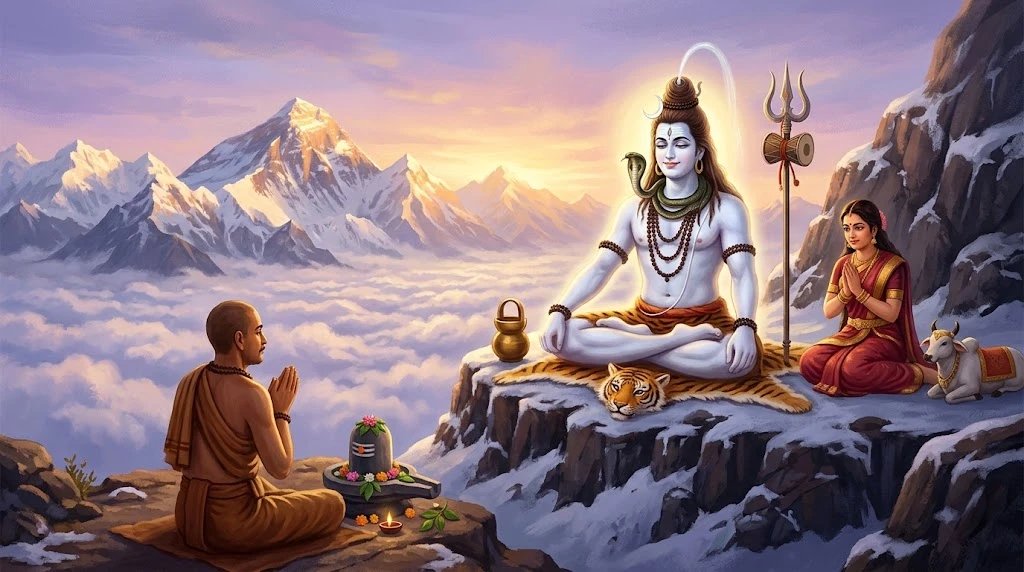
रुद्राष्टक रामचरितमानस के उत्तरकाण्ड में काकभुशुण्डि और गरुड़ के संवाद में आता है। काकभुशुण्डि अपने एक पिछले जन्म की कथा सुनाते हैं: वे उज्जैन में शिव के उपासक थे और एक दयालु ब्राह्मण उनके गुरु थे। एक दिन शिव-मन्दिर में गुरु के आने पर उन्होंने अहंकार में उठकर प्रणाम नहीं किया, तो शिव की आकाशवाणी ने उन्हें शाप दिया।
तब गुरु ने शिष्य के लिए हाथ जोड़कर यही स्तुति की। प्रसन्न होकर शिव ने शाप तो बना रहने दिया, पर उसकी पीड़ा हटा दी और शिष्य को श्रीराम की भक्ति का वर दिया। इसीलिए फलश्रुति कहती है कि यह अष्टक एक ब्राह्मण ने हर को प्रसन्न करने के लिए कहा था। मानस का बाकी भाग अवधी में है, पर यह स्तुति संस्कृत में, भुजंगप्रयात छन्द में है।
The Rudrashtakam comes in the Uttarkand of the Ramcharitmanas, in the dialogue between Kakbhushundi and Garuda. Kakbhushundi tells the story of one of his former births: he was a worshipper of Shiva in Ujjain, and a kind brahmin was his guru. One day, in a Shiva temple, he was too proud to rise and greet his guru, and a voice from the sky, Shiva's own, laid a curse on him.
The guru then folded his hands and sang this very hymn for his pupil. Pleased, Shiva let the curse stand but took away its suffering, and blessed the pupil with devotion to Rama. That is why the phalashruti says the ashtakam was spoken by a brahmin to please Hara. The rest of the Manas is in Awadhi, but this hymn is in Sanskrit, in the bhujangaprayat metre.
पाठ विधिHow to read it
स्नान करके स्वच्छ वस्त्र पहनें, शिवलिंग या शिव-परिवार के चित्र के सामने दीपक जलाएँ, और हो सके तो जल, दूध या बेलपत्र अर्पित करें। आठों श्लोक और फलश्रुति एक बैठक में, स्पष्ट उच्चारण से पढ़ें। संस्कृत कठिन लगे तो पहले हर श्लोक का अर्थ पढ़ लें, फिर पाठ करें।
रुद्राभिषेक के समय, सोमवार और प्रदोष की संध्या को शिव-पूजा के बाद, और सावन के महीने में इसका पाठ विशेष रूप से किया जाता है। पाठ के अन्त में 'ॐ नमः शिवाय' का जप करें और 'हर हर महादेव' बोलकर प्रसाद बाँटें।
Bathe, put on clean clothes, light a lamp before a Shivalinga or a picture of Shiva's family, and if you can, offer water, milk or bel leaves. Read all eight shlokas and the phalashruti in one sitting, with clear pronunciation. If the Sanskrit feels hard, read the meaning of each shloka first and then recite it.
It is read especially at a rudrabhishek, after Shiva puja on the evening of a Monday or of Pradosh, and through the month of Sawan. At the end, chant Om Namah Shivaya, call out Har Har Mahadev, and share the prasad.
महत्व और फलMeaning and fruit
रुद्राष्टक की खूबी यह है कि छोटे-से पाठ में यह शिव के दोनों रूप साथ रख देता है: पहले दो श्लोकों में निराकार, निर्गुण ब्रह्म, और अगले श्लोकों में गंगा, चन्द्र, सर्प और मुंडमाला वाले साकार शंकर। आठवाँ श्लोक भक्ति का सार है: भक्त कहता है कि वह न योग जानता है, न जप, न पूजा, केवल नमन करना जानता है, और इसी के बल पर शरण माँगता है।
फलश्रुति कहती है कि जो इसे भक्ति से पढ़ते हैं, उन पर शम्भु प्रसन्न होते हैं। परम्परा में इसे भय, मानसिक अशान्ति, रोग और कठिन समय में पढ़ा जाता है, और काकभुशुण्डि की कथा के कारण इसे गुरु या बड़ों के प्रति हुई भूल के प्रायश्चित्त के भाव से भी पढ़ा जाता है।
The beauty of the Rudrashtakam is that in a short text it holds both of Shiva's aspects together: in the first two shlokas the formless Brahman beyond the gunas, and in the next ones Shankara with the Ganga, the moon, the serpents and the garland of skulls. The eighth shloka is the heart of devotion: the devotee admits he knows no yoga, japa or puja, only how to bow, and on that alone asks for refuge.
The phalashruti says that Shambhu is pleased with those who read it with devotion. By tradition it is read in fear, unrest of mind, illness and hard times, and because of Kakbhushundi's story it is also read in a spirit of atonement for a wrong done to a guru or an elder.
कब पढ़ेंWhen to read
सोमवार और प्रदोष की संध्या को शिव-पूजा के बाद; महाशिवरात्रि पर और पूरे सावन में; रुद्राभिषेक के समय; और किसी भी दिन प्रातः या संध्या की पूजा में।On the evening of a Monday or of Pradosh, after Shiva puja; on Mahashivratri and through the month of Sawan; during a rudrabhishek; and in morning or evening worship on any day.
कुंडली मेंIn your kundli
ज्योतिष में शिव की उपासना चन्द्रमा और शनि, दोनों के लिए बताई जाती है: चन्द्रमा शिव के मस्तक पर है और शनि शिव के भक्त माने जाते हैं। कुंडली में चन्द्रमा के नीच (वृश्चिक), क्षीण या राहु-केतु-शनि से पीड़ित होने पर, चन्द्र या शनि की महादशा-अन्तर्दशा में, और शनि की साढ़ेसाती या ढैया में रुद्राष्टक का पाठ उपाय के रूप में दिया जाता है, विशेषकर जब मन अशान्त हो या भय सताता हो। आपकी कुंडली में चन्द्रमा और शनि कहाँ हैं और कौन-सी दशा चल रही है, यह इसी साइट पर अपनी कुंडली बनाकर देखा जा सकता है।In Jyotish the worship of Shiva is prescribed for both the Moon and Saturn: the Moon rests on Shiva's head, and Saturn is held to be Shiva's devotee. The Rudrashtakam is given as a remedy when the Moon is debilitated (in Scorpio), waning or afflicted by Rahu, Ketu or Saturn in the kundli, during a Moon or Saturn mahadasha or antardasha, and during Saturn's sade sati or dhaiya, especially when the mind is restless or fearful. Where the Moon and Saturn stand in your kundli and which dasha is running can be seen by building your kundli on this site.
ग्रह: Grahas: चन्द्रMoon, शनिSaturn
अपनी कुंडली में देखेंCheck it in your kundliप्रश्नोत्तरQuestions people ask
- रुद्राष्टकम् किसने लिखा और यह किस ग्रन्थ में है?Who wrote the Rudrashtakam and where is it found?
- यह गोस्वामी तुलसीदास की रचना है और रामचरितमानस के उत्तरकाण्ड में काकभुशुण्डि की कथा में आती है, जहाँ उनके गुरु ने शिव को प्रसन्न करने के लिए इसे गाया था। मानस का बाकी भाग अवधी में है, पर यह स्तुति संस्कृत में है।It is by Goswami Tulsidas and comes in the Uttarkand of the Ramcharitmanas, in Kakbhushundi's story, where his guru sang it to please Shiva. The rest of the Manas is in Awadhi, but this hymn is in Sanskrit.
- रुद्राष्टकम् कब पढ़ना चाहिए?When should the Rudrashtakam be read?
- किसी भी दिन शिव-पूजा में पढ़ा जा सकता है। सोमवार, प्रदोष, महाशिवरात्रि और सावन के महीने में, और रुद्राभिषेक के समय इसका पाठ विशेष माना जाता है।It can be read in Shiva puja on any day. It is held to be special on Mondays, on Pradosh, on Mahashivratri, through the month of Sawan, and during a rudrabhishek.
- रुद्राष्टकम् कितनी बार पढ़ना चाहिए?How many times should the Rudrashtakam be read?
- एक बार पूरा पाठ, फलश्रुति सहित, पर्याप्त है। कुछ लोग संकल्प लेकर 3, 7 या 11 बार पढ़ते हैं, या सावन भर रोज़ पढ़ते हैं। कोई संख्या अनिवार्य नहीं है; नियमितता और भाव अधिक महत्व रखते हैं।One full reading, with the phalashruti, is enough. Some take a vow to read it 3, 7 or 11 times, or every day through Sawan. No count is required; regularity and feeling matter more.
- रुद्राष्टकम् पढ़ने के क्या लाभ हैं?What are the benefits of reading the Rudrashtakam?
- फलश्रुति के अनुसार भक्ति से पढ़ने वालों पर शिव प्रसन्न होते हैं। परम्परा में इसे भय, मन की अशान्ति और कठिन समय में पढ़ा जाता है, और ज्योतिष में यह चन्द्रमा और शनि के उपाय के रूप में बताया जाता है।By its phalashruti, Shiva is pleased with those who read it with devotion. By tradition it is read in fear, unrest of mind and hard times, and in Jyotish it is given as a remedy for the Moon and Saturn.
साथ में पढ़ेंRead alongside
 स्तोत्र और कवचStotras and Kavachas
शिवताण्डवस्तोत्रम्
Shiv Tandav Stotram
रावण-रचित माने जाने वाला शिव के ताण्डव का स्तोत्र, फलश्रुति सहित, हर श्लोक के अर्थ के साथThe hymn to Shiva's tandava traditionally attributed to Ravana, with its closing phalashruti and the meaning of every shloka
 स्तोत्र और कवचStotras and Kavachas
शिवपञ्चाक्षरस्तोत्रम्
Shiv Panchakshar Stotram
'नागेन्द्रहाराय त्रिलोचनाय': 'नमः शिवाय' के पाँच अक्षरों पर पाँच श्लोक, फलश्रुति और हर श्लोक के अर्थ सहितNagendraharaya Trilochanaya: five verses on the five syllables of Namah Shivaya, with the closing verse of merit and the meaning of each
 चालीसाChalisas
श्री शिव चालीसा
Shiv Chalisa
अयोध्यादास रचित शिव की चालीस चौपाइयाँ, अर्थ सहितAyodhyadas's forty verses to Shiva, with the meaning of every line
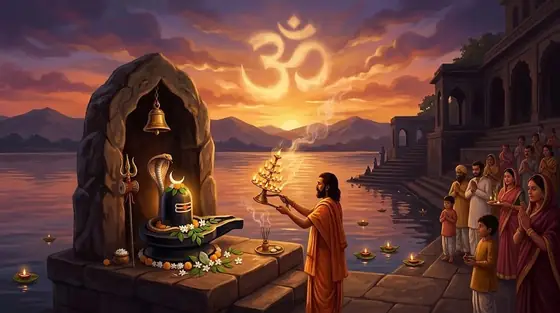 आरतीAartis
ॐ जय शिव ओंकारा
Om Jai Shiv Omkara
शिव जी की आरती, गीता प्रेस के श्रीआरती-संग्रह के पाठ से, अर्थ सहितThe Shiva aarti as printed in the Gita Press Aarti Sangrah, with the meaning of every stanza
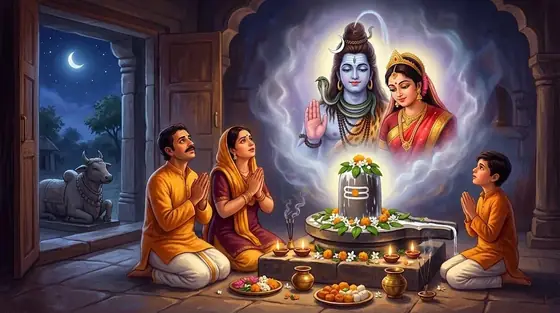 व्रत कथाVrat Kathas
सोमवार व्रत कथा
Somvar Vrat Katha
भगवान शिव का सोमवार व्रत — साहूकार और उसके पुत्र की कथा, व्रत विधि और उद्यापनThe Monday fast for Lord Shiva: the moneylender's son, how to keep the fast, and the udyapan
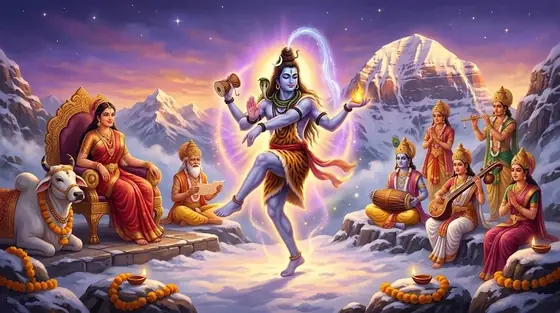 व्रत कथाVrat Kathas
प्रदोष व्रत कथा
Pradosh Vrat Katha
हर मास की दोनों त्रयोदशी की संध्या — प्रदोष काल में शिव पूजा, स्कंद पुराण की निर्धन ब्राह्मणी और विदर्भ के राजकुमार की कथा, व्रत विधि, और सोम, भौम, शनि प्रदोष का फलThe evening of every Trayodashi: Shiva's puja in the pradosh window, the Skanda Purana katha of the poor Brahmin widow and the prince of Vidarbha, the method of the fast, and the fruit of Som, Bhaum and Shani Pradosh