ॐ जय शिव ओंकारा
Om Jai Shiv Omkara
शिव जी की आरती, गीता प्रेस के श्रीआरती-संग्रह के पाठ से, अर्थ सहितThe Shiva aarti as printed in the Gita Press Aarti Sangrah, with the meaning of every stanza
PDF डाउनलोडDownload PDF
ॐ जय शिव ओंकारा शिव जी की सबसे प्रसिद्ध आरती है, जो सोमवार, प्रदोष और शिवरात्रि की पूजा के अन्त में और शिवालयों की सायं-आरती में गाई जाती है। इसके अन्तिम पद में रचयिता का नाम शिवानन्द स्वामी आया है। यह केवल शिव की नहीं, ब्रह्मा, विष्णु और सदाशिव की एक रूप में स्तुति है: हर पद में तीनों के मुख, वाहन, आयुध, वस्त्र और पार्षद एक-एक करके गिनाए गए हैं और अन्त में कहा गया है कि ॐ के अक्षर में ये तीनों एक हैं। इसीलिए गीता प्रेस इसे 'भगवान् ब्रह्मा, विष्णु, महेश' शीर्षक से छापता है।
यहाँ दिया गया पाठ गीता प्रेस, गोरखपुर के श्रीआरती-संग्रह के अनुसार है, जो आज गाए जाने वाले रूप से कई जगह अलग है: वहाँ पहली पंक्ति 'जय शिव ओंकारा, भज शिव ओंकारा' है, टेक 'ॐ हर हर महादेव' है और आठ ही पद हैं। हर पद के नीचे उसका सीधा अर्थ है, ताकि आरती करते हुए शब्दों का भाव भी साथ चले। साइन-इन करके पूरा पाठ PDF में उतारा जा सकता है, छापने या परिवार को भेजने के लिए।
Om Jai Shiv Omkara is the best-known aarti of Shiva, sung at the close of worship on Mondays, on Pradosh and on Shivratri, and at the evening aarti of Shiva temples. Its last stanza names its composer, Shivanand Swami. It praises not Shiva alone but Brahma, Vishnu and Sadashiva as one being: stanza by stanza it counts the faces, mounts, weapons, robes and companions of all three, and ends by saying that in the syllable Om the three are one. That is why the Gita Press prints it under the heading 'Bhagavan Brahma, Vishnu, Mahesh'.
The text here follows the Gita Press, Gorakhpur Aarti Sangrah, which differs in several places from the version sung today: its first line is 'Jai Shiv Omkara, bhaj Shiv Omkara', its refrain is 'Om Hara Hara Mahadev', and it has eight stanzas only. Under each stanza is a plain meaning, so the sense of the words travels with the singing. After sign-in the whole text can be taken as a PDF, for printing or for sending to family.
पाठThe text
टेकRefrain
जय शिव ओंकारा, भज शिव ओंकारा। ब्रह्मा विष्णु सदाशिव अर्द्धांगी धारा ॥ ॐ हर हर महादेव॥
ॐकार-स्वरूप शिव की जय हो; ॐकार-स्वरूप शिव का भजन करो। ब्रह्मा, विष्णु और सदाशिव (शिव का नित्य, परम रूप) एक ही हैं, और उन्होंने अर्द्धांगिनी पार्वती को अपने आधे अंग में धारण किया है। ॐ हर हर महादेव।Victory to Shiva, whose form is the syllable Om; sing of Shiva, who is Om. Brahma, Vishnu and Sadashiva (Shiva's eternal, highest form) are one, and he holds his consort Parvati as half of his own body. Om, Hara Hara Mahadev.
पदVerse 1
एकानन चतुरानन पञ्चानन राजै। हंसासन गरुडासन वृषवाहन साजै॥ ॐ हर हर०
एक मुख (विष्णु), चार मुख (ब्रह्मा) और पाँच मुख (शिव) वाले रूप में वही शोभा पाते हैं। हंस पर आसीन (ब्रह्मा), गरुड़ पर आसीन (विष्णु) और वृषभ नन्दी पर सवार (शिव) बनकर वही सजते हैं।The same Lord shines with one face as Vishnu, four faces as Brahma and five faces as Shiva. He is adorned seated on the swan (Brahma), on Garuda (Vishnu) and on the bull Nandi (Shiva).
पदVerse 2
दो भुज चारु चतुर्भुज दशभुज अति सोहै। तीनों रूप निरखते त्रिभुवन-जन मोहै॥ ॐ हर हर०
दो भुजाओं, सुन्दर चार भुजाओं और दस भुजाओं वाले रूपों में वे अत्यन्त शोभायमान हैं। इन तीनों रूपों को देखकर तीनों लोकों के प्राणी मोहित हो जाते हैं।With two arms, with four graceful arms and with ten arms, he is splendid in every form. Beholding these three forms, the beings of the three worlds are enchanted.
पदVerse 3
अक्षमाला वनमाला रुण्डमाला धारी। त्रिपुरारी कंसारी करमाला धारी॥ ॐ हर हर०
वे अक्षमाला (रुद्राक्ष की जपमाला, ब्रह्मा), वनमाला (वन-पुष्पों की माला, विष्णु) और रुण्डमाला (मुण्डों की माला, शिव) धारण करते हैं। वे त्रिपुरारी (त्रिपुर के तीन नगरों का नाश करने वाले शिव) हैं, कंसारी (कंस के शत्रु, विष्णु के अवतार कृष्ण) हैं, और हाथ में माला धारण करने वाले (ब्रह्मा) हैं।He wears the rosary of beads (Brahma), the garland of forest flowers (Vishnu) and the garland of skulls (Shiva). He is Tripurari (Shiva, destroyer of the three demon cities), Kansari (Krishna, Vishnu's avatar, the foe of Kansa), and the one who holds the prayer beads in his hand (Brahma).
पदVerse 4
श्वेताम्बर पीताम्बर बाघाम्बर अंगे। सनकादिक गरुडादिक भूतादिक संगे॥ ॐ हर हर०
उनके अंगों पर श्वेत वस्त्र (ब्रह्मा), पीला वस्त्र (विष्णु) और बाघ की खाल (शिव) है। सनक आदि ऋषि (ब्रह्मा के मानस-पुत्र), गरुड़ आदि (विष्णु के पार्षद) और भूत-गण आदि (शिव के गण) उनके साथ रहते हैं।On his limbs are white robes (Brahma), yellow robes (Vishnu) and the tiger skin (Shiva). Sanaka and the sages (Brahma's mind-born sons), Garuda and his kind (Vishnu's attendants) and the bhutas (Shiva's ganas) keep him company.
पदVerse 5
कर मध्ये सुकमण्डलु चक्र शूलधारी। सुखकारी दुखहारी जग-पालनकारी॥ ॐ हर हर०
उनके हाथों में सुन्दर कमण्डलु (ब्रह्मा), चक्र (विष्णु) और त्रिशूल (शिव) हैं। वे सुख देने वाले, दुःख हरने वाले और जगत का पालन करने वाले हैं।In his hands are the fine water-pot (Brahma), the discus (Vishnu) and the trident (Shiva). He gives happiness, takes away sorrow, and sustains the world.
पदVerse 6
ब्रह्मा विष्णु सदाशिव जानत अविवेका। प्रणवाक्षरमें शोभित ये तीनों एका॥ ॐ हर हर०
ब्रह्मा, विष्णु और सदाशिव को अलग-अलग मानना अविवेक है, ऐसा ज्ञानी जानते हैं। प्रणव यानी ॐ के अक्षर में ये तीनों एक होकर शोभा पाते हैं।To take Brahma, Vishnu and Sadashiva as three separate beings is a want of discernment, as the wise know. In the syllable Om, the Pranava, these three shine as one.
पदVerse 7
त्रिगुणस्वामिकी आरति जो कोइ नर गावै। भनत शिवानन्द स्वामी मनवाञ्छित पावै॥ ॐ हर हर०
तीनों गुणों (सत्त्व, रज और तम) के स्वामी की यह आरती जो कोई मनुष्य गाता है, वह मनचाहा फल पाता है, ऐसा इस आरती के रचयिता शिवानन्द स्वामी कहते हैं।Whoever sings this aarti of the Lord of the three gunas (sattva, rajas and tamas) gains what the heart desires, so says Shivanand Swami, the aarti's composer.
आरती कैसे करेंHow the aarti is done
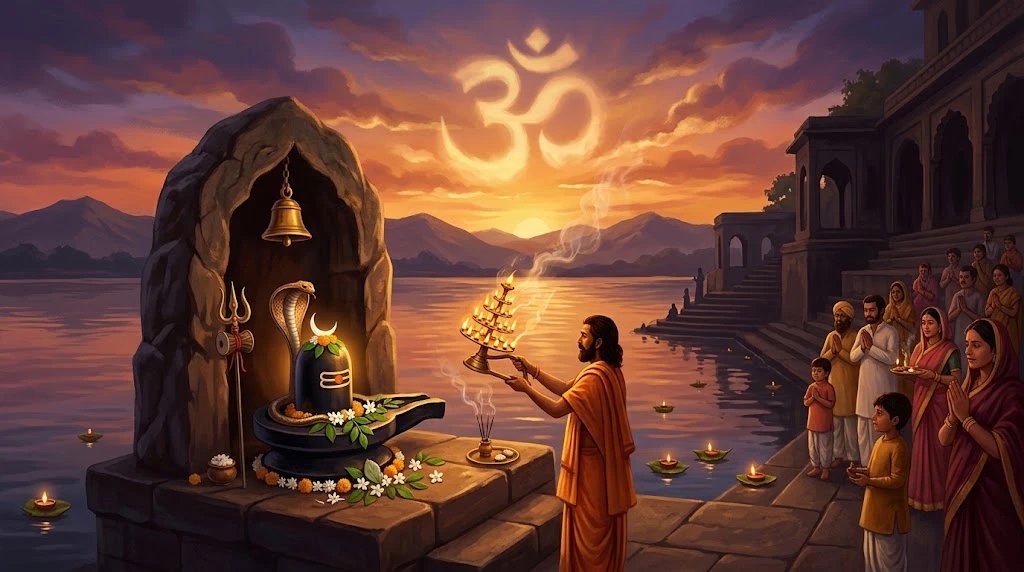
आरती पूजा का अन्तिम चरण है। शिवलिंग या शिव-प्रतिमा का जल, दूध, बेलपत्र, धतूरा, भस्म और चन्दन से पूजन कर लेने के बाद घी के दीपक या कपूर की ज्योति थाली में रखकर आरती की जाती है। थाली में बत्तियों की संख्या विषम रखी जाती है: एक, पाँच या सात। घण्टी और शंख के साथ यह आरती गाई जाती है और हर पद के अन्त में टेक 'ॐ हर हर महादेव' दोहराई जाती है।
ज्योति को घड़ी की दिशा में घुमाया जाता है। शास्त्रीय विधान में चरणों पर चार बार, नाभि पर दो बार, मुख पर एक बार और पूरे विग्रह पर सात बार घुमाने का नियम है; घरों में प्रायः पूरे विग्रह पर ही घुमाते हैं। आरती पूरी होने पर दोनों हाथों से ज्योति ली जाती है और सिर तथा आँखों से लगाई जाती है, फिर प्रसाद बाँटा जाता है।
खड़े होकर, स्थिर मन से और स्पष्ट उच्चारण के साथ गाना चाहिए। शिव-पूजा में तुलसी, केतकी और हल्दी नहीं चढ़ाई जाती, और शिवलिंग की पूरी परिक्रमा नहीं की जाती; जलधारा जहाँ से निकलती है, वहाँ से लौट आते हैं।
Aarti is the last step of the puja. After the Shivling or the image has been worshipped with water, milk, bel leaves, dhatura, ash and sandal paste, a ghee lamp or camphor flame is placed on a plate and the aarti is performed. The number of wicks is kept odd: one, five or seven. The aarti is sung with bell and conch, and the refrain 'Om Hara Hara Mahadev' is repeated at the end of every stanza.
The flame is circled clockwise. The classical rule is four times at the feet, twice at the navel, once at the face and seven times over the whole image; in homes it is usually circled before the whole image. When the aarti ends, everyone takes the flame with both hands and touches it to the head and eyes, and prasad is shared.
Sing standing, with a steady mind and clear pronunciation. In Shiva's worship tulsi, ketaki flowers and turmeric are not offered, and the Shivling is not circled fully; one turns back at the channel through which the water flows out.
महत्वMeaning
इस आरती की विशेषता इसका भाव है: यह शिव को ब्रह्मा और विष्णु से अलग नहीं, तीनों को एक मानकर स्तुति करती है। हर पद में तीन-तीन चिह्न गिनाए गए हैं, एक मुख, चार मुख, पाँच मुख; हंस, गरुड़, वृषभ; कमण्डलु, चक्र, त्रिशूल; और सातवाँ पद कहता है कि इन्हें अलग समझना अविवेक है, ॐ के एक अक्षर में तीनों समाए हैं। इसलिए यह आरती सृष्टि, पालन और संहार, तीनों शक्तियों को एक साथ प्रणाम है।
व्यवहार में इसे शिव की आरती के रूप में ही गाया जाता है, और अन्तिम पद इसका फल बताता है: जो इसे गाता है, वह मनवांछित फल पाता है। परम्परा में सोमवार की शिव-पूजा, प्रदोष व्रत और शिवरात्रि की रात्रि-पूजा इस आरती के बिना पूरी नहीं मानी जाती।
गीता प्रेस का पाठ और आज गाया जाने वाला पाठ कई जगह अलग हैं। गाए जाने वाले रूप में 'स्वामी जय शिव ओंकारा' की टेक, 'मुण्डमाला धारी, चन्दन मृगमद सोहै' वाला चौथा पद और पार्वती, गंगा, कैलास तथा काशी विश्वनाथ के चार अतिरिक्त पद मिलते हैं; छपे पाठ में ये नहीं हैं और रचयिता के नाम वाला आठवाँ पद ही अन्तिम है। यहाँ छपा पाठ रखा गया है; अन्तर स्रोत-टिप्पणी में दर्ज हैं।
What sets this aarti apart is its idea: it does not praise Shiva as separate from Brahma and Vishnu but praises the three as one. Every stanza counts three marks, one face, four faces, five faces; the swan, Garuda, the bull; the water-pot, the discus, the trident; and the seventh stanza says that to hold them apart is a want of discernment, since all three live in the single syllable Om. The aarti is thus a bow to creation, preservation and dissolution together.
In practice it is sung as the aarti of Shiva, and the last stanza states its fruit: whoever sings it gains what the heart desires. By custom, Monday worship of Shiva, the Pradosh vrat and the night worship of Shivratri are not complete without it.
The Gita Press reading and the version sung today differ in several places. The sung version has the refrain 'Swami jai Shiv Omkara', a fourth stanza 'mundmala dhari, chandan mrigmad sohai', and four added stanzas on Parvati, Ganga, Kailash and Vishwanath of Kashi; the printed text has none of these, and the eighth stanza with the composer's name is its last. The printed text is kept here; the differences are recorded in the source notes.
कब पढ़ेंWhen to read
प्रतिदिन सायं पूजा के अन्त में, दीपक या कपूर की ज्योति घुमाते हुए। सोमवार की शिव-पूजा, प्रदोष व्रत की सन्ध्या और शिवरात्रि की रात्रि-पूजा में विशेष रूप से।At the end of the evening puja every day, while circling the lamp or camphor flame. Especially in the Monday worship of Shiva, at dusk on the Pradosh vrat, and in the night worship of Shivratri.
कुंडली मेंIn your kundli
शिव का सम्बन्ध चन्द्रमा और शनि से है: चन्द्रमा उनके मस्तक पर है और शनि उनके भक्त हैं। कुंडली में चन्द्रमा के नीच, पीड़ित या क्षीण होने पर, मन की अशान्ति में, और शनि की साढ़ेसाती, ढैया या शनि की महादशा-अन्तर्दशा में सोमवार को शिव-पूजा, जलाभिषेक और यह आरती बताई जाती है। अपनी कुंडली में चन्द्र और शनि की स्थिति इसी साइट पर बनाकर देखी जा सकती है।Shiva is linked with the Moon and with Saturn: the Moon sits on his brow, and Saturn is his devotee. When the Moon is debilitated, afflicted or waning in the kundli, in times of mental unrest, and during Saturn's sade sati, dhaiya or a Saturn mahadasha or antardasha, Monday worship of Shiva with jal abhishek and this aarti is the usual advice. You can build your kundli on this site and see where the Moon and Saturn stand.
ग्रह: Grahas: चन्द्रMoon, शनिSaturn
अपनी कुंडली में देखेंCheck it in your kundliप्रश्नोत्तरQuestions people ask
- ॐ जय शिव ओंकारा आरती कब करनी चाहिए?When should Om Jai Shiv Omkara be sung?
- शिव-पूजा के अन्त में, प्रायः सायंकाल। सोमवार, प्रदोष व्रत की सन्ध्या और शिवरात्रि की रात को इसका विशेष महत्व है। प्रतिदिन घर की सायं आरती में भी इसे गाया जा सकता है।At the end of Shiva's worship, usually in the evening. It has special weight on Mondays, at dusk on the Pradosh vrat and on the night of Shivratri. It can also be sung in the daily evening aarti at home.
- आरती कितनी बार गाई जाती है?How many times is the aarti sung?
- एक बार, पूरे आठ पद, हर पद के बाद टेक दोहराते हुए। कुछ भक्त शिवरात्रि की चारों प्रहर की पूजा में हर प्रहर के अन्त में इसे गाते हैं। गिनती से अधिक महत्व भाव और स्पष्ट उच्चारण का है।Once, all eight stanzas, repeating the refrain after each stanza. Some devotees sing it at the end of each of the four watches of the Shivratri night worship. The feeling and clear pronunciation matter more than the count.
- ॐ जय शिव ओंकारा गाने के क्या लाभ हैं?What are the benefits of singing Om Jai Shiv Omkara?
- आरती का अन्तिम पद स्वयं कहता है कि जो इसे गाता है, वह मनवांछित फल पाता है। परम्परा में इसे मन की शान्ति, भय और रोग से रक्षा, और शनि तथा चन्द्र के दोषों की शान्ति के लिए गाया जाता है। पूजन में रह गई कमी आरती से पूरी मानी जाती है।The last stanza itself says that whoever sings it gains what the heart desires. By tradition it is sung for peace of mind, protection from fear and illness, and the easing of afflictions of Saturn and the Moon. Any lapse in the puja is held to be made good by the aarti.
- शिव आरती के नियम क्या हैं?What are the rules for the Shiva aarti?
- स्नान करके, खड़े होकर, घी के दीपक या कपूर से आरती करें और ज्योति को घड़ी की दिशा में घुमाएँ। बत्तियाँ विषम संख्या में रखें। शिव को तुलसी, केतकी और हल्दी न चढ़ाएँ। आरती के बाद ज्योति सबको दें और प्रसाद बाँटें।Bathe first, stand, perform the aarti with a ghee lamp or camphor, and circle the flame clockwise. Keep the wicks an odd number. Do not offer tulsi, ketaki flowers or turmeric to Shiva. After the aarti, pass the flame to everyone and share the prasad.
साथ में पढ़ेंRead alongside
 चालीसाChalisas
श्री शिव चालीसा
Shiv Chalisa
अयोध्यादास रचित शिव की चालीस चौपाइयाँ, अर्थ सहितAyodhyadas's forty verses to Shiva, with the meaning of every line
 व्रत कथाVrat Kathas
सोमवार व्रत कथा
Somvar Vrat Katha
भगवान शिव का सोमवार व्रत — साहूकार और उसके पुत्र की कथा, व्रत विधि और उद्यापनThe Monday fast for Lord Shiva: the moneylender's son, how to keep the fast, and the udyapan
 व्रत कथाVrat Kathas
प्रदोष व्रत कथा
Pradosh Vrat Katha
हर मास की दोनों त्रयोदशी की संध्या — प्रदोष काल में शिव पूजा, स्कंद पुराण की निर्धन ब्राह्मणी और विदर्भ के राजकुमार की कथा, व्रत विधि, और सोम, भौम, शनि प्रदोष का फलThe evening of every Trayodashi: Shiva's puja in the pradosh window, the Skanda Purana katha of the poor Brahmin widow and the prince of Vidarbha, the method of the fast, and the fruit of Som, Bhaum and Shani Pradosh
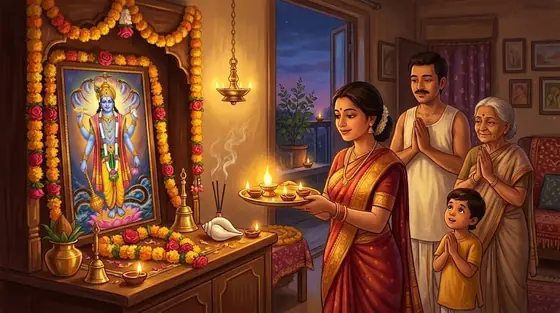 आरतीAartis
ॐ जय जगदीश हरे
Om Jai Jagdish Hare
श्री विष्णु जी की आरती, पं. श्रद्धाराम शर्मा रचित, अर्थ सहितThe Vishnu aarti written by Pandit Shardha Ram Sharma, with the meaning of every stanza