प्रदोष व्रत कथा
Pradosh Vrat Katha
हर मास की दोनों त्रयोदशी की संध्या — प्रदोष काल में शिव पूजा, स्कंद पुराण की निर्धन ब्राह्मणी और विदर्भ के राजकुमार की कथा, व्रत विधि, और सोम, भौम, शनि प्रदोष का फलThe evening of every Trayodashi: Shiva's puja in the pradosh window, the Skanda Purana katha of the poor Brahmin widow and the prince of Vidarbha, the method of the fast, and the fruit of Som, Bhaum and Shani Pradosh
अगला व्रतNext fast
शुक्रवार, 6 नवंबर 2026Friday, 6 November 2026
शुक्र प्रदोषShukra Pradosh
कार्तिक कृष्ण त्रयोदशी · 10:31 (6 नवंबर 2026) से 10:48 (7 नवंबर 2026) तकKartika Krishna Trayodashi · from 10:31 on 6 November 2026 to 10:48 on 7 November 2026
- प्रदोष कालPradosh kaal
- 17:28 – 19:52
आगे की तिथियाँDates after that
- रविवार, 22 नवंबर 2026Sunday, 22 November 2026रवि प्रदोषRavi Pradosh · 17:21–19:45
- रविवार, 6 दिसंबर 2026Sunday, 6 December 2026रवि प्रदोषRavi Pradosh · 17:19–19:43
- सोमवार, 21 दिसंबर 2026Monday, 21 December 2026सोम प्रदोषSom Pradosh · 17:24–19:48
PDF डाउनलोडDownload PDF
हर चंद्र मास में दो बार, शुक्ल और कृष्ण पक्ष की त्रयोदशी को, सूर्यास्त के आसपास की संध्या वेला प्रदोष काल कहलाती है। मान्यता है कि इस समय भगवान शिव कैलास पर प्रसन्न मुद्रा में नृत्य करते हैं और सभी देवता उनकी स्तुति में उपस्थित रहते हैं; इसलिए इस समय की गई शिव पूजा का फल अन्य समय की पूजा से कई गुना बताया गया है। इसी त्रयोदशी को दिन भर उपवास रखकर संध्या में शिव की पूजा करने का व्रत प्रदोष व्रत है। यह शैव परंपरा के सबसे सरल और सबसे नियमित व्रतों में से है — न बड़ा आयोजन, न बड़ा खर्च; केवल जल, बेलपत्र, दूध, दीपक, पंचाक्षरी मंत्र और शांत मन।
प्रदोष व्रत जिस वार को पड़ता है, उसी वार का नाम पाता है — सोम प्रदोष, भौम प्रदोष, शनि प्रदोष — और वार के अनुसार उसका विशेष फल बताया गया है। कुंडली में शनि की साढ़ेसाती या ढैया चल रही हो तो शनि प्रदोष, मन अशांत हो तो सोम प्रदोष, और रोग-ऋण से छूटना हो तो भौम प्रदोष विशेष माने जाते हैं। नीचे पहले वह कथा है जो इस व्रत में सुनी जाती है — स्कंद पुराण की, एक निर्धन ब्राह्मणी की जिसने अपने पुत्र के साथ विदर्भ के अनाथ राजकुमार को पाला — फिर व्रत की पूरी विधि, वार के अनुसार फल, महत्व और आरती। अगली त्रयोदशी और उस दिन का प्रदोष काल पंचांग से इस पृष्ठ के ऊपर दिखाया गया है।
Twice in every lunar month, on the Trayodashi, the thirteenth tithi, of the bright and of the dark fortnight, the evening hour around sunset is called the pradosh kaal. It is believed that at this hour Shiva dances in joy on Kailash and all the gods stand around him in praise, so worship of Shiva done in this window is said to bear many times the fruit of worship at any other time. The vow of fasting through this Trayodashi and worshipping Shiva at its twilight is the Pradosh vrat. It is among the simplest and most regular vows of the Shaiva tradition: no large ceremony, no great expense, only water, bel leaves, milk, a lamp, the five-syllable mantra and a quiet mind.
A Pradosh takes the name of the weekday it falls on, Som Pradosh, Bhaum Pradosh, Shani Pradosh, and each weekday is given its own fruit. Shani Pradosh is sought when Saturn's sade sati or dhaiya is running in the kundli, Som Pradosh when the mind is restless, Bhaum Pradosh for release from illness and debt. Below is first the katha heard during this fast, from the Skanda Purana, of a poor Brahmin widow who raised the orphaned prince of Vidarbha alongside her own son; then the full method of the fast, the fruit by weekday, its meaning and the aarti. The next Trayodashi and that day's pradosh window, computed from the panchang, are shown above the text.
व्रत कथाThe story
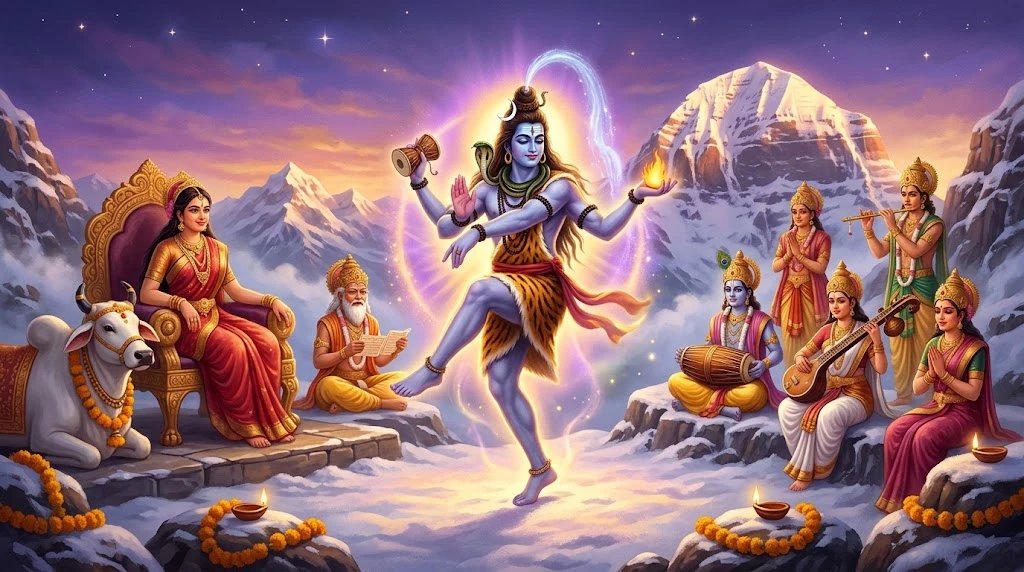
पुराणों में कहा गया है कि त्रयोदशी की संध्या भगवान शिव की विशेष प्रसन्नता का समय है। परंपरा कहती है कि इस समय कैलास के रजत शिखर पर शिव आनंद में नृत्य करते हैं — नंदी मृदंग बजाते हैं, सरस्वती वीणा, इंद्र बाँसुरी, ब्रह्मा ताल देते हैं और लक्ष्मी गान करती हैं; सभी देवता, गंधर्व और ऋषि चारों ओर खड़े स्तुति करते हैं। जो भक्त इस समय पृथ्वी पर शिव को स्मरण करता है, कहते हैं, उसकी पुकार सीधे उस सभा तक पहुँचती है। यही कारण है कि प्रदोष काल की शिव पूजा को अन्य सभी समयों की पूजा से श्रेष्ठ कहा गया।
एक और परंपरा इस तिथि को समुद्र मंथन से जोड़ती है। जब देवताओं और असुरों ने अमृत के लिए समुद्र मथा, तो अमृत से पहले हलाहल विष निकला, जिसकी ज्वाला से तीनों लोक जलने लगे। सब शिव की शरण में गए और शिव ने संसार की रक्षा के लिए वह विष पी लिया और उसे कंठ में रोक लिया — तभी से वे नीलकंठ कहलाए। कहते हैं यह त्रयोदशी का दिन था, और देवताओं ने संध्या के समय, प्रदोष काल में, शिव का आभार मानते हुए उनकी स्तुति की। तब शिव ने वर दिया कि जो त्रयोदशी की संध्या को उनकी पूजा करेगा, वह उन्हें विशेष प्रिय होगा। इसी को प्रदोष व्रत का आरंभ माना जाता है।
स्कंद पुराण में सूत जी ने ऋषियों को प्रदोष व्रत की यह कथा सुनाई थी। विदर्भ देश का एक धर्मपरायण राजा था, जिसका एक ही पुत्र था — धर्मगुप्त। एक समय पड़ोसी राजाओं ने मिलकर विदर्भ पर आक्रमण किया। युद्ध में राजा मारा गया और राज्य शत्रुओं के हाथ चला गया। रानी नन्हे धर्मगुप्त को गोद में लेकर महल से निकली और वन की ओर भागी। वन के कष्ट, भूख और शोक ने उसे तोड़ दिया, और कुछ ही दिनों में वह भी चल बसी। अब वह राजकुमार, जो कभी महल में पला था, वन में अकेला, भूखा और अनाथ था।
उसी वन के पास के गाँव में एक निर्धन ब्राह्मणी रहती थी। उसके पति का देहांत हो चुका था और वह अपने छोटे पुत्र शुचिव्रत को लेकर भिक्षा माँगकर जीवन चलाती थी। एक दिन भिक्षा से लौटते समय उसने वन के किनारे एक बालक को रोते देखा — वस्त्र राजसी, पर मुख धूल और आँसुओं से भरा। पास ही उसकी माँ का शव पड़ा था। ब्राह्मणी का हृदय द्रवित हो गया। उसने बालक को उठाया और कहा, 'मेरे पास दो रोटी हैं तो आधी-आधी दोनों को दूँगी।' वह उसे घर ले आई और अपने पुत्र के साथ उसे भी पालने लगी — एक माँ, दो पुत्र, और घर में प्रायः एक ही समय का भोजन।
एक दिन ब्राह्मणी दोनों बालकों को लेकर तीर्थ पर गई, जहाँ उसकी भेंट ऋषि शांडिल्य से हुई। ऋषि ने बालकों को देखा और ध्यान से जान लिया कि राजसी मुख वाला बालक विदर्भ का राजकुमार है, जिसका पिता युद्ध में मारा गया और माँ वन में। उन्होंने ब्राह्मणी से कहा, 'तुमने जो किया है वह बड़ा पुण्य है। अब मैं तुम्हें एक व्रत बताता हूँ — हर त्रयोदशी को दिन भर उपवास रखो, संध्या को प्रदोष काल में शिव की पूजा करो, और दोनों बालकों को भी साथ बिठाओ। शिव की कृपा से इन बालकों के दुःख के दिन बीतेंगे।' ब्राह्मणी ने ऋषि को प्रणाम किया और उसी त्रयोदशी से प्रदोष व्रत करने लगी। भिक्षा में मिला थोड़ा दूध, पेड़ से तोड़े बेलपत्र, मिट्टी का दीपक — बस यही उसकी पूजा-सामग्री थी, पर भाव पूरा था।
कुछ वर्ष बीते और दोनों बालक किशोर हुए। एक दिन वे वन में खेलते-खेलते दूर निकल गए और उन्हें गंधर्व कन्याएँ दिखीं जो वन में विहार कर रही थीं। शुचिव्रत घर लौट आया, पर धर्मगुप्त एक गंधर्व कन्या से बातों में लग गया। वह अंशुमती थी — गंधर्वराज की पुत्री। दोनों में परस्पर स्नेह हुआ, और अंशुमती ने उसे कुछ दिन बाद उसी स्थान पर फिर आने को कहा। धर्मगुप्त जब फिर आया तो अंशुमती अपने माता-पिता के साथ थी। गंधर्वराज ने युवक को देखा — वन में पला, पर दृष्टि और वाणी में राजसी तेज — और पूछा कि वह कौन है। धर्मगुप्त ने सब सच कह दिया: वह विदर्भ के राजा का पुत्र है, जिसका राज्य छिन गया और जिसे एक निर्धन ब्राह्मणी ने भिक्षा के अन्न से पाला।
गंधर्वराज बोले, 'मुझे यह पहले से ज्ञात है। भगवान शिव ने स्वयं मुझे स्वप्न में दर्शन दिए और आज्ञा दी — अपनी पुत्री अंशुमती का विवाह विदर्भ के राजकुमार धर्मगुप्त से करो, जो इस वन में पल रहा है। जिस ब्राह्मणी ने तुम्हें पाला, उसके प्रदोष व्रत से शिव प्रसन्न हैं, और उस व्रत का फल तुम्हें मिलना है।' शुभ मुहूर्त में अंशुमती और धर्मगुप्त का विवाह हुआ। वह ब्राह्मणी, जिसने भिक्षा के अन्न से इस राजकुमार को पाला था, विवाह में माँ के स्थान पर बैठी।
विवाह के बाद गंधर्वराज ने धर्मगुप्त को गंधर्वों की सेना दी। धर्मगुप्त ने उस सेना के साथ विदर्भ पर चढ़ाई की, शत्रुओं को पराजित किया और अपने पिता का सिंहासन फिर प्राप्त किया। राज्य पाकर उसने पहला काम यह किया कि ब्राह्मणी और शुचिव्रत को सम्मान से महल में बुलाया, ब्राह्मणी को राजमाता का स्थान दिया और शुचिव्रत को अपना भाई माना। उसने पूरे विदर्भ में घोषणा की कि यह राज्य, यह विवाह और यह जीवन — सब एक निर्धन विधवा के प्रदोष व्रत का फल है, और राज्य के घर-घर में त्रयोदशी की संध्या को शिव का दीपक जलने लगा।
सूत जी ने कथा समाप्त करते हुए कहा — जो मनुष्य त्रयोदशी को उपवास रखकर प्रदोष काल में शिव की पूजा करता है और यह कथा सुनता है, उसके दुःख, दरिद्रता और रोग दूर होते हैं, और शिव उसकी रक्षा वैसे ही करते हैं जैसे उन्होंने वन के उस अनाथ बालक की की। कथा का संदेश यही है कि शिव को सामग्री नहीं, भाव चाहिए — भिक्षा के अन्न वाली ब्राह्मणी के दीपक ने एक राज्य लौटा दिया। इसीलिए हर त्रयोदशी की संध्या को शिव के भक्त व्रत रखकर दीपक जलाते हैं, बेलपत्र चढ़ाते हैं और यह कथा सुनते हैं।
The Puranas say that the twilight of Trayodashi is the hour of Shiva's special delight. Tradition tells that at this hour, on the silver peak of Kailash, Shiva dances in bliss: Nandi beats the drum, Saraswati plays the veena, Indra the flute, Brahma keeps time and Lakshmi sings, while all the gods, the gandharvas and the sages stand around in praise. Whoever on earth remembers Shiva at this hour, it is said, has their call carried straight to that assembly. This is why the worship of Shiva in the pradosh kaal is called the best of all worship at any hour.
Another tradition ties this tithi to the churning of the ocean. When the gods and the demons churned the sea for the nectar of immortality, before the nectar rose the halahala poison, and its flames began to burn the three worlds. All took refuge in Shiva, and Shiva, to save the world, drank the poison and held it in his throat; from that day he is Neelkanth, the blue-throated. It is said that this was a Trayodashi, and that in the evening, in the pradosh window, the gods praised Shiva in gratitude. Then Shiva granted that whoever worships him at the twilight of Trayodashi would be especially dear to him. This is taken as the beginning of the Pradosh vrat.
In the Skanda Purana it is Suta who tells the sages this katha of the Pradosh vrat. There was a righteous king of the country of Vidarbha who had a single son, Dharmagupta. Once the neighbouring kings joined together and attacked Vidarbha. The king fell in battle and the kingdom passed into enemy hands. The queen took the infant Dharmagupta in her arms, slipped out of the palace and fled toward the forest. The hardships of the forest, hunger and grief broke her, and within a few days she too died. Now the prince, who had once been raised in a palace, was alone in the forest, hungry and orphaned.
In a village near that forest lived a poor Brahmin woman. Her husband had died, and she kept herself and her small son Shuchivrata alive by begging for alms. One day, returning with her alms, she saw a child weeping at the edge of the forest, his clothes royal but his face covered with dust and tears. Beside him lay the body of his mother. The Brahmin woman's heart melted. She lifted the child and said, 'If I have two pieces of bread, I will give half to each of you.' She brought him home and began to raise him with her own son: one mother, two sons, and most days a single meal in the house.
One day she took both boys on a pilgrimage, and there she met the sage Shandilya. The sage looked at the boys and knew by his inner sight that the child with the royal face was the prince of Vidarbha, whose father had died in battle and whose mother had died in the forest. He said to the woman, 'What you have done is a great merit. Now I will teach you a vow. On every Trayodashi fast through the day, worship Shiva at twilight in the pradosh kaal, and seat both boys beside you. By Shiva's grace the days of sorrow of these children will pass.' The woman bowed to the sage and from that very Trayodashi began the Pradosh vrat. A little milk received as alms, bel leaves plucked from a tree, a clay lamp: that was all her puja had, but the devotion in it was whole.
Some years passed and both boys grew into youths. One day, playing in the forest, they wandered far and saw gandharva maidens roaming there. Shuchivrata turned home, but Dharmagupta fell into conversation with one of the maidens. She was Anshumati, the daughter of the king of the gandharvas. Affection grew between them, and Anshumati asked him to return to the same place some days later. When Dharmagupta came again, Anshumati was with her parents. The gandharva king looked at the young man, raised in the forest yet royal in his gaze and his speech, and asked who he was. Dharmagupta told the whole truth: he was the son of the king of Vidarbha, whose kingdom had been taken, and a poor Brahmin woman had raised him on the bread of alms.
The gandharva king said, 'I already know this. Lord Shiva himself appeared to me in a dream and commanded me: marry your daughter Anshumati to Dharmagupta, the prince of Vidarbha, who is growing up in this forest. Shiva is pleased with the Pradosh vrat of the woman who raised you, and the fruit of that vow is to come to you.' At an auspicious hour Anshumati and Dharmagupta were married. The Brahmin woman, who had raised this prince on the bread of alms, sat in the mother's place at the wedding.
After the wedding the gandharva king gave Dharmagupta an army of gandharvas. With it Dharmagupta marched on Vidarbha, defeated his enemies and won back his father's throne. The first thing he did on gaining the kingdom was to call the Brahmin woman and Shuchivrata to the palace with honour; he gave the woman the place of the queen mother and took Shuchivrata as his brother. He proclaimed across Vidarbha that this kingdom, this marriage and this life were all the fruit of a poor widow's Pradosh vrat, and in every home of the kingdom a lamp began to burn for Shiva at the twilight of Trayodashi.
Suta closed the katha with these words: whoever fasts on Trayodashi, worships Shiva in the pradosh kaal and hears this story has their sorrow, poverty and disease taken away, and Shiva protects them as he protected that orphaned child of the forest. The message of the story is that Shiva asks not for materials but for devotion; the lamp of a woman who lived on alms gave back a kingdom. That is why, at the twilight of every Trayodashi, Shiva's devotees keep the fast, light the lamp, offer bel leaves and hear this katha.
व्रत विधिHow to keep the fast
सामग्री: शिवलिंग या शिव-पार्वती का चित्र, जल और गंगाजल, पंचामृत के लिए दूध, दही, घी, शहद और शक्कर, तीन पत्तियों वाले बिना कटे बेलपत्र, धतूरा या आक के फूल, सफेद फूल, भस्म या चंदन, अक्षत, धूप, घी या तिल के तेल का दीपक, नैवेद्य के लिए फल या खीर, और कथा की पुस्तक। बेलपत्र की संख्या नहीं, शुद्धता देखें; एक ही बेलपत्र को धोकर फिर चढ़ाना भी मान्य है।
त्रयोदशी के दिन सूर्योदय से पहले उठकर स्नान करें, स्वच्छ वस्त्र पहनें और शिवजी के सामने हाथ में जल-अक्षत लेकर संकल्प लें — 'मैं आज प्रदोष व्रत भगवान शिव की प्रसन्नता के लिए रखता/रखती हूँ।' प्रातः एक संक्षिप्त पूजा करें और दिन भर उपवास रखें। जो निराहार न रह सकें, वे फल और दूध ले सकते हैं; अन्न और नमक नहीं लिया जाता।
दिन भर मन में 'ॐ नमः शिवाय' चलता रहे; क्रोध, झूठ और निंदा से दूर रहें। पास में शिव मंदिर हो तो संध्या की पूजा वहाँ करना उत्तम है; नहीं तो घर में ही शिवलिंग या चित्र के सामने।
सूर्यास्त से पहले फिर से स्नान करें — प्रदोष व्रत में संध्या का यह स्नान विशेष है — और सफेद या स्वच्छ वस्त्र पहनें। पूजा-स्थान को शुद्ध करें, पूर्व या उत्तर की ओर मुख करके बैठें और दीपक जलाएँ। मुख्य पूजा प्रदोष काल में ही करें, जो सूर्यास्त के आसपास की संध्या वेला है; उस दिन का प्रदोष काल पंचांग से देखें, जो इस पृष्ठ के ऊपर दिखाया गया है।
शिवलिंग का अभिषेक करें — पहले जल, फिर दूध, दही, घी, शहद और शक्कर, और अंत में गंगाजल या शुद्ध जल। हर धारा के साथ 'ॐ नमः शिवाय' बोलें। फिर भस्म या चंदन का त्रिपुंड लगाएँ, अक्षत और सफेद फूल चढ़ाएँ, और बेलपत्र चढ़ाएँ — चिकनी ओर नीचे, डंठल अपनी ओर। धतूरा, आक और भाँग के पत्ते भी शिव को प्रिय हैं। धूप-दीप दिखाएँ और फल या खीर का नैवेद्य रखें।
अब पंचाक्षरी मंत्र 'ॐ नमः शिवाय' की एक या अधिक माला जपें। समय हो तो महामृत्युंजय मंत्र का जप, शिव चालीसा या शिव पंचाक्षर स्तोत्र का पाठ करें। जिस वार का प्रदोष हो, उस ग्रह का स्मरण करें — सोमवार को चंद्र का, शनिवार को शनि का — और शिव से उस ग्रह की शांति की प्रार्थना करें।
फिर प्रदोष व्रत की यह कथा पढ़ें या सुनें। कथा के बाद भगवान शिव की आरती 'ॐ जय शिव ओंकारा' करें, कपूर जलाकर आरती घुमाएँ और सबको आरती दें। पूजा में हुई त्रुटियों के लिए क्षमा-प्रार्थना करें और शिव को प्रणाम करें।
आरती के बाद नैवेद्य प्रसाद रूप में परिवार में बाँटें और तब व्रत खोलें — एक समय का सात्विक भोजन, बिना प्याज-लहसुन के। प्रदोष व्रत का पारण उसी रात होता है; अगले दिन अलग पारण की प्रतीक्षा नहीं होती। बेलपत्र और फूल किसी पेड़ के नीचे या बहते जल में विसर्जित करें, नाली में नहीं।
व्रत का संकल्प प्रायः ग्यारह या छब्बीस त्रयोदशियों का लिया जाता है; कुछ भक्त इसे जीवन भर रखते हैं। संकल्प पूरा होने पर उद्यापन करें — शिव की विशेष पूजा, और किसी ब्राह्मण या ज़रूरतमंद को भोजन और दान।
Things needed: a Shivling or a picture of Shiva and Parvati, water and Ganga water, milk, curd, ghee, honey and sugar for the panchamrit, uncut three-leaved bel leaves, datura or aak flowers, white flowers, bhasma or sandal paste, akshat, incense, a lamp of ghee or sesame oil, fruit or kheer for the offering, and the katha book. Look to the purity of the bel leaves rather than their number; washing a single leaf and offering it again is accepted.
On the day of Trayodashi rise before sunrise, bathe, wear clean clothes, and before Shiva take water and akshat in your hand for the sankalp, the vow: 'Today I keep the Pradosh vrat for the pleasure of Lord Shiva.' Do a short puja in the morning and fast through the day. Those who cannot go without food may take fruit and milk; grain and salt are not taken.
Through the day keep 'Om Namah Shivaya' going in the mind, and stay away from anger, lies and gossip. If there is a Shiva temple nearby, it is best to do the evening puja there; otherwise at home before the Shivling or the picture.
Before sunset bathe again; this evening bath is particular to the Pradosh vrat. Wear white or clean clothes. Purify the puja place, sit facing east or north and light the lamp. Do the main puja in the pradosh kaal itself, the evening window around sunset; check that day's pradosh window in the panchang, which is shown above this text.
Bathe the Shivling: first water, then milk, curd, ghee, honey and sugar, and last Ganga water or clean water. Say 'Om Namah Shivaya' with each stream. Then mark the three lines of the tripund with bhasma or sandal, offer akshat and white flowers, and offer the bel leaves with the smooth side down and the stalk toward you. Datura, aak and bhang leaves are also dear to Shiva. Show the incense and the lamp and set out the offering of fruit or kheer.
Now chant one or more malas of the five-syllable mantra, 'Om Namah Shivaya'. If there is time, chant the Mahamrityunjaya mantra or recite the Shiva Chalisa or the Shiva Panchakshara Stotra. Remember the graha of the weekday of this Pradosh, the Moon on a Monday, Saturn on a Saturday, and ask Shiva for the peace of that graha.
Then read or hear this katha of the Pradosh vrat. After the katha do the aarti of Shiva, 'Om Jai Shiv Omkara', light camphor, wave the aarti and offer it to everyone present. Ask forgiveness for any lapse in the puja and bow to Shiva.
After the aarti share the offering as prasad in the family and then open the fast with one sattvic meal, without onion or garlic. The paran of the Pradosh vrat is the same night; there is no separate paran to wait for the next day. Put the bel leaves and flowers under a tree or in flowing water, never in a drain.
The vow is usually taken for eleven or twenty-six Trayodashis; some devotees keep it for life. When the vow is complete do the udyapan: a special puja of Shiva, and a meal and gifts for a brahmin or someone in need.
सोम, भौम, शनि प्रदोष — वार के अनुसार फलSom, Bhaum and Shani Pradosh: the fruit by weekday
प्रदोष व्रत का नाम उस वार से तय होता है जिस दिन त्रयोदशी की संध्या पड़ती है, और परंपरा ने हर वार को एक विशेष फल दिया है। रविवार का रवि प्रदोष आयु, आरोग्य और मानसिक शांति के लिए रखा जाता है; सूर्य कुंडली में आत्मबल और पिता का कारक है, इसलिए पिता के स्वास्थ्य और मान-सम्मान के लिए भी। सोमवार का सोम प्रदोष सबसे अधिक रखा जाने वाला प्रदोष है — सोमवार स्वयं शिव का दिन है और चंद्र का भी, जो कुंडली में मन का कारक है। जिनका मन अशांत हो, नींद न आती हो, निर्णय में डर लगता हो, या चंद्र कुंडली में निर्बल, पाप-पीड़ित या छठे, आठवें या बारहवें भाव में हो, उनके लिए सोम प्रदोष मन की शांति और इच्छापूर्ति का व्रत है।
मंगलवार का भौम प्रदोष रोग से मुक्ति, ऋण से छुटकारे और शारीरिक बल के लिए रखा जाता है; मंगल रक्त, भूमि, भाई और साहस का कारक है, इसलिए भूमि-विवाद और मंगल दोष में भी इसका विधान है। बुधवार का बुध प्रदोष बुद्धि, विद्या, वाणी और मनोकामना की पूर्ति के लिए है; विद्यार्थियों और वाणी से व्यापार करने वालों के लिए विशेष बताया गया है।
गुरुवार का गुरु प्रदोष पितरों की शांति, शत्रुओं पर विजय और गुरु की कृपा के लिए रखा जाता है; बृहस्पति धर्म, संतान और विवाह का कारक है, इसलिए संतान और विवाह की कामना वाले भी गुरु प्रदोष करते हैं। शुक्रवार का शुक्र प्रदोष धन, सौभाग्य, दाम्पत्य-सुख और घर की शांति के लिए है; जिनके घर में कलह हो, या शुक्र कुंडली में पीड़ित हो, उनके लिए यह व्रत बताया गया है।
शनिवार का शनि प्रदोष सबसे अधिक खोजा जाने वाला प्रदोष है। शनि कुंडली में कर्म, विलंब, कष्ट और न्याय का ग्रह है, और शिव शनि के भी स्वामी माने जाते हैं — इसलिए शनि की साढ़ेसाती, ढैया या शनि की दशा में शनि प्रदोष का व्रत शनि-शांति का सबसे सरल उपाय बताया गया है। परंपरा में शनि प्रदोष संतान-प्राप्ति के लिए भी विशेष है — निःसंतान दम्पती शनि प्रदोष का व्रत रखकर शिव-पार्वती से संतान की कामना करते हैं — और खोई हुई प्रतिष्ठा या पद को फिर से पाने के लिए भी, जैसे कथा में धर्मगुप्त ने अपना राज्य पाया। यदि आपकी कुंडली में शनि अभी साढ़ेसाती या ढैया में है, तो इसी साइट पर अपनी कुंडली बनाकर उसकी अवधि देखें और शनि प्रदोष का संकल्प उसी के अनुसार लें।
A Pradosh is named for the weekday on which the twilight of Trayodashi falls, and tradition has given each weekday its own fruit. Ravi Pradosh, on a Sunday, is kept for long life, health and peace of mind; in the kundli the Sun stands for inner strength and for the father, so it is kept for the father's health and for honour too. Som Pradosh, on a Monday, is the most widely kept of all: Monday is Shiva's own day and the Moon's, and the Moon in the kundli is the mind. For those whose mind is restless, who cannot sleep, who are afraid of decisions, or whose Moon is weak, afflicted by malefics or placed in the sixth, eighth or twelfth house, Som Pradosh is the fast for peace of mind and the fulfilment of wishes.
Bhaum Pradosh, on a Tuesday, is kept for freedom from illness, release from debt and bodily strength; Mars stands for blood, land, brothers and courage, so it is also prescribed in land disputes and for Mangal dosha. Budh Pradosh, on a Wednesday, is for intelligence, learning, speech and the fulfilment of wishes, and is held special for students and for those whose trade depends on their speech.
Guru Pradosh, on a Thursday, is kept for the peace of the ancestors, victory over enemies and the grace of the guru; Jupiter stands for dharma, children and marriage, so those who wish for a child or a marriage also keep Guru Pradosh. Shukra Pradosh, on a Friday, is for wealth, good fortune, happiness between husband and wife and peace in the home; it is prescribed for those whose homes are troubled by quarrels, or whose Venus is afflicted in the kundli.
Shani Pradosh, on a Saturday, is the most searched-for Pradosh of all. Saturn in the kundli is the graha of karma, delay, hardship and justice, and Shiva is held to be the lord of Saturn too, so during Saturn's sade sati, its dhaiya or its dasha the Shani Pradosh fast is given as the simplest remedy for Saturn's peace. In tradition Shani Pradosh is also special for the gift of a child: childless couples keep it and ask Shiva and Parvati for a son or daughter. It is kept, too, to regain lost standing or a lost position, as Dharmagupta in the story regained his kingdom. If Saturn is now in sade sati or dhaiya in your kundli, build your chart on this site, see how long the period runs, and take the vow of Shani Pradosh accordingly.
महत्व और फलMeaning and fruit
परंपरा के अनुसार प्रदोष व्रत पाप-नाश, रोग-मुक्ति, ऋण-मुक्ति और मनोकामना-पूर्ति का व्रत है; कहा गया है कि प्रदोष काल की एक पूजा का फल अनेक पूजाओं के बराबर है, और जो नियम से हर त्रयोदशी को यह व्रत रखता है, उसे शिवलोक की प्राप्ति होती है। कथा का संदेश यह है कि शिव सामग्री नहीं, भाव देखते हैं — भिक्षा के अन्न वाली ब्राह्मणी के दीपक ने एक अनाथ बालक को राज्य दिला दिया।
ज्योतिष की दृष्टि से प्रदोष व्रत चंद्र और शनि — मन और कर्म — दोनों की शांति का उपाय है। यह उन लोगों के लिए विशेष बताया जाता है जिनकी कुंडली में शनि की साढ़ेसाती या ढैया चल रही हो, जिनका चंद्र निर्बल या पीड़ित हो, जो रोग, ऋण या मुकदमे से घिरे हों, जिन्हें संतान की कामना हो, या जो केवल हर पखवाड़े एक संध्या शिव को देना चाहते हों। महीने में दो त्रयोदशियाँ आती हैं, इसलिए यह व्रत जीवन की लय में सबसे सहजता से बैठता है।
By tradition the Pradosh vrat is the fast that destroys sin, frees from disease and debt and fulfils wishes; it is said that a single puja in the pradosh kaal equals many pujas at other hours, and that whoever keeps this vow regularly on every Trayodashi attains the abode of Shiva. The message of the story is that Shiva looks at devotion, not at materials; the lamp of a woman who lived on alms won a kingdom for an orphaned child.
Seen through astrology, the Pradosh vrat is a remedy for the peace of both the Moon and Saturn, the mind and karma. It is held special for those whose kundli is passing through Saturn's sade sati or dhaiya, whose Moon is weak or afflicted, who are surrounded by illness, debt or litigation, who long for a child, or who simply want to give Shiva one evening in every fortnight. Two Trayodashis come in every month, so this is the vow that settles most easily into the rhythm of a life.
आरतीAarti
कथा के बाद प्रदोष काल में भगवान शिव की आरती 'ॐ जय शिव ओंकारा' गाई जाती है। कपूर या घी के दीपक से आरती घुमाएँ, घंटी बजाएँ, और अंत में 'ॐ नमः शिवाय' कहते हुए शिव को प्रणाम करें। आरती के बाद नैवेद्य प्रसाद रूप में बाँटें और तब व्रत खोलें।
After the katha, in the pradosh kaal, the Shiva aarti 'Om Jai Shiv Omkara' is sung. Wave the aarti with camphor or a ghee lamp, ring the bell, and at the end bow to Shiva saying 'Om Namah Shivaya'. After the aarti share the offering as prasad and then open the fast.
कब पढ़ेंWhen to read
यह कथा हर मास की शुक्ल और कृष्ण त्रयोदशी की संध्या को, प्रदोष काल में शिव की पूजा के बाद और आरती से पहले, व्रत खोलने से पूर्व पढ़ी या सुनी जाती है।This katha is read or heard at the twilight of the bright and the dark Trayodashi of every month, in the pradosh kaal, after the puja of Shiva and before the aarti, before the fast is opened.
कुंडली मेंIn your kundli
प्रदोष व्रत के ग्रह चंद्र और शनि हैं — शिव के मस्तक पर चंद्र है और शनि के स्वामी भी शिव माने जाते हैं। कुंडली में चंद्र मन, माता और सुख का कारक है और शनि कर्म, विलंब और कष्ट का; चंद्र से शनि का गोचर ही साढ़ेसाती और ढैया बनाता है, इसलिए प्रदोष व्रत — विशेषकर सोम और शनि प्रदोष — इन दोनों ग्रहों की शांति का एक साथ उपाय है। इसी साइट पर अपनी कुंडली बनाकर देखें कि आपका चंद्र किस राशि में है, शनि अभी उससे कितने भाव पर है, और साढ़ेसाती या ढैया कब तक चलेगी।The grahas of the Pradosh vrat are the Moon and Saturn: the Moon rests on Shiva's head, and Shiva is held to be the lord of Saturn too. In the kundli the Moon stands for the mind, the mother and comfort, and Saturn for karma, delay and hardship; it is Saturn's transit counted from the Moon that makes the sade sati and the dhaiya, so the Pradosh vrat, Som and Shani Pradosh above all, is a remedy for both grahas at once. Build your kundli on this site and see which sign your Moon is in, how many houses from it Saturn now stands, and how long the sade sati or dhaiya will run.
ग्रह: Grahas: चन्द्रMoon, शनिSaturn
अपनी कुंडली में देखेंCheck it in your kundliप्रश्नोत्तरQuestions people ask
- प्रदोष व्रत कब रखा जाता है? त्रयोदशी दो दिन हो तो किस दिन?When is the Pradosh vrat kept? If Trayodashi spans two days, which one?
- प्रदोष व्रत हर मास की दोनों त्रयोदशियों को — शुक्ल पक्ष और कृष्ण पक्ष — रखा जाता है, यानी वर्ष में लगभग चौबीस बार। व्रत उस दिन रखा जाता है जिस दिन त्रयोदशी तिथि संध्या के प्रदोष काल में हो; तिथि दो दिन छूती हो तो जिस दिन सूर्यास्त के समय त्रयोदशी हो, वही दिन प्रदोष का है। यदि किसी दिन त्रयोदशी के साथ सोमवार या शनिवार पड़े तो वह सोम प्रदोष या शनि प्रदोष कहलाता है। इस मास की तिथि और प्रदोष काल इस पृष्ठ के ऊपर पंचांग से दिखाया गया है।The Pradosh vrat is kept on both Trayodashis of every month, in the bright fortnight and in the dark, about twenty-four times a year. It is kept on the day on which the Trayodashi tithi is current during the evening pradosh window; when the tithi touches two days, the day on which Trayodashi holds at sunset is the Pradosh day. When a Trayodashi falls on a Monday or a Saturday it is called Som Pradosh or Shani Pradosh. This month's tithi and pradosh window are shown above this text from the panchang.
- प्रदोष काल क्या है और पूजा किस समय करें?What is the pradosh kaal, and when should the puja be done?
- प्रदोष काल सूर्यास्त के आसपास की संध्या वेला है — दिन और रात की संधि, जो परंपरा में शिव का विशेष समय माना गया है। प्रदोष व्रत की मुख्य पूजा इसी समय होती है: संध्या का स्नान, शिवलिंग का अभिषेक, बेलपत्र, पंचाक्षरी मंत्र, कथा और आरती। सूर्यास्त का समय स्थान और ऋतु से बदलता है, इसलिए प्रदोष काल अपने स्थान के पंचांग से देखें; इस पृष्ठ पर नई दिल्ली का समय दिया है और पंचांग पृष्ठ पर कोई भी स्थान चुनकर उसका समय देखा जा सकता है।The pradosh kaal is the evening window around sunset, the meeting point of day and night, which tradition holds to be Shiva's special hour. The main puja of the Pradosh vrat is done in it: the evening bath, the bathing of the Shivling, bel leaves, the five-syllable mantra, the katha and the aarti. Sunset changes with place and season, so take the pradosh window from the panchang for your own place; this page gives it for New Delhi, and the panchang page computes it for any place you choose.
- प्रदोष व्रत में क्या खाएँ और व्रत कब खोलें?What may one eat in the Pradosh vrat, and when is the fast opened?
- प्रदोष व्रत में दिन भर अन्न नहीं लिया जाता। जो निराहार न रह सकें वे फल, दूध, दही और मेवे ले सकते हैं; अन्न, नमक, प्याज-लहसुन और तामसिक भोजन वर्जित है। व्रत उसी रात संध्या की पूजा, कथा और आरती के बाद खोला जाता है — एक समय का सात्विक भोजन। एकादशी की तरह अगले दिन का अलग पारण प्रदोष में नहीं होता। रोगी, वृद्ध, गर्भवती स्त्रियाँ और बच्चे फलाहार लेकर व्रत रखें।No grain is taken during the day of the Pradosh vrat. Those who cannot go without food may take fruit, milk, curd and nuts; grain, salt, onion, garlic and heavy food are left out. The fast is opened the same night, after the evening puja, the katha and the aarti, with one sattvic meal. Unlike Ekadashi, Pradosh has no separate paran on the next day. The sick, the old, pregnant women and children should keep the fast on fruit and milk.
- साढ़ेसाती में शनि प्रदोष रखें या सोम प्रदोष? दोनों में क्या अंतर है?In sade sati, should one keep Shani Pradosh or Som Pradosh? What is the difference?
- दोनों एक ही व्रत हैं — अंतर केवल वार का है। शनिवार की त्रयोदशी शनि प्रदोष है, जो शनि की साढ़ेसाती, ढैया और दशा में शनि-शांति के लिए, और संतान व खोए पद की प्राप्ति के लिए विशेष मानी गई है। सोमवार की त्रयोदशी सोम प्रदोष है, जो चंद्र — यानी मन — की शांति के लिए है। साढ़ेसाती चंद्र से ही गिनी जाती है, इसलिए उसमें दोनों लाभ देते हैं; जो हर त्रयोदशी का व्रत रख सकें, वे वार न देखें, और जो नहीं, वे शनि प्रदोष का संकल्प लें और बीच में जो सोम प्रदोष आएँ उन्हें भी रखें। अपनी साढ़ेसाती की अवधि इसी साइट पर कुंडली बनाकर देखें।They are the same vow; only the weekday differs. A Saturday Trayodashi is Shani Pradosh, held special for the peace of Saturn in its sade sati, dhaiya and dasha, and for the gift of a child or the recovery of a lost position. A Monday Trayodashi is Som Pradosh, for the peace of the Moon, that is, of the mind. Sade sati is counted from the Moon, so in it both help; those who can keep every Trayodashi need not look at the weekday, and those who cannot should take the vow of Shani Pradosh and also keep the Som Pradoshes that fall in between. See how long your sade sati runs by building your kundli on this site.
साथ में पढ़ेंRead alongside
 व्रत कथाVrat Kathas
सोमवार व्रत कथा
Somvar Vrat Katha
भगवान शिव का सोमवार व्रत — साहूकार और उसके पुत्र की कथा, व्रत विधि और उद्यापनThe Monday fast for Lord Shiva: the moneylender's son, how to keep the fast, and the udyapan
 व्रत कथाVrat Kathas
शनिवार व्रत कथा
Shanivar Vrat Katha
शनि देव का शनिवार व्रत — नवग्रहों का विवाद और राजा विक्रमादित्य की साढ़े साती की कथा, व्रत विधि और उद्यापनThe Saturday fast for Shani Dev: the quarrel of the nine grahas and King Vikramaditya's sade sati, how to keep the fast, and the udyapan
 आरतीAartis
ॐ जय शिव ओंकारा
Om Jai Shiv Omkara
शिव जी की आरती, गीता प्रेस के श्रीआरती-संग्रह के पाठ से, अर्थ सहितThe Shiva aarti as printed in the Gita Press Aarti Sangrah, with the meaning of every stanza