कार्तिक पूर्णिमा और देव दीपावली: पूजा विधि और कथा
Kartik Purnima and Dev Deepawali: Puja Vidhi and Katha
त्रिपुरारी पूर्णिमा की कथा, कार्तिक स्नान और गंगा स्नान, सत्यनारायण पूजा, प्रदोष में दीपदान और देव दीपावली की पूरी विधिThe story of Tripurari Purnima, Kartik snan and Ganga snan, the Satyanarayan puja, deep-daan at pradosh and the full rite of Dev Deepawali
2026 मेंIn 2026
मंगलवार, 24 नवंबर 2026Tuesday, 24 November 2026
कार्तिक पूर्णिमा · 23:42 (23 नवंबर 2026) से 20:23 (24 नवंबर 2026) तकKartika Purnima · from 23:42 on 23 November 2026 to 20:23 on 24 November 2026
- प्रातःकाल मुहूर्तMorning muhurat
- 06:54 – 08:59
- प्रदोष कालPradosh kaal
- 17:20 – 19:44
PDF डाउनलोडDownload PDF
कार्तिक शुक्ल पूर्णिमा कार्तिक मास का समापन है, और परंपरा में यह वर्ष की सबसे पवित्र पूर्णिमाओं में गिनी जाती है। इस दिन को तीन नामों से जाना जाता है: त्रिपुरारी पूर्णिमा, क्योंकि शिव ने त्रिपुरासुर का अंत किया; देव दीपावली, क्योंकि कहते हैं देवता इस दिन दीप जलाकर उत्सव मनाते हैं; और कार्तिक पूर्णिमा, जिस पर पूरे महीने का स्नान, दीपदान और व्रत पूर्ण होता है। विष्णु-भक्त इसे मत्स्य अवतार की स्मृति से भी जोड़ते हैं।
इस पृष्ठ पर पहले कथा है, फिर पूजा की पूरी विधि: सूर्योदय के समय स्नान, शिव और विष्णु की पूजा, सत्यनारायण कथा, तुलसी, प्रदोष में दीपदान और दान। इस वर्ष की तिथि और स्नान, पूजा तथा दीपदान के समय ऊपर की पट्टी में दिए गए हैं; वे आपके स्थान के अनुसार गिने जाते हैं।
Kartik Shukla Purnima closes the month of Kartik, and in the tradition it counts among the holiest full moons of the year. The day goes by three names: Tripurari Purnima, because Shiva ended the demon Tripurasura; Dev Deepawali, because the gods are said to celebrate it by lighting lamps; and Kartik Purnima, on which the month-long bath, lamp-giving and fast come to their close. Devotees of Vishnu also link it to the memory of the Matsya avatar.
This page gives the story first, then the whole rite: the bath at sunrise, worship of Shiva and Vishnu, the Satyanarayan katha, tulsi, deep-daan at pradosh and charity. The date of this year and the timings for the bath, the puja and the lamps are in the box above; they are worked out for your place.
कार्तिक पूर्णिमा की कथाThe story of Kartik Purnima
तारकासुर नाम का एक असुर था जिसे शिव के पुत्र कार्तिकेय ने युद्ध में हराया। उसके तीन पुत्र थे, तारकाक्ष, कमलाक्ष और विद्युन्माली, जिन्हें मिलाकर त्रिपुरासुर कहा जाता है। पिता की मृत्यु का बदला लेने के लिए तीनों ने कठोर तप किया और ब्रह्मा जी को प्रसन्न किया। वे अमर होने का वर चाहते थे, पर ब्रह्मा जी ने कहा कि जन्म लेने वाले को मरना ही है, कोई और वर माँगो। तब उन्होंने माँगा कि उनके तीन नगर हों, आकाश में घूमने वाले, और वे नगर हज़ार वर्ष में एक बार एक पंक्ति में आएँ; उस क्षण जो एक ही बाण से तीनों को भेद दे, वही उनकी मृत्यु का कारण बने। ब्रह्मा जी ने कहा, तथास्तु।
मय दानव ने उनके लिए तीन नगर बनाए, एक सोने का, एक चाँदी का और एक लोहे का। इन तीन पुरों के कारण वे त्रिपुरासुर कहलाए। वर के बल से वे उन्मत्त हो गए। उन्होंने देवताओं को स्वर्ग से निकाल दिया, यज्ञ रोक दिए और ऋषियों को सताया। कथा कहती है कि उनके नगरों में कुछ समय तक धर्म भी रहा, पर बल के अहंकार ने उसे खा लिया। देवता कोई मार्ग न पाकर शिव की शरण में गए।
शिव ने उनकी विनती सुनी। देवताओं ने उनके लिए अद्भुत रथ तैयार किया: पृथ्वी रथ बनी, सूर्य और चंद्र उसके पहिए, ब्रह्मा सारथी, मेरु पर्वत धनुष और विष्णु स्वयं बाण बने। जब तीनों नगर आकाश में एक सीध में आए, उस एक क्षण के लिए, शिव ने बाण छोड़ा और तीनों पुर एक साथ भस्म हो गए। उस दिन से शिव त्रिपुरारी कहलाए, तीन पुरों के शत्रु। यह विजय कार्तिक शुक्ल पूर्णिमा को हुई मानी जाती है।
कथा का अर्थ यह भी पढ़ा जाता है कि तीन पुर तीन बंधन हैं, तन, मन और अहंकार के, जो सोने, चाँदी और लोहे की तरह सुंदर और मज़बूत दिखते हैं। जब तीनों एक पंक्ति में आते हैं, तभी साधक के भीतर वह क्षण आता है जब एक ही दृष्टि सबको भेद देती है। यह पाठ परंपरा की व्याख्या है, कथा का वर्णन नहीं।
विजय के बाद देवताओं ने काशी में गंगा के घाटों पर दीप जलाए और उत्सव मनाया। इसी स्मृति से कार्तिक पूर्णिमा को देव दीपावली कहा जाता है। जैसे अमावस्या की दीपावली मनुष्यों की है, वैसे यह पूर्णिमा देवताओं की मानी जाती है। आज भी वाराणसी के घाट इस रात लाखों दीपों से सज जाते हैं, और देश भर में लोग गंगा, यमुना, सरोवर या घर के आँगन में दीप रखते हैं।
वैष्णव परंपरा इसी पूर्णिमा को भगवान विष्णु के मत्स्य अवतार की तिथि भी मानती है। कथा के अनुसार प्रलय के समय वेदों और जीवन के बीजों की रक्षा के लिए विष्णु ने मछली का रूप लिया और मनु की नाव को सुरक्षित पार कराया। अलग-अलग क्षेत्रों में इस अवतार की तिथि को लेकर भिन्न मत हैं, इसलिए इसे यहाँ परंपरा का एक मत समझें। इसी कारण इस दिन सत्यनारायण पूजा और विष्णु की पूजा विशेष मानी जाती है।
कार्तिक का पूरा महीना दामोदर मास भी कहलाता है। इस महीने भक्त सुबह स्नान, तुलसी की सेवा, दीपदान और विष्णु-स्मरण का नियम रखते हैं। पूर्णिमा उस नियम का पूर्ण होना है, इसलिए जिसने महीने भर स्नान और दीपदान किया हो, वह इस दिन उसका उद्यापन करता है। जिन्होंने पूरा महीना नहीं किया, वे भी इस एक दिन की विधि से श्रद्धा पूर्ण कर सकते हैं।
There was an asura named Tarakasura, whom Kartikeya, the son of Shiva, defeated in battle. He had three sons, Tarakaksha, Kamalaksha and Vidyunmali, who together are called Tripurasura. To avenge their father they performed hard austerities and pleased Brahma. They wanted the boon of immortality, but Brahma told them that whatever is born must die and asked for another boon. So they asked for three cities that move through the sky, and that these cities come into one line only once in a thousand years; whoever could pierce all three with a single arrow at that moment would be the cause of their death. Brahma said, so be it.
The demon-architect Maya built three cities for them, one of gold, one of silver and one of iron. Because of these three puras they were called Tripurasura. The boon made them drunk with power. They drove the gods out of heaven, stopped the sacrifices and tormented the sages. The story says that for a time dharma lived even in their cities, but pride in their strength consumed it. The gods, finding no other way, took refuge in Shiva.
Shiva heard their plea. The gods made him a wonderful chariot: the earth became the chariot, the sun and moon its wheels, Brahma the charioteer, Mount Meru the bow and Vishnu himself the arrow. When the three cities came into line in the sky, for that one moment, Shiva loosed the arrow and all three puras were burnt at once. From that day Shiva is called Tripurari, the enemy of the three cities. This victory is held to have taken place on Kartik Shukla Purnima.
The meaning is also read this way: the three cities are the three bonds of body, mind and ego, which look beautiful and strong like gold, silver and iron. Only when the three come into one line does the moment arrive inside the seeker when a single glance can pierce them all. This is the tradition's reading, not part of the narration.
After the victory the gods lit lamps on the ghats of the Ganga at Kashi and celebrated. It is from this memory that Kartik Purnima is called Dev Deepawali. As the Deepawali of the new moon belongs to people, this full moon is held to belong to the gods. Even today the ghats of Varanasi are lined with lakhs of lamps on this night, and all over the country people set lamps on the Ganga, the Yamuna, a lake or the courtyard of the home.
The Vaishnava tradition also takes this full moon as the day of the Matsya avatar of Vishnu. In the story, at the time of the great flood, Vishnu took the form of a fish to guard the Vedas and the seeds of life, and carried Manu's boat safely across. Regions differ about the date of this avatar, so take it here as one view of the tradition. For this reason the Satyanarayan puja and the worship of Vishnu are held especially fitting on this day.
The whole month of Kartik is also called Damodar masa. In it devotees keep the discipline of a morning bath, service of tulsi, lamp-giving and remembrance of Vishnu. The full moon is the completion of that discipline, so whoever has bathed and given lamps all month closes it on this day. Those who could not keep the whole month can still complete their devotion through the rite of this one day.
पूजा विधि, क्रम सेThe puja, step by step
तैयारी: पूर्णिमा से एक दिन पहले घर साफ़ करें और पूजा स्थान धो लें। सामग्री इकट्ठी करें: गंगाजल, पंचामृत, पीला वस्त्र, चंदन, हल्दी, रोली, अक्षत, फूल, तुलसी दल, बेलपत्र, धूप, फल, पंजीरी या मिठाई, घी या तिल के तेल के दीपक, मिट्टी के दीये और बत्ती। दीपदान के लिए उतने दीये रखें जितने सामर्थ्य हो, कम से कम ग्यारह या इक्कीस।
प्रातः स्नान: सूर्योदय से पहले उठकर पवित्र नदी में स्नान करें। गंगा, यमुना या अपने क्षेत्र की कोई नदी या सरोवर हो तो वहाँ जाएँ। जहाँ यह संभव न हो, घर पर पानी में थोड़ा गंगाजल मिलाकर स्नान करें और नदियों का स्मरण करें। स्नान के बाद उगते सूर्य को जल चढ़ाएँ। जिन्होंने पूरे कार्तिक में नियम से स्नान किया हो, उनके लिए यह महीने का अंतिम स्नान है।
संकल्प: स्नान के बाद स्वच्छ वस्त्र पहनकर हाथ में जल, अक्षत और फूल लें और संकल्प करें कि वे कार्तिक पूर्णिमा का व्रत और पूजा श्रद्धा से कर रहे हैं। अपनी सामर्थ्य के अनुसार दिन भर निराहार, फलाहार या सात्विक भोजन का नियम तय करें। व्रत रखना सबके लिए अनिवार्य नहीं है; बुज़ुर्ग, रोगी और गर्भवती स्त्रियाँ अपनी स्थिति देखकर सरल नियम रखें।
शिव की पूजा: पूजा स्थान पर शिवलिंग या शिव का चित्र रखें। जल, दूध, पंचामृत और फिर गंगाजल से अभिषेक करें, बेलपत्र, सफ़ेद फूल और चंदन चढ़ाएँ, धूप-दीप दिखाएँ। 'ॐ नमः शिवाय' का एक माला या यथाशक्ति जप करें, और त्रिपुरारी शिव का स्मरण करें। शिव को तुलसी नहीं चढ़ाई जाती।
विष्णु और सत्यनारायण की पूजा: फिर पीले वस्त्र पर भगवान विष्णु या सत्यनारायण की मूर्ति या चित्र स्थापित करें। पंचामृत से स्नान कराएँ, चंदन लगाएँ, पीले फूल और तुलसी दल अर्पित करें। 'ॐ नमो भगवते वासुदेवाय' का जप करें। इस दिन घर में सत्यनारायण की कथा सुनना या कराना परंपरा में अत्यंत शुभ माना जाता है; कथा के बाद पंजीरी या हलवे का प्रसाद बाँटें। कथा इसी पुस्तकालय में है।
तुलसी: तुलसी के पौधे पर जल चढ़ाएँ, दीप जलाएँ और परिक्रमा करें। कार्तिक में तुलसी की सेवा का विशेष महत्व है। तुलसी विवाह इस पूर्णिमा तक किसी भी दिन किया जा सकता है; जिनके यहाँ अभी नहीं हुआ, वे इस दिन कर सकते हैं। पत्ते तोड़ने के नियम का पालन करें, और जो दल पूजा के लिए चाहिए, वह पहले ही तोड़कर रख लें।
दीपदान: जिस काल में दीपदान की परंपरा है, वह प्रदोष है, यानी सूर्यास्त के बाद का समय। इसका समय ऊपर की पट्टी में दिया है। दीये में घी या तिल का तेल भरें और बत्ती लगाएँ। पहला दीप शिव के सामने जलाएँ, फिर विष्णु और तुलसी के पास, फिर घर के द्वार, आँगन, छत और पीपल या किसी पवित्र वृक्ष के नीचे। जो नदी या सरोवर के पास रहते हों, वे दीये पत्तों पर रखकर जल में प्रवाहित करें; जल प्रदूषित न हो इसका ध्यान रखें, इसलिए केवल मिट्टी के दीये और प्राकृतिक सामग्री ही रखें।
चंद्र दर्शन और अर्घ्य: रात में पूर्णिमा का चंद्रमा दिखे तो उसे जल या दूध का अर्घ्य दें और शांत मन से कुछ देर उसे देखें। चंद्र के लिए 'ॐ सोमाय नमः' का जप किया जाता है। कहते हैं कि इस रात चंद्र की किरणों में स्थिरता है, इसलिए यह मन को शांत करने का समय है।
दान: परंपरा में इस दिन दान का फल कई गुना माना जाता है। अपनी सामर्थ्य से अन्न, वस्त्र, कंबल, तिल, घी, गुड़, दीपक और दक्षिणा का दान करें। ब्राह्मणों, ज़रूरतमंदों और गौशाला में दें। गाय को चारा और गुड़ खिलाएँ। सबसे अच्छा दान वह है जो चुपचाप और बिना दिखावे के दिया जाए।
समापन: रात को आरती करें और पूरे परिवार को प्रसाद दें। अगले दिन व्रत का पारण सात्विक भोजन से करें। जिन्होंने पूरे महीने का नियम लिया था, वे मन में उसकी पूर्णता का धन्यवाद करें और जो भूल रह गई हो उसकी क्षमा माँगें।
Preparation: the day before the full moon, clean the house and wash the place of worship. Gather the materials: Ganga water, panchamrit, yellow cloth, sandal paste, turmeric, roli, akshat, flowers, tulsi leaves, bel leaves, incense, fruit, panjiri or sweets, lamps of ghee or sesame oil, clay diyas and wicks. For the deep-daan keep as many lamps as you can afford, at least eleven or twenty-one.
Morning bath: rise before sunrise and bathe in a sacred river. Go to the Ganga, the Yamuna or any river or lake of your region. Where that is not possible, bathe at home with a little Ganga water mixed into the bath water and remember the rivers. After the bath offer water to the rising sun. For those who have bathed by rule through all of Kartik, this is the last bath of the month.
Sankalp: after the bath, in clean clothes, take water, akshat and a flower in the hand and make the vow that they are keeping the Kartik Purnima fast and puja with faith. According to your strength decide on a fast with no food, with fruit only, or with sattvic food through the day. The fast is not compulsory for everyone; the elderly, the ill and women who are pregnant should keep a simpler rule suited to their condition.
Worship of Shiva: at the place of worship set a Shivling or a picture of Shiva. Perform the abhishek with water, milk, panchamrit and then Ganga water, offer bel leaves, white flowers and sandal paste, and show incense and a lamp. Chant 'Om Namah Shivaya' for a mala or as much as you can, and remember Shiva as Tripurari. Tulsi is not offered to Shiva.
Worship of Vishnu and Satyanarayan: then on a yellow cloth set an image or picture of Vishnu or Satyanarayan. Bathe it with panchamrit, apply sandal, and offer yellow flowers and tulsi leaves. Chant 'Om Namo Bhagavate Vasudevaya'. Hearing or holding the Satyanarayan katha at home on this day is held in the tradition to be most auspicious; after the katha share the prasad of panjiri or halwa. The katha is in this library.
Tulsi: pour water on the tulsi plant, light a lamp and walk around it. Service of tulsi counts for much in Kartik. The Tulsi Vivah can be held on any day up to this full moon; those who have not yet held it may do so on this day. Follow the rules for plucking leaves, and pluck the leaves you need for the puja beforehand.
Deep-daan: the time for giving lamps in the tradition is pradosh, the hours after sunset. The timing is in the box above. Fill the diya with ghee or sesame oil and set the wick. Light the first lamp before Shiva, then beside Vishnu and the tulsi, then at the door of the house, in the courtyard, on the roof and under a peepal or other sacred tree. Those who live near a river or lake set lamps on leaves and float them on the water; take care that the water is not polluted, so keep to clay lamps and natural materials only.
Moon sighting and arghya: at night, when the full moon is seen, offer it water or milk as arghya and look at it for a while with a quiet mind. For the Moon the chant is 'Om Somaya Namah'. It is said that the light of this full moon holds steadiness, which makes it a good time to calm the mind.
Daan: in the tradition charity given on this day is held to bear many times its fruit. According to your means give grain, clothes, blankets, sesame, ghee, jaggery, lamps and dakshina. Give to brahmins, to the needy and to a gaushala. Feed the cow fodder and jaggery. The best gift is one given quietly and without show.
Closing: at night do the aarti and give prasad to the whole family. Next day break the fast with sattvic food. Those who took a vow for the whole month give thanks for its completion and ask forgiveness for any lapse.
नियमRules of the day
क्या करें और क्या न करें: इस दिन सात्विक रहें, क्रोध, झगड़े और अपशब्दों से बचें, और मांस, मदिरा और तामसिक भोजन से दूर रहें। दिन में सोना, किसी को दुख देना और जल्दबाज़ी में पूजा निपटाना अच्छा नहीं माना जाता। सबसे ज़रूरी भाव है; सामग्री कम हो, पूजा छोटी हो, तब भी श्रद्धा से किया गया दीप और स्मरण पूर्ण माना जाता है।
Do's and don'ts: keep the day sattvic, avoid anger, quarrels and harsh words, and keep away from meat, liquor and tamasic food. Sleeping in the day, hurting anyone and hurrying through the puja are not thought well of. What matters most is the feeling; even if materials are few and the puja short, a lamp and a remembrance offered with faith are held to be complete.
महत्व और फलMeaning and fruit
परंपरा के अनुसार कार्तिक पूर्णिमा का स्नान, दीपदान और दान पाप का क्षय करने वाला और पुण्य बढ़ाने वाला माना जाता है। कहते हैं कि जो इस दिन शिव और विष्णु दोनों का स्मरण करता है, उसे दोनों की कृपा मिलती है, क्योंकि कार्तिक पूर्णिमा हरि और हर के मिलन की तिथि के रूप में भी गाई जाती है। ये फल की मान्यताएँ हैं, परिणाम का वचन नहीं; इस दिन का सबसे ठोस लाभ यह है कि पूरा परिवार एक साथ बैठकर पूजा, दीप और दान का एक सुंदर दिन बिताता है।
According to tradition the Kartik Purnima bath, lamp-giving and charity are held to wear down sin and add to merit. It is said that whoever remembers both Shiva and Vishnu on this day receives the grace of both, for Kartik Purnima is also sung as the day of the meeting of Hari and Har. These are beliefs about the fruit, not a promise of results; the most solid gain of the day is that a whole family sits together through a lovely day of puja, lamps and giving.
कब पढ़ेंWhen to read
त्रिपुरारी पूर्णिमा की कथा कार्तिक पूर्णिमा के दिन, स्नान और पूजा के बाद या प्रदोष में दीपदान से पहले पढ़ी या सुनी जाती है।The story of Tripurari Purnima is read or heard on the day of Kartik Purnima, after the bath and puja or at pradosh just before the lamps are given.
कुंडली मेंIn your kundli
पूर्णिमा वह तिथि है जब चंद्रमा पूर्ण होता है, और कुंडली में चंद्रमा मन, भावनाओं, माता और मानसिक शांति का कारक है। कार्तिक पूर्णिमा पर चंद्र की साधना, दीपदान और जल से जुड़े नियम परंपरा में मन को स्थिर करने के लिए बताए जाते हैं। जिनकी कुंडली में चंद्रमा नीच का, पाप ग्रहों से पीड़ित, या राहु और शनि के साथ हो, या जिनकी चंद्र की दशा चल रही हो, उन्हें यह दिन विशेष लग सकता है। विष्णु की पूजा बृहस्पति से भी जुड़ती है। यह जाँच का एक आधार है, किसी फल का वचन या भय का कारण नहीं। आप इसी साइट पर अपनी कुंडली बनाकर अपने चंद्र की राशि, भाव, बल और दशा देख सकते हैं।The Purnima is the tithi when the Moon is full, and in the kundli the Moon stands for the mind, the emotions, the mother and peace of mind. On Kartik Purnima the worship of the Moon, the lamps and the rules about water are given in the tradition to steady the mind. This day may feel especially fitting to those whose Moon is debilitated, afflicted by malefics or with Rahu or Saturn, or who are running a Moon dasha. The worship of Vishnu also relates to Jupiter. This is one basis for looking, not a promise of results nor a reason for fear. Build your kundli on this site and look at the sign, house, strength and dasha of your Moon.
ग्रह: Grahas: चन्द्रMoon, बृहस्पतिJupiter
अपनी कुंडली में देखेंCheck it in your kundliप्रश्नोत्तरQuestions people ask
- देव दीपावली क्या है और कार्तिक पूर्णिमा से कैसे जुड़ी है?What is Dev Deepawali and how is it linked to Kartik Purnima?
- देव दीपावली कार्तिक पूर्णिमा की रात का दीपोत्सव है। कथा के अनुसार शिव ने त्रिपुरासुर को हराया तो देवताओं ने काशी में गंगा के घाटों पर दीप जलाए। इसलिए इसे देवताओं की दीपावली कहते हैं, जैसे अमावस्या की दीपावली मनुष्यों की मानी जाती है। वाराणसी के घाट इस रात विशेष रूप से सजते हैं, और देश भर में लोग घर, नदी और मंदिर में दीप रखते हैं।Dev Deepawali is the festival of lamps on the night of Kartik Purnima. In the story, when Shiva defeated Tripurasura, the gods lit lamps on the ghats of the Ganga at Kashi. So it is called the Deepawali of the gods, as the Deepawali of the new moon is taken to be the people's. The ghats of Varanasi are specially lit on this night, and all over the country people set lamps at home, on rivers and in temples.
- कार्तिक पूर्णिमा को क्या करना चाहिए?What should be done on Kartik Purnima?
- सूर्योदय के समय नदी या घर पर स्नान, उगते सूर्य को अर्घ्य, शिव की पूजा, विष्णु और सत्यनारायण की पूजा या कथा, तुलसी की सेवा, प्रदोष में दीपदान और अपनी सामर्थ्य से दान। इस दिन सात्विक रहना और क्रोध से बचना अच्छा माना जाता है। ऊपर की विधि क्रम से दी गई है, और तिथि और समय पट्टी में हैं।A bath at sunrise in a river or at home, water to the rising sun, worship of Shiva, worship of Vishnu and Satyanarayan or the katha, service of tulsi, deep-daan at pradosh and charity as you can. Staying sattvic and avoiding anger is held to be good on this day. The rite above is given in order, and the date and timings are in the box.
- क्या गंगा तक गए बिना, घर पर कार्तिक पूर्णिमा का स्नान हो सकता है?Can the Kartik Purnima bath be done at home, without going to the Ganga?
- हाँ। परंपरा में जहाँ नदी तक पहुँचना संभव न हो, वहाँ घर पर स्नान के जल में थोड़ा गंगाजल मिलाकर गंगा, यमुना और अन्य पवित्र नदियों का स्मरण करते हुए स्नान किया जाता है। मुख्य बात सूर्योदय के समय का नियम और श्रद्धा है; नदी तक पहुँचना कठिन हो तो घर का स्नान भी मान्य है।Yes. Where the river cannot be reached the tradition allows a bath at home with a little Ganga water mixed into the bath water, remembering the Ganga, the Yamuna and the other sacred rivers. The main thing is the discipline at sunrise and the faith; if reaching the river is hard, the bath at home is also accepted.
- दीपदान कितने दीये से करना चाहिए और कब?How many lamps should be given and when?
- कोई निश्चित संख्या अनिवार्य नहीं है। लोग ग्यारह, इक्कीस, इक्यावन या एक सौ आठ दीये जलाते हैं, पर सामर्थ्य और श्रद्धा के अनुसार एक दीप भी पूर्ण माना जाता है। दीपदान का समय प्रदोष है, यानी सूर्यास्त के बाद, और आपके स्थान का सही समय ऊपर की पट्टी में दिया है। पहला दीप शिव के सामने जलाएँ।No fixed number is required. People give eleven, twenty-one, fifty-one or a hundred and eight lamps, but according to means and faith even one lamp is held to be complete. The time for deep-daan is pradosh, the hours after sunset, and the correct time for your place is in the box above. Light the first lamp before Shiva.
साथ में पढ़ेंRead alongside
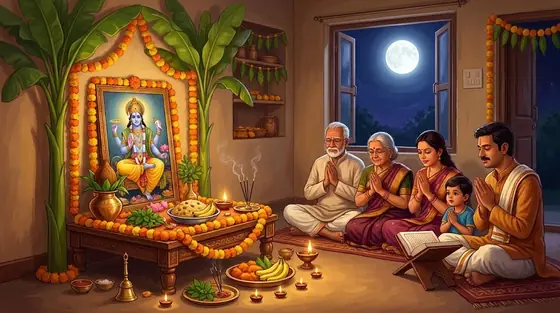 व्रत कथाVrat Kathas
श्री सत्यनारायण व्रत कथा
Shri Satyanarayan Vrat Katha
स्कंद पुराण के रेवा खंड की पाँच अध्याय की कथा — नारद का प्रश्न, काशी का निर्धन ब्राह्मण और लकड़हारा, साधु वणिक और कलावती, राजा तुंगध्वज — अपने शब्दों में, पूजा विधि, सामग्री, प्रसाद और उद्यापन के साथThe five-chapter katha of the Reva Khanda of the Skanda Purana: Narada's question, the poor Brahmin of Kashi and the woodcutter, the merchant Sadhu and Kalavati, King Tungadhwaja, retold in our own words with the puja method, samagri, prasad and udyapan
 पूजा विधिPuja Vidhis
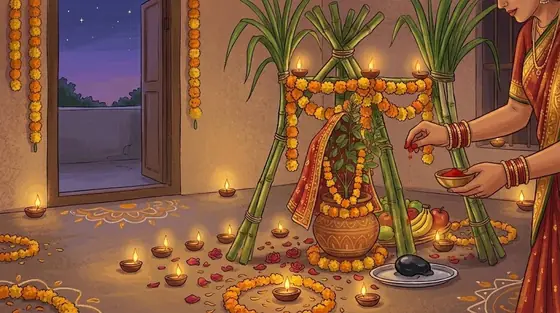
तुलसी विवाह पूजा विधि और कथा
Tulsi Vivah Puja Vidhi and Katha
कार्तिक शुक्ल द्वादशी का तुलसी विवाह — वृंदा और जलंधर की कथा, शालिग्राम का रहस्य, गन्ने के मंडप में सात फेरों की पूरी विधि और घर में तुलसी के नियमTulsi Vivah on Kartik Shukla Dwadashi: the story of Vrinda and Jalandhar, how Vishnu became the Shaligram, the full wedding under the sugarcane mandap, and the rules of keeping Tulsi at home
 आरतीAartis
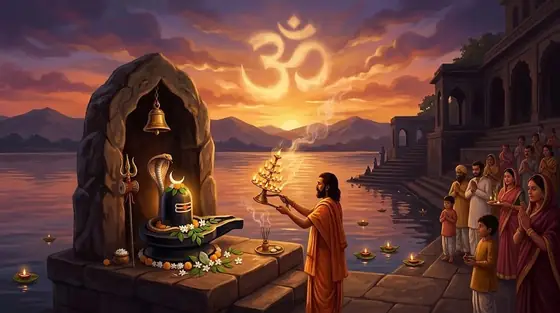
ॐ जय शिव ओंकारा
Om Jai Shiv Omkara
शिव जी की आरती, गीता प्रेस के श्रीआरती-संग्रह के पाठ से, अर्थ सहितThe Shiva aarti as printed in the Gita Press Aarti Sangrah, with the meaning of every stanza
 चालीसाChalisas
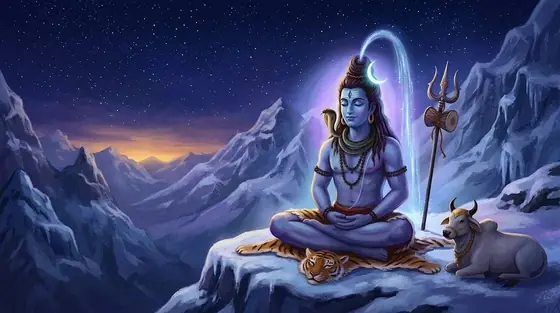
श्री शिव चालीसा
Shiv Chalisa
अयोध्यादास रचित शिव की चालीस चौपाइयाँ, अर्थ सहितAyodhyadas's forty verses to Shiva, with the meaning of every line
 पूजा विधिPuja Vidhis
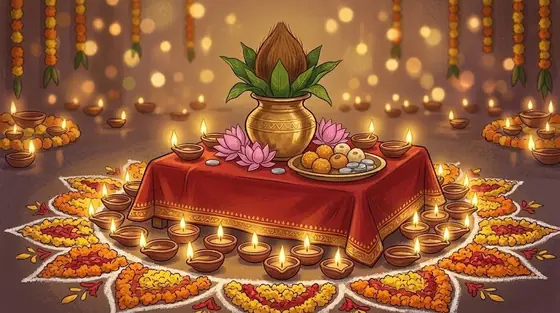
दीपावली लक्ष्मी-गणेश पूजा विधि
Diwali Lakshmi-Ganesh Puja Vidhi
कार्तिक अमावस्या की रात — राम के अयोध्या आगमन और लक्ष्मी के प्राकट्य की कथा, लक्ष्मी-गणेश पूजा की पूरी विधि, बहीखाता पूजन, दीपदान और रंगोलीThe night of the Kartik new moon: Rama's return to Ayodhya and the appearance of Lakshmi, the Lakshmi-Ganesh puja step by step, the ledger puja, the lamps and the rangoli
 व्रत कथाVrat Kathas
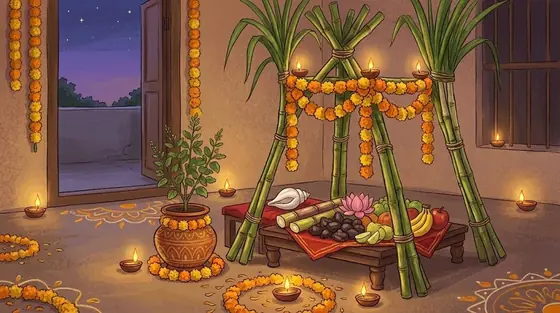
देवउठनी एकादशी व्रत कथा
Dev Uthani (Prabodhini) Ekadashi Vrat Katha
कार्तिक शुक्ल एकादशी — चार महीने की योगनिद्रा से भगवान विष्णु का जागना, एकादशी पर अन्न न खाने वाले राजा की कथा, व्रत के नियम, पारण और चातुर्मास का अंतKartik Shukla Ekadashi: Vishnu wakes from his four-month sleep, the katha of the king whose kingdom ate no grain on Ekadashi, the rules of the fast, the paran and the end of chaturmas
 आरतीAartis
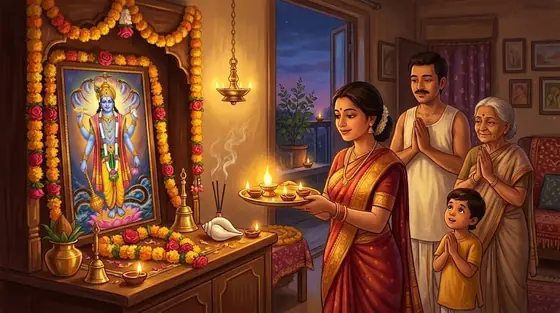
ॐ जय जगदीश हरे
Om Jai Jagdish Hare
श्री विष्णु जी की आरती, पं. श्रद्धाराम शर्मा रचित, अर्थ सहितThe Vishnu aarti written by Pandit Shardha Ram Sharma, with the meaning of every stanza