दीपावली लक्ष्मी-गणेश पूजा विधि
Diwali Lakshmi-Ganesh Puja Vidhi
कार्तिक अमावस्या की रात — राम के अयोध्या आगमन और लक्ष्मी के प्राकट्य की कथा, लक्ष्मी-गणेश पूजा की पूरी विधि, बहीखाता पूजन, दीपदान और रंगोलीThe night of the Kartik new moon: Rama's return to Ayodhya and the appearance of Lakshmi, the Lakshmi-Ganesh puja step by step, the ledger puja, the lamps and the rangoli
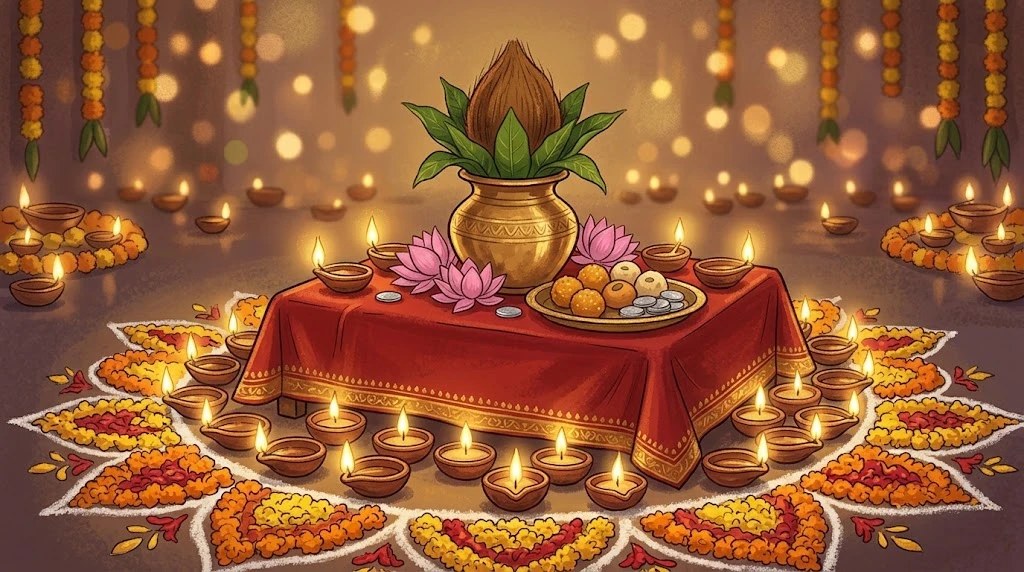
2026 मेंIn 2026
रविवार, 8 नवंबर 2026Sunday, 8 November 2026
कार्तिक अमावस्या · 11:28 (8 नवंबर 2026) से 12:32 (9 नवंबर 2026) तकKartika Amavasya · from 11:28 on 8 November 2026 to 12:32 on 9 November 2026
- लक्ष्मी पूजा मुहूर्तLakshmi puja muhurat
- 17:54 – 19:50
- प्रदोष कालPradosh kaal
- 17:27 – 19:51
- वृषभ लग्न (स्थिर लग्न)Vrishabha lagna (sthir lagna)
- 17:54 – 19:50
- सिंह लग्न (निशीथ काल)Simha lagna (around midnight)
- 00:25 – 02:42 (9 नवंबर 2026)(9 November 2026)
PDF डाउनलोडDownload PDF
दीपावली कार्तिक मास की अमावस्या को मनाई जाती है — वर्ष की सबसे अँधेरी रातों में से एक, जिसे घर-घर के दीपों से उजाला किया जाता है। यह पाँच दिन के पर्व का मुख्य दिन है: धनतेरस से आरंभ, नरक चतुर्दशी, फिर अमावस्या की लक्ष्मी पूजा, गोवर्धन पूजा और भाई दूज। इस रात देवी लक्ष्मी, धन और समृद्धि की देवी, गणेश जी के साथ पूजी जाती हैं — गणेश बुद्धि और विघ्न-नाश के देव हैं, और माना जाता है कि बिना बुद्धि के धन ठहरता नहीं। व्यापारी इस दिन नए बहीखाते की पूजा करते हैं और बहुत जगह नया व्यावसायिक वर्ष यहीं से गिना जाता है।
दीपावली की कथा एक नहीं, कई हैं — रावण पर विजय के बाद राम का अयोध्या लौटना और नगर का दीपों से सजना; समुद्र मंथन से लक्ष्मी का प्रकट होना और विष्णु को वरना; और यह कि लक्ष्मी के साथ गणेश क्यों बैठते हैं। नीचे पहले ये कथाएँ हैं, फिर लक्ष्मी-गणेश पूजा की चरण-दर-चरण विधि — सामग्री से आरती तक — फिर दीपदान, रंगोली और घर की तैयारी, और अंत में प्रश्न-उत्तर। इस वर्ष की तिथि, प्रदोष काल और स्थिर लग्न का समय इस पृष्ठ के ऊपर नई दिल्ली के अनुसार दिखता है।
Diwali is kept on the new moon of Kartik, one of the darkest nights of the year, lit up by lamps in every home. It is the main day of a five-day festival: Dhanteras to begin, then Narak Chaturdashi, the Lakshmi puja of the new moon, Govardhan Puja and Bhai Dooj. On this night the goddess Lakshmi, who gives wealth and plenty, is worshipped together with Ganesh, the lord of wisdom and remover of obstacles, for it is held that without wisdom wealth does not stay. Traders worship their new account books on this day, and in many places the new business year is counted from here.
There is not one story of Diwali but several: Rama's return to Ayodhya after his victory over Ravana and the city lit with lamps; Lakshmi rising from the churning of the ocean and choosing Vishnu; and why Ganesh sits beside Lakshmi. Below come these stories first, then the Lakshmi-Ganesh puja step by step, from the samagri to the aarti, then the lamps, the rangoli and the preparation of the home, and finally the questions people ask. This year's date and the pradosh and fixed-lagna windows for New Delhi are shown at the top of this page.
दीपावली की कथाThe story of Diwali
सबसे प्रचलित कथा श्रीराम की है। चौदह वर्ष का वनवास, सीता का हरण, लंका का युद्ध और रावण का वध — यह सब पूरा करके राम, सीता और लक्ष्मण पुष्पक विमान से अयोध्या की ओर लौटे। वह कार्तिक की अमावस्या की रात थी — आकाश में चाँद नहीं था। अयोध्या चौदह वर्ष से अपने राजा की प्रतीक्षा में थी; भरत ने नंदीग्राम में तपस्वी की तरह रहकर राम की चरण-पादुकाएँ सिंहासन पर रखकर राज्य चलाया था। जब समाचार आया कि राम आ रहे हैं, तो नगर में हर्ष की लहर दौड़ गई।
अयोध्यावासियों ने घर-घर, गली-गली, सरयू के तट पर घी के दीप जलाए, ताकि अँधेरी अमावस्या की रात में भी उनके राजा को नगर का मार्ग दिखे और उनका स्वागत प्रकाश से हो। द्वार सजाए गए, रंगोली बनी, फूल बरसे, मिठाइयाँ बँटीं। कहते हैं उस रात अयोध्या में अमावस्या थी, पर अँधेरा कहीं नहीं था — दीपों की पंक्तियाँ ही 'दीपावली' हैं। तब से हर वर्ष इस रात दीप जलाए जाते हैं: अन्याय पर न्याय की, अँधेरे पर प्रकाश की, और वनवास के बाद घर लौटने की स्मृति में।
दूसरी कथा लक्ष्मी की है। जब देवों और असुरों ने क्षीरसागर का मंथन किया, तो उसमें से चौदह रत्न निकले — त्रयोदशी को धन्वंतरि अमृत कलश लेकर, और फिर कार्तिक की अमावस्या को स्वयं देवी लक्ष्मी प्रकट हुईं — कमल पर आसीन, हाथों में कमल, स्वर्ण-आभा से दीप्त, समुद्र की पुत्री। सब देव और असुर उन्हें पाना चाहते थे, पर लक्ष्मी ने अपनी दृष्टि से सबको देखा और भगवान विष्णु का वरण किया — उनके वक्ष पर अपना स्थान बनाया। इसीलिए इस रात लक्ष्मी की पूजा होती है, और इसीलिए कहा जाता है कि लक्ष्मी वहाँ रहती हैं जहाँ विष्णु हैं — अर्थात धर्म, स्थिरता और पालन।
लोक-मान्यता है कि दीपावली की रात लक्ष्मी पृथ्वी पर विचरण करती हैं और उन घरों में प्रवेश करती हैं जो स्वच्छ हों, जिनमें दीप जलते हों और जहाँ लोग जागकर उनकी प्रतीक्षा कर रहे हों। इसीलिए दीपावली से पहले घर की सफ़ाई-पुताई होती है, द्वार खुले रखे जाते हैं, रंगोली में लक्ष्मी के चरण बनाए जाते हैं और रात को जागरण की रीत है। कुछ परंपराओं में यह भी कथा है कि इसी दिन विष्णु ने वामन रूप में राजा बलि से तीन पग भूमि माँगकर लक्ष्मी को बलि के बंधन से मुक्त किया था।
लक्ष्मी के साथ गणेश क्यों पूजे जाते हैं, इसकी भी एक कथा है। एक बार लक्ष्मी को अभिमान हुआ कि संसार में सब उन्हीं की कामना करते हैं। विष्णु ने मुस्कराकर कहा, 'देवी, आप पूज्य हैं, पर जो स्त्री माँ नहीं है, उसे पूर्णता नहीं मिलती।' लक्ष्मी को यह बात चुभी और वे पार्वती के पास गईं। पार्वती ने उनका दुख समझा और अपने पुत्र गणेश को लक्ष्मी को दत्तक पुत्र के रूप में दे दिया। लक्ष्मी ने प्रसन्न होकर वचन दिया — 'जहाँ मेरी पूजा होगी, वहाँ गणेश की पूजा पहले होगी; जो गणेश को छोड़कर मुझे पूजेगा, मैं उसके पास नहीं ठहरूँगी।' तभी से लक्ष्मी-गणेश साथ पूजे जाते हैं।
इस कथा का अर्थ भी सीधा है। गणेश बुद्धि, विवेक और विघ्न-नाश के देव हैं; लक्ष्मी धन और वैभव की देवी। बुद्धि के बिना धन या तो ठहरता नहीं, या विनाश का कारण बनता है — इसलिए दीपावली की पूजा में गणेश पहले पूजे जाते हैं और लक्ष्मी की दाहिनी ओर बैठाए जाते हैं। कुछ घर उनके साथ सरस्वती (विद्या) और कुबेर (कोष) की भी पूजा करते हैं — धन, बुद्धि, विद्या और संचय, चारों एक साथ।
दीपावली की और भी स्मृतियाँ हैं जो इस रात को जोड़ती हैं: इससे एक दिन पहले कृष्ण ने नरकासुर का वध कर सोलह हज़ार बंदिनी कन्याओं को मुक्त किया था; बंगाल और पूर्वी भारत में इस रात महाकाली की पूजा होती है; जैन परंपरा में इसी दिन भगवान महावीर को निर्वाण प्राप्त हुआ; और सिख परंपरा में यह बंदी छोड़ दिवस है, जब गुरु हरगोबिंद जी ग्वालियर के बंधन से अमृतसर लौटे। कथाएँ अलग हैं, पर दीप एक है — हर कथा अँधेरे से प्रकाश की ओर, बंधन से मुक्ति की ओर, और घर लौटने की कथा है।
The best known story is that of Shri Rama. Fourteen years of exile, the abduction of Sita, the war in Lanka and the killing of Ravana: all this done, Rama, Sita and Lakshmana returned to Ayodhya in the flying chariot Pushpaka. It was the night of the Kartik new moon, and there was no moon in the sky. Ayodhya had waited fourteen years for its king; Bharata had ruled from Nandigram like an ascetic, with Rama's sandals on the throne. When word came that Rama was coming, a wave of joy swept the city.
The people of Ayodhya lit ghee lamps in every house, in every lane and along the bank of the Sarayu, so that even on the dark new-moon night their king would see the way into the city and be welcomed with light. Doorways were decorated, rangolis drawn, flowers showered, sweets shared. It is said that there was a new moon over Ayodhya that night, but no darkness anywhere; those rows of lamps are the 'deepavali'. Since then lamps are lit on this night every year, in memory of justice over injustice, of light over darkness, and of coming home after exile.
The second story is Lakshmi's. When the gods and the asuras churned the ocean of milk, fourteen treasures rose from it: on the thirteenth tithi Dhanvantari with the pot of nectar, and then on the new moon of Kartik the goddess Lakshmi herself, seated on a lotus, lotuses in her hands, shining with a golden light, the daughter of the sea. Every god and asura wished to have her, but Lakshmi looked at them all and chose Lord Vishnu, taking her place upon his chest. That is why Lakshmi is worshipped on this night, and why it is said that Lakshmi lives where Vishnu is: where there is dharma, steadiness and care for others.
Folk belief holds that on the night of Diwali Lakshmi walks the earth and enters those homes that are clean, where lamps are burning and where people are awake, waiting for her. That is why the house is cleaned and whitewashed before Diwali, the doors are kept open, Lakshmi's footprints are drawn in the rangoli and people keep vigil through the night. Some traditions also tell that on this day Vishnu, in his Vamana form, asked King Bali for three paces of land and freed Lakshmi from Bali's hold.
There is a story, too, of why Ganesh is worshipped with Lakshmi. Once Lakshmi grew proud that all the world desired her alone. Vishnu smiled and said, 'Devi, you are worshipped by all, yet a woman who is not a mother does not find completeness.' The words stung Lakshmi, and she went to Parvati. Parvati understood her sorrow and gave her own son Ganesh to Lakshmi as an adopted son. Lakshmi, delighted, gave her word: 'Wherever I am worshipped, Ganesh shall be worshipped first; whoever worships me and leaves out Ganesh, with him I will not stay.' Since then Lakshmi and Ganesh are worshipped together.
The meaning of this story is plain. Ganesh is the lord of wisdom, discernment and the removal of obstacles; Lakshmi is the goddess of wealth and plenty. Without wisdom, wealth either does not stay or becomes a cause of ruin; so in the Diwali puja Ganesh is worshipped first and seated to Lakshmi's right. Some homes also worship Saraswati (learning) and Kuber (the treasury) with them: wealth, wisdom, learning and savings, all four together.
Other memories too are bound to this night. The day before, Krishna killed Narakasura and freed the sixteen thousand women he held captive; in Bengal and eastern India Mahakali is worshipped on this night; in the Jain tradition Lord Mahavira attained nirvana on this day; and in the Sikh tradition it is Bandi Chhor Divas, when Guru Hargobind returned to Amritsar from captivity at Gwalior. The stories differ, but the lamp is one: each is a story of darkness giving way to light, of bondage giving way to freedom, and of coming home.
लक्ष्मी-गणेश पूजा विधिThe Lakshmi-Ganesh puja, step by step
सामग्री: लक्ष्मी और गणेश की मूर्तियाँ (मिट्टी की नई मूर्तियाँ परंपरा में हैं) या चित्र, चौकी, लाल या पीला वस्त्र, कलश और उसके लिए जल, सुपारी, सिक्का, अक्षत, आम के पत्ते और नारियल, घी और तेल के दीपक (जितने घर में जलाने हों), रूई की बत्तियाँ, रोली, कुमकुम, हल्दी, चंदन, मौली, अक्षत, कमल या गुलाब के फूल और माला, दूर्वा, पान के पत्ते, सुपारी, लौंग-इलायची, धूप-अगरबत्ती, कपूर, पंचामृत (दूध, दही, घी, शहद, शक्कर), खील-बताशे, मिठाई, फल, नारियल, सिक्के और नोट, और व्यापारी हों तो नए बहीखाते, कलम-दवात।
दीपावली से पहले घर की पूरी सफ़ाई हो चुकी हो — धुलाई, पुताई, टूटी और बेकार वस्तुएँ बाहर। दीपावली की सुबह स्नान करें, घर में गंगाजल छिड़कें, मुख्य द्वार पर रंगोली बनाएँ, आम के पत्तों का तोरण बाँधें और द्वार के दोनों ओर रोली या हल्दी से स्वस्तिक और 'शुभ-लाभ' लिखें। बहुत घरों में इस दिन पूजा तक फलाहार रखा जाता है।
पूजा का समय: दीपावली की लक्ष्मी पूजा संध्या के प्रदोष काल में और उसके भीतर स्थिर लग्न (प्रायः वृष लग्न) में सर्वोत्तम मानी जाती है, क्योंकि स्थिर लग्न में पूजी गई लक्ष्मी घर में स्थिर रहती हैं। व्यापारी और जो रात्रि-पूजा करते हैं, वे मध्यरात्रि के आसपास सिंह लग्न (दूसरा स्थिर लग्न) में भी पूजा करते हैं; और शास्त्रीय परंपरा में महानिशीथ काल भी तंत्र-साधकों के लिए है। नई दिल्ली के अनुसार इन मुहूर्तों का समय इस पृष्ठ के ऊपर दिया गया है।
पूजा-स्थल: पूर्व या उत्तर दिशा में, या ईशान कोण में चौकी रखें और उस पर लाल या पीला वस्त्र बिछाएँ। वस्त्र पर मुट्ठी भर अक्षत की ढेरी बनाएँ या अष्टदल कमल बनाएँ। उस पर लक्ष्मी जी की मूर्ति बीच में रखें और गणेश जी की मूर्ति लक्ष्मी जी की दाहिनी ओर (अर्थात पूजा करने वाले के बाईं ओर) रखें; गणेश की सूँड़ बाईं ओर मुड़ी हो तो शुभ माना जाता है। मूर्तियों का मुख पूर्व या पश्चिम की ओर हो, पूजा करने वाला उनके सामने उत्तर या पूर्व की ओर मुख करके बैठे।
कलश: ताँबे या मिट्टी के कलश में जल भरें, उसमें सुपारी, सिक्का, अक्षत, दूर्वा और थोड़ा गंगाजल डालें, मुख पर आम या अशोक के पाँच पत्ते लगाएँ और ऊपर मौली बँधा नारियल रखें। कलश पर रोली से स्वस्तिक बनाएँ। इसे लक्ष्मी जी के सामने दाहिनी ओर रखें — यह वरुण और सब तीर्थों का प्रतीक है। चौकी पर ही कुबेर और सरस्वती के चित्र, तिजोरी की चाबी, कुछ सिक्के और नोट, गहने, और नए बहीखाते व कलम-दवात रखें। दो घी के दीपक जलाएँ — एक लक्ष्मी के सामने, एक गणेश के सामने — और एक तेल का बड़ा दीपक अलग रखें, जिससे बाद में घर के सारे दीप जलाए जाएँगे।
संकल्प: हाथ में जल, अक्षत और फूल लेकर कहें — 'मैं अपने परिवार की सुख-समृद्धि, आरोग्य और स्थिर लक्ष्मी के लिए दीपावली की लक्ष्मी-गणेश पूजा करता/करती हूँ।' फिर जल भूमि पर छोड़ दें। घर के सब सदस्य पूजा में साथ बैठें; घर के मुखिया या जिसे पूजा आती हो, वह आगे बैठे।
गणेश पूजन पहले: गणेश जी को जल से स्नान कराएँ (मूर्ति मिट्टी की हो तो केवल जल का छींटा), वस्त्र या मौली अर्पित करें, रोली-चंदन का तिलक, अक्षत, दूर्वा की गाँठें, लाल फूल, धूप, दीप, और मोदक या लड्डू का नैवेद्य। नाम-मंत्र 'ॐ गं गणपतये नमः' का जप करें। फिर कलश का पूजन — उसे रोली, अक्षत, फूल चढ़ाएँ — और नवग्रहों तथा कुल-देवता का स्मरण करें।
लक्ष्मी पूजन — षोडशोपचार (सोलह उपचार) संक्षेप में: आवाहन (देवी को आमंत्रण), आसन (बैठने का स्थान), पाद्य (चरण धोने का जल), अर्घ्य (हाथ धोने का जल), आचमन (मुँह का जल), स्नान (जल, फिर पंचामृत, फिर शुद्ध जल), वस्त्र (लाल या पीली चुनरी), आभूषण (मौली, या कोई गहना), गंध (चंदन, कुमकुम, हल्दी), पुष्प (कमल या गुलाब, माला), धूप, दीप, नैवेद्य (खील-बताशे, मिठाई, फल, पंचामृत), ताम्बूल (पान-सुपारी-लौंग-इलायची), दक्षिणा (सिक्का), और प्रदक्षिणा-नमस्कार। हर उपचार के साथ 'ॐ महालक्ष्म्यै नमः' कहें। यह सब मूर्ति के सामने एक-एक वस्तु अर्पित करते हुए कुछ मिनटों में सहज हो जाता है।
स्तोत्र: जो जानते हों, वे श्री सूक्त, कनकधारा स्तोत्र, लक्ष्मी अष्टोत्तरशत नाम या महालक्ष्मी अष्टक का पाठ करें; न जानते हों तो 'ॐ महालक्ष्म्यै नमः' की एक माला और सच्चे मन से प्रार्थना पर्याप्त है। फिर कुबेर को नाम-मंत्र 'ॐ कुबेराय नमः' से, और सरस्वती को 'ॐ सरस्वत्यै नमः' से फूल-अक्षत अर्पित करें। तिजोरी, धन-स्थान और गहनों पर रोली-अक्षत छिड़कें।
बहीखाता पूजन (व्यापारियों के लिए): नए बहीखाते या लेखा-पुस्तक के पहले पृष्ठ पर रोली या केसर से स्वस्तिक बनाएँ, 'श्री' और 'शुभ-लाभ' लिखें, और नया वर्ष का पहला लेख 'श्री गणेशाय नमः' से आरंभ करें। बही को हल्दी-कुमकुम का तिलक, फूल और अक्षत चढ़ाएँ, कलम-दवात की पूजा करें। गुजरात में इसे चोपड़ा पूजन कहते हैं। दुकान या कार्यालय में अलग से लक्ष्मी-गणेश की पूजा और वहाँ भी दीप जलाने की रीत है; तराजू, तिजोरी और प्रवेश-द्वार पर स्वस्तिक बनाएँ।
दीपदान: पूजा के बड़े तेल के दीपक से घर के सारे दीप जलाएँ — मुख्य द्वार के दोनों ओर, हर कमरे में, रसोई, तुलसी के पास, आँगन, छत, सीढ़ियाँ, पिछला द्वार, जल-स्थान और दुकान पर। दीपों की संख्या अपनी श्रद्धा से — 11, 21, 51 या अधिक। एक घी का दीपक लक्ष्मी के सामने रात भर जलता रहना चाहिए; उसे अखंड दीप कहते हैं। बहुत घरों में इस रात एक दीपक पितरों के नाम और एक दीपक घर के बाहर यम के नाम भी रखा जाता है। दीपदान का विस्तार नीचे अलग से है।
आरती और समापन: कपूर या घी की आरती से लक्ष्मी-गणेश की आरती करें — पहले 'जय गणेश देवा', फिर 'ॐ जय लक्ष्मी माता' — घंटी और शंख बजाएँ, फिर क्षमा-प्रार्थना करें कि जो भूल हुई हो, देवी क्षमा करें। खील-बताशे और मिठाई का प्रसाद सबको दें, बड़ों के पैर छूकर आशीर्वाद लें, पड़ोसियों और ज़रूरतमंदों को मिठाई-भोजन दें। पूजा के बाद घर का द्वार रात में खुला या अधखुला रखने और दीप जलते रखने की रीत है — लक्ष्मी के आगमन के लिए। पूजन की मिट्टी की मूर्तियाँ अगली दीपावली तक रखी जाती हैं या अगले दिन किसी पवित्र स्थान पर रखी/विसर्जित की जाती हैं; पुरानी मूर्ति नई लाने पर जल में विसर्जित करें।
What you need: images of Lakshmi and Ganesh (new clay images are the tradition) or pictures, a low stool, a red or yellow cloth, a kalash with water, a betel nut, a coin, rice, mango leaves and a coconut for it, ghee and oil lamps (as many as you will light around the house), cotton wicks, roli, kumkum, turmeric, sandal paste, mauli, unbroken rice, lotus or rose flowers and a garland, durva grass, betel leaves, betel nuts, cloves and cardamom, incense, camphor, panchamrit (milk, curd, ghee, honey, sugar), kheel-batashe, sweets, fruit, a coconut, coins and notes, and for traders the new account books and pen and inkpot.
The whole house should have been cleaned before Diwali: washed, whitewashed, with broken and useless things put out. On Diwali morning bathe, sprinkle Ganga water through the house, draw a rangoli at the main door, tie a toran of mango leaves and draw a swastika and write 'Shubh-Labh' in roli or turmeric on either side of the door. Many homes take only fruit until the puja on this day.
The time: the Diwali Lakshmi puja is held best in the pradosh period of the evening and, within it, in a fixed lagna (usually Taurus rising), because a Lakshmi worshipped in a fixed lagna stays settled in the house. Traders and those who worship at night also do the puja around midnight in Leo, the second fixed lagna; and in the classical tradition the mahanishitha period is for tantric practitioners. The times of these muhurtas for New Delhi are shown at the top of this page.
The place: set the stool in the east or north, or the north-east corner, and spread the red or yellow cloth on it. Make a small heap of rice on the cloth, or draw an eight-petalled lotus. Place Lakshmi's image in the middle and Ganesh's image to Lakshmi's right (that is, to the left of the person doing the puja); a Ganesh whose trunk curves to the left is held auspicious. The images should face east or west, and the worshipper should sit before them facing north or east.
The kalash: fill a copper or clay kalash with water, add a betel nut, a coin, rice, durva grass and a little Ganga water, set five mango or ashoka leaves in its mouth and place a coconut tied with mauli on top. Draw a swastika on the kalash in roli. Set it in front of Lakshmi on the right; it stands for Varuna and all the sacred waters. On the stool also keep the pictures of Kuber and Saraswati, the key of the safe, some coins and notes, jewellery, and the new account books with the pen and inkpot. Light two ghee lamps, one before Lakshmi and one before Ganesh, and keep a large oil lamp apart, from which all the lamps of the house will be lit later.
The vow: take water, rice and a flower in your hand and say, 'I perform the Diwali Lakshmi-Ganesh puja for the happiness, prosperity, health and lasting wealth of my family.' Then let the water fall to the ground. All the members of the family sit together for the puja; the head of the house, or whoever knows the puja, sits in front.
Ganesh first: bathe Ganesh with water (if the image is clay, only a sprinkle), offer cloth or mauli, a tilak of roli and sandal, rice, knots of durva grass, red flowers, incense, lamp, and modak or laddoo as the food offering. Chant the name mantra 'Om Gam Ganapataye Namah'. Then worship the kalash with roli, rice and flowers, and remember the nine grahas and the family deity.
The Lakshmi puja, the sixteen offerings (shodashopachara) in brief: avahana (inviting the goddess), asana (a seat), padya (water for the feet), arghya (water for the hands), achamana (water for the mouth), snana (bathing with water, then panchamrit, then clean water), vastra (a red or yellow chunri), abharana (mauli or a piece of jewellery), gandha (sandal, kumkum, turmeric), pushpa (lotus or rose, and the garland), dhoopa (incense), deepa (lamp), naivedya (kheel-batashe, sweets, fruit, panchamrit), tambula (betel leaf with nut, clove and cardamom), dakshina (a coin), and pradakshina-namaskara (circling and bowing). With each offering say 'Om Mahalakshmyai Namah'. Offering each item before the image one after another, all this comes naturally in a few minutes.
Hymns: those who know them recite the Shri Sukta, the Kanakadhara Stotra, the hundred and eight names of Lakshmi or the Mahalakshmi Ashtaka; otherwise one mala of 'Om Mahalakshmyai Namah' and a sincere prayer are enough. Then offer flowers and rice to Kuber with the name mantra 'Om Kuberaya Namah' and to Saraswati with 'Om Saraswatyai Namah'. Sprinkle roli and rice on the safe, the place where money is kept, and the jewellery.
The ledger puja (for traders): on the first page of the new account book or ledger draw a swastika in roli or saffron, write 'Shri' and 'Shubh-Labh', and begin the first entry of the new year with 'Shri Ganeshaya Namah'. Mark the book with turmeric and kumkum, offer flowers and rice, and worship the pen and inkpot. In Gujarat this is called the Chopda Pujan. It is also the custom to do a separate Lakshmi-Ganesh puja at the shop or office and light lamps there too; draw swastikas on the scales, the safe and the entrance.
The lamps: from the large oil lamp of the puja light all the lamps of the house, on both sides of the main door, in every room, the kitchen, by the tulsi, in the courtyard, on the roof, the stairs, the back door, at the water place and at the shop. The number is as your devotion allows: 11, 21, 51 or more. One ghee lamp before Lakshmi should burn all night; it is called the akhand deep. In many homes one lamp is also set out this night in the name of the ancestors, and one outside the house in the name of Yama. The lamps are described further below.
Aarti and closing: do the aarti of Lakshmi and Ganesh with camphor or a ghee lamp, first 'Jai Ganesh Deva', then 'Om Jai Lakshmi Mata', ring the bell and blow the conch, then ask forgiveness for any mistake made in the worship. Give everyone the prasad of kheel-batashe and sweets, touch the feet of the elders for their blessing, and give sweets and food to neighbours and to those in need. After the puja it is the custom to leave the door of the house open or ajar through the night and the lamps burning, for Lakshmi's coming. The clay images from the puja are kept until the next Diwali, or placed or immersed at a sacred spot the next day; when new images are brought, immerse the old ones in water.
दीपदान, रंगोली और घर की तैयारीLamps, rangoli and preparing the home
दीपावली का दीप मिट्टी का हो, यह पुरानी रीत है — कुम्हार के हाथ का बना दीया, रूई की बत्ती, और घी या तिल का तेल (सरसों का तेल भी चलता है)। पूजा से पहले दीयों को कुछ घंटे जल में भिगोकर सुखा लें, तो वे तेल कम सोखते हैं। दीप सबसे पहले पूजा-स्थल पर, फिर मुख्य द्वार के दोनों ओर, फिर तुलसी, रसोई, जल-स्थान, हर कमरे के द्वार, सीढ़ियों, छत की मुँडेर और पिछले द्वार पर रखें — ताकि घर के किसी कोने में अँधेरा न रहे। एक दीप पितरों के नाम दक्षिण की ओर, और एक दीप घर के बाहर यम के नाम रखने की भी रीत है। घर के सारे दीप पूजा के एक ही दीपक से जलाएँ, और लक्ष्मी के सामने का अखंड दीप रात भर जलता रहे। बिजली की लड़ियाँ सजावट हैं; पर लक्ष्मी के लिए मिट्टी का दीप ही दीपदान है।
रंगोली मुख्य द्वार पर, पूजा-स्थल के सामने और आँगन में बनाई जाती है — यह लक्ष्मी के स्वागत का चिह्न है। पारंपरिक रंगोली चावल के आटे, हल्दी, रोली, फूलों की पंखुड़ियों या रंगों से बनती है। दीपावली की रंगोली में कमल (लक्ष्मी का आसन), स्वस्तिक, 'शुभ-लाभ', दीप, और सबसे विशेष — लक्ष्मी के छोटे चरण, जो द्वार से पूजा-स्थल की ओर जाते हुए बनाए जाते हैं, मानो देवी बाहर से भीतर आ रही हों। रंगोली के बीच में या किनारों पर दीप रखें। द्वार पर आम या अशोक के पत्तों का तोरण, और गेंदे के फूलों की माला भी लक्ष्मी को प्रिय मानी जाती है।
घर की तैयारी दीपावली से बहुत पहले शुरू होती है — यह कथा का ही भाग है कि लक्ष्मी स्वच्छ, प्रकाशित और जागते घर में आती हैं। घर की धुलाई-पुताई, कोनों की सफ़ाई, पुरानी टूटी और बेकार वस्तुओं को बाहर करना, दीपावली तक पुराने लेन-देन और कर्ज़ का हिसाब साफ़ करना, और घर में नई वस्तु या नया वस्त्र लाना — यह सब 'लक्ष्मी की तैयारी' है। घर के हर सदस्य के लिए नए वस्त्र, घर में बनी मिठाई, और पड़ोस, सेवकों तथा ज़रूरतमंदों के लिए मिठाई, वस्त्र और दीप — दीपावली का दान पूजा से कम नहीं। और यह भी याद रखें कि लक्ष्मी ध्वनि और धुएँ से नहीं, दीप और स्वच्छता से प्रसन्न होती हैं — पटाखे संयम से, जीवों और पड़ोसियों का ध्यान रखते हुए।
The old rule is that the Diwali lamp should be of clay: a diya made by the potter's hand, a cotton wick, and ghee or sesame oil (mustard oil also serves). Soak the diyas in water for a few hours before the puja and dry them, and they will drink less oil. Place the lamps first at the place of worship, then on both sides of the main door, then at the tulsi, the kitchen, the water place, the door of every room, the stairs, the parapet of the roof and the back door, so that no corner of the house is left dark. It is also the custom to set one lamp facing south in the name of the ancestors, and one outside the house in the name of Yama. Light every lamp in the house from the single lamp of the puja, and let the akhand deep before Lakshmi burn all night. Strings of electric lights are decoration; for Lakshmi, the clay lamp is the true offering.
The rangoli is drawn at the main door, before the place of worship and in the courtyard, as the sign of Lakshmi's welcome. A traditional rangoli is made with rice flour, turmeric, roli, flower petals or coloured powders. A Diwali rangoli has the lotus (Lakshmi's seat), the swastika, 'Shubh-Labh', lamps, and most particular of all, Lakshmi's small footprints, drawn leading from the door towards the place of worship, as if the goddess were walking in from outside. Set lamps in the middle of the rangoli or along its edges. A toran of mango or ashoka leaves at the door, and a garland of marigolds, are also held dear to Lakshmi.
Preparing the home begins long before Diwali; it is part of the story itself that Lakshmi enters a home that is clean, lit and awake. Washing and whitewashing the house, cleaning the corners, putting out old, broken and useless things, settling old accounts and debts before Diwali, and bringing a new object or new clothes into the home: all this is 'preparing for Lakshmi'. New clothes for every member of the family, sweets made at home, and sweets, clothes and lamps for the neighbours, for those who work for you and for the needy: the giving of Diwali is no less than the puja. And remember that Lakshmi is pleased by lamps and cleanliness, not by noise and smoke; keep the fireworks within limits, with a thought for animals and neighbours.
महत्व और फलMeaning and fruit
परंपरा में दीपावली की लक्ष्मी-गणेश पूजा घर में धन, समृद्धि और सुख की स्थिरता के लिए, व्यापार में वृद्धि के लिए, और ऋण व दरिद्रता से मुक्ति के लिए की जाती है। कथाओं का संदेश एक है — लक्ष्मी वहाँ आती हैं जहाँ प्रकाश है, स्वच्छता है, जागरण है और धर्म है; वे विष्णु को चुनती हैं, और गणेश के बिना नहीं ठहरतीं। अर्थात धन उद्यम, स्थिरता और विवेक के साथ आता है, और इन्हीं के साथ टिकता है। अयोध्या के दीप हमें याद दिलाते हैं कि सबसे अँधेरी रात भी दीपों से भरी जा सकती है, और वनवास के बाद भी घर लौटा जा सकता है।
ज्योतिष में लक्ष्मी शुक्र से जुड़ी हैं — धन, वैभव और सुख का ग्रह — और गणेश बुद्धि के देव बुध से, जो व्यापार, लेखा और वाणी का ग्रह है; बृहस्पति समृद्धि, ज्ञान और रक्षा का कारक है। कुंडली का दूसरा भाव संचित धन, ग्यारहवाँ भाव आय-लाभ और नवाँ भाव भाग्य बताता है। जिनकी कुंडली में शुक्र, बृहस्पति या बुध कमज़ोर हों, या ये भाव पीड़ित हों, उनके लिए दीपावली की पूजा, दान और ऋण-मुक्ति का संकल्प विशेष बताया जाता है। पर वास्तव में यह पूजा हर घर की है — दीप हर घर में जलता है।
By tradition the Lakshmi-Ganesh puja of Diwali is done for lasting wealth, prosperity and happiness in the home, for growth in business, and for freedom from debt and want. The stories carry one message: Lakshmi comes where there is light, cleanliness, wakefulness and dharma; she chooses Vishnu, and she does not stay without Ganesh. Which is to say that wealth comes with effort, steadiness and good sense, and stays only with them. The lamps of Ayodhya remind us that even the darkest night can be filled with lamps, and that even after exile one can come home.
In Jyotish, Lakshmi is linked to Venus, the graha of wealth, luxury and comfort, and Ganesh, the lord of wisdom, to Mercury, the graha of trade, accounts and speech; Jupiter is the significator of prosperity, wisdom and protection. The second house of the kundli shows accumulated wealth, the eleventh income and gain, and the ninth fortune. Those whose kundli has a weak Venus, Jupiter or Mercury, or affliction to these houses, are said to gain most from the Diwali puja, from giving, and from a resolve to clear debt. But in truth this puja belongs to every home; the lamp burns in every house.
आरतीAarti
पूजा के अंत में पहले गणेश जी की आरती 'जय गणेश देवा' और फिर लक्ष्मी जी की आरती 'ॐ जय लक्ष्मी माता' गाई जाती है; बहुत घरों में इसके बाद 'ॐ जय जगदीश हरे' भी, क्योंकि लक्ष्मी विष्णु के साथ पूजी जाती हैं। आरती कपूर या घी के दीपक से, घंटी और शंख की ध्वनि के साथ करें, फिर आरती की लौ पर हाथ फेरकर आँखों से लगाएँ। आरती के बाद खील-बताशे और मिठाई का प्रसाद सबको बाँटें और घर के सारे दीप जलाकर रात का उत्सव आरंभ करें।
The puja ends with the Ganesh aarti 'Jai Ganesh Deva' first and then the Lakshmi aarti 'Om Jai Lakshmi Mata'; many homes follow with 'Om Jai Jagdish Hare' as well, since Lakshmi is worshipped together with Vishnu. Do the aarti with camphor or a ghee lamp, with the bell and the conch, then pass your hands over the flame and touch them to your eyes. After the aarti share the prasad of kheel-batashe and sweets with everyone, light all the lamps of the house and begin the night's celebration.
कब पढ़ेंWhen to read
यह विधि दीपावली की संध्या को प्रदोष काल और स्थिर लग्न में लक्ष्मी-गणेश पूजा करते समय चरण-दर-चरण पढ़ी जाती है; कथा पूजा से पहले या नैवेद्य के बाद परिवार के साथ सुनी जाती है।This vidhi is followed step by step during the Lakshmi-Ganesh puja on the evening of Diwali, in the pradosh period and the fixed lagna; the story is heard with the family before the puja or after the food offering.
कुंडली मेंIn your kundli
दीपावली के ग्रह शुक्र, बृहस्पति और बुध हैं — शुक्र कुंडली में धन, वैभव और सुख का कारक है और लक्ष्मी से जुड़ा है; बृहस्पति समृद्धि, ज्ञान और रक्षा का; बुध व्यापार, लेखा और बुद्धि का, जिनके देव गणेश हैं। दूसरा भाव संचित धन और ग्यारहवाँ भाव आय-लाभ बताता है। जब ये ग्रह नीच के, अस्त या पाप ग्रहों से पीड़ित हों, या दूसरे-ग्यारहवें भाव के स्वामी कमज़ोर हों, तब धन की अस्थिरता और इस पूजा का विशेष महत्व बताया जाता है। आप इसी साइट पर अपनी कुंडली बनाकर अपने शुक्र, बृहस्पति, बुध और धन भावों की स्थिति देख सकते हैं।The grahas of Diwali are Venus, Jupiter and Mercury. In the kundli Venus stands for wealth, luxury and comfort and is linked to Lakshmi; Jupiter for prosperity, wisdom and protection; Mercury for trade, accounts and intellect, whose lord is Ganesh. The second house shows accumulated wealth and the eleventh income and gain. When these grahas are debilitated, combust or afflicted by malefics, or when the lords of the second and eleventh houses are weak, wealth is unsteady and this puja is given special weight. You can build your kundli on this site and check the condition of your Venus, Jupiter, Mercury and houses of wealth.
ग्रह: Grahas: शुक्रVenus, बृहस्पतिJupiter, बुधMercury
अपनी कुंडली में देखेंCheck it in your kundliप्रश्नोत्तरQuestions people ask
- दीपावली की लक्ष्मी पूजा किस समय करनी चाहिए — प्रदोष काल या स्थिर लग्न?At what time should the Diwali Lakshmi puja be done, pradosh period or fixed lagna?
- दोनों एक साथ सर्वोत्तम हैं — संध्या के प्रदोष काल के भीतर जब वृष (स्थिर) लग्न चल रहा हो। स्थिर लग्न में पूजी गई लक्ष्मी घर में स्थिर रहती हैं, यह मान्यता है। व्यापारी मध्यरात्रि के आसपास सिंह लग्न में भी पूजा करते हैं। नई दिल्ली के अनुसार ये दोनों समय इस पृष्ठ के ऊपर दिए गए हैं। यदि किसी कारण ये समय न बन पाएँ, तो प्रदोष काल में कभी भी श्रद्धा से पूजा करें — मुहूर्त से बड़ी श्रद्धा है।Both together are best: within the pradosh period of the evening, while Taurus, a fixed lagna, is rising. The belief is that a Lakshmi worshipped in a fixed lagna stays settled in the house. Traders also do the puja around midnight in Leo. Both windows for New Delhi are shown at the top of this page. If for some reason neither is possible, do the puja with faith at any point in the pradosh period; faith is greater than the muhurta.
- दीपावली पर व्रत रखना ज़रूरी है? पूजा से पहले और बाद में क्या खाएँ?Is fasting required on Diwali? What does one eat before and after the puja?
- व्रत की बाध्यता नहीं है, पर बहुत घरों में पूजा तक फलाहार रखा जाता है — फल, दूध, मेवे। पूजा के बाद पहले खील-बताशे और मिठाई का प्रसाद, फिर सात्त्विक भोजन — पूड़ी, सब्ज़ी, खीर या हलवा, घर में बनी मिठाइयाँ। इस दिन प्याज़-लहसुन, मांस और मदिरा वर्जित हैं। लक्ष्मी को खील-बताशे, सफ़ेद मिठाई, खीर, नारियल, अनार और कमलगट्टे का भोग प्रिय माना जाता है।Fasting is not required, but many homes take only fruit, milk and dry fruit until the puja. After the puja, first the prasad of kheel-batashe and sweets, then a sattvik meal: puri, vegetables, kheer or halwa, and home-made sweets. Onion, garlic, meat and alcohol are not taken on this day. Lakshmi is held to be fond of offerings of kheel-batashe, white sweets, kheer, coconut, pomegranate and lotus seeds.
- लक्ष्मी-गणेश की मूर्ति कैसी हो, कैसे रखें, और पुरानी मूर्ति का क्या करें?What kind of Lakshmi-Ganesh images should be used, how are they placed, and what is done with the old ones?
- परंपरा में हर वर्ष मिट्टी की नई मूर्तियाँ लाई जाती हैं — बैठी हुई लक्ष्मी (कमल पर, हाथ से स्वर्ण-वर्षा) और बाईं ओर मुड़ी सूँड़ वाले गणेश शुभ माने जाते हैं; चाँदी या पीतल की मूर्तियाँ भी चलती हैं। गणेश जी को लक्ष्मी जी की दाहिनी ओर रखें (पूजा करने वाले के बाईं ओर)। खंडित मूर्ति की पूजा न करें। पुरानी मिट्टी की मूर्तियाँ नई लाने पर बहते जल, तालाब या घर में ही किसी गमले की मिट्टी में विसर्जित करें; धातु की मूर्तियाँ वर्षों तक चलती हैं। कुछ घर मूर्तियाँ अगली दीपावली तक पूजा-घर में ही रखते हैं।By tradition new clay images are brought every year: a seated Lakshmi (on a lotus, gold pouring from her hand) and a Ganesh with his trunk curving to the left are held auspicious; silver or brass images serve as well. Place Ganesh to Lakshmi's right (to the left of the person doing the puja). Do not worship a broken image. When new clay images are brought, immerse the old ones in flowing water, a pond, or the soil of a pot at home; metal images last for years. Some homes keep the images in the puja room until the next Diwali.
- मासिक धर्म में दीपावली की पूजा कैसे करें? घर में शोक हो तो?How is the Diwali puja done during periods? And if there has been a death in the family?
- मासिक धर्म में स्त्री पूजा-सामग्री और मूर्तियों को स्पर्श न करे; घर का कोई और सदस्य पूजा करे और वह दूर से कथा सुने, आरती में सम्मिलित हो और दीप जलाने में सहभागी हो — लक्ष्मी श्रद्धा देखती हैं। घर में इसी वर्ष किसी की मृत्यु हुई हो तो बहुत परिवार पहली दीपावली नहीं मनाते — पूजा सादी रखते हैं, दीप जलाते हैं पर उत्सव, मिठाई और पटाखे नहीं करते; यह कुल की परंपरा पर निर्भर है। एक दीप पितरों के नाम अवश्य रखें।During periods a woman does not touch the puja materials or the images; another member of the household does the puja while she hears the katha from a distance, joins the aarti and takes part in lighting the lamps. Lakshmi looks at faith. If there has been a death in the family that year, many families do not celebrate the first Diwali: they keep the puja simple and light the lamps, but hold no festivity, sweets or fireworks; this depends on the family's tradition. Do set one lamp in the name of the ancestors.
साथ में पढ़ेंRead alongside
 पूजा विधिPuja Vidhis
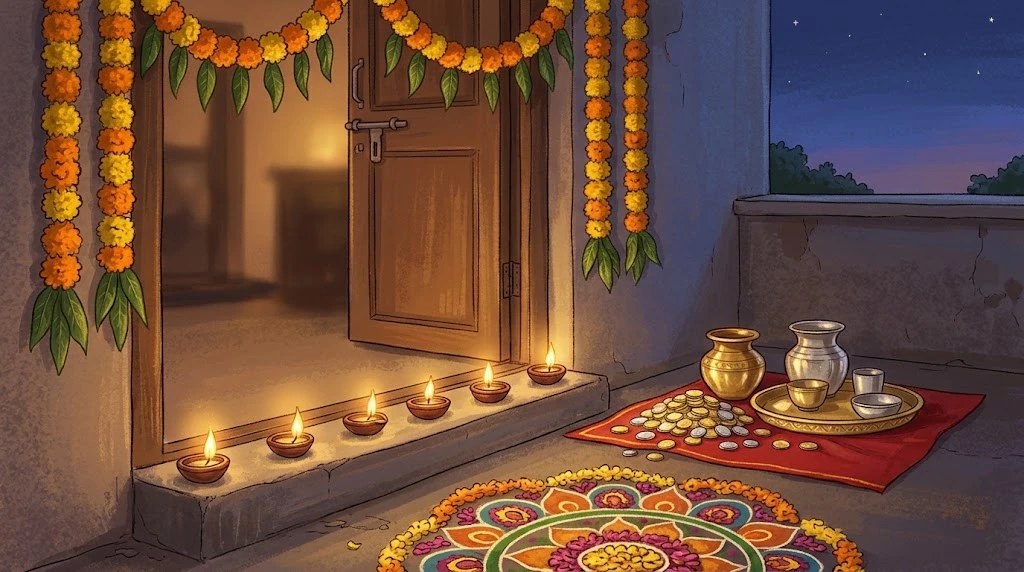
धनतेरस पूजा विधि और कथा
Dhanteras Puja Vidhi and Katha
कार्तिक कृष्ण त्रयोदशी — धन्वंतरि जयंती और धनत्रयोदशी: राजा हिम के पुत्र और यम की कथा, यम दीपदान, खरीदारी, कुबेर-लक्ष्मी पूजा और तेरह दीपकKartik Krishna Trayodashi, Dhanvantari Jayanti and Dhantrayodashi: the story of King Hima's son and Yama, the Yama lamp, what to buy, the Kuber-Lakshmi puja and the thirteen lamps
 व्रत कथाVrat Kathas
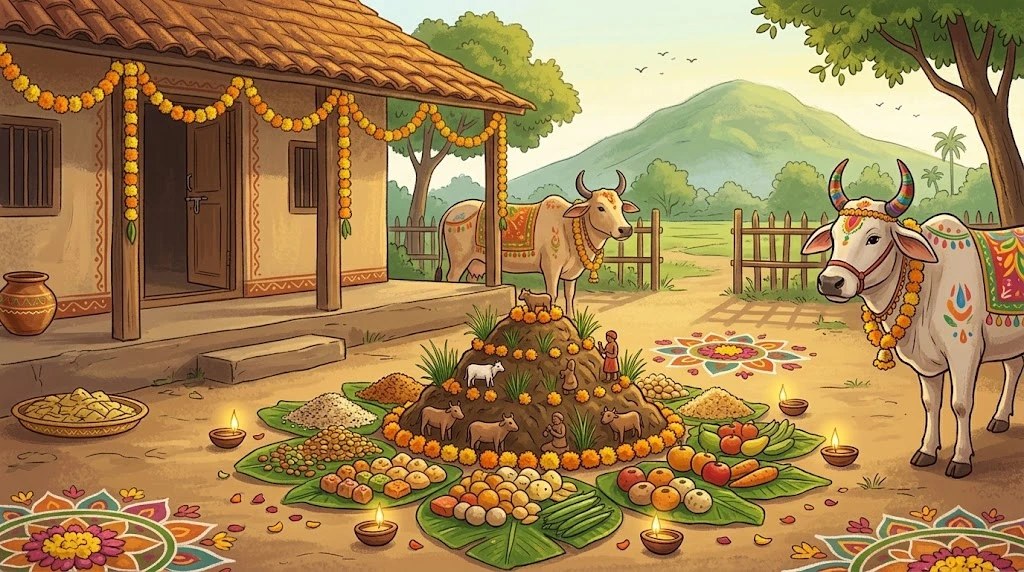
गोवर्धन पूजा कथा और विधि
Govardhan Puja Katha and Vidhi
कार्तिक शुक्ल प्रतिपदा की गोवर्धन पूजा — श्रीकृष्ण, इंद्र का क्रोध और गिरिराज की कथा, गोबर के गोवर्धन और अन्नकूट की पूजा विधिGovardhan Puja on Kartik Shukla Pratipada, the day after Diwali: how Krishna lifted the hill against Indra's rain, and how to make and worship the Govardhan of cow dung with the Annakut
जय गणेश देवा
Jai Ganesh Deva
श्री गणेश जी की आरती, अर्थ सहितThe Ganesh aarti sung before every puja, with the meaning of every stanza