धनतेरस पूजा विधि और कथा
Dhanteras Puja Vidhi and Katha
कार्तिक कृष्ण त्रयोदशी — धन्वंतरि जयंती और धनत्रयोदशी: राजा हिम के पुत्र और यम की कथा, यम दीपदान, खरीदारी, कुबेर-लक्ष्मी पूजा और तेरह दीपकKartik Krishna Trayodashi, Dhanvantari Jayanti and Dhantrayodashi: the story of King Hima's son and Yama, the Yama lamp, what to buy, the Kuber-Lakshmi puja and the thirteen lamps
2026 मेंIn 2026
शुक्रवार, 6 नवंबर 2026Friday, 6 November 2026
कार्तिक कृष्ण त्रयोदशी · 10:31 (6 नवंबर 2026) से 10:48 (7 नवंबर 2026) तकKartika Krishna Trayodashi · from 10:31 on 6 November 2026 to 10:48 on 7 November 2026
- लक्ष्मी पूजा मुहूर्तLakshmi puja muhurat
- 18:02 – 19:52
- प्रदोष कालPradosh kaal
- 17:28 – 19:52
- वृषभ लग्न (स्थिर लग्न)Vrishabha lagna (sthir lagna)
- 18:02 – 19:58
PDF डाउनलोडDownload PDF
धनतेरस — धनत्रयोदशी — कार्तिक मास के कृष्ण पक्ष की त्रयोदशी को आती है और इसी दिन से दीपावली का पाँच दिन का पर्व आरंभ होता है। इसी तिथि को समुद्र मंथन से देवों के वैद्य धन्वंतरि अमृत कलश लेकर प्रकट हुए थे, इसलिए यह धन्वंतरि जयंती भी है और भारत में इसे आयुर्वेद दिवस के रूप में भी मनाया जाता है। 'धन' यहाँ केवल सोना-चाँदी नहीं — आरोग्य भी धन है, और इस दिन की दोनों कथाएँ इसी बात को कहती हैं: एक में अमृत का कलश है, दूसरी में सोने-चाँदी के ढेर और दीपों की चमक से मृत्यु को रोका गया है।
इस दिन शाम को प्रदोष काल में कुबेर, लक्ष्मी और धन्वंतरि की पूजा होती है, घर के बाहर यम के नाम का दीपक रखा जाता है, और नई धातु — बर्तन, चाँदी, सोना — खरीदने की परंपरा है। नीचे पहले राजा हिम के पुत्र की कथा और धन्वंतरि का प्राकट्य है, फिर पूजा की पूरी विधि, यम दीपदान और खरीदारी की रीत, और अंत में प्रश्न-उत्तर। इस वर्ष की तिथि और प्रदोष काल का समय इस पृष्ठ के ऊपर नई दिल्ली के अनुसार दिखता है।
Dhanteras, or Dhantrayodashi, falls on the thirteenth tithi of the dark fortnight of Kartik, and the five-day festival of Diwali begins with it. On this tithi Dhanvantari, the physician of the gods, rose from the churning of the ocean carrying the pot of amrit, so the day is also Dhanvantari Jayanti and is observed in India as Ayurveda Day. 'Dhan', wealth, here means more than gold and silver: health is wealth too, and both of the day's stories say so. In one there is the pot of nectar; in the other, death is held back by heaps of gold and silver and the blaze of lamps.
On this evening, in the pradosh period, Kuber, Lakshmi and Dhanvantari are worshipped, a lamp in Yama's name is set outside the house, and by custom new metal is bought: utensils, silver, gold. Below come first the story of King Hima's son and the rising of Dhanvantari, then the full method of the puja, the custom of the Yama lamp and of buying, and at the end the questions people ask. This year's date and the pradosh window for New Delhi are shown at the top of this page.
व्रत कथाThe story
प्राचीन काल में हिम नाम का एक राजा था। बहुत प्रतीक्षा के बाद उसके घर पुत्र हुआ। राजा ने प्रसन्न होकर ज्योतिषियों को बुलाया और बालक की जन्म-कुंडली बनवाई। ज्योतिषियों ने ग्रह देखे और उनके मुख उतर गए। उन्होंने कहा, 'राजन, यह बालक तेजस्वी है, पर इसकी कुंडली में एक भारी योग है — सोलहवें वर्ष में, इसके विवाह के चौथे दिन, इसकी मृत्यु सर्पदंश से लिखी है।' राजा और रानी पर वज्र गिरा। उन्होंने यह बात किसी से न कही और पुत्र को बड़े जतन से पाला।
राजकुमार बड़ा हुआ — सुंदर, वीर और विद्वान। जब वह सोलह वर्ष का हुआ, तो राजा ने सोचा कि विवाह न करने से शायद विधि का लेख टल जाए। पर राजकुमार का विवाह एक राजकन्या से तय हो चुका था, और वह कन्या बहुत बुद्धिमती, धर्मपरायण और साहसी थी। विवाह हो गया। विवाह के बाद राजा ने अपनी पुत्रवधू को, और कुछ कथाओं में स्वयं राजकुमार को भी, ज्योतिषियों की भविष्यवाणी बता दी — 'चौथे दिन की रात संकट की रात है।'
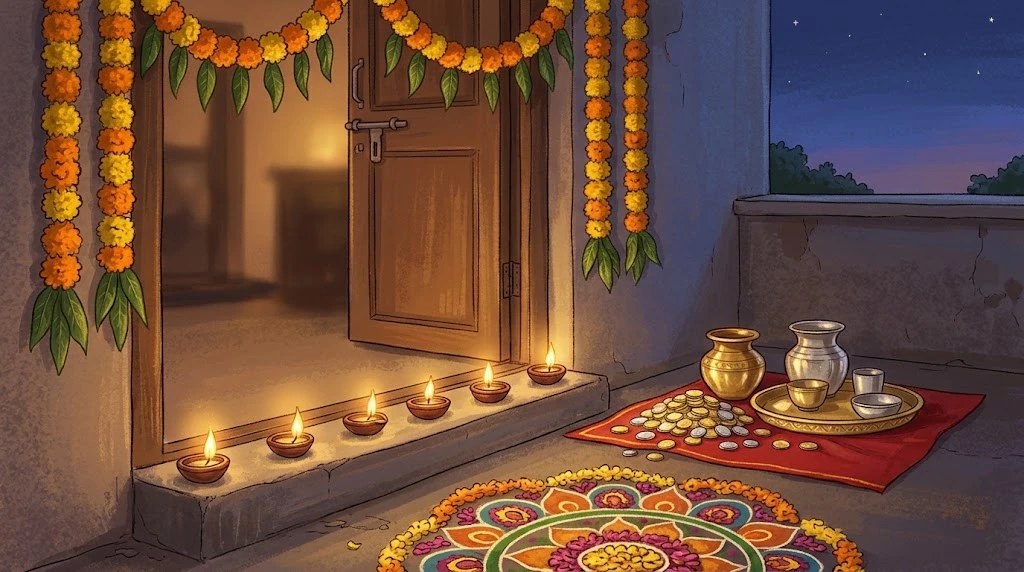
नवविवाहिता ने निश्चय किया कि वह अपने पति को इस रात नहीं खोएगी। चौथे दिन शाम होते ही उसने एक उपाय किया। उसने शयन-कक्ष के द्वार पर अपने और पति के सारे आभूषण — सोना, चाँदी, मोती — और राजकोष के सिक्कों का ऊँचा ढेर लगा दिया, ताकि द्वार ढँक जाए। कक्ष के भीतर और बाहर उसने अनगिनत दीपक जलाए, जिससे पूरा कक्ष दिन की तरह चमकने लगा। फिर उसने पति को बिठाया और कहा, 'आज रात आप सोएँगे नहीं। मैं आपको गीत सुनाऊँगी, कथाएँ कहूँगी — बस जागते रहिए।'
रात बीतने लगी। राजकुमारी गाती रही — भक्ति के गीत, वीरों की कथाएँ, पहेलियाँ। जब पति की पलकें भारी होतीं, वह नई कथा छेड़ देती। आधी रात को यमराज अपने नियम से आए — मृत्यु के देवता, जिनका लेख नहीं टलता — और वे सर्प का रूप लेकर राजकुमार के कक्ष की ओर बढ़े। पर द्वार पर पहुँचते ही दीपों की चमक और सोने-चाँदी की चकाचौंध से उनकी आँखें चौंधिया गईं। सर्प को द्वार नहीं दिखा; वह आभूषणों के ढेर पर चढ़ गया और वहाँ कुंडली मारकर बैठ गया।
भीतर से राजकुमारी के मधुर गीत और कथाएँ आ रही थीं। कहते हैं यमराज सर्प के रूप में वहीं बैठकर रात भर उन्हें सुनते रहे — गीत ऐसे थे कि उन्हें आगे बढ़ने का ध्यान ही न रहा। इसी बीच पूर्व में भोर हुई। जो मुहूर्त राजकुमार की मृत्यु का था, वह बीत गया। विधि का लेख जिस घड़ी के लिए था, वह घड़ी बिना मृत्यु के निकल गई। यमराज चुपचाप ढेर से उतरे और जैसे आए थे, वैसे ही लौट गए। राजकुमार जीवित रहा, और राजकुमारी ने अपनी बुद्धि, जागरण और दीपों से पति को मृत्यु से बचा लिया।
कथा का एक और रूप है, जिसमें यमराज के दूत स्वर्ग लौटकर यमराज से कहते हैं, 'प्रभु, हमें किसी के प्राण लेते दुख होता है — क्या कोई उपाय नहीं कि अकाल मृत्यु न हो?' तब यमराज कहते हैं, 'जो कार्तिक कृष्ण त्रयोदशी की संध्या को मेरे नाम दीपदान करे और दीपावली के दिनों में घर में दीप जलाए रखे, उसके घर अकाल मृत्यु नहीं आएगी।' इसी से धनतेरस की संध्या को घर के बाहर यम के नाम का दीपक रखने की परंपरा चली — यम दीपदान।
धनतेरस की दूसरी कथा समुद्र मंथन की है। जब देवों और असुरों ने मंदराचल को मथानी और वासुकि को रस्सी बनाकर क्षीरसागर को मथा, तो उससे एक-एक कर चौदह रत्न निकले — कामधेनु, ऐरावत, कल्पवृक्ष, कौस्तुभ मणि, चन्द्र, और अन्य। कार्तिक कृष्ण त्रयोदशी के दिन समुद्र से भगवान धन्वंतरि प्रकट हुए — विष्णु के अंश, हाथ में अमृत का कलश, दूसरे हाथ में औषधि और शंख। वे देवों के वैद्य हुए और उन्होंने आयुर्वेद का ज्ञान संसार को दिया। इसलिए यह दिन धन्वंतरि जयंती है, और वैद्य, चिकित्सक और औषधि से जुड़े लोग आज भी इस दिन धन्वंतरि की पूजा करते हैं।
इसी मंथन से दो दिन बाद, कार्तिक अमावस्या को, देवी लक्ष्मी प्रकट हुईं — इसलिए धनतेरस से दीपावली तक का पर्व एक ही सूत्र में बँधा है: पहले आरोग्य का कलश, फिर धन की देवी। धनतेरस पर धन्वंतरि के साथ धन के स्वामी कुबेर और लक्ष्मी की पूजा होती है, और घर में नई धातु लाई जाती है — यह उस अमृत कलश का प्रतीक है जो समुद्र से इसी दिन निकला था। और यम का दीपक याद दिलाता है कि धन और आरोग्य दोनों का मूल है जीवन — जो राजकुमारी ने जागरण और दीपों से बचाया था।
In ancient times there was a king named Hima. After long waiting, a son was born to him. Overjoyed, the king called the astrologers and had the boy's birth chart cast. They studied the grahas and their faces fell. 'King,' they said, 'this child is brilliant, but there is a grave yoga in his chart. In his sixteenth year, on the fourth day after his wedding, his death by snakebite is written.' It was a thunderbolt for the king and queen. They told no one and raised the boy with the greatest care.
The prince grew up handsome, brave and learned. When he turned sixteen the king thought that by not marrying him off, fate's writing might be turned aside. But the prince's marriage to a princess had already been settled, and that princess was wise, devout and brave. The wedding took place. Afterwards the king told his daughter-in-law, and in some tellings the prince himself, what the astrologers had foretold: 'The night of the fourth day is the night of danger.'
The young bride resolved that she would not lose her husband that night. As evening fell on the fourth day she set her plan in motion. At the door of the bedchamber she heaped up all her ornaments and her husband's, gold, silver and pearls, and coins from the royal treasury, in a pile so high that it blocked the doorway. Inside and outside the chamber she lit lamps beyond counting, until the whole room blazed like day. Then she seated her husband and said, 'Tonight you will not sleep. I will sing to you and tell you stories; only stay awake.'
The night wore on. The princess kept singing: songs of devotion, tales of heroes, riddles. Whenever her husband's eyelids grew heavy she began a new story. At midnight Yamaraj came as his law required, the god of death whose writ is never turned, and he took the form of a serpent and moved towards the prince's chamber. But as he reached the door, the blaze of the lamps and the glitter of gold and silver dazzled his eyes. The serpent could not see the doorway; it climbed onto the heap of ornaments and lay there coiled.
From within came the princess's sweet songs and stories. It is said that Yamaraj, in his serpent form, sat there and listened to them all night long; the songs were such that he forgot to go further. Meanwhile dawn broke in the east. The hour appointed for the prince's death had passed. The moment for which fate's writing had been made went by without a death. Yamaraj climbed quietly down from the heap and went back the way he had come. The prince lived, and the princess, by her wit, her vigil and her lamps, had saved her husband from death.
There is another form of the story, in which Yamaraj's messengers return to his realm and say, 'Lord, it grieves us to take anyone's life. Is there no way that untimely death might be avoided?' Then Yamaraj says, 'Whoever offers a lamp in my name on the evening of Kartik Krishna Trayodashi and keeps lamps burning in the house through the days of Diwali, untimely death will not enter their home.' From this came the custom of placing a lamp in Yama's name outside the house on the evening of Dhanteras: the Yama deepdaan.
The second story of Dhanteras is that of the churning of the ocean. When the gods and the asuras churned the ocean of milk, with Mount Mandara as the churning rod and the serpent Vasuki as the rope, fourteen treasures rose from it one after another: the wish-granting cow Kamadhenu, the elephant Airavata, the Kalpavriksha tree, the Kaustubha gem, the Moon, and the rest. On the day of Kartik Krishna Trayodashi, Lord Dhanvantari rose from the sea, a portion of Vishnu, with the pot of amrit in one hand and herbs and a conch in the other. He became the physician of the gods and gave the knowledge of Ayurveda to the world. That is why this day is Dhanvantari Jayanti, and physicians and all who work with medicine worship Dhanvantari on this day even now.
From the same churning, two days later on the new moon of Kartik, the goddess Lakshmi appeared; so the festival from Dhanteras to Diwali is bound by a single thread: first the pot of health, then the goddess of wealth. On Dhanteras, Kuber, the lord of riches, and Lakshmi are worshipped along with Dhanvantari, and new metal is brought into the house as a sign of the pot of nectar that rose from the sea on this day. And the lamp for Yama reminds us that the root of both wealth and health is life itself, which the princess saved with her vigil and her lamps.
पूजा विधिHow to perform the puja
सामग्री: लक्ष्मी-गणेश, कुबेर और धन्वंतरि के चित्र या प्रतिमाएँ, चौकी और लाल या पीला वस्त्र, कलश, मिट्टी के दीपक (कम से कम तेरह, और यम दीप के लिए एक चौमुखा दीपक), सरसों का तेल और घी, रूई की बत्तियाँ, रोली, अक्षत, हल्दी, मौली, फूल और माला, धूप-अगरबत्ती, कपूर, पान-सुपारी, नारियल, धनिया के साबुत बीज, खील-बताशे, मिठाई, फल, सिक्के, और इस दिन खरीदी गई नई धातु की वस्तु।
सुबह घर की सफ़ाई करें — धनतेरस दीपावली की तैयारी का पहला दिन है, इसलिए पुरानी टूटी वस्तुएँ बाहर निकालें, घर धोएँ, मुख्य द्वार पर रंगोली बनाएँ और तोरण (आम या अशोक के पत्तों की बंदनवार) बाँधें। स्नान कर स्वच्छ वस्त्र पहनें। दिन में बाज़ार से नई धातु की वस्तु — बर्तन, चाँदी का सिक्का, सोना — या जो सामर्थ्य में हो, वह लाकर पूजा-स्थल पर रख दें; उसका प्रयोग दीपावली की पूजा के बाद शुरू करें।
पूजा का समय संध्या का प्रदोष काल है — सूर्यास्त के बाद का लगभग सवा दो घंटे का समय — और इसके भीतर स्थिर लग्न (प्रायः वृष लग्न) को सर्वोत्तम माना जाता है, क्योंकि स्थिर लग्न में की गई पूजा से लक्ष्मी घर में स्थिर रहती हैं। नई दिल्ली के अनुसार यह समय इस पृष्ठ के ऊपर दिया गया है। पूजा से पहले पूर्व या उत्तर की ओर मुख करके बैठें।
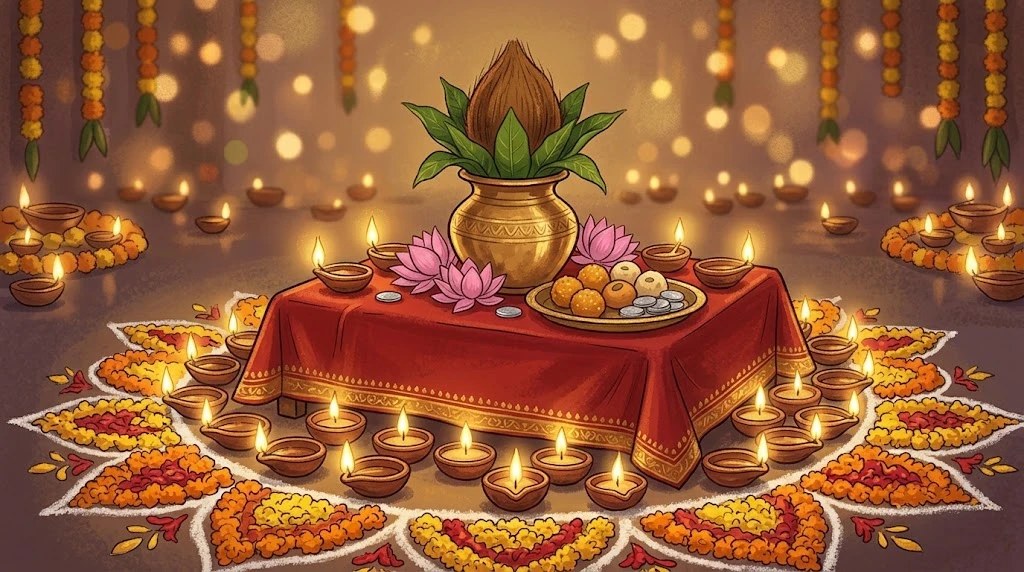
चौकी पर लाल या पीला वस्त्र बिछाकर बीच में गणेश-लक्ष्मी, उनके पास धन्वंतरि और कुबेर के चित्र या प्रतिमाएँ रखें। बाईं ओर जल भरा कलश रखें — उसमें सुपारी, सिक्का, अक्षत और आम के पत्ते डालकर ऊपर नारियल रखें। सामने घी का दीपक जलाएँ। नई खरीदी हुई धातु, तिजोरी की चाबी, कुछ सिक्के और नोट, और व्यापारी हों तो बहीखाता या लेखा-पुस्तक भी चौकी पर रखें।
संकल्प लें — 'मैं अपने परिवार के आरोग्य, आयु और समृद्धि के लिए धनत्रयोदशी की पूजा करता/करती हूँ।' फिर सबसे पहले गणेश जी का पूजन करें: जल, रोली, अक्षत, दूर्वा, फूल, धूप, दीप और मोदक या लड्डू अर्पित करें; नाम-मंत्र 'ॐ गं गणपतये नमः'। गणेश के बिना कोई पूजा आरंभ नहीं होती।
फिर धन्वंतरि का पूजन करें — यह धनतेरस की विशेष पूजा है। उन्हें जल, पीले फूल, रोली-अक्षत, धूप-दीप और दूध या पंचामृत का भोग अर्पित करें; नाम-मंत्र 'ॐ धन्वन्तरये नमः'। घर में कोई बीमार हो तो उसके नाम से आरोग्य की प्रार्थना करें। कई घर इस दिन तुलसी, आँवला या नीम जैसी औषधि वाले पौधे की भी पूजा करते हैं, क्योंकि धन्वंतरि औषधियों के देव हैं।
फिर कुबेर का पूजन करें — धन के कोषाध्यक्ष। तिजोरी, अलमारी या जहाँ धन रखते हों, वहाँ रोली से स्वस्तिक बनाएँ, कुबेर के चित्र को फूल-अक्षत चढ़ाएँ और नाम-मंत्र 'ॐ कुबेराय नमः' कहें। नई धातु की वस्तु पर हल्दी-रोली का टीका लगाकर मौली बाँधें। धनिया के साबुत बीज कुबेर और लक्ष्मी को चढ़ाएँ — दीपावली के बाद इन्हें घर के बगीचे या गमले में बोने की रीत है; जितने हरे पौधे निकलें, उतनी वर्ष की समृद्धि मानी जाती है।
अंत में लक्ष्मी जी का पूजन करें: जल, रोली, हल्दी, अक्षत, कमल या गुलाब के फूल, धूप, दीप, और खील-बताशे व मिठाई का भोग; नाम-मंत्र 'ॐ महालक्ष्म्यै नमः'। जो श्री सूक्त, लक्ष्मी अष्टोत्तर या कनकधारा स्तोत्र जानते हों, वे पढ़ें; न जानते हों तो नाम का जप और श्रद्धा से प्रार्थना पर्याप्त है। याद रखें, धनतेरस की लक्ष्मी पूजा दीपावली की मुख्य पूजा की पूर्व-तैयारी है; मुख्य पूजा अमावस्या की रात होती है।
पूजा के बाद दीपदान करें। घर में तेरह दीपक जलाएँ — रसोई, पूजा-घर, मुख्य द्वार, आँगन, तुलसी, छत और हर कमरे में — और सबसे अंत में, सूर्यास्त के बाद, मुख्य द्वार के बाहर दक्षिण दिशा की ओर मुख किया हुआ सरसों के तेल का चौमुखा दीपक यम के नाम रखें; इसकी विधि नीचे अलग से है। फिर आरती करें और प्रसाद बाँटें। धनतेरस पर उपवास की बाध्यता नहीं है; जो व्रत रखना चाहें, वे दिन में फलाहार कर पूजा के बाद एक समय सात्त्विक भोजन करते हैं।
What you need: pictures or images of Lakshmi-Ganesh, Kuber and Dhanvantari, a low stool with a red or yellow cloth, a kalash, clay lamps (at least thirteen, and one four-wicked lamp for the Yama deep), mustard oil and ghee, cotton wicks, roli, unbroken rice, turmeric, mauli, flowers and a garland, incense, camphor, betel leaf and nut, a coconut, whole coriander seeds, puffed rice and sugar drops (kheel-batashe), sweets, fruit, coins, and the new metal object bought that day.
In the morning clean the house. Dhanteras is the first day of preparing for Diwali, so put out old and broken things, wash the house, make a rangoli at the main door and tie a toran (a string of mango or ashoka leaves). Bathe and wear clean clothes. During the day bring home the new metal from the market, a utensil, a silver coin, gold, or whatever is within your means, and set it at the place of worship; begin using it after the Diwali puja.
The time for the puja is the pradosh period of the evening, roughly two and a quarter hours after sunset, and within it a fixed lagna (usually Taurus rising) is held best, because worship done in a fixed lagna keeps Lakshmi settled in the house. The window for New Delhi is shown at the top of this page. Sit facing east or north before you begin.
Spread the red or yellow cloth on the stool, place Ganesh and Lakshmi in the middle and the pictures or images of Dhanvantari and Kuber beside them. On the left set the kalash filled with water, with a betel nut, a coin, rice and mango leaves in it and a coconut on top. Light a ghee lamp in front. Also place on the stool the newly bought metal, the key of the safe, some coins and notes, and, for traders, the account book or ledger.
Take the vow: 'I perform the puja of Dhantrayodashi for the health, long life and prosperity of my family.' Then worship Ganesh first: offer water, roli, rice, durva grass, flowers, incense, lamp and modak or laddoo, with the name mantra 'Om Gam Ganapataye Namah'. No puja begins without Ganesh.
Then worship Dhanvantari; this is the puja particular to Dhanteras. Offer water, yellow flowers, roli and rice, incense and lamp, and milk or panchamrit, with the name mantra 'Om Dhanvantaraye Namah'. If anyone in the house is ill, pray for their recovery by name. Many homes also worship a medicinal plant on this day, tulsi, amla or neem, since Dhanvantari is the lord of herbs.
Then worship Kuber, the treasurer of wealth. Draw a swastika in roli on the safe, the cupboard or wherever money is kept, offer flowers and rice to Kuber's picture and say the name mantra 'Om Kuberaya Namah'. Mark the new metal object with turmeric and roli and tie mauli around it. Offer whole coriander seeds to Kuber and Lakshmi; the custom is to sow them in the garden or a pot after Diwali, and the greener the plants that come up, the more prosperous the year is said to be.
Finally worship Lakshmi: water, roli, turmeric, rice, lotus or rose flowers, incense, lamp, and an offering of kheel-batashe and sweets, with the name mantra 'Om Mahalakshmyai Namah'. Those who know the Shri Sukta, the Lakshmi Ashtottara or the Kanakadhara Stotra may recite them; otherwise japa of the name and a heartfelt prayer are enough. Remember that the Lakshmi puja of Dhanteras is a prelude to the main puja of Diwali, which is done on the night of the new moon.
After the puja comes the offering of lamps. Light thirteen lamps around the house, in the kitchen, the puja room, at the main door, in the courtyard, at the tulsi, on the roof and in every room, and last of all, after sunset, place the four-wicked mustard-oil lamp for Yama outside the main door facing south; the method is given separately below. Then do the aarti and share the prasad. Fasting is not required on Dhanteras; those who wish to keep a vrat take fruit during the day and one sattvik meal after the puja.
यम दीपदान और खरीदारीYama deepdaan and what to buy
यम दीपदान धनतेरस की सबसे पुरानी रीत है — राजकुमारी के दीपों की स्मृति और यमराज के वचन का पालन। सूर्यास्त के बाद, प्रदोष काल में, मिट्टी का एक चौमुखा दीपक (चार बत्तियों वाला) लें, उसमें सरसों का तेल भरें और उसे घर के मुख्य द्वार के बाहर, दक्षिण दिशा की ओर मुख करके रखें — दक्षिण यम की दिशा है। दीपक के नीचे थोड़ा अनाज या चावल रखें। बहुत घरों में यह दीपक घर की सबसे बड़ी स्त्री या सदस्य रखता है, और रखते समय परिवार के सभी सदस्यों की दीर्घायु और अकाल मृत्यु से रक्षा की प्रार्थना की जाती है। दीपक रात भर जलता रहे तो उत्तम। यम का दीपक घर के भीतर नहीं रखा जाता, और उसे पूजा के अन्य दीपों के साथ नहीं मिलाया जाता।
धनतेरस पर नई धातु खरीदने की परंपरा समुद्र से निकले अमृत कलश से जुड़ी है — इसलिए सबसे पुरानी रीत बर्तन खरीदने की है: पीतल, ताँबे या चाँदी का कलश, लोटा, थाली या कटोरी। इसके बाद चाँदी का सिक्का या लक्ष्मी-गणेश की चाँदी की मूर्ति, और सामर्थ्य हो तो सोना। कई घर इस दिन नई झाड़ू भी खरीदते हैं, क्योंकि झाड़ू लक्ष्मी का प्रतीक मानी जाती है और घर से दरिद्रता हटाती है; और धनिया के बीज, जो पूजा में चढ़ाकर बाद में बोए जाते हैं। लोक-नियम में इस दिन लोहे की वस्तु, काँच, काले रंग की चीज़ें और धारदार वस्तुएँ खरीदना टाला जाता है। खरीदारी दबाव या कर्ज़ से नहीं — एक चाँदी का सिक्का या एक छोटा बर्तन भी पूरी रीत है।
शाम को प्रदोष काल में कुबेर और लक्ष्मी की पूजा होती है, जो ऊपर विधि में है। व्यापारी इस दिन नए बहीखाते लाते हैं और उन पर रोली से स्वस्तिक व 'श्री' लिखकर चौकी पर रखते हैं; उनका मुख्य पूजन दीपावली को होता है। घर की तिजोरी या धन-स्थान पर स्वस्तिक बनाना, कुबेर का ध्यान करना और नई धातु को वहाँ रखना इसी पूजा का भाग है। जो लोग सोना-चाँदी नहीं खरीद पाए, वे मिट्टी की लक्ष्मी-गणेश की मूर्ति, जो दीपावली की पूजा के लिए चाहिए, इसी दिन लाते हैं।
तेरह दीपक त्रयोदशी के तेरह के लिए हैं। संध्या को यम दीप के अलावा तेरह दीपक घर के भीतर और बाहर जलाए जाते हैं — द्वार पर, आँगन में, रसोई, पूजा-घर, तुलसी के पास, छत और सीढ़ियों पर। बहुत घरों में इसी दिन से दीपावली तक हर शाम दीप जलाने का क्रम चलता है, और अगले दिन नरक चतुर्दशी (छोटी दीपावली) पर चौदह दीपक जलाए जाते हैं। दीपों का तात्पर्य यही है जो राजकुमारी की कथा में था — प्रकाश में मृत्यु और दरिद्रता दोनों का द्वार नहीं दिखता।
The Yama deepdaan is the oldest custom of Dhanteras, a memory of the princess's lamps and the keeping of Yamaraj's word. After sunset, in the pradosh period, take a clay lamp with four wicks, fill it with mustard oil and place it outside the main door of the house facing south, the direction of Yama. Put a little grain or rice under the lamp. In many homes the eldest woman or eldest member of the family sets this lamp, and as it is placed a prayer is made for the long life of every member of the household and for protection from untimely death. It is best if the lamp burns all night. The Yama lamp is never kept inside the house, and it is not mixed with the other lamps of the puja.
The custom of buying new metal on Dhanteras goes back to the pot of nectar that rose from the sea, which is why the oldest custom is to buy a vessel: a kalash, lota, plate or bowl of brass, copper or silver. After that a silver coin or a silver image of Lakshmi-Ganesh, and gold if one can afford it. Many homes also buy a new broom on this day, since the broom is taken as a sign of Lakshmi and sweeps poverty out of the house, and coriander seeds, which are offered in the puja and sown later. By folk rule, iron objects, glass, black things and sharp objects are not bought on this day. Buying should never come from pressure or debt; a single silver coin or a small vessel fulfils the custom completely.
In the evening, in the pradosh period, Kuber and Lakshmi are worshipped as described in the method above. Traders bring new account books on this day, mark them with a swastika and the word 'Shri' in roli and set them on the stool; their main worship is on Diwali. Drawing a swastika on the safe or the place where money is kept, meditating on Kuber and placing the new metal there are part of this same puja. Those who could not buy gold or silver bring home on this day the clay images of Lakshmi and Ganesh that will be needed for the Diwali puja.
The thirteen lamps are for the thirteen of the trayodashi. At dusk, besides the Yama lamp, thirteen lamps are lit inside and outside the house: at the door, in the courtyard, the kitchen, the puja room, by the tulsi, on the roof and the stairs. In many homes lamps are lit every evening from this day until Diwali, and on the next day, Narak Chaturdashi (Choti Diwali), fourteen lamps are lit. The meaning of the lamps is the one in the princess's story: in the light, neither death nor poverty can find the door.
महत्व और फलMeaning and fruit
परंपरा में धनतेरस की पूजा परिवार के आरोग्य, दीर्घायु और समृद्धि के लिए की जाती है — यम दीप अकाल मृत्यु से रक्षा के लिए, धन्वंतरि पूजा रोग से मुक्ति के लिए, और कुबेर-लक्ष्मी पूजा धन की स्थिरता के लिए। कथा का संदेश यह है कि विधि का लेख कठोर है, पर जागरण, बुद्धि, प्रकाश और प्रेम उसे टाल सकते हैं — राजकुमारी ने न यम से लड़ाई की, न भागी; उसने दीप जलाए और गीत गाए। धन के ढेर ने यम की आँखें चौंधियाईं, पर रात भर रोका गीतों ने।
धनतेरस याद दिलाता है कि धन का पहला रूप आरोग्य है — इसी दिन अमृत का कलश निकला था, सोना नहीं। ज्योतिष में धन और सुख-भोग का कारक शुक्र है और समृद्धि, ज्ञान और रक्षा का कारक बृहस्पति; कुंडली का दूसरा भाव संचित धन और ग्यारहवाँ भाव आय और लाभ बताता है। जिनकी कुंडली में शुक्र या बृहस्पति कमज़ोर हों, या दूसरा-ग्यारहवाँ भाव पीड़ित हो, उनके लिए धनतेरस की पूजा और इस दिन का दान विशेष बताया जाता है। दान इस दिन खरीदारी से कम महत्व का नहीं — वैद्य और औषधि के लिए, और जिन्हें भोजन चाहिए, उनके लिए।
By tradition the Dhanteras puja is done for the family's health, long life and prosperity: the Yama lamp for protection from untimely death, the Dhanvantari puja for freedom from illness, and the Kuber-Lakshmi puja for wealth that stays. The message of the story is that fate's writing is hard, but vigil, wit, light and love can turn it aside. The princess neither fought Yama nor fled; she lit lamps and sang. The heap of wealth dazzled Yama's eyes, but it was the songs that held him till dawn.
Dhanteras reminds us that the first form of wealth is health: it was the pot of nectar that rose on this day, not gold. In Jyotish, Venus is the significator of wealth and enjoyment and Jupiter of prosperity, wisdom and protection; the second house of the kundli shows accumulated wealth and the eleventh house income and gain. Those whose kundli has a weak Venus or Jupiter, or an afflicted second or eleventh house, are said to gain most from the Dhanteras puja and from giving on this day. Giving matters on this day no less than buying: for physicians and medicine, and for those who need food.
आरतीAarti
पूजा के अंत में लक्ष्मी जी की आरती 'ॐ जय लक्ष्मी माता' गाई जाती है, और उसके साथ अधिकांश घरों में गणेश जी की आरती 'जय गणेश देवा' तथा विष्णु की आरती 'ॐ जय जगदीश हरे' — क्योंकि धन्वंतरि विष्णु के ही अंश हैं। कुछ घर धन्वंतरि की स्तुति भी पढ़ते हैं। आरती के बाद खील-बताशे और मिठाई का प्रसाद बाँटें और यम दीप रात भर जलता छोड़ दें।
The puja ends with the Lakshmi aarti 'Om Jai Lakshmi Mata', and with it in most homes the Ganesh aarti 'Jai Ganesh Deva' and the Vishnu aarti 'Om Jai Jagdish Hare', since Dhanvantari is a portion of Vishnu. Some homes also read a hymn to Dhanvantari. After the aarti share the prasad of kheel-batashe and sweets, and leave the Yama lamp burning through the night.
कब पढ़ेंWhen to read
यह कथा धनतेरस की संध्या को प्रदोष काल में, कुबेर-लक्ष्मी-धन्वंतरि पूजा के बाद और यम दीप रखने से पहले, परिवार के साथ पढ़ी या सुनी जाती है।This katha is read or heard with the family on the evening of Dhanteras in the pradosh period, after the Kuber-Lakshmi-Dhanvantari puja and before the Yama lamp is set out.
कुंडली मेंIn your kundli
धनतेरस के ग्रह शुक्र और बृहस्पति हैं — शुक्र कुंडली में धन, सुख, वैभव और भोग का कारक है, बृहस्पति समृद्धि, ज्ञान, संतान और रक्षा का; दूसरा भाव संचित धन और ग्यारहवाँ भाव आय-लाभ बताता है। जब शुक्र या बृहस्पति नीच के, अस्त या पाप ग्रहों से पीड़ित हों, या दूसरे-ग्यारहवें भाव के स्वामी कमज़ोर हों, तब धन में अस्थिरता और इस दिन की पूजा का विशेष महत्व बताया जाता है। आप इसी साइट पर अपनी कुंडली बनाकर अपने शुक्र, बृहस्पति और धन भावों की स्थिति देख सकते हैं।The grahas of Dhanteras are Venus and Jupiter. In the kundli Venus stands for wealth, comfort, luxury and enjoyment, and Jupiter for prosperity, wisdom, children and protection; the second house shows accumulated wealth and the eleventh income and gain. When Venus or Jupiter is debilitated, combust or afflicted by malefics, or when the lords of the second and eleventh houses are weak, wealth is unsteady and the puja of this day is given special weight. You can build your kundli on this site and check the condition of your Venus, Jupiter and houses of wealth.
ग्रह: Grahas: शुक्रVenus, बृहस्पतिJupiter
अपनी कुंडली में देखेंCheck it in your kundliप्रश्नोत्तरQuestions people ask
- धनतेरस पर क्या खरीदना चाहिए और क्या नहीं? सोना न खरीद पाएँ तो?What should be bought on Dhanteras, and what not? What if one cannot buy gold?
- सबसे पुरानी रीत धातु का बर्तन खरीदने की है — पीतल, ताँबा या चाँदी; फिर चाँदी का सिक्का, लक्ष्मी-गणेश की मूर्ति और सामर्थ्य हो तो सोना। झाड़ू, धनिया के बीज और मिट्टी के दीपक भी इस दिन खरीदे जाते हैं। लोक-नियम में लोहा, काँच, काली वस्तुएँ और धारदार चीज़ें टाली जाती हैं। सोना न खरीद पाएँ तो एक चाँदी का सिक्का, एक छोटा बर्तन या एक नई झाड़ू भी पूरी रीत है — खरीदारी कर्ज़ लेकर या दबाव में कभी न करें; लक्ष्मी स्थिरता से प्रसन्न होती हैं, दिखावे से नहीं।The oldest custom is to buy a metal vessel of brass, copper or silver; then a silver coin, an image of Lakshmi-Ganesh, and gold if one can afford it. A broom, coriander seeds and clay lamps are also bought on this day. Folk rule avoids iron, glass, black objects and sharp things. If gold is out of reach, a single silver coin, a small vessel or a new broom fulfils the custom completely. Never buy on credit or under pressure; Lakshmi is pleased by steadiness, not by show.
- धनतेरस की पूजा किस समय करें? क्या व्रत रखना ज़रूरी है?At what time is the Dhanteras puja done? Is fasting required?
- पूजा संध्या के प्रदोष काल में की जाती है — सूर्यास्त के बाद का लगभग सवा दो घंटे का समय — और इसके भीतर स्थिर लग्न (प्रायः वृष) सर्वोत्तम माना जाता है। नई दिल्ली का यह समय इस पृष्ठ के ऊपर दिया गया है; यदि यह समय न बन पाए तो प्रदोष काल में कभी भी पूजा करें। धनतेरस पर उपवास की बाध्यता नहीं है; जो चाहें, वे दिन में फलाहार कर पूजा के बाद एक समय सात्त्विक भोजन करते हैं। यम दीप सूर्यास्त के बाद ही रखा जाता है।The puja is done in the pradosh period of the evening, roughly two and a quarter hours after sunset, and within it a fixed lagna (usually Taurus) is held best. The window for New Delhi is shown at the top of this page; if that exact time is not possible, do the puja at any point in the pradosh period. Fasting is not required on Dhanteras; those who wish take fruit during the day and one sattvik meal after the puja. The Yama lamp is set out only after sunset.
- यम का दीपक कहाँ, कब और कैसे रखें?Where, when and how is the Yama lamp placed?
- सूर्यास्त के बाद, प्रदोष काल में, मिट्टी का चौमुखा दीपक सरसों के तेल से भरकर घर के मुख्य द्वार के बाहर दक्षिण दिशा की ओर मुख करके रखें; नीचे थोड़ा अनाज रखें। घर का सबसे बड़ा सदस्य इसे रखे और परिवार की दीर्घायु और अकाल मृत्यु से रक्षा की प्रार्थना करे। यह दीपक घर के भीतर नहीं रखा जाता और रात भर जलता रहे तो उत्तम। फ्लैट में रहते हों तो अपने द्वार के बाहर या बालकनी में दक्षिण की ओर रखें।After sunset, in the pradosh period, fill a four-wicked clay lamp with mustard oil and place it outside the main door of the house facing south, with a little grain under it. The eldest member of the family sets it and prays for the household's long life and protection from untimely death. This lamp is never kept inside the house, and it is best if it burns all night. In a flat, place it outside your own door or on the balcony, facing south.
- धनतेरस पर धन्वंतरि की पूजा क्यों होती है? घर में कोई बीमार हो तो क्या करें?Why is Dhanvantari worshipped on Dhanteras? What if someone at home is ill?
- कार्तिक कृष्ण त्रयोदशी को ही समुद्र मंथन से भगवान धन्वंतरि अमृत कलश लेकर प्रकट हुए थे, इसलिए यह दिन उनकी जयंती है और आयुर्वेद दिवस के रूप में मनाया जाता है। धन का पहला रूप आरोग्य है — इसीलिए धन के दिन वैद्य की पूजा होती है। घर में कोई बीमार हो तो धन्वंतरि को पीले फूल और दूध अर्पित कर उसके नाम से आरोग्य की प्रार्थना करें, नाम-मंत्र 'ॐ धन्वन्तरये नमः' का जप करें, तुलसी या किसी औषधि पौधे की पूजा करें, और इस दिन किसी ज़रूरतमंद की दवा या उपचार में सहायता करें — यह धनतेरस का सबसे उत्तम दान है।On Kartik Krishna Trayodashi, Lord Dhanvantari rose from the churning of the ocean with the pot of nectar, so this day is his jayanti and is observed as Ayurveda Day. The first form of wealth is health, which is why the physician of the gods is worshipped on the day of wealth. If someone at home is ill, offer yellow flowers and milk to Dhanvantari and pray for their recovery by name, chant the name mantra 'Om Dhanvantaraye Namah', worship a tulsi or another medicinal plant, and help someone in need with medicine or treatment on this day; that is the finest gift of Dhanteras.
साथ में पढ़ेंRead alongside
 पूजा विधिPuja Vidhis
दीपावली लक्ष्मी-गणेश पूजा विधि
Diwali Lakshmi-Ganesh Puja Vidhi
कार्तिक अमावस्या की रात — राम के अयोध्या आगमन और लक्ष्मी के प्राकट्य की कथा, लक्ष्मी-गणेश पूजा की पूरी विधि, बहीखाता पूजन, दीपदान और रंगोलीThe night of the Kartik new moon: Rama's return to Ayodhya and the appearance of Lakshmi, the Lakshmi-Ganesh puja step by step, the ledger puja, the lamps and the rangoli
ॐ जय जगदीश हरे
Om Jai Jagdish Hare
श्री विष्णु जी की आरती, पं. श्रद्धाराम शर्मा रचित, अर्थ सहितThe Vishnu aarti written by Pandit Shardha Ram Sharma, with the meaning of every stanza