छठ पूजा विधि
Chhath Puja Vidhi
कार्तिक शुक्ल चतुर्थी से सप्तमी तक सूर्य देव और छठी मैया का चार दिन का व्रत — नहाय-खाय, खरना, संध्या अर्घ्य और उषा अर्घ्य, सामग्री, कोसी, नियम और कथाएँThe four-day vrat of the Sun and Chhathi Maiya, Kartik Shukla Chaturthi to Saptami: Nahay-Khay, Kharna, the evening and dawn arghya, the samagri, the kosi, the rules and the stories
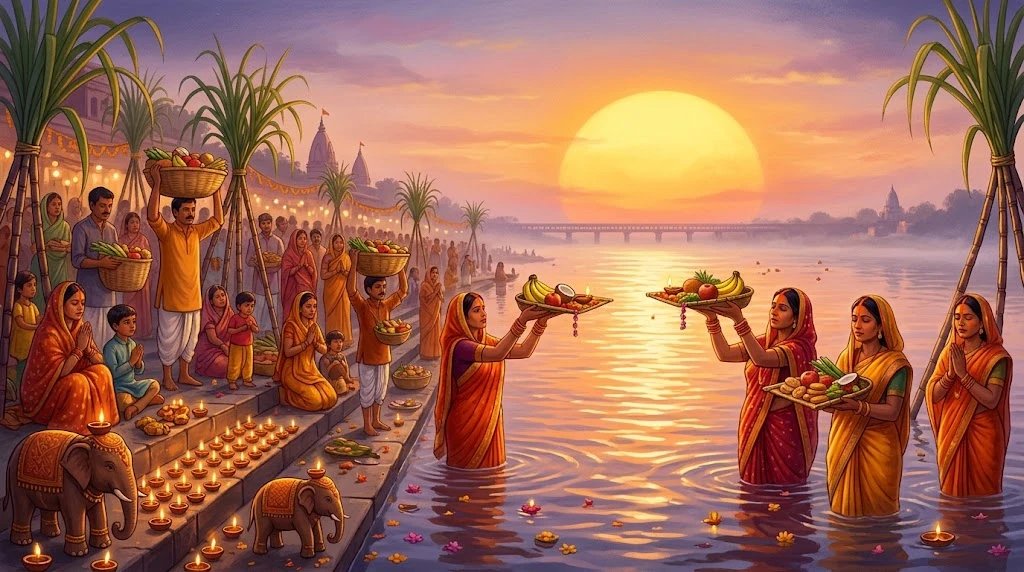
2026 मेंIn 2026
रविवार, 15 नवंबर 2026Sunday, 15 November 2026
कार्तिक शुक्ल षष्ठी · 23:24 (14 नवंबर 2026) से 02:01 (16 नवंबर 2026) तकKartika Shukla Shashthi · from 23:24 on 14 November 2026 to 02:01 on 16 November 2026
- संध्या अर्घ्य (दिखता सूर्यास्त)Sandhya Arghya (visible sunset)
- 17:27
- उषा अर्घ्य (अगले दिन दिखता सूर्योदय)Usha Arghya (next day's visible sunrise)
- 06:44 (16 नवंबर 2026)(16 November 2026)
PDF डाउनलोडDownload PDF
छठ सूर्य देव और छठी मैया की उपासना का पर्व है — एक ऐसा व्रत जिसमें डूबते और उगते, दोनों सूर्यों को जल में खड़े होकर अर्घ्य दिया जाता है। यह मुख्य रूप से बिहार, झारखंड, पूर्वी उत्तर प्रदेश और नेपाल के तराई क्षेत्र का पर्व है, पर आज दिल्ली, मुंबई और कोलकाता से लेकर विदेशों तक, जहाँ भी इन क्षेत्रों के लोग बसे हैं, वहाँ घाट सजते हैं। मुख्य छठ कार्तिक मास में, दीपावली के छह दिन बाद, शुक्ल पक्ष की षष्ठी को होती है; इसी व्रत का एक छोटा रूप चैत्र शुक्ल षष्ठी को होता है, जिसे चैती छठ कहते हैं। चार दिन का यह व्रत परिवार, संतान और आरोग्य की मंगल-कामना से रखा जाता है।
छठ में न पुरोहित अनिवार्य है, न मूर्ति — देवता सामने आकाश में हैं, और पूजा का सारा भार व्रती की शुद्धता, संयम और श्रद्धा पर है। नीचे पहले छठ का परिचय है, फिर चारों दिनों का क्रम — नहाय-खाय, खरना, संध्या अर्घ्य और उषा अर्घ्य — फिर सामग्री, अर्घ्य देने की विधि, कोसी भरना, नदी से दूर छठ कैसे करें, नियम और सावधानियाँ, और छठ से जुड़ी कथाएँ; अंत में प्रश्न-उत्तर। इस पृष्ठ के ऊपर इस वर्ष संध्या अर्घ्य के दिन (कार्तिक शुक्ल षष्ठी) की तिथि, उस शाम के सूर्यास्त का समय और अगली सुबह उषा अर्घ्य के लिए सूर्योदय का समय दिखता है। पूरी विधि सबके लिए खुली है, और साइन-इन करके इसकी PDF निःशुल्क डाउनलोड की जा सकती है।
Chhath is the festival of the Sun god and Chhathi Maiya, a vrat in which arghya is offered, standing in water, to both the setting and the rising Sun. It belongs above all to Bihar, Jharkhand, eastern Uttar Pradesh and the Terai of Nepal, but today ghats are decorated wherever people from these regions have settled, from Delhi, Mumbai and Kolkata to countries abroad. The main Chhath falls in the month of Kartik, six days after Diwali, on the Shashthi (sixth tithi) of the bright fortnight; a smaller form of the same vrat is kept on Chaitra Shukla Shashthi and is called Chaiti Chhath. The four-day vrat is kept for the wellbeing of the family, for children and for health.
Chhath needs no priest and no image: the deity is there in the sky, and the whole weight of the worship rests on the purity, restraint and faith of the one keeping the vrat. Below come first what Chhath is, then the four days in order (Nahay-Khay, Kharna, Sandhya Arghya and Usha Arghya), then the samagri, how the arghya is given, the kosi, how to keep Chhath away from a river, the rules and cautions, and the stories told about Chhath; the questions people ask come at the end. The box at the top of this page shows this year's date of the Sandhya Arghya day (Kartik Shukla Shashthi), the sunset time for that evening and the sunrise time for the Usha Arghya the next morning. The full vidhi is open to all, and a free PDF can be downloaded after signing in.
छठ क्या हैWhat Chhath is
छठ में सूर्य की उपासना प्रत्यक्ष देवता के रूप में होती है — वह देवता जो हर दिन दिखाई देते हैं, और जिनसे अन्न, जल, प्रकाश और जीवन है। उनके साथ छठी मैया की पूजा होती है। लोक-परंपरा में छठी मैया को सूर्य की बहन कहा जाता है; पुराण-परंपरा उन्हें षष्ठी देवी से जोड़ती है — प्रकृति का छठा अंश, स्कंद (कार्तिकेय) की प्रिया, और बालकों की रक्षा करने वाली देवी, जिनकी पूजा बच्चे के जन्म के छठे दिन 'छठी' के रूप में घर-घर होती है। कुछ लोग संध्या अर्घ्य को सूर्य की अंतिम किरण प्रत्यूषा से और उषा अर्घ्य को पहली किरण उषा से भी जोड़ते हैं।
छठ की पहचान उसकी सादगी और सामूहिकता है। घाटों की सफ़ाई पूरा मोहल्ला मिलकर करता है, रास्ते धोए जाते हैं, और व्रती के लिए हर कोई कुछ न कुछ करता है — कोई गेहूँ सुखाता है, कोई दउरा उठाता है, कोई घाट पर दीप सजाता है। प्रसाद में मौसम की उपज है — गन्ना, केला, नारियल, गागल नींबू, शकरकंद, सिंघाड़ा, हल्दी और अदरक के पौधे — और घर में बना ठेकुआ। भोजपुरी, मैथिली और मगही में स्त्रियाँ पीढ़ियों से चले आ रहे छठ के लोकगीत गाती हैं; यही गीत इस पर्व के मंत्र हैं।
छठ का व्रत कठिन माना जाता है: नहाय-खाय से शुद्धता का आरंभ, खरना के बाद लगभग छत्तीस घंटे का निर्जला उपवास, और दो बार जल में खड़े होकर अर्घ्य। व्रत रखने वाले को व्रती या परवैतिन कहते हैं। प्रायः घर की स्त्रियाँ यह व्रत रखती हैं, पर पुरुष भी उतनी ही श्रद्धा से रखते हैं — यह व्रत किसी एक के लिए बँधा नहीं है।
In Chhath the Sun is worshipped as the visible god: the deity seen every day, from whom come grain, water, light and life. With him Chhathi Maiya is worshipped. Folk tradition calls Chhathi Maiya the Sun's sister; the Puranic tradition links her to Shashthi Devi, the sixth portion of Prakriti, the beloved of Skanda (Kartikeya), and the goddess who protects children, worshipped in every home on the sixth day after a birth as the 'Chhathi'. Some also link the evening arghya to Pratyusha, the Sun's last ray, and the dawn arghya to Usha, his first ray.
Chhath is known for its simplicity and for being kept together. The whole neighbourhood cleans the ghats together, the paths are washed, and everyone does something for the vrati: one dries the wheat, one carries the daura, one sets lamps at the ghat. The prasad is the produce of the season, sugarcane, bananas, coconut, the large gagal lemon, sweet potato, water chestnut, turmeric and ginger plants, along with thekua made at home. Women sing the folk songs of Chhath in Bhojpuri, Maithili and Magahi, handed down over generations; these songs are the mantras of the festival.
The vrat of Chhath is held to be hard: purity begins with Nahay-Khay, after Kharna comes a fast of about thirty-six hours without water, and twice the arghya is given standing in water. The one keeping the vrat is called the vrati or parvaitin. Usually the women of the house keep it, but men keep it with the same faith; the vrat is not bound to anyone in particular.
चार दिन का क्रमThe four days
पहला दिन, नहाय-खाय (कार्तिक शुक्ल चतुर्थी): 'नहाकर खाना'। इससे पहले घर, विशेषकर रसोई, पूरी तरह धो-पोंछकर साफ़ कर ली जाती है। व्रती सुबह नदी या तालाब में, या घर पर गंगाजल मिले जल से स्नान करते हैं। इस दिन एक ही बार सात्त्विक भोजन बनता है — लौकी (कद्दू) की सब्ज़ी, चने की दाल और अरवा चावल का भात, घी में और साधारण नमक की जगह सेंधा नमक में। पहले व्रती भोजन करते हैं, फिर परिवार। बहुत जगह इसे 'कद्दू-भात' भी कहते हैं। इस दिन से घर में प्याज़, लहसुन, मांस और मदिरा बंद हो जाते हैं।
दूसरा दिन, खरना (कार्तिक शुक्ल पंचमी), जिसे लोहंडा भी कहते हैं: व्रती पूरे दिन बिना जल के उपवास रखते हैं। शाम को नए या भली-भाँति धोए बर्तनों में, प्रायः मिट्टी के चूल्हे पर आम की लकड़ी से, गुड़ और चावल की खीर — रसियाव — और गेहूँ की रोटी बनती है। केले के पत्ते पर यह प्रसाद छठी मैया को अर्पित करके व्रती एकांत में, शांति से इसे ग्रहण करते हैं; उस समय घर में शोर नहीं किया जाता। फिर यही प्रसाद परिवार, पड़ोसियों और आए लोगों में बँटता है। खरना का प्रसाद ग्रहण करने के साथ ही लगभग छत्तीस घंटे का निर्जला व्रत आरंभ होता है, जो चौथे दिन उषा अर्घ्य के बाद पारण से टूटता है।
तीसरा दिन, संध्या अर्घ्य (कार्तिक शुक्ल षष्ठी): यह मुख्य दिन है। दिन भर घर में प्रसाद बनता है — गेहूँ के आटे, गुड़ और घी का ठेकुआ, चावल के आटे और गुड़ के कसार के लड्डू — और फल धोकर सजाए जाते हैं। शाम से पहले बाँस के सूप और दउरे में प्रसाद सजाकर परिवार गीत गाते हुए घाट की ओर चलता है; दउरा प्रायः घर के पुरुष सिर पर उठाते हैं। घाट पर व्रती जल में खड़े होकर डूबते सूर्य को अर्घ्य देते हैं; विधि नीचे अलग से है। अर्घ्य सूर्यास्त के समय दिया जाता है, और इस वर्ष का सूर्यास्त का समय इस पृष्ठ के ऊपर है। घर लौटकर बहुत परिवार कोसी भरते हैं।
चौथा दिन, उषा अर्घ्य (कार्तिक शुक्ल सप्तमी): भोर से पहले, अँधेरे में ही, परिवार फिर दउरा लेकर घाट पहुँचता है। व्रती पूर्व की ओर मुख करके जल में खड़े होकर सूर्य के उगने की प्रतीक्षा करते हैं, और पहली किरण के साथ उगते सूर्य को अर्घ्य दिया जाता है। फिर घाट पर छठी मैया की पूजा, प्रसाद का वितरण और बड़ों का आशीर्वाद होता है। उसके बाद व्रती थोड़ा जल, अदरक या प्रसाद लेकर व्रत खोलते हैं — इसे पारण कहते हैं — और घर लौटकर सादा भोजन करते हैं। अगली सुबह के सूर्योदय का समय भी इस पृष्ठ के ऊपर दिया है।
Day one, Nahay-Khay (Kartik Shukla Chaturthi): 'bathe, then eat'. Before this the house, and the kitchen above all, has been washed and wiped clean. In the morning the vrati bathes in a river or pond, or at home in water mixed with Ganga water. A single sattvik meal is cooked on this day: bottle gourd (lauki or kaddu), chana dal and rice of unparboiled grain, in ghee, with rock salt in place of ordinary salt. The vrati eats first, then the family. In many places this is also called 'kaddu-bhaat'. From this day onion, garlic, meat and alcohol stop coming into the house.
Day two, Kharna (Kartik Shukla Panchami), also called Lohanda: the vrati fasts the whole day without water. In the evening, in new or well-washed vessels, often on a clay stove fired with mango wood, a kheer of jaggery and rice, the rasiya, is cooked along with wheat roti. This prasad is offered to Chhathi Maiya on a banana leaf, and then the vrati eats it alone and in quiet; no noise is made in the house at that time. The same prasad is then shared with the family, the neighbours and those who come. With the eating of the Kharna prasad the fast of about thirty-six hours without water begins, and it is broken only by the paran after the Usha Arghya on the fourth day.
Day three, Sandhya Arghya (Kartik Shukla Shashthi): this is the main day. All day the prasad is made at home, thekua of wheat flour, jaggery and ghee, and kasar laddoos of rice flour and jaggery, and the fruit is washed and arranged. Before evening the prasad is set in bamboo soops and the daura, and the family walks to the ghat singing; the daura is usually carried on the head by the men of the house. At the ghat the vrati stands in the water and offers arghya to the setting Sun; the method is given separately below. The arghya is given at sunset, and this year's sunset time is at the top of this page. On returning home many families fill the kosi.
Day four, Usha Arghya (Kartik Shukla Saptami): before dawn, while it is still dark, the family carries the daura to the ghat again. The vrati stands in the water facing east and waits for the Sun to rise, and with the first ray the arghya is offered to the rising Sun. Then comes the puja of Chhathi Maiya at the ghat, the sharing of prasad and the blessing of the elders. After that the vrati breaks the fast with a little water, ginger or prasad, which is called the paran, and eats a simple meal on returning home. The sunrise time for the next morning is also given at the top of this page.
सामग्रीSamagri
सूप और दउरा: बाँस के सूप (हर व्रती के लिए कम से कम एक; बहुत घरों में परिवार के हर सदस्य या हर मन्नत के लिए एक), बाँस का बड़ा दउरा या टोकरी, और अर्घ्य के लिए ताँबे या पीतल का लोटा। कई घर बाँस के सूप के साथ पीतल का सूप भी रखते हैं।
प्रसाद: ठेकुआ (गेहूँ का आटा, गुड़ और घी; घर में धोकर सुखाया और पिसवाया गेहूँ उत्तम माना जाता है), कसार या चावल के आटे के लड्डू, केले का पूरा घौद, पत्तों वाला गन्ना, पानी वाला नारियल, गागल (बड़ा नींबू), मौसमी, सेब, सिंघाड़ा, शकरकंद, सुथनी, पत्तों वाली मूली, कच्ची हल्दी और अदरक के पौधे, सुपारी, पान के पत्ते, मखाना, और जो भी मौसमी फल मिलें।
पूजा की वस्तुएँ: मिट्टी के दीपक, घी, रूई की बत्ती, धूप-अगरबत्ती, सिंदूर, रोली, केसर या कुमकुम, अक्षत, हल्दी, फूल और माला, कच्चा दूध, गंगाजल, व्रती के लिए नए वस्त्र (स्त्रियों के लिए बिना सिली साड़ी, पुरुषों के लिए धोती), और घाट पर बैठने के लिए चटाई। कोसी भरने वाले घरों के लिए पाँच या सात गन्ने, मिट्टी का हाथी, मिट्टी का कलश (कोसी) और अधिक दीपक।
प्रसाद बनाने के लिए: गेहूँ, गुड़, घी और चावल का आटा; खरना के लिए दूध, अरवा चावल और गुड़; नहाय-खाय के लिए लौकी, चने की दाल, अरवा चावल और सेंधा नमक। मिट्टी का नया चूल्हा और आम की लकड़ी जहाँ मिल सकें, वहाँ उत्तम; न मिलें तो अच्छी तरह धोया हुआ अलग चूल्हा। प्रसाद में नमक नहीं पड़ता।
Soop and daura: bamboo soops (winnowing trays; at least one for each vrati, and in many homes one for each member of the family or for each vow), a large bamboo daura or basket, and a copper or brass lota for the arghya. Many homes keep a brass soop as well as the bamboo ones.
Prasad: thekua (wheat flour, jaggery and ghee; wheat washed, dried and ground for the household is held best), kasar or rice-flour laddoos, a whole bunch of bananas, sugarcane with its leaves, a coconut with water in it, gagal (the large lemon), sweet lime, apples, water chestnuts, sweet potato, suthni, radish with its leaves, fresh turmeric and ginger plants, betel nuts, betel leaves, makhana, and whatever fruits of the season can be found.
For the puja: clay lamps, ghee, cotton wicks, incense, sindoor, roli, kesar or kumkum, unbroken rice, turmeric, flowers and a garland, raw milk, Ganga water, new clothes for the vrati (an unstitched sari for women, a dhoti for men), and a mat to sit on at the ghat. For homes that fill the kosi: five or seven sugarcane stalks, a clay elephant, a clay pot (the kosi) and more lamps.
For cooking the prasad: wheat, jaggery, ghee and rice flour; for Kharna, milk, unparboiled rice and jaggery; for Nahay-Khay, bottle gourd, chana dal, unparboiled rice and rock salt. A new clay stove and mango wood are best where they can be had; otherwise a separate stove washed well. No salt goes into the prasad.
अर्घ्य कैसे देंHow the arghya is given
घाट पर पहुँचकर पहले अपना स्थान साफ़ करें। बहुत परिवार वहाँ मिट्टी की छोटी वेदी बनाकर उस पर सिंदूर लगाते हैं और दीप जलाते हैं — यह छठी मैया का स्थान है। दउरे से सूप निकालकर उनमें प्रसाद सजाएँ: ठेकुआ, फल, गन्ने के टुकड़े, नारियल, हल्दी-अदरक, सिंदूर और अक्षत, और बीच में एक जलता दीपक।
संध्या अर्घ्य: सूर्यास्त से कुछ पहले व्रती स्नान करके जल में उतरते हैं — घुटने या कमर तक, उससे गहरे नहीं — और पश्चिम की ओर, डूबते सूर्य की ओर मुख करके खड़े होते हैं। वे दोनों हाथों में प्रसाद से भरा सूप सूर्य की ओर उठाते हैं। परिवार का कोई सदस्य, या घाट पर कोई भी श्रद्धालु, लोटे से कच्चे दूध या जल की धार सूप के किनारे पर डालता है, ताकि धार सूप को छूती हुई सूर्य की ओर गिरे। हर सूप से इसी तरह अर्घ्य दिया जाता है।
अर्घ्य के साथ व्रती जल में ही अपनी जगह पर घूमकर परिक्रमा करते हैं — एक बार, या अपनी परंपरा के अनुसार अधिक — और हाथ जोड़कर प्रार्थना करते हैं। मन में 'ॐ सूर्याय नमः' या 'ॐ घृणि सूर्याय नमः' का जप कर सकते हैं, पर छठ का असली मंत्र घाट पर स्त्रियों के गाए लोकगीत हैं, जो पूरे अर्घ्य के समय चलते रहते हैं — सूर्य से उगने की विनती के, छठी मैया से संतान और सुहाग की रक्षा की प्रार्थना के, और व्रत की कठिनाई के गीत। सूर्य के डूबने के बाद व्रती जल से निकलते हैं, सूप फिर दउरे में रखे जाते हैं और परिवार घर लौटता है।
उषा अर्घ्य: भोर से पहले घाट पर पहुँचें, वेदी पर दीप जलाएँ और सूप फिर से सजाएँ। व्रती पूर्व की ओर मुख करके जल में खड़े होकर सूर्य के उगने की प्रतीक्षा करते हैं; यह प्रतीक्षा भी पूजा का भाग है और गीतों और प्रार्थना में बीतती है। सूर्य का पहला दर्शन होते ही उसी तरह सूप पर दूध या जल की धार से अर्घ्य दिया जाता है और परिक्रमा होती है।
पारण: अर्घ्य के बाद व्रती घाट पर छठी मैया की वेदी की पूजा करते हैं, सबको प्रसाद देते हैं और बड़ों के पैर छूते हैं। छठ में प्रसाद माँगकर लेना शुभ माना जाता है, और माँगने वाले को मना नहीं किया जाता। कई जगह सुहागिन स्त्रियाँ इस समय एक-दूसरे को नाक से माँग तक लंबा सिंदूर लगाती हैं। फिर थोड़ा जल, कच्चा दूध, अदरक का टुकड़ा या प्रसाद लेकर व्रत खोला जाता है। घर लौटकर हल्का, सादा भोजन करें; लंबे उपवास के बाद एकदम भारी भोजन न करें।
On reaching the ghat, first clean your place. Many families make a small altar of earth there, mark it with sindoor and light a lamp on it; this is Chhathi Maiya's place. Take the soops out of the daura and arrange the prasad in them: thekua, fruit, pieces of sugarcane, coconut, turmeric and ginger, sindoor and rice, and a lit lamp in the middle.
The evening arghya: a little before sunset the vrati bathes and steps into the water, knee-deep or waist-deep and no deeper, and stands facing west, towards the setting Sun. They lift the soop full of prasad towards the Sun in both hands. A member of the family, or any devotee at the ghat, pours a stream of raw milk or water from a lota over the rim of the soop, so that the stream touches the soop and falls towards the Sun. The arghya is offered in the same way from each soop.
With the arghya the vrati turns round on the spot in the water as a parikrama, once or more as their tradition holds, and prays with folded hands. They may chant 'Om Suryaya Namah' or 'Om Ghrini Suryaya Namah' in their heart, but the true mantras of Chhath are the folk songs sung by the women at the ghat, which go on through the whole arghya: songs asking the Sun to rise, songs praying to Chhathi Maiya to protect children and married life, and songs of the hardship of the vrat. After the Sun has set the vrati comes out of the water, the soops go back into the daura and the family returns home.
The dawn arghya: reach the ghat before dawn, light a lamp at the altar and arrange the soops again. The vrati stands in the water facing east and waits for the Sun to rise; the waiting is itself part of the worship and passes in song and prayer. At the first sight of the Sun the arghya is offered in the same way, with a stream of milk or water over the soop, and the parikrama follows.
The paran: after the arghya the vrati worships at Chhathi Maiya's altar on the ghat, gives prasad to everyone and touches the feet of the elders. In Chhath it is held auspicious to ask for prasad, and no one who asks is refused. In many places married women put a long line of sindoor on each other at this time, from the nose up to the parting of the hair. Then the fast is broken with a little water, raw milk, a piece of ginger or prasad. On returning home eat a light, simple meal; after a long fast do not eat heavily all at once.
कोसी भरनाFilling the kosi
कोसी भरना छठ की एक विशेष रीत है, जो प्रायः तब की जाती है जब किसी ने छठी मैया से मन्नत माँगी हो और वह पूरी हुई हो — संतान का जन्म, विवाह, रोग से मुक्ति — या घर में कोई शुभ कार्य हुआ हो। संध्या अर्घ्य के बाद घर के आँगन या छत पर पाँच, सात या अधिक गन्नों को ऊपर से बाँधकर एक छत्र-सा बनाया जाता है। उसके नीचे मिट्टी का हाथी रखा जाता है, जिस पर मिट्टी का कलश — कोसी — होता है, और चारों ओर बारह, चौबीस या अधिक दीपक जलाए जाते हैं। ठेकुआ, फल और प्रसाद से भरे सूप वहाँ रखे जाते हैं और स्त्रियाँ देर तक छठ के गीत गाती हैं।
भोर में उषा अर्घ्य से पहले यही कोसी घाट पर फिर से सजाई और भरी जाती है। कोसी भरना हर घर में अनिवार्य नहीं है; यह मन्नत और कुल की परंपरा पर निर्भर है, और गन्नों और दीपों की गिनती भी घर-घर में अलग होती है।
Filling the kosi is a particular custom of Chhath, usually done when someone has made a vow to Chhathi Maiya and it has been fulfilled, the birth of a child, a marriage, recovery from illness, or when some auspicious event has taken place in the home. After the evening arghya, five, seven or more sugarcane stalks are tied together at the top in the courtyard or on the roof to make a kind of canopy. Under it is placed a clay elephant carrying a clay pot, the kosi, and twelve, twenty-four or more lamps are lit around it. Soops full of thekua, fruit and prasad are set there, and the women sing the songs of Chhath late into the night.
At dawn, before the Usha Arghya, the same kosi is set up and filled again at the ghat. Filling the kosi is not required in every home; it depends on the vow and the family's tradition, and the number of sugarcane stalks and lamps differs from house to house.
नदी से दूर छठChhath away from a river
छठ के लिए बहता जल उत्तम माना जाता है, पर नदी पास न हो तो पूजा अधूरी नहीं होती। साफ़ तालाब या पोखर, पास का कोई घाट, कॉलोनी या सोसाइटी में बना अस्थायी जलकुंड, या घर की छत पर एक बड़ा टब या तिरपाल से बना छोटा कुंड — इन सबमें छठ होती है। आवश्यक इतना है कि जल साफ़ हो, व्रती उसमें खड़े हो सकें, और वहाँ से सूर्य की दिशा खुली हो।
घर पर कुंड बनाएँ तो उसे साफ़ जल से भरें और उसमें थोड़ा गंगाजल मिलाएँ। इमारतों के कारण सूर्य सीधे न दिखें, तब भी उसी दिशा की ओर मुख करके अर्घ्य के समय अर्घ्य दें। पूजा के बाद अर्घ्य का और कुंड का जल नाली में बहाने की जगह पेड़-पौधों में डालें।
सार्वजनिक घाट पर जल को साफ़ रखना भी छठ का ही भाग है — सूर्य और जल, दोनों इस पर्व के देवता हैं। प्लास्टिक, पॉलीथिन, पूजा के बचे फूल और कूड़ा जल में न डालें, साबुन या डिटर्जेंट लगाकर नदी में न नहाएँ, और घाट छोड़ते समय अपनी जगह साफ़ करके जाएँ।
Flowing water is held best for Chhath, but if there is no river nearby the worship is not incomplete. A clean tank or pond, a nearby ghat, a temporary pool made in the colony or housing society, or a large tub or a small pool lined with tarpaulin on the roof of the house: Chhath is kept in all of these. All that is needed is that the water is clean, that the vrati can stand in it, and that the direction of the Sun is open from there.
If you make a pool at home, fill it with clean water and add a little Ganga water. Even if buildings hide the Sun itself, face its direction and give the arghya at the time of the arghya. After the puja pour the water of the arghya and of the pool on trees and plants rather than down the drain.
At a public ghat, keeping the water clean is part of Chhath too; the Sun and the water are both deities of this festival. Do not throw plastic, polythene bags, leftover puja flowers or rubbish into the water, do not bathe in the river with soap or detergent, and clean your place before you leave the ghat.
नियम और सावधानियाँRules and cautions
छठ के चारों दिन शुद्धता सबसे बड़ा नियम है। प्रसाद नए या अच्छी तरह धोए बर्तनों में, धुली रसोई में, स्नान करके और साफ़ वस्त्र पहनकर बनाया जाता है। प्रसाद के लिए गेहूँ धोकर धूप में सुखाया जाता है, और ध्यान रखा जाता है कि उसे पक्षी या कोई और जूठा न करे। प्रसाद बनाते समय उसे चखा नहीं जाता। प्रसाद में नमक, प्याज़ और लहसुन नहीं पड़ते, और इन दिनों पूरे घर में प्याज़-लहसुन, मांस और मदिरा नहीं आते।
व्रती इन दिनों प्रायः ज़मीन पर चटाई या कंबल बिछाकर सोते हैं, नए या धुले बिना सिले वस्त्र पहनते हैं और कठोर वचन से बचते हैं। सूप और प्रसाद को बिना हाथ धोए नहीं छुआ जाता, और प्रसाद के पास जूते-चप्पल नहीं ले जाते। बहुत परिवारों में जिस वर्ष घर में किसी की मृत्यु हुई हो, उस वर्ष छठ नहीं की जाती; यह कुल की परंपरा पर निर्भर है। एक बार आरंभ करने पर बहुत घर इसे हर वर्ष रखते हैं, और जब व्रती आगे न रख सकें तो परिवार का कोई और सदस्य इसे उठा लेता है।
स्वास्थ्य पहले है — यह बात स्पष्ट रहे। छत्तीस घंटे का निर्जला उपवास और ठंडे जल में देर तक खड़े रहना शरीर पर भारी पड़ता है। वृद्ध, गर्भवती स्त्रियाँ, स्तनपान कराने वाली माताएँ, मधुमेह, हृदय, गुर्दे या रक्तचाप के रोगी, और जो नियमित दवा लेते हैं, वे डॉक्टर से पूछकर ही उपवास रखें, या हल्का रूप अपनाएँ — जल और फल लेकर व्रत, या बिना उपवास के प्रसाद बनाने, दउरा उठाने और अर्घ्य में सम्मिलित होकर। छठी मैया संतान और जीवन की रक्षा करने वाली देवी हैं; अपने शरीर को संकट में डालकर व्रत रखना उनकी इच्छा नहीं मानी जा सकती।
यह व्रत पुरुष भी रखते हैं, और उनके लिए विधि वही है। घाट पर बच्चों को गहरे जल से दूर रखें, भीड़ में साथ बनाए रखें, जल के पास बिजली के तारों और पटाखों से सावधान रहें, और जल में उतरने वाले व्रती के साथ परिवार का कोई सदस्य रहे।
Through all four days of Chhath, purity is the first rule. The prasad is made in new or well-washed vessels, in a washed kitchen, after bathing and in clean clothes. The wheat for the prasad is washed and dried in the sun, and care is taken that no bird or anyone else touches it. The prasad is not tasted while it is being made. No salt, onion or garlic goes into the prasad, and in these days onion, garlic, meat and alcohol do not come into the house at all.
In these days the vrati usually sleeps on the floor on a mat or blanket, wears new or washed unstitched clothes and avoids harsh words. The soops and the prasad are not touched without washing the hands, and shoes are not taken near the prasad. In many families Chhath is not kept in a year when there has been a death in the house; this depends on the family's tradition. Once it is begun, many homes keep it every year, and when the vrati can no longer keep it, another member of the family takes it up.
Health comes first; let this be clear. A fast of thirty-six hours without water and standing long in cold water weigh heavily on the body. The elderly, pregnant women, nursing mothers, people with diabetes, heart, kidney or blood-pressure conditions, and anyone on regular medicine should fast only after asking their doctor, or keep a lighter form: a vrat with water and fruit, or joining without fasting by making the prasad, carrying the daura and taking part in the arghya. Chhathi Maiya is the goddess who protects children and life; keeping the vrat by putting one's own body in danger cannot be counted as her wish.
Men keep this vrat too, and for them the method is the same. At the ghat keep children away from deep water, stay together in the crowd, beware of electric wires and fireworks near the water, and let a member of the family stay beside the vrati who goes into the water.
छठ से जुड़ी कथाएँThe stories told about Chhath
छठ के आरंभ के बारे में कई कथाएँ कही जाती हैं। ये श्रद्धा की कथाएँ हैं, इतिहास नहीं; इनमें से कोई अकेली छठ का आरंभ सिद्ध नहीं करती, पर सब मिलकर बताती हैं कि सूर्य और षष्ठी की उपासना इस भूमि में कितनी पुरानी है।
परंपरा इस व्रत को कर्ण से जोड़ती है। सूर्य-पुत्र कर्ण, जो अंग देश (आज के भागलपुर-मुंगेर का क्षेत्र) के राजा थे, प्रतिदिन कमर तक जल में खड़े होकर सूर्य को अर्घ्य देते थे, और कहा जाता है कि उसी से उन्हें तेज और बल मिला। जल में खड़े होकर अर्घ्य देने की छठ की रीत को लोग इसी से जोड़ते हैं।
एक कथा द्रौपदी और पांडवों की है। जब पांडव अपना राज्य हारकर संकट में थे, तब द्रौपदी ने सूर्य और षष्ठी की उपासना का यह व्रत रखा, और परंपरा कहती है कि उसी के फल से पांडवों का संकट दूर हुआ और उन्हें राज्य वापस मिला।
रामायण की परंपरा में यह कथा है कि लंका-विजय के बाद अयोध्या लौटकर राम और सीता ने कार्तिक शुक्ल षष्ठी को उपवास रखकर सूर्य की उपासना की, और अगली सुबह उगते सूर्य को अर्घ्य देकर व्रत खोला। मुंगेर में गंगा के बीच स्थित सीताचरण मंदिर इसी कथा से जुड़ा माना जाता है।
षष्ठी देवी की कथा ब्रह्मवैवर्त पुराण के प्रकृति खंड में है। स्वायंभुव मनु के पुत्र राजा प्रियव्रत की लंबे समय तक कोई संतान नहीं थी। जब अंततः रानी को पुत्र हुआ, तो वह मृत जन्मा। शोक में डूबे राजा बालक को लेकर श्मशान पहुँचे और स्वयं भी प्राण त्यागने को तैयार हो गए। तभी एक दिव्य विमान में एक देवी प्रकट हुईं और उन्होंने अपना परिचय दिया — वे षष्ठी देवी हैं, प्रकृति का छठा अंश, स्कंद की प्रिया, और संसार के बालकों की रक्षा करने वाली। देवी ने बालक को उठा लिया और वह जीवित हो उठा। उन्होंने राजा से कहा कि वे पृथ्वी पर उनकी पूजा का प्रचार करें। प्रियव्रत ने ऐसा ही किया, और उनकी की हुई षष्ठी देवी की स्तुति उसी अध्याय में मिलती है।
पुराण की यह कथा षष्ठी देवी की पूजा की है — वही देवी जिनकी पूजा बच्चे के जन्म के छठे दिन 'छठी' में होती है। लोक-परंपरा ने इन्हीं देवी को छठी मैया के रूप में सूर्य के साथ जोड़ा, और इसीलिए छठ में संतान की मंगल-कामना सबसे आगे रहती है।
Many stories are told about how Chhath began. They are stories of faith, not history; none of them alone proves the beginning of Chhath, but together they show how old the worship of the Sun and of Shashthi is in this land.
Tradition links this vrat to Karna. Karna, the son of the Sun and king of Anga (the region of present-day Bhagalpur and Munger), stood waist-deep in water every day and offered arghya to the Sun, and it is said that from this came his radiance and strength. People link the Chhath custom of offering arghya while standing in water to him.
One story is that of Draupadi and the Pandavas. When the Pandavas had lost their kingdom and were in distress, Draupadi kept this vrat of the worship of the Sun and Shashthi, and tradition says that by its fruit the Pandavas' troubles ended and their kingdom came back to them.
In the Ramayana tradition the story is told that after the victory over Lanka, on returning to Ayodhya, Rama and Sita fasted on Kartik Shukla Shashthi and worshipped the Sun, and broke the fast the next morning by offering arghya to the rising Sun. The Sitacharan temple in the middle of the Ganga at Munger is held to be linked to this story.
The story of Shashthi Devi is in the Prakriti Khanda of the Brahmavaivarta Purana. King Priyavrata, son of Svayambhuva Manu, had no child for a long time. When at last a son was born to his queen, the child was stillborn. Overcome with grief, the king carried the child to the cremation ground and was ready to give up his own life. Just then a goddess appeared in a celestial chariot and told him who she was: Shashthi Devi, the sixth portion of Prakriti, the beloved of Skanda, and the protector of the children of the world. The goddess lifted the child and he came to life. She asked the king to spread her worship on earth. Priyavrata did so, and the hymn to Shashthi Devi that he is said to have offered is found in the same chapter.
This Puranic story is about the worship of Shashthi Devi, the same goddess who is worshipped on the sixth day after a child's birth in the 'Chhathi'. Folk tradition joined this goddess to the Sun as Chhathi Maiya, and that is why the wellbeing of children comes first among the prayers of Chhath.
महत्व, फल और आरतीMeaning, fruit and aarti
परंपरा में छठ का व्रत संतान की रक्षा और उन्नति, परिवार के आरोग्य और मन्नत की पूर्ति के लिए रखा जाता है; कई लोग इसे त्वचा और नेत्र के रोगों से मुक्ति से भी जोड़ते हैं, क्योंकि सूर्य आरोग्य के देवता माने जाते हैं। पर छठ का सबसे बड़ा संदेश उसके रूप में ही है — पहला अर्घ्य डूबते सूर्य को, अर्थात जो ढल रहा है उसका भी उतना ही आदर जितना उगते का; प्रसाद में धरती की हर उपज; और घाट पर पूरा समाज, जहाँ कोई ऊँचा-नीचा नहीं, सब एक ही जल में खड़े हैं।
उषा अर्घ्य और पारण के बाद घर पर सूर्य देव की आरती गाई जाती है; बहुत परिवार घाट पर ही दीप से आरती कर लेते हैं। गंगा या किसी नदी के घाट पर हों तो गंगा जी की आरती भी साथ गाई जाती है। सूर्य देव की आरती, सूर्य चालीसा और गंगा जी की आरती इस पुस्तकालय में अलग से हैं।
By tradition the vrat of Chhath is kept for the protection and progress of children, for the health of the family and for the fulfilment of a vow; many also link it to relief from diseases of the skin and eyes, since the Sun is held to be the god of health. But the greatest message of Chhath lies in its very form: the first arghya goes to the setting Sun, which is to say that what is declining is honoured as much as what is rising; the prasad holds every crop of the earth; and at the ghat the whole community stands together, with no one high or low, all in the same water.
After the Usha Arghya and the paran the aarti of the Sun god is sung at home; many families do the aarti with a lamp at the ghat itself. At a ghat of the Ganga or another river, the aarti of Ganga ji is sung with it. The aarti of the Sun god, the Surya Chalisa and the aarti of Ganga ji are given separately in this library.
कब पढ़ेंWhen to read
यह विधि छठ से कुछ दिन पहले तैयारी के लिए, और नहाय-खाय से उषा अर्घ्य तक चारों दिन क्रम से देखने के लिए है; कथाएँ खरना की शाम या संध्या अर्घ्य से पहले परिवार के साथ सुनी जाती हैं।This vidhi is for preparing a few days before Chhath and for following day by day from Nahay-Khay to the Usha Arghya; the stories are heard with the family on the evening of Kharna or before the Sandhya Arghya.
कुंडली मेंIn your kundli
छठ के ग्रह सूर्य और चंद्र हैं। सूर्य कुंडली में आत्मा, पिता, आरोग्य, तेज, नेत्र, हड्डियों, मान-सम्मान और शासन का कारक है, और छठ स्वयं सूर्य की उपासना है। चंद्र तिथि से जुड़ा है — षष्ठी तिथि सूर्य और चंद्र के बीच की दूरी से बनती है — और वह मन, माता और जल का कारक है, जो इस व्रत में जल में खड़े होकर अर्घ्य देने से जुड़ता है। ज्योतिष परंपरा में जिनकी कुंडली में सूर्य नीच (तुला में) हो, राहु, केतु या शनि से पीड़ित हो, या छठे, आठवें अथवा बारहवें भाव में हो, या जिन पर सूर्य की महादशा या अंतर्दशा चल रही हो, उनके लिए सूर्य को अर्घ्य और छठ जैसा व्रत अनुकूल बताया जाता है। संतान की कामना से छठ रखने वालों के लिए पंचम भाव और उसके स्वामी की स्थिति भी देखी जाती है। यह श्रद्धा और अनुशासन का उपाय है, किसी फल का वचन नहीं। आप इसी साइट पर अपनी कुंडली बनाकर अपने सूर्य, चंद्र और पंचम भाव की स्थिति देख सकते हैं।The grahas of Chhath are the Sun and the Moon. In the kundli the Sun stands for the soul, the father, health, vitality, the eyes, the bones, honour and authority, and Chhath is the worship of the Sun itself. The Moon is tied to the tithi, since the Shashthi tithi is made by the distance between the Sun and the Moon, and it stands for the mind, the mother and water, which meets this vrat in the arghya given standing in water. In the Jyotish tradition, for those whose Sun is debilitated (in Libra), afflicted by Rahu, Ketu or Saturn, or placed in the sixth, eighth or twelfth house, or who are running a mahadasha or antardasha of the Sun, arghya to the Sun and a vrat such as Chhath are said to be helpful. For those keeping Chhath with a wish for children, the fifth house and its lord are looked at as well. This is a remedy of faith and discipline, not a promise of any result. You can build your kundli on this site and check the condition of your Sun, your Moon and your fifth house.
ग्रह: Grahas: सूर्यSun, चन्द्रMoon
अपनी कुंडली में देखेंCheck it in your kundliप्रश्नोत्तरQuestions people ask
- खरना में क्या खाया जाता है?What is eaten on Kharna?
- खरना की शाम गुड़ और अरवा चावल की खीर — रसियाव — और गेहूँ की रोटी बनती है, कहीं घी लगी रोटी या पूरी, साथ में केला। व्रती दिन भर बिना जल के रहकर शाम को पहले यह प्रसाद छठी मैया को अर्पित करते हैं, फिर एकांत में शांति से ग्रहण करते हैं; उसके बाद परिवार और आए लोगों में प्रसाद बँटता है। इसमें नमक नहीं होता, और यह नए या साफ़ बर्तनों में, प्रायः मिट्टी के चूल्हे पर बनता है।On the evening of Kharna a kheer of jaggery and unparboiled rice, the rasiya, is made with wheat roti, in some homes roti with ghee or puri, along with bananas. Having gone without water all day, the vrati first offers this prasad to Chhathi Maiya in the evening and then eats it alone and in quiet; after that the prasad is shared with the family and those who come. There is no salt in it, and it is cooked in new or clean vessels, often on a clay stove.
- छठ का 36 घंटे का निर्जला व्रत कब शुरू होता है और कब खत्म होता है?When does the 36-hour Chhath fast without water begin and end?
- निर्जला व्रत खरना (पंचमी) की शाम प्रसाद ग्रहण करने के बाद आरंभ होता है और चौथे दिन (सप्तमी) सुबह उगते सूर्य को अर्घ्य देने के बाद पारण से टूटता है। बीच में षष्ठी का पूरा दिन और रात व्रती न अन्न लेते हैं, न जल। यह अवधि लगभग छत्तीस घंटे की होती है। व्रत टूटने का समय उषा अर्घ्य पर, अर्थात अगली सुबह के सूर्योदय पर निर्भर है, जो इस पृष्ठ के ऊपर दिया है। स्वास्थ्य के कारण निर्जला न रख सकें तो जल और फल वाला हल्का रूप अपनाएँ।The fast without water begins after the prasad is eaten on the evening of Kharna (Panchami) and is broken by the paran after the arghya to the rising Sun on the morning of the fourth day (Saptami). Through the whole day and night of Shashthi in between, the vrati takes neither food nor water. The span is about thirty-six hours. The fast ends with the Usha Arghya, that is, with the next morning's sunrise, which is given at the top of this page. If health does not allow a fast without water, keep the lighter form with water and fruit.
- क्या छठ पूजा घर पर कर सकते हैं?Can Chhath Puja be done at home?
- हाँ। नदी पास न हो तो छत पर बड़ा टब या तिरपाल से बना छोटा कुंड, आँगन में बना जलकुंड, सोसाइटी का अस्थायी घाट या पास का साफ़ तालाब — सबमें छठ होती है। कुंड को साफ़ जल से भरें, थोड़ा गंगाजल मिलाएँ, और ऐसी जगह चुनें जहाँ से सूर्य की दिशा खुली हो; इमारतों के कारण सूर्य न दिखें तो भी उसी दिशा की ओर मुख करके अर्घ्य दें। बाकी विधि वही है — नहाय-खाय, खरना, दोनों अर्घ्य और पारण। पूजा के बाद जल पेड़-पौधों में डालें।Yes. If there is no river nearby, a large tub or a small tarpaulin-lined pool on the roof, a pool made in the courtyard, a temporary ghat in the housing society or a clean pond close by: Chhath is kept in all of these. Fill the pool with clean water, add a little Ganga water, and choose a place from which the direction of the Sun is open; if buildings hide the Sun, still face its direction for the arghya. The rest of the vidhi is the same: Nahay-Khay, Kharna, both arghyas and the paran. After the puja pour the water on trees and plants.
- छठ के सूप में क्या-क्या रखा जाता है?What goes into the Chhath soop?
- बाँस के सूप में ठेकुआ, कसार के लड्डू, केला, गन्ने के टुकड़े, पानी वाला नारियल, गागल नींबू, मौसमी, सिंघाड़ा, शकरकंद, सुथनी, पत्तों वाली मूली, कच्ची हल्दी और अदरक, सुपारी, पान, मखाना और मौसम के फल रखे जाते हैं; साथ में सिंदूर, अक्षत, केसर या कुमकुम, फूल और बीच में एक जलता दीपक। सूप प्रायः हर व्रती, हर सदस्य या हर मन्नत के लिए अलग सजाया जाता है। सूप को धुले हाथों से ही छुएँ और उसमें नमक या प्याज़-लहसुन वाली कोई वस्तु न रखें।The bamboo soop holds thekua, kasar laddoos, bananas, pieces of sugarcane, a coconut with water in it, gagal lemon, sweet lime, water chestnuts, sweet potato, suthni, radish with its leaves, fresh turmeric and ginger, betel nut, betel leaf, makhana and the fruits of the season; with them sindoor, rice, kesar or kumkum, flowers and a lit lamp in the middle. A soop is usually arranged separately for each vrati, each member of the family or each vow. Touch the soop only with washed hands and put nothing in it that has salt, onion or garlic.
- क्या अविवाहित लोग और पुरुष छठ का व्रत रख सकते हैं?Can unmarried people, and men, keep the Chhath vrat?
- हाँ। परंपरा में यह व्रत प्रायः विवाहित स्त्रियाँ संतान और परिवार के लिए रखती हैं, पर यह किसी के लिए वर्जित नहीं है। पुरुष भी यह व्रत रखते हैं, और अविवाहित स्त्री-पुरुष भी अपनी श्रद्धा या मन्नत से रखते हैं। कुछ परिवारों में नियम है कि व्रत बड़ों से विधि सीखकर या उनकी अनुमति से उठाया जाए और एक बार आरंभ करने पर हर वर्ष निभाया जाए — इसलिए अपने घर की परंपरा भी पूछ लें। जो व्रत न रखें, वे प्रसाद बनाने, दउरा उठाने और अर्घ्य में साथ देकर भी छठ में पूरी तरह सम्मिलित होते हैं।Yes. By tradition the vrat is usually kept by married women for their children and family, but it is barred to no one. Men keep it too, and unmarried women and men keep it out of their own faith or a vow. Some families have the rule that the vrat is taken up after learning the method from the elders or with their blessing, and that once begun it is kept every year, so ask about your own family's tradition as well. Those who do not keep the fast still take full part in Chhath by making the prasad, carrying the daura and joining the arghya.
- कोसी क्या है और कोसी कब भरी जाती है?What is the kosi, and when is it filled?
- कोसी भरना मन्नत पूरी होने पर, या घर में संतान-जन्म, विवाह जैसे शुभ कार्य के बाद की जाने वाली रीत है। संध्या अर्घ्य के बाद आँगन या छत पर पाँच, सात या अधिक गन्ने ऊपर से बाँधकर छत्र बनाया जाता है, उसके नीचे मिट्टी का हाथी और उस पर मिट्टी का कलश (कोसी) रखकर चारों ओर दीप जलाए जाते हैं, प्रसाद के सूप रखे जाते हैं और गीत गाए जाते हैं। भोर में उषा अर्घ्य से पहले घाट पर यही कोसी फिर भरी जाती है। यह हर घर में अनिवार्य नहीं; कुल और मन्नत की परंपरा देखें।Filling the kosi is a custom kept when a vow has been fulfilled, or after an auspicious event in the home such as the birth of a child or a marriage. After the evening arghya five, seven or more sugarcane stalks are tied together at the top in the courtyard or on the roof to make a canopy; under it a clay elephant with a clay pot (the kosi) on it is set, lamps are lit all round, soops of prasad are placed and songs are sung. At dawn, before the Usha Arghya, the same kosi is filled again at the ghat. It is not required in every home; follow your family's tradition and the vow.
- छठ में पहला अर्घ्य कौन सा होता है — डूबते सूर्य को या उगते सूर्य को?Which arghya comes first in Chhath, to the setting Sun or the rising Sun?
- पहला अर्घ्य डूबते सूर्य को दिया जाता है — षष्ठी की शाम, संध्या अर्घ्य। दूसरा अर्घ्य अगली सुबह, सप्तमी को, उगते सूर्य को दिया जाता है — उषा अर्घ्य — और उसी के बाद पारण होता है। डूबते सूर्य की पूजा छठ की विशेषता है; इसका भाव यह है कि जीवन के ढलान का भी उतना ही आदर हो जितना उदय का। दोनों अर्घ्यों के लिए इस वर्ष के सूर्यास्त और सूर्योदय के समय इस पृष्ठ के ऊपर हैं।The first arghya is given to the setting Sun, on the evening of Shashthi: the Sandhya Arghya. The second is given to the rising Sun the next morning, on Saptami: the Usha Arghya, and the paran follows it. Worship of the setting Sun is the mark of Chhath; its spirit is that the decline of life deserves as much honour as its rise. This year's sunset and sunrise times for both arghyas are at the top of this page.
- छठ पूजा के नियम क्या हैं?What are the rules of Chhath Puja?
- मुख्य नियम शुद्धता का है: धुली रसोई, नए या साफ़ बर्तन, स्नान के बाद ही प्रसाद बनाना, और प्रसाद को बनाते समय न चखना। प्रसाद में नमक, प्याज़ और लहसुन नहीं पड़ते, और चारों दिन घर में प्याज़-लहसुन, मांस और मदिरा नहीं आते। व्रती ज़मीन पर सोते हैं, बिना सिले नए या धुले वस्त्र पहनते हैं, सूप और प्रसाद को धुले हाथों से ही छूते हैं, और कठोर वचन से बचते हैं। घाट और जल को साफ़ रखना भी नियम का भाग है। और सबसे ऊपर — स्वास्थ्य पहले है: वृद्ध, गर्भवती और रोगी डॉक्टर से पूछकर हल्का रूप अपनाएँ या बिना उपवास के सम्मिलित हों।The main rule is purity: a washed kitchen, new or clean vessels, making the prasad only after bathing, and not tasting it while it is made. No salt, onion or garlic goes into the prasad, and for all four days onion, garlic, meat and alcohol do not come into the house. The vrati sleeps on the floor, wears new or washed unstitched clothes, touches the soop and the prasad only with washed hands, and avoids harsh words. Keeping the ghat and the water clean is part of the rule too. And above all, health comes first: the elderly, pregnant women and the unwell should ask their doctor and keep a lighter form, or join without fasting.
साथ में पढ़ेंRead alongside
 चालीसाChalisas
श्री सूर्य चालीसा
Surya Chalisa
सूर्यदेव की चालीस चौपाइयाँ, बारह नामों और सूर्य-कवच सहित, अर्थ के साथForty verses to the Sun god, with his twelve names and protective armour, and the meaning of every line
 आरतीAartis
सूर्य देव की आरती (जय कश्यप-नन्दन)
Surya Dev Aarti (Jai Kashyap Nandan)
भगवान् सूर्य की आरती, गीता प्रेस के पाठ से, हर पद के अर्थ सहितThe aarti of Lord Surya in the Gita Press reading, with the meaning of every stanza
 आरतीAartis
आरती श्री गंगा जी की
Ganga Aarti (Om Jai Gange Mata)
ॐ जय गंगे माता, गंगा मैया की प्रसिद्ध आरती, छपे पाठ से, हर पद के अर्थ सहितOm Jai Gange Mata, the best-known aarti of Mother Ganga, from a printed text, with the meaning of every stanza
 व्रत कथाVrat Kathas
रविवार व्रत कथा
Ravivar Vrat Katha
सूर्य देव का रविवार व्रत — गोबर से आँगन लीपने वाली बुढ़िया और सोने का गोबर देने वाली गाय की कथा, व्रत विधि और उद्यापनThe Sunday fast for Surya Dev: the old woman who plastered her courtyard with cow dung and the cow that gave golden dung, how to keep the fast, and the udyapan
 व्रत कथाVrat Kathas
गोवर्धन पूजा कथा और विधि
Govardhan Puja Katha and Vidhi
कार्तिक शुक्ल प्रतिपदा की गोवर्धन पूजा — श्रीकृष्ण, इंद्र का क्रोध और गिरिराज की कथा, गोबर के गोवर्धन और अन्नकूट की पूजा विधिGovardhan Puja on Kartik Shukla Pratipada, the day after Diwali: how Krishna lifted the hill against Indra's rain, and how to make and worship the Govardhan of cow dung with the Annakut
 पूजा विधिPuja Vidhis
दीपावली लक्ष्मी-गणेश पूजा विधि
Diwali Lakshmi-Ganesh Puja Vidhi
कार्तिक अमावस्या की रात — राम के अयोध्या आगमन और लक्ष्मी के प्राकट्य की कथा, लक्ष्मी-गणेश पूजा की पूरी विधि, बहीखाता पूजन, दीपदान और रंगोलीThe night of the Kartik new moon: Rama's return to Ayodhya and the appearance of Lakshmi, the Lakshmi-Ganesh puja step by step, the ledger puja, the lamps and the rangoli