सूर्य देव की आरती (जय कश्यप-नन्दन)
Surya Dev Aarti (Jai Kashyap Nandan)
भगवान् सूर्य की आरती, गीता प्रेस के पाठ से, हर पद के अर्थ सहितThe aarti of Lord Surya in the Gita Press reading, with the meaning of every stanza
PDF डाउनलोडDownload PDF
जय कश्यप-नन्दन भगवान् सूर्य की सबसे अधिक गाई जाने वाली आरती है। इसका रचयिता ज्ञात नहीं है; यह लोक-परम्परा से चली आई रचना है और ॐ जय जगदीश हरे की धुन पर गाई जाती है। रविवार की पूजा में, सूर्य को अर्घ्य देने के बाद, मकर संक्रान्ति, रथ सप्तमी और छठ पर्व पर यही आरती घर-घर में गाई जाती है।
आरती सूर्य को महर्षि कश्यप और देवमाता अदिति का पुत्र, सात घोड़ों वाले एक पहिये के रथ पर विराजमान, अन्धकार और पाप का नाश करने वाला, वर्षा देने वाला और नेत्र-रोग हरने वाला देवता कहती है, और अन्त में अज्ञान हटाकर तत्त्वज्ञान माँगती है। यहाँ दिया गया पाठ गीता प्रेस, गोरखपुर के श्रीआरती-संग्रह के अनुसार है, और हर पद के नीचे उसका सीधा अर्थ है। साइन-इन करके पूरा पाठ PDF में उतारकर आप उसे छाप सकते हैं या परिवार को भेज सकते हैं।
Jai Kashyap Nandan is the most widely sung aarti of Lord Surya, the Sun. Its author is not known; it has come down through popular tradition and is sung to the tune of Om Jai Jagdish Hare. It is sung in homes at the Sunday puja, after offering arghya to the Sun, and on Makar Sankranti, Ratha Saptami and Chhath.
The aarti hails Surya as the son of the sage Kashyapa and of Aditi, mother of the gods, seated on a one-wheeled chariot drawn by seven horses, the destroyer of darkness and sin, the giver of rain and the healer of the eyes, and at the end it asks him to remove ignorance and grant knowledge of the truth. The text below follows the Shri Aarti Sangrah of Gita Press, Gorakhpur, and under each stanza is a plain meaning. After signing in you can download the same text as a PDF to print or to send to family.
पाठThe text
टेकRefrain
जय कश्यप-नन्दन, ॐ जय अदिति-नन्दन। त्रिभुवन-तिमिर-निकन्दन भक्त-हृदय-चन्दन॥
हे कश्यप ऋषि के पुत्र, आपकी जय हो; ॐ, हे अदिति के पुत्र, आपकी जय हो। आप तीनों लोकों के अन्धकार को जड़ से मिटाने वाले हैं और भक्तों के हृदय को चन्दन की तरह शीतल और सुगन्धित करने वाले हैं।Victory to you, son of the sage Kashyapa; Om, victory to you, son of Aditi. You root out the darkness of the three worlds, and you are sandal to the hearts of your devotees, cooling and fragrant.
पदVerse 1
सप्त-अश्वरथ राजित एक चक्रधारी। दुखहारी, सुखकारी, मानस-मल-हारी॥ जय कश्यप-नन्दन॥
आप सात घोड़ों वाले रथ पर विराजमान हैं, जिसका एक ही पहिया है। आप दुःख हरने वाले, सुख देने वाले और मन का मैल दूर करने वाले हैं।You sit in splendour on a chariot of seven horses that runs on a single wheel. You take away sorrow, bring happiness and wash the impurity from the mind.
पदVerse 2
सुर-मुनि-भूसुर-वंदित, विमल विभवशाली। अघ-दल-दलन दिवाकर दिव्य किरण माली॥ जय कश्यप-नन्दन॥
देवता, मुनि और भूसुर (पृथ्वी के देवता कहे जाने वाले ब्राह्मण) आपकी वन्दना करते हैं; आप निर्मल और ऐश्वर्य से भरे हैं। हे दिवाकर (दिन करने वाले), आप पापों के समूह को कुचल देते हैं और दिव्य किरणों की माला धारण करते हैं।Gods, sages and bhusuras (Brahmins, called the gods of the earth) bow to you; you are spotless and full of splendour. O Divakara, maker of the day, you crush the hosts of sin and wear a garland of divine rays.
पदVerse 3
सकल-सुकर्म-प्रसविता सविता शुभकारी। विश्व-विलोचन मोचन भव-बंधन भारी॥ जय कश्यप-नन्दन॥
आप सविता हैं, जो सब शुभ कर्मों को जन्म देते और प्रेरित करते हैं, और सबका मंगल करने वाले हैं। आप विश्व के नेत्र हैं और संसार के भारी बन्धन से छुड़ाने वाले हैं।You are Savita, who brings forth and sets in motion every good deed, the doer of good to all. You are the eye of the world, and you free us from the heavy bondage of worldly life.
पदVerse 4
कमल-समूह-विकासक, नाशक त्रय तापा। सेवत सहज हरत अति मनसिज-संतापा॥ जय कश्यप-नन्दन॥
आप कमलों के समूह को खिलाने वाले और तीनों तापों (शरीर-मन के, दैवी और भौतिक कष्टों) का नाश करने वाले हैं। सेवा करने पर आप सहज ही मनसिज (कामदेव, अर्थात् काम-वासना) की तीव्र जलन हर लेते हैं।You make the lotuses open, and you destroy the three kinds of suffering: of body and mind, from the heavens, and from the world around. When served, you easily take away the fierce burning of manasija, Kamadeva, that is, of desire.
पदVerse 5
नेत्र-व्याधि-हर सुरवर भू-पीड़ा-हारी। वृष्टि-विमोचन संतत परहित-व्रतधारी॥ जय कश्यप-नन्दन॥
हे देवताओं में श्रेष्ठ, आप नेत्रों के रोग हरने वाले और पृथ्वी की पीड़ा दूर करने वाले हैं। आप वर्षा बरसाने वाले हैं और सदा दूसरों के हित का व्रत धारण किए रहते हैं।Best of the gods, you cure the diseases of the eyes and relieve the suffering of the earth. You release the rain, and you keep for ever the vow of working for the good of others.
पदVerse 6
सूर्यदेव करुणाकर अब करुणा कीजै। हर अज्ञान-मोह सब तत्त्वज्ञान दीजै॥ जय कश्यप-नन्दन॥
हे करुणा के भण्डार सूर्यदेव, अब हम पर करुणा कीजिए। हमारा सारा अज्ञान और मोह हरकर हमें तत्त्वज्ञान (सत्य का ज्ञान) दीजिए।Surya Dev, treasure-house of compassion, show us compassion now. Take away all our ignorance and delusion, and give us tattva-jnana, knowledge of the truth.
आरती कैसे करेंHow the aarti is done
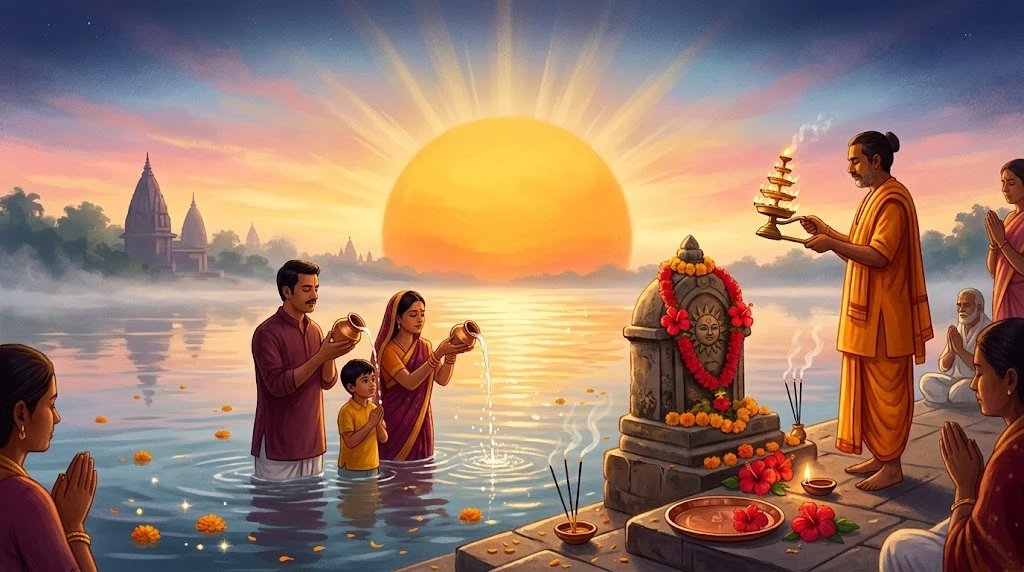
सूर्य की पूजा सूर्योदय के समय सबसे उत्तम मानी जाती है। स्नान करके स्वच्छ वस्त्र पहनें, ताँबे के लोटे में जल, लाल पुष्प, रोली और अक्षत डालकर उगते सूर्य को अर्घ्य दें। अर्घ्य देते समय जल की धारा के बीच से सूर्य का दर्शन किया जाता है।
फिर पूजा-स्थान पर सूर्य देव के चित्र के सामने घी का दीपक जलाएँ, लाल पुष्प और गुड़ या गेहूँ से बनी मिठाई अर्पित करें। थाली में दीपक या कपूर रखकर, घंटी बजाते हुए यह आरती गाएँ और थाली घड़ी की दिशा में घुमाएँ। हर पद के बाद सब मिलकर 'जय कश्यप-नन्दन' की टेक दोहराते हैं।
आरती के बाद ज्योति पर हाथ फेरकर आँखों और सिर से लगाएँ और प्रसाद बाँटें। रविवार का व्रत रखने वाले लोग इस दिन प्रायः नमक नहीं खाते और सूर्यास्त से पहले एक बार भोजन करते हैं।
Sunrise is held to be the best time to worship the Sun. Bathe, put on clean clothes, fill a copper vessel with water, red flowers, roli and rice grains, and offer it as arghya to the rising Sun. While pouring, people look at the Sun through the falling stream of water.
Then, at the place of worship, light a ghee lamp before a picture of Surya Dev and offer red flowers and a sweet made of jaggery or wheat. Place the lamp or camphor on a plate, ring the bell, sing this aarti and move the plate clockwise. After each stanza everyone joins in the refrain, Jai Kashyap Nandan.
When the aarti ends, pass the hands over the flame, touch them to the eyes and the head, and share the prasad. Those who keep the Sunday fast usually take no salt that day and eat a single meal before sunset.
आरती में सूर्य का रूपSurya as the aarti sees him
आरती की टेक सूर्य को कश्यप और अदिति का पुत्र कहती है। अदिति के पुत्र होने से सूर्य 'आदित्य' कहलाते हैं; उनका रथ एक पहिये का है और उसे सात घोड़े खींचते हैं, जिन्हें वैदिक परम्परा में सात छन्दों या प्रकाश के सात रंगों से जोड़ा जाता है।
आरती सूर्य को केवल प्रकाश देने वाला ग्रह नहीं, पूरे जीवन का पोषक बताती है: वे कमल खिलाते हैं, वर्षा बरसाते हैं, आँखों के रोग हरते हैं और पृथ्वी की पीड़ा दूर करते हैं। 'सविता' नाम वही है जिससे गायत्री मन्त्र में सूर्य का ध्यान किया जाता है, अर्थात् वह शक्ति जो सब शुभ कर्मों को प्रेरित करती है।
अन्तिम पद में भक्त धन या पद नहीं, तत्त्वज्ञान माँगता है। बाहर का अन्धकार मिटाने वाले सूर्य से भीतर का अज्ञान और मोह मिटाने की प्रार्थना ही इस आरती का सार है।
The refrain calls Surya the son of Kashyapa and Aditi. As the son of Aditi he is called Aditya; his chariot has one wheel and is drawn by seven horses, which the Vedic tradition links with the seven metres of the Vedas or the seven colours of light.
The aarti presents the Sun not merely as a giver of light but as the one who sustains all life: he opens the lotuses, sends the rain, heals the eyes and eases the suffering of the earth. The name Savita is the one under which the Sun is meditated on in the Gayatri mantra, the power that sets every good deed in motion.
In the last stanza the devotee asks not for wealth or rank but for knowledge of the truth. To ask the Sun, who drives away the darkness outside, to drive away the ignorance and delusion within is the heart of this aarti.
कब पढ़ेंWhen to read
प्रतिदिन सूर्योदय के समय अर्घ्य देने के बाद, विशेषकर रविवार को और रविवार व्रत के दिन। मकर संक्रान्ति, रथ सप्तमी और छठ पर्व की सूर्य पूजा में, और सूर्य की महादशा-अन्तर्दशा के समय नियम से।Every day at sunrise after offering arghya, and especially on Sundays and on the day of the Sunday fast. Also in the Sun worship of Makar Sankranti, Ratha Saptami and Chhath, and as a regular practice during a Sun mahadasha or antardasha.
कुंडली मेंIn your kundli
ज्योतिष में सूर्य आत्मा, पिता, मान-सम्मान, अधिकार, आत्मविश्वास, नेत्र और हड्डियों का कारक है। कुंडली में सूर्य के तुला राशि में नीच होने पर, राहु-केतु या शनि से पीड़ित होने पर, छठे, आठवें या बारहवें भाव (दुःस्थान) में होने पर, और सूर्य की महादशा या अन्तर्दशा में रविवार को सूर्य को अर्घ्य और यह आरती बताई जाती है। अपनी कुंडली में सूर्य किस राशि और भाव में है, यह इसी साइट पर कुंडली बनाकर देखा जा सकता है।In Jyotish the Sun signifies the soul, the father, honour, authority, self-confidence, the eyes and the bones. When the Sun is debilitated in Libra, afflicted by Rahu, Ketu or Saturn, or placed in the sixth, eighth or twelfth house (a dusthana) of the kundli, and during a Sun mahadasha or antardasha, arghya to the Sun on Sundays with this aarti is the usual advice. You can see the sign and house of the Sun in your own kundli by building it on this site.
ग्रह: Grahas: सूर्यSun
अपनी कुंडली में देखेंCheck it in your kundliप्रश्नोत्तरQuestions people ask
- सूर्य देव की आरती कब करनी चाहिए?When should the Surya Dev aarti be done?
- सूर्योदय के समय, सूर्य को अर्घ्य देने के बाद यह आरती करना सबसे उत्तम माना जाता है। रविवार, मकर संक्रान्ति, रथ सप्तमी और छठ पर्व पर इसका विशेष महत्व है।It is best done at sunrise, after offering arghya to the Sun. It has special value on Sundays, Makar Sankranti, Ratha Saptami and Chhath.
- सूर्य को अर्घ्य कैसे दें?How is arghya offered to the Sun?
- स्नान के बाद ताँबे के लोटे में जल, लाल पुष्प, रोली और अक्षत डालकर, पूर्व की ओर मुँह करके उगते सूर्य को धीरे-धीरे जल चढ़ाएँ। जल की धारा के बीच से सूर्य का दर्शन करें, फिर तीन बार परिक्रमा करके प्रणाम करें।After bathing, fill a copper vessel with water, red flowers, roli and rice grains, face east and pour the water slowly towards the rising Sun. Look at the Sun through the falling stream, then turn round three times in place and bow.
- सूर्य देव की आरती गाने से क्या लाभ होता है?What is the benefit of singing the Surya Dev aarti?
- आरती स्वयं सूर्य को दुःख हरने वाला, मन का मैल धोने वाला, नेत्र-रोग हरने वाला और तत्त्वज्ञान देने वाला कहती है। परम्परा में इसे आत्मविश्वास, अच्छे स्वास्थ्य, मान-सम्मान और पिता के सुख के लिए गाया जाता है।The aarti itself calls the Sun the remover of sorrow, the cleanser of the mind, the healer of the eyes and the giver of knowledge of the truth. By tradition it is sung for self-confidence, good health, honour and the well-being of the father.
- सूर्य पूजा और आरती के नियम क्या हैं?What are the rules for Surya puja and aarti?
- सूर्योदय से पहले उठकर स्नान करें, स्वच्छ वस्त्र पहनें और ताँबे के पात्र से अर्घ्य दें। आरती खड़े होकर, घंटी बजाते हुए, थाली घड़ी की दिशा में घुमाकर गाई जाती है। रविवार व्रत में नमक नहीं खाया जाता और भोजन सूर्यास्त से पहले एक बार किया जाता है।Rise before sunrise, bathe, wear clean clothes and offer arghya from a copper vessel. The aarti is sung standing, with the bell ringing and the plate moving clockwise. On the Sunday fast no salt is eaten, and a single meal is taken before sunset.
साथ में पढ़ेंRead alongside
 चालीसाChalisas
श्री सूर्य चालीसा
Surya Chalisa
सूर्यदेव की चालीस चौपाइयाँ, बारह नामों और सूर्य-कवच सहित, अर्थ के साथForty verses to the Sun god, with his twelve names and protective armour, and the meaning of every line
 व्रत कथाVrat Kathas
रविवार व्रत कथा
Ravivar Vrat Katha
सूर्य देव का रविवार व्रत — गोबर से आँगन लीपने वाली बुढ़िया और सोने का गोबर देने वाली गाय की कथा, व्रत विधि और उद्यापनThe Sunday fast for Surya Dev: the old woman who plastered her courtyard with cow dung and the cow that gave golden dung, how to keep the fast, and the udyapan
 पूजा विधिPuja Vidhis
छठ पूजा विधि
Chhath Puja Vidhi
कार्तिक शुक्ल चतुर्थी से सप्तमी तक सूर्य देव और छठी मैया का चार दिन का व्रत — नहाय-खाय, खरना, संध्या अर्घ्य और उषा अर्घ्य, सामग्री, कोसी, नियम और कथाएँThe four-day vrat of the Sun and Chhathi Maiya, Kartik Shukla Chaturthi to Saptami: Nahay-Khay, Kharna, the evening and dawn arghya, the samagri, the kosi, the rules and the stories
 आरतीAartis
ॐ जय जगदीश हरे
Om Jai Jagdish Hare
श्री विष्णु जी की आरती, पं. श्रद्धाराम शर्मा रचित, अर्थ सहितThe Vishnu aarti written by Pandit Shardha Ram Sharma, with the meaning of every stanza