होलिका दहन पूजा विधि और कथा
Holika Dahan Puja Vidhi and Katha
फाल्गुन पूर्णिमा की संध्या — प्रह्लाद, हिरण्यकशिपु और होलिका की कथा, भद्रा का नियम, कच्चे सूत की परिक्रमा, नई बालियाँ भूनना और अगली सुबह की भस्मThe evening of Phalguna Purnima: the story of Prahlad, Hiranyakashipu and Holika, the rule of Bhadra, circling the fire with raw cotton thread, roasting the new grain and the ash of the next morning
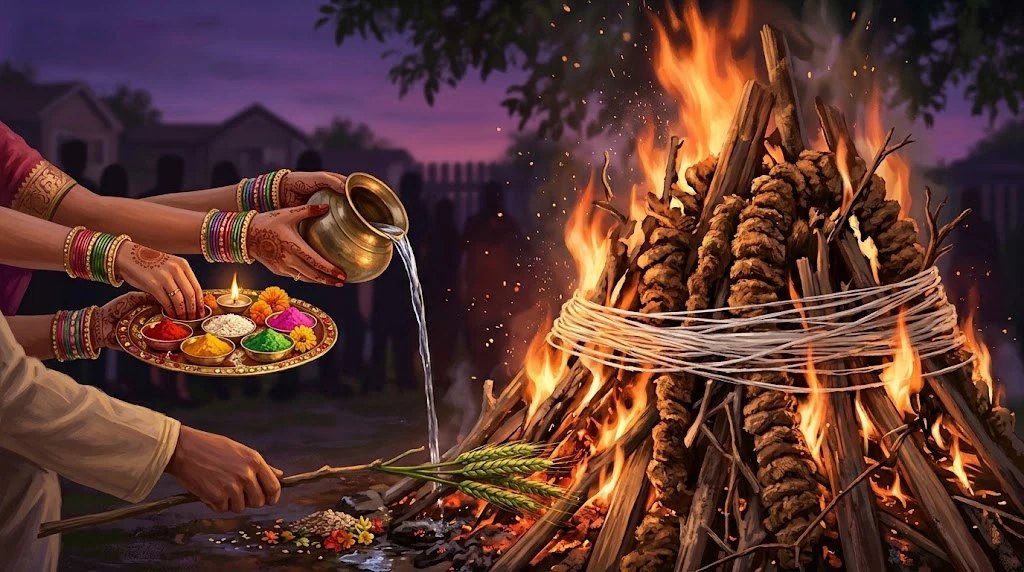
2027 मेंIn 2027
रविवार, 21 मार्च 2027Sunday, 21 March 2027
फाल्गुन पूर्णिमा · 18:22 (21 मार्च 2027) से 16:13 (22 मार्च 2027) तकPhalguna Purnima · from 18:22 on 21 March 2027 to 16:13 on 22 March 2027
- होलिका दहन मुहूर्तHolika Dahan muhurat
- 18:33 – 20:55
- भद्रा (विष्टि करण)Bhadra (Vishti karana)
- 18:22 – 05:15
PDF डाउनलोडDownload PDF
होलिका दहन फाल्गुन पूर्णिमा की संध्या को जलाई जाने वाली पवित्र अग्नि है — रंगों वाली होली से ठीक एक रात पहले। उत्तर भारत की गलियों, चौराहों और गाँव की चौपालों पर कई दिनों से लकड़ी और उपलों का जो ढेर सजाया जाता है, मोहल्ले के परिवार मिलकर उसकी पूजा करते हैं और रात के पहले भाग, प्रदोष काल में, उसे अग्नि दी जाती है। यह अग्नि उस रात की याद है जब होलिका जल गई और विष्णु का नाम जपने वाला बालक प्रह्लाद सुरक्षित निकल आया।
नीचे पहले प्रह्लाद और होलिका की कथा है, फिर पूजन-सामग्री, मुहूर्त और भद्रा, चरण-दर-चरण पूजा, इस रात की सावधानियाँ और अगली सुबह की होली। ऊपर का बॉक्स नई दिल्ली के अनुसार इस वर्ष की तिथि, होलिका दहन मुहूर्त और भद्रा का समय देता है; किसी और शहर के लिए उस दिन का पंचांग खोलें।
Holika Dahan is the sacred fire lit on the evening of Phalguna Purnima, the full moon of Phalgun, one night before Holi is played with colours. In the lanes, crossroads and village squares of north India, a pile of wood and cow-dung cakes is built up over many days; the families of the neighbourhood worship it together, and it is set alight in the first part of the night, the pradosh. The fire remembers the night when Holika burned and the boy Prahlad, who held on to the name of Vishnu, came out unharmed.
Below come the story of Prahlad and Holika, then the samagri, the muhurat and Bhadra, the puja step by step, the cautions of the night and the Holi of the next morning. The box above gives this year's date, the Holika Dahan muhurat and the span of Bhadra for New Delhi; for another city, open the panchang for that day.
प्रह्लाद और होलिका की कथाThe story of Prahlad and Holika
दैत्यराज हिरण्यकशिपु के भाई हिरण्याक्ष को भगवान विष्णु ने वराह रूप में मारा था, और तभी से हिरण्यकशिपु विष्णु से बैर रखने लगा। अमर होने के लिए उसने कठोर तप किया। भागवत पुराण के अनुसार ब्रह्मा जी ने प्रसन्न होकर उसे वर दिया कि ब्रह्मा का रचा कोई प्राणी उसे न मार सके — न मनुष्य, न पशु; न घर के भीतर, न बाहर; न दिन में, न रात में; न धरती पर, न आकाश में; और न किसी अस्त्र-शस्त्र से। वर पाकर वह स्वयं को अमर मान बैठा, तीनों लोक जीत लिए और आदेश दे दिया कि कोई विष्णु का नाम न ले।
पर उसी के घर में विष्णु का सबसे बड़ा भक्त जन्मा। भागवत कहता है कि जब हिरण्यकशिपु तप करने गया था, उसकी रानी कयाधु नारद जी के आश्रम में रहीं, और गर्भ में ही बालक ने नारद का उपदेश सुन लिया। वही बालक प्रह्लाद था। गुरुकुल में भी उसे हर पाठ में हरि ही दिखते, और वह साथी दैत्य-बालकों को भी भगवान का नाम सिखाने लगा।
एक दिन पिता ने पूछा, 'बेटा, तुमने जो सीखा, उसमें सबसे अच्छी बात क्या है?' प्रह्लाद ने निर्भय होकर कहा — भगवान विष्णु की कथा सुनना, उनका गुणगान और स्मरण करना, और अपने को उन्हें सौंप देना। हिरण्यकशिपु क्रोध से काँप उठा और पुत्र को मार डालने का आदेश दे दिया। भागवत और विष्णु पुराण दोनों में ऐसे कई प्रयत्नों का वर्णन है, और दोनों की सूची एक-सी नहीं है; उनमें ये भी हैं — शस्त्र चले पर काट न सके, विषैले सर्प, मतवाले हाथी, भोजन में विष, ऊँचाई से नीचे गिराना, जल में डुबोना (विष्णु पुराण में समुद्र में) — पर हर बार प्रह्लाद हरि का नाम लेते हुए सुरक्षित रहा।
तब, जैसा लोक में सबसे अधिक कहा जाता है, राजा ने अपनी बहन होलिका को बुलाया। होलिका को वर था कि अग्नि उसे जला नहीं सकती; अधिकतर उत्तर भारतीय कथाओं में यह वर एक दिव्य ओढ़नी के रूप में है। तय हुआ कि होलिका प्रह्लाद को गोद में लेकर जलती चिता पर बैठेगी — वह बच जाएगी, बालक जल जाएगा। लकड़ियों का ढेर सजा, होलिका प्रह्लाद को लेकर बैठी और आग लगा दी गई।
लपटें उठीं, और तभी हवा के झोंके से होलिका की ओढ़नी उड़कर प्रह्लाद पर जा पड़ी। प्रह्लाद 'नारायण, नारायण' जपता सुरक्षित रहा और होलिका उसी आग में भस्म हो गई। कुछ कथाएँ कहती हैं कि वर तभी तक था जब तक उसका दुरुपयोग न हो — निर्दोष को जलाने में लगाते ही वह व्यर्थ हो गया। ओढ़नी वाला रूप सबसे प्रचलित है। ध्यान रहे, होलिका का यह प्रसंग न भागवत की प्रह्लाद-कथा में है, न विष्णु पुराण में; यह बाद की परंपरा और लोक-कथा से आया है, और पीढ़ियों से होली की रात यही सुनाया जाता है। कहते हैं वह फाल्गुन पूर्णिमा की रात थी, और उसी चिता की याद में हर वर्ष होलिका जलाई जाती है।
कथा का अंत नृसिंह से होता है। हिरण्यकशिपु ने गरजकर पूछा, 'कहाँ है तेरा विष्णु? क्या इस खंभे में भी है?' प्रहार करते ही खंभे से भगवान नृसिंह प्रकट हुए — आधे मनुष्य, आधे सिंह, न मनुष्य न पशु। संध्या के समय, जो न दिन था न रात; देहली पर, जो न भीतर थी न बाहर; उसे अपनी जंघाओं पर रखकर, जो न धरती थीं न आकाश; और नखों से, जो कोई शस्त्र नहीं — उन्होंने हिरण्यकशिपु का अंत किया। वर भी झूठा नहीं हुआ और अधर्म भी नहीं बचा। प्रह्लाद ने अपनी स्तुति से भगवान का क्रोध शांत किया और वर में अपने लिए कुछ नहीं माँगा — केवल यह कि मन में कोई कामना न जागे और पिता का उद्धार हो।
Lord Vishnu, in his Varaha form, had killed Hiranyaksha, brother of the daitya king Hiranyakashipu, and from then on Hiranyakashipu hated Vishnu. To become immortal he did fierce penance. As the Bhagavata Purana tells it, Brahma was pleased and granted that no being made by Brahma could kill him: not man nor beast; not inside a house nor outside it; not by day nor by night; not on the earth nor in the sky; and by no weapon. With the boon in hand he thought himself immortal, conquered the three worlds, and ordered that no one should take Vishnu's name.
Yet in his own house was born Vishnu's greatest devotee. The Bhagavata says that while Hiranyakashipu was away at his penance, his queen Kayadhu stayed in the hermitage of the sage Narada, and the child heard Narada's teaching while still in the womb. That child was Prahlad. At school too he saw only Hari in every lesson, and he began teaching the other daitya boys to take the Lord's name.
One day his father asked, 'Son, of all you have learned, what is the best thing?' Prahlad answered without fear: to hear the stories of Lord Vishnu, to sing his praise and remember him, and to give oneself to him. Hiranyakashipu shook with rage and ordered his son killed. The Bhagavata and the Vishnu Purana both tell of many such attempts, and their lists are not the same. Among them: weapons struck him but would not cut; venomous snakes, maddened elephants and poison in his food were tried; he was thrown down from a height and cast into the water (into the sea, in the Vishnu Purana). Each time Prahlad stayed safe, saying the name of Hari.
Then, as the story is most often told among the people, the king called his sister Holika. Holika had a boon that fire could not burn her; in most north-Indian tellings the boon takes the form of a divine shawl. The plan was that Holika would sit on a burning pyre with Prahlad in her lap: she would live and the boy would burn. A pile of wood was built, Holika sat on it with Prahlad, and it was set alight.
The flames rose, and just then a gust of wind blew Holika's shawl off her and onto Prahlad. Prahlad sat unharmed, chanting 'Narayana, Narayana', and Holika burned to ash in that very fire. Some tellings say instead that the boon held only as long as it was not misused, and failed the moment she used it to burn an innocent child. The version with the shawl is the most popular. Note that this episode of Holika is not in the Bhagavata's story of Prahlad, nor in the Vishnu Purana; it comes from later tradition and folk telling, and it is what has been told on the night of Holi for generations. That night, they say, was the full moon of Phalgun, and the Holika is burned every year in memory of that pyre.
The story ends with Narasimha. Hiranyakashipu roared, 'Where is your Vishnu? Is he in this pillar too?' He struck it, and out of the pillar came Lord Narasimha, half man and half lion, neither man nor beast. At dusk, neither day nor night; on the threshold, neither inside nor outside; across his thighs, neither earth nor sky; and with his claws, which are no weapon, he put an end to Hiranyakashipu. The boon was not broken, and wrong did not escape. Prahlad calmed the Lord's wrath with his praise, and when offered a boon asked nothing for himself: only that no desire should rise in his heart, and that his father be redeemed.
होलिका सजाना और पूजन-सामग्रीBuilding the Holika and the samagri
उत्तर भारत के कई भागों में जिस खुले स्थान या चौराहे पर होलिका जलनी है, वहाँ पहले से एक डंडा गाड़ दिया जाता है — कहीं वसंत पंचमी को, कहीं माघ पूर्णिमा को, कहीं होलाष्टक के आरंभ में। यह क्षेत्रीय रीत है। फिर दिनों-दिन मोहल्ले के लोग उसके चारों ओर सूखी लकड़ियाँ, गिरी टहनियाँ और उपले जमा करते हैं। उत्तर प्रदेश और राजस्थान के बहुत घरों में स्त्रियाँ और बच्चे गोबर के छोटे गोल उपले बनाते हैं जिनके बीच छेद होता है — इन्हें बड़कुल्ले या गुलरियाँ कहते हैं; सूखने पर इनकी मालाएँ पिरोकर होलिका पर चढ़ाई जाती हैं।
पूजन-सामग्री: एक लोटा स्वच्छ जल; कच्चा सूत (बिना रँगा सफ़ेद सूत) या मौली; रोली, हल्दी और अक्षत; फूल और माला; गुलाल; एक साबुत नारियल; गुड़; बताशे; साबुत हरी मूँग; नई फ़सल की गेहूँ और जौ की बालियाँ (जहाँ होता हो, हरा चना भी); बड़कुल्लों की मालाएँ; धूप; घी का छोटा दीपक; मिठाई; और बालियाँ भूनने के लिए एक लंबी डंडी। सब एक थाली में सजा लें। कुछ कम हो तो चिंता न करें — जल, सूत, रोली-अक्षत, फूल और बालियाँ काफ़ी हैं।
In many parts of north India a stick or pole, the danda, is planted ahead of time at the open ground or crossroads where the Holika will burn: in some places on Basant Panchami, in others on Magh Purnima, in others at the start of the Holashtak. This is a regional custom. Day by day the neighbourhood piles dry wood, fallen branches and cow-dung cakes around it. In many homes of Uttar Pradesh and Rajasthan, women and children make small round cow-dung cakes with a hole in the middle, called badkulle or gulariyan; once dry they are strung into garlands and offered on the Holika.
What you need: a lota of clean water; raw cotton thread (kachcha soot, plain undyed white thread) or mauli; roli, turmeric and akshat (unbroken rice); flowers and a garland; gulal; a whole coconut; gud (jaggery); batashe (sugar drops); whole green moong; ears of the new wheat and barley (and green chickpeas where they grow); the garlands of cow-dung cakes; incense; a small ghee lamp; sweets; and a long stick for roasting the grain ears. Arrange it all on a plate. If something is missing, do not worry: water, thread, roli and rice, flowers and the grain ears are enough.
मुहूर्त और भद्रा: ऊपर का बॉक्स कैसे पढ़ेंThe muhurat and Bhadra: reading the box above
होलिका दहन उस दिन होता है जिस दिन फाल्गुन पूर्णिमा प्रदोष काल में रहे। प्रदोष काल सूर्यास्त से आरंभ होकर रात के पहले पाँचवें भाग तक चलता है (रात यानी सूर्यास्त से अगले सूर्योदय तक)। ऊपर के बॉक्स में 'होलिका दहन मुहूर्त' ठीक यही प्रदोष काल है।
भद्रा क्या है? पंचांग में हर तिथि के दो आधे भाग होते हैं जिन्हें करण कहते हैं; उनमें 'विष्टि' करण को भद्रा कहा जाता है। पूर्णिमा का पहला आधा भाग सदा विष्टि होता है, इसलिए होलिका दहन के दिन भद्रा प्रायः पड़ती है — कभी सूर्यास्त से पहले समाप्त हो जाती है, कभी संध्या में या आधी रात के पार तक चलती है। परंपरा में भद्रा शुभ आरंभ के लिए, और विशेषकर होलिका की अग्नि के लिए, अनुपयुक्त मानी जाती है। इसीलिए ऊपर के बॉक्स में भद्रा का समय अलग से दिखाया गया है, ताकि आप उसे मुहूर्त के साथ मिलाकर देख सकें।
पंचांग जो नियम मानते हैं, वह यह है: होलिका प्रदोष काल में, पूर्णिमा रहते, भद्रा समाप्त होने के बाद जलाई जाए। भद्रा सूर्यास्त से पहले समाप्त हो चुकी हो तो पूरा प्रदोष शुद्ध है। भद्रा प्रदोष में चल रही हो पर आधी रात से पहले समाप्त हो जाए, तो दहन भद्रा समाप्त होने के बाद होता है। और यदि भद्रा आधी रात के बाद तक चले, तो पंचांग उसके समाप्त होने की प्रतीक्षा नहीं करते — तब भी दहन प्रदोष में ही बताते हैं: भद्रा मुख से हर हाल में बचकर, जो भद्रा का 'मुँह' और सबसे अशुभ भाग है, और भद्रा पुच्छ, यानी उसकी 'पूँछ', उस समय पड़े तो उसे प्राथमिकता देकर। यहाँ आधी रात का अर्थ घड़ी के बारह बजे नहीं, बल्कि सूर्यास्त और अगले सूर्योदय के ठीक बीच का समय है। मुख और पुच्छ कब पड़ते हैं, यह पंचांग या कुल-पुरोहित से पूछ लें।
हर जगह एक ही मत नहीं है। काशी और उत्तर भारत के कुछ पंडित, भद्रा आधी रात के पार जाए तब भी, उसके पूरी तरह समाप्त होने की प्रतीक्षा करते हैं और तभी होलिका जलाते हैं, चाहे वह समय भोर से पहले का हो। मोहल्ले की होलिका सबके लिए एक समय जलती है, इसलिए स्थानीय पंडित और बड़ों के साथ एक मत तय कर लें।
Holika Dahan falls on the day when Phalguna Purnima is present in the pradosh. The pradosh begins at sunset and runs through the first fifth of the night (the night being sunset to the next sunrise). The 'Holika Dahan muhurat' in the box above is exactly this pradosh window.
What is Bhadra? In the panchang every tithi has two halves, called karanas; the karana named Vishti is called Bhadra. The first half of the Purnima is always Vishti, so Bhadra often falls on the day of Holika Dahan: sometimes it ends before sunset, sometimes it runs into the evening or past midnight. Tradition holds Bhadra unfit for auspicious beginnings, and above all for the Holika fire. That is why the box above shows the span of Bhadra separately, so that you can set it beside the muhurat.
The rule followed by the almanacs is this: the Holika is lit in the pradosh while the Purnima lasts, after Bhadra ends. If Bhadra ended before sunset, the whole pradosh is clear. If Bhadra runs into the pradosh but ends before midnight, the fire is lit after Bhadra ends. And if Bhadra runs past midnight, the almanacs do not wait for it: they still place the fire in the pradosh, avoiding Bhadra mukha at all costs, Bhadra's 'mouth' and its worst part, and preferring Bhadra punchha, its 'tail', when it falls then. Midnight here does not mean twelve o'clock but the Hindu midnight, halfway between sunset and the next sunrise. Ask the panchang or your family priest when the mukha and the punchha fall.
Not everyone follows one view. Some pandits of Banaras and elsewhere in north India, when Bhadra runs past midnight, still wait until it is fully over and only then light the Holika, even if that is in the hours before dawn. A neighbourhood Holika burns at one time for everyone, so settle on one view with the local pandit and the elders.
होलिका पूजन विधिThe Holika puja, step by step
1. दिन की तैयारी: पूर्णिमा को स्नान करके स्वच्छ वस्त्र पहनें और थाली सजा लें। बहुत से प्रदेशों में, विशेषकर राजस्थान और उत्तर प्रदेश में, स्त्रियाँ होलिका का पूजन दिन में, अग्नि लगने से पहले, कर लेती हैं और रात को मुहूर्त में मोहल्ला मिलकर दहन करता है।
2. दिशा और संकल्प: होलिका के पास पूर्व या उत्तर की ओर मुख करके खड़े हों या बैठें। 'ॐ गं गणपतये नमः' कहकर गणेश जी का स्मरण करें। फिर हाथ में जल, अक्षत और फूल लेकर अपने शब्दों में संकल्प करें — 'मैं अपने परिवार के आरोग्य, सुख और विघ्नों के नाश के लिए होलिका का पूजन करता/करती हूँ' — और जल भूमि पर छोड़ दें।
3. जल अर्पण: लोटे से थोड़ा जल होलिका के आधार पर चढ़ाएँ; शेष जल परिक्रमा के बाद के लिए रखें।
4. तिलक और फूल: होलिका पर रोली-हल्दी का तिलक करें, अक्षत छिड़कें, फूल और माला चढ़ाएँ, और कहें 'ॐ होलिकायै नमः'।
5. प्रह्लाद और नृसिंह का स्मरण: हाथ जोड़कर प्रह्लाद की भक्ति को याद करें और 'ॐ नृसिंहाय नमः' तथा 'ॐ नमो भगवते वासुदेवाय' कहकर भगवान को फूल चढ़ाएँ।
6. भेंट: गुड़, बताशे, साबुत मूँग, गुलाल और मिठाई चढ़ाएँ; बड़कुल्लों की मालाएँ होलिका पर डालें; नारियल चढ़ाएँ — बहुत जगह साबुत नारियल दहन के समय अग्नि को अर्पित होता है।
7. कच्चे सूत की परिक्रमा: सूत का एक सिरा होलिका के डंडे या लकड़ी से बाँधें और परिक्रमा करते हुए सूत होलिका के चारों ओर लपेटते जाएँ — कुल की रीत के अनुसार तीन या सात बार, घड़ी की सुई की दिशा में, होलिका को दाहिनी ओर रखकर। यह सूत रक्षा का बंधन माना जाता है।
8. अर्घ्य और प्रार्थना: परिक्रमा के बाद लोटे का शेष जल होलिका को अर्पित करें, प्रणाम करें और परिवार के स्वास्थ्य और कष्टों के दूर होने की प्रार्थना करें। बड़ों के पैर छूकर आशीर्वाद लें।
9. आरती: धूप और घी का दीपक जलाकर 'ॐ जय जगदीश हरे' की आरती करें।
10. दहन: मुहूर्त आने पर, भद्रा के नियम का ध्यान रखकर, होलिका को अग्नि दी जाती है — प्रायः मोहल्ले के किसी बड़े के हाथ से, कुछ जगह किसी मंदिर या घर से अग्नि लाकर। कुछ जगह अग्नि पकड़ते ही बीच का डंडा खींच लिया जाता है, प्रह्लाद के बचने के प्रतीक के रूप में; यह स्थानीय रीत है।
11. बालियाँ भूनना: अग्नि स्थिर हो जाए तो गेहूँ-जौ की बालियाँ लंबी डंडी में बाँधकर, दूर से, लपटों पर भूनें। भुनी बालियाँ प्रसाद के रूप में घर ले जाएँ, परिवार में बाँटें और पड़ोसियों से गले मिलकर उन्हें दें। नई फ़सल का पहला अन्न अग्नि को दिखाकर ग्रहण करना इस रात की बहुत पुरानी रीत है।
12. अगली सुबह की भस्म: अगली सुबह, अग्नि ठंडी होने पर, होलिका की चुटकी भर भस्म घर लाएँ, उसका तिलक अपने और बच्चों के माथे पर लगाएँ। परंपरा इस भस्म को बुरी नज़र और नकारात्मकता दूर करने वाली मानती है। गरम राख को हाथ न लगाएँ।
1. The day's preparation: on the Purnima, bathe, put on clean clothes and set the plate. In many regions, especially Rajasthan and Uttar Pradesh, the women do the Holika puja in the day, before the fire is lit, and at night, in the muhurat, the neighbourhood lights it together.
2. Direction and vow: stand or sit near the Holika facing east or north. Remember Ganesh, saying 'Om Gam Ganapataye Namah'. Then take water, rice and a flower in your hand and make the vow in your own words: 'I worship the Holika for the health and happiness of my family and the removal of obstacles', and let the water fall on the ground.
3. Offering water: pour a little water from the lota at the foot of the Holika; keep the rest for after the circling.
4. Tilak and flowers: mark the Holika with roli and turmeric, sprinkle rice, offer flowers and the garland, and say 'Om Holikayai Namah'.
5. Remembering Prahlad and Narasimha: fold your hands, remember Prahlad's devotion, and offer flowers to the Lord saying 'Om Narasimhaya Namah' and 'Om Namo Bhagavate Vasudevaya'.
6. Offerings: offer gud, batashe, whole moong, gulal and sweets; lay the garlands of cow-dung cakes on the pile; offer the coconut. In many places a whole coconut is given to the fire when it is lit.
7. Circling with raw cotton thread: tie one end of the thread to the pole or the wood and walk around the Holika, winding the thread around it as you go: three or seven times, as your family's custom is, clockwise, keeping the Holika on your right. The thread is held to be a binding of protection.
8. Arghya and prayer: after the circling, offer the rest of the water in the lota to the Holika, bow, and pray for your family's health and the removal of troubles. Touch the feet of the elders for their blessing.
9. Aarti: light incense and the ghee lamp and do the aarti 'Om Jai Jagdish Hare'.
10. Lighting the fire: when the muhurat comes, keeping the Bhadra rule in mind, the Holika is lit, usually by an elder of the neighbourhood, in some places with fire brought from a temple or a home. In some places the central pole is pulled out as soon as the fire catches, as a sign of Prahlad's escape; this is a local custom.
11. Roasting the grain: once the fire has settled, tie the ears of wheat and barley to the long stick and roast them over the flames from a distance. Take the roasted ears home as prasad, share them in the family, and give them to your neighbours as you embrace. Showing the first grain of the new crop to the fire before eating it is a very old custom of this night.
12. The ash the next morning: the next morning, when the fire has cooled, bring a pinch of the Holika's ash home and put a tilak of it on your forehead and the children's. Tradition holds this ash to ward off the evil eye and negativity. Do not touch hot ash.
इस दिन के नियम और सावधानियाँRules and cautions of the day
व्रत और भोजन: व्रत अनिवार्य नहीं है। बहुत लोग पूर्णिमा का व्रत रखकर होलिका पूजन के बाद भोजन करते हैं। रोगी, गर्भवती, बुज़ुर्ग और बच्चे फलाहार या एक सादा भोजन लेकर हल्का या प्रतीक मात्र व्रत रखें। इस दिन सात्त्विक भोजन रखें, मांस और मदिरा से दूर रहें।
नई बहू और मासिक धर्म: उत्तर प्रदेश, राजस्थान और मध्य प्रदेश के कुछ परिवारों में नई बहू ससुराल में अपनी पहली होलिका की अग्नि नहीं देखती और पहली होली मायके में मनाती है। यह कुछ कुलों की रीत है, शास्त्र का बंधन नहीं — इसे डर की बात न बनाएँ। मासिक धर्म में पारंपरिक मत यह है कि स्त्री पूजा-सामग्री और होलिका को न छुए, परिक्रमा न करे और दूर से प्रणाम करे; आज बहुत परिवार मानते हैं कि श्रद्धा से आरती और उत्सव में साथ रहना पूरी तरह उचित है। अपने परिवार की परंपरा से निर्णय लें — भगवान भाव देखते हैं।
अग्नि की सुरक्षा: होलिका की आग ऊँची और तेज़ उठती है। बच्चों को दूर और किसी बड़े के हाथ में रखें; ढीले दुपट्टे, पल्लू और सिंथेटिक कपड़ों का ध्यान रखें। आग के लिए पेट्रोल या मिट्टी का तेल न डालें, पास में पानी और रेत रखें, होलिका घरों, बिजली के तारों, वाहनों और पेड़ों से दूर सजाएँ, और अग्नि बुझने तक कोई उसकी देखरेख करे।
पर्यावरण: होलिका में टायर, प्लास्टिक, रबर, पॉलिथीन या कचरा कभी न डालें — इनका धुआँ ज़हरीला है और पड़ोस के बच्चों और बुज़ुर्गों की साँस पर भारी पड़ता है। हरे पेड़ न काटें; सूखी लकड़ी और उपले लें। हर गली में अलग होलिका के बजाय पूरे मोहल्ले की एक होलिका बनाएँ। कथा की अग्नि बुराई को जलाने की है, हवा को नहीं।
Fasting and food: a fast is not required. Many keep the Purnima fast and eat after the Holika puja. Those who are ill, pregnant, elderly, or children should take fruit or one simple meal and keep a light or symbolic fast. Keep the food sattvik, and stay away from meat and alcohol.
The new bride, and periods: in some families of Uttar Pradesh, Rajasthan and Madhya Pradesh a new bride does not watch the first Holika fire at her in-laws' home and spends her first Holi at her parents' home. This is the custom of some families, not a bond of scripture; do not make it a matter of fear. During periods, the traditional view is that a woman does not touch the puja materials or the Holika, does not do the circling, and bows from a distance; today many families hold that joining the aarti and the festival in faith is entirely fitting. Decide by your family's tradition; the Lord looks at the heart.
Fire safety: the Holika fire rises high and fast. Keep children back and in an adult's hands; take care with loose dupattas, saree ends and synthetic clothes. Do not pour petrol or kerosene, keep water and sand nearby, build the Holika away from houses, electric wires, vehicles and trees, and let someone watch over it until it dies down.
The environment: never put tyres, plastic, rubber, polythene or rubbish in the Holika; their smoke is poisonous and weighs on the breath of the neighbourhood's children and elders. Do not cut green trees; use dry wood and cow-dung cakes. Instead of a Holika in every lane, build one for the whole neighbourhood. The fire of the story is meant to burn away evil, not the air we breathe.
अलग-अलग प्रदेशों की रीतCustoms in different regions
ब्रज — मथुरा, वृंदावन, बरसाना, नंदगाँव — में होली कई दिनों की होती है; बरसाना और नंदगाँव की लट्ठमार होली राधा-कृष्ण की लीला की याद है। महाराष्ट्र में इसे होली कहते हैं, और कोंकण में शिमगा; अग्नि को पूरनपोली का भोग लगता है। बंगाल और ओडिशा में यह डोल पूर्णिमा है — कृष्ण झूले पर विराजते हैं और अबीर खेला जाता है; गौड़ीय वैष्णव इसी दिन चैतन्य महाप्रभु का प्राकट्य-दिवस, गौर पूर्णिमा, मनाते हैं। दक्षिण भारत के कई भागों में यह रात काम-दहन की है — शिव के तीसरे नेत्र से कामदेव के भस्म होने की स्मृति। संस्कृत में इस पर्व का पुराना नाम 'होलाका' भी मिलता है, और परंपरा इसे अधपके अन्न को अग्नि में भूनने की रीत से जोड़ती है — वही रीत जो आज बालियाँ भूनने में जीवित है।
In Braj — Mathura, Vrindavan, Barsana, Nandgaon — Holi lasts many days; the Lathmar Holi of Barsana and Nandgaon remembers the play of Radha and Krishna. In Maharashtra it is called Holi, and Shimga in the Konkan; puran poli is offered to the fire. In Bengal and Odisha it is Dol Purnima: Krishna is seated on a swing and people play with abir; Gaudiya Vaishnavas keep the same day as Gaura Purnima, the appearance day of Chaitanya Mahaprabhu. In many parts of south India this night is Kama Dahanam, remembering how Kamadeva was burned to ash by Shiva's third eye. An old Sanskrit name of the festival, 'Holaka', is also found, and tradition links it to roasting half-ripe grain in the fire, the custom that lives on in roasting the grain ears.
अगली सुबह: रंगों वाली होलीThe next morning: Holi with colours
होलिका दहन के अगले दिन रंगों वाली होली होती है — कहीं धुलेंडी, कहीं धुलेटी, कहीं केवल होली। लोक-मान्यता है कि प्रह्लाद के बचने की खुशी में लोगों ने अगली सुबह एक-दूसरे पर होलिका की राख और धूल उड़ाई थी, इसी से 'धुलेंडी' नाम जुड़ा। सुबह भस्म का तिलक, घर के देवताओं और बड़ों के चरणों पर थोड़ा गुलाल, फिर रंग, फाग के गीत, गुझिया और गले मिलना। कृष्ण-भक्त घरों में राधा-कृष्ण को गुलाल चढ़ाकर 'आरती कुंजबिहारी की' गाई जाती है।
रंग प्राकृतिक रखें: टेसू (पलाश) के फूल रात भर भिगोकर केसरिया, हल्दी-बेसन से पीला, चुकंदर से गुलाबी, मेहँदी से हरा। रासायनिक और चमकीले रंग आँखों और त्वचा को नुकसान पहुँचाते हैं। आँख-मुँह पर और जानवरों पर रंग न डालें, पानी व्यर्थ न बहाएँ, और जो रंग न खेलना चाहे, उसकी इच्छा का सम्मान करें — होली मेल-मिलाप का पर्व है, ज़बरदस्ती का नहीं।
The day after Holika Dahan is the Holi of colours: Dhulandi in some places, Dhuleti in others, simply Holi elsewhere. Folk belief holds that the next morning, in joy at Prahlad's escape, people threw the Holika's ash and dust over one another, and that the name 'Dhulandi', the day of dust, comes from this. In the morning a tilak of the ash, a little gulal for the family deities and at the feet of the elders, then colours, the songs of phag, gujhiya and embraces. In homes devoted to Krishna, gulal is offered to Radha and Krishna and 'Aarti Kunj Bihari Ki' is sung.
Keep the colours natural: tesu (palash) flowers soaked overnight for saffron, turmeric with gram flour for yellow, beetroot for pink, mehndi for green. Chemical and glittering colours harm the eyes and skin. Do not throw colour into eyes or mouths or on animals, do not waste water, and respect the wish of anyone who does not want to play; Holi is a festival of coming together, not of force.
महत्व और फलMeaning and fruit
परंपरा में होलिका की पूजा परिवार की रक्षा, रोग और कष्टों के दूर होने, और घर से नकारात्मकता के जलने के लिए की जाती है। कथा का संदेश सीधा है: अहंकार, क्रूरता और छल चाहे कितना बड़ा वरदान ओढ़ लें, अंत में वही जलते हैं; और जो सच्चे मन से भगवान को पकड़े रहता है, उसे अग्नि भी नहीं छू पाती। होलिका में हम अपने भीतर का क्रोध, ईर्ष्या और पुराने बैर भी डालते हैं, और अगली सुबह रंगों के साथ नया आरंभ करते हैं। इसे फल का वादा न मानें; यह श्रद्धा, कृतज्ञता और आत्म-अनुशासन का अभ्यास है।
By tradition the Holika puja is done for the protection of the family, the removal of illness and trouble, and the burning away of negativity from the home. The message of the story is plain: however great the boon that pride, cruelty and deceit wrap themselves in, in the end it is they that burn; and whoever holds on to the Lord with a true heart, even fire cannot touch. Into the Holika we also put our own anger, envy and old grudges, and the next morning we begin again with colours. Do not take this as a promise of results; it is a practice of faith, gratitude and self-discipline.
आरती और पाठAarti and readings
होलिका पूजन के अंत में भगवान विष्णु की आरती 'ॐ जय जगदीश हरे' गाई जाती है, क्योंकि इस रात की कथा प्रह्लाद के भगवान की है। जो चाहें, इस रात विष्णु सहस्रनाम या अच्युताष्टकम् का पाठ करें; रक्षा की भावना से बहुत लोग हनुमान चालीसा भी पढ़ते हैं — ये सब हमारी लाइब्रेरी में हैं। पूर्णिमा होने के कारण कई घरों में इस दिन सत्यनारायण व्रत कथा भी होती है। अगली सुबह कृष्ण-भक्त घरों में 'आरती कुंजबिहारी की' गाई जाती है।
The Holika puja ends with the aarti of Lord Vishnu, 'Om Jai Jagdish Hare', since the story of this night is the story of Prahlad's Lord. Those who wish may recite the Vishnu Sahasranama or the Achyutashtakam this night; many also read the Hanuman Chalisa in the spirit of protection. All of these are in our library. Since it is a Purnima, many homes also hold the Satyanarayan Vrat Katha on this day. The next morning, homes devoted to Krishna sing 'Aarti Kunj Bihari Ki'.
कब पढ़ेंWhen to read
यह कथा और विधि फाल्गुन पूर्णिमा को होलिका पूजन के समय पढ़ी जाती है — दिन में स्त्रियों के पूजन के समय, या संध्या को प्रदोष काल में होलिका दहन से पहले, परिवार और मोहल्ले के साथ।This story and vidhi are read on Phalguna Purnima at the time of the Holika puja: in the day when the women do the puja, or in the evening pradosh before the fire is lit, with the family and the neighbourhood.
कुंडली मेंIn your kundli
परंपरा होलिका दहन को नकारात्मकता के जलने की रात मानती है, और ज्योतिष की परंपरा इसे शनि, राहु और चंद्रमा से जोड़ती है। फाल्गुन पूर्णिमा को चंद्रमा पूर्ण होता है — महीने का नाम ही फाल्गुनी नक्षत्र से है, जिसके आसपास इस पूर्णिमा का चंद्रमा रहता है। चंद्रमा मन का कारक है; जिनकी कुंडली में चंद्रमा राहु, केतु या शनि से पीड़ित हो, उनके लिए परंपरा इस रात भगवान विष्णु और नृसिंह का स्मरण बताती है। शनि की साढ़ेसाती या ढैया, राहु की महादशा या अंतर्दशा, बार-बार की बाधाएँ और 'नज़र' की शिकायत में परंपरा होलिका की परिक्रमा और अगली सुबह भस्म के तिलक को रक्षा का उपाय मानती है। यह श्रद्धा और अनुशासन का उपाय है, किसी फल की गारंटी नहीं, और कुंडली का फल कभी किसी एक ग्रह से तय नहीं होता। इसी साइट पर अपनी कुंडली बनाकर देखें कि आपका चंद्रमा, शनि और राहु कहाँ हैं और कौन-सी दशा चल रही है।Tradition sees Holika Dahan as the night when negativity is burned away, and the Jyotish tradition links it with Saturn, Rahu and the Moon. On Phalguna Purnima the Moon is full; the month itself is named after the Phalguni nakshatras, near which this full Moon stands. The Moon is the significator of the mind; for those whose kundli has a Moon afflicted by Rahu, Ketu or Saturn, the tradition suggests remembering Lord Vishnu and Narasimha on this night. In Saturn's sade sati or dhaiya, in a Rahu mahadasha or antardasha, in repeated obstacles and in worries about the evil eye, tradition takes the circling of the Holika and the tilak of its ash the next morning as a protective remedy. It is a remedy of faith and discipline, not a guarantee of any result, and a kundli's fruit is never decided by one graha alone. Build your kundli on this site and see where your Moon, Saturn and Rahu stand and which dasha is running.
ग्रह: Grahas: शनिSaturn, राहुRahu, चन्द्रMoon
अपनी कुंडली में देखेंCheck it in your kundliप्रश्नोत्तरQuestions people ask
- होलिका दहन किस समय करना चाहिए, और भद्रा का क्या नियम है?At what time should Holika Dahan be done, and what is the rule about Bhadra?
- होलिका दहन उस दिन होता है जिस दिन फाल्गुन पूर्णिमा प्रदोष काल में हो — सूर्यास्त से रात के पहले पाँचवें भाग तक। पंचांगों का नियम है कि अग्नि प्रदोष में, भद्रा समाप्त होने के बाद दी जाए; भद्रा प्रदोष के बाद पर आधी रात से पहले समाप्त हो, तो उसके समाप्त होते ही। भद्रा आधी रात के बाद तक चले, तो भी दहन प्रदोष में होता है — भद्रा मुख से हर हाल में बचकर और भद्रा पुच्छ को प्राथमिकता देकर। काशी के कुछ पंडित ऐसे में भी भद्रा पूरी तरह समाप्त होने की प्रतीक्षा करते हैं, भले वह भोर से पहले का समय हो। नई दिल्ली के लिए मुहूर्त और भद्रा ऊपर के बॉक्स में हैं।Holika Dahan falls on the day when Phalguna Purnima is present in the pradosh, from sunset through the first fifth of the night. The almanacs' rule is that the fire is lit in the pradosh after Bhadra ends; if Bhadra ends after the pradosh but before midnight, as soon as it ends. If Bhadra runs past midnight, the fire is still lit in the pradosh, avoiding Bhadra mukha at all costs and preferring Bhadra punchha. Some pandits of Banaras wait even then until Bhadra is fully over, even if that is before dawn. The muhurat and the Bhadra for New Delhi are in the box above.
- होलिका की परिक्रमा कितनी बार करें और कच्चा सूत क्यों लपेटते हैं?How many times should one circle the Holika, and why is raw cotton thread wound around it?
- परिक्रमा कुल की रीत के अनुसार तीन या सात बार की जाती है, घड़ी की सुई की दिशा में, होलिका को दाहिनी ओर रखकर। परिक्रमा करते हुए कच्चा सूत होलिका के चारों ओर लपेटा जाता है; इसे रक्षा का बंधन माना जाता है — परिवार की ओर से भगवान से रक्षा की प्रार्थना।The circling is done three or seven times, as the family's custom is, clockwise, with the Holika on your right. As you circle, raw cotton thread is wound around the Holika; it is held to be a binding of protection, the family's prayer to the Lord to keep them safe.
- क्या नवविवाहिता को होलिका दहन देखना चाहिए?Should a newly married woman watch Holika Dahan?
- कुछ परिवारों में, विशेषकर उत्तर प्रदेश, राजस्थान और मध्य प्रदेश में, रीत है कि नई बहू ससुराल में अपनी पहली होलिका की अग्नि नहीं देखती और पहली होली मायके में मनाती है। यह कुछ कुलों की परंपरा है, शास्त्र का बंधन नहीं; इसमें भय की कोई बात नहीं। अपने परिवार की रीत के अनुसार करें; जहाँ यह रीत नहीं है, वहाँ नई बहू आनंद से पूजा में भाग ले।In some families, especially in Uttar Pradesh, Rajasthan and Madhya Pradesh, it is the custom that a new bride does not watch the first Holika fire at her in-laws' home and spends her first Holi at her parents' home. This is the tradition of some families, not a bond of scripture, and there is nothing to fear in it. Follow your family's custom; where it is not kept, the new bride takes part in the puja with joy.
- होलाष्टक क्या है?What is Holashtak?
- होलिका दहन से पहले के आठ दिन, फाल्गुन शुक्ल अष्टमी से पूर्णिमा तक, उत्तर भारत के कई भागों में होलाष्टक कहलाते हैं। इन दिनों विवाह, गृह-प्रवेश, मुंडन जैसे शुभ संस्कार प्रायः नहीं किए जाते। यह मुख्यतः पंजाब, हरियाणा, उत्तर प्रदेश और राजस्थान की परंपरा है; हर क्षेत्र इसे नहीं मानता। पूजा, जप और भगवान का स्मरण इन दिनों भी पूरी तरह शुभ है।In many parts of north India the eight days before Holika Dahan, from Phalguna Shukla Ashtami to the Purnima, are called Holashtak. Auspicious rites such as weddings, house-warmings and the mundan are usually not done in these days. It is mainly a tradition of Punjab, Haryana, Uttar Pradesh and Rajasthan; not every region keeps it. Worship, japa and remembering the Lord are fully auspicious in these days too.
- फ्लैट में रहते हैं, मोहल्ले की होलिका नहीं है — घर में होलिका पूजन कैसे करें?We live in a flat and there is no neighbourhood Holika. How can we do the Holika puja at home?
- सबसे अच्छा है कि सोसाइटी या पास के मंदिर की सामूहिक होलिका में पूजा करें — एक बड़ी अग्नि कई छोटी अग्नियों से सुरक्षित भी है और पर्यावरण के लिए भी बेहतर। यह संभव न हो, तो प्रतीक रूप में पूजा करें: बालकनी या आँगन में सुरक्षित स्थान पर मिट्टी के पात्र या हवन-कुंड में एक-दो उपले जलाएँ, उस पर कच्चा सूत, रोली, अक्षत, फूल, गुड़ और बालियाँ अर्पित करें, प्रह्लाद और नृसिंह का स्मरण करें और 'ॐ जय जगदीश हरे' गाएँ। फ्लैट के भीतर खुली आग न जलाएँ, और अग्नि बुझने तक पास रहें।Best of all is to do the puja at the shared Holika of your society or a nearby temple; one large fire is both safer and kinder to the environment than many small ones. If that is not possible, do the puja in a symbolic way: on a balcony or in a courtyard, in a safe spot, burn one or two cow-dung cakes in a clay pot or havan kund, offer raw cotton thread, roli, rice, flowers, gud and the grain ears, remember Prahlad and Narasimha, and sing 'Om Jai Jagdish Hare'. Do not light an open fire inside the flat, and stay close until the fire is out.
साथ में पढ़ेंRead alongside
 आरतीAartis
ॐ जय जगदीश हरे
Om Jai Jagdish Hare
श्री विष्णु जी की आरती, पं. श्रद्धाराम शर्मा रचित, अर्थ सहितThe Vishnu aarti written by Pandit Shardha Ram Sharma, with the meaning of every stanza
 स्तोत्र और कवचStotras and Kavachas
श्रीविष्णुसहस्रनामस्तोत्रम्
Shri Vishnu Sahasranama Stotram
'विश्वं विष्णुर्वषट्कारो': महाभारत के अनुशासन पर्व से भगवान् विष्णु के सहस्र नाम, संवाद और फलश्रुति के अर्थ सहितVishvam Vishnur Vashatkaro: the thousand names of Vishnu from the Anushasana Parva of the Mahabharata, with the meaning of the dialogue and the phalashruti
 स्तोत्र और कवचStotras and Kavachas
अच्युताष्टकम्
Achyutashtakam
'अच्युतं केशवं रामनारायणं': श्रीविष्णु के कृष्ण और राम रूपों के नामों से भरे आठ श्लोक और फलश्रुति, हर श्लोक के अर्थ सहितAchyutam Keshavam: eight verses on the names of Vishnu as Krishna and Rama, with the phalashruti and the meaning of every verse
 चालीसाChalisas
श्री हनुमान चालीसा
Hanuman Chalisa
गोस्वामी तुलसीदास रचित चालीस चौपाइयाँ, अर्थ सहितTulsidas's forty verses to Hanuman, with the meaning of every line
 आरतीAartis
आरती कुंजबिहारी की
Aarti Kunj Bihari Ki
श्रीकृष्ण की प्रसिद्ध आरती, गीता प्रेस के पाठ से, हर पद के अर्थ सहितThe best-known aarti of Krishna, from the Gita Press text, with the meaning of every stanza
 व्रत कथाVrat Kathas
श्री सत्यनारायण व्रत कथा
Shri Satyanarayan Vrat Katha
स्कंद पुराण के रेवा खंड की पाँच अध्याय की कथा — नारद का प्रश्न, काशी का निर्धन ब्राह्मण और लकड़हारा, साधु वणिक और कलावती, राजा तुंगध्वज — अपने शब्दों में, पूजा विधि, सामग्री, प्रसाद और उद्यापन के साथThe five-chapter katha of the Reva Khanda of the Skanda Purana: Narada's question, the poor Brahmin of Kashi and the woodcutter, the merchant Sadhu and Kalavati, King Tungadhwaja, retold in our own words with the puja method, samagri, prasad and udyapan