श्री राम चालीसा
Ram Chalisa
"श्री रघुवीर भक्त हितकारी" से आरम्भ होने वाली राम चालीसा, हर चौपाई और दोहे के अर्थ सहितThe Ram Chalisa that begins "Shri Raghuvir bhakt hitkari", with the meaning of every chaupai and doha
PDF डाउनलोडDownload PDF
श्री राम चालीसा, जो "श्री रघुवीर भक्त हितकारी" से आरम्भ होती है, भगवान श्री राम की हिन्दी स्तुति है। इसके रचयिता का नाम ज्ञात नहीं है; अन्तिम चौपाई और दोहे में 'हरिदास' नाम आता है, जो कवि की छाप मानी जाती है। यह चालीसा सीधे चौपाइयों से आरम्भ होती है और अन्त में दो दोहे हैं। इसमें राम को अनाथों का नाथ, रावण का संहारक और निर्गुण ब्रह्म कहा गया है, और हनुमान, भरत, शत्रुघ्न, लक्ष्मण, गणेश, शेषनाग तथा माता सीता की महिमा राम-नाम के प्रताप से जोड़ी गई है।
लोग इसे रामनवमी पर, नित्य पूजा में और मन की शान्ति, घर के कल्याण तथा भक्ति की कामना से पढ़ते हैं। अन्तिम दोहा सात दिन नियम से पाठ करने की बात कहता है। यहाँ दिया गया पाठ हरिद्वार की छपी पुस्तक से अक्षरशः लिया गया है और हर चौपाई के नीचे उसका सीधा अर्थ है, ताकि पाठ के साथ भाव भी समझ में आए। साइन-इन करके पूरा पाठ PDF में उतारा जा सकता है।
The Shri Ram Chalisa that begins "Shri Raghuvir bhakt hitkari" is a Hindi hymn to Lord Rama. The author is not known; the last chaupai and the closing doha carry the name Haridas, taken to be the poet's signature. This Chalisa opens straight with its chaupais and ends with two dohas. It calls Rama the protector of those who have no one, the slayer of Ravana and the Brahman beyond all qualities, and ties the glory of Hanuman, Bharata, Shatrughna, Lakshmana, Ganesha, Shesha and Mother Sita to the power of Rama's name.
People read it on Ram Navami, in daily worship, and for peace of mind, the welfare of the home and the gift of devotion. The closing doha speaks of reading it by a rule for seven days. The text below is transcribed letter for letter from a printed Haridwar book, and under every chaupai is a plain meaning so that the sense travels with the recitation. After signing in you can take the whole text as a PDF.
पाठThe text
चौपाईChaupai 1
श्री रघुवीर भक्त हितकारी। सुनि लीजै प्रभु अरज हमारी॥
हे रघुवीर (रघुकुल के वीर, श्री राम), आप भक्तों का हित करने वाले हैं। हे प्रभु, मेरी विनती सुन लीजिए।Raghuvir (hero of Raghu's line, Rama), you who do good to your devotees: Lord, hear my plea.
चौपाईChaupai 2
निशि दिन ध्यान धरै जो कोई। ता सम भक्त और नहिं होई॥
जो कोई रात-दिन आपका ध्यान करता है, उसके समान दूसरा कोई भक्त नहीं होता।Whoever keeps you in meditation night and day, there is no devotee to equal them.
चौपाईChaupai 3
ध्यान धरे शिवजी मन माहीं। ब्रह्मा इन्द्र पार नहिं पाहीं॥
शिवजी अपने मन में आपका ध्यान धरते हैं, और ब्रह्मा तथा इन्द्र भी आपका पार नहीं पाते।Shiva holds you in meditation within his mind, and even Brahma and Indra cannot find your limit.
चौपाईChaupai 4
जय जय जय रघुनाथ कृपाला। सदा करो सन्तन प्रतिपाला॥
हे कृपालु रघुनाथ (रघुकुल के स्वामी), आपकी जय हो, जय हो, जय हो। आप सदा संतों का पालन करते रहिए।Victory, victory, victory to Raghunath (lord of the Raghu line), the merciful. Ever protect and care for the saints.
चौपाईChaupai 5
दूत तुम्हार वीर हनुमाना। जासु प्रभाव तिहूँ पुर जाना॥
वीर हनुमान आपके दूत हैं, जिनका प्रभाव तीनों लोकों में जाना जाता है।Your messenger is the hero Hanuman, whose might is known in all three worlds.
चौपाईChaupai 6
तव भुज दण्ड प्रचण्ड कृपाला। रावण मारि सुरन प्रतिपाला॥
हे कृपालु, आपकी भुजाएँ प्रचण्ड बल वाली हैं। आपने रावण को मारकर देवताओं की रक्षा की।Merciful one, your arms are of fierce strength. You slew Ravana and protected the gods.
चौपाईChaupai 7
तुम अनाथ के नाथ गोसाईं। दीनन के हो सदा सहाई॥
हे गोसाईं (स्वामी), आप अनाथों के नाथ हैं और दीन-दुखियों के सदा सहायक हैं।Gosain (master), you are the protector of those who have no one, and ever the helper of the poor and lowly.
चौपाईChaupai 8
ब्रह्मादिक तव पार न पावैं। सदा ईश तुम्हरो यश गावैं॥
ब्रह्मा आदि देवता आपका पार नहीं पाते, और ईश (शिव) सदा आपका यश गाते हैं।Brahma and the other gods cannot reach your end, and Isha (Shiva) ever sings your glory.
चौपाईChaupai 9
चारिउ वेद भरत हैं साखी। तुम भक्तन की लज्जा राखी॥
चारों वेद इस बात के साक्षी हैं कि आपने सदा भक्तों की लाज रखी है।All four Vedas bear witness that you have always guarded the honour of your devotees.
चौपाईChaupai 10
गुण गावत शारद मन माहीं। सुरपति ताको पार न पाहीं॥
शारद (सरस्वती) अपने मन में आपके गुण गाती हैं, और सुरपति (देवराज इन्द्र) भी उनका पार नहीं पाते।Sharada (Sarasvati) sings your virtues in her heart, and even Indra, king of the gods, cannot reach their end.
चौपाईChaupai 11
नाम तुम्हार लेत जो कोई। ता सम धन्य और नहिं होई॥
जो कोई आपका नाम लेता है, उसके समान धन्य दूसरा कोई नहीं होता।Whoever takes your name, no one else is as blessed as they are.
चौपाईChaupai 12
राम नाम है अपरम्पारा। चारिउ वेदन जाहि पुकारा॥
राम का नाम अपरम्पार (असीम) है, जिसे चारों वेद पुकारते हैं।The name of Rama is without limit; it is the name all four Vedas call upon.
चौपाईChaupai 13
गणपति नाम तुम्हारो लीन्हौ। तिनको प्रथम पूज्य तुम कीन्हौ॥
गणपति ने आपका नाम लिया, और आपने उन्हें सबसे पहले पूजे जाने वाला देवता बना दिया।Ganapati took up your name, and you made him the god who is worshipped first of all.
चौपाईChaupai 14
शेष रटत नित नाम तुम्हारा। महि को भार शीश पर धारा॥
शेषनाग नित्य आपका नाम रटते हैं और पृथ्वी का भार अपने सिर पर धारण किए रहते हैं।Shesha, the serpent, repeats your name without pause and carries the weight of the earth upon his head.
चौपाईChaupai 15
फूल समान रहत सो भारा। पाव न कोउ तुम्हारो पारा॥
आपके नाम के बल से वह भारी बोझ उन्हें फूल के समान हल्का लगता है। आपका पार कोई नहीं पाता।By the strength of your name that great weight rests on him as light as a flower. No one can find your limit.
चौपाईChaupai 16
भरत नाम तुम्हरो उर धारो। तासों कबहु न रण में हारो॥
भरत ने आपका नाम हृदय में धारण किया, इसलिए वे कभी युद्ध में नहीं हारे।Bharata held your name in his heart, and so he was never defeated in battle.
चौपाईChaupai 17
नाम शत्रुहन हदय प्रकाशा। सुमिरत होत शत्रु कर नाशा॥
शत्रुघ्न के हृदय में आपका नाम प्रकाशित रहता है; उसका स्मरण करते ही शत्रुओं का नाश हो जाता है।Your name shines in Shatrughna's heart; at its remembrance enemies are destroyed.
चौपाईChaupai 18
लषन तुम्हारे आज्ञाकारी। सदा करत सन्तन रखवारी॥
लक्ष्मण (लषन) आपके आज्ञाकारी हैं, जो सदा संतों की रखवाली करते हैं।Lakshmana is obedient to your every word, and he ever stands guard over the saints.
चौपाईChaupai 19
ताते रण जीते नहिं कोई। युद्ध जुरे यमहूं किन होई॥
इसीलिए युद्ध में उन्हें कोई नहीं जीत सकता, चाहे स्वयं यमराज ही उनसे लड़ने क्यों न आ जाएँ।That is why no one can defeat him in battle, even if Yama, lord of death, should come to fight.
चौपाईChaupai 20
महालक्ष्मी धर अवतारा। सब विधि करत पाप को छारा॥
महालक्ष्मी ने (सीता के रूप में) अवतार लिया, जो हर प्रकार से पापों को भस्म कर देती हैं।Mahalakshmi took birth (as Sita), and in every way she burns sin to ash.
चौपाईChaupai 21
सीता नाम पुनीता गायो। भुवनेश्वरी प्रभाव दिखायो॥
सीता के पवित्र नाम का गुणगान हुआ है; उन्होंने भुवनेश्वरी (समस्त लोकों की स्वामिनी) का प्रभाव दिखाया।The holy name of Sita has been sung; she showed the power of Bhuvaneshvari, mistress of all the worlds.
चौपाईChaupai 22
घट सों प्रकट भई सो आई। जाको देखत चन्द्र लजाई॥
वे घड़े से प्रकट होकर आईं; उन्हें देखकर चन्द्रमा भी लजा जाता है।She came forth from a pot, and at the sight of her even the moon is put to shame.
चौपाईChaupai 23
सो तुमरे नित पाँव पलोटत। नवों निद्धि चरणन में लोटत॥
वही सीता नित्य आपके चरण दबाती हैं (चरण-सेवा करती हैं), और नौ निधियाँ आपके चरणों में लोटती हैं।That same Sita serves your feet every day, and the nine treasures lie rolling at your feet.
चौपाईChaupai 24
सिद्धि अठारह मंगलकारी। सो तुम पर जावै बलिहारी॥
मंगल करने वाली अठारह सिद्धियाँ भी आप पर न्योछावर होती हैं।The eighteen siddhis (powers), bringers of all good, offer themselves up to you.
चौपाईChaupai 25
औरहु जो अनेक प्रभुताई। सो सीतापति तुमहिं बनाई॥
और जितनी भी अनेक प्रकार की प्रभुताएँ हैं, हे सीतापति, वे सब आपकी ही बनाई हुई हैं।And all the many other forms of power and glory there are, Lord of Sita, you made every one of them.
चौपाईChaupai 26
इच्छा ते कोटिन संसारा। रचत न लागत पल की वारा॥
आपकी इच्छा मात्र से करोड़ों संसार बनते हैं, और उन्हें रचने में आपको एक पल की भी देर नहीं लगती।By your will alone millions of worlds come into being, and making them does not take you even a moment.
चौपाईChaupai 27
जो तुम्हरे चरणन चित लावै। ताकी मुक्ति अवसि हो जावै॥
जो आपके चरणों में मन लगाता है, उसकी मुक्ति अवश्य हो जाती है।Whoever sets their mind on your feet is surely set free.
चौपाईChaupai 28
जय जय जय प्रभु ज्योति स्वरूपा। निर्गुण ब्रह्म अखण्ड अनूपा॥
हे प्रभु, आप ज्योति-स्वरूप हैं, आपकी जय हो, जय हो, जय हो। आप निर्गुण ब्रह्म हैं, अखण्ड और अनुपम।Victory, victory, victory to the Lord whose form is light: the Brahman beyond all qualities, undivided and beyond compare.
चौपाईChaupai 29
सत्य सत्य सत्य ब्रत स्वामी। सत्य सनातन अन्तर्यामी॥
आप सत्य हैं, सत्य हैं, सत्य हैं, सत्य-व्रत के स्वामी हैं। आप सत्य, सनातन और अन्तर्यामी (सबके भीतर रहकर सब जानने वाले) हैं।True, true, true are you, master of the vow of truth. You are the truth, the eternal, the one who dwells within all and knows every heart.
चौपाईChaupai 30
सत्य भजन तुम्हरो जो गावै। सो निश्चय चारों फल पावै॥
जो सच्चे मन से आपका भजन गाता है, वह निश्चय ही चारों फल (धर्म, अर्थ, काम, मोक्ष) पाता है।Whoever sings your praise with a true heart surely gains the four fruits of life: dharma, wealth, desire and liberation.
चौपाईChaupai 31
सत्य शपथ गौरिपति कीन्हीं। तुमने भक्तिहिं सब सिद्धि दीन्हीं॥
गौरिपति (गौरी के पति, शिव) ने सच्ची शपथ लेकर कहा है कि आपने भक्ति को ही सारी सिद्धियाँ दे दी हैं।Shiva, Gauri's husband, has sworn a true oath that you have given every siddhi to devotion itself.
चौपाईChaupai 32
सुनहु राम तुम तात हमारे। तुमहिं भरत कुल पूज्य प्रचारे॥
हे राम, सुनिए, आप ही हमारे पिता हैं। भरत के कुल (रघुवंश) में आप ही पूज्य रूप में प्रकट और प्रसिद्ध हुए।Hear us, Rama: you are our father. In Bharata's line it is you who came forth and became known as the one to be worshipped.
चौपाईChaupai 33
तुमहिं देव कुल देव हमारे। तुम गुरुदेव प्राण के प्यारे॥
आप ही हमारे देव और कुलदेव हैं। आप ही गुरुदेव हैं और प्राणों से भी प्यारे हैं।You are our god and the god of our family. You are our Guru, and dearer to us than life.
चौपाईChaupai 34
जो कुछ हो सो तुम ही राजा। जय जय जय प्रभु राखो लाजा॥
जो कुछ भी है, उसके राजा आप ही हैं। हे प्रभु, आपकी जय हो, जय हो, जय हो, हमारी लाज रखिए।Whatever there is, you alone are its king. Victory, victory, victory to you, Lord: keep our honour.
चौपाईChaupai 35
राम आत्मा पोषण हारे। जय जय जय दशरथ दुलारे॥
हे राम, आप आत्मा का पोषण करने वाले हैं। दशरथ के दुलारे, आपकी जय हो, जय हो, जय हो।Rama, you are the one who nourishes the soul. Victory, victory, victory to Dasharatha's beloved son.
चौपाईChaupai 36
ज्ञान हदय दो ज्ञान स्वरूपा। नमो नमो जय जगपति भूपा॥
हे ज्ञान-स्वरूप, हमारे हृदय को ज्ञान दीजिए। हे जगपति (जगत के स्वामी), हे राजा, आपको बार-बार नमस्कार है, आपकी जय हो।You whose very form is knowledge, give knowledge to our hearts. Salutation upon salutation to you, king and lord of the world; victory to you.
चौपाईChaupai 37
धन्य धन्य तुम धन्य प्रतापा। नाम तुम्हार हरत संतापा॥
आप धन्य हैं, धन्य हैं, आपका प्रताप धन्य है। आपका नाम सारे सन्ताप हर लेता है।Blessed, blessed are you, and blessed is your glory. Your name takes away all suffering.
चौपाईChaupai 38
सत्य शुद्ध देवन मुख गाया। बजी दुन्दुभी शंख बजाया॥
देवताओं ने अपने मुख से आपके सत्य और शुद्ध स्वरूप का गुणगान किया; दुन्दुभी (नगाड़े) बजे और शंख बजाए गए।The gods sang aloud of you, the true and the pure; the kettledrums sounded and the conches were blown.
चौपाईChaupai 39
सत्य सत्य तुम सत्य सनातन। तुम ही हो हमारे तन मन धन॥
आप सत्य हैं, सत्य हैं, सत्य और सनातन हैं। आप ही हमारे तन, मन और धन हैं।True, true are you, true and eternal. You are our body, our mind and our wealth.
चौपाईChaupai 40
याको पाठ करे जो कोई। ज्ञान प्रकट ताके उर होई॥
जो कोई इस चालीसा का पाठ करता है, उसके हृदय में ज्ञान प्रकट होता है।Whoever recites this Chalisa, knowledge dawns in their heart.
चौपाईChaupai 41
आवागमन मिटै तिहि केरा। सत्य वचन माने शिव मेरा॥
उसका जन्म-मरण का आवागमन मिट जाता है; मेरे शिव इसे सत्य वचन मानते हैं।Their coming and going through birth and death comes to an end; my Lord Shiva holds this to be a true word.
चौपाईChaupai 42
और आस मन में जो होई। मनवांछित फल पावे सोई॥
और मन में जो भी दूसरी आशा हो, वह मनचाहा फल भी उसे मिलता है।And whatever other hope is in their heart, that wished-for fruit too is theirs.
चौपाईChaupai 43
तीनहूं काल ध्यान जो ल्यावैं। तुलसी दल अरु फूल चढ़ावैं॥
जो तीनों काल (प्रातः, मध्याह्न और संध्या) आपका ध्यान करते हैं और तुलसी-दल तथा फूल चढ़ाते हैं,Those who meditate on you at the three times of day (morning, midday and evening) and offer tulsi leaves and flowers,
चौपाईChaupai 44
साग पत्र सो भोग लगावैं। सो नर सकल सिद्धता पावैं॥
और साग-पत्तों का ही भोग लगाते हैं, वे सब प्रकार की सिद्धि पाते हैं।and offer you even a simple meal of greens and leaves, gain every kind of fulfilment.
चौपाईChaupai 45
अन्त समय रघुवर पुर जाई। जहां जन्म हरि भक्त कहाई॥
अन्त समय वे रघुवर (श्री राम) के धाम जाते हैं, और यदि फिर जन्म लें तो हरि-भक्त कहलाते हैं।At the end they go to the abode of Raghuvar (Rama), and if they are born again they are known as devotees of Hari.
चौपाईChaupai 46
श्री हरिदास कहै अरु गावै। सो बैकुण्ठ धाम को जावै॥
श्री हरिदास कहते हैं: जो इसे पढ़ता और गाता है, वह वैकुण्ठ धाम को जाता है।Shri Haridas says: whoever recites and sings this goes to Vaikuntha, the abode of Vishnu.
दोहाDoha
सात दिवस जो नेम कर, पाठ करे चित लाय। हरिदास हरि कृपा से, अवसि भक्ति को पाय॥
जो सात दिन तक नियम बनाकर, मन लगाकर इसका पाठ करता है, वह हरि की कृपा से अवश्य भक्ति पाता है, ऐसा हरिदास कहते हैं।Whoever keeps a rule for seven days and recites this with their mind on it surely gains devotion by Hari's grace, says Haridas.
दोहाDoha
राम चालीसा जो पढ़े, राम चरण चित लाय। जो इच्छा मन में करै, सकल सिद्ध हो जाय॥
जो राम के चरणों में मन लगाकर यह राम चालीसा पढ़ता है, वह मन में जो भी इच्छा करे, सब सिद्ध हो जाती है।Whoever reads this Ram Chalisa with their mind fixed on Rama's feet, whatever wish they hold in their heart is fulfilled.
पाठ विधिHow to read it
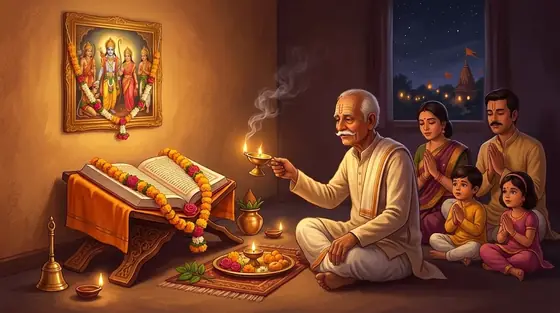
स्नान के बाद स्वच्छ स्थान पर पूर्व या उत्तर की ओर मुख करके बैठें। श्री राम दरबार (राम, सीता, लक्ष्मण और हनुमान) का चित्र सामने रखें, घी का दीपक जलाएँ और तुलसी-दल, फूल तथा अक्षत अर्पित करें। चालीसा स्वयं तुलसी-दल, फूल और साग-पत्र के सादे भोग की बात कहती है, इसलिए भोग में बड़ी व्यवस्था की आवश्यकता नहीं है।
पाठ चौपाइयों से आरम्भ करें, उन्हें क्रम से स्पष्ट उच्चारण के साथ पढ़ें और अन्त के दोनों दोहों पर समाप्त करें। पाठ से पहले 'श्री राम जय राम जय जय राम' का कुछ बार जप और पाठ के बाद श्री राम की आरती की परम्परा है, पर केवल चालीसा का पाठ भी पूर्ण माना जाता है।
अन्तिम दोहे के अनुसार किसी संकल्प के लिए सात दिन तक नियम से, एक ही समय और एक ही स्थान पर पाठ किया जाता है। जो तीनों काल ध्यान कर सकें, वे प्रातः, मध्याह्न और संध्या को पढ़ें; बाकी लोग दिन में एक बार भी पढ़ सकते हैं।
After bathing, sit in a clean place facing east or north. Keep a picture of the Ram Darbar (Rama, Sita, Lakshmana and Hanuman) before you, light a ghee lamp and offer tulsi leaves, flowers and rice grains. The Chalisa itself speaks of tulsi leaves, flowers and a plain offering of greens, so no elaborate arrangement is needed for the offering.
Begin with the chaupais, read them in order with clear pronunciation, and end with the two closing dohas. The custom is to chant 'Shri Ram Jai Ram Jai Jai Ram' a few times before the reading and to do Rama's aarti after it, but the Chalisa by itself is counted a complete recitation.
Following the closing doha, a reading for a particular vow is kept up by a rule for seven days, at the same time and in the same place each day. Those who can meditate at the three times of day read it morning, midday and evening; anyone else may read it once a day.
चालीसा में क्या कहा गया हैWhat the Chalisa says
चालीसा का केन्द्र राम-नाम है। वह बताती है कि गणेश ने राम का नाम लिया तो प्रथम पूज्य बने, शेषनाग उसी नाम के बल से पृथ्वी का भार फूल की तरह उठाते हैं, भरत उसी नाम को हृदय में रखकर युद्ध में कभी नहीं हारे और शत्रुघ्न के हृदय में वही नाम शत्रुओं का नाश करता है।
इसके बाद माता सीता को महालक्ष्मी और भुवनेश्वरी का रूप बताया गया है, जिनके चरणों में नौ निधियाँ और अठारह सिद्धियाँ हैं। फिर चालीसा राम को निर्गुण, अखण्ड ब्रह्म और सत्य-व्रत के स्वामी के रूप में प्रणाम करती है, जिनकी इच्छा मात्र से करोड़ों संसार बनते हैं।
अन्तिम चौपाइयाँ पाठ का फल बताती हैं: हृदय में ज्ञान, जन्म-मरण के चक्र से मुक्ति, मनचाहा फल और अन्त में राम का धाम। दोहे कहते हैं कि सात दिन नियम से पाठ करने वाले को हरि की कृपा से भक्ति मिलती है।
At the centre of the Chalisa is the name of Rama. It tells how Ganesha took up Rama's name and became the god worshipped first, how Shesha carries the weight of the earth as lightly as a flower by that name, how Bharata, holding it in his heart, was never beaten in battle, and how in Shatrughna's heart the same name destroys enemies.
It then praises Mother Sita as Mahalakshmi and Bhuvaneshvari, with the nine treasures and the eighteen siddhis at her feet. After that the Chalisa bows to Rama as the undivided Brahman beyond all qualities and the master of the vow of truth, by whose will alone millions of worlds come into being.
The last chaupais name the fruit of the reading: knowledge in the heart, release from the round of birth and death, the fruit one wishes for, and at the end Rama's own abode. The dohas say that whoever reads it by a rule for seven days gains devotion by Hari's grace.
महत्व और फलMeaning and fruit
राम मर्यादा, सत्य और कर्तव्य के आदर्श हैं, इसलिए उनकी चालीसा केवल कामना-पूर्ति का पाठ नहीं, आचरण को सीधा रखने का स्मरण भी है। घर में कलह, मन में अस्थिरता या निर्णय लेने में भ्रम हो, तो लोग इसका नियमित पाठ करते हैं।
चालीसा स्वयं अपना फल कहती है: जो सच्चे मन से भजन करता है, उसे धर्म, अर्थ, काम और मोक्ष, चारों फल मिलते हैं, और जो मन में इच्छा रखकर पढ़ता है, उसकी इच्छा सिद्ध होती है। परम्परा में इसका सबसे बड़ा फल भक्ति माना गया है, जिसे अन्तिम दोहा हरि की कृपा से मिलने वाला कहता है।
Rama is the ideal of right conduct, truth and duty, so his Chalisa is not only a prayer for wishes to be granted but also a reminder to keep one's own conduct straight. When there is strife at home, unrest in the mind or confusion over a decision, people take up its regular reading.
The Chalisa names its own fruit: whoever sings with a true heart gains the four aims of life, dharma, wealth, desire and liberation, and whoever reads with a wish in mind sees that wish fulfilled. Tradition counts devotion as its greatest fruit, which the closing doha says comes by Hari's grace.
कब पढ़ेंWhen to read
किसी भी दिन प्रातः स्नान के बाद या संध्या को दीपक जलाकर। रामनवमी, विवाह पंचमी, दशहरा और दीपावली इसके विशेष दिन हैं। किसी संकल्प के लिए अन्तिम दोहे के अनुसार सात दिन नियम से पाठ किया जाता है।On any day, in the morning after bathing or in the evening with a lamp lit. Ram Navami, Vivah Panchami, Dussehra and Diwali are its special days. For a particular vow, the closing doha asks for a reading by a rule for seven days.
कुंडली मेंIn your kundli
श्री राम सूर्यवंशी हैं, और ज्योतिष में राम चालीसा सूर्य और गुरु का उपाय मानी जाती है। कुंडली में सूर्य तुला राशि में नीच हो, राहु या शनि से पीड़ित हो, सूर्य की महादशा-अन्तर्दशा चल रही हो, या पिता, सरकार और अधिकारियों से सम्बन्धों में बाधा हो, तो इसका नियमित पाठ बताया जाता है। गुरु मकर में नीच हो, गुरु-चाण्डाल योग बना हो, या नवम भाव (धर्म और भाग्य) कमज़ोर हो, तब भी यह चालीसा पढ़ी जाती है। आत्मविश्वास, मान-सम्मान और धर्म में आस्था के लिए इसे सूर्य के दूसरे उपायों के साथ जोड़ा जाता है। अपनी कुंडली इसी साइट पर बनाकर देखें कि सूर्य और गुरु कहाँ हैं।Rama belongs to the solar line, and in Jyotish the Ram Chalisa is treated as a remedy for the Sun and Jupiter. It is prescribed when the Sun is debilitated in Libra, afflicted by Rahu or Saturn, during a Sun mahadasha or antardasha, or when relations with one's father, the government or those in authority meet obstacles. It is read too when Jupiter is debilitated in Capricorn, when Guru-Chandal yoga is formed, or when the ninth house of dharma and fortune is weak. For confidence, standing and faith it goes alongside the other Sun remedies. Build your kundli on this site and see where the Sun and Jupiter stand.
ग्रह: Grahas: सूर्यSun, बृहस्पतिJupiter
अपनी कुंडली में देखेंCheck it in your kundliप्रश्नोत्तरQuestions people ask
- राम चालीसा किस दिन पढ़नी चाहिए?On which day should the Ram Chalisa be read?
- किसी भी दिन पढ़ी जा सकती है। रामनवमी इसका मुख्य दिन है, और विवाह पंचमी, दशहरा तथा दीपावली पर भी इसका पाठ विशेष माना जाता है। नित्य पूजा में इसे प्रातः या संध्या को पढ़ा जाता है।On any day. Ram Navami is its chief day, and a reading on Vivah Panchami, Dussehra and Diwali is also held special. In daily worship it is read in the morning or the evening.
- राम चालीसा का पाठ कितनी बार करें?How many times should it be read?
- सामान्यतः दिन में एक बार पर्याप्त है। चालीसा का अन्तिम दोहा सात दिन तक नियम से पाठ करने की बात कहता है, इसलिए किसी विशेष संकल्प के लिए सात दिन लगातार पाठ की परम्परा है। जो चाहें, वे तीनों काल (प्रातः, मध्याह्न, संध्या) भी पढ़ सकते हैं।Once a day is usually enough. The closing doha speaks of reading by a rule for seven days, so for a particular vow the custom is seven days in a row. Those who wish may also read it at all three times of day: morning, midday and evening.
- राम चालीसा पढ़ने के क्या फायदे हैं?What are the benefits of reading the Ram Chalisa?
- चालीसा स्वयं कहती है कि इसके पाठ से हृदय में ज्ञान आता है, चारों फल मिलते हैं, मनचाही इच्छा पूरी होती है और अन्त में राम का धाम मिलता है। परम्परा में इसे मन की शान्ति, घर के कल्याण और भक्ति के लिए पढ़ा जाता है। ज्योतिष में यह कमज़ोर सूर्य और गुरु का उपाय है।The Chalisa itself says that its reading brings knowledge to the heart, the four aims of life, the fulfilment of one's wish and, at the end, Rama's abode. Tradition reads it for peace of mind, the welfare of the home and devotion. In Jyotish it is a remedy for a weak Sun or Jupiter.
- राम चालीसा पढ़ने के नियम क्या हैं?What are the rules for reading it?
- कोई कठिन नियम नहीं हैं। स्नान करके स्वच्छ स्थान पर बैठें, श्री राम के सामने दीपक जलाएँ, तुलसी-दल और फूल चढ़ाएँ और शुद्ध उच्चारण से पूरा पाठ करें। सात दिन का संकल्प लिया हो, तो रोज़ एक ही समय पर पढ़ें और उन दिनों सात्त्विक भोजन रखें।There are no hard rules. Bathe, sit in a clean place, light a lamp before Shri Rama, offer tulsi leaves and flowers and read the whole text with correct pronunciation. If you have taken a seven-day vow, read at the same time each day and keep to sattvic food on those days.
साथ में पढ़ेंRead alongside
 स्तोत्र और कवचStotras and Kavachas
श्रीरामचन्द्र कृपालु भजु मन (श्रीराम-स्तुति)
Shri Ramchandra Kripalu (Shri Ram Stuti)
गोस्वामी तुलसीदास रचित श्रीराम-स्तुति, गौरी के आशीर्वाद और सोरठा सहित, अर्थ के साथTulsidas's hymn to Rama, with Gauri's blessing to Sita and the closing sortha, and the meaning of every verse
 स्तोत्र और कवचStotras and Kavachas
भए प्रगट कृपाला (श्रीराम-जन्म स्तुति)
Bhaye Pragat Kripala (Ram Janm Stuti)
रामचरितमानस के बालकाण्ड से श्रीराम के प्रकट होने की स्तुति, गोस्वामी तुलसीदास रचित, चारों छन्दों के अर्थ सहितTulsidas's hymn of Rama's appearance before Kausalya, from the Balkand of the Ramcharitmanas, with the meaning of all four chhands
 स्तोत्र और कवचStotras and Kavachas
श्रीरामरक्षास्तोत्रम्
Shri Ram Raksha Stotra
बुधकौशिक ऋषि रचित रामरक्षा-कवच: विनियोग, ध्यान और 38 श्लोक, हर श्लोक के अर्थ सहितBudha Kaushika's armour of Rama's names: the viniyoga, the dhyana and all 38 verses, with the meaning of each
 चालीसाChalisas
श्री हनुमान चालीसा
Hanuman Chalisa
गोस्वामी तुलसीदास रचित चालीस चौपाइयाँ, अर्थ सहितTulsidas's forty verses to Hanuman, with the meaning of every line
 आरतीAartis
आरती श्री रामायण जी की
Aarti Shri Ramayan Ji Ki
श्री रामायण जी की आरती, गीता प्रेस के पाठ से, हर पद के अर्थ सहितThe aarti of the Ramayana in the Gita Press reading, with the meaning of every stanza