श्रीरामचन्द्र कृपालु भजु मन (श्रीराम-स्तुति)
Shri Ramchandra Kripalu (Shri Ram Stuti)
गोस्वामी तुलसीदास रचित श्रीराम-स्तुति, गौरी के आशीर्वाद और सोरठा सहित, अर्थ के साथTulsidas's hymn to Rama, with Gauri's blessing to Sita and the closing sortha, and the meaning of every verse
PDF डाउनलोडDownload PDF
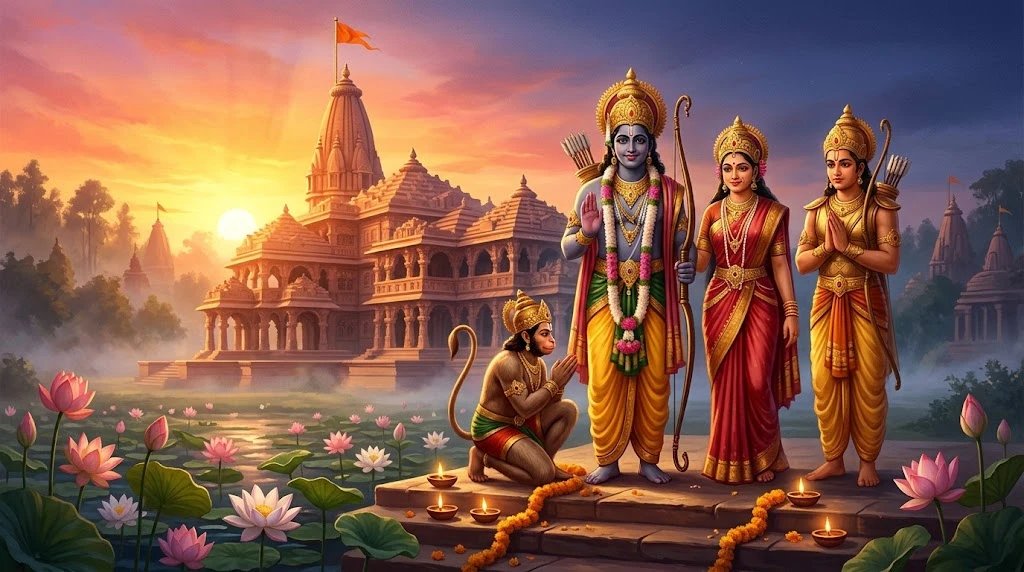
'श्रीरामचन्द्र कृपालु भजु मन' गोस्वामी तुलसीदास की सबसे प्रसिद्ध राम-स्तुति है। इसकी भाषा संस्कृत-मिश्रित ब्रज है: हर पद में कमल, मेघ, बिजली और कामदेव की उपमाओं से श्रीराम के रूप का वर्णन है और अन्त में तुलसीदास अपने हृदय-कमल में उनके निवास की प्रार्थना करते हैं। यह पद विनय-पत्रिका में मिलता है, और गीता प्रेस की परम्परा में इसके साथ रामचरितमानस के बालकाण्ड के वे पद भी पढ़े जाते हैं जिनमें गौरी सीता को आशीर्वाद देती हैं, तथा 'जानि गौरि अनुकूल' सोरठा।
रामनवमी, सुन्दरकाण्ड और रामायण-पाठ के आरम्भ में, मन्दिरों की आरती में और घर की नित्य पूजा में यह स्तुति गाई जाती है। इस पृष्ठ पर पूरा पाठ गीता प्रेस के छपे पाठ के अनुसार है, हर पद के नीचे उसका सीधा अर्थ है जिसमें कठिन विशेषणों की व्याख्या भी है, और साइन-इन के बाद पूरा पाठ मुफ्त PDF में उतारा जा सकता है।
Shri Ramchandra Kripalu Bhaju Man is Goswami Tulsidas's best-known hymn to Rama. Its language is Braj laced with Sanskrit: each verse paints Rama's form through images of lotuses, rain-clouds, lightning and the god of love, and at the end Tulsidas asks Rama to live in the lotus of his heart. The hymn belongs to the Vinay Patrika; in the Gita Press tradition it is printed with two verses from the Balkand of the Ramcharitmanas, where Gauri blesses Sita, and the sortha Jani Gauri Anukul.
It is sung on Ram Navami, at the start of a Sundarkand or Ramayan recitation, in temple aartis and in daily worship at home. This page gives the full text as printed by Gita Press, a plain meaning under every verse that also explains the harder epithets, and, after sign-in, a free PDF of the whole text.
पाठThe text
पदVerse 1
श्रीरामचन्द्र कृपालु भजु मन हरण भवभय दारुणं। नवकंज-लोचन, कंज-मुख, कर-कंज पद कंजारुणं॥
हे मन, कृपालु श्रीरामचन्द्र का भजन कर, जो संसार के भयंकर भय (भवभय) को हरने वाले हैं। उनके नेत्र नये खिले कमल (नवकंज) जैसे हैं, मुख कमल है, हाथ कमल हैं और चरण लाल कमल (कंजारुण) के समान हैं।O mind, worship the compassionate Rama, who takes away the dreadful fear of worldly existence (bhava-bhaya). His eyes are fresh-blown lotuses (nava-kanja), his face a lotus, his hands lotuses, and his feet are red lotuses (kanjaruna).
पदVerse 2
कंदर्प अगणित अमित छबि, नवनील-नीरद सुंदरं। पट पीत मानहु तड़ित रुचि शुचि नौमि जनक सुतावरं॥
उनकी शोभा असंख्य कामदेवों (कंदर्प) से भी बढ़कर और अपार है; वे नये नीले मेघ (नवनील-नीरद) के समान सुन्दर हैं। उनका पीताम्बर (पीत पट) मानो बिजली की चमक है; उन पवित्र जनकसुता-वर, अर्थात् सीता के पति, को मैं नमस्कार करता हूँ।His beauty is beyond measure, greater than countless gods of love (Kandarpa); he is lovely as a fresh dark rain-cloud (nava-nila-nirada). His yellow robe (pita pata) gleams on it like lightning. I bow to that pure one, the chosen lord of Janaka's daughter (Janaka-suta-vara), Sita.
पदVerse 3
भजु दीनबंधु दिनेश दानव-दैत्यवंश-निकंदनं। रघुनंद आनँदकंद कोशलचंद दशरथ-नंदनं॥
हे मन, दीनों के बन्धु, सूर्य के समान तेजस्वी (दिनेश), दानवों और दैत्यों के वंश का नाश करने वाले राम का भजन कर। वे रघुकुल को आनन्द देने वाले (रघुनंद), आनन्द के मूल (आनँदकंद), कोसल देश के चन्द्रमा (कोशलचंद) और राजा दशरथ के पुत्र हैं।Worship him, friend of the lowly (dina-bandhu), bright as the sun (dinesha), who cut down the clans of the danavas and daityas. He is the joy of the Raghu line (Raghunanda), the root of all bliss (ananda-kanda), the moon of Kosala (Koshala-chanda), and Dasharatha's son.
पदVerse 4
सिर मुकुट कुंडल तिलक चारु उदारु अंग बिभूषणं। आजानुभुज शर-चाप-धर, संग्राम-जित-खरदूषणं॥
उनके सिर पर मुकुट, कानों में कुंडल और माथे पर तिलक है; सुन्दर और भव्य आभूषण उनके अंगों को सजाते हैं। उनकी भुजाएँ घुटनों तक लम्बी हैं (आजानुभुज), हाथों में बाण और धनुष हैं, और युद्ध में उन्होंने खर और दूषण नामक राक्षसों को जीता है।A crown on his head, rings in his ears, a tilak on his brow, and fine, generous ornaments on every limb. His arms reach to his knees (ajanu-bhuja), he holds arrow and bow, and in battle he defeated the demons Khara and Dushana.
पदVerse 5
इति वदति तुलसीदास शंकर-शेष-मुनि-मन-रंजनं। मम हृदय-कंज निवास कुरु, कामादि खल-दल-गंजनं॥
तुलसीदास कहते हैं: हे शंकर, शेषनाग और मुनियों के मन को प्रसन्न करने वाले राम, मेरे हृदय-कमल में निवास कीजिए। आप काम-क्रोध आदि दुष्टों के दल (खल-दल) को नष्ट करने वाले हैं।So says Tulsidas: Rama, who gladdens the hearts of Shiva, the serpent Shesha and the sages, make your home in the lotus of my heart. You are the one who crushes the wicked host (khala-dala) of lust and the other passions.
पदVerse 6
मनु जाहिं राचेउ मिलिहि सो बरु सहज सुंदर साँवरो। करुना निधान सुजान सीलु सनेहु जानत रावरो॥
(गौरी सीता को आशीर्वाद देती हैं:) जिसमें तुम्हारा मन रम गया है, वही सहज सुन्दर साँवला वर तुम्हें मिलेगा। वह करुणा का भण्डार और सुजान (सब जानने वाला) है; तुम्हारे शील और स्नेह को वह जानता है।(Gauri blesses Sita:) The one your heart is set on, that naturally handsome, dark-hued bridegroom, you shall have. He is a treasury of compassion and all-knowing (sujan); he knows your gentleness and your love.
पदVerse 7
एहि भाँति गौरि असीस सुनि सिय सहित हियँ हरषीं अली। तुलसी भवानिहि पूजि पुनि पुनि मुदित मन मंदिर चली॥
इस प्रकार गौरी (पार्वती) का आशीर्वाद सुनकर सीता के साथ उनकी सखियाँ (अली) हृदय में हर्षित हुईं। तुलसीदास कहते हैं कि भवानी की बार-बार पूजा करके सीता प्रसन्न मन से महल (मंदिर) लौट चलीं।Hearing Gauri's (Parvati's) blessing, Sita and her companions (ali) rejoiced in their hearts. Tulsidas says that, worshipping Bhavani again and again, Sita went back to the palace (mandir) with a glad heart.
दोहाDoha
जानि गौरि अनुकूल सिय हिय हरषु न जाइ कहि। मंजुल मंगल मूल बाम अंग फरकन लगे॥
गौरी को अनुकूल जानकर सीता के हृदय का हर्ष कहा नहीं जा सकता। सुन्दर मंगलों के मूल, उनके बाएँ अंग फड़कने लगे (स्त्री का बायाँ अंग फड़कना शुभ शकुन माना जाता है)।Knowing Gauri to be favourable, Sita felt a joy in her heart that cannot be told. Her left limbs, the root of every lovely good omen, began to throb (a woman's left side twitching is held to be an auspicious sign).
यह स्तुति कहाँ से हैWhere the hymn comes from
पहले पाँच पद गोस्वामी तुलसीदास की विनय-पत्रिका के हैं। इनकी भाषा संस्कृत के ढंग की ब्रज है, इसीलिए हर पंक्ति 'दारुणं', 'सुंदरं', 'नंदनं' जैसे अनुस्वार-अन्त वाले शब्दों पर समाप्त होती है और कुछ संस्करण इन्हें 'दारुणम्' की तरह शुद्ध संस्कृत रूप में छापते हैं।
गीता प्रेस की परम्परा में इस स्तुति के साथ रामचरितमानस के बालकाण्ड के दो पद और एक सोरठा जोड़कर पढ़े जाते हैं: गौरी-पूजन के बाद पार्वती सीता को आशीर्वाद देती हैं कि साँवला वर उन्हें मिलेगा, सखियाँ हर्षित होती हैं और सीता के बाएँ अंग फड़कने लगते हैं। मन्दिरों और घरों में प्रायः यही पूरा रूप गाया जाता है, और इस पृष्ठ का पाठ भी वही है।
The first five verses are from Goswami Tulsidas's Vinay Patrika. Their language is Braj shaped like Sanskrit, which is why every line ends on an anusvara, as in darunam, sundaram and nandanam, and why some editions print those endings as pure Sanskrit, with the final m.
In the Gita Press tradition the hymn is read together with two verses and a sortha from the Balkand of the Ramcharitmanas: after Sita's worship of Gauri, Parvati blesses her that the dark-hued bridegroom will be hers, her companions rejoice, and Sita's left limbs begin to throb. That full form is what temples and homes usually sing, and it is the text given on this page.
पाठ विधिHow to read it
स्नान करके स्वच्छ वस्त्र पहनें, श्रीराम-दरबार या सीताराम के चित्र के सामने दीपक जलाएँ और शान्त मन से बैठें। स्तुति धीरे-धीरे, अर्थ समझते हुए पढ़ें; यह गाने की रचना है, इसलिए इसे लय में गाना भी उतना ही उचित है।
पाठ के अन्त में 'सियावर रामचन्द्र की जय' बोलने की परम्परा है। हनुमान चालीसा के बाद या सुन्दरकाण्ड के आरम्भ में इसे पढ़ने का चलन है, क्योंकि हनुमान जी की उपासना श्रीराम के स्मरण के बिना अधूरी मानी जाती है।
Bathe, put on clean clothes, light a lamp before an image of Rama's court or of Sita and Rama, and sit with a quiet mind. Read the hymn slowly, following the meaning; it was written to be sung, so singing it to its familiar tune is just as proper.
The custom is to end with the cry Siyavar Ramchandra ki jai. Many read it right after the Hanuman Chalisa or at the start of a Sundarkand recitation, since worship of Hanuman is held to be incomplete without remembering Rama.
महत्व और फलMeaning and fruit
पहली ही पंक्ति इस स्तुति का सार है: श्रीराम 'भवभय' यानी संसार के भय को हरने वाले हैं। जो मन चिन्ता, डर और अस्थिरता से घिरा है, उसे तुलसीदास कमल-नयन, मेघ-श्याम राम के रूप पर टिकाते हैं और अन्त में काम-क्रोध आदि को दबाने की प्रार्थना करते हैं। इसलिए इसे मन की शान्ति और धैर्य के लिए पढ़ा जाता है।
गौरी के आशीर्वाद वाले पद विवाह की कामना से पढ़े जाते हैं: सीता ने गौरी-पूजन के बाद मनचाहा वर पाया, इसलिए कन्याएँ और उनके परिवार इन पदों को विशेष श्रद्धा से गाते हैं। रामनवमी पर इसका पाठ श्रीराम के जन्मोत्सव का अंग है।
The first line is the heart of the hymn: Rama takes away bhava-bhaya, the fear that comes with living in the world. Tulsidas fixes an anxious, restless mind on Rama's lotus-eyed, cloud-dark form, and ends by asking him to crush lust, anger and the rest. That is why it is read for peace of mind and steadiness.
The verses of Gauri's blessing are read with marriage in mind: Sita received the husband of her choice after worshipping Gauri, so girls and their families sing these lines with particular faith. On Ram Navami the hymn is part of celebrating Rama's birth.
कब पढ़ेंWhen to read
रामनवमी पर अवश्य; नित्य पूजा में प्रातः या संध्या को दीपक जलाकर; हनुमान चालीसा के बाद या सुन्दरकाण्ड और रामायण-पाठ के आरम्भ में। विवाह की कामना से गौरी-पूजन के साथ भी पढ़ी जाती है।On Ram Navami without fail; in daily worship, morning or evening, with a lamp lit; after the Hanuman Chalisa or at the start of a Sundarkand or Ramayan recitation. Those hoping for marriage read it with the worship of Gauri.
कुंडली मेंIn your kundli
श्रीराम सूर्यवंशी हैं, और ज्योतिष में यह स्तुति सूर्य और गुरु, दोनों का उपाय मानी जाती है। कुंडली में सूर्य के नीच (तुला), अस्त या पीड़ित होने पर, सूर्य की महादशा-अन्तर्दशा में, पिता या अधिकारियों से सम्बन्ध बिगड़ने पर, और गुरु के पीड़ित होने या धर्म-भाव (नवम) के कमज़ोर होने पर इसका नियमित पाठ बताया जाता है। आत्मविश्वास, मान-सम्मान और मन की स्थिरता के लिए इसे सूर्य के उपायों के साथ जोड़ा जाता है। अपनी कुंडली में सूर्य और गुरु की स्थिति इसी साइट पर देखी जा सकती है।Rama belongs to the solar line, and in Jyotish this hymn is treated as a remedy for both the Sun and Jupiter. It is prescribed when the Sun is debilitated (in Libra), combust or afflicted in the kundli, during a Sun mahadasha or antardasha, when relations with one's father or with those in authority are strained, and when Jupiter or the ninth house of dharma is weak. For confidence, standing and steadiness of mind it goes alongside the other Sun remedies. You can check where the Sun and Jupiter stand in your own kundli on this site.
ग्रह: Grahas: सूर्यSun, बृहस्पतिJupiter
अपनी कुंडली में देखेंCheck it in your kundliप्रश्नोत्तरQuestions people ask
- श्रीरामचन्द्र कृपालु स्तुति किसने लिखी और यह किस ग्रन्थ में है?Who wrote Shri Ramchandra Kripalu and where is it found?
- यह गोस्वामी तुलसीदास की रचना है और विनय-पत्रिका में मिलती है। गौरी के आशीर्वाद वाले दो पद और 'जानि गौरि अनुकूल' सोरठा रामचरितमानस के बालकाण्ड से हैं, जिन्हें परम्परा में इसके साथ पढ़ा जाता है।It is by Goswami Tulsidas and is found in the Vinay Patrika. The two verses of Gauri's blessing and the sortha Jani Gauri Anukul come from the Balkand of the Ramcharitmanas and are read with it by tradition.
- राम स्तुति कब और कितनी बार पढ़नी चाहिए?When, and how many times, should the Ram Stuti be read?
- किसी भी दिन, प्रातः या संध्या को, एक बार पढ़ना पर्याप्त है। रामनवमी पर, हनुमान चालीसा के बाद और सुन्दरकाण्ड के आरम्भ में इसका पाठ विशेष माना जाता है। कोई संख्या बँधी नहीं है; नियमितता अधिक महत्व रखती है।Any day, morning or evening, once is enough. It is held to be special on Ram Navami, after the Hanuman Chalisa and at the start of a Sundarkand recitation. No count is fixed; regularity matters more.
- श्रीरामचन्द्र कृपालु पढ़ने के क्या लाभ हैं?What are the benefits of reading Shri Ramchandra Kripalu?
- परम्परा में इसे भय, चिन्ता और मन की अस्थिरता दूर करने वाली स्तुति माना गया है, क्योंकि यह श्रीराम को 'भवभय हरण' कहकर आरम्भ होती है। गौरी के आशीर्वाद वाले पद विवाह की कामना से पढ़े जाते हैं, और ज्योतिष में इसे सूर्य और गुरु के उपाय के रूप में बताया जाता है।Tradition holds it to remove fear, worry and restlessness of mind, since it opens by calling Rama the remover of worldly fear. The verses of Gauri's blessing are read by those hoping for marriage, and in Jyotish it is given as a remedy for the Sun and Jupiter.
- कुछ जगह 'दारुणम्' और कुछ जगह 'दारुणं' क्यों छपा है?Why do some versions print darunam with a final m and others with an anusvara?
- दोनों एक ही शब्द के रूप हैं। तुलसीदास की भाषा संस्कृत-मिश्रित ब्रज है; गीता प्रेस की हनुमान चालीसा की पुस्तिका में अनुस्वार वाला रूप (दारुणं) है और उसी के आरती-संग्रह में संस्कृत रूप (दारुणम्)। इस पृष्ठ पर अनुस्वार वाला पाठ रखा गया है।They are two spellings of the same word. Tulsidas's language is Braj mixed with Sanskrit; the Gita Press Hanuman Chalisa booklet prints the anusvara form (darunam with a dot) and its Aarti Sangrah the Sanskrit form (with a final m). This page keeps the anusvara reading.
साथ में पढ़ेंRead alongside
 चालीसाChalisas
श्री हनुमान चालीसा
Hanuman Chalisa
गोस्वामी तुलसीदास रचित चालीस चौपाइयाँ, अर्थ सहितTulsidas's forty verses to Hanuman, with the meaning of every line
 व्रत कथाVrat Kathas
एकादशी व्रत कथा और नियम
Ekadashi Vrat Katha and Rules
एकादशी व्रत की उत्पत्ति — पद्म पुराण की मुर दैत्य और एकादशी देवी की कथा, व्रत के नियम, फलाहार, जागरण, द्वादशी का पारण, और वर्ष की चौबीस एकादशियों का फलWhere Ekadashi comes from: the Padma Purana katha of the demon Mura and the goddess Ekadashi, the rules of the fast, phalahar, the vigil, the Dwadashi paran, and the fruit of the twenty-four Ekadashis of the year
 आरतीAartis
ॐ जय जगदीश हरे
Om Jai Jagdish Hare
श्री विष्णु जी की आरती, पं. श्रद्धाराम शर्मा रचित, अर्थ सहितThe Vishnu aarti written by Pandit Shardha Ram Sharma, with the meaning of every stanza
 व्रत कथाVrat Kathas
रविवार व्रत कथा
Ravivar Vrat Katha
सूर्य देव का रविवार व्रत — गोबर से आँगन लीपने वाली बुढ़िया और सोने का गोबर देने वाली गाय की कथा, व्रत विधि और उद्यापनThe Sunday fast for Surya Dev: the old woman who plastered her courtyard with cow dung and the cow that gave golden dung, how to keep the fast, and the udyapan