भए प्रगट कृपाला (श्रीराम-जन्म स्तुति)
Bhaye Pragat Kripala (Ram Janm Stuti)
रामचरितमानस के बालकाण्ड से श्रीराम के प्रकट होने की स्तुति, गोस्वामी तुलसीदास रचित, चारों छन्दों के अर्थ सहितTulsidas's hymn of Rama's appearance before Kausalya, from the Balkand of the Ramcharitmanas, with the meaning of all four chhands
PDF डाउनलोडDownload PDF
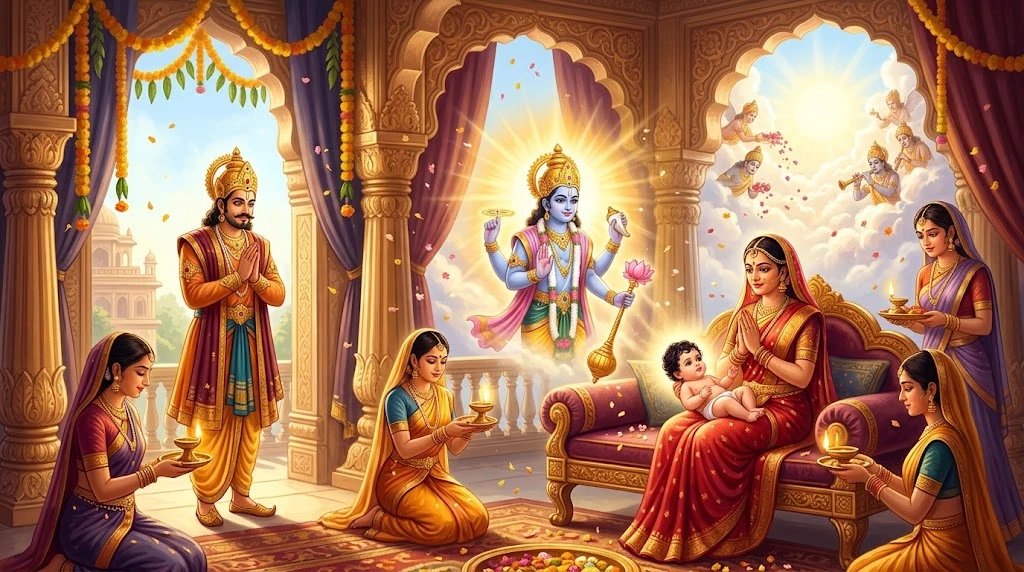
'भए प्रगट कृपाला दीनदयाला' गोस्वामी तुलसीदास के रामचरितमानस के बालकाण्ड की वह स्तुति है जिसमें श्रीराम माता कौसल्या के सामने चतुर्भुज रूप में प्रकट होते हैं। चार छन्दों में पूरा प्रसंग है: प्रभु का अद्भुत रूप, माता की हाथ जोड़कर की गई स्तुति, उनका यह आश्चर्य कि जिनके रोम-रोम में ब्रह्माण्ड हैं वे उनकी कोख में रहे, और अन्त में माता की प्रार्थना पर प्रभु का शिशु बनकर रोना। भाषा अवधी है और हर पंक्ति की लय ऐसी है कि यह सहज ही गाई जाती है।
रामनवमी पर मध्याह्न में, श्रीराम के जन्म के उत्सव में, घर में शिशु के जन्म पर बधाई और सोहर के रूप में, और रामायण-पाठ में यह स्तुति गाई जाती है। इस पृष्ठ पर पूरा पाठ गीता प्रेस के छपे पाठ के अनुसार है, हर छन्द के नीचे उसका सीधा अर्थ है जिसमें कठिन शब्दों की व्याख्या भी है, और साइन-इन के बाद पूरा पाठ मुफ्त PDF में उतारा जा सकता है।
Bhaye Pragat Kripala Deen Dayala is the hymn in the Balkand of Goswami Tulsidas's Ramcharitmanas in which Rama appears before his mother Kausalya in his four-armed form. Four chhands tell the whole scene: the Lord's wondrous form, the mother's praise with folded hands, her wonder that the one whose every pore holds whole universes should have lived within her, and at last, at her request, the Lord becoming a baby and crying. The language is Awadhi, and every line runs to a rhythm that makes it easy to sing.
It is sung at midday on Ram Navami, at celebrations of Rama's birth, as a badhai or sohar when a child is born at home, and during Ramayan recitations. This page gives the full text as printed by Gita Press, a plain meaning under every chhand that also explains the harder words, and, after sign-in, a free PDF of the whole text.
पाठThe text
पदVerse 1
भए प्रगट कृपाला दीनदयाला कौसल्या हितकारी। हरषित महतारी मुनि मन हारी अद्भुत रूप बिचारी॥ लोचन अभिरामा तनु घनस्यामा निज आयुध भुज चारी। भूषन बनमाला नयन बिसाला सोभासिंधु खरारी॥
दीनों पर दया करने वाले, कौसल्या का हित करने वाले कृपालु प्रभु प्रकट हुए। मुनियों के मन को हर लेने वाले उनके अद्भुत रूप को देख-विचारकर माता (महतारी) हर्षित हो उठीं। नेत्रों को आनन्द देने वाला (अभिराम) रूप, बादल जैसा श्याम शरीर (घनस्याम), चारों भुजाओं में अपने आयुध (शंख, चक्र, गदा और पद्म), वनमाला का आभूषण और बड़े-बड़े नेत्र: शोभा के सागर, खर राक्षस के शत्रु (खरारी) प्रभु ऐसे प्रकट हुए।The compassionate Lord, kind to the lowly and the well-wisher of Kausalya, appeared. Seeing and pondering his wondrous form, which steals the hearts of sages, the mother rejoiced. Eyes that delight the beholder (abhirama), a body dark as a rain-cloud (ghana-shyama), his own weapons (conch, discus, mace and lotus) in four arms, a garland of forest flowers (vanamala), large eyes: so appeared the ocean of beauty, the foe of the demon Khara (Kharari).
पदVerse 2
कह दुइ कर जोरी अस्तुति तोरी केहि बिधि करौं अनंता। माया गुन ग्यानातीत अमाना बेद पुरान भनंता॥ करुना सुखसागर सब गुन आगर जेहि गावहिं श्रुति संता। सो मम हित लागी जन अनुरागी भयउ प्रगट श्रीकंता॥
दोनों हाथ जोड़कर माता कहती हैं: हे अनन्त, मैं आपकी स्तुति किस प्रकार करूँ? वेद और पुराण आपको माया, गुणों और ज्ञान से परे (ग्यानातीत) और माप से रहित (अमान) कहते हैं। जिन करुणा और सुख के सागर, सब गुणों के धाम (आगर) का गान वेद (श्रुति) और सन्त करते हैं, वही भक्तों से प्रेम करने वाले लक्ष्मीपति (श्रीकंत) मेरे हित के लिए प्रकट हुए हैं।With both hands folded the mother says: O infinite one, how am I to praise you? The Vedas and Puranas call you beyond maya, beyond the gunas and beyond knowledge (gyanatita), beyond all measure (amana). The ocean of compassion and bliss, the home (agara) of every virtue, whom the Vedas (shruti) and the saints sing of, the lord of Lakshmi (Shrikanta) who loves his devotees, has appeared for my good.
पदVerse 3
ब्रह्मांड निकाया निर्मित माया रोम रोम प्रति बेद कहै। मम उर सो बासी यह उपहासी सुनत धीर मति थिर न रहै॥ उपजा जब ग्याना प्रभु मुसुकाना चरित बहुत बिधि कीन्ह चहै। कहि कथा सुहाई मातु बुझाई जेहि प्रकार सुत प्रेम लहै॥
वेद कहते हैं कि माया से रचे ब्रह्माण्डों के समूह (निकाय) आपके एक-एक रोम में हैं; वही आप मेरे भीतर (उर में) बसे, यह हँसी की-सी बात सुनकर धीर पुरुषों की बुद्धि भी स्थिर नहीं रहती। माता के मन में जब यह ज्ञान जागा तो प्रभु मुस्कराए, क्योंकि वे बहुत प्रकार की लीलाएँ (चरित) करना चाहते थे। उन्होंने (पिछले जन्म में दिए वरदान की) सुन्दर कथा कहकर माता को समझाया, जिससे वे उन्हें पुत्र मानकर प्रेम कर सकें।The Vedas say that hosts (nikaya) of universes, shaped by maya, lie in every pore of your body; that you should have dwelt within me (ura) is a wonder so strange that on hearing it even the steadiest mind cannot stay still. When this knowledge rose in the mother, the Lord smiled, for he wished to play out his deeds (charita) in many ways. He told her the lovely story (of the boon given in a former birth) and reassured her, so that she might love him as her son.
पदVerse 4
माता पुनि बोली सो मति डोली तजहु तात यह रूपा। कीजै सिसुलीला अति प्रियसीला यह सुख परम अनूपा॥ सुनि बचन सुजाना रोदन ठाना होइ बालक सुरभूपा। यह चरित जे गावहिं हरिपद पावहिं ते न परहिं भवकूपा॥
तब माता की वह बुद्धि बदल गई (डोली) और वे फिर बोलीं: हे तात, यह रूप छोड़ दो और शिशु की वह लीला करो जो अत्यन्त प्रिय लगती है; मेरे लिए यही सुख सबसे बड़ा और अनुपम है। यह वचन सुनकर सब जानने वाले (सुजान) देवताओं के स्वामी (सुरभूप) बालक बनकर रोने लगे। जो इस चरित को गाते हैं, वे हरि के चरण (हरिपद) पाते हैं और संसार-रूपी कुएँ (भवकूप) में नहीं गिरते।Then the mother's mind turned (doli), and she spoke again: dear one, leave this form and play the part of a baby, which is so dear; that joy is the highest and beyond compare. Hearing her words, the all-knowing (sujana) king of the gods (sura-bhupa) became a baby and began to cry. Those who sing this story reach Hari's feet (Haripada) and do not fall into the well of worldly existence (bhava-kupa).
यह स्तुति कहाँ से हैWhere the hymn comes from
ये चार छन्द रामचरितमानस के बालकाण्ड में दोहा 191 के बाद आते हैं। तुलसीदास वहाँ श्रीराम के जन्म का समय बताते हैं: चैत्र मास, शुक्ल पक्ष की नवमी, अभिजित मुहूर्त और दोपहर का समय, जब न अधिक ठंड थी न धूप। उसके तुरन्त बाद यह स्तुति है, इसीलिए रामनवमी पर मध्याह्न में इसे गाने की परम्परा है।
मानस में इन छन्दों के बाद एक दोहा आता है ('बिप्र धेनु सुर संत हित ...'), जिसमें बताया गया है कि प्रभु ने ब्राह्मण, गौ, देवता और सन्तों के हित के लिए मनुष्य रूप में अवतार लिया। गीता प्रेस की जिस पुस्तिका से यह पाठ लिया गया है, उसमें 'श्रीरामावतार' शीर्षक के नीचे केवल चार छन्द छपे हैं, इसलिए इस पृष्ठ पर भी वही चार छन्द हैं।
These four chhands come in the Balkand of the Ramcharitmanas, right after doha 191. There Tulsidas gives the moment of Rama's birth: the month of Chaitra, the ninth day of the bright fortnight, the Abhijit muhurta, at midday, when it was neither cold nor hot. The hymn follows immediately, which is why the custom is to sing it at midday on Ram Navami.
In the Manas the chhands are followed by a doha (Bipra dhenu sur sant hit ...) which says that the Lord took a human birth for the good of brahmins, cows, the gods and the saints. The Gita Press booklet this text is taken from prints only the four chhands under the heading Shri Ramavatar, so this page gives those four.
पाठ विधिHow to read it
स्नान करके स्वच्छ वस्त्र पहनें, श्रीराम के बाल-रूप या राम-दरबार के चित्र के सामने दीपक जलाएँ और शान्त मन से बैठें। चारों छन्द एक बैठक में, अर्थ समझते हुए पढ़ें या गाएँ; यह गाने की रचना है, इसलिए परिचित लय में गाना भी उतना ही उचित है।
रामनवमी पर मध्याह्न में श्रीराम के जन्म के समय यह स्तुति गाकर पालना झुलाने और पंजीरी या पंचामृत का भोग लगाने की परम्परा है। पाठ के अन्त में 'सियावर रामचन्द्र की जय' बोलें और प्रसाद बाँटें।
Bathe, put on clean clothes, light a lamp before a picture of the infant Rama or of Rama's court, and sit with a quiet mind. Read or sing all four chhands in one sitting, following the meaning; it was written to be sung, so singing it to its familiar tune is just as proper.
On Ram Navami the custom is to sing it at midday, at the hour of Rama's birth, while rocking a cradle, and to offer panjiri or panchamrit. End with the cry Siyavar Ramchandra ki jai and share the prasad.
महत्व और फलMeaning and fruit
इस स्तुति का सार दूसरे और तीसरे छन्द में है: जो अनन्त हैं, जिनके रोम-रोम में ब्रह्माण्ड हैं, वे भक्त के प्रेम के लिए शिशु बन जाते हैं। माता कौसल्या ईश्वर का ऐश्वर्य देखकर भी पुत्र का प्रेम माँगती हैं, और प्रभु वही देते हैं। इसलिए यह स्तुति भक्ति में प्रेम के स्थान की याद दिलाती है।
अन्तिम पंक्ति स्वयं इसका फल बताती है: जो इस चरित को गाते हैं, वे हरि के चरण पाते हैं और संसार के कुएँ में नहीं गिरते। घर में शिशु के जन्म पर, नामकरण और जन्मदिन पर इसे बधाई और सोहर की तरह गाया जाता है, और सन्तान की कामना रखने वाले परिवार भी इसे श्रद्धा से पढ़ते हैं।
The heart of the hymn is in the second and third chhands: the infinite one, whose every pore holds universes, becomes a baby for the sake of a devotee's love. Kausalya, even after seeing his divine majesty, asks for a son's love, and the Lord gives exactly that. The hymn is a reminder of the place of love in devotion.
The last line states its own fruit: those who sing this story reach Hari's feet and do not fall into the well of worldly life. At a child's birth, naming ceremony or birthday it is sung as a badhai or sohar, and families hoping for a child also read it with faith.
कब पढ़ेंWhen to read
रामनवमी पर मध्याह्न में, श्रीराम के जन्म के समय, अवश्य; नित्य पूजा में प्रातः या संध्या को दीपक जलाकर; घर में शिशु के जन्म, नामकरण या जन्मदिन पर बधाई के रूप में; और रामायण-पाठ में बालकाण्ड के इस प्रसंग पर।At midday on Ram Navami, the hour of Rama's birth, without fail; in daily worship, morning or evening, with a lamp lit; as a badhai at a child's birth, naming ceremony or birthday; and during a Ramayan recitation when this scene of the Balkand is reached.
कुंडली मेंIn your kundli
श्रीराम सूर्यवंशी हैं, और ज्योतिष में उनकी स्तुति सूर्य और गुरु, दोनों का उपाय मानी जाती है। कुंडली में सूर्य के नीच (तुला), अस्त या पीड़ित होने पर, सूर्य की महादशा-अन्तर्दशा में, और गुरु के पीड़ित होने पर इसका पाठ बताया जाता है। यह स्तुति श्रीराम के जन्म की है, इसलिए सन्तान के कारक गुरु और पंचम भाव के कमज़ोर या पीड़ित होने पर भी इसे श्रद्धा से पढ़ने की परम्परा है। अपनी कुंडली में सूर्य, गुरु और पंचम भाव की स्थिति इसी साइट पर अपनी कुंडली बनाकर देखी जा सकती है।Rama belongs to the solar line, and in Jyotish his praise is treated as a remedy for both the Sun and Jupiter. This hymn is suggested when the Sun is debilitated (in Libra), combust or afflicted in the kundli, during a Sun mahadasha or antardasha, and when Jupiter is afflicted. Since it celebrates Rama's birth, the custom is also to read it with faith when Jupiter, the karaka of children, or the fifth house is weak or afflicted. You can see where the Sun, Jupiter and the fifth house stand in your own kundli by building it on this site.
ग्रह: Grahas: सूर्यSun, बृहस्पतिJupiter
अपनी कुंडली में देखेंCheck it in your kundliप्रश्नोत्तरQuestions people ask
- भए प्रगट कृपाला स्तुति किस ग्रन्थ में है और किसने लिखी?Which book is Bhaye Pragat Kripala from, and who wrote it?
- यह गोस्वामी तुलसीदास के रामचरितमानस के बालकाण्ड में है, दोहा 191 के ठीक बाद, जहाँ श्रीराम के जन्म का वर्णन है। इसमें चार छन्द हैं।It is in the Balkand of Goswami Tulsidas's Ramcharitmanas, right after doha 191, where Rama's birth is told. It has four chhands.
- भए प्रगट कृपाला कब पढ़नी या गानी चाहिए?When should Bhaye Pragat Kripala be read or sung?
- रामनवमी पर मध्याह्न में, श्रीराम के जन्म के समय, इसका गान विशेष माना जाता है। इसके अलावा नित्य पूजा में, शिशु के जन्म और जन्मदिन पर बधाई के रूप में, और रामायण-पाठ में इसे गाया जाता है।Singing it at midday on Ram Navami, the hour of Rama's birth, is held to be special. It is also sung in daily worship, as a badhai at a child's birth or birthday, and during Ramayan recitations.
- इस स्तुति को कितनी बार पढ़ना चाहिए?How many times should this hymn be read?
- एक बार चारों छन्द पूरे पढ़ना या गाना पर्याप्त है। कोई संख्या बँधी नहीं है; कुछ लोग रामनवमी पर इसे बार-बार गाते हैं। नियमितता और भाव अधिक महत्व रखते हैं।Reading or singing all four chhands once is enough. No count is fixed; some sing it over and over on Ram Navami. Regularity and feeling matter more.
- भए प्रगट कृपाला पढ़ने के क्या लाभ हैं?What are the benefits of reading Bhaye Pragat Kripala?
- स्तुति की अन्तिम पंक्ति कहती है कि इस चरित को गाने वाले हरि के चरण पाते हैं और संसार के कुएँ में नहीं गिरते। परम्परा में इसे घर में मंगल और सन्तान-सुख की कामना से गाया जाता है, और ज्योतिष में इसे सूर्य और गुरु के उपाय के रूप में बताया जाता है।Its last line says that those who sing this story reach Hari's feet and do not fall into the well of worldly life. By tradition it is sung for auspiciousness at home and in the hope of children, and in Jyotish it is given as a remedy for the Sun and Jupiter.
साथ में पढ़ेंRead alongside
 स्तोत्र और कवचStotras and Kavachas
श्रीरामचन्द्र कृपालु भजु मन (श्रीराम-स्तुति)
Shri Ramchandra Kripalu (Shri Ram Stuti)
गोस्वामी तुलसीदास रचित श्रीराम-स्तुति, गौरी के आशीर्वाद और सोरठा सहित, अर्थ के साथTulsidas's hymn to Rama, with Gauri's blessing to Sita and the closing sortha, and the meaning of every verse
 चालीसाChalisas
श्री राम चालीसा
Ram Chalisa
"श्री रघुवीर भक्त हितकारी" से आरम्भ होने वाली राम चालीसा, हर चौपाई और दोहे के अर्थ सहितThe Ram Chalisa that begins "Shri Raghuvir bhakt hitkari", with the meaning of every chaupai and doha
 आरतीAartis
आरती श्री रामायण जी की
Aarti Shri Ramayan Ji Ki
श्री रामायण जी की आरती, गीता प्रेस के पाठ से, हर पद के अर्थ सहितThe aarti of the Ramayana in the Gita Press reading, with the meaning of every stanza
 चालीसाChalisas
श्री हनुमान चालीसा
Hanuman Chalisa
गोस्वामी तुलसीदास रचित चालीस चौपाइयाँ, अर्थ सहितTulsidas's forty verses to Hanuman, with the meaning of every line