आरती श्री रामायण जी की
Aarti Shri Ramayan Ji Ki
श्री रामायण जी की आरती, गीता प्रेस के पाठ से, हर पद के अर्थ सहितThe aarti of the Ramayana in the Gita Press reading, with the meaning of every stanza
PDF डाउनलोडDownload PDF
आरती श्री रामायण जी की किसी देवता की नहीं, स्वयं रामायण ग्रन्थ की आरती है। रामचरितमानस, सुन्दरकाण्ड या रामायण के किसी भी पाठ के समापन पर पोथी के सामने यह आरती गाई जाती है। इसकी भाषा अवधी है और इसके पद गिनाते हैं कि ब्रह्मा, नारद, वाल्मीकि, शुकदेव, सनकादि, शेष, शारदा, शिव-भवानी, अगस्त्य, व्यास, काकभुशुण्डि और गरुड़ सब इस कथा को गाते हैं। इसका रचयिता ज्ञात नहीं है; अन्तिम पंक्ति तुलसीदास का नाम लेकर कहती है कि यह ग्रन्थ उनके लिए माता-पिता के समान है।
यहाँ दिया गया पाठ गीता प्रेस, गोरखपुर के श्रीआरती-संग्रह के अनुसार है। हर पद के नीचे उसका सीधा अर्थ है, जिसमें पद में आए हर नाम का परिचय भी है, ताकि पाठ के बाद आरती गाते समय उसका भाव भी साथ रहे। साइन-इन करके पूरा पाठ PDF में उतारकर आप उसे छाप सकते हैं या पाठ-मण्डली में बाँट सकते हैं।
Aarti Shri Ramayan Ji Ki is the aarti not of a deity but of the Ramayana itself. It is sung before the book at the close of any reading of the Ramcharitmanas, of the Sundarkand, or of the Ramayana. Its language is Awadhi, and its stanzas name those who sing this story: Brahma, Narada, Valmiki, Shuka, the Sanaka brothers, Shesha, Sharada, Shiva and Bhavani, Agastya, Vyasa, Kakbhushundi and Garuda. The author is not known; the last line names Tulsidas and says the book is mother and father to him.
The text below follows the Shri Aarti Sangrah of Gita Press, Gorakhpur. Under each stanza is a plain meaning that also says who each named figure is, so the sense stays with the singing after a path. After signing in you can download the same text as a PDF to print or to share with your reading group.
पाठThe text
टेकRefrain
आरति श्रीरामायनजी की, कीरति कलित ललित सिय पी की॥
यह श्री रामायण जी की आरती है, जो सिय-पी (सीता के प्रियतम, श्रीराम) की सुन्दर और मनोहर कीर्ति से सजी हुई है।This is the aarti of the revered Ramayana, which is adorned with the lovely and charming glory of Siya's beloved, Rama.
पदVerse 1
गावत ब्रह्मादिक मुनि नारद, बालमीक विग्यान-बिसारद। सुक सनकादि सेष अरु सारद, बरनि पवनसुत कीरति नीकी॥
ब्रह्मा आदि देवता, नारद मुनि और विज्ञान (तत्त्व-ज्ञान) में निपुण वाल्मीकि इसे गाते हैं। शुकदेव, सनकादि (सनक आदि चार कुमार), शेषनाग और शारदा (सरस्वती) भी इसे गाते हैं, और पवनसुत (पवन के पुत्र, हनुमान) ने इसकी सुन्दर कीर्ति का वर्णन किया है।Brahma and the other gods, the sage Narada, and Valmiki, master of true knowledge, sing it. Shuka, Sanaka and his three brothers, Shesha the serpent and Sharada (Saraswati) sing it too, and Pavanasuta, Hanuman, son of the Wind, has told its fine glory.
पदVerse 2
गावत बेद पुरान अष्टदस, छओ सास्त्र सब ग्रंथन को रस। मुनि जन धन संतन को सरबस, सार अंस संमत सबही की॥
वेद और अठारह पुराण इसका गान करते हैं; यह छहों शास्त्रों (छह दर्शनों) और सब ग्रन्थों का रस है। यह मुनि-जनों का धन और सन्तों का सर्वस्व है, सबका सार-अंश है, जिसे सब मानते हैं।The Vedas and the eighteen Puranas sing of it; it is the essence of the six shastras, the schools of philosophy, and of every scripture. It is the wealth of sages and the all-in-all of saints, the very essence on which everyone agrees.
पदVerse 3
गावत संतत संभु भवानी अरु घटसंभव मुनि बिग्यानी। ब्यास आदि कबिबर्ज बखानी, कागभुसुंडि गरुड के ही की॥
शम्भु (शिव) और भवानी (पार्वती) इसे निरन्तर गाते हैं, और ज्ञानी मुनि घटसम्भव (घड़े से जन्मे, अगस्त्य) भी। व्यास आदि श्रेष्ठ कवियों ने इसका बखान किया है; यह काकभुशुण्डि और गरुड़ के ही (हिय, हृदय) की निधि है।Shambhu and Bhavani, Shiva and Parvati, sing it without pause, and so does the wise sage Ghatasambhava, the pot-born Agastya. Vyasa and the other great poets have praised it; it is the treasure of the heart of Kakbhushundi, the crow-sage, and of Garuda.
पदVerse 4
कलिमल-हरनि बिषय रस फीकी, सुभग सिंगार मुक्ति जुबती की। दलन रोग भव मूरि अमी की, तात मात सब बिधि तुलसी की॥
यह कलियुग के मल (दोषों) को हरती है और विषयों के रस को फीका कर देती है; यह मुक्ति-रूपी युवती का सुन्दर शृंगार है। भव-रोग (जन्म-मरण के रोग) को नष्ट करने के लिए यह अमृत की जड़ी है, और तुलसी (तुलसीदास) के लिए सब प्रकार से पिता और माता है।It washes away the stains of the Kali age and makes the taste of sense pleasures pale; it is the lovely adornment of Liberation, pictured as a young bride. It is the herb of nectar that destroys the disease of worldly existence, and to Tulsi, Tulsidas, it is father and mother in every way.
आरती कैसे करेंHow the aarti is done
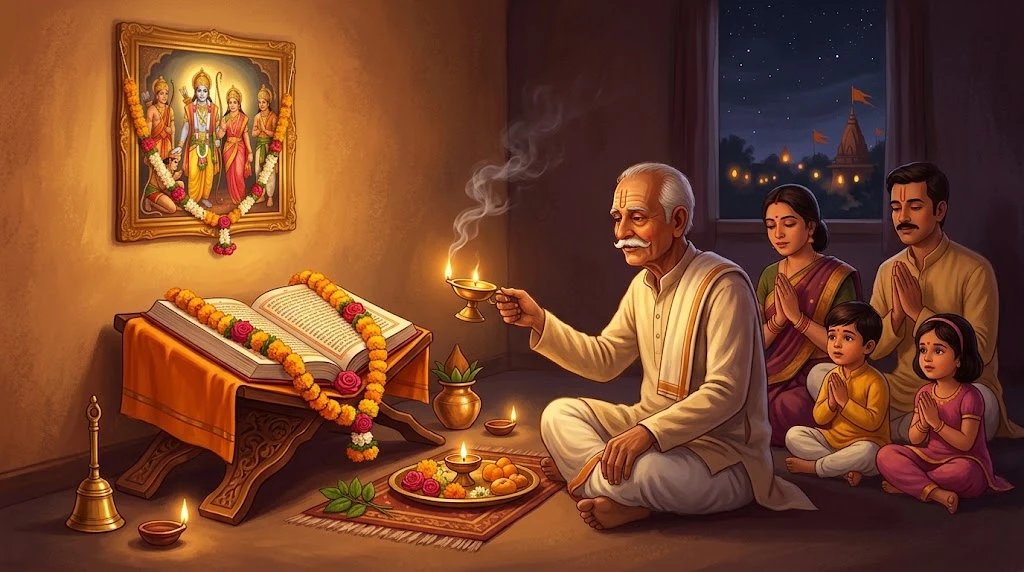
यह आरती पाठ के अन्त में की जाती है। रामचरितमानस या सुन्दरकाण्ड की पोथी को चौकी पर लाल या पीले वस्त्र पर रखा जाता है, और पास में श्रीराम दरबार और हनुमान जी का चित्र। पाठ पूरा होने पर पोथी पर पुष्प और अक्षत चढ़ाकर उसी के सामने आरती की जाती है, क्योंकि यह आरती ग्रन्थ की है।
थाली में घी का दीपक या कपूर रखकर, घंटी बजाते हुए आरती गाएँ और थाली को घड़ी की दिशा में घुमाएँ। गीता प्रेस के पाठ में टेक एक बार छपी है, पर गाते समय 'आरति श्रीरामायनजी की, कीरति कलित ललित सिय पी की' हर पद के बाद सब मिलकर दोहराते हैं। प्रायः इसके बाद श्रीराम और हनुमान जी की आरती भी होती है।
आरती के बाद ज्योति सब पर फेरी जाती है, प्रसाद बँटता है और पोथी को आदर से वस्त्र में लपेटकर ऊँचे स्थान पर रखा जाता है। नवाह्न या मासपारायण जैसे कई दिनों के पाठ में हर दिन के विश्राम पर भी यह आरती की जाती है।
The aarti is done at the end of the reading. The book of the Ramcharitmanas or the Sundarkand rests on a red or yellow cloth on a low stool, with a picture of Rama's court and of Hanuman beside it. When the path is complete, flowers and rice grains are offered on the book and the aarti is done before it, because this is the aarti of the book itself.
Place a ghee lamp or camphor on a plate, ring the bell, sing the aarti and move the plate clockwise. The Gita Press text prints the refrain once, but in singing everyone repeats it, Aarti Shri Ramayan Ji Ki, Kirati Kalit Lalit Siya Pi Ki, after every stanza. Often the aartis of Rama and of Hanuman follow.
After the aarti the flame is passed to everyone, the prasad is shared, and the book is wrapped in its cloth and set in a raised place with respect. In readings that run over several days, such as the nine-day Navahna or the month-long Masaparayan, the aarti is also done at each day's pause.
महत्वMeaning
यह आरती बताती है कि रामकथा केवल एक ग्रन्थ नहीं, एक परम्परा है जिसे सृष्टि के आरम्भ से देवता, ऋषि और भक्त गाते आए हैं। इसमें आए नाम रामचरितमानस के वक्ता-श्रोताओं की याद दिलाते हैं: मानस में शिव जी पार्वती को कथा सुनाते हैं, काकभुशुण्डि गरुड़ को, और यही कथा वाल्मीकि, व्यास, नारद और शुकदेव जैसे ऋषियों की वाणी में भी है।
दूसरा पद रामायण को वेद, पुराण और छहों दर्शनों का सार कहता है, और चौथा पद उसका फल: यह कलियुग के दोष धोती है, विषय-भोग का आकर्षण फीका करती है और भव-रोग की अमृत-औषधि है। अन्त में आरती कहती है कि तुलसीदास के लिए यह ग्रन्थ माता-पिता के समान है; यही भाव लेकर पाठ करने वाला इसे गाता है।
The aarti says that the story of Rama is not just a book but a tradition, sung by gods, sages and devotees since the beginning of creation. The names in it recall the tellers and listeners of the Ramcharitmanas: in the Manas, Shiva tells the story to Parvati and Kakbhushundi tells it to Garuda, and the same story lives in the words of sages such as Valmiki, Vyasa, Narada and Shuka.
The second stanza calls the Ramayana the essence of the Vedas, the Puranas and the six schools of philosophy, and the fourth gives its fruit: it washes away the faults of the Kali age, dulls the pull of sense pleasure and is the nectar-herb for the disease of worldly life. At the end the aarti says that to Tulsidas this book is mother and father; the reader sings it in that same spirit.
कब पढ़ेंWhen to read
रामचरितमानस के पाठ (नवाह्न, मासपारायण या अखण्ड पाठ) और सुन्दरकाण्ड के पाठ के समापन पर; राम नवमी, विवाह पंचमी और हनुमान जयन्ती के पाठ में; और घर में रामायण-पाठ के हर दिन के अन्त में।At the close of a Ramcharitmanas reading (Navahna, Masaparayan or an unbroken akhand path) and of a Sundarkand path; at the readings of Rama Navami, Vivah Panchami and Hanuman Jayanti; and at the end of each day's Ramayana reading at home.
कुंडली मेंIn your kundli
ज्योतिष में श्रीराम की उपासना का सम्बन्ध सूर्य और बृहस्पति से है: राम सूर्यवंशी हैं और सूर्य आत्मबल, पिता, प्रतिष्ठा और धर्म-मर्यादा का कारक है, जबकि गुरु शास्त्र, ज्ञान और श्रद्धा का कारक है, और यह आरती एक शास्त्र की ही स्तुति है। कुंडली में सूर्य के नीच या पीड़ित होने पर, सूर्य या गुरु की महादशा-अन्तर्दशा में, और नवम भाव (धर्म और पिता) या पंचम भाव के कमज़ोर होने पर रामचरितमानस या सुन्दरकाण्ड का पाठ और उसके अन्त में यह आरती बताई जाती है। अपनी कुंडली में सूर्य और गुरु की स्थिति इसी साइट पर देखी जा सकती है।In Jyotish the worship of Rama is linked with the Sun and Jupiter: Rama is of the solar dynasty, and the Sun signifies inner strength, the father, standing and righteous conduct, while Jupiter signifies scripture, wisdom and faith, and this aarti is the praise of a scripture. When the Sun is debilitated or afflicted in the kundli, during a Sun or Jupiter mahadasha or antardasha, and when the ninth house of dharma and the father or the fifth house is weak, a reading of the Ramcharitmanas or the Sundarkand closed with this aarti is the usual advice. You can check where the Sun and Jupiter stand in your own kundli on this site.
ग्रह: Grahas: सूर्यSun, बृहस्पतिJupiter
अपनी कुंडली में देखेंCheck it in your kundliप्रश्नोत्तरQuestions people ask
- रामायण जी की आरती कब की जाती है?When is the Ramayan aarti done?
- रामचरितमानस या सुन्दरकाण्ड का पाठ पूरा होने पर, पोथी के सामने। कई दिनों तक चलने वाले पाठ में हर दिन के विश्राम पर भी यह आरती की जाती है। राम नवमी और विवाह पंचमी के पाठ में इसका विशेष चलन है।When a reading of the Ramcharitmanas or the Sundarkand is complete, before the book. In a reading that runs over several days it is also done at each day's pause. It is especially common at the readings of Rama Navami and Vivah Panchami.
- क्या सुन्दरकाण्ड के बाद भी यही आरती गाते हैं?Is the same aarti sung after the Sundarkand?
- हाँ। सुन्दरकाण्ड रामचरितमानस का ही एक काण्ड है, इसलिए उसके पाठ के अन्त में भी पहले यह आरती गाई जाती है, और प्रायः उसके बाद हनुमान जी की आरती 'आरती कीजै हनुमान लला की'।Yes. The Sundarkand is a book of the Ramcharitmanas, so this aarti is sung first at the end of its reading too, usually followed by the Hanuman aarti, Aarti Kije Hanuman Lala Ki.
- रामायण जी की आरती गाने से क्या लाभ होता है?What is the benefit of singing the Ramayan aarti?
- आरती स्वयं कहती है कि रामकथा कलियुग के दोष हरती है, विषयों का आकर्षण फीका करती है और भव-रोग की अमृत-औषधि है। पाठ के अन्त में इसे गाना ग्रन्थ के प्रति कृतज्ञता है और पाठ को पूर्णता देता है।The aarti itself says that the story of Rama removes the faults of the Kali age, dulls the pull of sense pleasure and is the nectar-remedy for the disease of worldly life. Singing it at the end of a path is an act of gratitude to the book and completes the reading.
- रामायण पाठ और आरती के नियम क्या हैं?What are the rules for the Ramayan path and aarti?
- स्नान करके स्वच्छ वस्त्र पहनें, पोथी को चौकी पर वस्त्र बिछाकर रखें और उसे भूमि पर न रखें। पाठ के बाद पोथी पर पुष्प-अक्षत चढ़ाकर खड़े होकर, घंटी बजाते हुए आरती गाएँ और हर पद के बाद टेक दोहराएँ। अन्त में ज्योति सब पर फेरें, प्रसाद बाँटें और पोथी को वस्त्र में लपेटकर रखें।Bathe and wear clean clothes, keep the book on a cloth on a low stool and never on the floor. After the path offer flowers and rice grains on the book, stand, ring the bell and sing the aarti, repeating the refrain after every stanza. At the end pass the flame to everyone, share the prasad and wrap the book in its cloth.
साथ में पढ़ेंRead alongside
 चालीसाChalisas
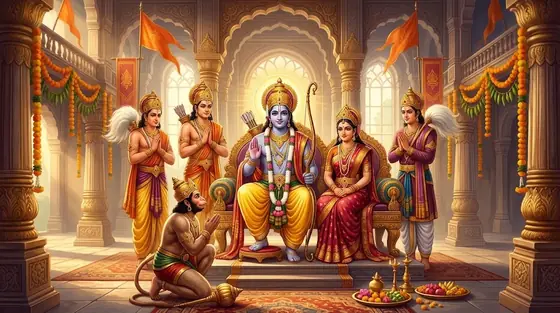
श्री राम चालीसा
Ram Chalisa
"श्री रघुवीर भक्त हितकारी" से आरम्भ होने वाली राम चालीसा, हर चौपाई और दोहे के अर्थ सहितThe Ram Chalisa that begins "Shri Raghuvir bhakt hitkari", with the meaning of every chaupai and doha
 स्तोत्र और कवचStotras and Kavachas
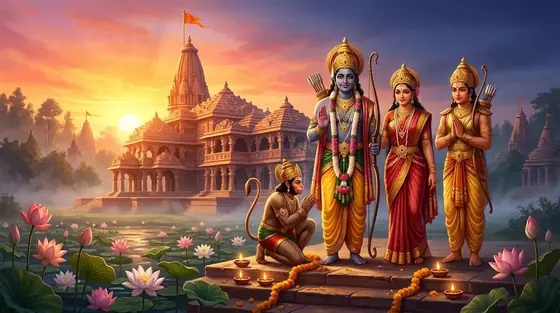
श्रीरामचन्द्र कृपालु भजु मन (श्रीराम-स्तुति)
Shri Ramchandra Kripalu (Shri Ram Stuti)
गोस्वामी तुलसीदास रचित श्रीराम-स्तुति, गौरी के आशीर्वाद और सोरठा सहित, अर्थ के साथTulsidas's hymn to Rama, with Gauri's blessing to Sita and the closing sortha, and the meaning of every verse
 स्तोत्र और कवचStotras and Kavachas
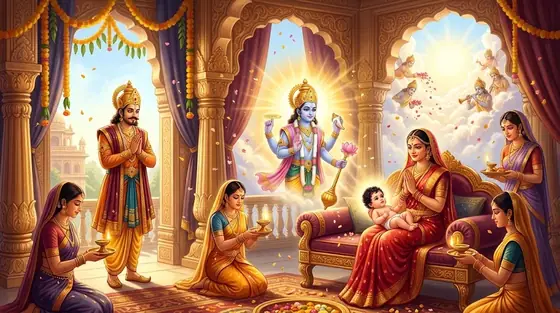
भए प्रगट कृपाला (श्रीराम-जन्म स्तुति)
Bhaye Pragat Kripala (Ram Janm Stuti)
रामचरितमानस के बालकाण्ड से श्रीराम के प्रकट होने की स्तुति, गोस्वामी तुलसीदास रचित, चारों छन्दों के अर्थ सहितTulsidas's hymn of Rama's appearance before Kausalya, from the Balkand of the Ramcharitmanas, with the meaning of all four chhands
 चालीसाChalisas
श्री हनुमान चालीसा
Hanuman Chalisa
गोस्वामी तुलसीदास रचित चालीस चौपाइयाँ, अर्थ सहितTulsidas's forty verses to Hanuman, with the meaning of every line