श्रीदक्षिणामूर्तिस्तोत्रम्
Shri Dakshinamurti Stotram
आदि शंकराचार्य की मानी जाने वाली अद्वैत-स्तुति 'विश्वं दर्पणदृश्यमाननगरीतुल्यं': गुरु-रूप शिव के दस श्लोक और दो ध्यान-श्लोक, हर श्लोक के अर्थ सहितThe Advaita hymn to Shiva as the teacher, traditionally attributed to Adi Shankaracharya: ten shlokas and two dhyana verses, with the meaning of every shloka
PDF डाउनलोडDownload PDF
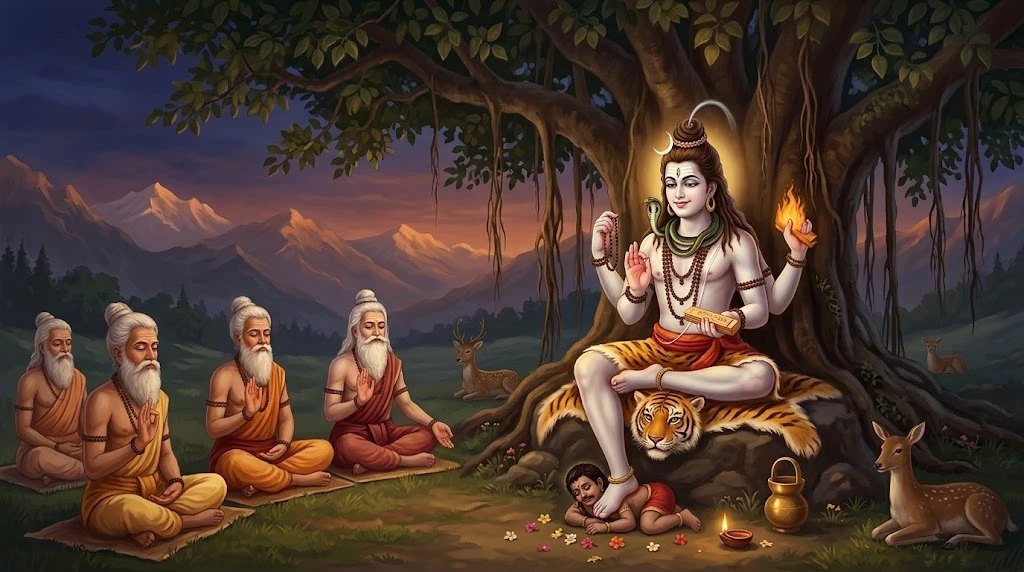
श्रीदक्षिणामूर्तिस्तोत्रम् शिव के दक्षिणामूर्ति रूप की संस्कृत स्तुति है: वह रूप जिसमें शिव गुरु बनकर, दक्षिण की ओर मुख किए, वट-वृक्ष के नीचे बैठे हैं और वृद्ध ऋषियों को मौन से ही ज्ञान देते हैं। परम्परा इसे आदि शंकराचार्य की रचना मानती है; गीता प्रेस के शिवस्तोत्ररत्नाकर में रचयिता का नाम नहीं छपा है। इसके दस श्लोक शार्दूलविक्रीडित छन्द में हैं, और पहले नौ श्लोक एक ही पंक्ति पर समाप्त होते हैं: उन गुरु-रूप श्रीदक्षिणामूर्ति को यह नमस्कार है। हर श्लोक अद्वैत वेदान्त की एक बात समझाता है: संसार दर्पण में दिखते नगर जैसा है, आत्मा ही सबको प्रकाशित करती है, और माया के कारण ही एक सत्य अनेक दिखता है।
विद्यार्थी, साधक और वेदान्त पढ़ने वाले इसे गुरुवार को, गुरु पूर्णिमा पर और अध्ययन आरम्भ करने से पहले पढ़ते हैं, और शिव-पूजा में भी इसका पाठ होता है। इस पृष्ठ पर पूरा पाठ गीता प्रेस, गोरखपुर के शिवस्तोत्ररत्नाकर के अनुसार है, जिसमें दस श्लोकों के बाद दो ध्यान-श्लोक भी छपे हैं; हर श्लोक के नीचे उसका सीधा अर्थ है जो कठिन दार्शनिक शब्दों को सरल भाषा में खोलता है, और साइन-इन के बाद पूरा पाठ मुफ्त PDF में उतारा जा सकता है।
Shri Dakshinamurti Stotram is a Sanskrit hymn to Dakshinamurti, the form in which Shiva is the teacher: seated beneath a banyan tree, facing south, he gives knowledge to aged sages through silence alone. Tradition holds it to be the work of Adi Shankaracharya; the Gita Press Shiv Stotra Ratnakar prints no author's name. Its ten shlokas are in the shardulavikridita metre, and the first nine all end on the same line: to that Shri Dakshinamurti, the guru in visible form, this salutation. Each shloka explains one point of Advaita Vedanta: the world is like a city seen in a mirror, the Self is what lights up everything, and it is maya that makes the one truth look like many.
Students, seekers and readers of Vedanta recite it on Thursdays, on Guru Purnima and before beginning their studies, and it is also read in Shiva puja. This page gives the full text as printed in the Gita Press, Gorakhpur Shiv Stotra Ratnakar, which adds two dhyana verses after the ten shlokas; a plain meaning under every shloka that opens up the harder philosophical words; and, after sign-in, a free PDF of the whole text.
पाठThe text
श्लोकShloka 1
विश्वं दर्पणदृश्यमाननगरीतुल्यं निजान्तर्गतं पश्यन्नात्मनि मायया बहिरिवोद्भूतं यथा निद्रया। यः साक्षात्कुरुते प्रबोधसमये स्वात्मानमेवाद्वयं तस्मै श्रीगुरुमूर्तये नम इदं श्रीदक्षिणामूर्तये॥
यह विश्व दर्पण में दिखते नगर के समान अपने ही भीतर है; फिर भी जो (आत्म-स्वरूप परमेश्वर) माया के कारण इसे अपने में ही बाहर उपजा हुआ-सा देखते हैं, जैसे नींद में स्वप्न का संसार बाहर-सा दिखता है, और जागने (प्रबोध, ज्ञान के उदय) के क्षण में अपनी ही अद्वितीय (अद्वय) आत्मा का साक्षात् अनुभव करते हैं, उन गुरु-रूप श्रीदक्षिणामूर्ति को यह नमस्कार है।This universe lies within him like a city seen in a mirror. To him (the Lord who is the Self) who, through maya, sees it in himself as though it had arisen outside, as a dream-world seems to in sleep, and who at the moment of awakening (prabodha, the dawn of knowledge) directly realises his own Self, one without a second (advaya): to that Shri Dakshinamurti, the guru in visible form, this salutation.
श्लोकShloka 2
बीजस्यान्तरिवाङ्कुरो जगदिदं प्राङ्निर्विकल्पं शनै- र्मायाकल्पितदेशकालकलनावैचित्र्यचित्रीकृतम्। मायावीव विजृम्भयत्यपि महायोगीव यः स्वेच्छया तस्मै श्रीगुरुमूर्तये नम इदं श्रीदक्षिणामूर्तये॥
जैसे बीज के भीतर अंकुर छिपा रहता है, वैसे ही यह जगत् पहले (सृष्टि से पूर्व) निर्विकल्प, अर्थात् भेद-रहित था; फिर धीरे-धीरे (शनैः) माया द्वारा कल्पित देश, काल और उनकी गणना (कलना) की विविधता से यह रंग-बिरंगे चित्र-सा बना दिया गया। जो जादूगर (मायावी) की तरह, या महायोगी की तरह, अपनी इच्छा से ही इसे फैलाकर प्रकट करते हैं (विजृम्भयति), उन गुरु-रूप श्रीदक्षिणामूर्ति को यह नमस्कार है।Like the sprout hidden inside a seed, this world was at first (before creation) undifferentiated (nirvikalpa); then, gradually (shanaih), it was painted into a many-coloured picture by the variety of space, time and their reckoning (kalana), all conjured by maya. To him who, like a magician (mayavi) or like a great yogi, unfolds it (vijrimbhayati) by his own will alone: to that Shri Dakshinamurti, the guru in visible form, this salutation.
श्लोकShloka 3
यस्यैव स्फुरणं सदात्मकमसत्कल्पार्थकं भासते साक्षात् तत्त्वमसीति वेदवचसा यो बोधयत्याश्रितान्। यत्साक्षात्करणाद्भवेन्न पुनरावृत्तिर्भवाम्भोनिधौ तस्मै श्रीगुरुमूर्तये नम इदं श्रीदक्षिणामूर्तये॥
जिनका प्रकाश (स्फुरण) ही, जो स्वयं सत्-स्वरूप है, लगभग असत् (असत्कल्प) विषयों के इस संसार के रूप में दिखाई देता है; जो अपनी शरण में आए शिष्यों (आश्रित) को वेद के वचन 'तत्त्वमसि' (वह तुम हो) से सीधे बोध कराते हैं; और जिनका साक्षात्कार हो जाने पर संसार-सागर (भवाम्भोनिधि) में फिर लौटना (पुनरावृत्ति) नहीं होता, उन गुरु-रूप श्रीदक्षिणामूर्ति को यह नमस्कार है।His shining (sphurana) alone, which is Being itself (sadatmaka), appears as this world of objects that are next to unreal (asat-kalpa). He awakens those who take refuge in him (ashrita) directly through the Vedic words 'Tat tvam asi' (That thou art), and once he is realised there is no return (punaravritti) to the ocean of worldly existence (bhavambhonidhi): to that Shri Dakshinamurti, the guru in visible form, this salutation.
श्लोकShloka 4
नानाछिद्रघटोदरस्थितमहादीपप्रभाभास्वरं ज्ञानं यस्य तु चक्षुरादिकरणद्वारा बहिः स्पन्दते। जानामीति तमेव भान्तमनुभात्येतत् समस्तं जगत् तस्मै श्रीगुरुमूर्तये नम इदं श्रीदक्षिणामूर्तये॥
जैसे अनेक छेदों वाले घड़े के भीतर रखे बड़े दीपक की प्रभा छेदों से बाहर फैलती है, वैसे ही जिनका ज्ञान (चेतना) आँख आदि इन्द्रियों (करण) के द्वार से बाहर फैलता है। 'मैं जानता हूँ' इस रूप में वे ही चमकते हैं, और उनके चमकने के पीछे ही यह सारा जगत् चमकता है (यही बात कठ, मुण्डक और श्वेताश्वतर उपनिषद् में भी आती है); उन गुरु-रूप श्रीदक्षिणामूर्ति को यह नमस्कार है।As the light of a great lamp set inside a pot pierced with many holes streams out through the holes, so his knowing (consciousness) flows outward through the eyes and the other senses (karana). He alone shines as 'I know', and only as he shines does this whole world shine after him (words found in the Katha, Mundaka and Shvetashvatara Upanishads too): to that Shri Dakshinamurti, the guru in visible form, this salutation.
श्लोकShloka 5
देहं प्राणमपीन्द्रियाण्यपि चलां बुद्धिं च शून्यं विदुः स्त्रीबालान्धजडोपमास्त्वहमिति भ्रान्ता भृशं वादिनः। मायाशक्तिविलासकल्पितमहाव्यामोहसंहारिणे तस्मै श्रीगुरुमूर्तये नम इदं श्रीदक्षिणामूर्तये॥
कुछ वादी (अपने-अपने मत के लिए तर्क करने वाले) देह को, प्राण को, इन्द्रियों को, चंचल (क्षण-क्षण बदलने वाली) बुद्धि को या शून्य को ही 'मैं' (आत्मा) मानते हैं। यह श्लोक उन्हें स्त्री, बालक, अन्धे और जड़ (मन्दबुद्धि) के समान कहता है और बताता है कि वे बहुत भ्रम में हैं, क्योंकि जो आत्मा नहीं है उसे वे आत्मा मान बैठे हैं। माया-शक्ति के खेल (विलास) से रचे इस बड़े मोह (महाव्यामोह) को नष्ट करने वाले उन गुरु-रूप श्रीदक्षिणामूर्ति को यह नमस्कार है।Some debaters (vadins) hold that the body, the breath (prana), the senses, the restless (ever-changing) intellect or the void (shunya) is the 'I' (the Self). The verse likens them to women, children, the blind and the dull (jada), and says they are badly deluded, for they take what is not the Self to be the Self. To him who destroys this great bewilderment (mahavyamoha) spun by the play of maya's power: to that Shri Dakshinamurti, the guru in visible form, this salutation.
श्लोकShloka 6
राहुग्रस्तदिवाकरेन्दुसदृशो मायासमाच्छादनात् सन्मात्रः करणोपसंहरणतो योऽभूत् सुषुप्तः पुमान्। प्रागस्वाप्समिति प्रबोधसमये यः प्रत्यभिज्ञायते तस्मै श्रीगुरुमूर्तये नम इदं श्रीदक्षिणामूर्तये॥
जैसे ग्रहण में राहु से ग्रसे सूर्य और चन्द्रमा छिप भर जाते हैं, मिटते नहीं, वैसे ही माया से ढका पुरुष गहरी नींद (सुषुप्ति) में इन्द्रियों के समेट लिए जाने से केवल सत्-मात्र (शुद्ध अस्तित्व) रह जाता है; और जागने पर वही 'अब तक मैं सोया था' इस अनुभव में अपने को पहचानता है (प्रत्यभिज्ञा)। हर अवस्था में बने रहने वाले उस आत्मा-रूप, गुरु-रूप श्रीदक्षिणामूर्ति को यह नमस्कार है।Like the sun or the moon seized by Rahu in an eclipse, hidden but not destroyed, the person (puman) covered by maya becomes pure Being alone (sanmatra) in deep sleep, when the senses are drawn in; and on waking he recognises himself (pratyabhijna) in the thought 'I was asleep until now'. To him, the Self that stays through every state: to that Shri Dakshinamurti, the guru in visible form, this salutation.
श्लोकShloka 7
बाल्यादिष्वपि जाग्रदादिषु तथा सर्वास्ववस्थास्वपि व्यावृत्तास्वनुवर्तमानमहमित्यन्तः स्फुरन्तं सदा। स्वात्मानं प्रकटीकरोति भजतां यो मुद्रया भद्रया तस्मै श्रीगुरुमूर्तये नम इदं श्रीदक्षिणामूर्तये॥
बचपन आदि आयु की अवस्थाएँ और जाग्रत, स्वप्न आदि चेतना की अवस्थाएँ, सब एक-दूसरे को हटाकर आती-जाती (व्यावृत्त) हैं, पर उन सबमें जो बिना बदले साथ चलता रहता है और भीतर सदा 'मैं' के रूप में चमकता है, वह अपनी ही आत्मा है। उसी आत्मा को जो भजने वालों के सामने शुभ मुद्रा (भद्रा मुद्रा, जिसे परम्परा चिन्मुद्रा मानती है: अँगूठे और तर्जनी के सिरे मिले हुए, बाकी तीन उँगलियाँ सीधी) से प्रकट कर देते हैं, उन गुरु-रूप श्रीदक्षिणामूर्ति को यह नमस्कार है।Childhood and the other ages of life, waking and the other states of mind, all come and go, each giving way to the next (vyavritta); through them all one thing runs on unchanged, ever shining within as 'I': one's own Self. To him who reveals that Self to his worshippers with the auspicious gesture (bhadra mudra, which tradition takes to be the chin-mudra: the tips of thumb and forefinger joined, the other three fingers straight): to that Shri Dakshinamurti, the guru in visible form, this salutation.
श्लोकShloka 8
विश्वं पश्यति कार्यकारणतया स्वस्वामिसम्बन्धतः शिष्याचार्यतया तथैव पितृपुत्राद्यात्मना भेदतः। स्वप्ने जाग्रति वा य एष पुरुषो मायापरिभ्रामित- स्तस्मै श्रीगुरुमूर्तये नम इदं श्रीदक्षिणामूर्तये॥
स्वप्न हो या जागरण, माया से भरमाया हुआ (मायापरिभ्रामित) यह पुरुष (आत्मा) विश्व को भेदों में बँटा हुआ देखता है: कार्य और कारण के रूप में, स्वामी और उसकी वस्तु (स्व-स्वामी) के सम्बन्ध में, शिष्य और आचार्य के रूप में, और पिता-पुत्र आदि के रूप में। जो स्वयं यही पुरुष हैं (और वास्तव में भेद से परे एक ही आत्मा हैं), उन गुरु-रूप श्रीदक्षिणामूर्ति को यह नमस्कार है।In dream or in waking, this Person (purusha, the Self), whirled about by maya (maya-paribhramita), sees the world split by difference: as cause and effect, as owner and owned, as disciple and teacher, as father and son, and so on. To him who is this Person (in truth the one Self, beyond all difference): to that Shri Dakshinamurti, the guru in visible form, this salutation.
श्लोकShloka 9
भूरम्भांस्यनलोऽनिलोऽम्बरमहर्नाथो हिमांशुः पुमा- नित्याभाति चराचरात्मकमिदं यस्यैव मूर्त्यष्टकम्। नान्यत्किञ्चन विद्यते विमृशतां यस्मात् परस्माद्विभो- स्तस्मै श्रीगुरुमूर्तये नम इदं श्रीदक्षिणामूर्तये॥
पृथ्वी (भू), जल (अम्भस्), अग्नि (अनल), वायु (अनिल), आकाश (अम्बर), दिन के स्वामी सूर्य (अहर्नाथ), शीतल किरणों वाला चन्द्रमा (हिमांशु) और पुरुष (पुमान्, यज्ञ करने वाला जीव): ये जिनकी आठ मूर्तियाँ (मूर्त्यष्टक) हैं, वे ही चर-अचर रूप में यह सारा जगत् बनकर दिखती हैं। विचार करने वालों (विमृशताम्) के लिए उन परम, सर्वव्यापक (विभु) प्रभु से भिन्न कुछ भी नहीं है; उन गुरु-रूप श्रीदक्षिणामूर्ति को यह नमस्कार है।Earth (bhu), water (ambhas), fire (anala), air (anila), space (ambara), the lord of the day (aharnatha, the sun), the cool-rayed moon (himamshu) and the person (puman, the one who offers sacrifice): these are his eight forms (murtyashtaka), and it is they alone that appear as this world of moving and unmoving things. For those who reflect (vimrishatam), nothing exists apart from him, the supreme, all-pervading Lord (vibhu): to that Shri Dakshinamurti, the guru in visible form, this salutation.
फलश्रुतिPhalashruti 10
सर्वात्मत्वमिति स्फुटीकृतमिदं यस्मादमुष्मिन् स्तवे तेनास्य श्रवणात् तदर्थमननाद्ध्यानाच्च संकीर्तनात्। सर्वात्मत्वमहाविभूतिसहितं स्यादीश्वरत्वं स्वतः सिध्येत् तत्पुनरष्टधा परिणतं चैश्वर्यमव्याहतम्॥
इस स्तोत्र में यह स्पष्ट किया गया है कि सब कुछ आत्मा ही है (सर्वात्मत्व)। इसलिए यह श्लोक कहता है कि इसके श्रवण से, इसके अर्थ के मनन से, ध्यान से और कीर्तन से, सबका आत्मा होने की महान विभूति के साथ ईश्वर-भाव (ईश्वरत्व) अपने-आप प्राप्त होता है, और साथ ही आठ रूपों में फैला अबाधित (अव्याहत) ऐश्वर्य भी सिद्ध होता है, जिसे परम्परा अणिमा आदि आठ सिद्धियाँ मानती है।This hymn makes plain that everything is the Self (sarvatmatva). Therefore, the verse says, from hearing it, reflecting on its meaning, meditating on it and reciting it, lordship (ishvaratva) comes of its own accord, together with the great glory of being the Self of all; and with it comes unhindered sovereignty (avyahata aishvarya) unfolding in eight ways, which tradition takes as the eight siddhis such as anima.
ध्यानDhyana 11
वटविटपिसमीपे भूमिभागे निषण्णं सकलमुनिजनानां ज्ञानदातारमारात्। त्रिभुवनगुरुमीशं दक्षिणामूर्तिदेवं जननमरणदुःखच्छेददक्षं नमामि॥
वट-वृक्ष के पास भूमि पर विराजमान, पास बैठे (आरात्) सब मुनियों को ज्ञान देने वाले, तीनों लोकों के गुरु, ईश्वर, और जन्म-मृत्यु के दुःख को काटने में कुशल (दक्ष) भगवान् दक्षिणामूर्ति को मैं नमस्कार करता हूँ।Seated on the ground beside the banyan tree, giving knowledge to the whole company of sages gathered close (arat), the guru of the three worlds, the Lord, skilled (daksha) in cutting away the sorrow of birth and death: to the god Dakshinamurti I bow.
ध्यानDhyana 12
चित्रं वटतरोर्मूले वृद्धाः शिष्या गुरुर्युवा। गुरोस्तु मौनं व्याख्यानं शिष्यास्तु छिन्नसंशयाः॥
कैसा आश्चर्य (चित्र) है: वट-वृक्ष के मूल में शिष्य वृद्ध हैं और गुरु युवा! गुरु का व्याख्यान मौन है, फिर भी शिष्यों के संशय कट गए हैं।What a wonder (chitra): at the foot of the banyan tree the disciples are old and the guru is young! The guru's teaching is silence, and yet the disciples' doubts are cut away.
यह स्तोत्र कहाँ से हैWhere the hymn comes from
दक्षिणामूर्ति शिव का वह रूप है जिसमें वे संसार के आदि गुरु हैं। परम्परा के चित्रों में वे एक वट-वृक्ष के नीचे, दक्षिण की ओर मुख करके, युवा रूप में बैठे हैं, और सनक, सनन्दन, सनातन और सनत्कुमार जैसे वृद्ध ऋषि उनके सामने बैठे हैं। वे कुछ बोलते नहीं; दाहिने हाथ की चिन्मुद्रा और मौन से ही शिष्यों के संशय मिट जाते हैं। स्तोत्र के अन्त के दोनों ध्यान-श्लोक यही चित्र खींचते हैं।
यह स्तोत्र परम्परा से आदि शंकराचार्य की रचना माना जाता है; गीता प्रेस की प्रति में रचयिता का नाम नहीं छपा है, पर अनेक संस्करणों की पुष्पिका इसे शंकराचार्य की कृति बताती है, और परम्परा यह भी मानती है कि उनके शिष्य सुरेश्वराचार्य ने 'मानसोल्लास' नाम से इस पर पद्य में व्याख्या लिखी। इसके दस श्लोक शार्दूलविक्रीडित छन्द में हैं। कुछ संस्करण ध्यान-श्लोकों को स्तोत्र से पहले रखते हैं और उनकी संख्या भी अधिक देते हैं, जबकि गीता प्रेस ने दो ध्यान-श्लोक दस श्लोकों के बाद ग्यारहवें और बारहवें श्लोक के रूप में छापे हैं।
Dakshinamurti is the form of Shiva as the first teacher of the world. In the traditional picture he sits beneath a banyan tree, facing south, in the form of a youth, while aged sages such as Sanaka, Sanandana, Sanatana and Sanatkumara sit before him. He says nothing; the chin-mudra of his right hand and his silence alone dispel the doubts of his disciples. The two dhyana verses at the end of the hymn paint exactly this picture.
Tradition holds the hymn to be the work of Adi Shankaracharya; the Gita Press copy prints no author's name, but the colophon in many editions names Shankaracharya, and tradition also holds that his disciple Sureshvaracharya wrote a verse commentary on it called the Manasollasa. Its ten shlokas are in the shardulavikridita metre. Some editions place the dhyana verses before the hymn and give more of them, while Gita Press prints two dhyana verses after the ten shlokas, as shlokas eleven and twelve.
स्तोत्र क्या सिखाता हैWhat the hymn teaches
यह स्तोत्र छोटे-से रूप में पूरा अद्वैत वेदान्त कहता है। पहला श्लोक इसका सार है: जैसे दर्पण में दिखता नगर दर्पण में ही होता है, बाहर नहीं, और जैसे स्वप्न का संसार सोने वाले के भीतर ही होता है, वैसे ही यह जगत् आत्मा के भीतर है, पर माया के कारण बाहर दिखता है। दूसरा श्लोक बताता है कि सृष्टि से पहले जगत् बीज में छिपे अंकुर जैसा भेद-रहित था, और माया ने देश और काल के भेदों से उसे अनेक रंगों का चित्र बना दिया।
बीच के श्लोक आत्मा को पहचानने के उदाहरण देते हैं: छेदों वाले घड़े में रखा दीपक, जिसकी रोशनी इन्द्रियों के छेदों से बाहर आती है; राहु से ग्रसा सूर्य, जो छिपता है पर मिटता नहीं, जैसे गहरी नींद में भी आत्मा बनी रहती है; और बचपन से बुढ़ापे तक, जागने, सपने और गहरी नींद में भी लगातार बना रहने वाला 'मैं'। पाँचवाँ श्लोक उन मतों को नकारता है जो देह, प्राण, इन्द्रियों, बुद्धि या शून्य को ही आत्मा मानते हैं।
नौवाँ श्लोक शिव की आठ मूर्तियों (पृथ्वी, जल, अग्नि, वायु, आकाश, सूर्य, चन्द्र और यजमान) को गिनाकर बताता है कि सारा चर-अचर जगत् उन्हीं का रूप है, और दसवाँ श्लोक कहता है कि इस स्तोत्र का श्रवण, मनन, ध्यान और कीर्तन ही इसका फल देता है। पहले नौ श्लोकों की अन्तिम पंक्ति गुरु और ईश्वर को एक मानकर नमस्कार करती है: जो आत्मा है, वही गुरु है, और वही दक्षिणामूर्ति है।
In a short space the hymn states the whole of Advaita Vedanta. The first shloka is its essence: just as a city seen in a mirror is in the mirror and not outside it, and just as a dream-world is within the dreamer, so this world is within the Self, though through maya it appears outside. The second shloka says that before creation the world lay undivided, like a sprout hidden in a seed, and that maya painted it into a picture of many colours through the divisions of space and time.
The middle shlokas give images for recognising the Self: a lamp inside a pot full of holes, whose light comes out through the holes of the senses; the sun seized by Rahu, hidden but not destroyed, as the Self remains even in deep sleep; and the 'I' that continues unbroken from childhood to old age, through waking, dream and deep sleep. The fifth shloka rejects the views that take the body, the breath, the senses, the intellect or the void to be the Self.
The ninth shloka lists the eight forms of Shiva (earth, water, fire, air, space, sun, moon and the sacrificer) and says that the whole world of moving and unmoving things is his form, and the tenth says that hearing, reflecting on, meditating on and reciting this hymn is itself what bears its fruit. The last line of each of the first nine shlokas bows to the guru and to God as one: the Self is the guru, and the guru is Dakshinamurti.
पाठ विधिHow to read it
स्नान करके स्वच्छ वस्त्र पहनें, शिव या दक्षिणामूर्ति के चित्र या शिवलिंग के सामने दीपक जलाएँ, और हो सके तो फूल या बेलपत्र अर्पित करें। कई लोग पहले ध्यान-श्लोक पढ़कर फिर दस श्लोकों का पाठ करते हैं; गीता प्रेस की प्रति में ध्यान-श्लोक अन्त में हैं, इसलिए उन्हें अपनी परम्परा के अनुसार आरम्भ में या अन्त में पढ़ा जा सकता है।
यह दार्शनिक स्तोत्र है, और दसवाँ श्लोक स्वयं इसका तरीका बताता है: सुनना (श्रवण), अर्थ पर विचार करना (मनन), ध्यान करना और फिर पाठ करना (कीर्तन)। इसलिए पहले हर श्लोक का अर्थ पढ़ें, फिर शान्त मन से, धीरे-धीरे और स्पष्ट उच्चारण के साथ पाठ करें। गुरुवार को, गुरु पूर्णिमा पर और पढ़ाई या किसी नए विषय का अध्ययन शुरू करने से पहले इसका पाठ विशेष रूप से किया जाता है।
Bathe, put on clean clothes, light a lamp before a picture of Shiva or Dakshinamurti or before a Shivalinga, and if you can, offer flowers or bel leaves. Many people first read the dhyana verses and then recite the ten shlokas; in the Gita Press copy the dhyana verses come at the end, so they can be read at the start or at the end, as one's own tradition has it.
This is a philosophical hymn, and the tenth shloka itself gives the method: hearing (shravana), reflecting on the meaning (manana), meditating, and then reciting (kirtana). So read the meaning of each shloka first, then recite it with a quiet mind, slowly and with clear pronunciation. It is read especially on Thursdays, on Guru Purnima, and before beginning one's studies or a new subject.
कब पढ़ेंWhen to read
गुरुवार को; गुरु पूर्णिमा पर; पढ़ाई, किसी ग्रन्थ या नए विषय का अध्ययन आरम्भ करने से पहले; वेदान्त-अध्ययन या सत्संग के आरम्भ में; और सोमवार या महाशिवरात्रि की शिव-पूजा में। प्रातःकाल का समय सबसे उपयुक्त माना जाता है।On Thursdays; on Guru Purnima; before beginning one's studies, a scripture or a new subject; at the start of Vedanta study or satsang; and in Shiva puja on a Monday or on Mahashivratri. The early morning is held to be the best time.
कुंडली मेंIn your kundli
ज्योतिष में बृहस्पति (गुरु) ज्ञान, शिक्षा, गुरु और धर्म का कारक है, और बुध बुद्धि, वाणी और अध्ययन का। शिव का गुरु-रूप होने के कारण दक्षिणामूर्ति की उपासना, विशेषकर दक्षिण भारत में, गुरुवार को गुरु ग्रह के उपाय के रूप में की जाती है। कुंडली में बृहस्पति के नीच (मकर) होने, राहु या शनि से पीड़ित होने, बृहस्पति की महादशा-अन्तर्दशा में, या गोचर में बृहस्पति के चन्द्रमा से आठवें या बारहवें भाव में होने पर, और पढ़ाई, एकाग्रता या वाणी की बाधाओं के समय बुध के कमज़ोर या नीच (मीन) होने पर इस स्तोत्र का पाठ पारम्परिक उपाय के रूप में दिया जाता है। आपकी कुंडली में बृहस्पति और बुध कहाँ हैं और कौन-सी दशा चल रही है, यह इसी साइट पर अपनी कुंडली बनाकर देखा जा सकता है।In Jyotish, Jupiter (Guru) signifies knowledge, learning, the teacher and dharma, and Mercury signifies intellect, speech and study. Because Dakshinamurti is Shiva as the guru, his worship is offered on Thursdays as a remedy for Jupiter, especially in South India. This hymn is given as a traditional remedy when Jupiter is debilitated (in Capricorn) or afflicted by Rahu or Saturn in the kundli, during a Jupiter mahadasha or antardasha, when transiting Jupiter passes the eighth or twelfth house from the Moon, and, for obstacles in study, concentration or speech, when Mercury is weak or debilitated (in Pisces). Where Jupiter and Mercury stand in your kundli and which dasha is running can be seen by building your kundli on this site.
ग्रह: Grahas: बृहस्पतिJupiter, बुधMercury
अपनी कुंडली में देखेंCheck it in your kundliप्रश्नोत्तरQuestions people ask
- दक्षिणामूर्ति स्तोत्र कब पढ़ना चाहिए?When should the Dakshinamurti Stotram be read?
- किसी भी दिन प्रातः या संध्या की पूजा में पढ़ा जा सकता है। गुरुवार, गुरु पूर्णिमा, और पढ़ाई या किसी नए विषय का अध्ययन शुरू करने से पहले इसका पाठ विशेष माना जाता है, और शिव-पूजा में भी यह पढ़ा जाता है।It can be read in morning or evening worship on any day. It is held to be special on Thursdays, on Guru Purnima and before beginning one's studies or a new subject, and it is also read in Shiva puja.
- दक्षिणामूर्ति स्तोत्र कितनी बार पढ़ना चाहिए?How many times should the Dakshinamurti Stotram be read?
- एक बार पूरा पाठ, दोनों ध्यान-श्लोकों सहित, पर्याप्त है। कुछ लोग संकल्प लेकर गुरुवार को 3, 11 या 21 बार पढ़ते हैं; कोई संख्या अनिवार्य नहीं है। स्तोत्र स्वयं अर्थ के मनन पर ज़ोर देता है, इसलिए गिनती से अधिक समझ के साथ पढ़ना महत्व रखता है।One full reading, with both dhyana verses, is enough. Some take a vow to read it 3, 11 or 21 times on Thursdays; no count is required. The hymn itself stresses reflection on its meaning, so reading with understanding matters more than the number.
- दक्षिणामूर्ति स्तोत्र पढ़ने के क्या लाभ हैं?What are the benefits of reading the Dakshinamurti Stotram?
- फलश्रुति (दसवाँ श्लोक) कहती है कि इसके श्रवण, मनन, ध्यान और कीर्तन से सबका आत्मा होने का बोध और ईश्वर-भाव अपने-आप प्राप्त होता है। परम्परा में इसे गुरु-कृपा, विद्या, एकाग्रता और विवेक के लिए पढ़ा जाता है, और ज्योतिष में यह बृहस्पति और बुध के उपाय के रूप में बताया जाता है।Its phalashruti (the tenth shloka) says that hearing, reflecting on, meditating on and reciting it brings, of its own accord, the realisation of being the Self of all, and lordship with it. By tradition it is read for the guru's grace, for learning, concentration and discernment, and in Jyotish it is given as a remedy for Jupiter and Mercury.
- क्या इसके पाठ के कोई नियम हैं?Are there any rules for reading it?
- कोई कठोर नियम नहीं है; कोई भी इसे श्रद्धा से पढ़ सकता है। स्वच्छ होकर, शान्त मन से, स्पष्ट उच्चारण के साथ पढ़ें, और हो सके तो पहले अर्थ समझ लें। शार्दूलविक्रीडित के लम्बे चरणों में शब्द आपस में जुड़े हुए हैं, इसलिए उच्चारण किसी जानकार से सीख लेना अच्छा है।There are no strict rules; anyone may read it with faith. Read it after washing, with a quiet mind and clear pronunciation, and if you can, understand the meaning first. The long lines of the shardulavikridita metre run many words together, so it helps to learn the pronunciation from someone who knows it.
साथ में पढ़ेंRead alongside
 स्तोत्र और कवचStotras and Kavachas
शिवपञ्चाक्षरस्तोत्रम्
Shiv Panchakshar Stotram
'नागेन्द्रहाराय त्रिलोचनाय': 'नमः शिवाय' के पाँच अक्षरों पर पाँच श्लोक, फलश्रुति और हर श्लोक के अर्थ सहितNagendraharaya Trilochanaya: five verses on the five syllables of Namah Shivaya, with the closing verse of merit and the meaning of each
 स्तोत्र और कवचStotras and Kavachas
श्रीरुद्राष्टकम्
Shri Rudrashtakam
गोस्वामी तुलसीदास रचित शिव-स्तुति, रामचरितमानस के उत्तरकाण्ड से: आठ श्लोक और फलश्रुति, हर श्लोक के अर्थ सहितTulsidas's Sanskrit hymn to Shiva from the Uttarkand of the Ramcharitmanas: eight shlokas and the phalashruti, with the meaning of every shloka
 स्तोत्र और कवचStotras and Kavachas
लिङ्गाष्टकम्
Lingashtakam
शिवलिंग की आठ श्लोकों वाली स्तुति और फलश्रुति, गीता प्रेस के शिवस्तोत्ररत्नाकर के पाठ से, हर श्लोक के अर्थ सहितThe eight-shloka hymn to the Shivalinga with its phalashruti, from the Gita Press Shiv Stotra Ratnakar, with the meaning of every shloka
 स्तोत्र और कवचStotras and Kavachas
बिल्वाष्टकम्
Bilvashtakam
शिव को बेलपत्र अर्पित करने के आठ श्लोक और फलश्रुति, गीता प्रेस के शिवस्तोत्ररत्नाकर के पाठ से, हर श्लोक के अर्थ सहितEight shlokas for offering bel leaves to Shiva, with the phalashruti, from the Gita Press Shiv Stotra Ratnakar, with the meaning of every shloka
 स्तोत्र और कवचStotras and Kavachas
शिवताण्डवस्तोत्रम्
Shiv Tandav Stotram
रावण-रचित माने जाने वाला शिव के ताण्डव का स्तोत्र, फलश्रुति सहित, हर श्लोक के अर्थ के साथThe hymn to Shiva's tandava traditionally attributed to Ravana, with its closing phalashruti and the meaning of every shloka
 व्रत कथाVrat Kathas
बृहस्पतिवार व्रत कथा
Brihaspativar Vrat Katha
भगवान विष्णु और बृहस्पति देव का गुरुवार व्रत — दानी राजा और अभिमानी रानी की कथा, व्रत विधि और उद्यापनThe Thursday fast for Vishnu and Brihaspati: the generous king and his proud queen, how to keep the fast, and the udyapan