ॐ जय लक्ष्मीरमणा (श्री सत्यनारायण जी की आरती)
Om Jai Lakshmi Ramana (Satyanarayan Aarti)
भगवान् श्री सत्यनारायण जी की आरती, गीता प्रेस के पाठ से, हर पद के अर्थ सहितThe aarti of Lord Satyanarayan in the Gita Press reading, with the meaning of every stanza
PDF डाउनलोडDownload PDF
ॐ जय लक्ष्मीरमणा भगवान् सत्यनारायण की आरती है, जो सत्यनारायण व्रत-कथा के अन्त में गाई जाती है। सत्यनारायण भगवान् विष्णु का ही सत्य-स्वरूप है, और 'लक्ष्मीरमण' का अर्थ है लक्ष्मी के पति। इस आरती का रचयिता ज्ञात नहीं है; यह लोक-परम्परा से चली आई रचना है। इसके पदों में कथा के पात्र एक-एक करके आते हैं: निर्धन ब्राह्मण, भील लकड़हारा, राजा चन्द्रचूड़, श्रद्धा छोड़ने वाला वैश्य और ग्वाल-बालों के साथ भक्ति करने वाला राजा।
यहाँ दिया गया पाठ गीता प्रेस, गोरखपुर के श्रीआरती-संग्रह के अनुसार है। हर पद के नीचे उसका सीधा अर्थ है, ताकि कथा सुनने के बाद आरती गाते समय पदों का भाव भी समझ में आए। साइन-इन करके पूरा पाठ PDF में उतारकर आप उसे छाप सकते हैं या कथा में आए परिवार और अतिथियों को दे सकते हैं।
Om Jai Lakshmi Ramana is the aarti of Lord Satyanarayan, sung at the end of the Satyanarayan vrat katha. Satyanarayan is Vishnu in his form as Truth, and Lakshmi-ramana means the husband of Lakshmi. The author is not known; the aarti has come down through popular tradition. Its stanzas bring back the people of the katha one by one: the poor Brahmin, the Bhil woodcutter, King Chandrachud, the merchant who let go of his faith, and the king who worshipped with the cowherd boys.
The text below follows the Shri Aarti Sangrah of Gita Press, Gorakhpur. Under each stanza is a plain meaning, so that after hearing the katha the sense of each verse is clear while it is sung. After signing in you can download the same text as a PDF to print or to hand to the family and guests at the katha.
पाठThe text
टेकRefrain
जय लक्ष्मीरमणा, श्रीलक्ष्मीरमणा। सत्यनारायण स्वामी जन-पातक-हरणा॥ जय लक्ष्मीरमणा॥
हे लक्ष्मीरमण (लक्ष्मी के पति, विष्णु), हे श्रीलक्ष्मीरमण, आपकी जय हो। हे सत्यनारायण स्वामी, आप अपने भक्तजनों के पातक (पाप) हर लेते हैं।Victory to you, Lakshmi-ramana, husband of Lakshmi, Vishnu; victory to the beloved of Shri Lakshmi. O Lord Satyanarayan, you take away the sins of your people.
पदVerse 1
रत्नजटित सिंहासन अद्भुत छबि राजै। नारद करत निराजन घंटा ध्वनि बाजै॥ जय लक्ष्मीरमणा॥
रत्नों से जड़े सिंहासन पर आपकी अद्भुत छवि शोभा पाती है। नारद मुनि आपका नीराजन (दीप से आरती) करते हैं और घण्टे की ध्वनि गूँजती है।Your wondrous form shines on a throne set with jewels. The sage Narada waves the lamp before you in aarti, and the sound of the bell rings out.
पदVerse 2
प्रकट भये कलि कारण, द्विजको दरस दियो। बूढ़े ब्राह्मण बनकर कंचन-महल कियो॥ जय लक्ष्मीरमणा॥
कलियुग के जीवों के लिए आप प्रकट हुए और एक निर्धन द्विज (ब्राह्मण) को दर्शन दिए। स्वयं बूढ़े ब्राह्मण का रूप धरकर आपने उसका घर कंचन-महल (सोने का महल, अर्थात् भरपूर वैभव से भरा) बना दिया।For the sake of the Kali age you appeared and gave darshan to a poor dvija, a Brahmin. Taking the form of an old Brahmin yourself, you turned his home into a palace of gold, that is, gave him plenty in place of poverty.
पदVerse 3
दुर्बल भील कठारो, जिनपर कृपा करी। चन्द्रचूड़ एक राजा, जिनकी बिपति हरी॥ जय लक्ष्मीरमणा॥
आपने एक दुर्बल (निर्धन) भील कठारे (लकड़हारे) पर कृपा की। चन्द्रचूड़ नाम के एक राजा की विपत्ति भी आपने हर ली।You showed grace to a poor Bhil, a woodcutter. You also took away the misfortune of a king named Chandrachud.
पदVerse 4
वैश्य मनोरथ पायो, श्रद्धा तज दीन्हीं। सो फल भोग्यो प्रभुजी फिर अस्तुति कीन्हीं॥ जय लक्ष्मीरमणा॥
एक वैश्य (व्यापारी) ने अपना मनोरथ पा लिया, पर फिर श्रद्धा छोड़ दी। हे प्रभु, उसने उसका फल भोगा और फिर आपकी स्तुति की।A merchant had his wish fulfilled, and then gave up his faith. He suffered the fruit of that, O Lord, and then sang your praise once more.
पदVerse 5
भाव-भक्तिके कारण छिन-छिन रूप धर्यो। श्रद्धा धारण कीनी, तिनको काज सर्यो॥ जय लक्ष्मीरमणा॥
भक्तों के भाव और भक्ति के कारण आपने क्षण-क्षण में नए रूप धारण किए। जिन्होंने श्रद्धा धारण की, उनके सब काम सिद्ध हो गए।Moved by the love and devotion of your devotees, you took one form after another, moment by moment. Those who held on to faith saw their work accomplished.
पदVerse 6
ग्वाल-बाल सँग राजा वनमें भक्ति करी। मनवांछित फल दीन्हों दीनदयालु हरी॥ जय लक्ष्मीरमणा॥
एक राजा ने वन में ग्वाल-बालों के साथ आपकी भक्ति की (कथा में यह राजा तुंगध्वज है)। दीनदयालु (दीनों पर दया करने वाले) हरि ने उसे मनचाहा फल दिया।A king worshipped you in the forest together with the cowherd boys (in the katha this is King Tungadhwaja). Hari, who is kind to the lowly, gave him the fruit his heart desired.
पदVerse 7
चढ़त प्रसाद सवायो कदलीफल, मेवा। धूप-दीप-तुलसीसे राजी सत्यदेवा॥ जय लक्ष्मीरमणा॥
आपको सवाया (सवा गुनी मात्रा का) प्रसाद, केले और मेवे चढ़ाए जाते हैं। धूप, दीप और तुलसी से सत्यदेव (सत्य के स्वामी भगवान्) प्रसन्न होते हैं।Prasad in the measure of sawa, one and a quarter, is offered to you, with plantains and dried fruit. Satyadeva, the Lord of truth, is pleased with incense, a lamp and tulsi leaves.
पदVerse 8
(सत्य) नारायणजीकी आरति जो कोइ नर गावै। तन-मन-सुख-सम्पति मन-वांछित फल पावै॥ जय लक्ष्मीरमणा॥
जो कोई मनुष्य सत्यनारायण जी की यह आरती गाता है, वह तन और मन का सुख, सम्पत्ति और मनचाहा फल पाता है।Whoever sings this aarti of Satyanarayan gains ease of body and mind, wealth, and the fruit the heart desires.
आरती कैसे करेंHow the aarti is done
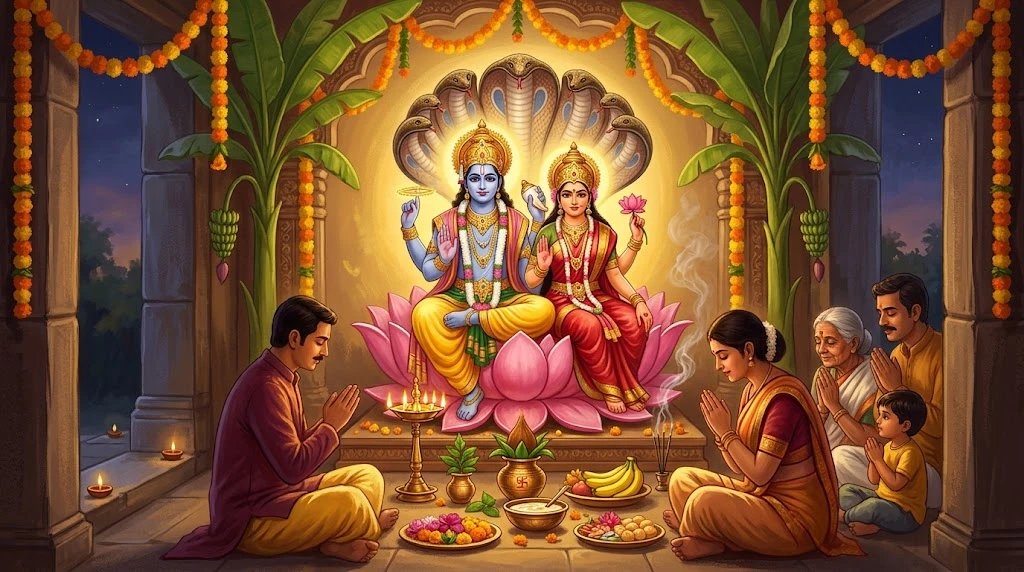
यह आरती सत्यनारायण पूजा का अन्तिम चरण है। पूजा में चौकी पर केले के पत्तों या खम्भों से मण्डप सजाकर भगवान् सत्यनारायण (शालिग्राम या चित्र) की स्थापना होती है, पहले गणेश जी और नवग्रहों का पूजन होता है, फिर पाँच अध्यायों की कथा पढ़ी या सुनी जाती है। कथा पूरी होने पर यह आरती गाई जाती है।
थाली में घी का दीपक या कपूर रखकर, घंटी बजाते हुए आरती गाएँ और थाली को घड़ी की दिशा में घुमाएँ। हर पद के बाद 'जय लक्ष्मीरमणा' की टेक सब मिलकर दोहराते हैं। भगवान् को तुलसी-दल अवश्य चढ़ाएँ; आरती का सातवाँ पद स्वयं कहता है कि सत्यदेव धूप, दीप और तुलसी से प्रसन्न होते हैं।
आरती के बाद ज्योति सब उपस्थित लोगों के सामने ले जाई जाती है और फिर प्रसाद बँटता है। सत्यनारायण का प्रसाद परम्परा से सवाये माप में बनता है: गेहूँ का भुना आटा या सूजी, घी, शक्कर, केला और पंचामृत। कथा में बार-बार कहा गया है कि प्रसाद का अनादर न हो, इसलिए हर अतिथि को प्रसाद लेकर ही जाना चाहिए।
This aarti is the last step of the Satyanarayan puja. A small pavilion of plantain leaves or stems is set up over a low stool, Lord Satyanarayan is installed as a shaligram or a picture, Ganesha and the nine grahas are worshipped first, and then the katha of five chapters is read or heard. When the katha is complete, this aarti is sung.
Place a ghee lamp or camphor on a plate, ring the bell, sing the aarti and move the plate clockwise. After each stanza everyone joins in the refrain, Jai Lakshmi Ramana. Be sure to offer tulsi leaves to the Lord; the seventh stanza itself says that Satyadeva is pleased with incense, a lamp and tulsi.
After the aarti the flame is carried to everyone present, and then the prasad is shared. By custom the Satyanarayan prasad is made in the sawa measure: roasted wheat flour or semolina, ghee, sugar, banana and panchamrit. The katha warns again and again against slighting the prasad, so every guest should take some before leaving.
आरती में कथाThe katha inside the aarti
यह आरती सत्यनारायण कथा का छोटा-सा सार है। पहले पद में भगवान् का रत्नजटित सिंहासन है और नारद मुनि उनकी आरती कर रहे हैं; कथा भी नारद जी के प्रश्न से ही आरम्भ होती है, जब वे कलियुग के दुखी जीवों को देखकर भगवान् से उपाय पूछते हैं।
इसके बाद के पद कथा के पात्रों को गिनाते हैं: निर्धन ब्राह्मण, जिसे भगवान् ने बूढ़े ब्राह्मण के रूप में दर्शन दिए; भील लकड़हारा; राजा चन्द्रचूड़; वह वैश्य जिसने मनोरथ पूरा होने पर श्रद्धा छोड़ दी और फिर कष्ट पाकर स्तुति की; और वह राजा जिसने वन में ग्वाल-बालों के साथ पूजा की। हर उदाहरण एक ही बात कहता है: श्रद्धा रखने वाले का काम सिद्ध होता है, और श्रद्धा छोड़ने वाले को उसका फल भोगना पड़ता है।
अन्तिम पद आरती का फल बताता है: जो इसे गाता है, वह तन-मन का सुख, सम्पत्ति और मनचाहा फल पाता है। इसीलिए गृह-प्रवेश, विवाह, नए काम के आरम्भ या किसी मनोरथ के पूरा होने पर सत्यनारायण की कथा और यह आरती करने की परम्परा है।
The aarti is a small summary of the Satyanarayan katha. Its first stanza shows the Lord on his jewelled throne with the sage Narada doing his aarti; the katha too begins with Narada, who sees the suffering of beings in the Kali age and asks the Lord for a remedy.
The stanzas that follow name the people of the katha: the poor Brahmin to whom the Lord appeared as an old Brahmin; the Bhil woodcutter; King Chandrachud; the merchant who gave up his faith once his wish was granted and praised the Lord again only after suffering; and the king who worshipped in the forest with the cowherd boys. Every example says the same thing: the one who keeps faith sees the work done, and the one who drops it bears the fruit of that.
The last stanza gives the fruit of the aarti: whoever sings it gains ease of body and mind, wealth and the fruit the heart desires. That is why the katha and this aarti are the custom at a housewarming, a wedding, the start of a new venture, or when a wish has come true.
कब पढ़ेंWhen to read
पूर्णिमा को सत्यनारायण व्रत-कथा के अन्त में, और गृह-प्रवेश, विवाह, नए काम के आरम्भ या किसी मनोरथ के पूरा होने पर होने वाली सत्यनारायण पूजा में। बृहस्पतिवार और एकादशी की विष्णु-पूजा में भी इसे गाया जाता है।At the end of the Satyanarayan vrat katha on Purnima, and at the Satyanarayan puja held for a housewarming, a wedding, the start of a new venture or when a wish has come true. It is also sung in the Vishnu puja of Thursdays and of Ekadashi.
कुंडली मेंIn your kundli
ज्योतिष में सत्यनारायण की उपासना का सम्बन्ध बृहस्पति और चन्द्रमा से है: गुरु श्रद्धा, धर्म, सन्तान और सौभाग्य का कारक है, और चन्द्रमा मन का, जिसका बल पूर्णिमा को सबसे अधिक होता है। कुंडली में गुरु के नीच, अस्त या पीड़ित होने पर, गुरु या चन्द्र की महादशा-अन्तर्दशा में, चन्द्रमा के राहु-केतु या शनि से पीड़ित होने पर, और नवम (भाग्य) या पंचम भाव के कमज़ोर होने पर पूर्णिमा की सत्यनारायण कथा और यह आरती बताई जाती है। अपनी कुंडली में गुरु और चन्द्रमा की स्थिति इसी साइट पर देखी जा सकती है।In Jyotish the worship of Satyanarayan is linked with Jupiter and the Moon: Jupiter signifies faith, dharma, children and good fortune, and the Moon the mind, whose strength is fullest on Purnima. When Jupiter is debilitated, combust or afflicted in the kundli, during a Jupiter or Moon mahadasha or antardasha, when the Moon is afflicted by Rahu, Ketu or Saturn, and when the ninth house of fortune or the fifth house is weak, the Satyanarayan katha on Purnima with this aarti is the usual advice. You can check where Jupiter and the Moon stand in your own kundli on this site.
ग्रह: Grahas: बृहस्पतिJupiter, चन्द्रMoon
अपनी कुंडली में देखेंCheck it in your kundliप्रश्नोत्तरQuestions people ask
- सत्यनारायण जी की आरती कब करनी चाहिए?When should the Satyanarayan aarti be done?
- सत्यनारायण व्रत-कथा के पाँचों अध्याय पूरे होने के बाद यह आरती की जाती है। पूर्णिमा इसका मुख्य दिन है; गृह-प्रवेश, विवाह, नए काम के आरम्भ या मनोरथ पूरा होने पर होने वाली कथा में भी अन्त में यही आरती गाई जाती है। कथा प्रायः संध्या के समय होती है।The aarti is done once all five chapters of the Satyanarayan vrat katha are complete. Purnima is its main day; at a katha held for a housewarming, a wedding, a new venture or a fulfilled wish, this same aarti closes the puja. The katha is usually held in the evening.
- क्या कथा के बिना भी यह आरती गा सकते हैं?Can the aarti be sung without the katha?
- हाँ। बृहस्पतिवार, एकादशी या नित्य विष्णु-पूजा में दीपक जलाकर यह आरती अकेले भी गाई जा सकती है। आरती एक बार पूरी गाना पर्याप्त है; हर पद के बाद टेक दोहराई जाती है।Yes. It can be sung on its own with a lamp at the Thursday, Ekadashi or daily worship of Vishnu. Singing the aarti through once is enough; the refrain is repeated after every stanza.
- ॐ जय लक्ष्मीरमणा आरती गाने से क्या लाभ होता है?What is the benefit of singing Om Jai Lakshmi Ramana?
- आरती का अन्तिम पद स्वयं कहता है कि जो इसे गाता है, वह तन-मन का सुख, सम्पत्ति और मनचाहा फल पाता है। इसके पद यह भी याद दिलाते हैं कि श्रद्धा रखने वाले का काम सिद्ध होता है, इसलिए इसे मनोरथ पूरा होने पर धन्यवाद के रूप में भी गाया जाता है।Its last stanza says that whoever sings it gains ease of body and mind, wealth and the fruit the heart desires. The stanzas also remind the singer that those who keep faith see their work done, which is why it is sung in thanks when a wish has come true.
- सत्यनारायण आरती और पूजा के नियम क्या हैं?What are the rules for the Satyanarayan aarti and puja?
- स्नान करके स्वच्छ वस्त्र पहनें, व्रत रखने वाले कथा के बाद प्रसाद लेकर व्रत खोलते हैं। भगवान् को तुलसी-दल, केला और सवाये माप का प्रसाद चढ़ाएँ, आरती खड़े होकर घंटी बजाते हुए गाएँ, फिर ज्योति सब पर फेरें। कथा का मुख्य नियम यह है कि प्रसाद का अनादर न हो और हर उपस्थित व्यक्ति उसे ग्रहण करे।Bathe and wear clean clothes; those keeping the fast break it with the prasad after the katha. Offer tulsi leaves, bananas and prasad in the sawa measure, sing the aarti standing with the bell ringing, and pass the flame to everyone. The chief rule of the katha is that the prasad must never be slighted and everyone present should take it.
साथ में पढ़ेंRead alongside
 व्रत कथाVrat Kathas
श्री सत्यनारायण व्रत कथा
Shri Satyanarayan Vrat Katha
स्कंद पुराण के रेवा खंड की पाँच अध्याय की कथा — नारद का प्रश्न, काशी का निर्धन ब्राह्मण और लकड़हारा, साधु वणिक और कलावती, राजा तुंगध्वज — अपने शब्दों में, पूजा विधि, सामग्री, प्रसाद और उद्यापन के साथThe five-chapter katha of the Reva Khanda of the Skanda Purana: Narada's question, the poor Brahmin of Kashi and the woodcutter, the merchant Sadhu and Kalavati, King Tungadhwaja, retold in our own words with the puja method, samagri, prasad and udyapan
 आरतीAartis
ॐ जय जगदीश हरे
Om Jai Jagdish Hare
श्री विष्णु जी की आरती, पं. श्रद्धाराम शर्मा रचित, अर्थ सहितThe Vishnu aarti written by Pandit Shardha Ram Sharma, with the meaning of every stanza
 चालीसाChalisas
श्री विष्णु चालीसा
Vishnu Chalisa
जगत के पालनहार भगवान विष्णु की चालीसा, हर दोहे और चौपाई के अर्थ सहितThe Chalisa of Vishnu, preserver of the world, with the meaning of every doha and chaupai
 व्रत कथाVrat Kathas
एकादशी व्रत कथा और नियम
Ekadashi Vrat Katha and Rules
एकादशी व्रत की उत्पत्ति — पद्म पुराण की मुर दैत्य और एकादशी देवी की कथा, व्रत के नियम, फलाहार, जागरण, द्वादशी का पारण, और वर्ष की चौबीस एकादशियों का फलWhere Ekadashi comes from: the Padma Purana katha of the demon Mura and the goddess Ekadashi, the rules of the fast, phalahar, the vigil, the Dwadashi paran, and the fruit of the twenty-four Ekadashis of the year