हनुमान जी की आरती
Hanuman Ji Ki Aarti
आरती कीजै हनुमान लला की, गीता प्रेस के पाठ से, हर पद के अर्थ सहितAarti Kije Hanuman Lala Ki, from the Gita Press text, with the meaning of every stanza
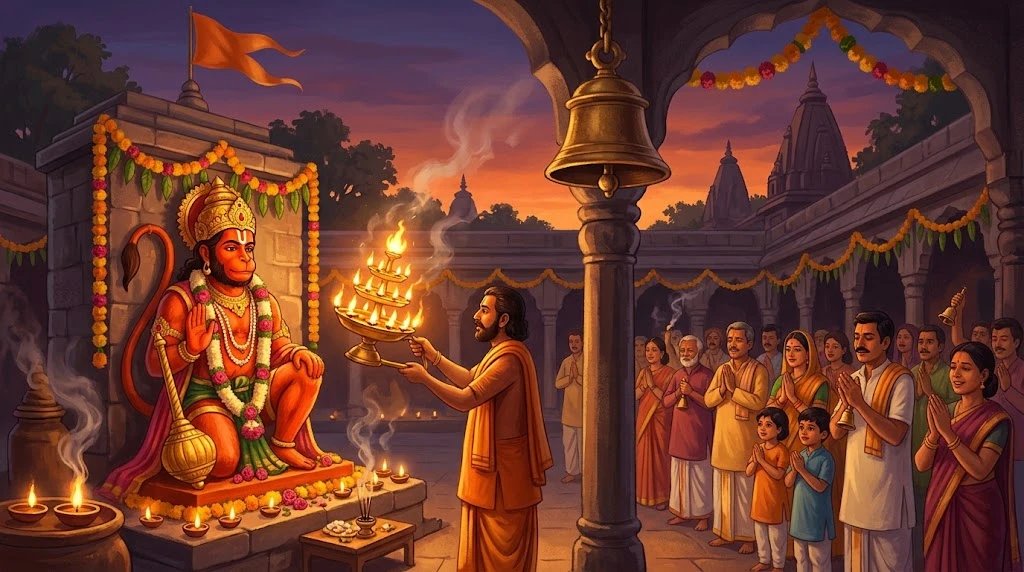
PDF डाउनलोडDownload PDF
'आरती कीजै हनुमान लला की' हनुमान जी की सबसे प्रचलित आरती है। यह हनुमान चालीसा के पाठ के अन्त में, मंगलवार और शनिवार की पूजा में, और हनुमान जयन्ती पर मन्दिरों और घरों में गाई जाती है। इसके ग्यारह पद हनुमान जी के चरित्र को क्रम से कहते हैं: सीता की खोज, लंका-दहन, संजीवनी लाकर लक्ष्मण के प्राण बचाना, पाताल में अहिरावण का वध, और अन्त में माता अंजना के हाथों आरती। रचयिता का नाम पाठ में नहीं है; परम्परा में इसे गोस्वामी तुलसीदास से जोड़ा जाता है, पर गीता प्रेस के दोनों संस्करण इसे बिना नाम के छापते हैं।
यहाँ दिया गया पाठ गीता प्रेस, गोरखपुर की 'श्री हनुमान चालीसा' पुस्तिका के अनुसार है और उसे गीता प्रेस के 'श्री आरती-संग्रह' से मिलाया गया है। हर पद के नीचे उसका सीधा अर्थ है, ताकि आरती गाते समय शब्दों का भाव भी साथ चले। साइन-इन करने के बाद यही पाठ PDF में उतारा जा सकता है, छापने या परिवार को भेजने के लिए।
Aarti Kije Hanuman Lala Ki is the best-known aarti of Hanuman. It is sung at the close of the Hanuman Chalisa, in Tuesday and Saturday worship, and on Hanuman Jayanti in temples and homes. Its eleven stanzas tell Hanuman's story in order: the search for Sita, the burning of Lanka, the sanjivani herb that saved Lakshmana, the slaying of Ahiravana in the netherworld, and at the end Mother Anjana herself performing the aarti. The text names no author; tradition links it with Goswami Tulsidas, but both Gita Press editions print it without a name.
The text here follows the Gita Press, Gorakhpur booklet Shri Hanuman Chalisa and has been checked against the Gita Press Shri Aarti Sangrah. Under each stanza is a plain meaning, so the sense of the words travels with the singing. After signing in you can download the same text as a PDF, for printing or for sending to family.
पाठThe text
टेकRefrain
आरती कीजै हनुमान लला की। दुष्टदलन रघुनाथ कला की॥
हनुमान लला (बालक हनुमान, प्रेम का सम्बोधन) की आरती कीजिए, जो दुष्टों का दलन करने वाले हैं और श्री रघुनाथ (राम) की कला, अर्थात् उनकी शक्ति के अंश हैं।Perform the aarti of Hanuman Lala (Hanuman addressed fondly as a child), the crusher of the wicked, who is a kala, a portion of the power, of Raghunath (Rama).
पदVerse 1
जाके बल से गिरिवर काँपै। रोग-दोष जाके निकट न झाँपै॥
जिनके बल से बड़े-बड़े पर्वत काँप उठते हैं, और रोग तथा दोष जिनके पास झाँक भी नहीं सकते।At whose strength the great mountains tremble, and near whom sickness and evil dare not even peep.
पदVerse 2
अंजनि पुत्र महा बलदाई। संतन के प्रभु सदा सहाई॥
अंजनी के पुत्र महान बल देने वाले हैं। वे प्रभु संतों के सदा सहायक हैं।Anjani's son is the giver of great strength. The Lord is ever the helper of the saints.
पदVerse 3
दे बीरा रघुनाथ पठाये। लंका जारि सीय सुधि लाये॥
श्री रघुनाथ ने बीड़ा देकर (सीता की खोज का भार सौंपकर) उन्हें भेजा। वे लंका जलाकर सीता की सुधि, अर्थात् उनका समाचार ले आये।Raghunath gave him the bira (the betel that seals a charge, entrusting him with the search for Sita) and sent him. He burnt Lanka and brought back news of Sita.
पदVerse 4
लंका सो कोट समुद्र सी खाई। जात पवनसुत बार न लाई॥
लंका जैसा किला और समुद्र जैसी खाई थी, फिर भी पवनपुत्र को वहाँ जाने में देर नहीं लगी।A fort like Lanka and a moat like the ocean, yet the son of the Wind took no time in going there.
पदVerse 5
लंका जारि असुर संहारे। सियारामजीके काज सँवारे॥
लंका जलाकर असुरों का संहार किया और श्री सीताराम जी के काम सँवार दिये।He burnt Lanka, destroyed the demons, and set right the work of Sita and Rama.
पदVerse 6
लक्ष्मण मूर्छित पड़े सकारे। आनि सजीवन प्रान उबारे॥
जब लक्ष्मण मूर्छित पड़े थे, तब सवेरा होने से पहले संजीवनी लाकर उनके प्राण बचाये।When Lakshmana lay unconscious, he brought the sanjivani herb before daybreak and saved his life.
पदVerse 7
पैठि पताल तोरि जम-कारे। अहिरावन की भुजा उखारे॥
पाताल में पैठकर यम के कारागार (मृत्यु के बन्धन) तोड़े और अहिरावण की भुजा उखाड़ दी।He entered the netherworld, broke open the prison of Yama (the bonds of death), and tore off the arm of Ahiravana.
पदVerse 8
बायें भुजा असुर दल मारे। दहिने भुजा संतजन तारे॥
बायीं भुजा से असुरों के दल मारे और दाहिनी भुजा से संतजनों को तारा।With his left arm he slew the demon hosts; with his right arm he carried the saints across.
पदVerse 9
सुर नर मुनि आरती उतारे। जै जै जै हनुमान उचारे॥
देवता, मनुष्य और मुनि आरती उतारते हैं और 'जय जय जय हनुमान' का उच्चारण करते हैं।Gods, men and sages wave the aarti lamp and cry 'Jai, jai, jai Hanuman'.
पदVerse 10
कंचन थार कपूर लौ छाई। आरति करत अंजना माई॥
सोने के थाल में कपूर की लौ जगमगा रही है, और माता अंजना आरती कर रही हैं।On a golden plate the camphor flame glows, and Mother Anjana performs the aarti.
पदVerse 11
जो हनुमान (जी) की आरति गावै। बसि बैकुंठ परमपद पावै॥
जो हनुमान जी की यह आरती गाता है, वह बैकुंठ में वास करके परम पद पाता है।Whoever sings this aarti of Hanuman comes to dwell in Vaikuntha and attains the highest state.
आरती कैसे करेंHow the aarti is done
हनुमान चालीसा या पूजा के अन्त में यह आरती की जाती है। थाली में घी का दीपक या कपूर जलाकर उसे हनुमान जी के विग्रह या चित्र के सामने घड़ी की दिशा में घुमाते हुए आरती गाई जाती है। टेक की पंक्ति 'आरती कीजै हनुमान लला की' हर पद के बाद दोहराई जाती है; छपे पाठ में वह एक बार ही दी गई है।
आरती में घण्टी या ताली का साथ रहता है। आरती पूरी होने पर ज्योति सब उपस्थित लोगों पर फेरी जाती है और हर कोई हाथ फेरकर उसे माथे से लगाता है। फिर बूँदी, लड्डू या गुड़-चने का प्रसाद बाँटा जाता है।
आरती खड़े होकर, हाथ जोड़कर या थाली थामकर की जाती है। मंगलवार और शनिवार को सिन्दूर और चमेली का तेल चढ़ाने के बाद यह आरती करने की परम्परा है।
This aarti closes the Hanuman Chalisa or the puja. A ghee lamp or a piece of camphor is lit on a plate and circled clockwise before the image or picture of Hanuman while the aarti is sung. The refrain, Aarti Kije Hanuman Lala Ki, is repeated after every stanza; the printed text gives it only once.
A bell or clapping keeps time. When the aarti is over, the flame is carried round to everyone present, and each person passes a hand over it and touches the forehead. Then prasad is shared: boondi, laddus or jaggery with roasted gram.
The aarti is done standing, with folded hands or holding the plate. On Tuesdays and Saturdays it is customary to offer sindoor and jasmine oil before the aarti.
महत्वMeaning
यह आरती एक छोटे चरित्र-गान की तरह है। पहले पद में हनुमान जी का बल और रोग-दोष को दूर रखने की शक्ति है; फिर सीता की खोज, लंका-दहन, संजीवनी से लक्ष्मण के प्राण, पाताल में अहिरावण का वध। अन्त के पद में देवता, मनुष्य, मुनि और स्वयं माता अंजना आरती करते दिखाये गये हैं, और गाने वाले को बैकुंठ का फल कहा गया है।
इसी कारण यह आरती केवल स्तुति नहीं, स्मरण भी है: जो भक्त रोज़ इसे गाता है, वह हनुमान जी के पूरे चरित्र को रोज़ दोहराता है। चालीसा पढ़ने के बाद यह आरती पाठ को पूरा करती है।
The aarti is a short telling of Hanuman's life. The first stanza names his strength and his power to keep sickness and evil away; then come the search for Sita, the burning of Lanka, Lakshmana's life saved by the sanjivani, and the slaying of Ahiravana in the netherworld. The closing stanzas show gods, men, sages and Mother Anjana herself performing the aarti, and promise Vaikuntha to the one who sings it.
So the aarti is remembrance as much as praise: the devotee who sings it every day repeats Hanuman's whole story every day. After the Chalisa it completes the recitation.
कब पढ़ेंWhen to read
हनुमान चालीसा के पाठ के अन्त में, प्रातः या सायं दीपक जलाकर। मंगलवार और शनिवार हनुमान जी के दिन हैं; हनुमान जयन्ती और बुढ़वा मंगल पर मन्दिरों में सामूहिक आरती होती है।At the end of the Hanuman Chalisa, morning or evening with a lamp lit. Tuesday and Saturday are Hanuman's days; on Hanuman Jayanti and Budhwa Mangal temples hold the aarti together.
कुंडली मेंIn your kundli
ज्योतिष में हनुमान जी की उपासना मंगल और शनि, दोनों की शान्ति का उपाय है। शनि की साढ़ेसाती या ढैया में, शनि की महादशा-अन्तर्दशा में, और कुंडली में मंगल के नीच, अस्त या पीड़ित होने पर मंगलवार और शनिवार को हनुमान चालीसा के साथ यह आरती बताई जाती है। अपनी कुंडली में शनि और मंगल की स्थिति इसी साइट पर देखी जा सकती है।In Jyotish the worship of Hanuman is the remedy for both Mars and Saturn. During Saturn's sade sati or dhaiya, in a Saturn mahadasha or antardasha, and when Mars is debilitated, combust or afflicted in the kundli, this aarti with the Hanuman Chalisa on Tuesdays and Saturdays is the usual advice. You can check where Saturn and Mars stand in your own kundli on this site.
ग्रह: Grahas: मंगलMars, शनिSaturn
अपनी कुंडली में देखेंCheck it in your kundliप्रश्नोत्तरQuestions people ask
- हनुमान जी की आरती कब करनी चाहिए?When should the Hanuman aarti be done?
- हनुमान चालीसा या पूजा के अन्त में, सुबह या शाम। मंगलवार और शनिवार को इसका विशेष महत्व है, और हनुमान जयन्ती पर मन्दिरों में सामूहिक आरती होती है।At the end of the Hanuman Chalisa or the puja, morning or evening. Tuesday and Saturday carry special weight, and on Hanuman Jayanti temples hold the aarti together.
- आरती में टेक की पंक्ति कितनी बार गाई जाती है?How often is the refrain sung?
- 'आरती कीजै हनुमान लला की' हर पद के बाद दोहराई जाती है। छपे पाठ में यह पंक्ति एक बार 'टेक' के रूप में दी गई है, इसलिए यहाँ भी एक ही बार लिखी है।Aarti Kije Hanuman Lala Ki is repeated after every stanza. The printed text gives it once, marked as the tek, so it is written once here too.
- हनुमान जी की आरती के क्या लाभ हैं?What are the benefits of the Hanuman aarti?
- आरती का पहला पद कहता है कि रोग-दोष हनुमान जी के भक्त के पास नहीं फटकते, और अन्तिम पद गाने वाले को बैकुंठ और परम पद का फल बताता है। ज्योतिष में इसे शनि और मंगल की पीड़ा का उपाय माना जाता है।The first stanza says sickness and evil cannot come near Hanuman's devotee, and the last promises Vaikuntha and the highest state to the one who sings it. In Jyotish it counts as a remedy for afflictions of Saturn and Mars.
- आरती किसने लिखी?Who wrote this aarti?
- पाठ में रचयिता का नाम नहीं है। परम्परा में इसे गोस्वामी तुलसीदास से जोड़ा जाता है, और कुछ वेबसाइटें अन्त में तुलसीदास के नाम वाला एक अतिरिक्त पद जोड़ती हैं, पर गीता प्रेस के दोनों संस्करणों में वह पद नहीं है।The text names no author. Tradition links it with Goswami Tulsidas, and some websites add an extra closing stanza with his name, but neither Gita Press edition has that stanza.
साथ में पढ़ेंRead alongside
 चालीसाChalisas
श्री हनुमान चालीसा
Hanuman Chalisa
गोस्वामी तुलसीदास रचित चालीस चौपाइयाँ, अर्थ सहितTulsidas's forty verses to Hanuman, with the meaning of every line
 स्तोत्र और कवचStotras and Kavachas
संकटमोचन हनुमानाष्टक
Sankat Mochan Hanuman Ashtak
गोस्वामी तुलसीदास रचित आठ छन्द और दोहा, अर्थ सहितTulsidas's eight verses to Hanuman the remover of trouble, with the meaning of every verse
 स्तोत्र और कवचStotras and Kavachas
हनुमान बाहुक
Hanuman Bahuk
गोस्वामी तुलसीदास रचित चौवालीस छन्द, हर छन्द के अर्थ सहितTulsidas's forty-four verses to Hanuman, with the meaning of every verse
 व्रत कथाVrat Kathas
मंगलवार व्रत कथा
Mangalvar Vrat Katha
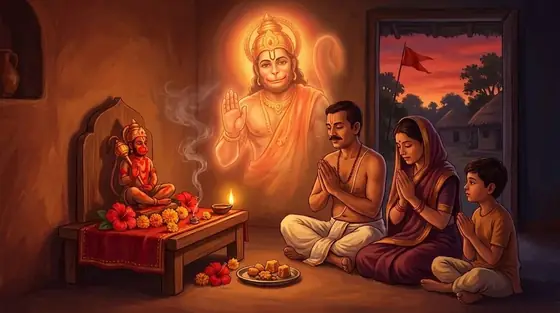
हनुमान जी का मंगलवार व्रत — निःसंतान ब्राह्मण दंपति और बालक मंगल की कथा, व्रत विधि और उद्यापनThe Tuesday fast for Hanuman: the childless Brahmin couple and the boy Mangal, how to keep the fast, and the udyapan
 व्रत कथाVrat Kathas
शनिवार व्रत कथा
Shanivar Vrat Katha
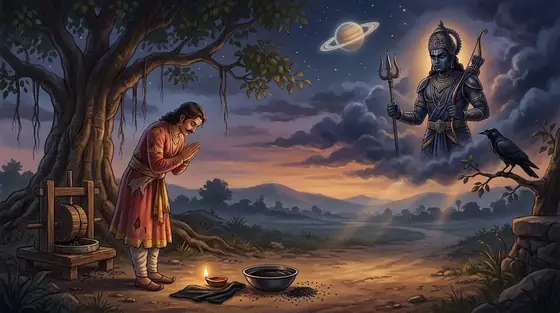
शनि देव का शनिवार व्रत — नवग्रहों का विवाद और राजा विक्रमादित्य की साढ़े साती की कथा, व्रत विधि और उद्यापनThe Saturday fast for Shani Dev: the quarrel of the nine grahas and King Vikramaditya's sade sati, how to keep the fast, and the udyapan