आरती श्री शनि देव जी की
Shani Dev Aarti
जय जय जय श्री शनि देव भक्तन हितकारी, हर पद के अर्थ सहितJai Jai Jai Shri Shani Dev Bhaktan Hitkari, with the meaning of every stanza
PDF डाउनलोडDownload PDF
'जय जय जय श्री शनि देव भक्तन हितकारी' शनिदेव की सबसे अधिक गाई जाने वाली आरती है। इसका रचयिता ज्ञात नहीं है; यह लोक-परम्परा से चली आई रचना है। पाँच छोटे पदों में यह शनिदेव को सूर्य का पुत्र और छाया का बेटा कहकर पुकारती है, उनके श्याम वर्ण, वक्र दृष्टि, चार भुजाओं, नीले वस्त्र और हाथी की सवारी का वर्णन करती है, और बताती है कि उन्हें लोहा, तिल, तेल और उड़द प्रिय हैं। लोग इसे शनिवार की पूजा के अन्त में, शनि चालीसा के बाद, और साढ़ेसाती, ढैया तथा शनि की दशा में गाते हैं।
यहाँ दिया गया पाठ रणधीर प्रकाशन, हरिद्वार की '51 चालीसा संग्रह आरतियों सहित' पुस्तक की छपी प्रति से लिया गया है और ऑनलाइन पाठों से मिलाया गया है। हर पद के नीचे उसका सरल हिन्दी और अंग्रेज़ी अर्थ है, ताकि गाते समय शब्दों का भाव भी साथ रहे। साइन-इन करने के बाद पूरा पाठ मुफ्त PDF में उतारा जा सकता है, छापने या परिवार को भेजने के लिए।
Jai Jai Jai Shri Shani Dev Bhaktan Hitkari is the most widely sung aarti of Shani Dev, Saturn. The author is not known; it has come down through popular tradition. In five short stanzas it hails Shani as the son of Surya and of Chhaya, describes his dark body, his oblique gaze, his four arms, his blue garments and his elephant mount, and names what is dear to him: iron, sesame, oil and urad. People sing it at the close of Saturday worship, after the Shani Chalisa, and through sade sati, dhaiya and a Saturn dasha.
The text below is taken from a printed copy of '51 Chalisa Sangrah Artiyon Sahit' from Randhir Prakashan, Haridwar, and checked against online texts. Under each stanza is a plain meaning in Hindi and English, so the sense of the words stays with the singing. After signing in you can download the full text as a free PDF, to print or to send to family.
पाठThe text
टेकRefrain
जय जय जय श्री शनि देव भक्तन हितकारी। सूर्य पुत्र प्रभुछाया महतारी॥ जय जय जय शनि देव॥
भक्तों का हित करने वाले श्री शनि देव, आपकी जय हो, जय हो, जय हो। हे प्रभु, आप सूर्य के पुत्र हैं और छाया आपकी माता हैं।Victory, victory, victory to Shri Shani Dev, who does good to his devotees. O Lord, you are the son of Surya, and Chhaya is your mother.
पदVerse 1
श्याम अंग वक्र-दृष्टि चतुर्भुजा धारी। नीलाम्बर धार नाथ गज की असवारी॥ जय जय जय श्री शनि देव॥
आपका शरीर श्याम (साँवला) है, आपकी दृष्टि वक्र (तिरछी) है और आप चार भुजाएँ धारण करते हैं। हे नाथ, आप नीलाम्बर (नीले वस्त्र) पहनते हैं और हाथी की सवारी करते हैं।Your body is dark, your gaze is oblique, and you bear four arms. O Lord, you wear blue garments and ride an elephant.
पदVerse 2
क्रीट मुकुट शीश राजित दिपत है लिलारी। मुक्तन की माल गले शोभित बलिहारी॥ जय जय जय श्री शनि देव॥
आपके सिर पर क्रीट (किरीट) मुकुट सुशोभित है और लिलार (माथा) दमक रहा है। गले में मोतियों की माला शोभा दे रही है; इस रूप पर मैं बलिहारी जाता हूँ।A crown shines on your head and your forehead glows. A string of pearls graces your neck; I give myself over to this form.
पदVerse 3
मोदक मिष्ठान पान चढ़त हैं सुपारी। लोहा तिल तेल उड़द महिषी अति प्यारी॥ जय जय जय श्री शनि देव॥
आपको मोदक, मिठाई, पान और सुपारी चढ़ाए जाते हैं। लोहा, तिल, तेल, उड़द और महिषी (भैंस) आपको बहुत प्रिय हैं।Modak, sweets, betel leaf and betel nut are offered to you. Iron, sesame, oil, urad and the she-buffalo are very dear to you.
पदVerse 4
देव दनुज ऋषि मुनी सुमिरत नर नारी। विश्वनाथ धरत ध्यान शरण हैं तुम्हारी॥ जय जय जय श्री शनि देव॥
देवता, दानव, ऋषि, मुनि और सब नर-नारी आपका स्मरण करते हैं। हे विश्वनाथ (जगत के स्वामी), आपका ध्यान धरते हुए हम आपकी शरण में हैं।Gods, demons, rishis, munis, men and women all remember you. O Vishwanath, lord of the world, holding you in meditation we take refuge in you.
आरती कैसे करेंHow the aarti is done
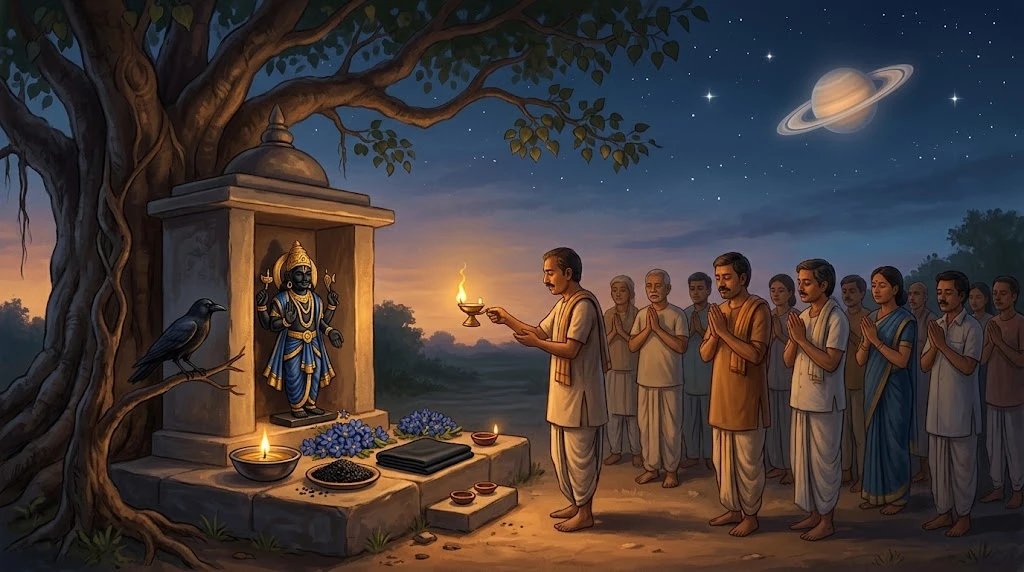
शनिदेव की आरती प्रायः शनिवार की संध्या को की जाती है। स्नान करके साफ़ वस्त्र पहनें, शनिदेव के चित्र या विग्रह के सामने, या पीपल के पेड़ के नीचे, सरसों के तेल का दीपक जलाएँ। आरती में जिन वस्तुओं का नाम है, वही अर्पित करने की परम्परा है: काला तिल, काली उड़द, तेल, पान-सुपारी और कुछ मिठाई। बहुत लोग पहले शनि चालीसा पढ़ते हैं और फिर यह आरती गाते हैं।
थाली में दीपक रखकर, घंटी बजाते हुए आरती गाएँ और थाली को घड़ी की दिशा में घुमाएँ। हर पद के बाद 'जय जय जय श्री शनि देव' की टेक सब मिलकर दोहराते हैं। शनि की पूजा में विग्रह की आँखों में सीधे न देखने का चलन है; दृष्टि चरणों पर रखें।
आरती के बाद ज्योति सब उपस्थित लोगों के सामने ले जाई जाती है, प्रसाद बाँटा जाता है, और यथाशक्ति दान किया जाता है: तेल, काला कपड़ा, लोहा, काली उड़द या भोजन किसी ज़रूरतमंद को।
The aarti of Shani Dev is usually done on Saturday evening. Bathe, put on clean clothes, and light a mustard-oil lamp before a picture or image of Shani Dev, or under a peepal tree. The custom is to offer what the aarti itself names: black sesame, black urad, oil, betel leaf and nut, and a few sweets. Many people read the Shani Chalisa first and then sing this aarti.
Place the lamp on a plate, ring the bell, sing the aarti and move the plate clockwise. After each stanza everyone joins in the refrain, Jai Jai Jai Shri Shani Dev. In Shani's worship the custom is not to look straight into the eyes of the image; keep the gaze on his feet.
After the aarti the flame is carried to everyone present, the prasad is shared, and a gift is made according to one's means: oil, black cloth, iron, black urad, or a meal for someone in need.
महत्वMeaning
यह आरती शनिदेव को भय के देवता के रूप में नहीं, 'भक्तन हितकारी', भक्तों का हित करने वाले के रूप में पुकारती है। शनि को कर्म का फल देने वाला न्यायाधीश माना जाता है; उनकी कठोरता अनुशासन सिखाने के लिए है, और जो विनय से उनकी शरण आता है, उसके लिए वे हितकारी हैं।
दूसरा और तीसरा पद उनके रूप का ध्यान कराते हैं: श्याम शरीर, तिरछी दृष्टि, चार भुजाएँ, नीले वस्त्र, हाथी की सवारी, सिर पर मुकुट और गले में मोतियों की माला। चौथा पद बताता है कि उन्हें क्या प्रिय है, और यहीं से शनिवार को तेल, तिल, उड़द और लोहे के दान की परम्परा जुड़ती है। अन्तिम पद कहता है कि देव, दानव, ऋषि-मुनि और सब मनुष्य उनका स्मरण करते हैं; अर्थात् शनि का न्याय सब पर समान है।
The aarti does not call on Shani as a god to be feared but as 'bhaktan hitkari', the one who does good to his devotees. Shani is held to be the judge who gives the fruit of deeds; his sternness is there to teach discipline, and to whoever comes to him in humility he is a benefactor.
The second and third stanzas set his form before the mind: the dark body, the oblique gaze, the four arms, the blue garments, the elephant mount, the crown on his head and the pearls at his neck. The fourth names what is dear to him, which is where the Saturday custom of giving oil, sesame, urad and iron comes from. The last stanza says that gods, demons, sages and all people remember him; Shani's justice, that is, falls on all alike.
कब पढ़ेंWhen to read
शनिवार की संध्या को, शनि चालीसा या शनिवार व्रत कथा के बाद। शनि जयन्ती और शनि अमावस्या पर, और साढ़ेसाती, ढैया तथा शनि की महादशा-अन्तर्दशा में इसे नियमित रूप से गाने की परम्परा है।On Saturday evening, after the Shani Chalisa or the Saturday vrat katha. It is the custom to sing it regularly on Shani Jayanti and Shani Amavasya, and through sade sati, dhaiya and a Saturn mahadasha or antardasha.
कुंडली मेंIn your kundli
ज्योतिष में शनि कर्म, अनुशासन, परिश्रम और धैर्य का ग्रह है। जब गोचर का शनि चन्द्र राशि से बारहवें, पहले और दूसरे भाव से गुज़रता है तो लगभग साढ़े सात वर्ष की साढ़ेसाती चलती है, और चौथे या आठवें भाव में ढाई वर्ष की ढैया। इन अवधियों में और शनि की महादशा या अन्तर्दशा में काम में देरी, ज़िम्मेदारियों का बोझ और धैर्य की परीक्षा सामान्य बातें हैं; यह हर किसी के लिए कष्ट का समय नहीं होता, क्योंकि फल कुंडली में शनि की अपनी स्थिति पर निर्भर करता है। जन्म कुंडली में शनि नीच, अस्त या पीड़ित हो, तब भी शनिवार की पूजा और यह आरती उपाय में बताई जाती है। आपकी कुंडली में शनि कहाँ है, साढ़ेसाती या ढैया चल रही है या नहीं, और शनि की दशा कब आती है, यह इसी साइट पर अपनी कुंडली बनाकर देखा जा सकता है।In Jyotish, Saturn is the graha of karma, discipline, hard work and patience. When transiting Saturn passes through the twelfth, first and second houses from the Moon sign, sade sati runs for about seven and a half years; in the fourth or eighth house it is dhaiya, about two and a half years. In these spells, and in a Saturn mahadasha or antardasha, delays, heavier responsibilities and a test of patience are common; it is not a hard time for everyone, because the outcome depends on where Saturn stands in the birth chart. When Saturn is debilitated, combust or afflicted in the kundli, Saturday worship with this aarti is also the usual advice. Where Saturn stands in your kundli, whether sade sati or dhaiya is running, and when a Saturn dasha begins, you can see by building your kundli on this site.
ग्रह: Grahas: शनिSaturn
अपनी कुंडली में देखेंCheck it in your kundliप्रश्नोत्तरQuestions people ask
- शनि देव की आरती कब करनी चाहिए?When should the Shani Dev aarti be done?
- शनिवार की संध्या इसका सबसे प्रचलित समय है, पूजा या शनि चालीसा के पाठ के बाद। शनि जयन्ती, शनि अमावस्या और साढ़ेसाती या ढैया के दौरान इसे विशेष रूप से गाया जाता है।Saturday evening is the most common time, after the puja or the Shani Chalisa. It is sung especially on Shani Jayanti, on Shani Amavasya, and through sade sati or dhaiya.
- क्या शनि देव की आरती रोज़ की जा सकती है?Can the Shani Dev aarti be done every day?
- हाँ। शनिवार इसका विशेष दिन है, पर साढ़ेसाती, ढैया या शनि की दशा में बहुत लोग इसे रोज़ संध्या को गाते हैं। एक बार श्रद्धा से गाई गई आरती पर्याप्त है; संख्या से अधिक नियमितता का महत्व है।Yes. Saturday is its special day, but in sade sati, dhaiya or a Saturn dasha many people sing it every evening. Singing it once with faith is enough; keeping at it regularly matters more than the count.
- शनि आरती के क्या फायदे हैं?What are the benefits of the Shani aarti?
- आरती शनिदेव को 'भक्तन हितकारी' कहती है, अर्थात् भक्तों का हित करने वाले। परम्परा में इसे साढ़ेसाती, ढैया और शनि दशा के समय मन में धैर्य और स्थिरता लाने, काम की रुकावटों में सहनशक्ति बढ़ाने और कर्म के प्रति सजग रहने के लिए गाया जाता है।The aarti calls Shani 'bhaktan hitkari', the one who does good to his devotees. By tradition it is sung during sade sati, dhaiya and a Saturn dasha to bring patience and steadiness to the mind, to bear delays at work, and to stay mindful of one's actions.
- शनि देव की आरती के नियम क्या हैं?What are the rules for the Shani Dev aarti?
- स्नान करके साफ़ वस्त्र पहनें और सरसों के तेल का दीपक जलाएँ। काला तिल, उड़द, तेल या पान-सुपारी अर्पित करें, विग्रह की आँखों में सीधे न देखें, और आरती के बाद प्रसाद बाँटें तथा यथाशक्ति दान करें।Bathe, wear clean clothes and light a mustard-oil lamp. Offer black sesame, urad, oil or betel, do not look straight into the eyes of the image, and after the aarti share the prasad and give something according to your means.
साथ में पढ़ेंRead alongside
 चालीसाChalisas
श्री शनि चालीसा
Shani Chalisa
शनिदेव की चालीस चौपाइयाँ, हर दोहे और चौपाई के अर्थ सहितForty verses to Shani Dev, with the meaning of every doha and chaupai
 व्रत कथाVrat Kathas
शनिवार व्रत कथा
Shanivar Vrat Katha
शनि देव का शनिवार व्रत — नवग्रहों का विवाद और राजा विक्रमादित्य की साढ़े साती की कथा, व्रत विधि और उद्यापनThe Saturday fast for Shani Dev: the quarrel of the nine grahas and King Vikramaditya's sade sati, how to keep the fast, and the udyapan
 चालीसाChalisas
श्री हनुमान चालीसा
Hanuman Chalisa
गोस्वामी तुलसीदास रचित चालीस चौपाइयाँ, अर्थ सहितTulsidas's forty verses to Hanuman, with the meaning of every line