महालक्ष्म्यष्टकम्
Mahalakshmi Ashtakam
इन्द्र द्वारा की गई महालक्ष्मी की स्तुति, 'नमस्तेऽस्तु महामाये', आठ श्लोक और फलश्रुति, हर श्लोक के अर्थ सहितIndra's hymn to Mahalakshmi, Namaste'stu Mahamaye: eight verses and the verses of merit, with the meaning of each
PDF डाउनलोडDownload PDF
महालक्ष्म्यष्टक आठ श्लोकों की संस्कृत स्तुति है, जिसमें देवराज इन्द्र महालक्ष्मी को नमस्कार करते हैं। हर श्लोक का दूसरा आधा 'महालक्ष्मि नमोऽस्तु ते' पर समाप्त होता है, और बीच में देवी के अनेक रूप आते हैं: शंख-चक्र-गदा धारण करने वाली, गरुड़ पर बैठी, सिद्धि-बुद्धि और भोग-मोक्ष देने वाली, आदि-अन्त से रहित आदिशक्ति, कमल पर विराजमान परब्रह्मस्वरूपिणी। अन्त के तीन श्लोक फलश्रुति हैं। परम्परा में इसे पद्मपुराण का अंश माना जाता है; गीता प्रेस की स्तोत्ररत्नावली इसे 'इन्द्रकृत' कहती है।
दीपावली की लक्ष्मी पूजा, शुक्रवार, शरद पूर्णिमा और नवरात्रि में यह स्तोत्र सबसे अधिक पढ़ा जाता है। इस पृष्ठ पर पाठ गीता प्रेस की स्तोत्ररत्नावली के छपे पाठ से अक्षरशः लिया गया है, हर श्लोक के नीचे उसका सीधा अर्थ है जिसमें कठिन विशेषणों की व्याख्या भी है, और साइन-इन के बाद पूरा पाठ मुफ्त PDF में उतारा जा सकता है।
The Mahalakshmi Ashtakam is a Sanskrit hymn of eight verses in which Indra, king of the gods, bows to Mahalakshmi. The second half of every verse ends 'Mahalakshmi namo'stu te', salutation to you, Mahalakshmi, and between those refrains come her many forms: holding conch, discus and mace, riding Garuda, giving success and wisdom, worldly joy and liberation, the primal power without beginning or end, seated on a lotus as the Supreme itself. The last three verses give the merit of reading it. Tradition places it in the Padma Purana; the Gita Press Stotra Ratnavali calls it Indra's hymn.
It is read most often at the Diwali Lakshmi puja, on Fridays, on Sharad Purnima and in Navratri. This page gives the text exactly as printed in the Gita Press Stotra Ratnavali, a plain meaning under every verse that also explains the harder epithets, and, after sign-in, a free PDF of the whole text.
पाठThe text
पदVerse 1
इन्द्र उवाच नमस्तेऽस्तु महामाये श्रीपीठे सुरपूजिते। शङ्खचक्रगदाहस्ते महालक्ष्मि नमोऽस्तु ते॥
(इन्द्र कहते हैं:) हे महामाया (जगत् को अपनी शक्ति से रचने और ढकने वाली), श्रीपीठ पर विराजमान, देवताओं से पूजित देवी, तुम्हें नमस्कार है। हाथों में शंख, चक्र और गदा धारण करने वाली महालक्ष्मी, तुम्हें नमस्कार है।(Indra speaks:) Salutation to you, Mahamaya (the great power that shapes and veils the world), seated on the Shri-pitha, worshipped by the gods. You who hold conch, discus and mace in your hands, Mahalakshmi, salutation to you.
पदVerse 2
नमस्ते गरुडारूढे कोलासुरभयङ्करि। सर्वपापहरे देवि महालक्ष्मि नमोऽस्तु ते॥
गरुड़ पर आरूढ़ (बैठी) और कोलासुर नामक दैत्य को भय देने वाली देवी, तुम्हें नमस्कार है। सब पापों को हरने वाली देवी महालक्ष्मी, तुम्हें नमस्कार है।Salutation to you who ride on Garuda and strike fear into the demon Kolasura. Goddess who takes away every sin, Mahalakshmi, salutation to you.
पदVerse 3
सर्वज्ञे सर्ववरदे सर्वदुष्टभयङ्करि। सर्वदुःखहरे देवि महालक्ष्मि नमोऽस्तु ते॥
हे सर्वज्ञ (सब कुछ जानने वाली), सबको वर देने वाली, सब दुष्टों को भय देने वाली, सब दुःखों को हरने वाली देवी महालक्ष्मी, तुम्हें नमस्कार है।You who know all (sarvajna), who grant boons to all, who strike fear into all the wicked, goddess who takes away all sorrow, Mahalakshmi, salutation to you.
पदVerse 4
सिद्धिबुद्धिप्रदे देवि भुक्तिमुक्तिप्रदायिनि। मन्त्रपूते सदा देवि महालक्ष्मि नमोऽस्तु ते॥
सिद्धि (सफलता) और बुद्धि देने वाली देवी, भुक्ति (संसार का सुख) और मुक्ति (मोक्ष) दोनों देने वाली, मन्त्रों से पवित्र (मन्त्रपूत) देवी महालक्ष्मी, तुम्हें सदा नमस्कार है।Goddess who gives siddhi (success) and wisdom, who gives both bhukti (the joys of the world) and mukti (liberation), goddess made holy by mantras (mantra-puta), Mahalakshmi, salutation to you always.
पदVerse 5
आद्यन्तरहिते देवि आद्यशक्तिमहेश्वरि। योगजे योगसम्भूते महालक्ष्मि नमोऽस्तु ते॥
आदि और अन्त से रहित देवी, आदिशक्ति (सृष्टि की मूल शक्ति), महेश्वरी (परम स्वामिनी), योग से जन्मी और योग से प्रकट होने वाली महालक्ष्मी, तुम्हें नमस्कार है।Goddess without beginning or end, the primal power (adi-shakti), the great sovereign (Maheshvari), born of yoga and arising from yoga, Mahalakshmi, salutation to you.
पदVerse 6
स्थूलसूक्ष्ममहारौद्रे महाशक्तिमहोदरे। महापापहरे देवि महालक्ष्मि नमोऽस्तु ते॥
स्थूल (दिखने वाले) और सूक्ष्म (न दिखने वाले) दोनों रूपों वाली, अत्यन्त उग्र (महारौद्र), महाशक्ति, महोदरा (जिनके उदर में सारा जगत् समाया है), बड़े-बड़े पापों को हरने वाली देवी महालक्ष्मी, तुम्हें नमस्कार है।You who are both gross and subtle, the visible world and what lies beyond sight, supremely fierce (maha-raudra), the great power, Mahodara (whose womb holds the whole world), goddess who takes away great sins, Mahalakshmi, salutation to you.
पदVerse 7
पद्मासनस्थिते देवि परब्रह्मस्वरूपिणि। परमेशि जगन्मातर्महालक्ष्मि नमोऽस्तु ते॥
कमल के आसन पर विराजमान देवी, परब्रह्म-स्वरूपिणी (स्वयं परम सत्य का रूप), परमेशी (सर्वोच्च स्वामिनी), हे जगन्माता (जगत् की माता) महालक्ष्मी, तुम्हें नमस्कार है।Goddess seated on a lotus, you whose very form is the Supreme Brahman, highest sovereign (Parameshi), mother of the world (Jaganmata), Mahalakshmi, salutation to you.
पदVerse 8
श्वेताम्बरधरे देवि नानालङ्कारभूषिते। जगत्स्थिते जगन्मातर्महालक्ष्मि नमोऽस्तु ते॥
श्वेत वस्त्र धारण करने वाली, अनेक प्रकार के आभूषणों से सजी देवी, सारे जगत् में स्थित (व्याप्त), हे जगन्माता महालक्ष्मी, तुम्हें नमस्कार है।Goddess clad in white, adorned with ornaments of many kinds, present throughout the world, mother of the world, Mahalakshmi, salutation to you.
पदVerse 9
महालक्ष्म्यष्टकं स्तोत्रं यः पठेद्भक्तिमान्नरः। सर्वसिद्धिमवाप्नोति राज्यं प्राप्नोति सर्वदा॥
(फलश्रुति:) जो मनुष्य भक्ति के साथ इस महालक्ष्म्यष्टक स्तोत्र का पाठ करता है, वह सब सिद्धियाँ पाता है और सदा राज्य (ऐश्वर्य और अधिकार) प्राप्त करता है।(The phalashruti, the merit of reading:) The person who reads this Mahalakshmi Ashtakam with devotion gains every kind of success and always attains sovereignty, that is, prosperity and standing.
पदVerse 10
एककाले पठेन्नित्यं महापापविनाशनम्। द्विकालं यः पठेन्नित्यं धनधान्यसमन्वितः॥
(फलश्रुति:) प्रतिदिन एक समय पढ़ने से बड़े पापों का नाश होता है। जो प्रतिदिन दो समय पढ़ता है, वह धन और धान्य (अन्न) से सम्पन्न होता है।(Phalashruti:) Read once a day, it destroys great sins. One who reads it twice a day is blessed with wealth and grain.
पदVerse 11
त्रिकालं यः पठेन्नित्यं महाशत्रुविनाशनम्। महालक्ष्मीर्भवेन्नित्यं प्रसन्ना वरदा शुभा॥
(फलश्रुति:) जो प्रतिदिन तीनों समय (प्रातः, मध्याह्न और संध्या) पढ़ता है, उसके बड़े शत्रुओं का नाश होता है, और कल्याणमयी, वर देने वाली महालक्ष्मी उस पर सदा प्रसन्न रहती हैं।(Phalashruti:) For one who reads it at all three times of day (morning, noon and evening), great enemies are destroyed, and Mahalakshmi, auspicious and generous with boons, is always pleased with them.
यह स्तोत्र कहाँ से हैWhere the hymn comes from
महालक्ष्म्यष्टक के आरम्भ में 'इन्द्र उवाच' छपा है, यानी यह इन्द्र के मुख से कही गई स्तुति है, और गीता प्रेस की स्तोत्ररत्नावली इसे 'इन्द्रकृत महालक्ष्म्यष्टक' कहकर समाप्त करती है। परम्परा में इसे पद्मपुराण का अंश माना जाता है। पुराणों में कई बार देवताओं के संकट में पड़ने और फिर लक्ष्मी की स्तुति से अपना वैभव वापस पाने की कथा आती है; यह स्तोत्र उसी भाव का है।
दूसरे श्लोक में 'कोलासुरभयङ्करि' आता है, यानी कोलासुर नामक दैत्य को भय देने वाली। महाराष्ट्र के कोल्हापुर की महालक्ष्मी (अम्बाबाई) की परम्परा में देवी द्वारा कोल्हासुर के वध की कथा कही जाती है, और कोल्हापुर को शक्तिपीठों में गिना जाता है; पहले श्लोक का 'श्रीपीठे' भी कई भक्त इसी अर्थ में पढ़ते हैं।
The hymn opens with 'Indra uvacha', Indra said, so it is a praise spoken by Indra, and the Gita Press Stotra Ratnavali closes it as 'the Mahalakshmi Ashtakam made by Indra'. Tradition places it in the Padma Purana. The Puranas tell more than once of the gods falling on hard times and winning back their fortune by praising Lakshmi; this hymn is in that spirit.
The second verse calls her Kolasura-bhayankari, the one who strikes fear into the demon Kolasura. In the tradition of Mahalakshmi (Ambabai) of Kolhapur in Maharashtra, the goddess is told to have slain Kolhasura, and Kolhapur is counted among the Shakti Pithas; many devotees read the word Shri-pitha in the first verse in the same light.
पाठ विधिHow to read it
स्नान करके स्वच्छ, हो सके तो श्वेत या लाल वस्त्र पहनें और लक्ष्मी जी के चित्र या श्रीयन्त्र के सामने घी का दीपक जलाएँ। कमल, लाल या पीले फूल और खीर, मिश्री या सफ़ेद मिठाई का भोग अर्पित करें। आठों श्लोक और फलश्रुति एक बैठक में, धीरे-धीरे और अर्थ समझते हुए पढ़ें।
फलश्रुति एक, दो या तीन समय पढ़ने की बात करती है, इसलिए कई लोग इसे प्रातः और संध्या, दोनों समय पढ़ते हैं। पहले श्लोक से पहले छपा 'इन्द्र उवाच' वक्ता का परिचय है; कुछ लोग इसे बोलते हैं, कुछ सीधे 'नमस्तेऽस्तु महामाये' से आरम्भ करते हैं। पाठ के बाद लक्ष्मी जी की आरती करना उचित माना जाता है।
After bathing, put on clean clothes, white or red if you can, and light a ghee lamp before a picture of Lakshmi or a Shri Yantra. Offer lotus, red or yellow flowers and kheer, rock sugar or a white sweet. Read the eight verses and the phalashruti in one sitting, slowly, following the meaning.
The phalashruti speaks of reading it once, twice or three times a day, so many read it both morning and evening. The words 'Indra uvacha' before the first verse introduce the speaker; some say them aloud, others begin straight with Namaste'stu Mahamaye. An aarti of Lakshmi after the reading is held to be fitting.
महत्व और फलMeaning and fruit
फलश्रुति स्वयं इसका फल बताती है: भक्ति से पढ़ने वाला सब सिद्धियाँ और ऐश्वर्य पाता है; प्रतिदिन एक बार पढ़ने से बड़े पापों का नाश, दो बार पढ़ने से धन-धान्य, और तीन बार पढ़ने से बड़े शत्रुओं का नाश होता है और महालक्ष्मी सदा प्रसन्न रहती हैं।
यह स्तोत्र लक्ष्मी को केवल धन की देवी के रूप में नहीं देखता: इसमें वे सिद्धि, बुद्धि और मोक्ष देने वाली, आदिशक्ति और परब्रह्मस्वरूपिणी भी हैं। इसीलिए परम्परा में इसे घर की सुख-समृद्धि के साथ मन की स्थिरता और धर्म से कमाए धन की कामना से पढ़ा जाता है।
The phalashruti states its own fruit: one who reads it with devotion gains every success and prosperity; read once a day it destroys great sins, twice a day it brings wealth and grain, and three times a day it destroys great enemies, and Mahalakshmi is always pleased.
The hymn does not see Lakshmi as the goddess of money alone: here she also gives success, wisdom and liberation, and is the primal power and the Supreme itself. That is why tradition reads it for a happy, prosperous home together with a steady mind and wealth earned rightly.
कब पढ़ेंWhen to read
दीपावली की रात लक्ष्मी पूजा में, हर शुक्रवार, शरद पूर्णिमा की रात और नवरात्रि में। नित्य पाठ के लिए प्रातः और संध्या, दीपक जलाकर।At the Lakshmi puja on Diwali night, every Friday, on the night of Sharad Purnima and in Navratri. For daily reading, morning and evening, with a lamp lit.
कुंडली मेंIn your kundli
ज्योतिष में लक्ष्मी जी का सम्बन्ध शुक्र और बृहस्पति से है: शुक्र सुख, वैभव और ऐश्वर्य का कारक है, और गुरु धन, सौभाग्य और धर्म का। कुंडली में शुक्र के नीच (कन्या), अस्त या पीड़ित होने पर, शुक्र की महादशा-अन्तर्दशा में, गुरु के कमज़ोर होने पर, और धन-भाव (दूसरे) या लाभ-भाव (ग्यारहवें) के पीड़ित होने पर शुक्रवार को लक्ष्मी पूजा के साथ यह स्तोत्र पढ़ने की सलाह दी जाती है। अपनी कुंडली इसी साइट पर बनाकर शुक्र और गुरु की स्थिति देखी जा सकती है।In Jyotish, Lakshmi is linked with Venus and Jupiter: Venus signifies comfort, luxury and splendour, Jupiter wealth, good fortune and dharma. When Venus is debilitated (in Virgo), combust or afflicted in the kundli, during a Venus mahadasha or antardasha, when Jupiter is weak, and when the second house of wealth or the eleventh house of gains is afflicted, the usual advice is to read this hymn with the Friday worship of Lakshmi. You can build your kundli on this site and see where Venus and Jupiter stand.
ग्रह: Grahas: शुक्रVenus, बृहस्पतिJupiter
अपनी कुंडली में देखेंCheck it in your kundliप्रश्नोत्तरQuestions people ask
- महालक्ष्मी अष्टकम किसने रचा?Who composed the Mahalakshmi Ashtakam?
- स्तोत्र स्वयं 'इन्द्र उवाच' से आरम्भ होता है, यानी इसे देवराज इन्द्र की स्तुति कहा गया है, और गीता प्रेस इसे 'इन्द्रकृत' कहती है। परम्परा में इसे पद्मपुराण का अंश माना जाता है; किसी मानव कवि का नाम इसके साथ नहीं मिलता।The hymn itself opens with 'Indra uvacha', so it is presented as Indra's praise, and Gita Press calls it 'made by Indra'. Tradition places it in the Padma Purana; no human poet's name comes down with it.
- महालक्ष्मी अष्टकम कब और कितनी बार पढ़ें?When, and how many times, should it be read?
- फलश्रुति प्रतिदिन एक, दो या तीन समय पढ़ने की बात करती है। शुक्रवार, दीपावली, शरद पूर्णिमा और नवरात्रि में इसका पाठ विशेष माना जाता है। संख्या से अधिक महत्व नियमितता और भक्ति का है।The phalashruti speaks of reading it once, twice or three times a day. It is held to be special on Fridays, at Diwali, on Sharad Purnima and in Navratri. Regularity and devotion matter more than the count.
- महालक्ष्मी अष्टकम पढ़ने के क्या लाभ हैं?What are the benefits of reading it?
- फलश्रुति के अनुसार भक्ति से पढ़ने वाला सिद्धि और ऐश्वर्य पाता है, बड़े पाप नष्ट होते हैं, धन-धान्य बढ़ता है और शत्रु नष्ट होते हैं। ज्योतिष में इसे शुक्र और गुरु के उपाय के रूप में बताया जाता है।By its phalashruti, one who reads it with devotion gains success and prosperity, great sins are destroyed, wealth and grain increase, and enemies are overcome. Jyotish gives it as a remedy for Venus and Jupiter.
- क्या पाठ के कोई विशेष नियम हैं?Are there any rules for reading it?
- स्नान करके, स्वच्छ स्थान पर, दीपक जलाकर पढ़ना पर्याप्त है। शुद्ध उच्चारण का ध्यान रखें; 'नमोऽस्तु' और 'नमस्तेऽस्तु' में अवग्रह (ऽ) वाला अ लुप्त है, इसलिए इन्हें 'नमोस्तु', 'नमस्तेस्तु' बोला जाता है। घर में स्वच्छता और वाणी में मधुरता को लक्ष्मी-उपासना का अंग माना जाता है।Reading after a bath, in a clean place, with a lamp lit is enough. Take care over pronunciation: in namo'stu and namaste'stu the avagraha (ऽ) marks a dropped a, so they are said 'namostu' and 'namastestu'. A clean home and gentle speech are held to be part of the worship of Lakshmi.
साथ में पढ़ेंRead alongside
 चालीसाChalisas
श्री लक्ष्मी चालीसा
Lakshmi Chalisa
धन, सुख और समृद्धि की देवी माँ लक्ष्मी की चालीसा, हर दोहे और चौपाई के अर्थ सहितThe Chalisa of Lakshmi, goddess of wealth and well-being, with the meaning of every doha and chaupai
 आरतीAartis
ॐ जय लक्ष्मी माता
Om Jai Lakshmi Mata
श्री लक्ष्मी जी की आरती, गीता प्रेस के पाठ से, हर पद के अर्थ सहितThe aarti of Lakshmi in the Gita Press reading, with the meaning of every stanza
 पूजा विधिPuja Vidhis
दीपावली लक्ष्मी-गणेश पूजा विधि
Diwali Lakshmi-Ganesh Puja Vidhi
कार्तिक अमावस्या की रात — राम के अयोध्या आगमन और लक्ष्मी के प्राकट्य की कथा, लक्ष्मी-गणेश पूजा की पूरी विधि, बहीखाता पूजन, दीपदान और रंगोलीThe night of the Kartik new moon: Rama's return to Ayodhya and the appearance of Lakshmi, the Lakshmi-Ganesh puja step by step, the ledger puja, the lamps and the rangoli
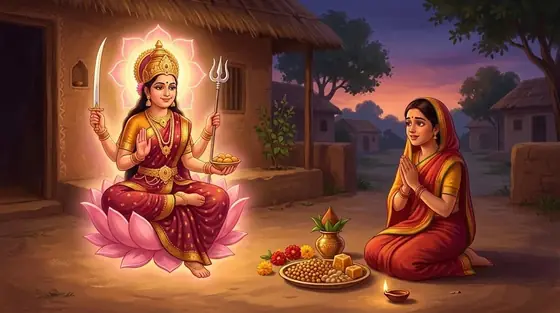 व्रत कथाVrat Kathas
शुक्रवार व्रत कथा
Shukravar Vrat Katha
संतोषी माता का शुक्रवार व्रत — सात बेटों वाली बुढ़िया और छोटी बहू की कथा, सोलह शुक्रवार की विधि और उद्यापनThe Friday fast for Santoshi Mata: the old woman with seven sons and the youngest wife, the sixteen-Friday method, and the udyapan