श्री गणेश चालीसा
Ganesh Chalisa
गणपति के जन्म और महिमा की चालीस चौपाइयाँ, अर्थ सहितForty verses on the birth and glory of Ganapati, with the meaning of every line
PDF डाउनलोडDownload PDF
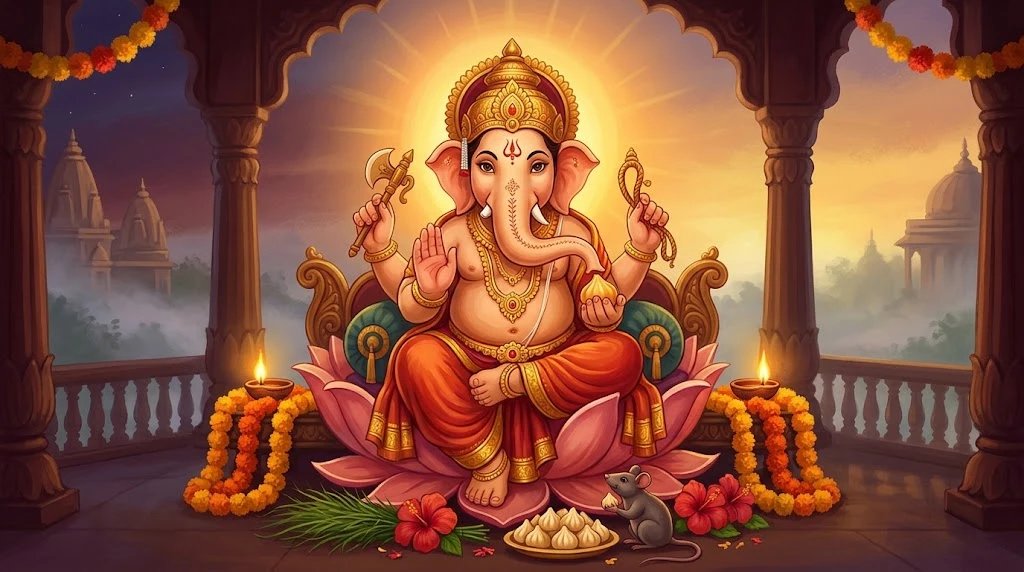
गणेश चालीसा गणपति की स्तुति है: एक आरम्भिक दोहा, चालीस चौपाइयाँ और दो अन्तिम दोहे। इसकी चौपाइयाँ पहले गणेश जी के रूप का वर्णन करती हैं, फिर शिव पुराण की वह कथा कहती हैं जिसमें पार्वती अपने शरीर के मैल से पुत्र रचती हैं, शिव अनजाने में उसका सिर काटते हैं और हाथी का सिर लगाकर उसे जीवन देते हैं, और अन्त में पृथ्वी-परिक्रमा की वह कथा, जिसमें गणेश माता-पिता की सात प्रदक्षिणा करके कार्तिकेय से आगे निकल जाते हैं। चालीसा अपने अन्तिम पदों में स्वयं बताता है कि इसकी रचना राम-भक्त सुन्दरदास ने दुर्वासा आश्रम में की।
यहाँ दिया गया पाठ महामाया प्रकाशन, जालन्धर की छपी पुस्तिका से अक्षरशः लिया गया है और एक दूसरे प्रकाशित पाठ से मिलाया गया है। हर दोहे और चौपाई के नीचे उसका सीधा अर्थ है, ताकि पाठ करते समय शब्दों का भाव साथ चले। पूरा पाठ PDF में उतारकर आप उसे छाप सकते हैं या परिवार को भेज सकते हैं; PDF के लिए साइट पर मुफ्त खाता चाहिए।
The Ganesh Chalisa is a hymn of praise to Ganapati: one opening doha, forty chaupais and two closing dohas. The verses first describe Ganesh's form, then tell the Shiva Purana story in which Parvati shapes a son from the rubbings of her own body, Shiva unknowingly cuts off his head and restores him with an elephant's head, and finally the contest in which Ganesh circles his parents seven times and so outdoes Kartikeya's circuit of the earth. In its last verses the Chalisa itself says it was composed by Sundardas, a devotee of Rama, at the ashram of Durvasa.
The text below is transcribed letter for letter from a printed booklet of Mahamaya Publications, Jalandhar, and checked against a second published text. Under each doha and chaupai is a plain meaning, so the sense of the words travels with the recitation. The PDF carries the same text for printing or for sending to family; a free account on the site is needed to download it.
पाठThe text
दोहाDoha
जय जय जय वंदन भुवन, नंदन गौरि महेश। दुख द्वंद्वन फंदन हरन, सुंदर सुवन गणेश॥
हे गौरी और महेश (पार्वती और शिव) के पुत्र, आपकी जय हो, जय हो, जय हो; सारा संसार आपकी वन्दना करता है। हे सुन्दर पुत्र गणेश, आप दुःख, द्वन्द्व और बन्धन के फन्दे को हरने वाले हैं।Victory, victory, victory to the son of Gauri and Mahesh (Parvati and Shiva), whom the whole world salutes. Beautiful son Ganesh, you take away sorrow, strife and the snare of bondage.
चौपाईChaupai 1
जयति शंभु सुत गौरी नंदन। विघ्न हरन नासन भव फंदन॥
शम्भु (शिव) के पुत्र और गौरी के नन्दन, आपकी जय हो। आप विघ्नों को हरते हैं और संसार के बन्धन का नाश करते हैं।Victory to the son of Shambhu (Shiva), Gauri's darling. You remove obstacles and destroy the snare of worldly existence.
चौपाईChaupai 2
जय गणनायक जनसुख दायक। विश्व विनायक बुद्धि विधायक॥
हे गणों के नायक, लोगों को सुख देने वाले, आपकी जय हो। आप सारे विश्व के विनायक (अग्रणी स्वामी) और बुद्धि के विधाता हैं।Victory to the leader of the ganas, giver of happiness to people. You are Vinayaka, the foremost lord of the whole world, and the giver of intelligence.
चौपाईChaupai 3
एक रदन गज बदन विराजत। वक्रतुंड शुचि शुंड सुसाजत॥
आपका एक दाँत और हाथी का मुख सुशोभित है। आपकी टेढ़ी सूँड़ पवित्र है और आपको सुन्दर सजाती है।One tusk and an elephant's face adorn you. Your curved trunk is pure and sets you off beautifully.
चौपाईChaupai 4
तिलक त्रिपुण्ड भाल शशि सोहत। छबि लखि सुरनर मुनि मन मोहत॥
आपके माथे पर त्रिपुण्ड तिलक और चन्द्रमा शोभा देते हैं। आपकी छवि देखकर देवता, मनुष्य और मुनि, सबका मन मोहित हो जाता है।The three-lined tilak and the moon shine on your forehead. Seeing your form, gods, men and sages are all enchanted.
चौपाईChaupai 5
उर मणिमाल सरोरुह लोचन। रत्न मुकुट सिर सोच विमोचन॥
आपके वक्ष पर मणियों की माला है और नेत्र कमल के समान हैं। सिर पर रत्नों का मुकुट है, और आप चिन्ता से छुड़ाने वाले हैं।A necklace of gems lies on your chest and your eyes are like lotuses. A jewelled crown sits on your head, and you free your devotees from worry.
चौपाईChaupai 6
कर कुठार शुचि सुभग त्रिशूलम्। मोदक भोग सुगंधित फूलम्॥
आपके हाथों में कुठार (परशु) और सुन्दर पवित्र त्रिशूल हैं। आपको मोदक का भोग और सुगन्धित फूल प्रिय हैं।In your hands are the axe and the fair, holy trident. Modak sweets and fragrant flowers are the offerings you love.
चौपाईChaupai 7
सुंदर पीताम्बर तन साजित। चरण पादुका मुनि मन राजित॥
आपके शरीर पर सुन्दर पीले वस्त्र सजे हैं। आपके चरणों की पादुकाएँ मुनियों के मन में विराजती हैं।Beautiful yellow garments adorn your body. The sandals of your feet reign in the hearts of the sages.
चौपाईChaupai 8
धनि शिव सुवन भुवन सुख दाता। गौरी ललन षडानन भ्राता॥
हे शिव के पुत्र, आप धन्य हैं, आप संसार को सुख देने वाले हैं। आप गौरी के लाड़ले और षडानन (छह मुख वाले कार्तिकेय) के भाई हैं।Blessed are you, son of Shiva, giver of happiness to the world. You are Gauri's darling and the brother of Shadanan (six-faced Kartikeya).
चौपाईChaupai 9
ऋद्धि सिद्धि तव चंवर सुढारहिं। मूषक वाहन सोहित द्वारहिं॥
ऋद्धि और सिद्धि आप पर चँवर डुलाती हैं। आपका वाहन मूषक द्वार पर शोभा पाता है।Riddhi and Siddhi wave the chowrie fan over you. Your mount, the mouse, graces the door.
चौपाईChaupai 10
तव महिमा को बरनै पारा। जन्म चरित्र विचित्र तुम्हारा॥
आपकी महिमा का वर्णन कौन कर सकता है? आपके जन्म की कथा बड़ी विचित्र है।Who can describe your greatness? The story of your birth is a wondrous one.
चौपाईChaupai 11
एक असुर शिवरूप बनावै। गौरहिं छलन हेतु तहं आवै॥
एक असुर शिव का रूप बनाकर गौरी को छलने के लिए वहाँ आता था।A demon would take Shiva's form and come there to deceive Gauri.
चौपाईChaupai 12
एहि कारण ते श्री शिव प्यारी। निज तन मैल मूर्ति रचि डारी॥
इसी कारण शिव की प्रिया पार्वती ने अपने शरीर के मैल से एक मूर्ति रच डाली।For this reason Parvati, Shiva's beloved, fashioned a figure from the rubbings of her own body.
चौपाईChaupai 13
सो निज सुत करि गृह रखवारे। द्वारपाल सम तेहिं बैठारे॥
उसे अपना पुत्र बनाकर उन्होंने घर का रखवाला किया और द्वारपाल की तरह द्वार पर बैठा दिया।Making him her own son, she set him to guard the house and seated him at the door like a gatekeeper.
चौपाईChaupai 14
जबहिं स्वयं श्री शिव तहं आए। बिनु पहिचान जान नहिं पाए॥
जब स्वयं शिव वहाँ आए, तो पहचान न होने के कारण वे भीतर नहीं जा सके।When Shiva himself came there, he could not go in, for the boy did not know him.
चौपाईChaupai 15
पूछ्यो शिव हो किनके लाला। बोलत भे तुम वचन रसाला॥
शिव ने पूछा, 'तुम किसके पुत्र हो?' तब आप मीठे वचन बोले।Shiva asked, "Whose child are you?" and you answered in sweet words.
चौपाईChaupai 16
मैं हूँ गौरी सुत सुनि लीजै। आगे पग न भवन हित दीजै॥
'सुन लीजिए, मैं गौरी का पुत्र हूँ। घर में जाने के लिए आगे पैर न रखिए।'"Hear me, I am Gauri's son. Do not step forward to enter the house."
चौपाईChaupai 17
आवहिं मातु बूझि तब जाओ। बालक से जनि बात बढ़ाओ॥
'माता आएँ, उनसे पूछकर तब जाइए। एक बालक से बात न बढ़ाइए।'"Let Mother come; ask her and then go in. Do not pick a quarrel with a child."
चौपाईChaupai 18
चलन चह्यो शिव बचन न मान्यो। तब है क्रुद्ध युद्ध तुम ठान्यो॥
शिव ने बात न मानी और भीतर जाना चाहा। तब आपने क्रोध में आकर युद्ध ठान लिया।Shiva did not heed the words and tried to go in. Then, angered, you resolved to fight.
चौपाईChaupai 19
तत्क्षण नहिं कछु शंभु बिचार्यो। गहि त्रिशूल भूल वश मार्यो॥
उसी क्षण शम्भु ने कुछ विचार नहीं किया और भूलवश त्रिशूल उठाकर प्रहार कर दिया।In that instant Shambhu thought no further; in error he seized his trident and struck.
चौपाईChaupai 20
शिरिष फूल सम सिर कटि गयउ। छंट उड़ि लोप गगन महं भयउ॥
सिर शिरीष के फूल की तरह कट गया, छिटककर उड़ा और आकाश में लुप्त हो गया।The head was cut off like a shirish flower; it flew off and vanished into the sky.
चौपाईChaupai 21
गयो शंभु जब भवन मंझारी। जहं बैठी गिरिराज कुमारी॥
तब शम्भु भवन के भीतर गए, जहाँ गिरिराज की पुत्री (पार्वती) बैठी थीं।Then Shambhu went inside the house, where the daughter of the mountain king (Parvati) was sitting.
चौपाईChaupai 22
पूछे शिव निज मन मुसकाये। कहहु सती सुत कहं ते जाये॥
शिव ने मन ही मन मुस्कुराकर पूछा, 'हे सती, कहो, तुमने पुत्र को कहाँ से जन्म दिया?'Smiling to himself, Shiva asked, "Tell me, Sati, where did you get a son from?"
चौपाईChaupai 23
खुलिगे भेद कथा सुनि सारी। गिरी विकल गिरिराज दुलारी॥
सारी कथा सुनकर भेद खुल गया, और गिरिराज की दुलारी पार्वती व्याकुल होकर गिर पड़ीं।As the whole story was told, the secret came out, and the mountain king's darling fell down in anguish.
चौपाईChaupai 24
कियो न भल स्वामी अब जाओ। लाओ शीष जहां ते पाओ॥
'स्वामी, आपने अच्छा नहीं किया। अब जाइए, और जहाँ से मिले, वहाँ से सिर लाइए।'"Lord, you have done wrong. Go now, and bring a head from wherever you can find one."
चौपाईChaupai 25
चल्यो विष्णु संग शिव विज्ञानी। मिल्यो न सो हस्तिहिं सिर आनी॥
ज्ञानी शिव विष्णु के साथ चले। वह सिर तो नहीं मिला, इसलिए वे हाथी का सिर ले आए।The wise Shiva set out with Vishnu. That head was not found, so he brought an elephant's head.
चौपाईChaupai 26
धड़ ऊपर स्थित कर दीन्ह्यो। प्राण वायु संचालन कीन्ह्यो॥
उसे धड़ के ऊपर स्थापित कर दिया और प्राण-वायु का संचार कर दिया।He set it upon the body and sent the breath of life moving through it.
चौपाईChaupai 27
श्री गणेश तब नाम धरायो। विद्या बुद्धि अमर वर पायो॥
तब आपका नाम श्री गणेश रखा गया, और आपने विद्या, बुद्धि और अमरता का वरदान पाया।Then you were given the name Shri Ganesh, and you received the boon of learning, intelligence and immortality.
चौपाईChaupai 28
भे प्रभु प्रथम पूज्य सुखदायक। विघ्न विनाशक बुद्धि विधायक॥
हे प्रभु, आप सबसे पहले पूजे जाने वाले और सुख देने वाले हुए। आप विघ्नों का नाश करते हैं और बुद्धि देते हैं।Lord, you became the first to be worshipped and the giver of happiness. You destroy obstacles and bestow intelligence.
चौपाईChaupai 29
प्रथमहिं नाम लेत तव जोई। जग कहं सकल काज सिध होई॥
जो कोई सबसे पहले आपका नाम लेता है, संसार में उसके सारे काम सिद्ध हो जाते हैं।Whoever takes your name first finds all his work in the world accomplished.
चौपाईChaupai 30
सुमिरहिं तुमहिं मिलहिं सुख नाना। बिनु तव कृपा न कहुं कल्याना॥
जो आपका स्मरण करते हैं, उन्हें नाना प्रकार के सुख मिलते हैं। आपकी कृपा के बिना कहीं कल्याण नहीं है।Those who remember you gain happiness of many kinds. Without your grace there is no welfare anywhere.
चौपाईChaupai 31
तुम्हरहिं शाप भयो जग अंकित। भादौं चौथ चंद्र अकलंकित॥
आपका शाप संसार में अंकित हो गया: भादों की चौथ का चन्द्रमा उसी से कलंकित माना जाता है, इसलिए उस रात उसे देखा नहीं जाता।Your curse is stamped upon the world: the moon of the fourth night of Bhadon bears its stain, and so it is not looked at that night.
चौपाईChaupai 32
जबहिं परीक्षा शिव तुहिं लीन्हा। प्रदक्षिणा पृथ्वी कहि दीन्हा॥
जब शिव ने आपकी परीक्षा ली, तो उन्होंने पृथ्वी की प्रदक्षिणा करने को कहा।When Shiva put you to the test, he told you to go round the earth.
चौपाईChaupai 33
षड्मुख चल्यो मयूर उड़ाई। बैठि रचे तुम सहज उपाई॥
षड्मुख (कार्तिकेय) मयूर उड़ाकर चल दिए, पर आपने बैठे-बैठे ही सहज उपाय रच लिया।Six-faced Kartikeya flew off on his peacock, but you, sitting where you were, devised a simple way.
चौपाईChaupai 34
राम नाम महि पर लिखि अंका। कीन्ह प्रदक्षिण तजि मन शंका॥
आपने पृथ्वी पर राम का नाम लिखा और मन की शंका छोड़कर उसकी प्रदक्षिणा की।You wrote the name of Rama on the ground and, casting off all doubt, walked around it.
चौपाईChaupai 35
श्री पितु मातु चरण धरि लीन्ह्यो। ता कहं सात प्रदक्षिणा कीन्ह्यो॥
फिर आपने पूज्य माता-पिता के चरण पकड़ लिए और उनकी सात प्रदक्षिणाएँ कीं।Then you clasped the feet of your revered parents and went round them seven times.
चौपाईChaupai 36
पृथ्वी परिक्रमा फल पायो। अस लखि सुरन सुमन बरसायो॥
इससे आपको पृथ्वी की परिक्रमा का फल मिला। यह देखकर देवताओं ने फूल बरसाए।By this you gained the fruit of circling the earth. Seeing it, the gods showered flowers.
चौपाईChaupai 37
‘सुंदरदास’ राम के चेरा। दुर्वासा आश्रम धरि डेरा॥
राम के सेवक 'सुन्दरदास' ने दुर्वासा के आश्रम में डेरा डाला (और वहीं यह चालीसा रचा)।Sundardas, a servant of Rama, made his dwelling at the ashram of Durvasa (and composed this there).
चौपाईChaupai 38
विरच्यो श्री गणेश चालीसा। शिव पुराण वर्णित योगीशा॥
उन्होंने यह श्री गणेश चालीसा रचा, जिसमें योगीश्वर गणेश का वह चरित्र है जो शिव पुराण में वर्णित है।He composed this Shri Ganesh Chalisa, which tells of Ganesh, lord of yogis, as the Shiva Purana describes him.
चौपाईChaupai 39
नित्य गजानन जो गुण गावत। गृह बसि सुमति परम सुख पावत॥
जो नित्य गजानन (हाथी के मुख वाले गणेश) के गुण गाता है, वह घर में रहते हुए ही सुबुद्धि और परम सुख पाता है।Whoever sings the virtues of Gajanan (elephant-faced Ganesh) every day gains good sense and the highest happiness while living at home.
चौपाईChaupai 40
जन धन धान्य सुवन सुखदायक। देहिं सकल शुभ श्री गणनायक॥
श्री गणनायक सब शुभ वस्तुएँ देते हैं: अपने जन, धन, धान्य और सुख देने वाली सन्तान।Shri Gananayak gives every good thing: people of one's own, wealth, grain and children who bring joy.
दोहाDoha
श्री गणेश यह चालीसा, पाठ करै धरि ध्यान। नित नव मंगल मोद लहि, मिलै जगत सम्मान॥
जो ध्यान लगाकर श्री गणेश के इस चालीसा का पाठ करता है, वह नित्य नया मंगल और आनन्द पाता है और उसे संसार में सम्मान मिलता है।Whoever recites this Chalisa of Shri Ganesh with attention gains new blessings and joy every day, and wins honour in the world.
दोहाDoha
द्वै सहस्त्र दस विक्रमी, भाद्र कृष्ण तिथि गंग। पूरन चालीसा भयो, सुंदर भक्ति अभंग॥
विक्रम संवत् दो हज़ार दस में, भाद्रपद के कृष्ण पक्ष की तृतीया तिथि ('गंग' अर्थात् तीन) को यह चालीसा पूरा हुआ, और सुन्दरदास की भक्ति अखण्ड बनी रही।In the Vikram year two thousand and ten, on the third tithi ('gang', three) of the dark half of Bhadrapada, this Chalisa was completed, and Sundardas's devotion remained unbroken.
पाठ विधिHow to read it
प्रातः स्नान के बाद गणेश जी की मूर्ति या चित्र के सामने आसन पर बैठें। दीपक जलाएँ, दूर्वा की कुछ पत्तियाँ, लाल या पीले फूल और यदि हो तो मोदक या लड्डू अर्पित करें। पहले 'ॐ गं गणपतये नमः' का कुछ बार जप करें, फिर आरम्भिक दोहे से पाठ शुरू करें।
चालीसा को बिना जल्दी के, शब्द स्पष्ट बोलते हुए एक बार पूरा पढ़ें; अन्तिम दोहों के बाद 'जय गणेश देवा' आरती की जा सकती है। जो लोग रोज़ नहीं पढ़ पाते, वे बुधवार को या चतुर्थी के दिन पढ़ें। संकट या किसी बड़े काम से पहले लगातार ग्यारह बुधवार पाठ करने की परम्परा है।
पाठ के समय अर्थ पर ध्यान रखना अच्छा है, इसीलिए यहाँ हर चौपाई के नीचे उसका अर्थ दिया गया है। एक बार अर्थ समझ लेने के बाद पाठ केवल शब्दों का उच्चारण नहीं रह जाता, कथा और स्तुति मन में साथ चलती है।
After the morning bath, sit on an asana before an image or picture of Ganesh. Light a lamp, offer a few blades of durva grass, red or yellow flowers and, if you have them, modak or laddu. Repeat 'Om gam Ganapataye namah' a few times, then begin the Chalisa from the opening doha.
Read the whole Chalisa once, without hurry and with every word spoken clearly; the aarti 'Jai Ganesh Deva' may follow the closing dohas. Those who cannot read it daily read it on Wednesdays or on Chaturthi. Before a big undertaking, or in trouble, the custom is to read it on eleven Wednesdays in a row.
It helps to keep the meaning in mind while reciting, which is why the sense of every chaupai is given below it here. Once the meaning is known, the recitation is no longer only sounds: the story and the praise move along with the words.
महत्व और फलMeaning and fruit
गणेश विघ्नहर्ता और बुद्धि के देवता हैं, और हर पूजा, हर शुभ कार्य में सबसे पहले उन्हीं का नाम लिया जाता है। चालीसा की उनतीसवीं चौपाई यही कहती है: जो सबसे पहले गणेश का नाम लेता है, उसके सब काम सिद्ध होते हैं। इसीलिए यह पाठ नया काम, नया घर, परीक्षा, विवाह या व्यापार शुरू करने से पहले पढ़ा जाता है।
चालीसा अपना फल स्वयं बताता है: नित्य पाठ करने वाले को सुबुद्धि, परम सुख, परिवार, धन-धान्य और सन्तान का सुख मिलता है, और संसार में सम्मान। परम्परा में इसे विद्यार्थियों के लिए विशेष माना गया है, क्योंकि गणेश विद्या और बुद्धि के दाता हैं और महाभारत के लेखक भी।
इस चालीसा की एक विशेषता यह है कि इसकी आधी से अधिक चौपाइयाँ कथा हैं: गणेश का जन्म, सिर कटना, हाथी का सिर लगना और माता-पिता की प्रदक्षिणा। इस तरह एक पाठ में गणेश जी की पूरी जीवन-कथा भी दोहराई जाती है, जो बच्चों को सुनाने के लिए भी उपयुक्त है।
Ganesh is the remover of obstacles and the god of intelligence, and his name is taken first in every puja and every auspicious undertaking. The twenty-ninth chaupai of the Chalisa says just this: whoever takes Ganesh's name first finds all his work accomplished. That is why the Chalisa is read before starting a new job, a new house, an examination, a marriage or a business.
The Chalisa states its own fruit: the one who reads it daily gains good sense, the highest happiness, family, wealth, grain and the joy of children, and honour in the world. Tradition holds it especially good for students, since Ganesh is the giver of learning and intelligence and was the scribe of the Mahabharata.
One feature of this Chalisa is that more than half its verses are narrative: Ganesh's birth, the beheading, the elephant's head, and the circling of his parents. A single recitation therefore also retells Ganesh's whole life story, which makes it a good text to read to children.
गणेश चालीसा के पाठ-भेदThe two Ganesh Chalisas
गणेश जी के नाम से दो अलग चालीसा प्रचलित हैं। एक 'जय गणपति सदगुण सदन' दोहे से शुरू होता है और उसमें रचयिता का नाम 'राम सुन्दर प्रभुदास' आता है। दूसरा, जो यहाँ दिया गया है, 'जय जय जय वंदन भुवन' दोहे से शुरू होता है और अपने अन्तिम पदों में रचयिता 'सुन्दरदास' और रचना-स्थान दुर्वासा आश्रम बताता है।
दोनों की कथा एक ही है और दोनों में चालीस चौपाइयाँ हैं, पर शब्द भिन्न हैं। यदि आपके घर में दूसरा पाठ पढ़ा जाता है, तो यह पृष्ठ उससे मेल नहीं खाएगा; यह महामाया प्रकाशन की पुस्तिका का पाठ है, जैसा छपा है वैसा ही।
Two different Chalisas go by Ganesh's name. One opens with the doha 'Jai Ganapati sadguna sadan' and names its author as 'Ram Sundar Prabhudas'. The other, given here, opens with 'Jai jai jai vandan bhuvan' and in its last verses names the author Sundardas and the place of composition, the ashram of Durvasa.
Both tell the same story and both have forty chaupais, but the words differ. If the other text is the one read in your family, this page will not match it; this is the text of the Mahamaya Publications booklet, exactly as printed.
कब पढ़ेंWhen to read
बुधवार गणेश जी का दिन है। चतुर्थी तिथि, विशेषकर संकष्टी और विनायक चतुर्थी, और भाद्रपद की गणेश चतुर्थी इसके विशेष अवसर हैं। किसी भी नए काम, यात्रा, परीक्षा या शुभ कार्य के आरम्भ से पहले इसका पाठ किया जाता है।Wednesday is Ganesh's day. The Chaturthi tithi, especially Sankashti and Vinayaka Chaturthi, and Ganesh Chaturthi in Bhadrapada are its special occasions. It is read before any new beginning: a journey, an examination, a new job or any auspicious work.
कुंडली मेंIn your kundli
ज्योतिष में गणेश जी बुध और केतु, दोनों से जुड़े हैं। बुध बुद्धि, वाणी, विद्या और व्यापार का कारक है; कुंडली में बुध के नीच (मीन राशि में), अस्त या पापग्रस्त होने पर, और बुध की महादशा-अन्तर्दशा में गणेश चालीसा का बुधवार का पाठ बताया जाता है। केतु के अधिदेवता गणपति ही हैं, इसलिए केतु की दशा में, केतु के लग्न या चन्द्रमा के साथ होने पर, और कालसर्प योग में भी यही पाठ उपाय है। अपनी कुंडली में बुध और केतु की स्थिति इसी साइट पर देखी जा सकती है।In Jyotish Ganesh is linked to both Mercury and Ketu. Mercury governs intelligence, speech, learning and trade; when Mercury is debilitated (in Pisces), combust or afflicted in the kundli, and during a Mercury mahadasha or antardasha, the Ganesh Chalisa on Wednesdays is the usual prescription. Ganapati is also the presiding deity of Ketu, so the same recitation is advised in a Ketu dasha, when Ketu sits in the lagna or with the Moon, and in a Kaal Sarp yoga. You can check where Mercury and Ketu stand in your own kundli on this site.
ग्रह: Grahas: बुधMercury, केतुKetu
अपनी कुंडली में देखेंCheck it in your kundliप्रश्नोत्तरQuestions people ask
- गणेश चालीसा किस दिन पढ़नी चाहिए?On which day should the Ganesh Chalisa be read?
- किसी भी दिन पढ़ी जा सकती है। बुधवार गणेश जी का दिन है, और चतुर्थी तिथि (संकष्टी और विनायक चतुर्थी) तथा गणेश चतुर्थी पर इसका पाठ विशेष फलदायी माना जाता है।Any day. Wednesday is Ganesh's day, and recitation on the Chaturthi tithi (Sankashti and Vinayaka Chaturthi) and on Ganesh Chaturthi is held to be especially fruitful.
- गणेश चालीसा कितनी बार पढ़नी चाहिए?How many times should the Ganesh Chalisa be read?
- नित्य एक बार पर्याप्त है। किसी विशेष कामना या संकट में लगातार ग्यारह बुधवार पाठ करने की परम्परा है; कुछ लोग चतुर्थी को ग्यारह या इक्कीस बार पढ़ते हैं।Once a day is enough. For a particular wish or in trouble, the custom is to read it on eleven Wednesdays in a row; some read it eleven or twenty-one times on Chaturthi.
- गणेश चालीसा पढ़ने के क्या लाभ हैं?What are the benefits of reading the Ganesh Chalisa?
- चालीसा स्वयं कहता है कि नित्य पाठ से सुबुद्धि, परम सुख, धन-धान्य, सन्तान-सुख और संसार में सम्मान मिलता है और सब काम सिद्ध होते हैं। परम्परा में इसे विघ्न दूर करने, पढ़ाई और व्यापार में सफलता, और बुध-केतु की शान्ति के लिए पढ़ा जाता है।The Chalisa itself promises good sense, the highest happiness, wealth, grain, the joy of children and honour in the world, and success in all work. By tradition it is read to clear obstacles, for success in studies and business, and to pacify Mercury and Ketu.
- गणेश चालीसा के पाठ के नियम क्या हैं?What are the rules for reading the Ganesh Chalisa?
- स्नान करके शुद्ध वस्त्र पहनें, गणेश जी के सामने दीपक जलाएँ, दूर्वा और मोदक या लड्डू चढ़ाएँ और शब्द स्पष्ट बोलते हुए पूरा पाठ एक बैठक में करें। तुलसी गणेश पूजा में नहीं चढ़ाई जाती। पाठ के बाद आरती और प्रसाद बाँटने की परम्परा है।Bathe and wear clean clothes, light a lamp before Ganesh, offer durva grass and modak or laddu, and read the whole text in one sitting with every word spoken clearly. Tulsi is not offered in Ganesh puja. The aarti and sharing of prasad follow the recitation.
- गणेश चालीसा में कितनी चौपाइयाँ हैं?How many verses does the Ganesh Chalisa have?
- चालीस चौपाइयाँ हैं, इसीलिए इसे चालीसा कहते हैं। इनके अलावा आरम्भ में एक दोहा और अन्त में दो दोहे हैं, जिनमें से अन्तिम दोहा रचना का समय बताता है।Forty chaupais, which is what the word chalisa means. There is also one doha at the start and two at the end, the last of which records when the text was completed.
साथ में पढ़ेंRead alongside
 आरतीAartis
जय गणेश देवा
Jai Ganesh Deva
श्री गणेश जी की आरती, अर्थ सहितThe Ganesh aarti sung before every puja, with the meaning of every stanza
 व्रत कथाVrat Kathas
बुधवार व्रत कथा
Budhvar Vrat Katha
गणेश जी और बुध देव का बुधवार व्रत — बुधवार को पत्नी को विदा कराने वाले पुरुष की कथा, व्रत विधि और उद्यापनThe Wednesday fast for Ganesha and Budh: the man who brought his wife home on a Wednesday, how to keep the fast, and the udyapan
 चालीसाChalisas
श्री हनुमान चालीसा
Hanuman Chalisa
गोस्वामी तुलसीदास रचित चालीस चौपाइयाँ, अर्थ सहितTulsidas's forty verses to Hanuman, with the meaning of every line
 चालीसाChalisas
श्री शिव चालीसा
Shiv Chalisa
अयोध्यादास रचित शिव की चालीस चौपाइयाँ, अर्थ सहितAyodhyadas's forty verses to Shiva, with the meaning of every line