भाई दूज की कथा और तिलक विधि
Bhai Dooj Katha and Tilak Vidhi
कार्तिक शुक्ल द्वितीया की यम द्वितीया — यमुना और उनके भाई यमराज की कथा, बहन के तिलक की विधि और भाई-बहन की रीतियाँYama Dwitiya on Kartik Shukla Dwitiya: the story of Yamuna and her brother Yama, how the sister does the tilak, and the brother-sister customs of the day
2026 मेंIn 2026
बुधवार, 11 नवंबर 2026Wednesday, 11 November 2026
कार्तिक शुक्ल द्वितीया · 14:00 (10 नवंबर 2026) से 15:53 (11 नवंबर 2026) तकKartika Shukla Dwitiya · from 14:00 on 10 November 2026 to 15:53 on 11 November 2026
- अपराह्न कालAparahna (afternoon)
- 13:09 – 15:17
PDF डाउनलोडDownload PDF
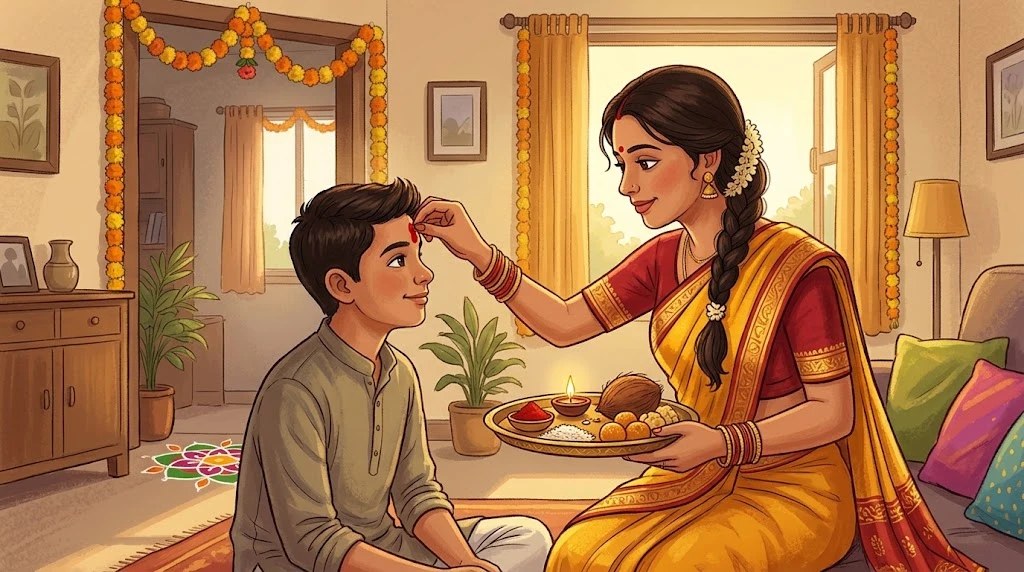
दीपावली के दो दिन बाद, कार्तिक शुक्ल द्वितीया को भाई दूज मनाई जाती है। इसे यम द्वितीया भी कहते हैं, क्योंकि इसी दिन मृत्यु के देवता यमराज अपनी बहन यमुना के घर भोजन करने गए थे। बहन भाई के माथे पर तिलक करती है, उसकी आरती उतारती है, उसे अपने हाथ से मिठाई खिलाती है और उसकी लंबी आयु की कामना करती है; भाई बहन को उपहार देता है और उसकी रक्षा का वचन दोहराता है। पाँच दिन के दीपोत्सव का यह अंतिम दिन है।
रक्षाबंधन में बहन भाई की कलाई पर रक्षा बाँधती है; भाई दूज में भाई बहन के घर जाता है। यही इस दिन की विशेषता है — बहन का घर, बहन का हाथ, बहन की थाली। महाराष्ट्र में इसे भाऊबीज, बंगाल में भाई फोंटा और नेपाल में भाई टीका कहते हैं; रीति थोड़ी बदलती है, भाव वही रहता है। नीचे यम और यमुना की वह कथा है जो इस दिन सुनी जाती है, तिलक की पूरी विधि, और भाई-बहन की रीतियाँ।
Bhai Dooj is celebrated on Kartik Shukla Dwitiya, two days after Diwali. It is also called Yama Dwitiya, because on this day Yama, the god of death, went to eat at the home of his sister Yamuna. The sister marks her brother's forehead with tilak, does his aarti, feeds him sweets with her own hand and prays for his long life; the brother gives her a gift and renews his promise to protect her. It is the last day of the five-day festival of lights.
On Raksha Bandhan the sister ties a thread on her brother's wrist; on Bhai Dooj the brother goes to his sister's home. That is what makes the day: her house, her hand, her thali. In Maharashtra it is Bhau Beej, in Bengal Bhai Phonta, in Nepal Bhai Tika; the customs vary a little, the feeling is the same. Below is the katha of Yama and Yamuna that is heard on this day, the full method of the tilak, and the brother-sister customs.
कथाThe story
सूर्य देव और उनकी पत्नी संज्ञा की दो संतानें थीं — पुत्र यम और पुत्री यमुना। दोनों जुड़वाँ थे और दोनों में बड़ा प्रेम था। समय आया तो यम को मृत्यु का देवता बनाकर दक्षिण दिशा में यमपुरी का राज्य मिला, और यमुना धरती पर नदी बनकर बहने लगीं। भाई-बहन अलग हो गए, पर यमुना का मन भाई में ही लगा रहता।
यमुना बार-बार भाई को संदेश भेजतीं — 'भैया, एक बार मेरे घर आओ, मेरे हाथ का भोजन करो।' पर यमराज का काम ऐसा था कि एक क्षण की छुट्टी नहीं। संसार में हर पल कोई जन्म लेता है, कोई जाता है, और यम को हर जाने वाले का लेखा रखना था। वे हर बार कहला देते, 'बहन, आऊँगा, पर अभी नहीं।' और यमुना हर बार प्रतीक्षा करतीं। वर्ष बीतते गए।
यम के मन में एक बात और थी। वे सोचते — मैं मृत्यु का देवता हूँ। मेरे आने से लोग डरते हैं। कौन अपने घर में मृत्यु को बुलाता है? बहन प्रेम से बुलाती है, पर मेरे पैर उसके घर पड़ें, यह उसके लिए शुभ है क्या? इसी सोच में वे टालते रहे। पर बहन का निमंत्रण रुकता नहीं था — वह हर बार और अधिक प्रेम से आता।
अंत में एक दिन यमराज का मन भर आया। उन्होंने सोचा, 'जो बहन इतने प्रेम से बुलाती है और मृत्यु से भी नहीं डरती, उसके घर न जाना अन्याय है।' उस दिन कार्तिक शुक्ल द्वितीया थी। यम ने अपने दूतों को कहा, 'आज मेरे द्वार पर किसी को न रोकना,' और वे यमुना के घर की ओर चले।
यमुना ने दूर से भाई को आते देखा तो उनकी आँखें भर आईं। वे दौड़कर द्वार पर गईं। उन्होंने भाई को आसन पर बिठाया, अपने जल से उन्हें स्नान कराया, नए वस्त्र दिए, माथे पर रोली-अक्षत का तिलक किया और आरती उतारी। फिर अपने हाथ से बनाए पकवान परोसे — जो-जो भाई को प्रिय था, सब। यमराज ने वर्षों बाद किसी के घर प्रेम से बैठकर भोजन किया। वे बोले, 'बहन, आज तक मुझे ऐसा सुख नहीं मिला। माँगो, जो चाहो वरदान माँगो।'
यमुना ने अपने लिए कुछ नहीं माँगा। उन्होंने कहा, 'भैया, वरदान दो कि आप हर वर्ष इसी दिन मेरे घर आएँ। और जो भाई इस दिन अपनी बहन के घर जाए, उसके हाथ का तिलक और भोजन ग्रहण करे, उसे अकाल मृत्यु का भय न रहे। और जो बहन इस दिन अपने भाई को तिलक करे और उसकी लंबी आयु की कामना करे, उसका घर सदा भरा रहे। जो इस दिन मेरे जल में स्नान करे, उसे आपकी यमपुरी के दर्शन न हों।'
यमराज ने मुस्कराकर कहा, 'ऐसा ही होगा। आज से कार्तिक शुक्ल द्वितीया यम द्वितीया कहलाएगी। इस दिन जो भाई बहन के घर जाकर उसके हाथ का तिलक और भोजन ग्रहण करेगा, उसे असमय मृत्यु का भय नहीं रहेगा। जो भाई-बहन इस दिन हाथ पकड़कर तेरे जल में स्नान करेंगे, उन्हें मेरा दंड नहीं भोगना पड़ेगा।' कहते हैं, उसी दिन प्रसन्न होकर यमराज ने नरक के जीवों को भी मुक्त कर दिया, और इसलिए इस दिन को कहीं-कहीं यम का उत्सव भी मानते हैं। यम बहन से विदा लेकर लौटे, और तब से हर वर्ष इस दिन लौटते हैं।
इसी वरदान से यमुना-स्नान की रीति चली। मथुरा के विश्राम घाट पर आज भी भाई दूज के दिन भाई और बहन हाथ पकड़कर यमुना में स्नान करते हैं, और मानते हैं कि यम और यमुना दोनों उन पर प्रसन्न हैं। कुछ क्षेत्रों में इस दिन की एक और कथा सुनी जाती है — नरकासुर का वध करके लौटे श्रीकृष्ण का उनकी बहन सुभद्रा ने तिलक और आरती से स्वागत किया था। कथा कोई भी हो, भाव एक है: इस दिन भाई बहन के द्वार पर जाए, बहन उसके माथे पर तिलक लगाए, और दोनों एक-दूसरे की लंबी आयु और सुख की कामना करें।
Surya Dev and his wife Sanjna had two children, a son, Yama, and a daughter, Yamuna. They were twins, and there was great love between them. In time Yama was made the god of death and given the realm of Yamapuri in the south, and Yamuna came down to earth to flow as a river. Brother and sister were parted, but Yamuna's heart stayed with her brother.
Again and again Yamuna sent word to him: 'Brother, come to my home once, eat a meal from my hands.' But Yama's work was such that there was never a moment free. Every instant someone in the world is born and someone departs, and Yama had to keep the account of every one who departed. Each time he sent back the same reply, 'Sister, I will come, but not yet.' And each time Yamuna waited. The years went by.
There was something else on Yama's mind. He thought: I am the god of death. People fear my coming. Who invites death into their home? My sister calls me out of love, but is it good for her that my feet should cross her threshold? With this thought he kept putting it off. But the sister's invitation did not stop; each time it came with more love than before.
At last one day Yama's heart was full. He thought, 'A sister who calls me with such love and is not afraid even of death; to refuse her home is an injustice.' That day was Kartik Shukla Dwitiya. Yama said to his messengers, 'Let no one be stopped at my gate today,' and he set out for Yamuna's home.
When Yamuna saw her brother coming from afar, her eyes filled. She ran to the door. She seated him, bathed him with her own waters, gave him new clothes, marked his forehead with roli and akshat and did his aarti. Then she served him the food she had cooked with her own hands, every dish her brother loved. For the first time in years Yama sat in someone's home and ate a meal served with love. He said, 'Sister, I have never known such happiness. Ask, ask for whatever boon you wish.'
Yamuna asked nothing for herself. She said, 'Brother, grant that you come to my home on this day every year. And grant that a brother who goes to his sister's home on this day and receives tilak and food from her hand shall have no fear of untimely death. And a sister who marks her brother with tilak on this day and prays for his long life, let her house always be full. And whoever bathes in my waters on this day, let them never see your Yamapuri.'
Yama smiled and said, 'So it shall be. From today Kartik Shukla Dwitiya will be called Yama Dwitiya. A brother who goes to his sister's home on this day and receives her tilak and her food will have no fear of death before his time. A brother and sister who hold hands and bathe in your waters on this day will not have to suffer my punishment.' It is said that in his happiness that day Yama also freed the beings in his hells, which is why some places keep the day as a festival of Yama himself. Yama took leave of his sister and returned, and he has returned on this day every year since.
From this boon came the custom of the Yamuna bath. At Vishram Ghat in Mathura, to this day, brothers and sisters hold hands and bathe in the Yamuna on Bhai Dooj, trusting that both Yama and Yamuna are pleased with them. In some regions another story is told for the day: when Krishna returned after killing the demon Narakasura, his sister Subhadra welcomed him with tilak and aarti. Whichever story is told, the meaning is one: on this day the brother goes to his sister's door, the sister marks his forehead, and each prays for the other's long life and happiness.
पूजा विधिHow to perform the puja
सामग्री: पूजा की थाली में रोली या कुमकुम, चंदन, अक्षत (साबुत चावल), कलावा या मौली, दीपक और घी, धूप, फूल, नारियल (सूखा गोला), मिठाई, पान-सुपारी, और भाई को देने के लिए पान या इलायची। भाई के बैठने के लिए चौकी या आसन, और हो सके तो चावल के आटे या हल्दी से चौक बनाने की सामग्री।
सुबह स्नान करके बहन और भाई दोनों स्वच्छ, हो सके तो नए वस्त्र पहनें। जहाँ संभव हो, यमुना या किसी नदी में स्नान करें — यही यम द्वितीया का मूल नियम है; न हो सके तो स्नान के जल में थोड़ा गंगाजल मिलाएँ और यमुना जी का स्मरण करें।
बहन घर में पूजा-स्थान या आँगन में चावल के आटे या हल्दी से चौक बनाए और उस पर चौकी या आसन रखे। सबसे पहले बहन घर के देवताओं, यमराज, यमुना जी और चित्रगुप्त जी का नाम लेकर दीपक जलाए और प्रणाम करे — 'ॐ यमाय नमः' और 'ॐ यमुनायै नमः' का स्मरण इस दिन का सरल मंत्र है।
भाई पूर्व या उत्तर की ओर मुख करके आसन पर बैठे और सिर पर रुमाल या कपड़ा रखे। बहन उसके हाथों में कलावा बाँधे, फिर अनामिका उँगली से माथे पर रोली या चंदन का तिलक करे और उस पर अक्षत लगाए। तिलक के समय बहन मन में भाई की लंबी आयु, स्वास्थ्य और सुख की कामना करे।
तिलक के बाद बहन भाई की आरती उतारे — थाली में जलता दीपक लेकर घड़ी की दिशा में घुमाए। फिर भाई के हाथ में सूखा नारियल दे; यह रक्षा और शुभता का प्रतीक है। बहन अपने हाथ से भाई को मिठाई खिलाए और पानी पिलाए; कई घरों में भाई के मुख में पान या इलायची भी दी जाती है।
भाई बहन के पैर छूए (यदि बहन बड़ी है) या बहन के सिर पर हाथ रखे (यदि छोटी है) और उसे उपहार दे — वस्त्र, आभूषण, धन या जो भी श्रद्धा से हो। इस उपहार का माप नहीं, भाव देखा जाता है। भाई बहन की रक्षा और उसके सुख-दुःख में साथ देने का वचन दोहराए।
तिलक के बाद भाई बहन के घर भोजन करे — यही कथा का मूल है। बहन भाई के पसंद का भोजन अपने हाथ से बनाए और परोसे। भाई दूज पर उपवास की परंपरा नहीं है; हाँ, कई बहनें तिलक होने तक अन्न नहीं लेतीं और भाई के भोजन के बाद ही खाती हैं। भोजन से पहले तिलक और आरती हो जानी चाहिए।
तिलक का समय: परंपरा में दोपहर का अपराह्न काल सबसे शुभ माना जाता है, क्योंकि यमराज अपनी बहन के घर दिन में भोजन करने आए थे। इस वर्ष की तिथि और तिलक का मुहूर्त पंचांग से देख लें। जो बहनें दूर रहती हैं, वे भाई के नाम का तिलक उसके चित्र पर या चंद्रमा को देखकर कर सकती हैं, और मिठाई-उपहार बाद में भिजवा सकती हैं।
Things needed: in the puja thali, roli or kumkum, sandal paste, akshat (whole rice), kalawa or mauli thread, a lamp and ghee, incense, flowers, a dry coconut, sweets, paan and supari, and paan or cardamom for the brother. A chauki or seat for the brother, and if possible rice flour or turmeric to draw a chauk, the square the seat rests on.
In the morning both sister and brother bathe and wear clean, preferably new, clothes. Where possible, bathe in the Yamuna or in any river; that is the root rule of Yama Dwitiya. If that is not possible, add a little Ganga water to the bath and remember Yamuna.
The sister draws a chauk with rice flour or turmeric at the puja place or in the courtyard and sets the chauki or seat on it. First she lights the lamp and bows to the household deities, to Yama, to Yamuna and to Chitragupta, taking their names; 'Om Yamaya Namah' and 'Om Yamunayai Namah' are the simple mantras of the day.
The brother sits on the seat facing east or north with a handkerchief or cloth on his head. The sister ties kalawa on his wrist, then with her ring finger marks his forehead with roli or sandal and presses akshat onto it. While doing the tilak she prays silently for her brother's long life, health and happiness.
After the tilak the sister does her brother's aarti, moving the lit lamp in the thali clockwise before him. Then she places a dry coconut in his hands; it stands for protection and good fortune. She feeds him sweets with her own hand and gives him water; in many homes she also puts paan or cardamom in his mouth.
The brother touches his sister's feet if she is older, or places his hand on her head if she is younger, and gives her a gift: clothes, jewellery, money or whatever comes from the heart. The gift is not measured; the feeling is. The brother renews his promise to protect his sister and to stand by her in joy and sorrow.
After the tilak the brother eats at his sister's home; this is the heart of the story. The sister cooks and serves his favourite food with her own hands. There is no tradition of fasting on Bhai Dooj, though many sisters take no grain until the tilak is done and eat only after their brother has eaten. The tilak and aarti should be complete before the meal.
Timing: by tradition the afternoon window, the aparahna, is considered the most auspicious, because Yama came to his sister's home to eat during the day. Check this year's tithi and the tilak muhurta in the panchang. Sisters who live far away may do the tilak in their brother's name on his photograph or while looking at the Moon, and send sweets and gifts afterwards.
तिलक विधि और भाई-बहन की रीतियाँThe tilak and the brother-sister customs
भाई दूज की थाली बहन की तैयारी का केंद्र है। उसमें रोली और अक्षत होते हैं — रोली शुभता का रंग और अक्षत अखंडता का प्रतीक, कि भाई की आयु अखंड रहे। साथ में घी का दीपक, कलावा, फूल, मिठाई, सूखा नारियल और पान-सुपारी। कई घरों में थाली में भीगे चावल और बताशे भी रखते हैं, और बंगाल में बहनें चंदन, दही और काजल से भाई के माथे पर फोंटा लगाती हैं। थाली को सजाना बहन का अपना काम है; उसमें प्रेम जितना हो, उतनी ही सुंदर।
तिलक और आरती की यह रीत कथा से सीधे निकली है — यमुना ने यमराज को स्नान कराया, तिलक किया, आरती उतारी और भोजन कराया। तिलक अनामिका से किया जाता है, और उसके साथ बहन अपने मन की बात कहती है: भाई लंबी उम्र पाए, स्वस्थ रहे, उसका काम बढ़े, उस पर कोई संकट न आए। आरती उतारते समय दीपक की लौ भाई के मुख के सामने घड़ी की दिशा में घुमाई जाती है। फिर मिठाई, और सूखा नारियल भाई के हाथ में — जैसे बहन कह रही हो, 'मेरी रक्षा तेरे हाथ में है।'
भाई का उपहार इस दिन का दूसरा छोर है। रक्षाबंधन की तरह यहाँ भी भाई बहन को कुछ देता है — वस्त्र, आभूषण, मिठाई या धन — पर उससे बड़ा उपहार है भाई का बहन के द्वार पर आना। कथा में यमराज वर्षों तक नहीं आए और फिर आए, इसीलिए इस दिन भाई का बहन के घर जाना ही सबसे बड़ी रीत है। विवाहित बहन के घर भाई का भोजन करना परिवार में बहन के सम्मान का भी संकेत है। भाई न हो तो बहनें चंद्रमा को तिलक करती हैं और उसे भाई मानकर आरती उतारती हैं; जिन भाइयों की बहन न हो, वे किसी मुँहबोली बहन, चाची-मामा की बेटी या गुरु की पुत्री से तिलक करवाते हैं।
तिलक की घड़ी दोपहर की है — अपराह्न काल, जब यमराज बहन के घर भोजन करने पहुँचे थे। पर जहाँ भाई दूर से आता हो, वहाँ द्वितीया तिथि के भीतर कोई भी समय चलता है; समय से बड़ा नियम बहन का हाथ और भाई का आना है। यमुना के किनारे रहने वाले इस दिन भाई-बहन हाथ पकड़कर नदी में डुबकी लगाते हैं; दूसरे शहरों में स्नान के जल में गंगाजल डालकर यही भाव रखा जाता है। दिन का अंत बहन के बनाए भोजन से होता है — वही भोजन जिसकी प्रतीक्षा यमुना ने वर्षों की थी।
The Bhai Dooj thali is the centre of the sister's preparation. In it go roli and akshat: roli the colour of good fortune, and akshat, the unbroken rice, a sign that the brother's life stay unbroken. With them a ghee lamp, kalawa thread, flowers, sweets, a dry coconut and paan with supari. Many homes add soaked rice and sugar drops; in Bengal sisters mark the forehead with sandal, curd and kajal, the phonta. Dressing the thali is the sister's own work, and the more love in it, the more beautiful it is.
The tilak and the aarti come straight from the story: Yamuna bathed Yama, marked him with tilak, did his aarti and fed him. The tilak is done with the ring finger, and as she does it the sister says what is in her heart: may my brother live long, stay well, prosper in his work, and may no trouble come to him. During the aarti the flame of the lamp is moved clockwise before the brother's face. Then the sweets, and the dry coconut placed in his hands, as if the sister were saying, 'My protection is in your hands.'
The brother's gift is the other end of the day. As on Raksha Bandhan, the brother gives his sister something, clothes, jewellery, sweets or money, but the greater gift is that he comes to her door. In the story Yama did not come for years and then came; that is why the brother going to his sister's home is the chief custom of the day. A brother eating at his married sister's home also marks her standing in her new family. A sister with no brother marks the Moon with tilak and does its aarti, taking the Moon as her brother; a brother with no sister receives the tilak from a sister by affection, a cousin or a guru's daughter.
The hour of the tilak is the afternoon, the aparahna window, when Yama reached his sister's home for the meal. But where the brother travels from afar, any time within the Dwitiya tithi serves; the sister's hand and the brother's coming matter more than the clock. Those who live by the Yamuna take a dip in the river hand in hand on this day; in other towns a little Ganga water in the bath carries the same intention. The day ends with the meal the sister has cooked, the very meal Yamuna waited years for.
महत्व और फलMeaning and fruit
परंपरा के अनुसार जो भाई इस दिन बहन के हाथ का तिलक और भोजन ग्रहण करता है, उसे अकाल मृत्यु का भय नहीं रहता, और जो बहन श्रद्धा से तिलक करती है, उसका घर सुख-समृद्धि से भरा रहता है। यमुना-स्नान करने वाले भाई-बहन को यमलोक का भय नहीं रहता, ऐसा यमराज का वचन है। कथा का संदेश यह है कि मृत्यु भी बहन के प्रेम के सामने कोमल हो जाती है।
भाई दूज रिश्तों को नया करने का दिन है। जो भाई-बहन दूर रहते हैं, व्यस्त हैं, या जिनके बीच कोई मनमुटाव है, उनके लिए यह दिन मिलने और माफ़ करने का अवसर है। कथा में यमराज वर्षों तक नहीं आ सके — पर जब आए, तो बहन ने शिकायत नहीं की, आरती उतारी। यही इस पर्व की सीख है।
By tradition a brother who receives tilak and food from his sister's hand on this day has no fear of untimely death, and a sister who does the tilak with faith keeps a home full of happiness and plenty. Brothers and sisters who bathe in the Yamuna need not fear Yama's realm; that is Yama's own word. The message of the story is that even death softens before a sister's love.
Bhai Dooj is a day for renewing bonds. For brothers and sisters who live far apart, who are busy, or who have some grievance between them, it is the chance to meet and to forgive. In the story Yama could not come for years, but when he came, his sister did not complain; she did his aarti. That is the lesson of the festival.
आरतीAarti
इस दिन बहन सबसे पहले भाई की आरती उतारती है। उसके बाद घरों में यमुना जी की आरती 'ॐ जय यमुना माता' गाई जाती है, और जहाँ कथा के साथ विष्णु पूजा होती है वहाँ 'ॐ जय जगदीश हरे'। आरती के बाद भाई को मिठाई खिलाएँ और परिवार साथ भोजन करे।
On this day the sister first does the aarti of her brother. After that, homes sing the Yamuna aarti 'Om Jai Yamuna Mata', and where the katha is followed by Vishnu puja, 'Om Jai Jagdish Hare'. After the aarti, feed the brother sweets and let the family eat together.
कब पढ़ेंWhen to read
यह कथा कार्तिक शुक्ल द्वितीया को, दीपावली के दो दिन बाद, भाई के तिलक और आरती से पहले या उसके साथ, बहन के घर में पढ़ी या सुनी जाती है।This katha is read or heard on Kartik Shukla Dwitiya, two days after Diwali, at the sister's home, before or along with the brother's tilak and aarti.
कुंडली मेंIn your kundli
कुंडली में भाई-बहन का विचार तृतीय भाव और मंगल से होता है — मंगल छोटे भाई-बहन, साहस और रक्षा का कारक है, और सूर्य, जो यम और यमुना के पिता हैं, पिता-पक्ष और आयु-बल का। जब तृतीय भाव या मंगल पीड़ित हों, भाई-बहन में दूरी या विवाद हो, या भाई की आयु और स्वास्थ्य की चिंता हो, तब भाई दूज का तिलक, यमुना-स्नान और यम का स्मरण विशेष फलदायी माने जाते हैं। आप इसी साइट पर अपनी कुंडली बनाकर अपने तृतीय भाव, मंगल और सूर्य की स्थिति देख सकते हैं।In the kundli, brothers and sisters are read from the third house and from Mars, which stands for younger siblings, courage and protection, while the Sun, father of Yama and Yamuna, stands for the father's side and the strength of one's life span. When the third house or Mars is afflicted, when there is distance or quarrel between siblings, or when a brother's health and longevity are a worry, the Bhai Dooj tilak, the Yamuna bath and the remembrance of Yama are held to be especially fruitful. Build your kundli on this site and check your third house, your Mars and your Sun.
ग्रह: Grahas: मंगलMars, सूर्यSun
अपनी कुंडली में देखेंCheck it in your kundliप्रश्नोत्तरQuestions people ask
- भाई दूज कब है और तिलक का सही समय क्या है?When is Bhai Dooj, and what is the right time for the tilak?
- भाई दूज कार्तिक शुक्ल द्वितीया को होती है, जो सामान्यतः दीपावली के दो दिन बाद और गोवर्धन पूजा के अगले दिन पड़ती है। तिलक का सबसे शुभ समय दोपहर का अपराह्न काल माना जाता है। तिथि हर वर्ष बदलती है, इसलिए इस वर्ष की तारीख और मुहूर्त पंचांग से देखें। द्वितीया तिथि के भीतर किसी भी समय तिलक मान्य है।Bhai Dooj falls on Kartik Shukla Dwitiya, normally two days after Diwali and the day after Govardhan Puja. The most auspicious time for the tilak is the afternoon window, the aparahna. The date changes every year, so check this year's date and muhurta in the panchang. Tilak at any time within the Dwitiya tithi is valid.
- भाई न हो तो भाई दूज कैसे मनाएँ?How is Bhai Dooj kept if there is no brother?
- जिन बहनों का भाई नहीं है, वे चंद्रमा को भाई मानकर उसे तिलक करती हैं और आरती उतारती हैं; यह बहुत पुरानी रीत है। मुँहबोले भाई, चचेरे-ममेरे भाई या किसी बालक को भी तिलक किया जा सकता है। जिन भाइयों की बहन नहीं है, वे किसी बहन-तुल्य स्त्री, चाची-मामा की बेटी या गुरु की पुत्री से तिलक करवाते हैं और उसे उपहार देते हैं।Sisters without a brother take the Moon as their brother, mark it with tilak and do its aarti; this is a very old custom. A brother by affection, a cousin or any boy may also be given the tilak. Brothers without a sister receive the tilak from a woman they regard as a sister, a cousin or a guru's daughter, and give her a gift.
- भाई दूज और रक्षाबंधन में क्या अंतर है?What is the difference between Bhai Dooj and Raksha Bandhan?
- रक्षाबंधन श्रावण पूर्णिमा को होता है, उसमें बहन भाई की कलाई पर राखी बाँधती है और प्रायः भाई के घर या पैतृक घर में मनाया जाता है। भाई दूज कार्तिक शुक्ल द्वितीया को होती है, उसमें राखी नहीं, तिलक होता है, और भाई बहन के घर जाकर उसके हाथ का भोजन करता है — यमराज के यमुना के घर जाने की स्मृति में। दोनों का भाव एक है, रीति अलग।Raksha Bandhan is on Shravan Purnima; the sister ties a rakhi on the brother's wrist and it is usually kept at the brother's or the parents' home. Bhai Dooj is on Kartik Shukla Dwitiya; there is no rakhi but a tilak, and the brother goes to his sister's home and eats a meal from her hand, in memory of Yama's visit to Yamuna. The feeling is the same; the custom is different.
- भाई दूज की थाली में क्या-क्या रखते हैं?What goes in the Bhai Dooj thali?
- रोली या कुमकुम, चंदन, अक्षत (साबुत चावल), कलावा, घी का दीपक, धूप, फूल, मिठाई, सूखा नारियल और पान-सुपारी। कई घरों में भीगे चावल, बताशे और भाई के लिए इलायची भी रखते हैं। थाली को रंगोली या फूलों से सजाया जाता है। भाई का उपहार अलग से तैयार रखें।Roli or kumkum, sandal paste, akshat (whole rice), kalawa thread, a ghee lamp, incense, flowers, sweets, a dry coconut and paan with supari. Many homes add soaked rice, sugar drops and cardamom for the brother. The thali is decorated with rangoli or flowers. Keep the brother's gift ready separately.
साथ में पढ़ेंRead alongside
 व्रत कथाVrat Kathas
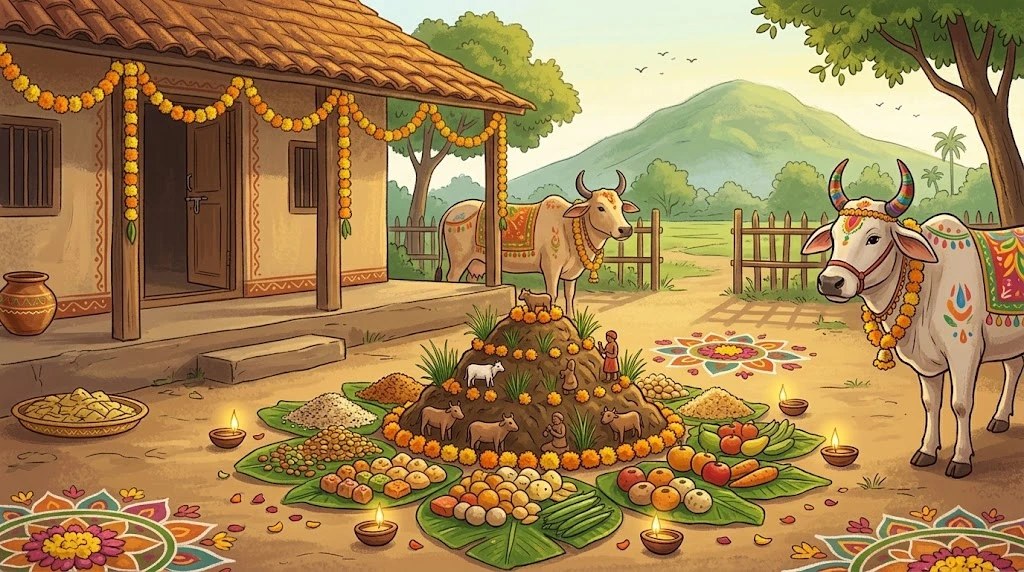
गोवर्धन पूजा कथा और विधि
Govardhan Puja Katha and Vidhi
कार्तिक शुक्ल प्रतिपदा की गोवर्धन पूजा — श्रीकृष्ण, इंद्र का क्रोध और गिरिराज की कथा, गोबर के गोवर्धन और अन्नकूट की पूजा विधिGovardhan Puja on Kartik Shukla Pratipada, the day after Diwali: how Krishna lifted the hill against Indra's rain, and how to make and worship the Govardhan of cow dung with the Annakut
 पूजा विधिPuja Vidhis
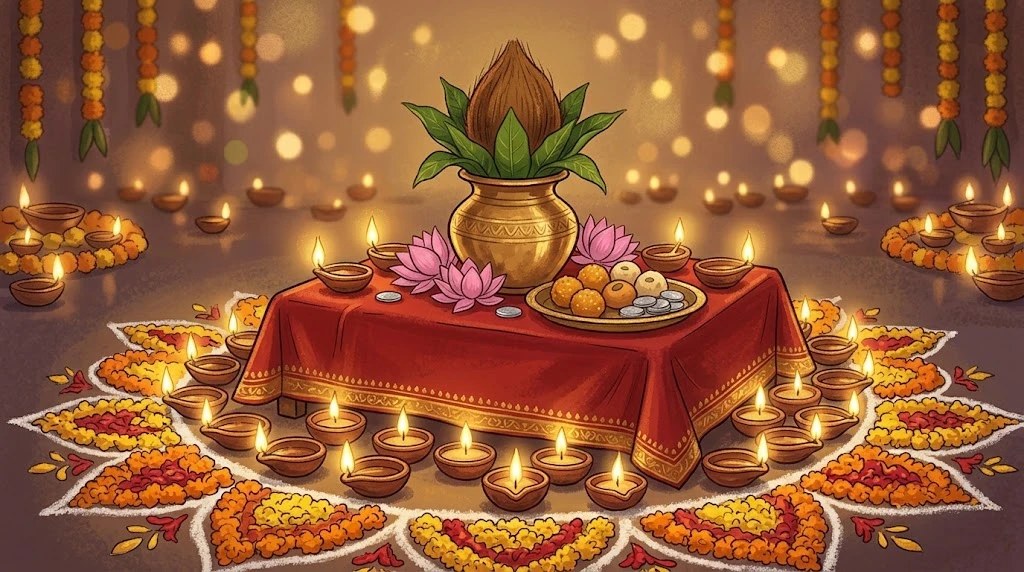
दीपावली लक्ष्मी-गणेश पूजा विधि
Diwali Lakshmi-Ganesh Puja Vidhi
कार्तिक अमावस्या की रात — राम के अयोध्या आगमन और लक्ष्मी के प्राकट्य की कथा, लक्ष्मी-गणेश पूजा की पूरी विधि, बहीखाता पूजन, दीपदान और रंगोलीThe night of the Kartik new moon: Rama's return to Ayodhya and the appearance of Lakshmi, the Lakshmi-Ganesh puja step by step, the ledger puja, the lamps and the rangoli