अहोई अष्टमी व्रत कथा
Ahoi Ashtami Vrat Katha
कार्तिक कृष्ण अष्टमी का संतान-रक्षा व्रत — साहूकारनी, स्याहु के बच्चे और सात पुत्रों की कथा, अहोई माता का चित्र, स्याहु माला और तारों को अर्घ्यThe Kartik Krishna Ashtami fast for one's children: the moneylender's wife, the syahu's cub and the seven sons, the Ahoi image on the wall, the syahu mala and the arghya to the stars
2026 मेंIn 2026
रविवार, 1 नवंबर 2026Sunday, 1 November 2026
कार्तिक कृष्ण अष्टमी · 14:52 (1 नवंबर 2026) से 13:11 (2 नवंबर 2026) तकKartika Krishna Ashtami · from 14:52 on 1 November 2026 to 13:11 on 2 November 2026
- प्रदोष कालPradosh kaal
- 17:32 – 19:56
- तारे दिखने का समय (लगभग)Stars visible (approx.)
- 17:56
- चन्द्रोदयMoonrise
- 23:35
PDF डाउनलोडDownload PDF
अहोई अष्टमी कार्तिक मास के कृष्ण पक्ष की अष्टमी को आती है — करवा चौथ के चार दिन बाद और दीपावली से लगभग एक सप्ताह पहले। यह माताओं का व्रत है, जो अपनी संतान की लंबी आयु, स्वास्थ्य और सुख के लिए रखा जाता है। करवा चौथ की तरह यह भी दिन भर निर्जल रखा जाता है, पर व्रत चाँद देखकर नहीं, शाम को तारे निकलने पर खुलता है। उत्तर भारत — उत्तर प्रदेश, दिल्ली, हरियाणा, पंजाब, राजस्थान और मध्य प्रदेश — में यह घर-घर का व्रत है, और जिन दम्पतियों को संतान की कामना है, वे भी इसे रखते हैं।
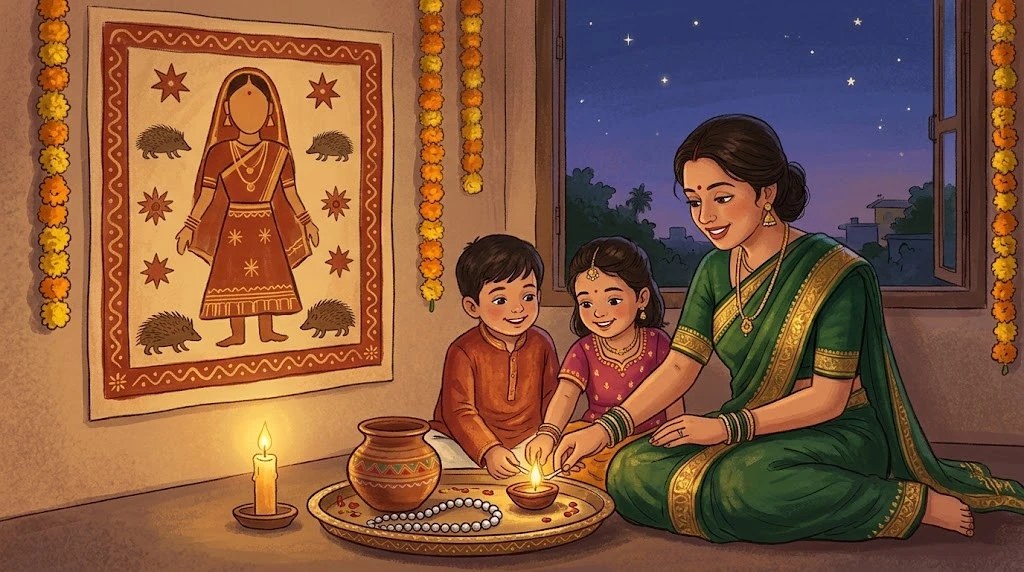
अहोई माता को पार्वती का ही रूप माना जाता है — संतान की रक्षक माँ। लोक में कहा जाता है कि 'अहोई' शब्द 'अनहोनी' से जुड़ा है: माता अनहोनी को होनी में बदल देती हैं, टले हुए को लौटा देती हैं। इस व्रत की सबसे विशेष बात दीवार पर बनाया जाने वाला चित्र है — अहोई माता और उनके पास स्याहु (साही) अपने बच्चों के साथ — और चाँदी की स्याहु माला, जिसमें हर वर्ष मनके जुड़ते जाते हैं। नीचे की कथा बताती है कि स्याहु और उसके बच्चे इस व्रत में क्यों हैं, और एक माँ का अनजाने में हुआ पाप कैसे कटा।
Ahoi Ashtami falls on the eighth tithi of the dark fortnight of Kartik, four days after Karwa Chauth and about a week before Diwali. It is a mothers' fast, kept for the long life, health and happiness of one's children. Like Karwa Chauth it is kept without water through the day, but it is broken not at the sight of the moon but when the stars come out at dusk. Across north India, in Uttar Pradesh, Delhi, Haryana, Punjab, Rajasthan and Madhya Pradesh, it is kept in home after home, and couples who long for a child keep it too.
Ahoi Mata is held to be a form of Parvati herself, the mother who protects children. In folk speech the name 'Ahoi' is linked to 'anhoni', the thing that should not happen: the Mother turns what should not happen into what does, and brings back what was lost. The most distinctive part of this vrat is the picture drawn on the wall, Ahoi Mata with the syahu, the porcupine, and her cubs beside her, and the silver syahu mala to which beads are added every year. The story below tells why the syahu and her cubs belong to this fast, and how a mother's unknowing sin was undone.
व्रत कथाThe story
प्राचीन समय में एक नगर में एक साहूकार रहता था। उसके सात बेटे थे, घर धन-धान्य से भरा था, आँगन में बच्चों की किलकारियाँ गूँजती थीं। साहूकारनी बहुत सुघड़ और धर्मपरायण स्त्री थी। एक वर्ष दीपावली आने में कुछ ही दिन शेष थे। उस समय की रीत थी कि दीपावली से पहले घर को मिट्टी से लीपा-पोता जाए, ताकि लक्ष्मी स्वच्छ घर में आएँ। साहूकारनी ने सोचा, 'मैं स्वयं जाकर अच्छी मिट्टी खोद लाती हूँ।'
वह कुदाल और टोकरी लेकर नगर के बाहर खेतों की ओर गई और एक जगह नरम चिकनी मिट्टी देखकर खोदने लगी। उसे पता न था कि ठीक उसी जगह ज़मीन के भीतर एक स्याहु — साही — की माँद थी, और उसमें उसके नन्हे बच्चे सो रहे थे। कुदाल का एक वार माँद पर पड़ा और एक बच्चा वहीं मर गया। साहूकारनी ने देखा तो उसका कलेजा मुँह को आ गया। 'हाय, मैंने यह क्या कर दिया!' — पर अब क्या हो सकता था? वह भारी मन से मिट्टी उठाकर घर आ गई और किसी से कुछ न कहा।
स्याहु माता भोजन की खोज से लौटी तो उसने अपने बच्चे को मरा पाया। वह विलाप करती रही और फिर उसके मुँह से शाप निकला — 'जिसने मेरा बच्चा मारा है, उसकी गोद भी इसी तरह सूनी हो।' स्याहु का यह शाप अनजाने में किए गए पाप के साथ साहूकारनी के घर तक पहुँच गया।
उसी वर्ष साहूकारनी का सबसे बड़ा बेटा अचानक बीमार पड़ा और कुछ दिनों में चल बसा। घर में शोक छा गया, पर लोगों ने कहा, 'विधि का विधान है।' अगले वर्ष दूसरा बेटा गया। फिर तीसरा। इस तरह सात वर्षों में सातों बेटे एक-एक कर चले गए। जिस आँगन में सात बच्चे खेलते थे, वहाँ अब सन्नाटा था। साहूकार और उसकी पत्नी टूट गए; सारा धन-वैभव पड़ा रह गया — घर में अब कोई चिराग़ नहीं था।
एक दिन पड़ोस की कुछ स्त्रियाँ संवेदना देने आईं। साहूकारनी ने रोते-रोते अपना हृदय खोल दिया — 'बहनों, मैंने जानबूझकर कोई पाप नहीं किया। पर एक बात बरसों से मेरे मन पर बोझ है। सात वर्ष पहले दीपावली से पहले मिट्टी खोदते समय मेरी कुदाल से स्याहु का एक बच्चा मर गया था। उसके बाद से ही मेरे बेटे एक-एक कर जाने लगे। क्या यह उसी का फल है?'
उन स्त्रियों में एक बूढ़ी, अनुभवी महिला थी। उसने कहा, 'बेटी, तुमने अपना पाप स्वीकार कर लिया — यही आधा प्रायश्चित है। जिस स्याहु का बच्चा गया, वह भी माँ थी; उसका दुख तुम्हारे दुख से कम नहीं था। अब उपाय सुनो। कार्तिक कृष्ण अष्टमी को अहोई माता का व्रत रख। दीवार पर गेरू से अहोई माता का चित्र बना और उनके पास स्याहु और उसके बच्चों का चित्र भी बना। माता के सामने स्याहु से क्षमा माँग, जल का करवा रख, कथा सुन और तारे निकलने पर अर्घ्य देकर व्रत खोल। अहोई माता संतान की रक्षक हैं — वे अनहोनी को होनी कर देती हैं।'
साहूकारनी ने उसी वर्ष कार्तिक कृष्ण अष्टमी को वैसा ही किया। उसने सूर्योदय से पहले स्नान कर संकल्प लिया और दिन भर न अन्न लिया, न जल। दीवार पर गेरू से अहोई माता का चित्र बनाया और उनके पास स्याहु और उसके सात बच्चे बनाए। सामने जल का करवा रखा, रोली-चावल और दूध-भात का भोग लगाया, घर की स्त्रियों के साथ कथा कही और हाथ जोड़कर बोली, 'माता, मैंने अनजाने में एक माँ की गोद सूनी की। उसी का फल मेरी सूनी गोद है। मुझे क्षमा करो, और उस स्याहु माँ से भी मेरे लिए क्षमा माँगो।' शाम को तारे निकले तो उसने करवे के जल से तारों को अर्घ्य दिया और व्रत खोला।
कहते हैं उस रात अहोई माता साहूकारनी के स्वप्न में आईं। उन्होंने कहा, 'तुमने अपना पाप छिपाया नहीं, और सच्चे मन से पश्चाताप किया है। स्याहु माता का क्रोध भी अब शांत हो गया है।' माता की कृपा से — कुछ कथाओं में उसी क्षण सातों बेटे जीवित होकर लौट आए, और कुछ में अगले वर्षों में साहूकारनी की गोद में फिर सात पुत्र खेले। दोनों रूप प्रचलित हैं, और दोनों का अर्थ एक है: जो गोद सूनी हो गई थी, वह अहोई माता ने फिर भर दी।
तब से हर वर्ष कार्तिक कृष्ण अष्टमी को माताएँ अहोई का व्रत रखती हैं, दीवार पर अहोई माता और स्याहु-बच्चों का चित्र बनाती हैं, और यह कथा सुनती हैं। कथा का संदेश यह है कि हर जीव की माँ का दुख बराबर है — स्याहु का भी, साहूकारनी का भी; अनजाने में हुए पाप का भी फल होता है, पर जो उसे स्वीकार कर पश्चाताप करता है और माता की शरण में जाता है, उसका पाप कटता है और उसकी संतान की रक्षा स्वयं अहोई माता करती हैं।
In ancient times there lived a moneylender in a certain town. He had seven sons, a house full of grain and wealth, and a courtyard that rang with the laughter of children. His wife was a capable and devout woman. One year Diwali was only a few days away. The custom in those days was to plaster the house with fresh earth before Diwali, so that Lakshmi would enter a clean home. The moneylender's wife thought, 'I will go and dig some good earth myself.'
She took a spade and a basket and went out past the town towards the fields, found a patch of soft fine clay and began to dig. She did not know that right there, under the ground, was the burrow of a syahu, a porcupine, with her little ones asleep in it. One stroke of the spade struck the burrow and a cub died on the spot. When she saw it her heart leapt into her mouth. 'Oh, what have I done!' But what could be done now? Heavy-hearted, she gathered the earth, went home and told no one.
When the mother syahu came back from foraging she found her cub dead. She wailed, and then a curse came from her mouth: 'Whoever has killed my child, let her lap be emptied in the same way.' The syahu's curse, together with the unknowing sin, travelled to the moneylender's house.
That same year the eldest son fell suddenly ill and died within days. Grief filled the house, but people said, 'It is the way of fate.' The next year the second son went. Then the third. In this way, over seven years, all seven sons went one by one. The courtyard where seven children had played was silent now. The moneylender and his wife were broken; all their wealth lay useless, for there was no lamp left in the house.
One day some women of the neighbourhood came to sit with her in her grief. Weeping, the moneylender's wife opened her heart. 'Sisters, I have never knowingly done wrong. But one thing has weighed on me for years. Seven years ago, digging earth before Diwali, my spade killed a syahu's cub. From that time my sons began to leave me, one after another. Is this the fruit of that?'
Among those women was an old and experienced one. She said, 'Daughter, you have owned your sin, and that is half the atonement. The syahu whose child died was a mother too; her grief was no less than yours. Now hear the remedy. On Kartik Krishna Ashtami keep the fast of Ahoi Mata. Draw Ahoi Mata on the wall in red ochre, and beside her draw the syahu with her cubs. Before the Mother ask the syahu's forgiveness, keep a karwa of water, hear the katha, and when the stars come out give the arghya and break your fast. Ahoi Mata is the protector of children; she turns what should not happen into what does.'
That very year, on Kartik Krishna Ashtami, the moneylender's wife did exactly that. She bathed before sunrise, took the vow, and through the day took neither food nor water. On the wall she drew Ahoi Mata in ochre, and beside her the syahu and her seven cubs. Before the image she set a karwa of water, offered roli, rice and milk-rice, told the katha with the women of the house, and said with folded hands, 'Mother, unknowing, I emptied a mother's lap, and my own empty lap is the fruit of it. Forgive me, and ask that syahu mother to forgive me too.' When the stars came out in the evening she poured the water of the karwa to the stars as arghya and broke her fast.
It is said that Ahoi Mata came to her in a dream that night and said, 'You did not hide your sin, and you have repented from the heart. The syahu mother's anger is now at rest as well.' By the Mother's grace, in some tellings the seven sons came back alive that very moment; in others, in the years that followed, seven sons played in her lap once more. Both versions are told, and both mean the same: the lap that had been emptied, Ahoi Mata filled again.
Since then, every year on Kartik Krishna Ashtami, mothers keep the Ahoi fast, draw Ahoi Mata and the syahu with her cubs on the wall, and hear this katha. Its message is that the grief of every creature's mother is the same, the syahu's no less than the moneylender's wife's; that even an unknowing sin bears fruit; but that whoever owns it, repents and takes refuge in the Mother has the sin undone, and Ahoi Mata herself protects their children.
व्रत विधिHow to keep the fast
सामग्री: अहोई माता का चित्र (दीवार पर गेरू से बनाया हुआ या बाज़ार का छपा चित्र), चाँदी की स्याहु और मनके (स्याहु माला) या उसके स्थान पर मौली में पिरोए मनके, जल भरा करवा या लोटा, पूजा की थाली, रोली, अक्षत, मौली, हल्दी, दूब, फूल, घी का दीपक, धूप, और भोग — दूध-भात, हलवा, पुए या पूड़ी (प्रायः आठ या चौदह), और सास के लिए बायना।
अष्टमी के दिन सूर्योदय से पहले उठकर स्नान करें और संकल्प लें: 'मैं अपनी संतान की दीर्घायु, आरोग्य और सुख के लिए अहोई माता का व्रत रखती हूँ और तारे निकलने पर अर्घ्य देकर व्रत खोलूँगी।' जिनकी संतान नहीं, वे संतान-प्राप्ति की कामना से संकल्प लें। दिन भर अन्न और जल न लें; रोगी या गर्भवती स्त्रियाँ फल और जल ले सकती हैं।
दोपहर में या शाम से पहले पूजा की दीवार तैयार करें। दीवार के एक भाग को साफ़ कर गेरू या पीली मिट्टी से अहोई माता का चित्र बनाएँ — उनके आठ कोने (अष्टमी के आठ) बनाने की रीत बहुत घरों में है — और उनके पास स्याहु और उसके बच्चों का चित्र। जो चित्र नहीं बना सकतीं, वे बाज़ार का छपा चित्र या कैलेंडर लगा लेती हैं। चित्र के नीचे चौकी पर लाल कपड़ा बिछाएँ।
चौकी पर जल भरा करवा या लोटा रखें और उसके ऊपर मौली बाँधें; करवे पर रोली से स्वस्तिक बनाएँ। बहुत घरों में यह वही करवा होता है जो करवा चौथ पर भरा गया था — उसी के जल से अहोई पर तारों को अर्घ्य दिया जाता है। साथ में गेहूँ के सात दाने, दूब और पुए-हलवा का भोग रखें। चाँदी की स्याहु माला को भी थाली में रखें।
सूर्यास्त के बाद, तारे निकलने से ठीक पहले, पूजा आरंभ करें — यह गोधूलि की वेला है। दीपक और धूप जलाएँ, चित्र को रोली, अक्षत, हल्दी, फूल और दूब चढ़ाएँ, और मौली अर्पित करें। दूध-भात, हलवा और पुओं का भोग लगाएँ। कहीं-कहीं माता को पानी से भरे करवे पर रखे दीपक के साथ पूजा जाता है।
कथा: घर की बड़ी स्त्री कथा कहे और बाकी स्त्रियाँ हाथ में गेहूँ के सात दाने या थोड़ा अनाज लेकर सुनें; बच्चों को पास बैठाएँ। कथा के बाद वह अनाज माता के सामने रख दें या बाद में पक्षियों को दे दें। बहुत घरों में अहोई की कथा के साथ 'स्याहु माता की कहानी' और एक छोटी गौरी-गणेश की कहानी भी कही जाती है।
मंत्र नाम से: अहोई माता पार्वती का रूप हैं, इसलिए 'ॐ पार्वत्यै नमः' या 'ॐ गौर्यै नमः'; गणेश जी के लिए 'ॐ गं गणपतये नमः'। लंबा जप आवश्यक नहीं। श्रद्धा से माता का नाम लें और संतान के नाम बोलते हुए उनकी रक्षा की प्रार्थना करें। जिन्हें मंत्र न आएँ, वे केवल 'जय अहोई माता' कहें — यही पर्याप्त है।
तारे निकलने पर करवे के जल से तारों को अर्घ्य दें — अंजुली या लोटे से जल आकाश की ओर अर्पित करें और हाथ जोड़कर प्रणाम करें। इसके बाद जल ग्रहण करें और व्रत खोलें। अष्टमी का चाँद बहुत देर रात निकलता है, इसलिए इस व्रत में चाँद नहीं, तारे देखे जाते हैं; जो स्त्रियाँ चाँद देखकर खोलना चाहें, वे मध्यरात्रि के आसपास चन्द्रोदय तक प्रतीक्षा करती हैं।
व्रत खोलने के बाद भोग का प्रसाद बच्चों को खिलाएँ और सास (या घर की बड़ी स्त्री) के पैर छूकर बायना दें — पूड़ियाँ, हलवा, वस्त्र और दक्षिणा। फिर सबके साथ सात्त्विक भोजन करें। स्याहु माला इस दिन पहनी जाती है और दीपावली तक पहनी रहती है; दीवार का चित्र भी दीपावली की पुताई तक रहता है। माता के भोग का हलवा-पुए घर की स्त्रियों में बाँटें।
What you need: an image of Ahoi Mata (drawn on the wall in red ochre or a printed picture from the market), a silver syahu with beads (the syahu mala) or, in its place, beads threaded on red mauli, a karwa or lota filled with water, a puja plate, roli, unbroken rice, mauli, turmeric, durva grass, flowers, a ghee lamp, incense, and the offering: milk-rice, halwa, and pua or puri (usually eight or fourteen), plus the bayana for the mother-in-law.
On the Ashtami, rise before sunrise, bathe and take the vow: 'I keep the fast of Ahoi Mata for the long life, health and happiness of my children, and I will break it after offering arghya when the stars come out.' Those without children take the vow with the wish for a child. Take neither food nor water through the day; women who are unwell or pregnant may take fruit and water.
In the afternoon, or before evening, prepare the puja wall. Clean a patch of wall and draw Ahoi Mata on it in ochre or yellow clay; in many homes she is drawn with eight corners, for the eighth tithi, and beside her the syahu with her cubs. Those who cannot draw put up a printed picture or calendar image. Below the picture spread a red cloth on a low stool.
On the stool place the karwa or lota filled with water and tie mauli around it; draw a swastika on it in roli. In many homes this is the very karwa that was filled on Karwa Chauth, and its water is used for the arghya to the stars on Ahoi. Beside it keep seven grains of wheat, durva grass and the offering of pua and halwa. Place the silver syahu mala on the plate too.
After sunset, just before the stars come out, begin the puja; this is the hour of godhuli, the dusk. Light the lamp and incense, offer roli, rice, turmeric, flowers and durva to the image, and offer the mauli. Set out the milk-rice, halwa and puas. In some places the Mother is worshipped with a lamp placed on the water-filled karwa.
The katha: the eldest woman of the house tells it while the others listen holding seven grains of wheat or a little grain in their hands; seat the children close by. After the katha, place that grain before the Mother or give it to birds later. In many homes the story of the syahu mother and a short story of Gauri and Ganesh are told along with the Ahoi katha.
The mantras, by name: Ahoi Mata is a form of Parvati, so 'Om Parvatyai Namah' or 'Om Gauryai Namah'; for Ganesh, 'Om Gam Ganapataye Namah'. Long japa is not needed. Take the Mother's name with faith and pray for your children's protection, speaking their names. Those who know no mantra simply say 'Jai Ahoi Mata'; that is enough.
When the stars appear, offer arghya to them with the water of the karwa: pour the water towards the sky from cupped hands or the lota and bow with folded hands. Then take water and break the fast. The moon of the Ashtami rises very late at night, so in this fast it is the stars that are looked for, not the moon; women who wish to break the fast at the moon wait until moonrise, around midnight.
After breaking the fast, feed the offered food to the children as prasad, touch the feet of your mother-in-law (or the eldest woman of the house) and give her the bayana: puris, halwa, cloth and dakshina. Then eat a sattvik meal together. The syahu mala is worn from this day until Diwali, and the picture on the wall stays until the Diwali whitewashing. Share the halwa and puas of the offering among the women of the house.
अहोई माता का चित्र और स्याहु मालाThe Ahoi image and the syahu mala
अहोई व्रत की पहचान दीवार पर बना चित्र है। पुराने घरों में माताएँ गेरू, पीली मिट्टी या कोयले से रसोई के पास या पूजा की दीवार पर अहोई माता की आकृति बनाती थीं — बहुत घरों में आठ कोनों वाली, अष्टमी के आठ के लिए — और उनके पास स्याहु और उसके बच्चे, जैसे कथा में हैं। साथ में कई घर सूरज, चाँद, तारे, कुआँ और करवा भी बनाते हैं। आज अधिकांश घरों में बाज़ार का छपा चित्र या कैलेंडर लगाया जाता है, जिसमें अहोई माता के चारों ओर यही आकृतियाँ बनी होती हैं। चित्र अहोई से दीपावली तक दीवार पर रहता है और दीपावली की सफ़ाई-पुताई के साथ उतरता है।
स्याहु माला इस व्रत की दूसरी विशेष वस्तु है — चाँदी की छोटी स्याहु (साही की आकृति) और चाँदी के दो मनके, जिन्हें मौली या लाल डोरे में पिरोकर पूजा में रखा और फिर गले में पहना जाता है। रीत है कि हर वर्ष अहोई पर माला में दो नए मनके जोड़े जाएँ, और घर में बेटे का जन्म या विवाह हो तो उस वर्ष और भी मनके जुड़ें — इस तरह माला परिवार की बढ़ती गोद का हिसाब रखती है। माला अहोई के दिन पहनकर दीपावली तक पहनी रहती है, फिर उतारकर गंगाजल या साफ़ जल से धोकर अगले वर्ष तक सँभाल कर रख दी जाती है। जिनके पास चाँदी की स्याहु न हो, वे मौली में मनके पिरोकर भी यह रीत निभाती हैं।
तीसरी वस्तु जल का करवा है। बहुत घरों में करवा चौथ का करवा उसी जल के साथ चार दिन सँभाल कर रखा जाता है और अहोई अष्टमी की शाम उसी जल से तारों को अर्घ्य दिया जाता है; फिर अहोई का यह जल दीपावली तक रखा जाता है और दीपावली की सुबह घर के कोनों में छिड़का जाता है, ताकि लक्ष्मी के आगमन से पहले घर शुद्ध हो जाए। इस तरह करवा चौथ, अहोई और दीपावली — तीनों पर्व एक ही करवे के जल से बँधे हैं। अहोई का व्रत चाँद से नहीं, तारों से खुलता है: अष्टमी का चाँद आधी रात के आसपास निकलता है, इसलिए माताएँ गोधूलि में पहला तारा निकलने की प्रतीक्षा करती हैं, और उसी को अर्घ्य देकर जल ग्रहण करती हैं। तारे यहाँ उन संतानों के प्रतीक माने जाते हैं जिनके लिए यह व्रत है — गिनती से बाहर और सदा चमकते हुए।
The mark of the Ahoi fast is the picture on the wall. In older homes mothers drew the figure of Ahoi Mata near the kitchen or on the puja wall in red ochre, yellow clay or charcoal, in many homes with eight corners for the eighth tithi, and beside her the syahu with her cubs, as in the story. Many homes add the sun, the moon, stars, a well and a karwa. Today most homes put up a printed picture or calendar image showing these same figures around Ahoi Mata. The picture stays on the wall from Ahoi until Diwali and comes down with the Diwali cleaning and whitewashing.
The syahu mala is the second distinctive object of this vrat: a small silver syahu, the figure of a porcupine, with two silver beads, threaded on mauli or a red string, kept in the puja and then worn around the neck. The custom is to add two new beads to the mala every Ahoi, and more in a year when a son is born or married in the family; in this way the mala keeps count of the family's growing lap. It is put on on the day of Ahoi and worn until Diwali, then taken off, washed in Ganga water or clean water and put away safely until the next year. Those who have no silver syahu keep the custom with beads threaded on mauli.
The third object is the karwa of water. In many homes the karwa from Karwa Chauth is kept with its water for the four days until Ahoi, and on the evening of Ahoi Ashtami that water is poured to the stars as arghya; this Ahoi water is then kept until Diwali and sprinkled in the corners of the house on Diwali morning, so that the home is purified before Lakshmi comes. In this way Karwa Chauth, Ahoi and Diwali are tied together by the water of a single karwa. The Ahoi fast is broken by the stars, not the moon: the moon of the Ashtami rises around midnight, so mothers wait at dusk for the first star, offer the arghya to it and take water. The stars here are taken as a sign of the children for whom the fast is kept, beyond counting and always shining.
महत्व और फलMeaning and fruit
परंपरा में अहोई अष्टमी का व्रत संतान की लंबी आयु, स्वास्थ्य और उन्नति के लिए, और निःसंतान दम्पतियों के लिए संतान-प्राप्ति के लिए किया जाता है। कथा का संदेश गहरा है — साहूकारनी का पाप अनजाने में हुआ था, पर फल फिर भी आया; और वह फल तब कटा जब उसने अपना दोष छिपाया नहीं, स्वीकार किया, और उस जीव से क्षमा माँगी जिसे उसने दुख दिया था। इसीलिए अहोई के चित्र में स्याहु और उसके बच्चे माता के साथ बनाए जाते हैं — यह याद दिलाने के लिए कि हर जीव की माँ का दुख बराबर है, और करुणा ही संतान की सबसे बड़ी रक्षा है।
यह व्रत कुटुम्ब की माताओं का उत्सव है — बहू, सास, जेठानी-देवरानी साथ बैठकर कथा सुनती हैं, बच्चे पास बैठते हैं, और स्याहु माला की बढ़ती गिनती परिवार की बढ़त की साक्षी बनती है। ज्योतिष में संतान का कारक बृहस्पति है और माता और पोषण का कारक चन्द्रमा; जिन माताओं की कुंडली में पंचम भाव पीड़ित हो, बृहस्पति नीच या अस्त हो, या संतान के स्वास्थ्य की चिंता बनी रहती हो, उनके लिए यह व्रत और माता की शरण विशेष बताई जाती है।
By tradition the Ahoi Ashtami fast is kept for the long life, health and progress of one's children, and by childless couples for the gift of a child. The message of the story runs deep: the moneylender's wife sinned unknowingly, yet the fruit came all the same; and that fruit was undone only when she stopped hiding her fault, owned it, and asked forgiveness of the creature she had hurt. That is why the syahu and her cubs are drawn beside the Mother in the Ahoi picture: a reminder that every creature's mother grieves the same, and that compassion is the greatest protection a child can have.
This fast is a festival of the mothers of a household: daughter-in-law, mother-in-law and the brothers' wives sit together to hear the katha, the children sit close, and the growing count of the syahu mala bears witness to the family's growth. In Jyotish, Jupiter is the significator of children and the Moon of the mother and of nurture; for mothers whose kundli has an afflicted fifth house, a debilitated or combust Jupiter, or a standing worry over a child's health, this fast and the refuge of the Mother are especially recommended.
आरतीAarti
कथा के बाद अहोई माता की आरती गाई जाती है; बहुत घरों में, क्योंकि अहोई पार्वती का रूप हैं, गौरी की आरती 'जय अम्बे गौरी' गाई जाती है, और उसके साथ गणेश जी की आरती 'जय गणेश देवा'। आरती के बाद तारों को अर्घ्य दिया जाता है और दूध-भात, हलवा और पुओं का प्रसाद पहले बच्चों को, फिर सबको बाँटा जाता है।
After the katha the aarti of Ahoi Mata is sung; in many homes, since Ahoi is a form of Parvati, this is the Gauri aarti 'Jai Ambe Gauri', followed by the Ganesh aarti 'Jai Ganesh Deva'. After the aarti the arghya is given to the stars, and the prasad of milk-rice, halwa and puas is shared, first with the children and then with everyone.
कब पढ़ेंWhen to read
यह कथा अहोई अष्टमी की शाम गोधूलि वेला में, अहोई माता के चित्र के सामने, तारों को अर्घ्य देने से पहले हाथ में गेहूँ के दाने लेकर सुनी जाती है।This katha is heard on the evening of Ahoi Ashtami at dusk, before the image of Ahoi Mata, holding grains of wheat, before the arghya is given to the stars.
कुंडली मेंIn your kundli
अहोई अष्टमी संतान का व्रत है, और कुंडली में संतान का कारक बृहस्पति है — पंचम भाव और उसका स्वामी संतान-सुख बताते हैं — जबकि चन्द्रमा माता, गर्भ और पोषण का कारक है। जब बृहस्पति नीच का, अस्त या पाप ग्रहों से पीड़ित हो, पंचम भाव पर राहु-केतु या शनि की दृष्टि हो, या चन्द्र क्षीण हो, तब संतान-संबंधी चिंता और इस व्रत का विशेष महत्व बताया जाता है। आप इसी साइट पर अपनी कुंडली बनाकर अपने बृहस्पति, पंचम भाव और चन्द्र की स्थिति देख सकते हैं।Ahoi Ashtami is a fast for one's children, and in the kundli the significator of children is Jupiter, with the fifth house and its lord showing the happiness one has from them, while the Moon stands for the mother, the womb and nurture. When Jupiter is debilitated, combust or afflicted by malefics, when Rahu-Ketu or Saturn aspect the fifth house, or when the Moon is weak, worry over children is indicated and this fast is given special weight. You can build your kundli on this site and check the condition of your Jupiter, your fifth house and your Moon.
ग्रह: Grahas: चन्द्रMoon, बृहस्पतिJupiter
अपनी कुंडली में देखेंCheck it in your kundliप्रश्नोत्तरQuestions people ask
- अहोई अष्टमी का व्रत कब खोला जाता है — तारे देखकर या चाँद देखकर?When is the Ahoi Ashtami fast broken, at the stars or at the moon?
- अधिकांश घरों में व्रत शाम को तारे निकलने पर खुलता है — करवे के जल से तारों को अर्घ्य देकर जल ग्रहण किया जाता है। अष्टमी का चाँद आधी रात के आसपास निकलता है, इसलिए कुछ परिवार चन्द्रोदय तक प्रतीक्षा करके चाँद को अर्घ्य देते हैं; यह घर की परंपरा पर निर्भर है। नई दिल्ली का सूर्यास्त और चन्द्रोदय समय इस पृष्ठ के ऊपर दिखता है। बादल हों तो सूर्यास्त के लगभग एक घंटे बाद आकाश की ओर अर्घ्य देकर व्रत खोल सकती हैं।In most homes the fast is broken when the stars come out in the evening: arghya is offered to the stars with the water of the karwa and water is taken. The moon of the Ashtami rises around midnight, so some families wait for moonrise and offer the arghya to the moon; it depends on the family's tradition. Sunset and moonrise times for New Delhi are shown at the top of this page. If it is cloudy, you may offer the arghya towards the sky about an hour after sunset and break the fast.
- अहोई के व्रत में क्या खाएँ? क्या निर्जल रखना ज़रूरी है?What does one eat on the Ahoi fast? Must it be kept without water?
- परंपरा में अहोई का व्रत करवा चौथ की तरह निर्जल रखा जाता है — तारे निकलने तक अन्न और जल कुछ नहीं। गर्भवती, रोगी या दूध पिलाने वाली माताएँ फल, दूध और जल ले सकती हैं; व्रत श्रद्धा से होता है, कष्ट से नहीं। तारों को अर्घ्य देने के बाद पहले जल और माता का प्रसाद — दूध-भात, हलवा, पुए — फिर सात्त्विक भोजन; प्याज़-लहसुन नहीं। बहुत घरों में इस दिन बच्चों को उनका मनपसंद भोजन कराया जाता है।By tradition the Ahoi fast is kept without water, like Karwa Chauth, with no food or water until the stars appear. Mothers who are pregnant, unwell or nursing may take fruit, milk and water; a vrat is kept with faith, not by suffering. After the arghya to the stars, first water and the Mother's prasad of milk-rice, halwa and puas, then a sattvik meal without onion or garlic. In many homes the children are given their favourite food on this day.
- मासिक धर्म में अहोई का व्रत कैसे रखें?How is the Ahoi fast kept during periods?
- उपवास और मन में प्रार्थना जारी रखें, पर दीवार के चित्र, करवे और पूजा की सामग्री को स्पर्श न करें। कथा सुन सकती हैं, और आपकी ओर से पूजा और अर्घ्य घर की सास, जेठानी या कोई और स्त्री करे; तारे निकलने पर दूर से हाथ जोड़कर प्रणाम करें और जल ग्रहण करें। व्रत की गिनती टूटती नहीं। चित्र उस दिन कोई और बना दे या छपा चित्र लगा लें।Keep the fast and your prayers, but do not touch the wall picture, the karwa or the puja materials. You may hear the katha, and let your mother-in-law, your husband's elder brother's wife or another woman of the house do the puja and the arghya on your behalf; when the stars appear, bow from a distance with folded hands and take water. The count of the vrat is not broken. Let someone else draw the picture that day, or put up a printed one.
- क्या बेटी के लिए या बिना संतान भी अहोई का व्रत रखा जा सकता है?Can the Ahoi fast be kept for a daughter, or by a woman without children?
- हाँ। अहोई माता संतान की रक्षक हैं — बेटे की भी, बेटी की भी; आज अधिकांश घरों में माताएँ अपनी सब संतानों के लिए यह व्रत रखती हैं और उनके नाम लेकर प्रार्थना करती हैं। जिन दम्पतियों की संतान नहीं है, वे संतान-प्राप्ति की कामना से यह व्रत रखते हैं; कथा में भी साहूकारनी की गोद सूनी थी और माता ने उसे भरा। कुछ परंपराओं में निःसंतान दम्पति इस दिन राधाकुंड या किसी पवित्र जल में स्नान भी करते हैं।Yes. Ahoi Mata protects children, daughters as well as sons; in most homes today mothers keep the fast for all their children and pray for them by name. Couples without children keep it with the wish for a child; in the story too the moneylender's wife's lap was empty, and the Mother filled it. In some traditions childless couples also bathe in Radha Kund or another sacred water on this day.
साथ में पढ़ेंRead alongside
 व्रत कथाVrat Kathas
करवा चौथ व्रत कथा
Karwa Chauth Vrat Katha
कार्तिक कृष्ण चतुर्थी का निर्जल व्रत — सात भाइयों की बहन वीरावती और झूठे चाँद की कथा, सरगी, करवा पूजा, छलनी से चन्द्र दर्शन और अर्घ्यThe waterless fast of Kartik Krishna Chaturthi: Queen Veeravati and the false moon, the sargi before dawn, the karwa puja, the moon seen through a sieve, and the arghya
 पूजा विधिPuja Vidhis
दीपावली लक्ष्मी-गणेश पूजा विधि
Diwali Lakshmi-Ganesh Puja Vidhi
कार्तिक अमावस्या की रात — राम के अयोध्या आगमन और लक्ष्मी के प्राकट्य की कथा, लक्ष्मी-गणेश पूजा की पूरी विधि, बहीखाता पूजन, दीपदान और रंगोलीThe night of the Kartik new moon: Rama's return to Ayodhya and the appearance of Lakshmi, the Lakshmi-Ganesh puja step by step, the ledger puja, the lamps and the rangoli